Overview

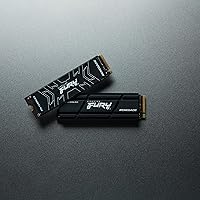
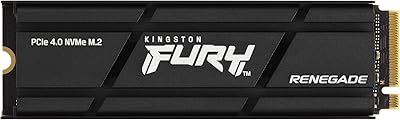
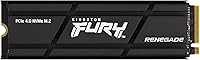
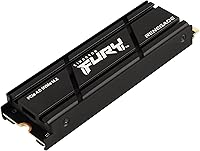
The Kingston Fury Renegade 4TB NVMe SSD sits firmly at the top end of the Gen 4 storage market, targeting serious gamers and power users who refuse to compromise on either speed or capacity. It ships in the standard M.2 2280 form factor and comes with a heatsink attached — not a cosmetic touch, but a practical one that keeps thermals honest during sustained workloads. PS5 compatibility broadens its appeal well beyond the PC crowd. Stacked against rivals like the Samsung 990 Pro and WD Black SN850X, it competes confidently. That said, this is a premium-tier drive priced to match, so set expectations accordingly before committing.
Features & Benefits

At its core, the Fury Renegade 4TB delivers sequential reads up to 7,300MB/s, which translates to game load times that feel nearly instantaneous and large file transfers that wrap up faster than you expect. That throughput runs through a PCIe Gen 4x4 interface — the same bandwidth pipeline content creators depend on for smooth 4K editing and real-time project streaming. The bundled heatsink earns its place: under heavy sustained reads, temperatures stay controlled enough that throttling rarely becomes a factor. And four terabytes means installing dozens of modern titles without constantly deciding what to uninstall to free up storage headroom.

Best For

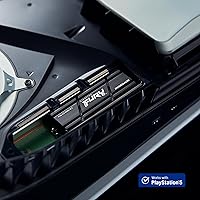
This Kingston drive makes the most sense for PC gamers who have filled a 1TB or 2TB drive and want one fast, high-capacity solution without juggling multiple volumes. Content creators handling large RAW photo batches or uncompressed video footage will appreciate the scratch disk performance. PS5 owners can use this Gen 4 NVMe drive to expand internal storage, though it is worth knowing the heatsink may need to be removed to clear the console cover depending on your unit. AMD and Intel Gen 4 desktop builders get the full bandwidth benefit, making this a clean, future-resistant upgrade for anyone serious about storage performance.

User Feedback

Among the several thousand owners who have weighed in, the consensus skews strongly positive — speed consistency and build quality surface repeatedly as the most appreciated qualities. Installation is widely described as trouble-free, though a portion of users note the heatsink height can be snug inside compact cases. The most common criticism involves heat management in chassis with restricted airflow when the drive is used bare. Long-term owners, those past the one-year mark, generally report no meaningful performance drop. The one edge case worth flagging before buying: heatsink clearance inside the PS5 is a real fit concern on certain console versions, so confirm before installing.

Pros

  • Sequential reads up to 7,300MB/s make large file transfers and game load times noticeably faster in practice.
  • Four terabytes of capacity is enough to house a serious game library without constant storage management.
  • The included heatsink keeps thermals controlled during sustained workloads without requiring a separate purchase.
  • PS5 Ready certification means console users have a verified upgrade path for internal storage expansion.
  • Long-term owners consistently report stable performance with no meaningful speed degradation over time.
  • Build quality is frequently praised, with the drive feeling solid and well-finished out of the box.
  • Standard M.2 2280 form factor ensures broad compatibility across modern desktop motherboards.
  • A 4.8-star rating across thousands of verified buyers reflects strong real-world satisfaction.
  • The Fury Renegade 4TB delivers strong value per gigabyte for users who actually need this performance tier.
  • Installation is widely described as straightforward, with minimal setup friction for experienced builders.

Cons

  • The heatsink height can conflict with tight case layouts or low-clearance M.2 slots in compact builds.
  • PS5 users may need to remove the heatsink entirely to fit under the console storage bay cover.
  • The premium price tier puts this Gen 4 NVMe drive out of reach for buyers with tighter budgets.
  • Thermal performance in cases with poor airflow can still be a concern even with the heatsink installed.
  • Users on older Gen 3 platforms will not access the full bandwidth and may not justify the cost.
  • A small number of buyers have reported fitment quirks with specific motherboard M.2 slot configurations.
  • The heatsink variant adds physical bulk that rules it out for most laptop or mini-ITX thin builds.
  • Those needing only 1TB or 2TB of storage are paying a significant capacity premium they may never use.

Ratings

The scores below reflect our AI-driven analysis of verified global buyer feedback for the Kingston Fury Renegade 4TB NVMe SSD, with spam, bot submissions, and incentivized reviews actively filtered out before processing. Ratings are drawn from thousands of real-world ownership experiences spanning gaming rigs, creative workstations, and PS5 console upgrades. Both the standout strengths and the friction points buyers actually ran into are represented transparently in each category.

Read Speed Performance
94%
Owners consistently describe noticeably faster game load times and near-instant large file transfers compared to their previous Gen 3 drives. Desktop builders on Gen 4 platforms in particular report that the drive sustains high throughput without significant dips during back-to-back transfers, which matters a lot when moving 50GB-plus game folders or video project files.
On Gen 3 motherboards, the drive operates within Gen 3 bandwidth limits, which significantly undercuts the performance argument at this price tier. A smaller portion of users noted that the peak speeds advertised are only achieved under specific benchmark conditions rather than typical mixed workloads.
Write Speed Performance
88%
Sustained write speeds hold up well during extended operations like copying large RAW photo archives or recording game footage directly to the drive, where cheaper SSDs tend to fall off a cliff after exhausting their cache. Most users handling video editing workflows report consistent write behavior throughout sessions lasting an hour or more.
A handful of users working with extremely large sequential writes — think multi-hour 4K capture sessions — observed some speed variation at the tail end of very prolonged operations. This is less a flaw and more a reality of how NAND flash handles sustained write pressure at high capacities.
Thermal Management
81%
19%
In well-ventilated mid-tower and full-tower builds, the bundled heatsink does a solid job keeping temperatures in a safe operating range during demanding sustained workloads like game installs or large data migrations. Owners who were previously managing drive temperatures with aftermarket solutions appreciated not having to source one separately.
In compact or small-form-factor cases with restricted airflow, the heatsink alone is not always enough to prevent temperatures from climbing during prolonged heavy use. A notable cluster of users in tight builds reported that the drive ran warmer than expected even with the heatsink, suggesting the thermal solution is optimized for open-air desktop environments.
Build Quality
92%
The physical construction of this Gen 4 NVMe drive earns consistent praise for its solid feel and well-finished heatsink that does not rattle or shift after installation. Buyers who have handled multiple NVMe drives over the years tend to note that this Kingston drive feels more premium in hand than its direct competitors at similar price points.
A small number of users reported that the heatsink clips or adhesive thermal pads felt less secure than expected after removal and reinstallation, which matters for anyone who needs to pull the drive for a system move. This is a minor gripe but worth flagging for builders who swap components frequently.
PS5 Compatibility
76%
24%
The drive passes Sony's minimum speed requirements comfortably and works reliably once installed in the PS5 expansion slot, giving console owners a meaningful boost in storage without sacrificing load time consistency compared to the built-in drive. Gamers who juggle large PS5 title libraries found the 4TB capacity particularly practical for eliminating the usual storage juggling act.
The heatsink height creates a real fitment problem on many PS5 units, requiring removal before the console bay cover can close properly — something Kingston does not make prominently clear in the box. Users who assumed it would drop in without modification were caught off guard, and the workaround of using a thinner third-party heatsink adds cost and hassle that undercuts the plug-and-play expectation.
Installation Experience
89%
Most desktop builders describe installation as clean and uncomplicated — standard M.2 screw-down, no driver headaches, detected by BIOS on first boot across a wide range of AMD and Intel Gen 4 boards. Experienced builders specifically appreciated that the drive did not require any firmware updates out of the box to operate at rated speeds.
Laptop users and small-form-factor builders ran into heatsink clearance issues more often than not, with the added height conflicting with neighboring slots or chassis walls. A small percentage of users also reported their motherboard's M.2 slot not recognizing the drive immediately, though this was typically resolved by updating BIOS rather than any fault with the drive itself.
Capacity Value
86%
At 4TB, this Kingston drive is one of the few single-drive solutions that can hold a serious modern game library — including large titles that regularly exceed 100GB each — without requiring any storage management compromise. Content creators working in video production found the capacity liberating as a primary project drive rather than a supplemental one.
The cost per gigabyte at this capacity tier is noticeably higher than buying two 2TB drives from competing brands, which some buyers calculated before purchasing. For users who do not actually need a single 4TB volume and are comfortable with multiple drives, the value math does not always favor this configuration.
Long-Term Reliability
91%
Owners who have run this Gen 4 NVMe drive for over a year consistently report no measurable performance degradation, which builds confidence for buyers making a long-term investment in storage. Kingston's brand reputation for NVMe longevity, backed by a multi-year warranty, adds an additional layer of reassurance that keeps satisfaction high among seasoned builders.
The long-term dataset is still relatively limited given the drive launched in late 2022, so multi-year failure rate data is not yet as comprehensive as older drive families. A very small number of users reported early failures, though these appear within normal statistical variance for the category rather than indicating a systemic concern.
Noise & Vibration
97%
As a solid-state drive with no moving parts, this Kingston drive produces zero audible noise or vibration under any workload, which is exactly what buyers switching from mechanical drives are after. Users in quiet recording or audio production environments specifically called this out as a practical benefit when moving to NVMe storage.
There is genuinely nothing meaningful to flag here for a solid-state drive — the category is included for completeness, and the score reflects the nature of the technology rather than any specific engineering achievement by Kingston.
Software & Firmware Support
73%
27%
Kingston provides SSD Manager software that allows users to monitor drive health, update firmware, and check SMART data without third-party tools, which was appreciated by the more technically minded segment of buyers. The firmware shipped on recent units has been stable, with no widely reported bugs affecting performance or compatibility.
Compared to Samsung's Magician software ecosystem, Kingston's toolset feels more limited in features and polish, which matters to users who like granular control over their storage. A handful of users also noted that firmware update documentation could be clearer, particularly for less experienced builders navigating the process for the first time.
Heatsink Fitment Versatility
67%
33%
For standard ATX and mATX mid-tower builds with adequate M.2 slot spacing, the bundled heatsink fits cleanly and stays firmly in place without interfering with GPU clearance or adjacent expansion cards. Builders who specifically sought a drive with a pre-installed thermal solution found the convenience factor worth the slightly bulkier profile.
The heatsink becomes a liability in a surprisingly wide range of real-world scenarios — compact ITX builds, most laptops, and PS5 installs all require its removal, which somewhat narrows the audience for this specific variant. Buyers who would be better served by the heat-spreader-only variant sometimes purchase this one by mistake due to ambiguous product listing differentiation.
Price to Performance Ratio
78%
22%
For users who genuinely need 4TB of Gen 4 NVMe throughput in a single drive, the Fury Renegade 4TB delivers competitive performance per dollar relative to comparable drives from Samsung and WD at similar capacities. The included heatsink also eliminates a supplemental purchase that some competing drives at this tier require separately.
Buyers who do not specifically need 4TB in one volume can find faster dollars-per-gigabyte ratios by stepping down to 2TB variants across the Gen 4 category. At the premium end of the market, price sensitivity is real, and even modest cost differences between competing 4TB drives influence purchasing decisions noticeably.

Suitable for:

The Kingston Fury Renegade 4TB NVMe SSD was built for buyers who have outgrown smaller drives and need high throughput alongside serious storage room. PC gamers with deep libraries of modern titles will feel the difference immediately — no more rotating what gets installed and what gets deleted. Content creators handling uncompressed 4K footage, large RAW photo archives, or multi-track audio projects will benefit from using this Gen 4 NVMe drive as a primary working volume rather than a secondary backup disk. Desktop builders running AMD or Intel platforms with Gen 4 M.2 slots get the full bandwidth advantage and a thermal solution already included in the box. PS5 owners who want to expand internal storage without settling for slower drives will also find this Kingston drive a capable fit, provided they verify heatsink clearance for their specific console version.
Not suitable for:

The Kingston Fury Renegade 4TB NVMe SSD is a hard sell for anyone whose workload does not actually push storage speed. Casual PC users who browse the web, run office apps, or play a small handful of games will not notice any practical difference compared to a mid-range Gen 3 or budget Gen 4 drive, both of which cost considerably less. Laptop owners need to be cautious — the bundled heatsink adds height that many notebook M.2 slots simply cannot accommodate, making the bare heat-spreader variant the wiser choice for portable builds. Budget-conscious buyers comparing cost per gigabyte across the Gen 4 category may find similar capacity drives from other brands at a lower outlay, depending on current market pricing. Anyone building into a compact or small-form-factor case with minimal airflow should also think carefully, since sustained heavy workloads in thermally restricted environments can push temperatures higher than the heatsink alone can fully offset.
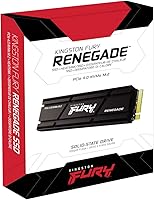
Specifications

  • Brand: Manufactured by Kingston Digital, Inc., under the Kingston Fury performance sub-brand.
  • Model Number: The specific model identifier for this variant is SFYRDK/4000G.
  • Capacity: This drive offers 4TB (4,000GB) of usable flash storage for games, media, and applications.
  • Interface: It connects via a PCIe Gen 4x4 NVMe interface, delivering maximum host bandwidth on compatible platforms.
  • Form Factor: Standard M.2 2280 form factor, measuring 3.15 x 0.93 x 0.41 inches including the heatsink.
  • Sequential Read: Peak sequential read speed reaches up to 7,300MB/s under optimal sustained conditions.
  • Thermal Solution: Ships with an integrated heatsink designed to reduce thermal throttling during extended high-load operations.
  • PS5 Support: Carries official PS5 Ready certification, confirming compatibility with the PlayStation 5 internal M.2 expansion slot.
  • Weight: The drive with heatsink weighs approximately 1.21 ounces, making it lightweight for internal installation.
  • Installation: Designed for internal installation only; it is not a portable or external drive and requires a compatible M.2 slot.
  • Compatible Devices: Primarily compatible with modern PCIe Gen 4 desktop motherboards and the PlayStation 5 console.
  • Memory Type: Uses NAND flash memory in an NVMe solid-state configuration with no moving parts.
  • BSR Ranking: Ranked #108 in the Internal Solid State Drives category on Amazon at the time of evaluation.
  • User Rating: Holds a 4.8 out of 5 star average rating based on over 5,296 verified customer ratings.
  • Release Date: This product was first made available for purchase on October 25, 2022.

Related Reviews
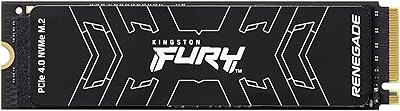
Kingston Fury Renegade 1TB PCIe Gen 4.0 NVMe M.2 SSD
89%
92%
Performance
88%
Value for Money
87%
Thermals & Cooling
90%
Setup & Installation
93%
Compatibility
More
Kingston FURY Renegade 2TB NVMe SSD
84%
94%
Read & Write Performance
88%
Sustained Throughput Consistency
71%
Thermal Management
92%
Installation & Compatibility
74%
Value for Money
More
Kingston NV2 4TB M.2 NVMe SSD
83%
93%
Value for Money
82%
Read Performance
61%
Sustained Write Speed
96%
Installation Ease
89%
Compatibility
More
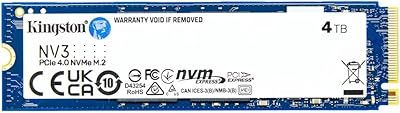
Kingston NV3 4TB NVMe SSD
80%
91%
Sequential Read Speed
63%
Sustained Write Performance
94%
Storage Capacity
88%
Value for Money
93%
Installation Ease
More
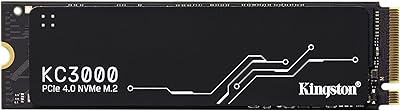
Kingston KC3000 4TB NVMe M.2 SSD
84%
93%
Read & Write Speed
88%
Thermal Management
96%
Storage Capacity
67%
Value for Money
91%
Installation Ease
More
WD_BLACK SN750 4TB NVMe Internal SSD
82%
91%
Read & Write Performance
93%
Storage Capacity
88%
Installation Ease
62%
Thermal Management
89%
Long-Term Reliability
More
Fikwot FX550 4TB NVMe M.2 SSD
79%
93%
Storage Capacity Value
88%
Sequential Read Speed
61%
Sustained Write Performance
91%
Value for Money
89%
Installation & Compatibility
More
Ediloca EN870 4TB NVMe M.2 SSD
78%
91%
Sequential Read Speed
58%
Sustained Write Performance
93%
PS5 Compatibility
84%
Value for Money
89%
Installation Experience
More
PHIXERO P7000PRO 4TB NVMe SSD
80%
88%
Sequential Read Speed
82%
Sequential Write Speed
76%
Thermal Management
84%
Value for Money
91%
Installation Experience
More
fanxiang S690Q 4TB NVMe M.2 SSD
77%
91%
Value for Money
83%
Read Speed Performance
58%
Sustained Write Performance
88%
PS5 Compatibility
62%
Thermal Management
More

FAQ

It fits the PS5 M.2 expansion slot electrically, but the heatsink height is a real concern depending on your console revision. Many users find they need to remove the bundled heatsink entirely to clear the PS5 storage bay cover. Sony recommends using a third-party low-profile heatsink or none at all if clearance is tight, so check your specific PS5 model before assuming the drive will drop in as-is.

Yes, a PCIe Gen 4 compatible M.2 slot is required to reach the advertised speeds. If you install this Gen 4 NVMe drive into a Gen 3 slot, it will still work — it will just operate at Gen 3 speeds, which roughly caps sequential reads around 3,500MB/s. Functional, but you would not be getting full value from the hardware.

Yes, the heatsink on this Kingston drive can be removed. It is typically attached with thermal pads and screws or clips depending on the production batch. Just be careful not to damage the NAND chips when separating it, and make sure your case has enough airflow to compensate if you run it bare.

All three are top-tier Gen 4 drives with competitive peak speeds. The Fury Renegade tends to perform very closely to the SN850X in sustained workloads, while the 990 Pro trades some raw throughput for slightly better power efficiency. The real differentiator often comes down to price at any given time and brand preference, since day-to-day performance differences for gaming are minimal across all three.

For raw load times in most games, the honest answer is: not dramatically. The gap between Gen 3 and Gen 4 in gaming is often smaller than the marketing numbers suggest. Where the Fury Renegade 4TB genuinely shines is in large file transfers, game installs, and workloads that push sustained throughput — tasks where Gen 3 drives start to slow down noticeably under pressure.

With the heatsink installed and reasonable airflow in the case, temperatures generally stay in a safe and stable range during sustained reads and writes. Users running the drive in cramped builds with poor airflow have reported higher temperatures, and without any heatsink at all, thermal throttling becomes a real risk under prolonged heavy workloads. It is worth making sure your M.2 slot has at least some passive airflow nearby.

Kingston typically backs the Fury Renegade series with a 5-year limited warranty, though you should confirm this with the retailer or Kingston directly for your specific purchase region. Kingston has a generally solid reputation for honoring warranty claims without excessive friction, and their support documentation is readily available online.

Technically you can place an M.2 NVMe drive in a compatible USB enclosure, and it will function. However, this drive is designed and optimized for internal installation, and USB enclosure speeds are bottlenecked well below what the drive is capable of. If you need portable external storage, a dedicated external NVMe enclosure with Thunderbolt or USB4 would be a better-matched solution.

Quite possibly, yes. The heatsink adds meaningful height above the M.2 slot, and in mini-ITX or compact mATX cases where components sit close together, that extra thickness can conflict with GPU clearance or adjacent M.2 slots. Measure your available clearance carefully before buying, and factor in whether removing the heatsink is something you are comfortable doing.

Under normal consumer workloads — gaming, media storage, daily OS use — a quality Gen 4 NVMe drive of this caliber is realistically expected to last well beyond five years for most users. The more meaningful longevity metric is the TBW (terabytes written) rating, which Kingston publishes for this series. For the 4TB variant, that figure is high enough that typical users are unlikely to approach the limit under normal use patterns.

Where to Buy