Overview

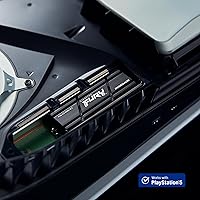
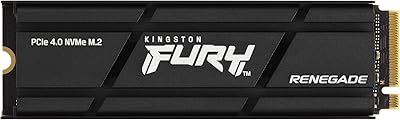
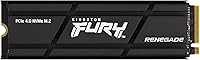
The Kingston Fury Renegade 1TB NVMe M.2 SSD sits firmly in the upper tier of the consumer Gen 4 storage market, competing directly with drives like the Samsung 980 Pro and WD Black SN850X. What sets this Kingston drive apart is the included heatsink, which matters more than most buyers expect — sustained workloads like large file transfers or long game-install sessions can throttle bare drives significantly. PS5 owners will appreciate the certified compatibility, though this NVMe SSD genuinely shines brightest in a modern PCIe Gen 4 desktop build. If your system is older or budget is tight, the performance headroom here may go largely untapped.
Features & Benefits

At 7300MB/s sequential read, the Fury Renegade is not just a number on a spec sheet — it translates to noticeably snappier large-file loads, faster game installs, and quicker OS boot times compared to Gen 3 drives. The standard M.2 2280 form factor means it drops into virtually any modern motherboard or the PS5 expansion bay without fuss. The bundled low-profile heatsink actively prevents thermal throttling during sustained transfers, something bare drives routinely suffer under pressure. This NVMe SSD is also backward compatible with Gen 3 slots, though you will cap out at Gen 3 speeds there. 1TB capacity comfortably handles a primary game library alongside system files.

Best For

This Kingston drive makes the most sense for PC gamers with Gen 4 motherboards who want near-ceiling NVMe performance without overpaying for enterprise-tier hardware. PS5 owners will find the setup straightforward — slot it in, format through the console menu, and you are done. Creative professionals moving large video or RAW photo batches will also notice real-world gains over slower drives. That said, if you are still running a Gen 3 platform, the honest answer is you will not feel a dramatic difference over a good Gen 3 drive — the bandwidth simply is not there to use. This NVMe SSD rewards the right system.

User Feedback

Across more than 5,200 ratings, the Fury Renegade holds a 4.8-star average, which is unusually consistent for a drive in this category. Buyers regularly call out how real-world speeds track closely with advertised figures — something that does not always hold true with competitors. PS5 users in particular mention how painless the installation process is. Where occasional criticism surfaces, it tends to involve heatsink clearance in tighter cases or compact builds where the added height creates fitment issues. A small number of users also note that the drive launched in late 2022, so truly long-term durability data is still accumulating — though early indicators are solid.

Pros

  • Sequential read speeds of up to 7300MB/s translate to noticeably faster game installs and large file transfers.
  • The included low-profile heatsink prevents thermal throttling during sustained workloads, unlike bare drives.
  • PS5 compatibility is certified, and console users consistently report a smooth, straightforward installation experience.
  • A 4.8-star average across more than 5,200 ratings reflects genuinely broad and consistent buyer satisfaction.
  • Real-world speeds reported by users closely match the advertised specs, which is not always the case in this category.
  • The M.2 2280 form factor fits virtually every modern motherboard and the PS5 expansion slot without adapters.
  • Backward compatibility with Gen 3 slots offers some flexibility if you plan to reuse the drive in a future build.
  • Kingston's reliability track record and warranty support provide meaningful peace of mind for a drive in this price tier.
  • 1TB capacity comfortably holds an operating system, core applications, and a solid rotating game library simultaneously.
  • Available in capacities up to 4TB, making it easy to scale up within the same product family if needed.

Cons

  • Gen 3 platform owners will see little to no real-world speed advantage over a good Gen 3 drive.
  • The heatsink adds height that can create fitment problems in tight cases or compact small form factor builds.
  • Buyers who only do light computing tasks will not justify the cost difference over a budget SATA SSD.
  • Long-term durability data is still limited given the drive only entered the market in late 2022.
  • PS5 performance gains are highly dependent on individual game optimization, not solely drive speed.
  • At 1TB, heavy users with large game libraries may find themselves managing storage more often than they would like.
  • The premium price point may be hard to justify for secondary or backup storage roles where speed is irrelevant.
  • A small number of users report edge-case compatibility concerns with certain older or non-standard M.2 slot configurations.

Ratings

The Kingston Fury Renegade 1TB NVMe M.2 SSD earns some of the strongest user sentiment we have seen in the premium Gen 4 storage category, and these scores reflect that — built by our AI after parsing thousands of verified global buyer reviews, with spam, bot activity, and incentivized feedback actively filtered out. The result is an honest picture: where this Kingston drive genuinely excels and where real buyers have hit friction, all weighted and scored transparently.
Read Performance
93%
Users consistently report that real-world read speeds feel every bit as fast as the advertised figures — game installs that used to take several minutes on older drives complete noticeably faster, and OS boot times see a meaningful drop. Reviewers coming from SATA SSDs describe the difference as immediately obvious from day one.
A handful of users on Gen 3 platforms were disappointed to find speeds capped well below the drive's ceiling, which is expected behavior but not always clearly understood at the point of purchase. The peak performance is only truly accessible on a Gen 4 platform.
Thermal Management
89%
The included low-profile heatsink earns consistent praise for keeping sustained transfer temperatures in check during extended workloads like video editing exports or large game file downloads. Most users note the drive maintains steady performance without the throttling dips they experienced on bare drives.
In very compact ITX cases or builds with dense component layouts, the heatsink's added height creates fitment conflicts with neighboring components or case panels. A small but vocal group of buyers had to remove it entirely, which somewhat defeats its purpose.
PS5 Compatibility
88%
PS5 users are among the most satisfied segment in the review pool — the drive meets Sony's specifications cleanly, and the installation process is described as genuinely easy even for people who have never opened a console before. Most report the PS5 detects and formats the drive on first boot without any issues.
Some buyers expected dramatic improvements in game load times and found the gains varied heavily depending on the specific title, since most PS5 games are not yet fully optimized to exploit Gen 4 storage bandwidth. Expectations management is the recurring theme in lower PS5-specific ratings.
Installation Experience
91%
The standard M.2 2280 form factor means this drive slots into virtually any compatible motherboard without adapters or special tools, and reviewers across both PC and PS5 installs describe the physical process as smooth and stress-free. Kingston's clear product labeling makes it easy to confirm orientation before seating.
A minority of users with older or non-standard M.2 implementations encountered minor compatibility edge cases, and the heatsink variant adds a step to the installation that bare drives skip. Nothing technically challenging, but worth knowing if you are new to internal drive installation.
Value for Money
78%
22%
Within the Gen 4 flagship tier — competing against drives like the Samsung 980 Pro and WD Black SN850X — the Fury Renegade is seen as fairly priced, especially given that the heatsink is included rather than sold separately. Buyers who need Gen 4 performance find the overall package reasonable for what is delivered.
For anyone whose workload does not demand Gen 4 throughput, the price premium is difficult to justify when capable Gen 3 drives cost significantly less. Budget-oriented buyers and those running older platforms consistently cite value as the category where this drive falls short of their expectations.
Build Quality
86%
The drive feels solid and well-constructed in hand, and Kingston's component sourcing reputation carries weight with experienced buyers who have dealt with lower-tier SSDs failing prematurely. The heatsink itself sits flush and secure after installation, with no reported issues of it loosening over time.
As a purely internal component, there is limited surface area for build quality criticism, but some users feel the heatsink's retention method could be more robust in high-vibration environments. The black finish also shows smudges during handling, though this is irrelevant once installed.
Sustained Write Performance
82%
18%
For creative professionals doing continuous large-file writes — think 4K video transfers or disk-to-disk backups — the Fury Renegade holds up better than many competitors without a heatsink, maintaining more consistent speeds across the full transfer duration rather than dipping midway through.
Like most consumer NVMe drives, sustained write speeds do eventually settle below the peak sequential figures once the SLC cache is saturated on very large transfers. This is an industry-wide characteristic rather than a specific flaw, but it is worth understanding for workloads involving files larger than a few hundred gigabytes.
Long-Term Reliability
74%
26%
Early reliability signals are encouraging — the drive has maintained a high rating across a substantial and growing review base, and Kingston's 5-year warranty offers a meaningful safety net that gives buyers confidence for multi-year ownership. No widespread failure patterns have emerged in the review pool.
The drive only entered the market in late 2022, which means there is simply not enough multi-year data to make definitive long-term reliability claims with confidence. Buyers who prioritize drives with a longer proven track record may prefer to wait for more durability data to accumulate.
Backward Compatibility
71%
29%
The fact that this NVMe SSD functions in Gen 3 slots at all is a practical benefit for users who plan to migrate the drive to a new platform later, essentially future-proofing the purchase across a system upgrade cycle without needing to buy new storage again.
Gen 3 users who purchase this drive expecting noticeable speed gains are frequently let down when their benchmark results look similar to a standard Gen 3 drive. The backward compatibility is a convenience feature, not a performance feature, and this nuance is lost on a meaningful portion of buyers.
Capacity Usability
84%
1TB hits a practical balance point for most users — it comfortably holds a modern OS installation, a suite of applications, and a rotating library of installed games without requiring constant management. Buyers upgrading from 500GB drives in particular describe the extra headroom as immediately noticeable.
Heavier users with large Steam or Epic libraries or those who work with raw 4K or 8K footage will find 1TB fills up faster than expected, pushing them toward the pricier 2TB or 4TB variants. For that audience, 1TB is a starting point rather than a long-term solution.
Heatsink Design
77%
23%
The low-profile heatsink design is thoughtfully sized for the PS5 bay and most mid-tower builds, and buyers consistently credit it with keeping the drive cooler than bare alternatives they previously used. For the majority of standard builds, it installs cleanly with no issues.
The heatsink clearance problem in compact SFF cases is a recurring and legitimate complaint — it is not hypothetical, and several users specifically mention having to source a thinner aftermarket cooler or remove the heatsink altogether when building in tight enclosures.
Software & Ecosystem
62%
38%
Kingston provides SSD Manager software for health monitoring and firmware updates, which is a useful addition for users who want visibility into drive status and temperature over time without relying on third-party tools.
The software ecosystem around this drive is notably thinner than what Samsung offers with Magician, and some users feel the toolset is functional but lacks the polish and feature depth of competitor software. For buyers who value robust drive management tools, this gap is real.
Noise & Vibration
96%
As a solid-state drive with no moving parts, the Fury Renegade operates completely silently under all workloads — a genuine and appreciated contrast to mechanical drives, particularly for users who have built quiet home office or media center PCs where noise is a priority.
There is genuinely very little to criticize here since silent operation is inherent to the technology, but a small number of users report very slight coil whine from nearby components that they mistakenly attributed to the drive before diagnosing the actual source.
Packaging & Unboxing
68%
32%
The drive arrives in protective packaging that keeps it secure during shipping, and Kingston includes the necessary mounting screw for the M.2 slot — a small but appreciated touch that saves buyers a trip to find hardware separately.
Several buyers noted the packaging feels utilitarian compared to the premium unboxing experience offered by Samsung and WD on their flagship drives, which some feel is inconsistent with the product's positioning. It is a minor point but relevant for gift purchases or brand-conscious buyers.

Suitable for:

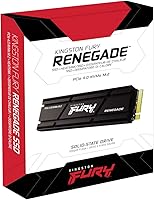
The Kingston Fury Renegade 1TB NVMe M.2 SSD is built for buyers who will actually use what it offers — starting with PC gamers running a PCIe Gen 4 platform who want storage that keeps pace with a high-end GPU and CPU without becoming a bottleneck. PS5 owners looking to expand beyond the console's built-in storage will find this drive a natural fit: it meets Sony's requirements, installs without drama, and delivers enough headroom that the slot is not wasted. Creative professionals who routinely work with large video files, RAW photo libraries, or multi-track audio sessions will notice real gains in transfer times compared to older SATA or Gen 3 NVMe drives. The included heatsink makes it a particularly smart pick for small form factor builds or the PS5 bay, where heat buildup can quietly erode sustained performance on bare drives. Anyone making a meaningful jump from a hard drive or entry-level SSD will feel the difference immediately and daily.
Not suitable for:

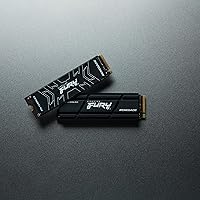
The Kingston Fury Renegade 1TB NVMe M.2 SSD is not the right call for everyone, and it is worth being direct about that. If your motherboard only supports PCIe Gen 3, you will be paying a premium for speeds your system physically cannot deliver — a well-reviewed Gen 3 drive would serve you just as well at a lower cost. Budget-conscious buyers who primarily browse the web, use office apps, or stream content will find no practical benefit over a much cheaper SATA SSD in day-to-day use. The heatsink adds a small amount of height that can cause clearance issues in particularly tight cases or low-profile M.2 slots, so compact build owners should verify fitment before purchasing. And since the drive only launched in late 2022, buyers who prioritize years of proven long-term reliability data may want to wait a bit longer before fully committing.
Specifications

  • Brand: Manufactured by Kingston Digital, Inc., a long-established name in consumer and enterprise memory and storage products.
  • Series: Part of the Kingston FURY Renegade lineup, positioned as Kingston's flagship consumer NVMe storage family.
  • Model Number: The specific model identifier for this 1TB heatsink variant is SFYRSK/1000G.
  • Interface: Uses a PCIe Gen 4x4 NVMe interface, delivering maximum bandwidth over four PCIe 4.0 lanes simultaneously.
  • Sequential Read: Rated for sequential read speeds of up to 7300MB/s under optimal conditions.
  • Form Factor: Follows the M.2 2280 standard, measuring 3.15 x 0.93 x 0.41 inches in its installed configuration.
  • Capacity: Ships in a 1TB (1000GB) configuration, with the broader product family available in capacities ranging up to 4TB.
  • Heatsink: Includes a low-profile heatsink designed to dissipate heat during sustained transfers and prevent thermal throttling.
  • PS5 Compatible: Officially compatible with the PlayStation 5 M.2 expansion slot, meeting Sony's required speed and form factor specifications.
  • Backward Compatible: Functions in PCIe Gen 3 M.2 slots, though maximum throughput is limited to Gen 3 bandwidth in those configurations.
  • Weight: The drive weighs 1.13 ounces, making it light enough to install without stressing the M.2 retention screw or slot.
  • Color: Ships in black, consistent with the FURY Renegade lineup's aesthetic designed for gaming-oriented builds.
  • Installation Type: Designed for internal installation into an M.2 slot on a compatible desktop or laptop motherboard, or the PS5 expansion bay.
  • First Available: This product was first made available for purchase on Amazon in October 2022.
  • Amazon Ranking: Ranked #105 in the Internal Solid State Drives category on Amazon at time of review.
  • User Rating: Holds a 4.8 out of 5 star average rating based on more than 5,299 verified customer ratings on Amazon.
  • Voltage: Operates at 1 volt, consistent with standard NVMe M.2 drive power requirements for modern platforms.

Related Reviews
Kingston Fury Renegade 4TB NVMe SSD
84%
94%
Read Speed Performance
88%
Write Speed Performance
81%
Thermal Management
92%
Build Quality
76%
PS5 Compatibility
More
Kingston FURY Renegade 2TB NVMe SSD
84%
94%
Read & Write Performance
88%
Sustained Throughput Consistency
71%
Thermal Management
92%
Installation & Compatibility
74%
Value for Money
More
Kingston NV3 1TB NVMe SSD
87%
93%
Value for Money
88%
Boot and Load Times
94%
Ease of Installation
91%
Physical Compatibility
86%
Power Efficiency
More
Kingston NV2 1TB NVMe SSD
83%
93%
Value for Money
86%
Read Performance
61%
Sustained Write Performance
74%
Thermal Management
91%
Compatibility
More
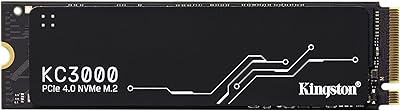
Kingston KC3000 1TB NVMe SSD
82%
91%
Sequential Read Speed
88%
Sequential Write Speed
74%
Random I/O Performance
86%
Thermal Management
89%
Value for Money
More
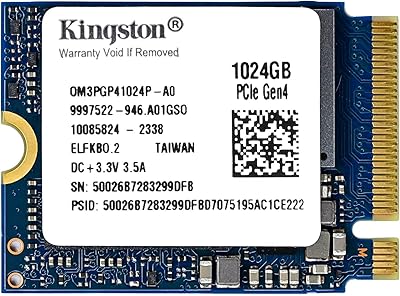
Kingston OM3PGP41024P-A0 1TB M.2 2230 SSD
83%
82%
Real-World Speed
94%
Form Factor Fit
89%
Installation Ease
67%
Thermal Behavior
85%
Value for Money
More
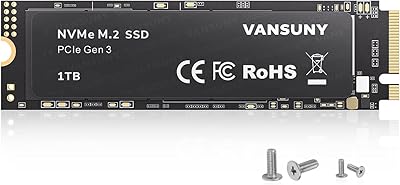
Vansuny X15 1TB NVMe M.2 SSD
77%
82%
Read & Write Performance
89%
Value for Money
91%
Installation Ease
58%
Brand Reliability
86%
Capacity Utility
More
GAMERKING 1TB M.2 2280 NVMe SSD
75%
88%
Value for Money
83%
Read Performance
76%
Write Performance
71%
Thermal Management
73%
Build Quality
More
Kingston NV2 4TB M.2 NVMe SSD
83%
93%
Value for Money
82%
Read Performance
61%
Sustained Write Speed
96%
Installation Ease
89%
Compatibility
More
Kingston NV3 500GB NVMe SSD
81%
91%
Read Performance
78%
Write Performance
94%
Value for Money
63%
Thermal Management
93%
Installation Ease
More

FAQ

Yes, the Fury Renegade is fully compatible with the PS5 expansion slot. The process is straightforward: power down the console, remove the side panel and expansion bay cover, seat the drive, reattach everything, and the PS5 walks you through formatting on the next boot. Most users report completing the whole process in under 15 minutes.

For most everyday tasks like web browsing or document editing, the difference will be subtle. Where you will genuinely feel it is in game load times, large file transfers, and application launches — especially if you are coming from a 500MB/s SATA drive. The jump to Gen 4 NVMe is one of the more noticeable storage upgrades you can make on a compatible system.

The drive will work fine in a Gen 3 slot, but it will run at Gen 3 speeds — roughly half the maximum throughput. It is not a bad option if you plan to upgrade your platform soon and want to future-proof the purchase, but if you are staying on Gen 3 long-term, a purpose-built Gen 3 drive will give you equivalent performance at a lower cost.

For most mid-tower and full-tower cases it is not an issue at all. The low-profile design is intentionally slim. That said, a small number of users with very compact ITX builds or cases that have tight M.2 slot clearances have reported fitment challenges, so it is worth measuring your available space or checking your case specs before buying.

All three are competitive Gen 4 drives in the same performance tier. The Fury Renegade trades blows with both in most benchmark categories, and real-world differences between them are often imperceptible in daily use. Kingston's drive tends to be competitively priced within that group, and the included heatsink adds practical value that the base versions of some competitors lack.

Absolutely — there is no technical requirement to use it as your primary OS drive. That said, the performance headroom is best utilized when the drive is handling tasks that actually demand high throughput, like a game library or active project files. Using it purely for cold archival storage would be underutilizing what you paid for.

The heatsink is not mechanically required for the drive to function, but removing it does expose the drive to higher operating temperatures under sustained load. For light workloads, thermals may not matter much. For gaming or creative work where the drive sees extended activity, keeping the heatsink on is the better long-term choice.

Kingston backs the FURY Renegade series with a 5-year limited warranty, which is standard for premium consumer NVMe drives and competitive with what Samsung and WD offer on their flagship models. Kingston also has a solid reputation for honoring warranty claims without excessive friction.

It works in any device with an M.2 2280 NVMe slot, which includes many modern laptops. The main thing to verify is that your laptop supports PCIe Gen 4 and has an M.2 slot in the 2280 size — some ultrabooks use shorter 2242 slots, which would not fit this drive. Check your laptop's manual or manufacturer spec page before ordering.

Like all drives rated in decimal gigabytes, the formatted usable capacity will appear slightly lower than 1000GB once your operating system applies its binary calculation — typically around 931GB on Windows. This is completely normal and applies to every drive on the market, not just this one.