Overview

The KingSpec NN900S 1TB M.2 NVMe SSD enters a crowded budget storage market from a brand that has been making flash storage products for well over a decade — not a household name, but far from a newcomer. It offers 1TB of capacity at a price that undercuts many recognizable competitors, packed into a standard M.2 2280 form factor that fits virtually any modern desktop or laptop. Broad OS support, including multiple Linux distributions, adds to its accessibility. That said, this is a mainstream performer built for everyday workloads, not a drive chasing enthusiast benchmarks. If you are coming from a spinning hard drive or an aging SATA SSD, the improvement in day-to-day responsiveness will feel substantial.
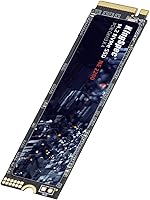
Features & Benefits

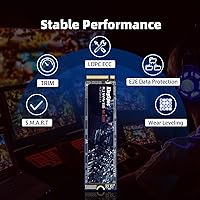
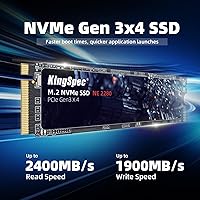
Running on PCIe Gen3x4, this 1TB M.2 SSD hits sequential reads up to 2,400MB/s and writes up to 1,900MB/s — numbers that translate to noticeably faster boot times, snappier application launches, and solid large-file transfers. KingSpec lists the NAND as 3D TLC/QLC, which is worth scrutinizing: TLC offers better write endurance, while QLC trades some longevity for cost efficiency. The actual type shipping in the 1TB variant is not confirmed in the listing, which is a fair question to raise before purchasing. On the reliability side, the drive includes S.M.A.R.T monitoring, TRIM, wear leveling, and LDPC error correction. A 3-year warranty with lifetime technical support rounds things out — more coverage than several rivals at this tier provide.

Best For

This KingSpec NVMe drive makes the most sense for buyers who need dependable storage without paying a premium for a brand badge. Students building their first PC, home office workers tired of waiting on a mechanical disk, or anyone retrofitting an older laptop that tops out at Gen3 anyway will find it delivers strong value. The broad OS compatibility — covering Windows, Ubuntu, CentOS, and RHEL — also makes it a practical choice for developers or IT students running Linux environments on secondary machines. Where it falls short is heavy sustained write workloads, 4K editing pipelines, or use cases where long-term endurance data from a proven brand is a hard requirement.

User Feedback

With over 1,000 ratings and a 4.6-star average, the NN900S has built up genuine goodwill from real buyers. The most consistent praise is around how much faster everyday tasks feel after ditching a hard drive, and how painless the physical installation is. Several reviewers report that real-world speeds track reasonably close to advertised figures under typical workloads. The recurring hesitation, however, is brand familiarity — buyers accustomed to Samsung or Western Digital sometimes express uncertainty about long-term reliability, particularly given the unspecified NAND type. Feedback on customer support is limited but leans positive, which is at least a mild vote of confidence for the lifetime support promise tied to the warranty.

Pros

  • Boot times drop dramatically coming from any hard drive or SATA SSD.
  • 1TB of NVMe storage at this price tier is genuinely hard to beat for everyday builds.
  • Standard M.2 2280 form factor fits virtually every modern desktop and laptop without adapters.
  • Broad OS support includes Ubuntu, CentOS, and RHEL — useful for developers and IT students.
  • The 3-year warranty offers more coverage than several competing budget drives provide.
  • S.M.A.R.T monitoring and LDPC error correction add real data protection at no extra cost.
  • Real-world read speeds track close to advertised figures under typical home and office workloads.
  • Lightweight at just over an ounce, making laptop installation quick and physically straightforward.
  • Over 1,000 verified buyer ratings with a 4.6-star average suggest consistent satisfaction across use cases.

Cons

  • KingSpec does not confirm whether the 1TB unit ships with TLC or QLC NAND, leaving endurance an open question.
  • No dedicated SSD management software means health monitoring requires third-party tools.
  • Sustained write performance can dip noticeably once the cache buffer fills during large transfers.
  • Brand reliability track record is thin compared to Samsung, WD, or Crucial — long-term failure data is scarce.
  • Random 4K write speeds are modest and will feel limiting in VM-heavy or database-driven workloads.
  • No heatspreader included, which can matter in thermally constrained compact or mini-ITX builds.
  • Warranty claim experiences from real users are rarely documented, making the support promise hard to verify.
  • Not a practical upgrade for anyone already running a modern Gen4 NVMe drive — gains would be negligible.

Ratings

The KingSpec NN900S 1TB M.2 NVMe SSD has been scored across 12 performance and ownership categories by our AI rating system, which analyzed verified global buyer reviews while actively filtering out incentivized, bot-generated, and duplicate feedback. The scores below reflect a balanced picture — where this drive genuinely delivers for budget-focused buyers, and where it falls short compared to more established competition.
Read & Write Performance
83%
Most users coming from hard drives or older SATA SSDs report a dramatic improvement in boot times and application load speeds. File transfers that previously took minutes on a spinning disk finish in seconds, and Windows launches feel noticeably more responsive in everyday desktop use.
Sustained write speeds can dip under prolonged workloads once the cache buffer fills, which a handful of users noticed during large backup operations. Sequential figures are strong for Gen3, but real-world numbers occasionally fall slightly below the advertised ceiling depending on system configuration.
Value for Money
88%
At this price point, 1TB of NVMe storage is hard to argue with for general home and office use. Buyers consistently highlight that the cost-per-gigabyte undercuts many brand-name alternatives, making it an easy recommendation for budget PC builds or secondary storage needs.
The value equation gets murkier if you factor in uncertainty around long-term endurance — paying slightly more for a Samsung or Crucial drive comes with years of reliability data that the NN900S simply cannot match yet. For primary drives storing irreplaceable data, the savings may not feel as compelling.
Build & Form Factor
79%
21%
The standard M.2 2280 footprint means it drops into virtually any modern motherboard or laptop without adapters or compatibility headaches. At just over an ounce, the physical installation is quick and clean, with no complaints about the PCB quality or connector fit in user reports.
There is no heatspreader included, which is fine for most use cases but worth noting in tight chassis or sustained workloads where thermal throttling could become relevant. The drive runs warm under stress, and a few users in compact mini-ITX builds noted occasional thermal slowdowns.
NAND Flash Transparency
54%
46%
The drive does use 3D NAND technology, which is standard for modern SSDs and provides better density and efficiency compared to older planar NAND. Buyers who did independent testing reported reasonably consistent performance across typical workloads.
KingSpec lists the flash as TLC/QLC without confirming which type actually ships in the 1TB variant — a frustration raised by technically informed buyers. TLC and QLC have meaningfully different endurance profiles, and not knowing which one you are getting is a legitimate concern for anyone planning heavy daily writes.
Installation & Compatibility
91%
Reviewers across desktop and laptop upgrades consistently describe a plug-and-play experience with zero driver installation required. OS support spanning Windows 7 through 10, Ubuntu, CentOS, and RHEL makes this a genuinely flexible option for both consumer and lightweight enterprise environments.
A small number of users on older motherboards reported needing a BIOS update before the drive was recognized, which is not unique to this product but can catch first-time builders off guard. Documentation included in the box is minimal, leaving some less experienced users relying on online resources.
Long-Term Reliability
62%
38%
The stated MTBF of one million hours and a DWPD rating of 0.69 are acceptable figures for a mainstream home or office drive — typical daily workloads of browsing, documents, and media storage will not stress these limits in years of normal use.
KingSpec lacks the multi-year public reliability track record of Tier-1 SSD manufacturers, and the absence of confirmed NAND type adds genuine uncertainty for buyers thinking five years ahead. Users who have owned the drive for under a year cannot yet speak to longevity, and that data gap is reflected in cautious reviews.
Data Protection Features
81%
19%
The inclusion of S.M.A.R.T monitoring, LDPC error correction, and end-to-end data protection is reassuring for a drive at this price tier. These are not marketing additions — they actively reduce the risk of silent data corruption, which matters even for everyday document and photo storage.
While the features are present, no third-party audits or published endurance test results from KingSpec are available to verify how effectively these protections perform under real failure conditions. Buyers have to take the spec sheet at face value, which some are understandably reluctant to do.
Random 4K Performance
67%
33%
For general desktop responsiveness — opening applications, switching between browser tabs, loading game levels — the random read performance is adequate and buyers rarely single it out as a bottleneck during typical daily use.
At 14,500 random 4K write IOPS, the NN900S lags behind premium Gen3 drives and most Gen4 options by a considerable margin. Users running databases, virtual machines, or frequent small-file write operations will feel the difference compared to higher-tier alternatives.
Warranty & Support
77%
23%
A 3-year warranty is genuinely above average for budget-tier NVMe drives, and the promise of lifetime technical support adds a layer of post-purchase confidence that buyers appreciate when dealing with a less familiar brand. Several reviewers mentioned receiving responsive replies to pre-sale questions.
Feedback on actual warranty claim experiences is sparse in the review pool, making it difficult to assess how smoothly the process works in practice. The lifetime technical support claim is reassuring in principle, but the real test comes when something goes wrong — and that evidence is still limited.
Thermal Management
63%
37%
Under light to moderate workloads — the kind most home users and students actually generate — the drive maintains stable temperatures without requiring any additional cooling. Casual users in well-ventilated mid-tower cases rarely experience any heat-related issues.
Extended high-throughput tasks, such as large game installations or prolonged backup jobs, can push temperatures into ranges where throttling kicks in. Without a heatsink and in tighter laptop enclosures, some buyers have observed sustained write speeds drop more noticeably than expected during thermal stress.
OS & Software Ecosystem
74%
26%
The broad OS support is a practical advantage for users running Linux environments for development or coursework. Ubuntu, CentOS, and RHEL compatibility means developers can use this as a reliable system drive without worrying about driver availability or initialization quirks.
KingSpec does not offer a companion SSD management tool comparable to Samsung Magician or Crucial Storage Executive, leaving users without a native interface for health monitoring, firmware updates, or over-provisioning adjustments. Third-party tools fill the gap, but the lack of dedicated software is a minor but real limitation.
Brand Trust & Reputation
58%
42%
KingSpec has been producing flash storage products for many years and is not a pop-up brand — the company has a legitimate manufacturing history and sells through major retail channels globally. Its 4.6-star average across over 1,000 ratings suggests real buyer satisfaction, not just promotional noise.
The brand simply does not carry the consumer confidence that Samsung, WD, or Seagate have built through decades of public reliability data and widespread retail presence. For risk-averse buyers or those storing critical files without a backup strategy, that trust gap is a real psychological and practical barrier.

Suitable for:

The KingSpec NN900S 1TB M.2 NVMe SSD is a practical choice for anyone whose priority is a meaningful speed upgrade without spending heavily on brand prestige. Students building their first PC on a tight budget will find the 1TB capacity generous enough to handle an OS, applications, and a solid library of files without constantly managing space. Home office workers who spend their days in browser tabs, office suites, and video calls will experience noticeably faster boot times and snappier system responsiveness compared to any hard drive or older SATA SSD. It also fits well in older laptops that physically cap out at PCIe Gen3, where paying extra for a Gen4 drive would yield zero real-world benefit. Developers and IT students who run Linux environments will appreciate the confirmed compatibility with Ubuntu, CentOS, and RHEL, making it a versatile secondary or system drive across multiple setups.

Not suitable for:

The KingSpec NN900S 1TB M.2 NVMe SSD is not the right call for buyers who need absolute confidence in long-term endurance and have critical, irreplaceable data on the line. Video editors, photographers, and content creators who routinely push large file transfers for hours at a stretch may run into sustained write slowdowns once the drive's cache is exhausted — a limitation that more endurance-focused drives handle better. Anyone building a high-performance workstation for gaming at the bleeding edge, running virtual machines simultaneously, or working with databases that demand strong random write throughput will find the 14,500 random 4K write IOPS underwhelming compared to premium alternatives. The unresolved TLC versus QLC NAND question is also a genuine sticking point for technically minded buyers who want to know exactly what they are getting before committing. If long-term reliability data and brand accountability matter as much as price, sticking with Samsung, Crucial, or WD is the more defensible choice.
Specifications

  • Capacity: The drive offers 1TB (1,024GB) of usable storage, suitable for an operating system, applications, and a large media or document library.
  • Interface: It uses an M.2 PCIe Gen3x4 interface with NVMe 1.3 protocol, delivering significantly faster throughput than older SATA-based M.2 drives.
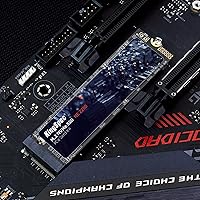
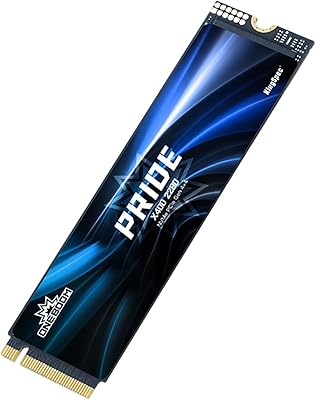
  • Form Factor: The drive follows the M.2 2280 standard, measuring 80x22x2.1mm — the most widely compatible size for both desktop motherboards and laptops.
  • Sequential Read: Maximum sequential read speed reaches up to 2,400MB/s under optimal conditions for the 1TB variant.
  • Sequential Write: Maximum sequential write speed reaches up to 1,900MB/s, though sustained performance may vary once the write cache is saturated.
  • Random 4K Read: The drive is rated at 100,200 IOPS for random 4K read operations, which reflects everyday responsiveness for file access and application launching.
  • Random 4K Write: Random 4K write performance is rated at 14,500 IOPS, adequate for general home and office workloads but modest compared to premium NVMe drives.
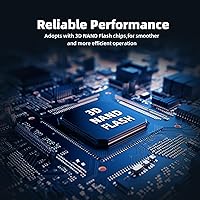
  • NAND Flash: The drive uses 3D NAND flash storage listed as TLC/QLC; the specific type shipping in the 1TB variant is not confirmed by the manufacturer in official documentation.
  • Endurance (DWPD): Drive Writes Per Day is rated at 0.69 cycles, meaning typical home users writing 20–30GB daily will operate well within the drive's designed endurance limits.
  • Reliability (MTBF): Mean Time Between Failures is rated at 1,000,000 hours, a standard figure for consumer-grade NVMe drives intended for non-critical workloads.
  • Data Protection: Supported features include S.M.A.R.T monitoring, TRIM, Wear Leveling, LDPC error correction, and end-to-end data protection to reduce the risk of silent data corruption.
  • OS Support: The drive is compatible with Windows 7 through 10, as well as RHEL, CentOS, Ubuntu, and other Linux distributions without additional driver installation.
  • Weight: The drive weighs approximately 1.31 oz (37g), making it a minimal addition to any laptop or desktop build.
  • Color: The PCB and label finish is black, consistent with the appearance of most consumer M.2 NVMe drives.
  • Warranty: KingSpec covers this drive with a 3-year limited warranty and additionally offers lifetime technical support for buyers with setup or usage questions.
  • Heatsink: No heatspreader or heatsink is included in the package; users in thermally constrained builds may want to source a third-party M.2 heatsink separately.
  • Management Software: KingSpec does not provide a proprietary SSD management utility; health monitoring and over-provisioning adjustments require third-party tools such as CrystalDiskInfo.

Related Reviews

KingSpec 1TB M.2 2230 SSD NVMe Gen3x4
87%
94%
Performance
92%
Read Speed
88%
Compatibility with Small Devices
65%
Ease of Installation
89%
Durability (Shock Resistance)
More
KingSpec OneBoom X400 1TB M.2 NVMe SSD
88%
91%
Performance
94%
Read Speed
85%
Thermal Management
88%
Ease of Installation
89%
Compatibility
More
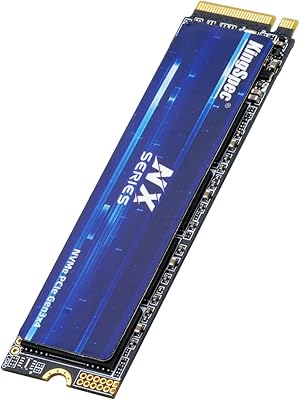
KingSpec NX Series 1TB NVMe M.2 SSD
74%
91%
Value for Money
78%
Read Speed Performance
67%
Write Speed Performance
93%
Installation & Compatibility
61%
Long-Term Reliability
More
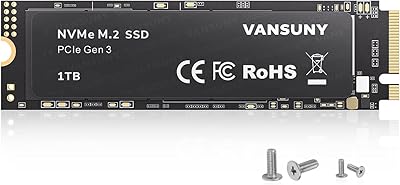
Vansuny 1TB NVMe M.2 SSD
87%
94%
Performance (Speed)
88%
Reliability
72%
Compatibility
91%
Value for Money
85%
Build Quality
More
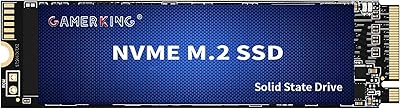
GAMERKING 1TB M.2 NVMe SSD
87%
89%
Performance
92%
Speed (Read/Write)
80%
Durability (MTTF)
91%
Compatibility
94%
Ease of Installation
More
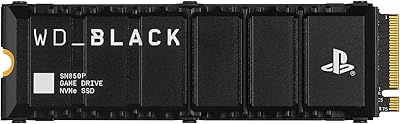
WD_BLACK SN850P 1TB NVMe SSD for PS5
84%
93%
Installation Experience
89%
Load Time Performance
67%
Value for Money
88%
Thermal Management
91%
Build Quality
More
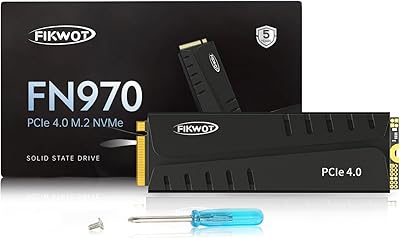
Fikwot FN970 1TB M.2 NVMe SSD
87%
93%
Performance
88%
Ease of Installation
91%
Compatibility with PS5
85%
Thermal Management (Heatsink)
86%
Write Speed
More
iDsonix D7450 1TB M.2 NVMe SSD
85%
94%
Performance
89%
Thermal Management
92%
Read/Write Speed
85%
Compatibility with PS5
88%
Build Quality
More
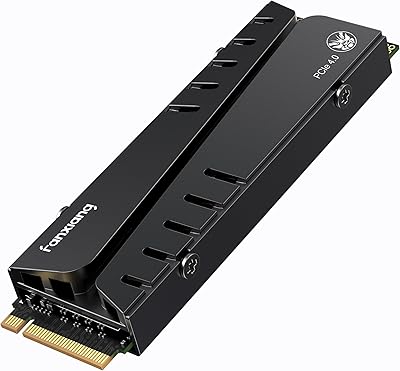
fanxiang S770 1TB NVMe M.2 SSD
79%
88%
Read Speed Performance
91%
PS5 Compatibility
86%
Value for Money
83%
Thermal Management
67%
Write Speed Consistency
More
KingSpec NE-512 2242 512GB M.2 NVMe SSD
77%
88%
Value for Money
79%
Read Performance
71%
Write Performance
93%
Installation Ease
91%
Form Factor Compatibility
More

FAQ

It depends on whether your laptop's M.2 slot supports NVMe or only SATA. The KingSpec NN900S 1TB M.2 NVMe SSD requires an NVMe-capable M.2 slot — if your machine only supports M.2 SATA, this drive will not be recognized. Check your laptop's manual or manufacturer spec page to confirm before buying.

For large sequential transfers — moving big folders, installing games, or loading video files — the speed difference is real and measurable. For everyday tasks like opening a browser or loading a document, the gap is smaller, though boot times and application launches do feel snappier. If you are upgrading from a hard drive, the improvement will be dramatic regardless.

This is a Gen3 drive, so it runs at Gen3 speeds regardless of the motherboard. If you install it in a Gen4 slot, it will work fine but will cap at Gen3 throughput. That is perfectly acceptable for everyday use — you are not losing functionality, just not gaining the Gen4 ceiling.

Yes, if you are adding it as secondary storage rather than a fresh OS installation, you will need to initialize and format it through your OS disk management tool. On Windows, this takes about two minutes — search for Disk Management, find the new drive, initialize it as GPT, then create a simple volume. On Linux, fdisk or GParted handle the same job.

KingSpec has been making flash storage for well over a decade and is not a fly-by-night manufacturer. That said, it does not have the same public reliability data or brand accountability that Samsung, Crucial, or WD have built up over time. For a secondary drive, scratch-build budget PC, or a machine you back up regularly, the NN900S is a reasonable gamble. For a primary drive storing irreplaceable files with no backup, the extra spend on a Tier-1 brand is probably worth it.

TLC (Triple-Level Cell) stores 3 bits per cell and offers better write endurance, while QLC (Quad-Level Cell) stores 4 bits per cell and is cheaper to produce but wears out faster under heavy writes. The honest answer here is that KingSpec lists both types without confirming which one ships in the 1TB variant — that ambiguity is a legitimate concern if endurance matters to you. For light daily use, either is fine; for heavy sustained writes, TLC is preferable.

Under light workloads it stays at manageable temperatures, and most laptops have enough passive airflow to keep it stable. During prolonged heavy transfers or extended gaming sessions, temperatures can climb enough to trigger thermal throttling, which temporarily reduces write speeds. If your laptop chassis runs warm already, it is worth keeping an eye on drive temps with a free tool like CrystalDiskInfo.

Yes, drive cloning works fine with this SSD. Free tools like Macrium Reflect or Clonezilla can transfer your existing Windows installation directly to the new drive. Just make sure the used space on your current drive does not exceed 1TB, and follow the cloning software's instructions for setting the new drive as the boot device afterward.

It works out of the box on modern Linux distributions including Ubuntu, CentOS, and RHEL — no manual driver installation needed. NVMe support is built into the Linux kernel, so the drive is recognized automatically on any reasonably up-to-date distribution. It is a solid and hassle-free option for dual-boot setups or dedicated Linux machines.

KingSpec offers a 3-year warranty, but documented real-world claim experiences from buyers are limited in available reviews, so it is difficult to say definitively how smooth the process is. The general feedback on their customer support is cautiously positive for pre-sale questions. As with any storage device from a smaller brand, keeping a backup of important data is strongly advisable regardless of warranty terms.