Overview

The fanxiang S630 2TB M.2 2230 NVMe SSD enters a genuinely underserved corner of the storage market — the short 2230 blade format that handheld consoles, compact ultrabooks, and mini PCs depend on. fanxiang isn't a household name, but the brand has been quietly building credibility in the budget-to-mid SSD space, and this drive reflects that upward trajectory. Launched in April 2025, it's still early days for long-term reliability data, but the initial reception has been strong: over 160 ratings averaging 4.7 stars and a top-400 ranking in Internal SSDs suggest real buyers are walking away satisfied.
Features & Benefits

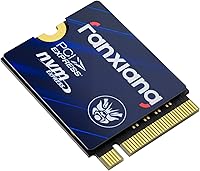
The S630 2TB runs on PCIe 4.0 x4, with sequential reads up to 5200 MB/s and writes up to 4500 MB/s — numbers that sit comfortably alongside established Gen 4 drives. One thoughtful inclusion is the graphene heat-dissipation sticker bonded directly to the chip surface; in thermally constrained devices like the Steam Deck or ROG Ally, passive heat management matters more than most people realize. Endurance is rated at 640 TBW, which is respectable for a 2TB drive at this price tier. The five-year warranty adds a layer of confidence that many buyers reasonably demand when trusting a newer brand with critical storage.

Best For

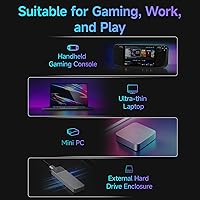
This compact Gen 4 SSD is purpose-built for situations where a standard 2280 drive simply won't fit. Steam Deck owners get a true drop-in upgrade — no soldering, no case modifications required. ROG Ally users benefit similarly, gaining real storage headroom for a growing game library. Surface Pro 9 (Intel) owners can access the full Gen 4 speeds, though anyone on a Surface Pro 8, 7+, or the ARM-based Pro 9 should expect PCIe 3.0 throughput instead. Mini PC and NUC-style builders who specifically need the shorter blade will also find this 2230 NVMe drive a practical, well-priced option.

User Feedback

Early buyers are largely positive, with installation reports from Steam Deck and Surface Pro users confirming clean fit and solid real-world performance without major issues. The thermal sticker earns occasional praise for keeping temperatures manageable during extended gaming sessions. On the critical side, some users note that sustained write speeds during large file transfers can dip below the headline figures — a common trait in this drive class, not an anomaly unique to this one. With the drive only hitting shelves in early 2025, multi-year durability simply remains unproven. The rating trend is genuinely encouraging, but anyone weighing long-term endurance should factor in that limited track record.

Pros

  • Full PCIe Gen 4 speeds in the compact 2230 form factor — a combination that's still hard to find at this price.
  • Fits Steam Deck and ROG Ally with no modifications needed, making upgrades straightforward for most users.
  • 2TB capacity gives handheld gamers enough room to stop constantly managing and deleting titles.
  • The graphene thermal sticker is a practical inclusion, not a marketing gimmick, for heat-sensitive handheld devices.
  • 640 TBW endurance rating is solid for a 2TB drive in this tier.
  • Backward compatibility with PCIe 3.0 means it works in older devices, even if speeds are reduced.
  • A five-year warranty from a budget-oriented brand is a meaningful commitment that adds real purchase confidence.
  • Early user ratings are strong and consistent, with installation reports across multiple device types holding up well.
  • Weighs almost nothing and installs internally — no external adapters, enclosures, or extra cables required.

Cons

  • Brand has limited long-term reliability history in Western markets — multi-year durability data simply does not exist yet.
  • Sustained write speeds under heavy continuous load can dip noticeably below the advertised peak figures.
  • Only the Surface Pro 9 Intel version unlocks full Gen 4 throughput — other Surface models get capped at PCIe 3.0 speeds.
  • The 2230 form factor, while ideal for specific devices, means fewer compatible systems overall compared to the standard 2280 length.
  • Buyers expecting Samsung or WD-level brand recognition and ecosystem support will find fanxiang falls short there.
  • No included cloning software or migration tools — you are handling data transfer setup entirely on your own.
  • With only a few months on the market, the rating pool is still relatively small to draw firm reliability conclusions from.
  • Performance in PCIe 3.0 devices, while functional, drops far enough that the Gen 4 spec becomes largely irrelevant in that context.

Ratings

Our AI rating engine analyzed verified global buyer reviews for the fanxiang S630 2TB M.2 2230 NVMe SSD, actively filtering out incentivized, bot-generated, and duplicate submissions to surface what real users consistently experienced. Scores below reflect a balanced synthesis of both what this compact Gen 4 drive does well and where it falls short — nothing has been glossed over.

Read Speed Performance
88%
Steam Deck and ROG Ally users consistently report noticeably faster game load times compared to stock drives, and benchmark results in PCIe 4.0 systems track close to the advertised ceiling. For everyday tasks — OS boots, app launches, large game installs — the speed improvement feels tangible and immediate.
In PCIe 3.0 devices, speeds drop to roughly 3500 MB/s, which is still respectable but far from the headline figure many buyers are expecting. Users who installed this in older Surface Pro models were occasionally disappointed when benchmarks fell well short of what the packaging implied.
Sustained Write Speed
71%
29%
For typical gaming workloads — downloading a 50GB title, moving a folder of saves, installing updates — write performance feels smooth and consistent in practice. Users who primarily game rather than do heavy file work rarely encounter any noticeable slowdown.
Under prolonged sequential writes, such as transferring large video files or cloning a full drive, speeds can dip significantly once the SLC cache is exhausted — a known trait of drives in this class. A handful of reviewers flagged this specifically when using the drive as a scratch disk for creative work, which is not its intended use case.
Form Factor Compatibility
93%
The 2230 blade fits cleanly into Steam Deck, ROG Ally, and Surface Pro 9 Intel slots without any adapter or modification — buyers consistently describe installation as physically effortless. This is exactly the form factor those devices need, and finding a 2TB option at this performance tier in the 2230 size is still uncommon.
The short 30mm length means it simply will not mount securely in many standard laptops that only have a 2280 screw position, frustrating buyers who did not check their device specs beforehand. Compatibility really does hinge on the specific device, and a few purchasers learned that the hard way.
Thermal Management
79%
21%
The pre-applied graphene sticker makes a measurable difference in thermally constrained devices like the Steam Deck, where enclosure heat buildup is a real concern during extended sessions. Users report stable performance through hour-long gaming sessions without obvious thermal throttling events.
A passive graphene sticker has physical limits, and under sustained heavy workloads in poorly ventilated mini PCs, some users noted the drive running warmer than expected. It outperforms bare drives, but buyers expecting active cooling-level temperature control will need to manage their expectations.
Installation Experience
86%
The physical swap itself earns consistent praise — the drive seats cleanly, requires only basic tools, and does not demand any special preparation beyond a standard screwdriver. Steam Deck users in particular found the process well-documented between community guides and the drive fitting exactly as expected.
No cloning software is included, and buyers who wanted to migrate existing data rather than start fresh had to research and source their own tools. For less technically experienced users, the lack of any setup guidance beyond the physical installation step was a friction point.
Value for Money
84%
The S630 2TB offers Gen 4 throughput in the 2230 footprint at a price that sits meaningfully below what premium brands charge for equivalent specs in this niche format. For Steam Deck and ROG Ally owners who want the storage upgrade without overspending, the math works out favorably.
Compared to budget 2280 drives, the 2230 format does carry a size-tax that is felt here too — you are paying a premium for the compact blade. Buyers who have a device that accepts both lengths will find better value-per-gigabyte in the standard size from competing brands.
Build & Reliability Signals
74%
26%
Early failure reports are rare across the review pool, and the 3D NAND plus dedicated controller combination gives the hardware a credible technical foundation. The 640 TBW endurance rating is competitive for the tier, and no widespread defect patterns have emerged in the months since launch.
The drive only launched in April 2025, so there is simply no multi-year field data to draw on yet — long-term reliability remains an open question. Buyers who have had prior experiences with unknown-brand SSDs failing after 18 months will reasonably want more time to pass before committing.
Warranty & After-Sales Support
81%
19%
A 5-year warranty from a brand still building its reputation in Western markets is a genuinely meaningful commitment, and buyers cite it as a key reason they chose this drive over similarly priced competitors with shorter coverage windows. The warranty terms — 5 years or 640 TBW, whichever comes first — are clearly stated.
Some buyers expressed uncertainty about how straightforward the RMA process would actually be in practice, given fanxiang's less established support infrastructure compared to brands with dedicated regional service centers. Real-world warranty claim experiences in the community are still limited due to the drive's recent release.
Brand Trust & Credibility
67%
33%
fanxiang has clearly invested in product quality relative to its price point, and the strong early rating average across a meaningful number of reviews suggests buyers are not being let down at first use. The brand's improving trajectory in the budget-to-mid SSD space is visible in user sentiment.
For buyers who weight brand legacy heavily, fanxiang simply cannot compete with Samsung, WD, or SK Hynix on name recognition or documented reliability history. The lack of widespread independent long-term testing data leaves a credibility gap that specs and early ratings alone cannot fully close.
Gaming Load Time Improvement
91%
This is where the drive earns its most enthusiastic feedback — Steam Deck and ROG Ally owners repeatedly describe game load times dropping sharply compared to slower stock or eMMC storage. Titles that previously showed lengthy loading screens between areas feel noticeably more responsive after the swap.
The improvement is most dramatic for users coming from eMMC or base SATA drives; those upgrading from an already-decent PCIe 3.0 SSD may find the real-world difference in load times less striking than the spec sheet gap suggests. Expectations calibrated to benchmark deltas rather than gaming reality can lead to mild disappointment.
PCIe 3.0 Fallback Performance
69%
31%
Even in PCIe 3.0 devices, the S630 2TB delivers read speeds in the 3400–3500 MB/s range, which is genuinely quick for everyday tasks and comfortably outpaces SATA SSDs. Surface Pro 8 and Pro 7+ users who understand the limitation upfront tend to be satisfied with the real-world result.
The disconnect between the advertised Gen 4 speeds and what PCIe 3.0 users actually experience has been a recurring source of frustration in the review pool. Several Surface Pro owners felt the product page did not make this distinction clear enough, and felt somewhat misled after installation.
Packaging & Delivery Condition
83%
Drives arrive in protective anti-static packaging with no reported DOA units emerging as a pattern in early buyer feedback. The unboxing experience is minimal but functional — there is nothing unnecessary in the box, which is appropriate for a component purchase.
The packaging itself is sparse, with no quick-start guide, accessory kit, or even a basic installation reminder card included. Buyers expecting a more complete kit — even just a small screwdriver or a compatibility reference sheet — will find the box contents underwhelming.
Compatibility Clarity
62%
38%
The product listing does call out the PCIe 3.0 versus 4.0 distinction for Surface Pro models specifically, and buyers who read carefully before purchasing tend to have accurate expectations. The list of supported devices is reasonably detailed for a storage product.
Despite the footnotes, the nuanced compatibility matrix — particularly around which exact Surface Pro models get full speeds — continues to trip buyers up at a notable rate. The confusion is a recurring theme in negative reviews, suggesting the messaging around this critical detail needs to be far more prominent.

Suitable for:

The fanxiang S630 2TB M.2 2230 NVMe SSD was built for a specific kind of buyer, and if you fall into that group, it's a genuinely strong pick. Steam Deck owners are the most obvious fit — the 2230 blade slots in cleanly without any hardware modification, and 2TB gives you enough room to stop rationing your game library. ROG Ally users and anyone running a similar handheld PC will find the same story: fast Gen 4 throughput in the exact footprint those devices require. Surface Pro 9 (Intel version) owners who want a meaningful performance upgrade over the stock drive are also well-served here. Mini PC and NUC-style builders who specifically need the shorter 2230 form factor, rather than the far more common 2280, will appreciate having a capable, reasonably priced option that doesn't force them to compromise on speed.

Not suitable for:

The fanxiang S630 2TB M.2 2230 NVMe SSD is a poor fit for anyone who needs a standard 2280 drive — this is a niche form factor, and if your device supports both lengths, you'll have more competition and potentially better-value options in the 2280 space. Surface Pro users outside the Intel Pro 9 lineup — including the Surface Pro 8, Pro 7+, and the ARM or 5G variants of the Pro 9 — are limited to PCIe 3.0 throughput, which means the advertised Gen 4 speeds are simply out of reach for them. Buyers who prioritize proven brand heritage and decades of reliability data from names like Samsung or Western Digital may not be comfortable with a brand that only entered widespread Western markets recently. Anyone who writes massive sequential files continuously — think video editing with 4K RAW footage — should also be cautious, since sustained write performance on drives in this class can fall short of peak figures under prolonged load. If long-term endurance data is a firm requirement before purchasing, the honest answer is that this drive hasn't been in the market long enough to provide it.

Specifications

  • Capacity: The drive provides 2TB of usable NVMe storage for games, applications, and files.
  • Form Factor: Uses the M.2 2230 blade size (22mm wide, 30mm long), designed for compact and handheld devices.
  • Interface: Connects via PCIe Gen 4.0 x4 with NVMe protocol for maximum throughput on compatible systems.
  • Sequential Read: Peak sequential read speed reaches up to 5200 MB/s under PCIe 4.0 conditions.
  • Sequential Write: Peak sequential write speed reaches up to 4500 MB/s under PCIe 4.0 conditions.
  • PCIe Compatibility: Backward compatible with PCIe 3.0 slots, though maximum read speeds in that mode are approximately 3500 MB/s.
  • Flash Type: Equipped with 3D NAND flash memory paired with a dedicated onboard controller for consistent performance.
  • Endurance Rating: Rated at 640 TBW (terabytes written) for the 2TB model, indicating the total data volume the drive is warranted to handle.
  • Thermal Solution: A pre-applied graphene heat-dissipation sticker on the chip surface acts as an ultra-thin passive heatsink.
  • Warranty: Covered by a 5-year manufacturer warranty or until the 640 TBW endurance limit is reached, whichever comes first.
  • Installation Type: Internal drive only — requires physical installation into an M.2 2230-compatible slot inside the host device.
  • Weight: The drive weighs approximately 0.176 oz (5g), making it negligible in terms of added device weight.
  • Compatible Devices: Officially compatible with Steam Deck, ROG Ally, Surface Pro 9 (Intel), mini PCs, NUC-style systems, and select ultrabooks.
  • Availability Date: First became available for purchase in April 2025, making it a recent market entrant.
  • Amazon BSR: Ranked #385 in the Internal Solid State Drives category on Amazon at time of review, reflecting strong early sales velocity.

Related Reviews
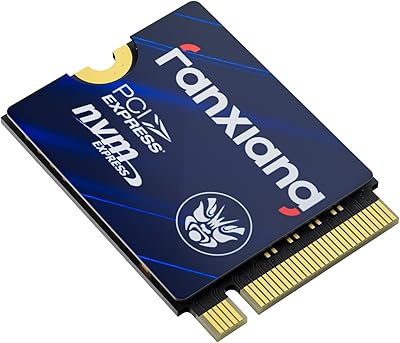
fanxiang S630 500GB M.2 2230 NVMe SSD
78%
88%
Read Performance
74%
Write Performance
94%
Form Factor Fit
86%
Installation Experience
71%
Thermal Management
More
fanxiang S630 1TB M.2 2230 NVMe SSD
80%
88%
Read Speed Performance
74%
Write Speed Performance
81%
Device Compatibility
79%
Thermal Management
93%
Installation Experience
More
KINGDATA 2TB M.2 2230 NVMe SSD
75%
81%
Real-World Speed
93%
Form Factor Fit
78%
Installation Experience
84%
Value for Money
62%
Brand Reliability Confidence
More
fanxiang S770 2TB NVMe M.2 SSD
79%
88%
Sequential Read Speed
91%
PS5 Compatibility
86%
Value for Money
83%
Thermal Management
74%
Build Quality
More
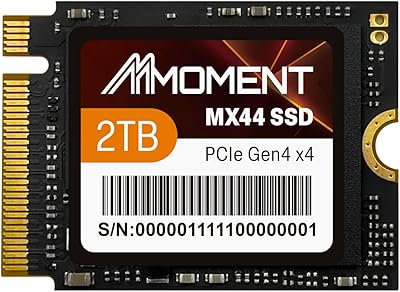
Micron 2400 2TB M.2 2230 NVMe SSD
88%
93%
Read & Write Performance
97%
Storage Capacity
96%
Form Factor Compatibility
91%
Installation Experience
89%
Build & Endurance
More
MMOMENT 2TB MX44 M.2 2230 NVMe SSD
88%
91%
Performance
93%
Speed (Read/Write)
88%
Ease of Installation
85%
Durability (Shock & Dust Resistance)
89%
Capacity (2TB)
More
Fikwot FX953 2TB M.2 2230 NVMe SSD
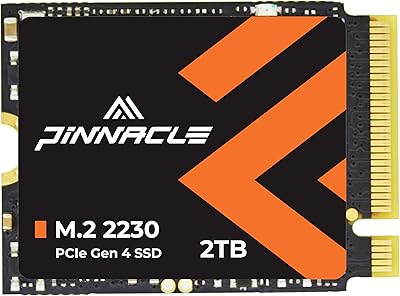
77%
83%
Read Speed Performance
71%
Write Speed Performance
74%
Thermal Management
91%
Installation Experience
78%
Device Compatibility
More
Timetec 2TB M.2 2230 NVMe Gen4 SSD
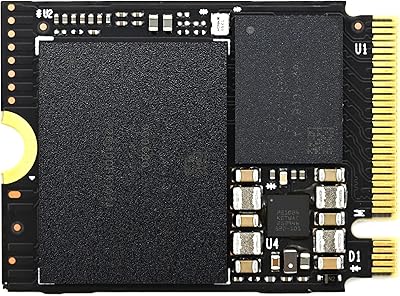
79%
88%
Read Performance
82%
Write Performance
93%
Form Factor Fit
86%
Device Compatibility
67%
Thermal Behavior
More
XPC Technologies SN740 2TB M.2 2230 NVMe SSD
87%
92%
Performance
88%
Installation Ease
94%
Compatibility with Steam Deck
89%
Write Speed
91%
Read Speed
More
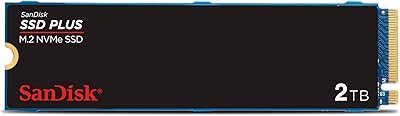
SanDisk 2TB SSD Plus M.2 NVMe SSD
86%
89%
Performance
92%
Ease of Installation
88%
Reliability
91%
Value for Money
90%
Capacity
More

FAQ

Yes, it slots directly into the Steam Deck's M.2 2230 bay with no hardware modifications needed. You will need to reinstall SteamOS or restore from a backup after swapping the drive, but the physical installation itself is straightforward with a small Phillips screwdriver.

Only the Surface Pro 9 with an Intel processor supports PCIe 4.0, so that is the one model where you will see speeds close to the advertised figures. The Surface Pro 8, Pro 7+, Surface Pro X, and the ARM or 5G variants of the Surface Pro 9 are all limited to PCIe 3.0, which caps read speeds at roughly 3500 MB/s — still fast, but not what the spec sheet advertises.

That is a fair concern. fanxiang is a Chinese SSD manufacturer that has been gaining ground in the budget-to-mid market over the past few years. They are not Samsung or Western Digital, and their long-term reputation is still being established in Western markets. That said, early user feedback on this specific drive has been consistently positive, and the 5-year warranty signals some confidence in their own product.

It depends on the slot length your laptop supports. Many laptops use the longer 2280 format, and while the 2230 blade will fit electronically, it may not seat securely without a mounting screw at the 30mm position. Check your laptop's service manual to confirm whether it has a 2230 mounting point before purchasing.

The graphene sticker helps dissipate heat passively, which matters in a sealed handheld with limited airflow. User reports suggest temperatures stay manageable during typical gaming sessions. That said, no passive sticker replaces active cooling, so if you are running extremely demanding workloads back-to-back for hours, some thermal throttling is always possible on any compact NVMe drive.

Peak sequential speeds in synthetic benchmarks tend to align reasonably well with the advertised figures when the drive is in a PCIe 4.0 system. Where things get more nuanced is sustained writes — copying very large files continuously can cause speeds to dip as the SLC cache fills up. For everyday use like loading games, booting an OS, or moving moderate-sized files, performance feels snappy and consistent.

No bundled cloning software is included. If you want to migrate an existing operating system or game library rather than starting fresh, you will need a third-party tool like Macrium Reflect (free edition), Clonezilla, or whatever your device's ecosystem recommends. For Steam Deck specifically, Valve's recovery image process is the most reliable path.

TBW stands for terabytes written, and it represents the total amount of data the manufacturer warranties the drive to handle before potential wear-related failure. At 640 TBW for 2TB, that is a solid rating for this tier. For context, a typical gamer writing 10–20GB per day would take decades to hit that limit under normal usage patterns.

It is genuinely more niche than the standard 2280 size, which is why the options have historically been limited and sometimes overpriced. Devices like the Steam Deck, ROG Ally, and certain Surface Pro and mini PC models physically require the shorter 30mm blade — a 2280 drive will not fit at all. As handheld gaming PCs have grown in popularity, demand for quality 2230 drives has risen, making this a category worth paying attention to.

The early signals are good — strong ratings, consistent installation reports, and a warranty that covers five years. What you cannot know yet is how this specific drive holds up after two or three years of daily use, because that data simply does not exist. If you need absolute certainty about long-term reliability backed by years of field data, a more established brand might give you more peace of mind. If you are comfortable with the current evidence and the warranty as a safety net, the risk looks reasonable.