

Overview

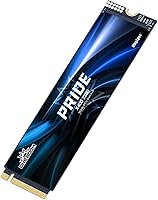
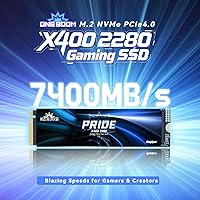
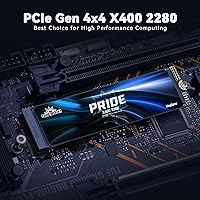
The KingSpec X400 2TB Gen4 NVMe SSD enters a crowded market where budget-minded buyers are increasingly demanding Gen4 performance without flagship pricing. KingSpec isn't a household name like Samsung or Western Digital, and that's worth acknowledging upfront — but the brand has been quietly building a storage catalog for over a decade. This 2TB SSD targets the middle of the market, offering PCIe 4.0 x4 connectivity in the standard M.2 2280 footprint that fits most modern PCs, laptops, and even the PS5's expansion slot. The specs look compelling on paper. Whether the real-world experience matches is the more interesting question.

Features & Benefits

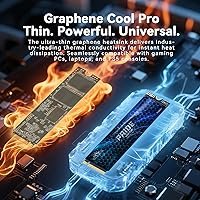
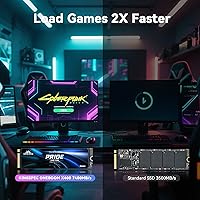
The headline here is raw read throughput that roughly doubles what older Gen3 drives can manage — a difference you actually feel when booting into a large open-world game or pulling footage off the drive for editing. The 3D TLC NAND pairs with a dynamic SLC cache that helps maintain strong write speeds for most day-to-day workloads, though it's honest to note that sustained writes on very large files — think multi-hundred-gigabyte archives — can see speeds taper once the cache is exhausted. A graphene heatsink handles thermal management without needing a bulky aftermarket cooler, and SMART throttling keeps the drive from cooking itself during long renders. The 1800TBW endurance rating is solid for a drive in this price range.

Best For

The KingSpec X400 is a natural fit for PS5 owners who want to stop deleting games to make room — the M.2 2280 form factor drops right into Sony's expansion slot, and the Gen4 speed rating meets Sony's minimum requirement comfortably. PC gamers upgrading from a SATA or Gen3 drive will notice a real difference in load times, even if the gap between this and a top-tier drive is narrower than marketing suggests. Content creators handling 4K projects will appreciate the read performance when scrubbing timelines, though heavy continuous write workloads are better served by drives with larger caches. This 2TB SSD also makes a strong case for laptop upgrades, where its low idle power draw helps preserve battery life.

User Feedback

With around 96 ratings and a 4.5-star average, early reception has been positive — but this Gen4 NVMe drive only launched in mid-2025, so there isn't much long-term reliability data to lean on yet. Buyers frequently mention how straightforward installation was and how noticeable the speed jump felt compared to their previous drives, particularly in PS5 load times. A recurring concern is brand familiarity — shoppers accustomed to Samsung or Seagate names occasionally pause before committing to KingSpec, and that hesitation is understandable. The bestseller ranking suggests strong early sales traction, which is encouraging. Still, anyone factoring durability into their decision should revisit owner feedback in six to twelve months when a larger body of real user data is available.

Pros

  • Gen4 read speeds are roughly double what older NVMe drives deliver, making a real difference in game load times.
  • 2TB of storage comfortably holds large game libraries and video project files without constant juggling.
  • Fits directly into the PS5 expansion slot and meets Sony's speed requirements without any adapter needed.
  • The graphene heatsink handles sustained workloads without needing a separate aftermarket cooler.
  • Tool-free installation makes swapping it into a laptop or desktop genuinely straightforward.
  • A 1800TBW endurance rating is generous for a drive in this price bracket.
  • Low idle power consumption is a practical advantage for laptop users concerned about battery life.
  • Early buyer ratings are strong, with installation ease and speed improvement cited repeatedly.
  • S.M.A.R.T support and wear leveling give you meaningful visibility into drive health over time.
  • The three-year warranty provides a reasonable safety net given the brand is relatively new to many buyers.

Cons

  • KingSpec lacks the long public track record of established SSD brands, making long-term reliability harder to predict.
  • The drive launched in mid-2025, so the review pool is still small — early ratings may not reflect long-term ownership.
  • Sustained write speeds can drop once the SLC cache is exhausted, which matters for very large continuous write jobs.
  • No independent third-party benchmarks or lab reviews are widely available yet to verify claimed speeds.
  • Buyers used to Samsung or WD support ecosystems may find KingSpec's customer service less familiar or accessible.
  • The warranty is three years, shorter than the five-year coverage some competing Gen4 drives offer.
  • Write performance consistency under prolonged heavy workloads remains less documented than with more established options.
  • Brand recognition is low enough that resale value could be weaker compared to mainstream names.

Ratings

The scores below for the KingSpec X400 2TB Gen4 NVMe SSD were generated by our AI after systematically analyzing verified global buyer reviews, actively filtering out incentivized, bot-generated, and low-effort feedback to surface genuine owner experiences. Both the strengths that earned early praise and the pain points that gave cautious buyers pause are transparently reflected in each category score.

Read Performance
88%
Buyers upgrading from SATA or Gen3 NVMe drives consistently describe a noticeable difference in how fast games and applications launch. The high sequential read throughput means large project files open quickly, and PS5 users in particular report that load screens feel dramatically shorter compared to the console's built-in storage.
A small number of users running synthetic benchmarks noted that peak speeds occasionally fell slightly short of the advertised ceiling, which is common across most consumer SSDs. Real-world reads in mixed workloads are strong but not definitively ahead of competing mid-range Gen4 options at the same price point.
Write Performance
73%
27%
For everyday writing tasks — installing games, saving project files, moving moderate-sized folders — the SLC cache kicks in effectively and write speeds feel responsive. Users handling typical consumer workloads rarely run into any noticeable sluggishness during normal use.
When writing very large files continuously, such as cloning a full drive or ingesting hours of raw footage in a single session, speeds can drop once the cache saturates and the drive falls back to native TLC write rates. This is a known behavior for TLC-based drives with dynamic caching, but it does affect heavy prosumer workflows.
PS5 Compatibility
91%
This is one of the clearest success stories in the early buyer feedback — PS5 owners report the drive seats correctly, passes Sony's speed verification during setup, and works without any configuration headaches. The included heatsink means there is no extra purchase required before installation, which simplifies the process considerably.
A small handful of users mentioned needing to update their PS5 system firmware before the drive was properly recognized, which caught them off guard. This is a Sony-side requirement rather than a flaw in the drive itself, but it adds a step that first-time expanders may not anticipate.
Thermal Management
84%
The integrated graphene heatsink keeps operating temperatures in check during sustained workloads like long game sessions or extended video renders, and most users never observe any thermal throttling under normal conditions. The compact design means it does not add meaningful bulk to laptop installations either.
In very compact PC builds with limited airflow, a few users noted that temperatures crept higher than expected during back-to-back intensive tasks. The heatsink handles typical consumer loads well, but enthusiasts running demanding workloads in cramped enclosures may want to ensure adequate case ventilation.
Installation Experience
93%
Ease of installation is the single most praised aspect across buyer reviews. Whether slotting into a desktop motherboard, a gaming laptop, or the PS5 expansion bay, users consistently describe the process as straightforward and fast — often completed in under ten minutes even by first-timers. No tools or adapters are required.
The heatsink adds a small amount of thickness to the drive, and a few laptop users discovered their chassis had just enough clearance to make reinserting the bottom panel slightly awkward. This is a minor inconvenience rather than a genuine compatibility issue, but it is worth checking your specific laptop's M.2 bay depth beforehand.
Value for Money
86%
For buyers primarily concerned with getting Gen4 speeds and 2TB of capacity without paying a premium-brand premium, the KingSpec X400 lands in a genuinely compelling position. The combination of a graphene heatsink, S.M.A.R.T support, and a solid endurance rating at this price tier is hard to argue with on paper.
Buyers who factor brand equity and resale value into their purchasing decisions will find less comfort here — if you ever sell your PC or parts, a KingSpec drive commands less buyer confidence than a Samsung or WD equivalent. The price advantage narrows if you value long-term peace of mind above all else.
Brand Trust & Reputation
61%
39%
KingSpec has been manufacturing storage products since the mid-2000s and is not an unknown entity in the industry. Some technically informed buyers were already familiar with the brand and expressed confidence in its build quality relative to the asking price.
For the majority of mainstream buyers, KingSpec remains an unfamiliar name, and that unfamiliarity creates hesitation that no spec sheet fully resolves. Without the years of widely published independent reviews and failure rate data that tier-one brands have accumulated, brand trust is a legitimate weak point that the company has not yet had time to overcome.
Long-Term Reliability
58%
42%
The drive's 1800TBW endurance rating and inclusion of wear leveling and bad block management suggest a thoughtful approach to NAND longevity, and the three-year warranty offers some financial protection if something does go wrong within that window.
With the drive only having launched in mid-2025, there is simply no substantial pool of long-term ownership data available yet. Buyers who need confidence backed by multi-year real-world reliability records will find the current evidence base too thin, and that uncertainty is reflected honestly in this score.
Power Efficiency
82%
18%
Laptop users specifically call out that the drive does not seem to meaningfully shorten their battery sessions compared to their previous storage. The low idle power draw is a practical benefit for anyone using this as a primary notebook drive and spending long stretches away from a power outlet.
Under active heavy load, power consumption rises as expected — this is not a drive optimized for ultra-low-power thin-and-light workloads. Users running it in performance-intensive tasks will see battery impact comparable to other high-throughput Gen4 drives in the same class.
Storage Capacity
89%
Two terabytes hits the sweet spot for most gaming and creative use cases right now — enough to hold a substantial game library alongside project files without constantly managing space. PS5 users in particular appreciate having room to store a broad mix of titles without routinely deleting and reinstalling.
For users who work with extremely large media archives or run storage-heavy professional workloads, 2TB can fill up faster than expected. There is no higher-capacity variant currently confirmed in early sales data for this specific model series, which limits upgrade headroom within the same product line.
Packaging & Unboxing
77%
23%
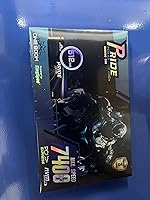
Most buyers describe the packaging as clean and adequate, with the drive well-protected on arrival. There are no reports of damage in transit, and the unboxing experience matches expectations for a product in this price tier.
The packaging and included accessories are minimal — there is no installation guide beyond basic documentation, which is fine for experienced builders but may leave complete newcomers looking for a little more guidance. A printed quick-start card for PS5 installation in particular would have been a welcome addition.
Benchmark Consistency
71%
29%
Users who ran multiple back-to-back benchmark passes reported reasonably consistent scores, suggesting the thermal and caching systems are working together to prevent wild performance variance during repeated testing cycles.
A subset of technically focused buyers noted that scores in sequential write tests showed more run-to-run variance than they expected, likely tied to cache state between test passes. This does not affect typical usage, but it makes direct spec-sheet comparisons with competing drives a less clean exercise than it might appear.
Customer Support
63%
37%
The few buyers who did reach out to KingSpec support for questions about compatibility or setup reported receiving timely responses, which is a positive early signal for a brand that does not yet have an extensive Western support infrastructure.
KingSpec's support ecosystem is nowhere near as well-established as that of Samsung or Seagate, who offer dedicated phone lines, extensive online knowledge bases, and widely reviewed warranty processes. For buyers who anticipate needing hands-on support, this relative immaturity in customer service infrastructure is a real consideration.

Suitable for:

The KingSpec X400 2TB Gen4 NVMe SSD is a strong match for PS5 owners who have already burned through their console's built-in storage and want a compatible, fast expansion drive without spending what a premium brand charges. PC gamers building or upgrading a mid-range rig will find the Gen4 read throughput meaningfully faster than a SATA or older NVMe drive, particularly during game launches and large asset loads. Laptop users replacing a sluggish stock drive will also benefit here — the low idle power draw means battery life takes less of a hit compared to higher-wattage alternatives. Content creators who primarily read from their drive during editing sessions, rather than writing continuously for hours at a stretch, will get solid performance for the price. If you know your workload and are comfortable with a newer brand backed by a three-year warranty, this 2TB SSD offers a compelling value proposition in its tier.

Not suitable for:

The KingSpec X400 2TB Gen4 NVMe SSD is probably not the right call for professionals whose workflows involve sustained, back-to-back large sequential writes — like recording multiple simultaneous video streams or repeatedly cloning massive disk images — since TLC NAND with dynamic SLC caching can see write speeds drop noticeably once the cache fills. Buyers who strongly prefer established brands with longer public track records and widely documented reliability histories — think Samsung, WD, or Seagate — will likely remain unconvinced here, and that instinct isn't unreasonable given how recently this drive launched. Enterprise or near-line workloads are also outside its scope entirely. If you're building a high-stakes workstation where you cannot afford unexpected downtime or where you need years of verified owner data before committing, waiting for a more established review pool makes sense. This 2TB SSD is built for consumers, not for mission-critical environments.

Specifications

  • Storage Capacity: The drive offers 2TB of usable storage, suitable for large game libraries, video projects, and general high-capacity computing needs.
  • Interface: It connects via PCIe 4.0 x4 NVMe, a high-bandwidth interface that supports substantially faster data transfer than the previous PCIe 3.0 generation.
  • Form Factor: The M.2 2280 format measures 80mm in length and fits the vast majority of modern motherboards, gaming laptops, and the PS5 expansion bay.
  • Read Speed: Sequential read performance reaches up to 7300MB/s under ideal conditions, positioning this drive at the faster end of the consumer Gen4 market.
  • NAND Type: The drive uses 3D TLC NAND paired with a dynamic SLC cache layer to balance cost, density, and write performance for everyday workloads.
  • Endurance Rating: KingSpec rates the drive at 1800TBW (terabytes written), which is a reasonable endurance figure for a 2TB consumer NVMe SSD in this price bracket.
  • Idle Power Draw: At idle, the drive consumes approximately 2.5mW, making it an energy-efficient option for laptop users where battery longevity matters.
  • Heatsink: A multi-layer graphene heatsink is integrated directly onto the drive to dissipate heat during sustained workloads without requiring additional cooling accessories.
  • Thermal Control: SMART thermal throttling dynamically adjusts performance to keep operating temperatures within safe limits during extended high-intensity tasks like long renders or large transfers.
  • Health Monitoring: The drive supports S.M.A.R.T reporting, wear leveling, bad block management, and Native Command Queuing for ongoing drive health visibility and data protection.
  • Compatibility: Verified compatible devices include PCIe 4.0 and 3.0 desktop systems, gaming laptops with M.2 slots, and the PlayStation 5 internal expansion bay.
  • Backward Compatibility: The drive is backward compatible with PCIe 3.0 motherboards, though maximum throughput will be limited to the capabilities of the host interface in that configuration.
  • Installation: Installation is tool-free on most platforms and follows standard M.2 slot insertion, making it accessible even for buyers with limited hardware experience.
  • Drive Weight: The drive weighs approximately 0.705 ounces (20g), which is typical for an M.2 SSD and adds negligible weight to any system.
  • Warranty: KingSpec backs this drive with a 3-year limited warranty, covering defects in materials and workmanship from the date of purchase.
  • Brand & Model: Manufactured by KingSpec under the model designation X400-2TB 2280, a newer series in the brand's consumer NVMe lineup launched in mid-2025.

Related Reviews
KingSpec XG7000 2TB NVMe M.2 SSD
81%
88%
Sequential Read Speed
84%
Sequential Write Speed
93%
Value for Money
91%
PS5 Compatibility
74%
Thermal Management
More
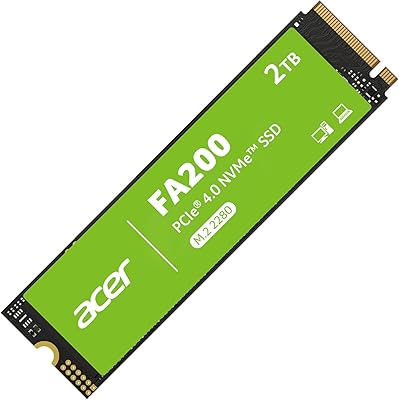
Acer FA200 2TB NVMe Gen4 SSD
87%
94%
Performance
89%
Thermal Management
93%
Read Speed (7200MB/s)
87%
Reliability
90%
Compatibility with PS5
More
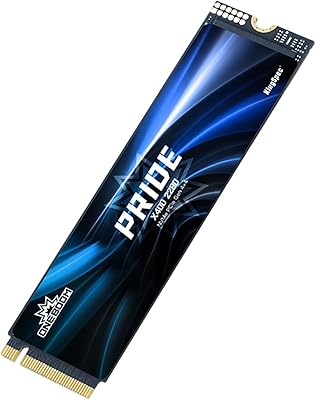
LinkMore XE400 2TB PCIe Gen4 NVMe SSD
77%
88%
Read Speed Performance
79%
Write Speed Performance
93%
Value for Money
92%
Installation Experience
87%
Compatibility
More
KingSpec X400 512GB Gen4 NVMe SSD
75%
88%
Sequential Read Speed
61%
Sustained Write Performance
91%
Value for Money
73%
PS5 Compatibility
77%
Thermal Management
More
PNY CS2241 2TB M.2 NVMe Gen4 SSD
83%
88%
Sequential Read Performance
83%
Sequential Write Performance
86%
Real-World Speed Gains
91%
Value for Money
67%
Thermal Management
More
Inland TN470 2TB Gen4 NVMe M.2 SSD
82%
93%
Sequential Speed
91%
Value for Money
62%
Thermal Performance
96%
Installation Ease
78%
Random I/O Performance
More
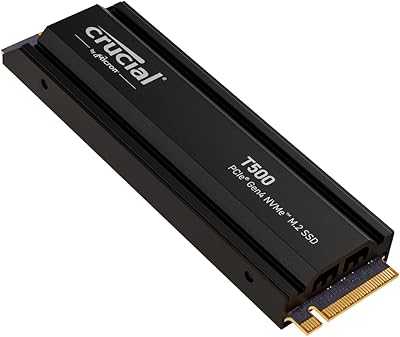
Crucial T500 2TB Gen4 NVMe M.2 SSD with Heatsink
89%
95%
Read Speed
92%
Write Speed
88%
Thermal Management
90%
Compatibility with PS5
83%
Ease of Installation
More
Crucial P310 2TB NVMe SSD
80%
86%
Read & Write Speed
93%
PS5 Compatibility
84%
Value for Money
71%
Thermal Management
91%
Installation Experience
More
KingSpec NX Series 2TB NVMe M.2 SSD
76%
91%
Value for Money
78%
Read Performance
67%
Write Performance
94%
Installation Ease
88%
Compatibility
More
Lexar NQ780 2TB NVMe SSD
81%
91%
Sequential Read Speed
86%
Sequential Write Speed
73%
Sustained Write Performance
78%
Random Read/Write
67%
Thermal Management
More

FAQ

Yes, the KingSpec X400 2TB Gen4 NVMe SSD fits the PS5 expansion slot directly — no adapter needed. Sony requires an M.2 2280 PCIe 4.0 drive with a minimum read speed that this drive exceeds comfortably. Just make sure your PS5 firmware is up to date before installing, and note that Sony recommends a heatsink, which this drive already includes.

Those are flagship drives from brands with long, well-documented reliability histories and larger independent review bodies. The KingSpec X400 offers comparable sequential read speeds on paper and costs less, but it launched recently, so there is far less real-world data available. If brand confidence and proven long-term durability are priorities for you, the Samsung and WD options have an edge. If you are comfortable with the trade-off in exchange for a lower price, the X400 is competitive on raw specs.

For most transfers, the dynamic SLC cache handles the workload well and you will see strong speeds throughout. However, during very large, sustained sequential writes — think copying hundreds of gigabytes in a single operation — the cache can fill up and write speeds may drop noticeably as the drive falls back to writing directly to the TLC NAND. For typical gaming or editing use, this is rarely an issue, but it is worth knowing if your workflow involves frequent bulk data movement.

No, NVMe SSDs like this one are natively supported by Windows 10, Windows 11, and most modern Linux distributions. Your system should detect and initialize the drive automatically. If you are using it as a fresh boot drive, you will just need to format it during OS installation.

The drive comes with a multi-layer graphene heatsink already attached. You do not need to purchase a separate cooler, which is particularly convenient for PS5 installs where a heatsink is recommended.

Yes, the drive is backward compatible with PCIe 3.0 slots. You will not get the full Gen4 throughput — speeds will be capped at what Gen3 bandwidth allows — but it will still function as a fast, high-capacity NVMe drive and will be a meaningful upgrade over a SATA SSD or spinning hard disk.

The drive supports S.M.A.R.T, which lets you monitor health metrics using free tools like CrystalDiskInfo on Windows or smartmontools on Linux. These utilities will show you things like temperature, total bytes written, and any error counts, giving you an early warning if something is off.

KingSpec is a Chinese storage manufacturer that has been around since the mid-2000s, so they are not a fly-by-night operation. That said, they do not have the same level of widespread third-party testing and long-term owner data that Samsung or Crucial have built up over years. The 3-year warranty is a reasonable signal of manufacturer confidence. If you are risk-tolerant and value the price-to-spec ratio, it is a fair bet — just go in with realistic expectations rather than treating it as equivalent to a tier-one brand.

The listed dimensions include the heatsink, which adds a little height compared to a bare drive. The footprint is still the standard M.2 2280 size, so it will fit any slot designed for that form factor. However, check that your laptop or PC case has enough vertical clearance for the heatsink before installing, especially in compact builds.

TBW stands for terabytes written — it is the total amount of data the manufacturer estimates the drive can write before NAND cells start to wear out. At 1800TBW, if you wrote 100GB per day every single day, the drive would theoretically last nearly 50 years before hitting that threshold. For a gamer or creative professional, this is well beyond what you would realistically write in the drive's useful lifetime, so endurance is unlikely to be a limiting factor.