Overview

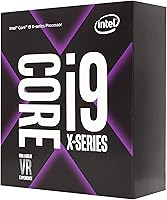
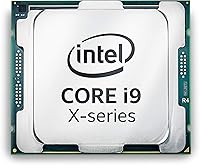
The Intel Core i9-9940X 14-Core Desktop Processor belongs to Intel's X-series high-end desktop lineup, released in late 2018 for the LGA2066 socket and X299 platform. This is not a mainstream consumer chip — it sits firmly in workstation territory, designed for users who genuinely need core counts that go far beyond what a typical gaming or office PC demands. Content creators, engineers, and researchers were the primary audience. That said, the platform is aging, and buyers should weigh that honestly before committing. If you are already invested in X299, this chip makes a compelling case. If you are starting fresh, newer platforms deserve a serious look.
Features & Benefits

With 14 cores and 28 threads, the i9-9940X handles heavy parallel workloads without breaking a sweat — think Blender renders, Premiere Pro exports, or large-scale data processing where thread counts directly translate to saved time. The base clock of 3.3GHz ramps up to 4.4GHz under Turbo Boost, so lightly-threaded tasks do not feel sluggish either. Quad-channel DDR4 memory support means memory bandwidth is rarely a bottleneck, which matters enormously for simulation and media work. The 19.25MB cache keeps frequently accessed data close, trimming latency noticeably under complex loads. One honest caveat: the 165W TDP demands serious cooling — a mid-range air cooler will not cut it.

Best For

This HEDT chip is purpose-built for workloads that genuinely scale with core count. 3D rendering and animation workflows — whether in Cinema 4D, Blender, or similar tools — see near-linear gains as cores increase, and 14 of them provides substantial headroom. Video editors cutting 4K or 6K footage in DaVinci Resolve or Premiere will notice the difference during export and real-time playback. Scientific computing tasks, like finite element analysis or molecular simulation, also benefit from the raw thread count. The X299 platform enthusiast who already has compatible RAM and a quality motherboard will find upgrading to this chip a cost-effective way to push performance without a full platform rebuild.

User Feedback

Most buyers rate this 14-core processor highly, with consistent praise centered on its sustained multi-threaded stability — a quality that matters more to professionals than peak benchmark numbers. Users running long rendering jobs or overnight compute tasks note it holds up without thermal throttling, provided cooling is adequate. The recurring criticism is thermal management: buyers who underestimated cooling requirements found themselves troubleshooting more than working. There is also some honest ambivalence about long-term platform value given X299's age, with a few noting they wish they had waited for newer alternatives. Compatibility with X299 boards is largely praised when the BIOS is updated, with few reported issues post-setup.

Pros

  • 14 cores and 28 threads handle demanding parallel workloads that would bottleneck mainstream chips entirely.
  • Turbo Boost up to 4.4GHz keeps single-threaded tasks responsive despite the high core count.
  • Quad-channel DDR4 memory support provides exceptional bandwidth for data-intensive professional workflows.
  • The i9-9940X runs exceptionally stable under sustained workloads — a quality professionals depend on daily.
  • 19.25MB of cache noticeably reduces latency in complex, repetitive computational tasks.
  • Compatible with the full X299 ecosystem, making it a natural upgrade for existing platform owners.
  • Unlocked multiplier allows experienced users to push performance further through overclocking.
  • Strong multi-threaded performance in rendering benchmarks consistently earns praise from content creators.
  • Quad-channel memory architecture pairs well with RAM-hungry applications like video compositing and simulation software.

Cons

  • 165W TDP means your cooling budget is not optional — budget for a capable AIO or high-end air cooler.
  • The X299 platform is aging, limiting the long-term upgrade path for new builders committing to it today.
  • Power consumption under full load is substantial, which adds up in electricity costs over time.
  • Some buyers feel the price-to-performance ratio has eroded compared to newer-generation workstation alternatives.
  • BIOS updates are required on many X299 boards for reliable compatibility — a frustrating extra step for some users.
  • Thermal management requires careful case airflow planning, not just a good cooler on the chip itself.
  • No integrated graphics means a discrete GPU is mandatory, adding to total system cost.
  • The platform requires specific X299 motherboards, narrowing your hardware options compared to mainstream socket choices.

Ratings

Our AI-generated scores for the Intel Core i9-9940X 14-Core Desktop Processor are derived from analyzing verified global buyer reviews, with automated filtering applied to remove incentivized, spam, and bot-generated feedback. The result is an honest, data-grounded picture of where this HEDT chip genuinely excels and where real buyers have run into friction. Both the strengths and the recurring pain points are reflected transparently across every category below.
Multi-Threaded Performance
93%
Professionals running Blender, Cinema 4D, or DaVinci Resolve consistently report that the 14-core architecture handles complex render queues and export pipelines with authority. Users who switched from 8-core mainstream chips noted render time reductions that meaningfully changed their daily production schedules.
A small number of users noted that poorly optimized software fails to distribute load evenly across all 28 threads, leaving some cores underutilized. In those edge cases, a fewer-core, higher-frequency chip would have served them better.
Single-Threaded Responsiveness
78%
22%
The Turbo Boost ceiling of 4.4GHz keeps the i9-9940X feeling snappy during everyday tasks and lightly-threaded applications, which surprised some buyers who expected HEDT chips to feel sluggish outside of workloads. General desktop use and web browsing feel perfectly fluid.
Compared to contemporary mainstream chips from both Intel and AMD that push closer to 5GHz, the single-core ceiling is noticeably lower. Competitive gamers or users whose primary software is single-threaded will feel this gap in real-world responsiveness.
Thermal Management
61%
39%
Users who invested in quality 360mm AIO liquid coolers or high-end tower solutions reported stable temperatures even under hours of sustained full-load rendering. Several professionals noted zero thermal throttling events over extended workstation sessions when cooling was properly matched.
The 165W TDP leaves almost no room for error in cooling selection, and buyers who paired this HEDT chip with mid-range or budget coolers reported frustrating throttling and instability. A few users were surprised by how much case airflow also mattered beyond just the CPU cooler itself.
Value for Money
59%
41%
For X299 platform owners upgrading from a lower-tier X-series chip, the i9-9940X represents a cost-effective path to significantly more cores without replacing the entire platform. Buyers who purchased during price drops reported feeling satisfied with the performance-per-dollar equation in that specific context.
At full retail pricing, newer-generation workstation and HEDT alternatives from both Intel and AMD now offer comparable or superior multi-threaded performance with better platform longevity. Several buyers expressed regret about the investment given how quickly the competitive landscape shifted after 2020.
Platform Compatibility
74%
26%
Users with established X299 ecosystems praised how straightforwardly the chip integrated into their existing setups, particularly when their motherboard BIOS was already current. The broad selection of X299 motherboards from major brands gave buyers flexibility in their overall build configuration.
Compatibility is strictly locked to X299 boards, which means there is no flexibility for buyers outside that ecosystem. A recurring frustration involves needing a BIOS update before the chip is recognized, which requires having another compatible processor on hand — an annoying prerequisite for first-time X299 builders.
Workstation Stability
91%
Long-duration stability under sustained workloads is one of the most consistently praised qualities of this 14-core processor. Engineers and animators running overnight compute jobs reported clean, uninterrupted sessions without crashes or unexpected performance dips, which matters enormously in professional production environments.
Stability is heavily contingent on proper cooling and adequate power delivery from the motherboard. Users who ran the chip on VRM-weak X299 boards occasionally reported instability under sustained all-core loads that turned out to be a platform bottleneck rather than a chip defect.
Memory Bandwidth
88%
The quad-channel DDR4 configuration delivers bandwidth that users running memory-hungry workloads — large Photoshop canvases, multi-stream video timelines, or simulation datasets — found genuinely impactful compared to dual-channel mainstream alternatives. Scientific computing users in particular highlighted this as a meaningful daily advantage.
The officially supported DDR4-2666 speed cap is somewhat conservative by modern standards, and buyers expecting aggressive XMP profile support out of the box found the experience inconsistent across different X299 board implementations. Achieving higher effective memory speeds sometimes required manual tuning.
Power Consumption
54%
46%
Under light workloads and idle conditions, the i9-9940X scales down its power draw reasonably well, and users running mixed workloads reported that sustained all-core loads were not a constant occurrence in typical creative workflows.
Full-load power draw is substantial, and several users flagged noticeable increases in electricity costs after upgrading to this chip in a workstation used many hours per day. Running this processor in a compact or poorly ventilated case is genuinely problematic and a recurring source of buyer complaints.
Overclocking Headroom
76%
24%
The unlocked multiplier attracted enthusiast buyers who reported achieving stable all-core overclocks that pushed render performance noticeably beyond stock figures. Users with premium X299 boards and robust cooling setups found the overclocking process relatively straightforward through BIOS voltage and multiplier adjustments.
The already high stock TDP leaves limited thermal headroom for aggressive overclocking without a top-tier cooling setup. Buyers who pushed voltages too aggressively without adequate VRM cooling on their motherboard encountered instability that was difficult to diagnose for less experienced builders.
Cache Performance
86%
The 19.25MB cache noticeably benefits workloads that repeatedly access the same datasets, such as iterative simulation loops or complex compositing pipelines. Several users reported that cache size made a tangible difference when comparing this chip against alternatives with smaller cache pools in their specific software environments.
Cache performance advantages are largely invisible to users whose workloads involve large, non-repeating datasets that exceed the cache capacity anyway. In those scenarios, the memory subsystem becomes the limiting factor, and the cache size advantage is essentially neutralized.
Setup & Installation
82%
18%
Buyers with prior CPU installation experience on LGA sockets found the physical installation process clean and uneventful. The LGA2066 socket mechanism is robust, and users reported confident seating of the chip without the pin-bending anxiety associated with AMD's competing AM4 PGA socket of the same era.
The BIOS update prerequisite on some X299 boards added a layer of complexity that frustrated less experienced builders. A handful of buyers also noted that finding clear, reliable documentation for X299 board BIOS update procedures without a compatible boot CPU was unnecessarily difficult.
Longevity & Future-Proofing
47%
53%
For workloads that exist today and have not changed dramatically — rendering, simulation, video production — the i9-9940X still performs those tasks without compromise and will continue to do so for years. The raw core count remains competitive for the specific multi-threaded professional use cases it was designed for.
The X299 platform has reached end of life with no further CPU upgrades available, meaning buyers are purchasing into a closed ecosystem with a fixed performance ceiling. As newer platforms offer more cores, faster memory, and PCIe 5.0 support, the long-term competitive position of this HEDT chip will only erode further.
Software Optimization
71%
29%
Industry-standard creative and scientific applications — DaVinci Resolve, Blender, MATLAB, SolidWorks — are well-optimized to leverage high core counts, and users in those workflows reported that the processor was rarely the limiting factor in their pipeline performance.
Consumer and productivity software that does not scale beyond 8 cores leaves a significant portion of the processor's capability idle, which some buyers found frustrating given the cost of entry. Gaming performance in particular exposed the mismatch between this chip's strengths and workloads that simply do not reward thread count.

Suitable for:

The Intel Core i9-9940X 14-Core Desktop Processor is purpose-built for professionals whose daily work genuinely punishes lesser hardware. If you spend hours waiting on 3D renders in Blender or Cinema 4D, those 14 cores translate directly into time saved — sometimes hours per project. Video editors handling 4K or higher resolution timelines in DaVinci Resolve or Premiere Pro will appreciate both the thread count and the quad-channel memory bandwidth working together during exports and effects processing. Engineers running finite element analysis, fluid simulations, or large-scale data modeling will find the workstation-class memory architecture particularly useful. It also makes strong sense for anyone already invested in the X299 platform who wants a meaningful core-count upgrade without scrapping their existing motherboard and RAM setup.
Not suitable for:

Buyers who primarily game, browse, or run everyday productivity software will not get meaningful returns from what this HEDT chip demands in cost, power, and cooling infrastructure. The i9-9940X runs at 165W under load, which requires a premium cooling solution — a quality 240mm AIO liquid cooler at minimum, and ideally something larger. That is an added expense and complexity that casual users simply do not need. The X299 platform itself is aging, and anyone building a workstation from scratch today should seriously evaluate whether current-generation platforms offer better value and a longer upgrade path. Gamers in particular will find that high-frequency mainstream chips often outperform this HEDT chip in titles that favor single-threaded speed over core count. If long-term platform support matters to your purchase decision, the honest answer is that X299 has a limited future ahead of it.

Specifications

  • Core Count: The processor features 14 physical cores with Hyper-Threading enabled, yielding 28 logical threads for parallel workload processing.
  • Base Clock: The base operating frequency is 3.3GHz, providing a consistent performance floor across all cores under sustained load.
  • Turbo Frequency: Intel Turbo Boost Technology 2.0 allows the chip to reach up to 4.4GHz on active cores when thermal and power headroom permits.
  • Cache: A total of 19.25MB of Intel Smart Cache reduces repeated memory fetch latency for complex computational tasks.
  • TDP: The rated thermal design power is 165W, requiring a high-capacity cooling solution for stable operation under full load.
  • CPU Socket: The processor uses the LGA2066 socket, which is exclusively compatible with Intel X299 series motherboards.
  • Memory Type: Supported memory is DDR4 SDRAM operating in quad-channel configuration for maximum bandwidth across data-intensive workloads.
  • Memory Speed: The officially supported maximum memory speed is DDR4-2666, though X299 motherboards may support higher XMP profiles.
  • Memory Channels: Four independent memory channels allow simultaneous data access across up to eight DIMM slots depending on the motherboard.
  • Optane Support: Intel Optane Memory is supported, enabling storage acceleration for compatible NVMe or SATA drives on qualifying X299 platforms.
  • Max Temperature: The maximum allowable processor junction temperature is 88°C, beyond which thermal throttling will engage to protect the chip.
  • Processor Series: This chip belongs to Intel's Core X-Series Extreme Edition family, positioned within the high-end desktop segment above mainstream consumer lines.
  • Model Number: The official Intel boxed model number is BX80673I99940X, used to verify authenticity and confirm the retail packaging variant.
  • Launch Date: The processor was first made available in November 2018 as part of Intel's Cascade Lake-X predecessor generation on the X299 platform.
  • Chipset: Compatibility is strictly limited to motherboards built on the Intel X299 chipset; no other chipset supports the LGA2066 socket.
  • Integrated Graphics: This processor does not include integrated graphics, so a discrete GPU is required in any build using this chip.
  • Overclocking: The unlocked multiplier allows experienced users to manually increase clock speeds beyond stock frequencies via compatible X299 motherboard BIOS settings.
  • Instruction Sets: The processor supports modern instruction set extensions including AVX-512, which benefits certain scientific and machine learning workloads.

Related Reviews

Intel Core i9-14900KF 14th Gen Desktop Processor
70%
88%
Gaming Performance
91%
Multitasking & Productivity
54%
Thermal Management
51%
Power Consumption
78%
Overclocking Headroom
More
Intel Core i9-11900K Desktop Processor
70%
91%
Gaming Performance
93%
Single-Core Speed
67%
Multi-Threaded Performance
54%
Thermal Performance
84%
Overclocking Capability
More
Intel Core i9-9900K Desktop Processor
74%
91%
Gaming Performance
83%
Multi-Core Throughput
88%
Overclocking Headroom
61%
Thermal Management
77%
Platform Compatibility
More
Intel Core i9-11900 Desktop Processor
70%
88%
Single-Core Performance
74%
Multi-Core Throughput
91%
Thermal Efficiency
63%
Value for Money
79%
Platform Compatibility
More
Intel Core i9-12900KS Desktop Processor
75%
94%
Raw Processing Performance
92%
Gaming Performance
58%
Thermal Management
54%
Power Consumption
91%
Out-of-Box Clock Speed
More
Intel Core i9-13900KS Desktop Processor
75%
96%
Single-Core Performance
91%
Multi-Core & Threaded Performance
58%
Thermal Management
63%
Value for Money
78%
Overclocking Headroom
More
Intel Core i9-10980XE Desktop Processor
84%
94%
Multi-core Performance
91%
Overclocking Capability
60%
Power Consumption
62%
Thermals (Heat Output)
88%
Compatibility (X299 & Optane)
More
Intel Core i9-13900F Desktop Processor
76%
93%
Multi-Threaded Performance
88%
Gaming Performance
57%
Thermal Management
71%
Value for Money
84%
Platform Compatibility
More
Intel Core i5-14600KF Desktop Processor
79%
88%
Gaming Performance
91%
Value for Money
84%
Multi-Core Throughput
78%
Overclocking Headroom
67%
Thermal Management
More
Intel Core i5-13400F 2.5GHz 10-Core Desktop Processor
87%
88%
Performance
92%
Value for Money
84%
Gaming Performance
89%
Multi-core Efficiency
91%
Ease of Installation
More

FAQ

You need a motherboard built on the Intel X299 chipset with an LGA2066 socket. There is no flexibility here — no other platform is compatible. Brands like ASUS, MSI, Gigabyte, and ASRock all produced X299 boards at various price points, so you have solid options to choose from.

No, it does not. Intel does not include a bundled cooler with X-series processors. You will need to purchase a cooling solution separately, and given the 165W TDP, a quality 240mm or 360mm AIO liquid cooler — or a high-end tower air cooler — is strongly recommended.

It can certainly run games, but it is not the most efficient choice for a pure gaming build. Games generally favor high single-core clock speeds and do not scale well beyond 8 cores, so you would be paying a significant premium for core count that most titles simply will not use. A mainstream high-frequency chip would serve most gamers better.

The i9-9940X supports quad-channel DDR4 memory, and depending on your X299 motherboard, you can typically populate between 4 and 8 DIMM slots. Total supported memory capacity varies by board, but most X299 platforms support up to 128GB. Running all four channels populated gives you the best memory bandwidth.

Quite possibly, yes. Many X299 motherboards shipped with BIOS versions that predate later X-series processors, and a BIOS update may be required for proper recognition and stability. It is worth checking your motherboard manufacturer's support page before you build, and having another compatible processor on hand to perform the update if needed.

Yes. The unlocked multiplier means you can push clock speeds beyond stock through your motherboard's BIOS. That said, at 165W stock, thermal management becomes even more critical when overclocking. Make sure your cooler, power delivery on your motherboard, and case airflow are all up to the task before attempting significant overclocks.

No, the i9-9940X does not officially support ECC memory. If ECC is a hard requirement for your workload — common in scientific computing or financial applications — you would need to look at Intel Xeon processors on a different platform architecture.

That is the honest question most buyers should ask themselves. If you already have a quality X299 motherboard and compatible RAM, upgrading to this HEDT chip makes practical sense. If you are starting from scratch, newer platforms generally offer better long-term support and more competitive performance per dollar. Go in with clear eyes about the platform's age.

In genuinely multi-threaded tasks like 4K timeline exports, background rendering, or applying heavy effects stacks, the jump from 8 cores to 14 is noticeable and measurable. The quad-channel memory bandwidth also helps when scrubbing high-resolution footage. Tasks that are less parallelized, like playback of a simple timeline, will feel comparable.

No, there is no integrated GPU in this chip. Every build using the i9-9940X requires a dedicated graphics card. Factor that into your total build budget, and make sure your chosen X299 motherboard has the PCIe slot configuration you need.