
Overview
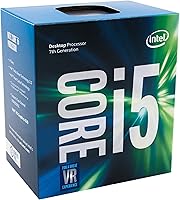
The Intel Core i5-7600 7th Gen Desktop Processor is a Kaby Lake chip that launched in early 2017, aimed squarely at mainstream desktop builders who needed solid, no-nonsense performance without spending a fortune. Running four cores at a base of 3.5 GHz — with Turbo Boost pushing that to 4.1 GHz — this seventh-gen Core i5 handles everyday workloads with confidence. It slots into the LGA 1151 socket, playing nicely with both 100 and 200 series motherboards, and brings along Intel HD Graphics 630 for basic display duties. For budget-conscious builders, the value proposition here is real.
Features & Benefits
One of the more practical aspects of this Kaby Lake chip is how Turbo Boost 2.0 keeps single-threaded tasks feeling snappy — applications open quickly, and the system rarely feels bogged down during typical use. The integrated HD Graphics 630 handles light media playback and dual-monitor setups without requiring a separate card, which is genuinely useful for office builds or HTPCs. DDR4 support with headroom up to 64 GB gives this desktop processor room to breathe as workloads grow. The 6 MB cache and 65W TDP round out a well-balanced spec sheet that performs reliably for its class.
Best For
This seventh-gen Core i5 hits its stride in budget desktop builds, home office setups, and light-use machines where spending more on a processor simply doesn't make practical sense. Pair it with a mid-range discrete GPU and you have a capable entry-level gaming rig that handles older titles without complaint. It's also a strong candidate for secondary builds or media center PCs, where the integrated graphics do the heavy lifting and a quieter, compact system is the goal. Anyone on a tight upgrade budget who still needs four solid cores will find this chip pulls its weight reliably day to day.
User Feedback
Across roughly 136 buyer ratings, this Kaby Lake chip holds a 4.1 out of 5 average — a score that reflects genuine satisfaction rather than hype. Buyers consistently highlight stable day-one performance and easy installation as standout positives. The most recurring complaint is the absence of a bundled CPU cooler; budget builders should factor that added purchase in upfront. Some reviewers also flag the platform's age as a real concern — LGA 1151 has limited runway, so future CPU upgrades on the same board are restricted. That said, for a reliable secondary build or a tight-budget primary PC, most owners feel they landed solid value.
Pros
- Quad-core performance holds up well for everyday productivity, web use, and light multitasking without hesitation.
- Turbo Boost pushes responsiveness noticeably in single-threaded tasks like launching apps or handling office software.
- Integrated HD Graphics 630 eliminates the need for a dedicated GPU in basic desktop and HTPC builds.
- Broad LGA 1151 motherboard compatibility gives builders plenty of affordable pairing options.
- Supports up to 64 GB of DDR4 memory, leaving room to scale for more demanding workloads down the line.
- Stable out-of-the-box behavior means less time troubleshooting and more time actually using the machine.
- At its current street price, this Kaby Lake chip delivers a respectable cost-per-core ratio for budget builds.
- A 65W TDP keeps thermals and power draw manageable, even with a modest aftermarket cooler.
- Works reliably as a secondary or guest PC build where spending more simply isn't justified.
Cons
- No Hyper-Threading means only four threads available, which shows under heavier parallel workloads.
- No CPU cooler included in the box — budget builders need to account for that added purchase separately.
- The LGA 1151 platform is effectively end-of-life, leaving no meaningful CPU upgrade path on the same board.
- Not an unlocked processor, so performance is essentially fixed with no overclocking headroom to exploit.
- Kaby Lake architecture is several generations old, and the gap versus current chips widens in CPU-intensive tasks.
- Integrated graphics are sufficient for basic use only — anything beyond light media playback needs a discrete card.
- With only 136 ratings on record, the review pool is relatively thin for confident long-term reliability assessment.
- Aging platform means finding compatible new motherboards may become harder and more expensive over time.
Ratings
Our AI rating system analyzed verified buyer reviews for the Intel Core i5-7600 7th Gen Desktop Processor from global sources, actively filtering out incentivized, duplicate, and bot-generated feedback to surface what real builders and everyday users actually experienced. Scores reflect both where this Kaby Lake chip genuinely delivers and where it falls short, so you get an honest picture before committing to a purchase.
Everyday Performance
Value for Money
Single-Core Speed
Multitasking Capability
Gaming Performance
Integrated Graphics
Platform Compatibility
Thermal Efficiency
Installation Ease
Out-of-Box Stability
Upgrade Longevity
Memory Support
Price Stability
Suitable for:
The Intel Core i5-7600 7th Gen Desktop Processor is a practical pick for budget-focused builders who need a dependable quad-core chip without paying a premium for newer architecture. If your daily workload revolves around web browsing, office applications, light photo editing, or streaming media, this seventh-gen Core i5 covers all of it without breaking a sweat. Home and small office builders upgrading from sixth-gen or older Intel platforms will find the transition smooth, especially given the wide selection of compatible LGA 1151 motherboards still available at reasonable prices. It also works well as the brain of a compact HTPC or secondary desktop, where the integrated HD Graphics 630 handles display output cleanly without needing a dedicated card. Builders putting together an entry-level gaming machine on a tight budget can pair this Kaby Lake chip with a modest discrete GPU and get a functional rig for older titles and less demanding games.
Not suitable for:
Buyers chasing cutting-edge performance or planning to keep a system relevant for the next five-plus years should think carefully before committing to this desktop processor. The LGA 1151 platform is mature — there is no meaningful upgrade path beyond what it already supports, so if you outgrow it, you are looking at a full platform replacement, not just a CPU swap. Content creators who regularly push through video rendering, 3D work, or heavy multitasking will feel the absence of Hyper-Threading, since the chip handles only four threads at once, which can become a bottleneck in parallel workloads. Enthusiasts hoping to push performance beyond stock settings will also find limited headroom here, as this is not an unlocked processor. Anyone building a primary productivity or creative workstation with a longer runway in mind would be better served by a newer-generation chip, even if it means spending more upfront.
Specifications
- CPU Socket: This processor uses the LGA 1151 socket, compatible with Intel 100 and 200 series chipset motherboards.
- Architecture: Built on Intel's seventh-generation Kaby Lake architecture, manufactured on a 14nm process node and released in January 2017.
- Core Count: Features four physical cores with no Hyper-Threading support, giving it four total processing threads.
- Base Clock: Operates at a base frequency of 3.5 GHz under sustained all-core workloads.
- Boost Clock: Intel Turbo Boost 2.0 can push the clock speed up to 4.1 GHz dynamically when thermal and power headroom permits.
- Thermal Design: Rated at a 65W TDP, making it compatible with a wide range of standard and compact aftermarket CPU coolers.
- Integrated Graphics: Includes Intel HD Graphics 630, capable of driving displays and handling basic media playback without a discrete GPU.
- Cache: Equipped with 6 MB of Intel Smart Cache to reduce memory latency during repetitive or data-heavy operations.
- Memory Type: Supports DDR4 SDRAM memory modules for improved bandwidth and efficiency over older DDR3 platforms.
- Memory Speed: Officially supports memory speeds up to 3500 MHz when using compatible XMP-enabled DDR4 kits.
- Max Memory: Supports a maximum of 64 GB of system RAM across the available memory slots on a compatible motherboard.
- Chipset Support: Compatible with Intel 200 series and 100 series chipset motherboards; does not support Intel Optane Memory technology.
- Model Number: The official Intel model identifier for this processor is BX80677I57600, which is the retail boxed version.
- Release Date: First made available in January 2017 as part of Intel's mainstream Kaby Lake desktop processor lineup.
- Graphics Memory: The integrated HD Graphics 630 can address up to 64 GB of shared system memory for display and light GPU tasks.
Related Reviews
Intel Core i5-7500 7th Gen Desktop Processor
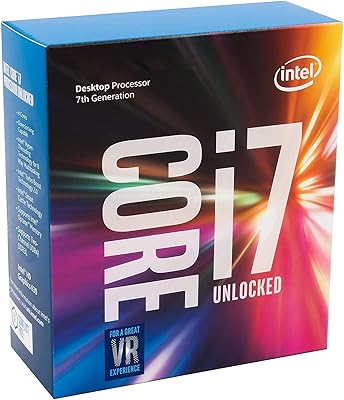
Intel Core i7-7700K Desktop Processor
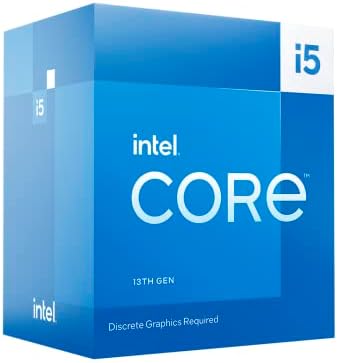
Intel Core i5-13400F Raptor Lake Desktop Processor
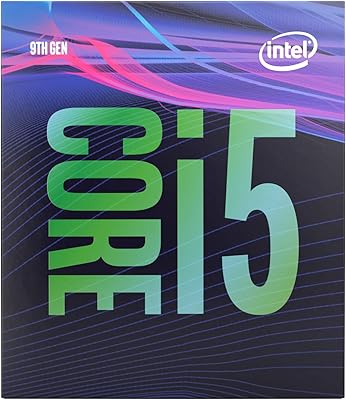
Intel Core i5-9500 Desktop Processor
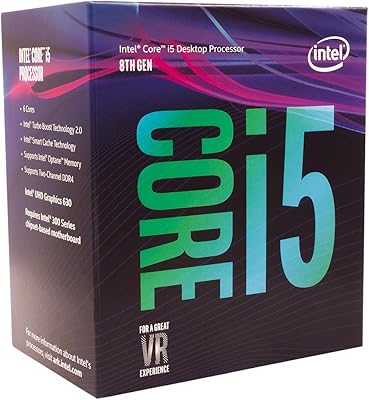
Intel Core i5-8600 Desktop Processor
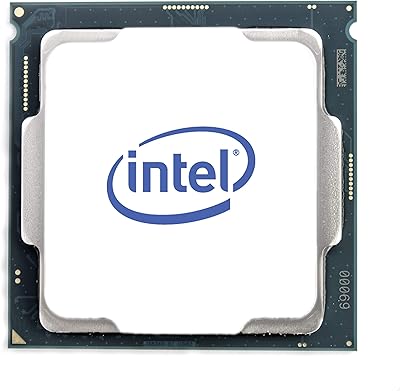
Intel Core i5-10600K Desktop Processor
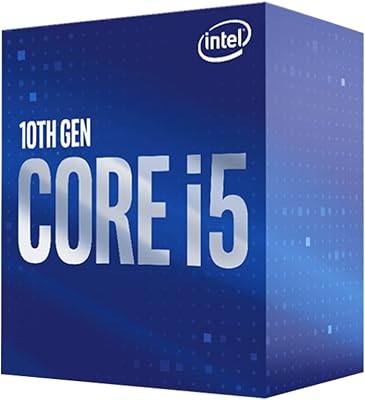
Intel Core i5-10400 Desktop Processor
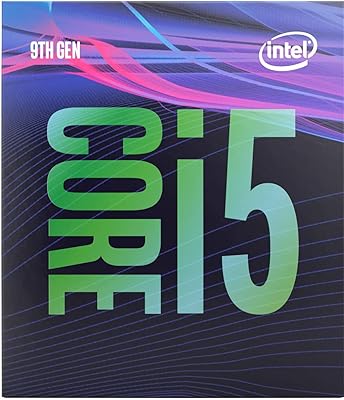
Intel Core i5-9400 Desktop Processor
Intel Core i5-9600KF Desktop Processor