Overview

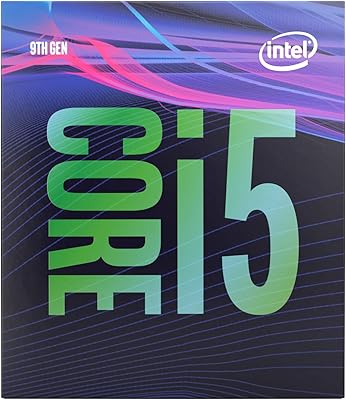
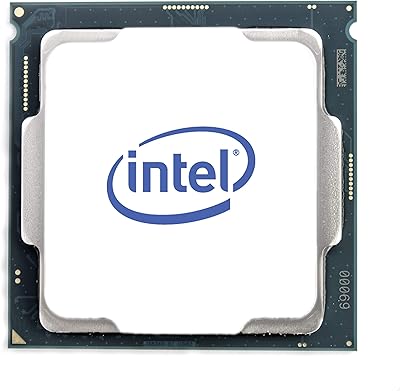
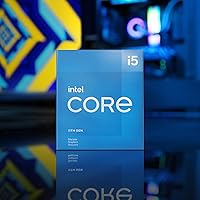
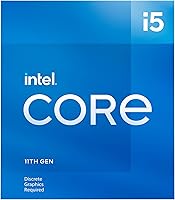
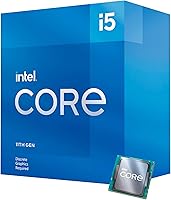
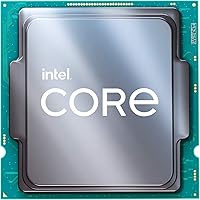
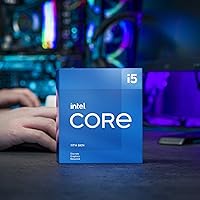
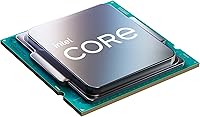
The Intel Core i5-11400F Desktop Processor sits in Intel's 11th-generation Rocket Lake family — and the F in its name tells you something important right away: there is no integrated graphics. A dedicated GPU is not optional here; without one, the system simply will not output a signal. Get past that requirement, and what you have is a capable six-core chip that handles multi-threaded workloads well above what its price suggests. It drops into LGA1200 motherboards paired with 500-series chipsets or select 400-series boards, making it a natural fit for budget builders who want a solid, well-documented platform without paying extra for overclocking headroom they will never use.

Features & Benefits

The i5-11400F runs six cores and twelve threads, with a base clock of 2.6 GHz that stretches to 4.4 GHz under load via Intel Turbo Boost 2.0 — enough to keep modern titles and productivity apps running without obvious bottlenecks. The 65W thermal envelope is one of the quieter selling points; the included stock cooler handles everyday workloads without complaint, trimming what you need to spend at checkout. Pair this six-core desktop processor with a 500-series board and you also unlock PCIe Gen 4.0 bandwidth, letting a fast NVMe drive perform as advertised. The 12MB Smart Cache rounds things out by reducing how often the chip has to reach out to slower system memory.

Best For

This six-core desktop processor hits a practical sweet spot for first-time PC builders who already have a graphics card in hand or are budgeting for one. The platform is mature, documentation is plentiful, and compatible B560 or Z590 boards are easy to find at reasonable prices. Upgraders stepping off old quad-core systems will notice a genuine improvement in multi-threaded workloads like light video editing or simultaneous streaming and gaming. It also suits compact HTPC and home office builds well, where low power draw and a modest cooler footprint matter more than chasing peak performance numbers that a mid-range build cannot fully use anyway.

User Feedback

People who have built around this 11th-gen Intel chip tend to land in a consistent place: pleasantly surprised by the gaming performance relative to what they spent, and quietly appreciating how cool and quiet it runs day-to-day. The included stock cooler gets more credit than expected — most buyers report it handles everyday loads without any fuss. Two concerns surface repeatedly, though. Anyone who overlooks the no-integrated-graphics limitation ends up with a machine that will not even boot, which catches more first-timers than you might expect. The other is longevity: LGA1200 has no further upgrade path past Rocket Lake, so this chip is effectively a platform endpoint, not a springboard to something better down the road.

Pros

  • Six cores and twelve threads handle everyday gaming and multitasking without obvious strain.
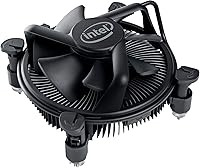
  • The included stock cooler keeps thermals manageable and reduces what you need to spend on day one.
  • A 65W TDP means the i5-11400F runs quietly under typical home or office workloads.
  • PCIe Gen 4.0 support on 500-series boards lets fast NVMe drives reach their rated throughput.
  • Compatible B560 and Z590 motherboards are widely available and easy to source at competitive prices.
  • The non-overclockable design simplifies platform selection and keeps overall build costs predictable.
  • Installation is straightforward, and the LGA1200 ecosystem has extensive community documentation for first-timers.
  • Buyers consistently report strong out-of-box gaming performance relative to total platform cost.
  • The 12MB Smart Cache noticeably reduces stuttering in cache-sensitive games and applications.

Cons

  • No integrated graphics means the system outputs nothing at all without a dedicated GPU installed.
  • LGA1200 is a dead-end socket with no newer Intel CPUs available to upgrade into.
  • Forgetting to budget for a discrete GPU at build time leaves you with a machine that will not boot.
  • Intel Turbo Boost 2.0 is an older boost implementation compared to what more current platforms provide.
  • A 2.6 GHz base clock feels low in sustained single-threaded workloads where turbo headroom is constrained.
  • Heavy creative tasks like 4K video rendering or complex 3D modeling will expose the core count ceiling.
  • Optane Memory support is present on paper but is a niche feature the vast majority of buyers will never use.
  • Competing AMD Ryzen options on newer platforms offer a longer CPU upgrade path for a similar outlay.

Ratings

The Intel Core i5-11400F Desktop Processor has been evaluated using an AI-driven methodology that processes thousands of verified buyer reviews from global markets, actively filtering out bot-generated, incentivized, and duplicate submissions to surface what real users actually experience day-to-day. The scores below reflect an honest cross-section of that feedback — where this six-core chip punches well above its weight class and where its design trade-offs create genuine friction for specific buyer types. Both strengths and pain points are weighted equally, so the ratings tell the full story rather than a curated highlight reel.

Value for Money
91%
The i5-11400F consistently ranks as one of the strongest-performing chips per dollar in its generation. Buyers coming from quad-core systems are frequently caught off guard by how much multi-threaded capability they get without stretching into enthusiast pricing. The included stock cooler removes one more line item from the build budget entirely.
The value equation weakens once you factor in that a dedicated GPU is non-negotiable — there is no integrated graphics fallback to lean on temporarily. Competing AMD platforms occasionally undercut the total build cost when B560 or Z590 board pricing pushes the overall spend above what a comparable Ryzen setup would require.
Gaming Performance
78%
22%
For 1080p and 1440p gaming, this six-core chip delivers a smooth experience in the vast majority of current titles, with 12 threads eliminating the core-count bottlenecks that plagued older quad-core builds. The 4.4 GHz boost clock keeps frame timing consistent in games that lean on single-threaded execution, covering most popular competitive titles well.
At 4K resolutions where per-core performance becomes a more significant factor, users report slightly more variability than expected. This chip is not competing with AMD Ryzen 5 5600 or Intel's own 12th-gen lineup for raw gaming ceiling — buyers chasing top-end frame rates will need to look at more recent processor generations.
Multi-core Throughput
82%
18%
With six cores and twelve threads, this processor handles real-world parallel workloads — background updates, browser multitasking, light encoding — far better than the quad-core chips many upgraders are replacing. Streaming while gaming, or running a game alongside chat apps and a browser, feels genuinely capable at this price level.
Heavy professional workloads such as sustained 4K video exports, large motion-graphics compositions, or complex 3D render queues expose the chip's limits fairly quickly. Users doing serious creative work professionally report that render times lag noticeably behind eight-core alternatives, making this a capable prosumer chip but not a production workhorse.
Thermal Management
86%
The 65W TDP is one of this chip's quietly appreciated attributes — the system stays cool and relatively quiet even under extended gaming sessions using only the bundled Intel cooler. Builders running compact cases or HTPCs with restricted airflow consistently report the chip never runs uncomfortably hot during typical home use.
Under sustained all-core loads — extended video encoding or heavy compilation tasks — temperatures creep up and the stock cooler fan ramps noticeably. A portion of users report that in poorly ventilated cases the bundled cooler becomes audible enough under peak load to be distracting when sitting in a quiet room.
Platform Compatibility
83%
B560 and Z590 motherboards are widely available and well-priced, giving builders solid options at nearly every budget tier without hunting for obscure parts. The LGA1200 ecosystem is well-documented, and the volume of community tutorials, compatibility lists, and forum support makes this an approachable platform for first-time builders.
LGA1200 is a closed platform — Intel's 12th-gen Alder Lake and beyond require an entirely different socket, meaning upgraders will need a new motherboard when the time comes to step up. Some buyers find it frustrating to invest in a B560 or Z590 board knowing this CPU is already sitting at the platform's ceiling.
Single-core Speed
74%
26%
The 4.4 GHz boost clock keeps the i5-11400F competitive in lightly-threaded applications like web browsing and general desktop tasks, where most users will notice no meaningful lag. For day-to-day home office use the single-threaded responsiveness feels solid and does not create visible bottlenecks in typical mixed workflows.
Single-threaded performance trails both AMD Ryzen 5 5600 and Intel's own 12th-gen chips by a measurable margin, which shows up in specific games and legacy software that cannot distribute work across cores. Users relying on simulation tools or certain engineering applications that are deeply single-threaded will feel this gap in practice.
Out-of-box Setup
88%
The boxed retail package includes the processor, thermal solution, and all necessary documentation — everything needed to drop it into a compatible board without sourcing extra parts first. Buyers routinely note that installation is straightforward, with the LGA1200 socket mechanism being forgiving and well-suited to builders handling their first CPU installation.
The one setup experience that consistently frustrates buyers is the absence of integrated graphics — first-timers who did not fully research the F-suffix sometimes complete the build only to find nothing on screen until a GPU arrives. This oversight is preventable but accounts for a disproportionate share of the negative early reviews.
Power Efficiency
84%
A 65W TDP is genuinely efficient for a six-core, twelve-thread desktop chip, keeping monthly electricity costs modest even in households where the PC runs for extended daily hours. Home office users and HTPC builders particularly appreciate the low idle draw, which makes the system economical to leave running in the background.
Under full multi-core load the chip pushes closer to its 65W ceiling, meaning there is limited thermal or power headroom for users who adjust software power limits trying to extract more performance. The efficiency advantage also narrows considerably when the system sustains heavy stress rather than operating under mixed or idle conditions.
Upgrade Longevity
43%
57%
Within the LGA1200 ecosystem there is some internal room to step up — buyers who start with this chip could theoretically swap to a higher-spec 11th-gen part like the i7-11700 without replacing the board. For users who plan to keep the same system for three to four years without touching the processor, the closed platform concern is largely moot in practice.
LGA1200 is a dead-end socket with no forward compatibility. Intel moved to LGA1700 with 12th-gen Alder Lake, meaning when this platform is ready for retirement the motherboard goes with it. Buyers who anticipated dropping in a next-gen chip down the road to extend the platform's useful life are consistently disappointed by this hard ceiling.
Integrated Graphics
12%
88%
The removal of integrated graphics is what allows Intel to price this chip below its non-F counterparts, and buyers who understand the F-suffix trade-off fully before purchasing are comfortable with the decision. For dedicated gaming builds where a discrete GPU was always part of the plan, the missing iGPU is simply a non-factor.
The complete absence of integrated graphics is the single most-cited frustration across all buyer feedback for this chip. Without a discrete GPU installed the system produces no video output at all — no BIOS screen, no error, nothing — which catches first-time builders off guard regularly and drives a disproportionate share of returns and one-star reviews.
Overclocking Headroom
17%
83%
The locked multiplier is not a drawback for the audience this chip genuinely targets — most budget and first-time builders have no interest in overclocking and appreciate the simplicity of a platform that does not demand Z-series boards or premium cooling. Factory-set performance can be a feature for users who want a stable, low-maintenance system.
For any enthusiast who purchased this processor hoping to extract extra performance through overclocking, the locked design is a hard stop with no workaround available. There is no memory controller tuning, no base clock manipulation worth attempting, and no way to push the chip beyond Intel factory specifications — the performance ceiling is entirely fixed.
Storage Bandwidth
76%
24%
On 500-series boards, PCIe Gen 4.0 support lets a high-speed NVMe SSD operate at full rated throughput, making a real difference in large file transfers and load times in open-world games with heavy asset streaming. Buyers who pair this chip with a Gen 4.0 drive on a compatible board report noticeably snappier overall system responsiveness.
On 400-series boards the system falls back to PCIe Gen 3.0, meaning Gen 4.0 NVMe drives operate below their rated speeds regardless of how fast the drive itself is rated. Buyers who invest in a premium Gen 4.0 SSD without verifying their board's bandwidth ceiling sometimes end up paying for throughput they are not actually getting.

Suitable for:

The Intel Core i5-11400F Desktop Processor is a natural fit for budget-conscious builders entering the PC hobby for the first time, particularly those who want a platform that is well-documented, broadly supported, and forgiving to work with. If you already own a dedicated GPU or have one allocated in your build budget, this six-core chip will handle everyday gaming, general productivity, and occasional light creative tasks like basic video editing or casual streaming without breaking a sweat. Upgraders coming from aging quad-core systems — a Core i5-7400 or anything in that era — will notice a real and meaningful improvement in multi-threaded performance without needing a premium board or aftermarket cooling. The modest 65W thermal profile also makes it a practical candidate for compact and HTPC builds, where airflow is limited and a quiet, low-heat chip matters more than raw ceiling performance. Home office users who want a capable, quiet desktop for mixed daily computing will find it holds up well for years of typical use.

Not suitable for:

The Intel Core i5-11400F Desktop Processor is a poor match for anyone planning to run a system without a discrete graphics card, even temporarily — the F-suffix means there is no integrated graphics fallback whatsoever, and the machine will simply not display anything without a GPU present. Enthusiasts chasing high-end gaming frame rates or demanding workstation output should look elsewhere; this chip competes on value, not raw performance, and it does not challenge unlocked K-series processors or AMD Ryzen 5000 parts at the top of the stack. Because LGA1200 is effectively a closed platform with no further CPU upgrade path beyond Rocket Lake, buyers hoping to drop in a faster chip a year or two from now will find they also need a new motherboard, which erodes the long-term cost argument. Content creators who routinely work with 4K timelines, complex 3D renders, or large multi-track audio sessions will likely run into the ceiling of what six cores can comfortably sustain in professional-grade software. Anyone considering using integrated graphics as a stopgap while waiting for a GPU deal should also know that plan is simply not an option here.

Specifications

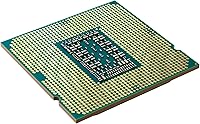
  • CPU Socket: This processor uses the LGA1200 socket, compatible with Intel 500-series and select 400-series motherboards.
  • Core Count: The chip features 6 physical cores and 12 threads, enabling genuine multi-tasking and parallel workload handling.
  • Base Clock: The base operating frequency is 2.6 GHz, reflecting Intel's power-efficient configuration for this 65W thermal class.
  • Boost Clock: Under sustained load, the processor scales up to a maximum boost frequency of 4.4 GHz via Intel Turbo Boost 2.0.
  • TDP: The rated thermal design power is 65W, making this chip manageable with modest cooling solutions including the included stock cooler.
  • Cache: A 12MB Intel Smart Cache is shared across all cores to reduce latency and improve data retrieval in gaming and productivity tasks.
  • Generation: This is an 11th-generation Intel Rocket Lake desktop processor, released in early 2021 and manufactured on a refined 14nm process.
  • Integrated Graphics: No integrated graphics are present; the F-suffix designation confirms a discrete GPU is required for any video output.
  • PCIe Version: PCIe Gen 4.0 is supported when paired with a compatible 500-series motherboard, enabling full-speed NVMe SSD and GPU bandwidth.
  • Boost Technology: Intel Turbo Boost 2.0 manages dynamic frequency scaling, automatically raising clock speeds when thermal and power headroom permits.
  • Optane Support: Intel Optane Memory is supported, allowing compatible Optane modules to accelerate storage access when paired with a supported motherboard.
  • Overclockable: This processor is not unlocked for overclocking; clock speeds are fixed at Intel factory settings and cannot be manually raised.
  • Chipset Support: Full compatibility covers Intel 500-series chipsets including B560, H570, and Z590, with partial support extending to select 400-series boards.
  • Thermal Solution: A boxed Intel stock cooler is included in the package, suitable for everyday workloads without requiring an immediate aftermarket purchase.
  • Model Number: The official Intel model number for the boxed retail version of this processor is BX8070811400.

Related Reviews
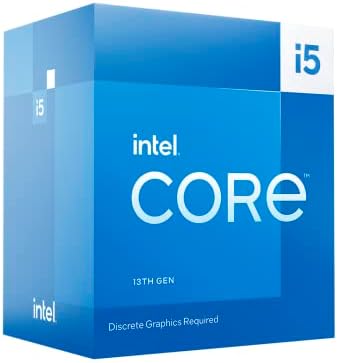
Intel Core i5-13400F 2.5GHz 10-Core Desktop Processor
87%
88%
Performance
92%
Value for Money
84%
Gaming Performance
89%
Multi-core Efficiency
91%
Ease of Installation
More
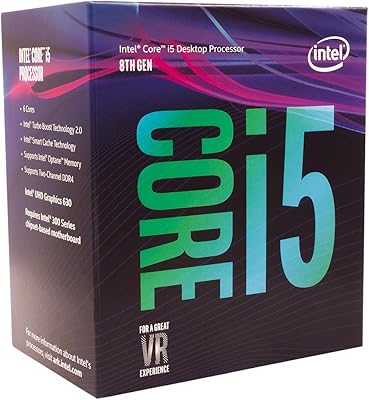
Intel Core i5-9500 Desktop Processor
72%
88%
Everyday Performance
81%
Gaming Capability
91%
Thermal Management
58%
Multi-threaded Workloads
83%
Platform Compatibility
More
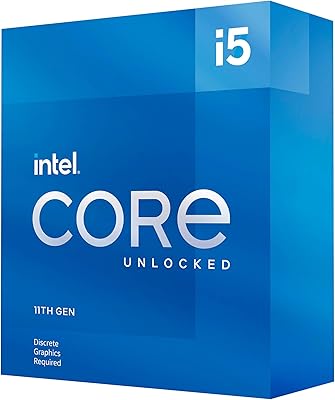
Intel Core i5-8600 Desktop Processor
71%
83%
Single-Core Performance
61%
Multithreaded Performance
74%
Gaming Performance
71%
Value for Money
88%
Thermal Efficiency
More
Intel Core i5-10400 Desktop Processor
76%
91%
Everyday Performance
88%
Multitasking Capability
93%
Value for Money
74%
Thermal Management
77%
Gaming Performance
More
Intel Core i5-10600K Desktop Processor
78%
88%
Gaming Performance
91%
Overclocking Potential
89%
Single-Core Performance
61%
Thermal Management
78%
Value for Money
More
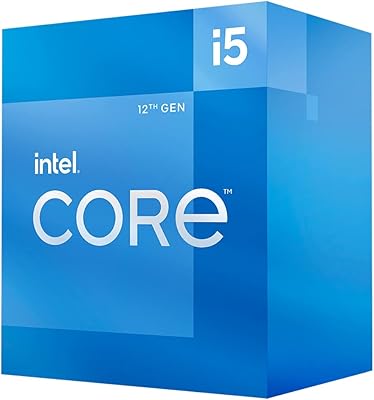
Intel Core i5-11600KF Desktop Processor
67%
84%
Gaming Performance
81%
Overclocking Headroom
58%
Thermal Management
79%
Value for Money
43%
Platform Longevity
More
Intel Core i5-12400 Desktop Processor
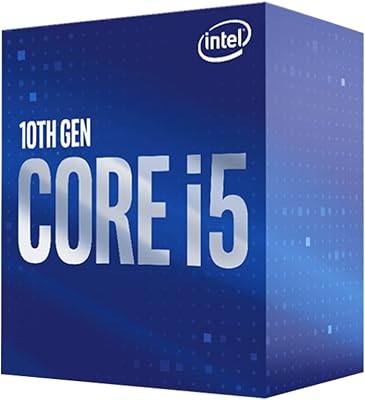
75%
86%
Gaming Performance
84%
Multitasking & Productivity
83%
Value for Money
87%
Thermal Management
67%
Platform Compatibility
More
Intel Core i5-9400 Desktop Processor
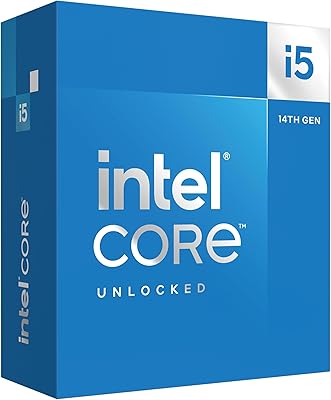
69%
83%
Everyday Performance
78%
Gaming Performance
81%
Value for Money
74%
Thermal Management
77%
Power Efficiency
More
Intel Core i5-10500 Desktop Processor
69%
83%
Value for Money
79%
Multithreaded Performance
72%
Gaming Performance
43%
Upgrade Path
74%
Single-core Performance
More
Intel Core i5-13600K Desktop Processor
79%
93%
Gaming Performance
88%
Multi-Threaded Throughput
61%
Thermal Management
91%
Value for Money
79%
Overclocking Headroom
More

FAQ

Yes — the Intel Core i5-11400F Desktop Processor carries an F-suffix, which means Intel removed the integrated graphics entirely from this chip. Without a discrete GPU installed, the system will power on but produce no video output at all. Make sure you have a graphics card ready before you complete your build, as there is no workaround for this.

The i5-11400F uses the LGA1200 socket and works with Intel 500-series boards — B560, H570, Z590 — as well as select 400-series boards like B460 and H470. Most builders pair it with a B560, which hits a solid balance between features and cost without paying for Z590 overclocking support you cannot use on this locked chip anyway.

For the majority of use cases, the included cooler does the job without complaint. Buyers regularly report it running cool and quiet through gaming sessions and everyday workloads. If you plan on sustained heavy rendering or want a near-silent build, a budget aftermarket cooler is worth the small extra spend — but for typical gaming and productivity use, the stock cooler holds up fine.

No. The i5-11400F is a locked chip, meaning clock speeds cannot be raised beyond Intel's factory settings regardless of which motherboard you use. If overclocking is a priority, you would need an unlocked K-series processor and a Z-series board to go that route.

It is a strong value pick for gaming within its price class. Six cores and twelve threads are more than sufficient for most current titles, and the 4.4 GHz boost clock keeps single-threaded performance competitive. That said, your actual in-game experience will depend far more on your graphics card than on this chip, so prioritize your GPU budget accordingly.

The 11th-gen chip generally outperforms the 10400F in multi-threaded workloads and adds PCIe Gen 4.0 support on 500-series boards, which the 10th-gen chip simply cannot offer. If pricing between the two is close, the i5-11400F is the smarter long-term buy. If you can find a 10400F at a significantly lower price and do not need Gen 4.0 storage speeds, it remains a capable chip for basic builds.

It depends on your motherboard. PCIe Gen 4.0 bandwidth is only unlocked when this chip is paired with an Intel 500-series board — B560, H570, or Z590. On a 400-series board, the system falls back to PCIe Gen 3.0, which is still fully functional and more than adequate for the vast majority of SSDs and GPUs on the market today.

Your options are narrow. LGA1200 supports 10th- and 11th-gen Intel CPUs only, and Intel has not released anything newer for this socket. You could swap in a higher-end 11th-gen chip like the i7-11700, but there is no path to 12th-gen Alder Lake or beyond without also buying a new motherboard. It is worth factoring that into your long-term planning.

It manages that workload reasonably well for most setups. Running a streaming encoder in the background while gaming at 1080p or 1440p is a task the chip handles without major frame rate hits under typical conditions. Where you may start to feel pressure is with higher-resolution streaming or heavy post-processing settings, in which case your GPU and encoder settings will matter as much as the CPU itself.

Intel typically backs boxed retail processors with a three-year limited warranty from the date of purchase. Hold onto your proof of purchase, as you will need it if you ever need to initiate a claim through Intel's customer support. Note that warranty coverage does not apply to damage caused by improper installation or overclocking attempts.