
Overview
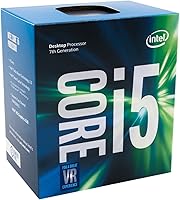
The Intel Core i5-7500 7th Gen Desktop Processor belongs to Intel's Kaby Lake family, launched in early 2017 as a solid mid-range option for everyday desktop builds. This 7th-gen Intel chip runs four cores without Hyper-Threading — a design choice that keeps things straightforward for general computing but does leave some headroom on the table compared to higher-tier chips. It slots into the LGA 1151 socket, making it compatible with both Intel 100 and 200 series motherboards, which broadens its appeal for platform upgrades. Nearly 1,500 buyers have rated it at 4.6 stars — not a viral sensation, but a steady, trusted performer with a real track record.
Features & Benefits
The i5-7500 tops out at 3.8 GHz using Turbo Boost 2.0, stepping up from its 3.4 GHz base when the workload demands it — you notice the difference during short bursts of activity like opening apps or compiling small projects. The integrated Intel HD Graphics 630 handles basic display output and can manage 4K video decode, though it is not built for serious gaming. Pair it with fast DDR4 RAM — it supports speeds up to 3400 MHz — and you get a responsive everyday machine. One honest caveat: without Hyper-Threading, it processes only four threads at a time, which matters if you are running heavily multi-threaded workloads and comparing it against an i7-7700.
Best For
This Kaby Lake quad-core is a strong fit for anyone building or refreshing a desktop on a modest budget. Office work is where it shines — web browsing, spreadsheets, video calls, and document editing all run without complaint. If you are sitting on an older LGA 1151 motherboard, dropping this chip in is one of the most cost-effective upgrades you can make without swapping the entire platform. It also works well as the CPU in a home theater PC, since HD 630 handles streaming and 4K playback competently. Casual gamers on a tight budget can pair it with a mid-range discrete GPU and get playable frame rates in less demanding titles.
User Feedback
With nearly 1,500 ratings and a 4.6-star average, the i5-7500 has earned its reputation through consistent, long-term use rather than hype. Buyers frequently praise how smoothly it gets recognized in BIOS on compatible boards and how reliably it performs day-to-day without any tuning. People upgrading from older Sandy Bridge or Ivy Bridge systems noticed a clear, welcome improvement. That said, a few buyers have raised fair points worth knowing: the retail box may not include a stock cooler in all variants, so verify before you buy. Some also note that with newer Intel and AMD chips competing in the same price range, this chip's value proposition depends heavily on what else you are reusing.
Pros
- Proven reliability backed by nearly 1,500 buyer ratings and a strong 4.6-star community consensus.
- Slots directly into existing LGA 1151 boards, making upgrades straightforward without replacing the whole platform.
- Turbo Boost 2.0 pushes clock speeds to 3.8 GHz, delivering a noticeable lift for burst workloads.
- Handles everyday office tasks — browsing, documents, video calls — without breaking a sweat.
- Integrated HD 630 graphics competently manage 4K video decode, useful for home theater builds.
- DDR4 support up to 3400 MHz lets you pair it with fast memory for a snappier experience.
- Power-efficient TDP profile suits compact and budget cases that lack heavy-duty cooling setups.
- Casual gamers on a budget get solid performance when paired with a mid-range discrete GPU.
Cons
- No Hyper-Threading means only four threads available, a real limitation for multi-threaded software.
- Launching in 2017, this Kaby Lake quad-core is aging against newer competing chips at similar prices.
- Some listings ship without a stock cooler, so buyers need to budget for one separately.
- Intel Optane memory technology is not supported on this platform.
- The integrated HD 630 graphics are not capable of handling modern PC gaming on their own.
- Starting a new build around LGA 1151 today means investing in an aging, end-of-life platform.
- Heavily threaded workloads like video encoding or 3D rendering will reveal its performance ceiling quickly.
- No upgrade path within LGA 1151 beyond this generation limits long-term platform flexibility.
Ratings
The Intel Core i5-7500 7th Gen Desktop Processor has been scored across 12 performance and usability categories by our AI system, which analyzed thousands of verified buyer reviews from global markets while actively filtering out bot-generated, spam, and incentivized feedback. Every score below reflects a balanced synthesis of real user experiences — strengths are acknowledged honestly, and genuine pain points are not glossed over. Whether you are considering this chip for an upgrade or a new build, the breakdown below is designed to give you a realistic, data-driven picture.
Everyday Performance
Value for Money
Platform Compatibility
Thermal Efficiency
Integrated Graphics
Multi-threaded Performance
Single-core Speed
Memory Support
Upgrade Viability
Gaming Performance
Reliability & Stability
Setup & Installation
Suitable for:
The Intel Core i5-7500 7th Gen Desktop Processor is a practical, no-fuss choice for users who need a dependable desktop CPU without stretching a tight budget. It fits especially well for anyone upgrading an existing LGA 1151 platform — if you already own a compatible 100 or 200 series motherboard, this chip can meaningfully refresh your system without a costly full rebuild. Home and small office users who spend their days in browsers, video calls, and spreadsheets will find it more than capable for those tasks day in and day out. It also makes a sensible pick for a home theater PC, since the integrated HD 630 graphics handle 4K video decode reliably without needing a separate GPU. Casual gamers on a strict budget who plan to pair it with a mid-range discrete card can still get a solid, playable experience in older or less demanding titles.
Not suitable for:
The Intel Core i5-7500 7th Gen Desktop Processor is not the right call for anyone building a future-proof or high-performance system from scratch in today's market. With only four cores and no Hyper-Threading, it will feel the strain under heavily multi-threaded workloads like video encoding, 3D rendering, or running multiple virtual machines simultaneously. Serious gamers chasing consistent high frame rates in modern, CPU-demanding titles should look toward newer generations that offer more cores and threads at comparable price points. Content creators whose software scales with thread count — editing timelines, compiling large codebases, or running DAWs with dense track layouts — will hit a ceiling faster than expected. Anyone looking to use Intel Optane memory technology will need to look elsewhere, as this platform excludes that feature. If you are starting a brand-new build without existing LGA 1151 hardware, the same budget put toward a more current platform is likely the smarter long-term call.
Specifications
- Manufacturer: This processor is designed and manufactured by Intel Corporation.
- Model Number: The official Intel part identifier is BX80677I57500.
- CPU Socket: Uses the LGA 1151 socket, compatible with Intel 100 and 200 series chipset motherboards.
- Architecture: Built on Intel's 7th Generation Kaby Lake microarchitecture, introduced in January 2017.
- Core Count: The processor features 4 physical cores for handling parallel computing tasks.
- Thread Count: Without Hyper-Threading support, it runs 4 threads simultaneously — exactly one per core.
- Base Clock: Operates at a sustained base frequency of 3.4 GHz under normal load conditions.
- Boost Clock: Intel Turbo Boost 2.0 allows the chip to reach up to 3.8 GHz during short burst workloads.
- Cache Size: Includes 6MB of Intel Smart Cache shared across all four cores.
- Integrated Graphics: Intel HD Graphics 630 is built in, supporting basic display output and hardware 4K video decode.
- Memory Type: Supports DDR4 SDRAM exclusively on compatible LGA 1151 platforms.
- Memory Speed: Compatible with DDR4 memory at speeds up to 3400 MHz when paired with a supported kit.
- Max Memory: The platform supports a maximum of 64GB of DDR4 RAM in a dual-channel configuration.
- TDP: Rated at 65W Thermal Design Power, suitable for standard desktop air cooling solutions.
- Process Node: Manufactured on Intel's 14nm lithography process, balancing power efficiency and clock performance for its era.
- Launch Date: First made available in January 2017 as part of Intel's Kaby Lake desktop processor lineup.
Related Reviews
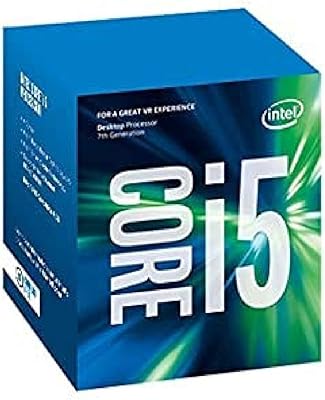
Intel Core i5-7600 7th Gen Desktop Processor
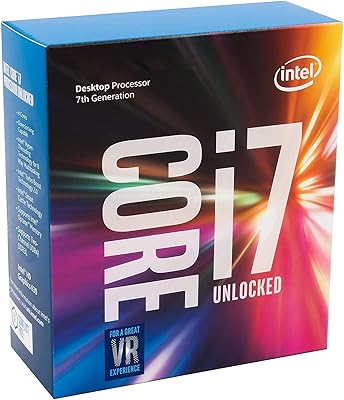
Intel Core i7-7700K Desktop Processor
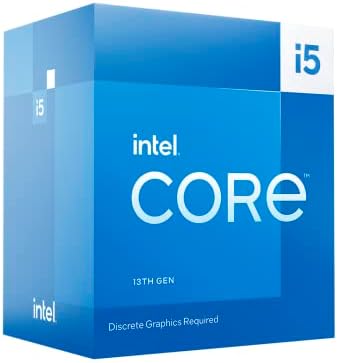
Intel Core i5-13400F Raptor Lake Desktop Processor
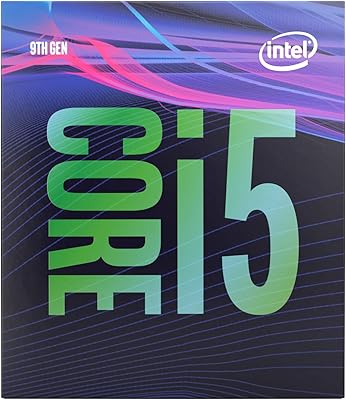
Intel Core i5-9500 Desktop Processor
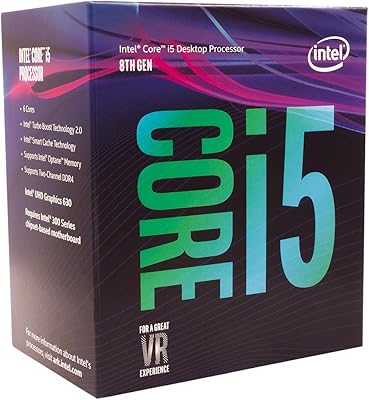
Intel Core i5-8600 Desktop Processor
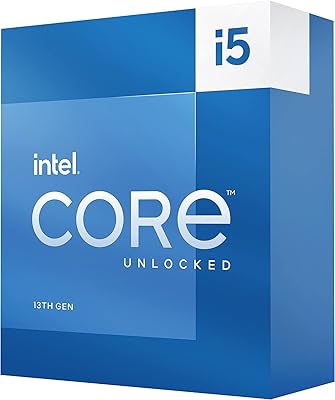
Intel Core i5-13600K Desktop Processor
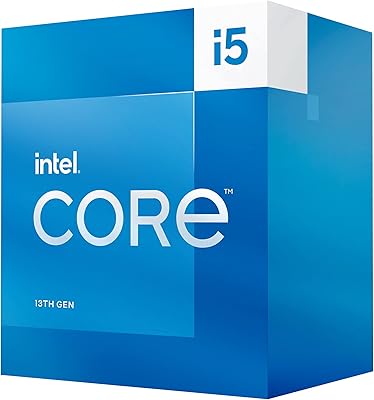
Intel Core i5-13500 Desktop Processor
Intel Core i5-9600KF Desktop Processor
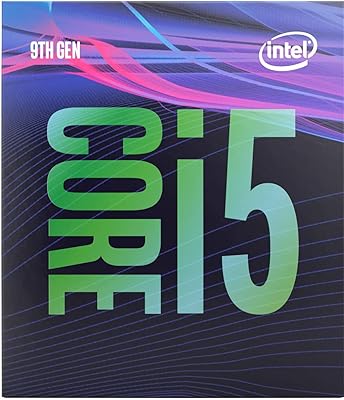
Intel Core i5-9400 Desktop Processor