Overview

The Intel Core i5-14600K 14th Gen Desktop Processor occupies a well-defined space in the processor market — powerful enough for serious workloads, but without asking you to spend enthusiast-tier money. Built on Intel's Raptor Lake Refresh architecture, it refines rather than reinvents the hybrid core design that debuted with 13th Gen, so anyone hoping for a dramatic architectural leap will need to temper their expectations. That said, the chip drops cleanly into any LGA 1700 socket, meaning owners of 600- or 700-series boards can upgrade without touching the rest of their system. Honest and capable, this is Intel polishing what already worked rather than starting from scratch.
Features & Benefits

The 14-core, 20-thread layout is the heart of what makes this chip tick. Six Performance cores handle the heavy lifting — gaming, rendering, compiling — while eight Efficiency cores quietly manage background tasks like system processes or a streaming encoder running alongside your game. Clock speeds peak at 5.3 GHz via Intel Turbo Boost Max 3.0, and in practice that translates to snappy single-thread responsiveness. The unlocked multiplier gives tinkerers genuine headroom to push beyond stock settings. Dual memory compatibility — DDR4 3200 or DDR5 5600 — is a real practical advantage for builders at different stages. A combined 44 MB of cache keeps frequently accessed data close, which noticeably smooths out frame pacing in games.

Best For

This 14th Gen i5 chip hits a sweet spot for a fairly specific type of builder. If you game at 1080p or 1440p and want headroom for simultaneous streaming or creative software, it handles both without compromise. Content creators doing video editing or light 3D work will appreciate how Efficiency cores keep background tasks from bogging down longer renders. If you are already running a 600- or 700-series motherboard, the upgrade path is especially clean since your existing platform stays intact. DDR4 owners can hold onto their current memory and still get strong performance — no forced migration to DDR5 required.

User Feedback

With over 350 ratings averaging 4.6 out of 5 stars, buyers are clearly satisfied overall. Praise most often centers on smooth multitasking, strong in-game frame rates, and a relatively painless overclocking experience for those willing to explore BIOS settings. That said, some users note the chip runs warm under sustained all-core loads, making a quality aftermarket cooler a real necessity rather than an optional extra. Upgraders from 13th Gen report a performance gain that is genuine but modest, which has tempered expectations for some. Opinions on value versus AMD Ryzen competition vary, though the majority of buyers view the i5-14600K as a worthwhile platform investment for the LGA 1700 ecosystem.

Pros

  • Hybrid 14-core, 20-thread architecture handles gaming and background tasks simultaneously without noticeable slowdown.
  • Peak boost speeds of 5.3 GHz deliver sharp single-thread responsiveness in competitive and fast-paced games.
  • Unlocked multiplier makes overclocking accessible even for builders with modest tuning experience.
  • Compatible with both DDR4 and DDR5 memory, giving builders real flexibility when planning or reusing a build.
  • Drops into existing 600- and 700-series motherboards, making it a low-disruption upgrade for Intel platform owners.
  • 44 MB of combined cache reduces in-game stutter and keeps frequently used data readily accessible.
  • Strong community of 350-plus verified buyers with a 4.6-star average reflects consistent real-world satisfaction.
  • Intel UHD Graphics 770 provides a functional fallback for display output during initial builds or GPU troubleshooting.
  • Turbo Boost Max 3.0 intelligently directs the heaviest workloads to the fastest available cores automatically.

Cons

  • No cooler is included in the box, so budget for a quality aftermarket solution before powering on.
  • Runs noticeably warm under sustained all-core loads — airflow and cooling quality are not optional considerations.
  • The performance gap over the i5-13600K is real but modest, making same-platform upgrades hard to justify for everyone.
  • A 125W base power draw makes this a poor choice for small form factor or low-noise builds.
  • Integrated graphics are not capable of gaming — a discrete GPU is a hard requirement for any gaming use case.
  • The Raptor Lake Refresh design means LGA 1700 is nearing the end of its platform lifespan, limiting future upgrade paths.
  • AMD Ryzen competitors at similar performance levels sometimes offer better power efficiency for equivalent workloads.
  • Builders on tight overall budgets may find the platform total cost — chip, board, cooler — adds up quickly.
  • DDR5 performance advantage is only accessible if you invest in newer memory kits, which adds to the overall build cost.

Ratings

The Intel Core i5-14600K 14th Gen Desktop Processor scores here reflect AI-driven analysis of verified global buyer reviews, with spam, bot activity, and incentivized feedback actively filtered out to ensure the results represent genuine ownership experiences. Ratings cover everything from raw gaming performance to thermal behavior and platform longevity, giving prospective buyers a transparent, unvarnished look at where this chip earns its reputation — and where it falls short.
Gaming Performance
91%
Buyers consistently report smooth, high-framerate gaming across demanding titles at 1080p and 1440p, with the 5.3 GHz boost clock keeping single-thread workloads sharp and responsive. Competitive multiplayer games in particular benefit from the chip's low-latency single-core headroom, which translates to noticeably tighter frame timing.
A small portion of users noted that at 4K, GPU bottlenecks quickly overshadow any CPU advantage, making the extra cores feel underutilized. Those comparing directly to AMD Ryzen 7 alternatives report occasional frame pacing parity that narrows the perceived gaming edge.
Multi-Core Throughput
86%
The hybrid 14-core layout genuinely shines when juggling simultaneous tasks — streaming while gaming, running a browser-heavy workflow alongside a DAW, or handling multi-threaded video exports. Efficiency cores absorb background processes without stealing resources from the Performance cores doing the heavy lifting.
For purely multi-threaded workloads like long 3D renders or heavy scientific computing, competing chips with higher core counts or more aggressive all-core boost behavior can edge ahead. The 125W base power envelope also means sustained all-core performance can throttle slightly if cooling is insufficient.
Thermal Management
68%
32%
Under typical gaming loads or mixed productivity tasks, temperatures stay within manageable ranges when paired with a quality 240mm AIO or a high-end air cooler. Most experienced builders report stable daily operation without thermal throttling during moderate work sessions.
Under sustained all-core stress — extended encoding jobs, prolonged compilation runs — this chip runs noticeably warm and demands serious cooling hardware. Buyers who underestimated cooling requirements reported thermal throttling that clipped expected performance, and the absence of an included cooler makes this a real upfront consideration.
Overclocking Headroom
83%
The unlocked multiplier is a genuine asset, and many builders report accessible, rewarding results even without deep overclocking expertise. Using automatic tuning profiles in modern 700-series board firmware, a meaningful bump in all-core performance is achievable with minimal manual intervention.
Manual overclocking headroom is narrower than some enthusiasts hoped — the chip arrives relatively close to its practical ceiling at stock speeds, leaving less room for dramatic gains compared to previous unlocked generations. Voltage and heat scale up quickly beyond moderate overclocks, reinforcing the need for premium cooling.
Platform Compatibility
88%
LGA 1700 socket compatibility means the i5-14600K is a drop-in upgrade for a huge installed base of 600- and 700-series motherboard owners, removing a major friction point from the upgrade process. Dual DDR4 and DDR5 memory support extends that compatibility even further, letting builders choose their memory platform without compromise.
Some 600-series board owners encountered BIOS update requirements before the chip was recognized, which can be frustrating without a compatible CPU already installed to perform the update. LGA 1700 is also approaching end-of-life as a platform, limiting the number of future CPU upgrades available within the same socket.
Value for Money
79%
21%
The consensus among buyers is that the performance-per-dollar ratio holds up well for new builds targeting gaming and content creation, especially when the total platform cost is spread across compatible existing hardware. Users who reused DDR4 memory and an existing LGA 1700 board were particularly satisfied with the overall value equation.
Upgraders from the 13th Gen i5-13600K found the generational performance delta too modest to justify the expense, and AMD Ryzen alternatives at a similar price tier offer competitive multi-threaded throughput with often better power efficiency. The mandatory cooler purchase adds to the real total outlay.
Power Efficiency
63%
37%
At stock settings during lightly loaded or idle states, power draw drops substantially thanks to the Efficiency cores managing background tasks, which keeps everyday desktop use reasonably economical. Builders running modest workloads reported PSU usage well within comfortable margins.
Under full load, the 125W base power and real-world peak draw during boost states pushes total system consumption higher than competing AMD offerings at comparable performance levels. Builders focused on power bills, noise levels, or small form factor thermal envelopes will find this a notable drawback.
Memory Performance
84%
DDR5 5600 support unlocks meaningful bandwidth headroom for memory-sensitive workloads, and users pairing the chip with fast DDR5 kits reported cleaner frame delivery in open-world games that stress system memory. DDR4 users also reported solid results, particularly at XMP-tuned speeds.
The memory performance advantage of DDR5 over DDR4 is real but incremental in most gaming scenarios, leading some users to question whether DDR5 justifies the added kit cost at this performance tier. DDR4 platform support, while convenient, caps bandwidth compared to what the architecture can theoretically utilize.
Integrated Graphics
57%
43%
The Intel UHD Graphics 770 is a reliable fallback for initial system setup, GPU troubleshooting, or driving a display in a workstation context where discrete graphics are not needed. Content professionals using the chip for non-gaming workloads appreciated having a functional display output without depending on a dedicated card.
As a gaming solution the integrated graphics are essentially non-functional — even light modern titles push well beyond what UHD 770 can handle at acceptable frame rates. Any buyer expecting to game without a discrete GPU will be immediately disappointed, and Intel makes no attempt to position this otherwise.
Out-of-Box Experience
74%
26%
Installation is straightforward for anyone with prior Intel build experience, and the chip is recognized instantly by most 700-series boards without additional setup. Buyers new to K-series processors appreciated the clean, no-frills installation process with no thermal paste pre-applied complications.
The lack of an included cooler means first-time builders face an unexpected additional purchase before the system is usable, which a handful of buyers flagged as a frustrating discovery post-checkout. Some 600-series motherboard owners also hit a wall with BIOS compatibility before the chip would POST.
Streaming & Content Creation
82%
18%
Running a software encoder alongside a game is noticeably smoother than on locked or lower-core-count alternatives, with Efficiency cores absorbing the encoder workload without dragging down in-game frame rates. Video editors working in proxy workflows reported responsive timeline scrubbing and faster export queues compared to their previous mid-range chips.
For professional-grade content creation — sustained 4K exports, heavy visual effects work, or large project renders — the chip eventually shows its mid-range ceiling, and users doing this work full-time tended to feel the pull toward higher core count alternatives. The thermal ceiling also compresses sustained encoding performance under prolonged sessions.
Long-Term Reliability
77%
23%
The vast majority of buyers reported stable daily operation over extended ownership periods, with no anomalous failure rates surfacing across the large verified review pool. Intel's platform maturity at LGA 1700 means driver support, BIOS stability, and OS compatibility are all well-established.
Platform longevity is the more nuanced concern — with LGA 1700 nearing the end of Intel's roadmap, buyers planning multi-year incremental upgrades within the same socket will find their options narrowing sooner than they might on a newer platform. A subset of users flagged this specifically as a purchasing regret.
Noise Levels
71%
29%
With a capable cooler and a well-ventilated case, the i5-14600K runs quietly during everyday workloads — productivity tasks, casual browsing, and light gaming rarely push fan curves into audible territory. Builders who invested in quality cooling hardware reported a genuinely quiet daily experience.
Under sustained gaming sessions or heavy computational work, the chip's thermal output forces cooler fans to ramp up noticeably, and users with budget air coolers reported this more acutely. Those targeting near-silent builds flagged the power envelope as a real obstacle to achieving consistently low noise floors.

Suitable for:

The Intel Core i5-14600K 14th Gen Desktop Processor is a strong fit for PC builders who want genuinely capable performance without committing to a flagship-tier budget. Gamers running titles at 1080p or 1440p will find the single-thread speed satisfying, especially when paired with a solid discrete GPU. It also works well for content creators who edit video, stream, or dabble in light 3D work — the hybrid core layout keeps heavy foreground tasks from being starved by background processes. Existing Intel platform owners on 600- or 700-series motherboards will appreciate the clean drop-in compatibility, as no new board is required. DDR4 users get a particularly smooth path here, since the chip supports both DDR4 and DDR5, letting builders upgrade the processor without forcing a memory overhaul. Overclockers who enjoy tuning will also find the unlocked multiplier a genuine invitation rather than a locked door.

Not suitable for:

Buyers hoping for a ground-up architectural leap will come away underwhelmed — the i5-14600K is a refinement of Raptor Lake, not a reinvention, and upgraders from the i5-13600K in particular may struggle to justify the switch on performance gains alone. Users planning to run the chip under sustained all-core loads for extended periods — think long video encodes or heavy compilation jobs — should know this processor runs warm at its 125W base power, and will need a capable aftermarket cooler since none is included in the box. Casual users who only browse the web, handle office documents, or watch media will find far more chip than they need here. Anyone building a compact or low-power system should also look elsewhere, as the thermal and power demands of this unlocked desktop processor are better suited to a mid-tower with adequate airflow. If budget is the primary concern and the workload is light, stepping down in the Intel lineup or considering AMD Ryzen alternatives at lower power envelopes may be more practical.

Specifications

  • Core Count: The processor features 14 cores in a hybrid layout — 6 Performance cores and 8 Efficiency cores — designed to distribute workloads intelligently based on demand.
  • Thread Count: With 20 threads total, the chip can handle a high number of simultaneous tasks without bottlenecking under mixed gaming and productivity workloads.
  • Max Turbo Speed: Performance cores can boost up to 5.3 GHz via Intel Turbo Boost Max 3.0, prioritizing the fastest available core for the most latency-sensitive tasks.
  • Base Power: The processor carries a 125W base power rating, which means adequate case airflow and a capable aftermarket cooler are necessary for stable sustained performance.
  • CPU Socket: Built for the LGA 1700 socket, it is compatible with Intel 600-series and 700-series chipset motherboards, with 600-series boards potentially requiring a BIOS update.
  • L3 Cache: A 24 MB Intel Smart Cache (L3) reduces memory latency and keeps frequently accessed game and application data closer to the processor cores.
  • L2 Cache: An additional 20 MB of L2 cache supplements the L3 pool, contributing to the chip's responsiveness in data-intensive tasks like video editing and compilation.
  • Memory Support: The i5-14600K supports both DDR5 at up to 5600 MT/s and DDR4 at up to 3200 MT/s, giving builders flexibility to work with their existing memory or upgrade to a newer platform.
  • PCIe Lanes: Twenty total PCIe lanes are available, providing sufficient bandwidth for a primary discrete GPU alongside additional storage or peripheral connectivity.
  • Integrated Graphics: Intel UHD Graphics 770 is included, enabling basic display output and light graphical tasks, though a dedicated GPU remains necessary for any gaming workload.
  • Overclocking: The processor ships with an unlocked multiplier, allowing experienced builders to push clock speeds beyond stock settings through motherboard BIOS controls.
  • Generation: This chip belongs to Intel's 14th Gen Raptor Lake Refresh lineup, sharing its underlying architecture with 13th Gen but delivering refined clock speeds and minor efficiency improvements.
  • Model Number: The official Intel model number is BX8071514600K, which corresponds to the boxed retail version of the processor.
  • Turbo Boost: Intel Turbo Boost Max 3.0 is supported, enabling the system to identify and preferentially assign demanding single-threaded workloads to the two fastest P-cores.
  • Dimensions: The physical package measures approximately 4.61 x 4.09 inches in footprint and weighs around 2.82 oz, consistent with standard LGA 1700 desktop processor dimensions.

Related Reviews

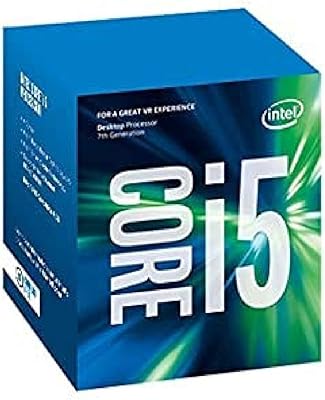
Intel Core i5-7600 7th Gen Desktop Processor
72%
83%
Everyday Performance
78%
Value for Money
86%
Single-Core Speed
61%
Multitasking Capability
67%
Gaming Performance
More
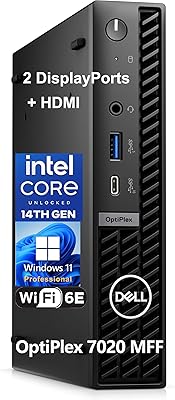
Dell OptiPlex 7020 MFF Mini Desktop Computer
78%
88%
Processing Performance
91%
Thermal & Noise
86%
Build Quality
94%
RAM Capacity
82%
Storage Performance
More
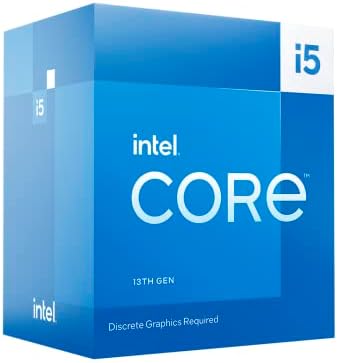
Intel Core i5-13400F Raptor Lake Desktop Processor
75%
88%
Gaming Performance
91%
Value for Money
84%
Multitasking Capability
86%
Platform Compatibility
71%
Thermal Performance
More
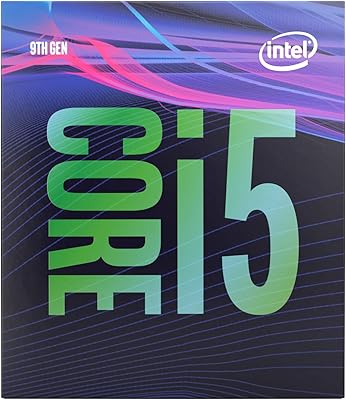
Intel Core i5-9500 Desktop Processor
72%
88%
Everyday Performance
81%
Gaming Capability
91%
Thermal Management
58%
Multi-threaded Workloads
83%
Platform Compatibility
More
Intel Core i5-8600 Desktop Processor
71%
83%
Single-Core Performance
61%
Multithreaded Performance
74%
Gaming Performance
71%
Value for Money
88%
Thermal Efficiency
More
Intel Core i5-11600KF Desktop Processor
67%
84%
Gaming Performance
81%
Overclocking Headroom
58%
Thermal Management
79%
Value for Money
43%
Platform Longevity
More
Intel Core i5-13500 Desktop Processor
87%
88%
Performance for Gaming
91%
Multi-Core Performance
85%
Power Efficiency
84%
Thermal Management
92%
Compatibility with Motherboards
More
Intel Core i5-11400F Desktop Processor
68%
91%
Value for Money
78%
Gaming Performance
82%
Multi-core Throughput
86%
Thermal Management
83%
Platform Compatibility
More
Intel Core i5-9400 Desktop Processor
69%
83%
Everyday Performance
78%
Gaming Performance
81%
Value for Money
74%
Thermal Management
77%
Power Efficiency
More
Intel Core i5-12400 Desktop Processor
75%
86%
Gaming Performance
84%
Multitasking & Productivity
83%
Value for Money
87%
Thermal Management
67%
Platform Compatibility
More

FAQ

Not necessarily. The i5-14600K uses the LGA 1700 socket, so if you already have a 600-series or 700-series Intel motherboard, you are likely good to go. Owners of 600-series boards may need to apply a BIOS update first — check your board manufacturer's support page before installing.

No, it does not. Intel does not include a stock cooler with unlocked K-series processors. Budget for a decent aftermarket air or liquid cooler before you power up, especially given the 125W base power rating.

Yes, absolutely. The Intel Core i5-14600K 14th Gen Desktop Processor supports both DDR4 (up to 3200 MT/s) and DDR5 (up to 5600 MT/s), so there is no forced memory upgrade required. Your motherboard will determine which memory type you can use, as most boards support one or the other but not both simultaneously.

Yes, it handles 1440p gaming well when paired with an appropriate discrete graphics card. Single-thread performance is strong, and the high boost clock ensures games that rely on fast per-core speeds run smoothly. Just keep in mind the GPU will be the bigger factor in high-resolution gaming performance.

The performance difference is real but not dramatic — think 3 to 5 percent in most workloads, occasionally a bit more in specific scenarios. If you are already on a 13600K, the upgrade is hard to justify on raw performance alone. If you are building fresh or coming from an older platform, the gap is much more meaningful.

Under light to moderate loads, temperatures are entirely manageable. Where it gets warm is during sustained all-core workloads — think long video encodes, heavy compilation jobs, or stress tests. A quality aftermarket cooler keeps things in check, but do not expect to run it cool with a budget solution. Adequate case airflow matters too.

The unlocked multiplier makes it more accessible than locked chips, but overclocking still requires some comfort with BIOS settings and monitoring tools. Many builders start with automatic overclocking profiles available in modern board firmware, which is a low-risk way to explore before diving into manual tuning.

You will need a dedicated GPU for gaming. The integrated Intel UHD Graphics 770 can handle desktop tasks and display output, but it is not built for gaming performance. It is useful for initial system setup or as a backup if your GPU ever needs service.

That is a fair concern. LGA 1700 is Intel's current mainstream socket but is expected to be replaced with future generations, so long-term upgrade headroom within the platform is limited. If you are building now and plan to stick with this setup for three to five years without another CPU upgrade, it is still a solid foundation. If you want maximum future flexibility, it is worth factoring that into your decision.

It competes well in gaming and single-threaded tasks, where its high boost clocks give it an edge in many titles. AMD counterparts at similar tiers often have an advantage in power efficiency, drawing less wattage for comparable multi-threaded throughput. Neither side dominates across the board — the right choice often comes down to platform preference, existing hardware, and the specific workload mix that matters most to you.