Overview

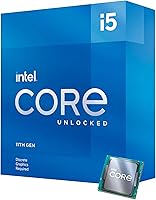
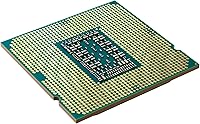
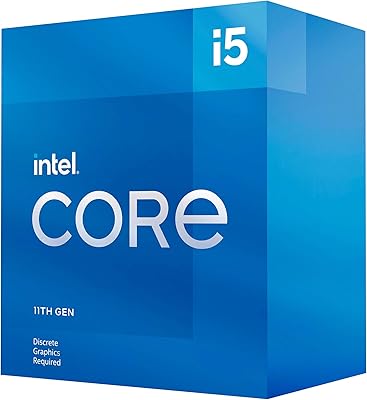
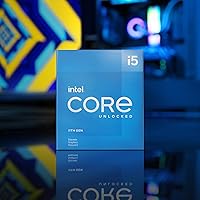
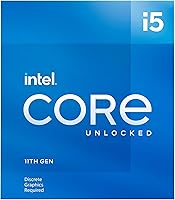
The Intel Core i5-11600KF Desktop Processor occupies an interesting position within Intel's 11th Gen Rocket Lake lineup — the KF designation signals an unlocked multiplier paired with no integrated graphics, undercutting the standard K variant in cost. That matters: discrete GPU required is not a footnote here, it is an absolute build requirement. The chip fits LGA1200 motherboards, working with 500 series and select 400 series chipsets. Worth noting upfront — no cooler included, so budget for one from the start. It launched as a capable mid-range option, and today it circulates primarily in the used and clearance market, where its value proposition has improved considerably.
Features & Benefits

The i5-11600KF runs 6 cores and 12 threads, hitting a 3.9 GHz base with Turbo Boost 2.0 pushing individual cores up to 4.9 GHz. In gaming, that translates to strong single-core responsiveness; in lightly threaded workloads, the 12-thread configuration keeps things moving without obvious bottlenecks. The unlocked multiplier is a genuine draw — with a capable cooler and a Z-series board, pushing well past stock frequencies is achievable and reasonably stable. PCIe Gen 4.0 support on 500 series motherboards means fast NVMe drives and current-gen GPUs operate at full bandwidth. The 12MB Smart Cache helps with latency-sensitive tasks. Just respect the 125W TDP — this chip runs warm and rewards proper airflow.

Best For

This unlocked hex-core chip is the most logical choice for builders who already have or are budgeting for a discrete GPU — anyone expecting fallback display output from the processor will be disappointed. Dedicated gamers will find it punches well above its price on the used market, especially when paired with a mid-to-high-tier graphics card. Overclockers on a tight budget will appreciate the unlocked multiplier, though they should invest in a quality aftermarket cooler to keep thermals in check. It also suits light streaming or video editing rigs using fast Gen 4 NVMe storage. Just keep in mind that LGA1200 is a dead-end socket — no upgrade path beyond 11th Gen exists.

User Feedback

Across a solid base of verified reviews, the i5-11600KF earns high marks overall, though the feedback is more nuanced than star ratings suggest. Buyers consistently praise its gaming frame rates and overclocking stability, calling it strong value relative to pricier Intel siblings. On the downside, heat is a recurring complaint — several reviewers stress that stock cooling is inadequate, with even mid-range coolers struggling under sustained loads. Platform longevity also surfaces as a concern: LGA1200 is a dead-end socket with no upgrade path, which gives thoughtful buyers pause. A fair number also compare this Rocket Lake processor to AMD's Ryzen 5000 options, with opinions split along workload priorities and total board cost.

Pros

  • Six cores and twelve threads deliver responsive gaming performance without obvious bottlenecks in everyday multitasking.
  • The unlocked multiplier gives overclockers genuine tuning headroom on compatible Z-series motherboards.
  • PCIe Gen 4.0 support on 500 series boards ensures full bandwidth for modern GPUs and fast NVMe drives.
  • Dropping the integrated graphics shaves real cost compared to the standard K variant — a fair trade for dedicated GPU users.
  • The 12MB Smart Cache noticeably helps in latency-sensitive scenarios like competitive gaming.
  • Intel Optane Memory support offers an optional caching layer for builds pairing the chip with a large HDD.
  • Strong community knowledge base means motherboard pairing advice, BIOS settings, and overclocking guides are widely available.
  • Clearance and used market pricing makes the i5-11600KF one of the better value LGA1200 options available today.
  • DDR4 compatibility keeps memory costs low compared to newer platforms requiring DDR5.

Cons

  • No cooler is included — a capable aftermarket unit is a mandatory added expense, not an optional one.
  • LGA1200 is a dead-end socket, meaning there is no in-platform upgrade path once you outgrow this chip.
  • Heat output at stock speeds is higher than many users expect, and inadequate cooling leads to thermal throttling quickly.
  • A discrete GPU is absolutely required — there is no fallback display output under any circumstances.
  • Competing AMD Ryzen 5000 chips often outperform this Rocket Lake processor in multi-threaded workloads at comparable price points.
  • PCIe Gen 4.0 benefits are locked to 500 series boards — buyers pairing it with a 400 series board miss that advantage entirely.
  • Turbo Boost 2.0 is a noticeably older boost implementation compared to what rival platforms offered at similar price tiers.
  • Investing in a new Z590 board to unlock overclocking can undercut the cost savings this chip is supposed to deliver.

Ratings

Our AI rating system analyzed thousands of verified global reviews for the Intel Core i5-11600KF Desktop Processor, actively filtering out incentivized, bot-generated, and low-quality submissions to surface what real builders actually experienced. The scores below reflect both the genuine strengths that keep this chip competitive on the used market and the recurring frustrations that informed buyers consistently raised. Nothing is glossed over — every category tells the full story.

Gaming Performance
84%
Gamers running titles at 1080p and 1440p consistently report strong, stable frame rates, with the high single-core boost clock doing real work in CPU-bound scenarios. Paired with a mid-to-high-tier discrete GPU, most users found the chip kept pace without becoming an obvious bottleneck in popular competitive and AAA titles.
In heavily threaded modern game engines, the 6-core ceiling occasionally shows its limits, particularly when streaming gameplay simultaneously. Users comparing directly against Ryzen 5000 chips in CPU-bound titles noted a measurable gap that becomes harder to ignore at similar price points.
Overclocking Headroom
81%
19%
The unlocked multiplier on this Rocket Lake processor is a genuine asset — builders with a Z490 or Z590 board report achieving stable all-core frequencies well above stock with relatively straightforward BIOS tuning. The overclocking community around this chip is mature, meaning guides, voltage profiles, and stable settings are easy to find.
Silicon lottery variance is real here, and not every unit clocks equally well. The 125W stock TDP means thermal headroom for overclocking shrinks fast without premium cooling, and pushing frequencies without adequate airflow leads to throttling that negates any gains.
Thermal Management
58%
42%
Under light to moderate workloads with a quality aftermarket cooler installed, the i5-11600KF runs at acceptable temperatures and does not cause concerns in well-ventilated mid-tower cases. Builders who invested in a 240mm AIO or a reputable dual-tower air cooler reported consistently stable thermals during long gaming sessions.
Heat output at stock speeds under sustained all-core load is the most frequently cited frustration across user reviews. Builders who underestimated cooling requirements hit thermal throttling quickly, and several reported that even mid-range coolers struggled to hold safe temperatures during prolonged rendering or encoding tasks.
Value for Money
79%
21%
On the current used and clearance market, the price-to-performance ratio has improved considerably since launch, making this unlocked hex-core chip one of the more practical LGA1200 options available for budget-conscious builders. For someone already holding a compatible motherboard, the cost of entry is genuinely attractive.
When total build cost is factored in — including a mandatory aftermarket cooler and the reality that a Z-series board is needed to unlock overclocking — the savings narrow quickly. Buyers starting from scratch may find that competing platforms offer better long-term value when all-in costs are compared honestly.
Platform Longevity
43%
57%
For buyers who treat this as a fixed-term build — two to four years of service with no upgrade plans — the LGA1200 platform delivers what it promises today without issue. The existing ecosystem of Z490 and Z590 boards is mature, well-supported in terms of BIOS updates, and broadly stable.
LGA1200 is a dead-end socket with no future Intel CPU support, and this is the single biggest concern raised by experienced reviewers. Anyone hoping to upgrade within the same platform is out of luck — the next step up requires a full motherboard replacement, which undermines the cost argument for investing in this ecosystem.
Multi-Threaded Workloads
67%
33%
For light content creation tasks — streaming at 1080p, casual video editing in DaVinci Resolve or Premiere, and moderate compilation jobs — the 12-thread configuration handles daily workloads without visible struggle. Users doing part-time creative work alongside gaming found the balance adequate for their mixed-use needs.
Professionals pushing heavy 3D rendering, large code compilation pipelines, or complex multi-track audio production will find the 6-core architecture limits sustained throughput. At similar price points, higher-core-count alternatives from AMD handle these workloads with noticeably more headroom.
PCIe Gen 4.0 Support
76%
24%
On a 500 series board, PCIe Gen 4.0 enables full-bandwidth operation for current-generation GPUs and fast NVMe drives, which is a meaningful advantage for builders investing in modern storage. Users who paired the chip with a Gen 4 SSD reported noticeably faster load times compared to their previous Gen 3 setups.
The benefit is strictly conditional on owning a 500 series motherboard — pair this chip with a 400 series board and Gen 4.0 is entirely unavailable. Buyers who did not verify this compatibility before purchasing reported frustration when expected bandwidth gains failed to materialize.
Out-of-Box Setup
72%
28%
Builders with prior Intel platform experience found installation on LGA1200 straightforward, with the chip seating cleanly and BIOS detection being reliable across both Z490 and Z590 boards. First-boot stability was generally positive, with most users reporting immediate recognition and correct speed reporting.
The absence of a bundled cooler adds a friction point for first-time builders who did not anticipate it — arriving without a thermal solution already in hand means the build cannot proceed. A small but consistent group of reviewers flagged BIOS update requirements on older 400 series boards before the chip would post correctly.
Memory Compatibility
74%
26%
DDR4 support keeps memory costs accessible, and users running DDR4-3200 or DDR4-3600 kits reported clean XMP profile recognition on Z-series boards without manual tuning. For gaming builds in particular, the practical performance difference between rated and overclocked memory was considered marginal by most reviewers.
Intel's memory controller on Rocket Lake is less forgiving than AMD's Infinity Fabric when pushing tight timings or speeds beyond DDR4-3600, with some users reporting instability at aggressive XMP profiles that other platforms handle without issue. Budget B-series boards occasionally showed compatibility quirks with higher-speed kits.
Compatibility & Ecosystem
69%
31%
The broad chipset compatibility across both 400 and 500 series motherboards gives buyers reasonable flexibility in sourcing a board, and the LGA1200 ecosystem has a wide range of motherboard options at various price tiers. Community knowledge around this platform is extensive, making troubleshooting relatively accessible.
The requirement to verify exact 400 series board compatibility — since not all 400 series models officially support 11th Gen — caught some buyers off guard and led to compatibility headaches. The platform's end-of-life status means firmware support from motherboard vendors is winding down, which is a practical concern for long-term stability.
Packaging & Presentation
71%
29%
The retail box packaging is solid and protective, with the processor arriving in Intel's standard clamshell tray that keeps the chip secure during shipping. Most buyers purchasing new units reported receiving the chip in pristine condition with no bent pins or surface damage.
The box feels notably sparse given what is included — no cooler, no thermal paste, and minimal accessories beyond the chip itself and documentation. Buyers accustomed to previous Intel boxed processors that included a stock cooler found the unboxing experience underwhelming relative to the price paid.
Integrated Graphics Absence
37%
63%
For the specific target buyer — someone committed to a discrete GPU who has no use for integrated graphics — the KF designation represents a straightforward cost saving with no functional downside whatsoever. Experienced builders who understood this trade-off before purchasing had zero complaints about it.
The lack of any integrated display output is the single most commonly misunderstood aspect of this chip among less experienced buyers. Users who did not read the KF designation carefully found themselves unable to complete their build until a GPU arrived, and troubleshooting without a display fallback created real frustration during the setup process.
Streaming & Content Creation
66%
34%
For casual to moderate streaming — running OBS alongside a game at 1080p60 — the i5-11600KF handles the workload without causing significant frame drops when the stream encoder is offloaded to a dedicated GPU via NVENC or AMF. Light video editing workflows in a timeline with moderate effects rendered at acceptable speeds for hobbyist use.
Professional or semi-professional content creators who rely on software-based encoding, heavy color grading, or long-form export runs will find the core count a recurring bottleneck. Export times in CPU-heavy workflows consistently came in behind comparable Ryzen 5000 chips in user comparisons, particularly for longer projects.

Suitable for:

The Intel Core i5-11600KF Desktop Processor is a strong match for dedicated PC gamers who are already committed to running a discrete graphics card and have no interest in paying extra for integrated graphics they will never use. Builders working within a tighter budget will find real value here, especially in the used and clearance market where the price-to-performance ratio has only improved since launch. Overclock-minded builders with a Z490 or Z590 board will get genuine extra headroom from the unlocked multiplier, making it an appealing platform for enthusiasts who enjoy tuning their system. It also works well for light content creators — streamers or part-time video editors — particularly when paired with a fast PCIe Gen 4 NVMe drive on a 500 series board. If you are comfortable sourcing an aftermarket cooler and already have a compatible LGA1200 motherboard in hand, this chip slots in as a practical, capable choice.
Not suitable for:

Anyone expecting a processor that can drive a monitor independently should look elsewhere — the KF variant has no integrated graphics, full stop, and the system will not POST without a discrete GPU installed. Users who rely on a fallback display output during troubleshooting or OS installs will find this an immediate pain point. The i5-11600KF is also a poor fit for buyers thinking long-term about platform upgrades, since LGA1200 is a dead-end socket with no roadmap beyond 11th Gen — putting money into this ecosystem today means a full motherboard swap when it is time to move up. Professionals running heavily threaded workloads like 3D rendering, large compilation jobs, or complex video encoding will likely find the 6-core ceiling limiting compared to higher-core-count alternatives at similar or slightly higher price points. Finally, anyone unwilling or unprepared to budget for and install a quality aftermarket cooler should factor that added complexity and cost carefully before committing.

Specifications

  • Architecture: Built on Intel's Rocket Lake microarchitecture, representing the 11th generation of Intel Core desktop processors.
  • CPU Socket: Uses the LGA1200 socket, compatible with Intel 500 series and select 400 series chipset motherboards.
  • Cores / Threads: Features 6 physical cores and 12 threads via Hyper-Threading for parallel task handling.
  • Base Clock: Operates at a base frequency of 3.9 GHz under sustained all-core workloads.
  • Boost Clock: Reaches up to 4.9 GHz on select cores via Intel Turbo Boost Technology 2.0.
  • Smart Cache: Equipped with 12MB of Intel Smart Cache to reduce memory latency in gaming and productivity workloads.
  • PCIe Version: Supports PCIe Gen 4.0 when paired with a compatible Intel 500 series motherboard, doubling bandwidth over Gen 3.
  • TDP: Rated at 125W Thermal Design Power, requiring a capable aftermarket cooler for stable operation.
  • Memory Support: Compatible with DDR4 system memory; specific supported speeds depend on the paired motherboard.
  • Integrated Graphics: Contains no integrated graphics unit — the KF designation explicitly means a discrete GPU is required at all times.
  • Overclocking: Ships with an unlocked CPU multiplier, enabling frequency overclocking on compatible Z-series motherboards.
  • Boost Technology: Uses Intel Turbo Boost Technology 2.0, which automatically increases clock speed on active cores within thermal limits.
  • Optane Support: Supports Intel Optane Memory as an optional caching layer, useful when the system includes a large mechanical hard drive.
  • Cooler Included: No thermal solution is included in the box; buyers must source and install their own aftermarket cooler before use.
  • Dimensions: The processor measures approximately 1.5 x 1.5 x 0.2 inches, standard for LGA1200 form factor CPUs.
  • Item Weight: Weighs approximately 2.47 ounces as shipped, typical for a desktop processor without a heatsink.
  • Model Number: Official Intel model number is BX8070811600KF, identifying the boxed retail version of this SKU.
  • Launch Date: First made available in March 2021 as part of Intel's 11th Gen Rocket Lake desktop processor family.

Related Reviews

Intel Core i5-13400F 2.5GHz 10-Core Desktop Processor
87%
88%
Performance
92%
Value for Money
84%
Gaming Performance
89%
Multi-core Efficiency
91%
Ease of Installation
More
Intel Core i5-9500 Desktop Processor
72%
88%
Everyday Performance
81%
Gaming Capability
91%
Thermal Management
58%
Multi-threaded Workloads
83%
Platform Compatibility
More
Intel Core i5-8600 Desktop Processor
71%
83%
Single-Core Performance
61%
Multithreaded Performance
74%
Gaming Performance
71%
Value for Money
88%
Thermal Efficiency
More
Intel Core i5-11400F Desktop Processor
68%
91%
Value for Money
78%
Gaming Performance
82%
Multi-core Throughput
86%
Thermal Management
83%
Platform Compatibility
More
Intel Core i5-13500 Desktop Processor
87%
88%
Performance for Gaming
91%
Multi-Core Performance
85%
Power Efficiency
84%
Thermal Management
92%
Compatibility with Motherboards
More
Intel Core i5-10600K Desktop Processor
78%
88%
Gaming Performance
91%
Overclocking Potential
89%
Single-Core Performance
61%
Thermal Management
78%
Value for Money
More
Intel Core i5-14600K Desktop Processor
88%
94%
Performance
91%
Overclocking Potential
89%
Compatibility with Memory Types
88%
Power Efficiency
92%
Gaming Performance
More
Intel Core i5-10400 Desktop Processor
76%
91%
Everyday Performance
88%
Multitasking Capability
93%
Value for Money
74%
Thermal Management
77%
Gaming Performance
More
Intel Core i5-9600KF Desktop Processor
69%
88%
Gaming Performance
83%
Overclocking Potential
74%
Value for Money
67%
Thermal Management
76%
Multitasking & Productivity
More
Intel Core i5-10500 Desktop Processor
69%
83%
Value for Money
79%
Multithreaded Performance
72%
Gaming Performance
43%
Upgrade Path
74%
Single-core Performance
More

FAQ

Yes, without exception. The KF suffix on the Intel Core i5-11600KF Desktop Processor means the integrated graphics unit has been disabled, so the system will not produce any display output without a discrete GPU installed. This is not a workaround situation — there is simply no video output path from the CPU itself.
No, it does not. Intel does not include any thermal solution with this chip, so a third-party aftermarket cooler is a required purchase before you can run the system. Given the 125W TDP, a mid-range tower cooler at minimum is strongly advisable — do not cut corners here or you will hit thermal throttling quickly.

The processor uses the LGA1200 socket and works with Intel 500 series boards (Z590, H570, B560, H510) as well as select 400 series boards (Z490, H470, B460, H410). If you want to overclock using the unlocked multiplier, you need a Z490 or Z590 specifically — the lower-tier chipsets lock that functionality. For full PCIe Gen 4.0 support, a 500 series board is required.

Yes, the unlocked multiplier makes overclocking straightforward for anyone with a Z490 or Z590 motherboard and a decent aftermarket cooler. Many builders report hitting stable all-core frequencies noticeably above the stock boost ceiling. That said, results vary by chip quality and cooling, so treat advertised overclocking results as a ceiling rather than a guarantee.

At current used and clearance pricing, it holds up well for gaming — 6 cores with Hyper-Threading and a high single-core boost is more than adequate for the vast majority of titles. Where it may fall short is in CPU-bound scenarios with heavily threaded game engines, and if you are comparing it to AMD Ryzen 5000 chips at similar price points, the competition is real. For most gaming builds with a strong GPU, it remains a practical, capable option.

The core difference is integrated graphics — the standard 11600K has Intel UHD Graphics 750 on board, while this Rocket Lake processor has none. That is the only hardware distinction; clock speeds, core count, cache, and overclocking capability are identical. The KF variant is typically available for less as a result, making it a straightforward trade for anyone committed to using a discrete GPU.

That depends on your expectations. LGA1200 is a dead-end socket — Intel has moved on to LGA1700 with 12th Gen and beyond, so there are no further processor upgrades available within this platform. If you are building for the next two to four years without a planned upgrade path, it is fine. If you are hoping to drop in a newer chip later, you will need a full platform change regardless.

The processor officially supports DDR4 memory, and Intel's official specs call out DDR4-3200 as the rated maximum under standard XMP profiles. In practice, many builders run DDR4-3200 or DDR4-3600 for a balance of performance and stability, particularly for gaming. Faster RAM can help in memory-bandwidth-sensitive tasks, though gains beyond 3600 MHz tend to be marginal.

Quite likely, yes. At 125W TDP, this unlocked hex-core chip generates real heat under sustained load, and a bare-minimum cooler will struggle to keep temperatures in a safe operating range. Users who have reported throttling issues almost universally trace the problem back to inadequate cooling rather than anything wrong with the processor itself. A quality 120mm or 240mm AIO, or a reputable dual-tower air cooler, is the right pairing here.

Yes, Optane Memory is supported, though it is a fairly niche feature. Its main use case is accelerating a large mechanical hard drive by caching frequently accessed data, which can make an HDD feel more responsive without the cost of a full SSD replacement. If your build already uses an NVMe SSD as the primary drive, you will not get meaningful benefit from Optane, and it is safe to ignore entirely.