Overview

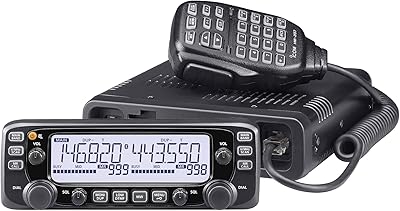
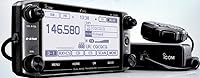
The Icom ID-5100A Dual-Band Mobile Ham Radio Transceiver sits at the premium end of the mobile ham radio market, packing capabilities that would have required multiple units just a decade ago. Built for licensed operators who want more than basic FM voice, it covers both 144 MHz and 440 MHz bands and adds D-STAR digital mode support — a protocol that delivers cleaner audio and data transmission over repeater networks. A built-in GPS receiver and touchscreen display set it apart from older button-heavy rigs. Most installations land as a dashboard mount in a vehicle, which is exactly the use case Icom designed around.
Features & Benefits

The touchscreen on the ID-5100A makes a real difference day to day. Rather than cycling through nested menus with a rotary knob, you tap your way to frequency, repeater settings, and D-STAR configuration with far less frustration. D-STAR is a digital voice and data protocol that can link repeaters globally via the internet, meaning clear contacts across the country on a local frequency. The internal GPS feeds into D-PRS, Icom's position-reporting system, genuinely useful during mobile operation. USB connectivity rounds things out, enabling firmware updates and PC audio interfacing without requiring any additional hardware purchases.

Best For

This dual-band mobile rig is squarely aimed at Technician-class licensees and above who want to move beyond analog-only operation. If you are already active on D-STAR repeaters or planning to get there, it fits naturally into that ecosystem. Emergency communication volunteers will appreciate the dual-band coverage and digital data capability, both of which appear in EMCOMM deployments regularly. Commuters who value position reporting will find the GPS integration useful rather than just a checkbox feature. And if you have been running an older analog mobile for years, this Icom transceiver offers a noticeable step forward without demanding a completely new skill set.

User Feedback

Owners of this dual-band mobile rig tend to be satisfied overall, with a 4.3-star average reflecting genuine appreciation rather than blind enthusiasm. The touchscreen gets consistent praise for responsiveness, and GPS lock speed comes up often as a pleasant surprise. D-STAR network compatibility draws positive comments from operators who already have repeater access. That said, the D-STAR setup process has a real learning curve — several reviewers note that configuring repeater lists and linking takes time, especially coming from analog backgrounds. Audio quality on both ends of a contact is generally reported as clean, and long-term durability appears solid based on multi-year ownership accounts.

Pros

  • Touchscreen navigation is noticeably more intuitive than the multi-knob layouts found on older mobile rigs.
  • D-STAR digital voice delivers cleaner audio quality compared to analog FM, especially on weaker signals.
  • Built-in GPS locks quickly and feeds position data into D-PRS without any external hardware.
  • Dual-band 144/440 MHz coverage handles the majority of repeater activity across North America.
  • USB port allows firmware updates and PC audio interfacing without additional adapters.
  • Long-term owners report solid build quality and reliable performance over multiple years of vehicle use.
  • Dashboard-mount form factor installs cleanly, and the included antenna hardware gets you on the air faster.
  • D-STAR repeater linking via the internet opens up long-distance contacts on local frequencies.
  • The ID-5100A holds a strong 4.3-star rating, reflecting broadly positive real-world ownership experiences.

Cons

  • D-STAR repeater list setup and linking configuration has a steep learning curve for operators new to digital modes.
  • No D-STAR repeaters in your area means paying for a major feature you will rarely or never use.
  • Price point is considerably higher than analog-only dual-band mobiles covering the same frequency range.
  • Strictly a vehicle-mount unit — not suitable for portable, handheld, or backpack-style field operation.
  • Some owners note the menu structure, while touch-friendly, still requires consulting the manual to master fully.
  • The Amazon listing contains metadata inconsistencies; buyers should verify specs against official Icom documentation before purchasing.
  • USB audio interfacing works well but may require driver installation and additional software setup on some computers.
  • Heavier investment means the learning curve carries real financial stakes for operators who end up not using D-STAR.

Ratings

The scores below reflect our AI-driven analysis of verified owner reviews for the Icom ID-5100A Dual-Band Mobile Ham Radio Transceiver, sourced globally and filtered to remove incentivized, bot-generated, and outlier submissions. Each category is scored to honestly represent both the strengths that make this rig stand out and the friction points that real operators encounter in daily use. Nothing is glossed over — the results reflect what it is actually like to own and operate this unit over months and years.

D-STAR Performance
88%
Operators with access to D-STAR repeaters consistently report clean digital voice quality, noticeably better than analog FM on marginal signals during highway drives or in areas with weak repeater coverage. Gateway linking works reliably, and callsign routing functions as expected across linked networks.
Performance is entirely dependent on local D-STAR infrastructure — operators in rural or underserved areas find this feature largely inaccessible. Initial gateway registration and repeater programming adds setup friction that analog rigs simply do not require.
Touchscreen Usability
83%
Users upgrading from traditional button-heavy mobiles frequently mention how much faster it is to change frequencies, access repeater memory channels, and navigate menus with direct taps rather than cycling through rotary encoder steps. The screen is responsive enough for gloved use in cooler conditions.
The touchscreen is not immune to criticism — some operators find it less reliable in direct sunlight, and a few report needing two hands to operate comfortably while stationary. It does not fully replace physical controls, and some menus still require multiple tap layers to reach common settings.
GPS & Position Reporting
86%
GPS lock speed earns consistent praise, with most owners reporting solid satellite acquisition within a minute or two of powering on, even from a cold start. D-PRS position reporting integrates naturally for operators already familiar with APRS concepts, making the ID-5100A genuinely useful for mobile tracking during events or EMCOMM deployments.
Setting up D-PRS reporting requires navigating several menu layers and understanding D-STAR routing logic, which is not intuitive for newer operators. Those expecting plug-and-play position reporting similar to a standalone APRS radio will need to invest real time in the configuration process.
Audio Quality
81%
19%
Both transmit and receive audio quality get positive marks from the majority of owners, with received digital voice described as noticeably cleaner than analog FM during weak-signal contacts. On analog, the receive audio is clear and well-balanced for extended monitoring sessions during daily commutes.
A minority of reviewers note that transmit audio can sound slightly processed on D-STAR to contacts on the other end, which is partly inherent to the codec rather than the radio itself. Speaker volume, while adequate, is not exceptional in noisy vehicle environments without an external speaker.
Ease of Setup
58%
42%
The physical installation — mounting the head unit, running the separation cable, and connecting power — is straightforward by mobile transceiver standards. Operators familiar with Icom's menu logic from previous rigs will find some familiarity in the interface layout.
D-STAR configuration is widely cited as the most frustrating part of ownership, particularly for operators new to digital modes. Repeater list management, callsign registration, and linking commands involve enough steps that several reviewers specifically mention needing community forums or YouTube guides to get fully operational.
Build Quality
84%
Long-term owners — some reporting three to five years of daily vehicle use — consistently describe the unit as holding up well under the temperature swings and vibration inherent to vehicle environments. Connector quality and the control head feel solid rather than plasticky.
The touchscreen surface shows minor wear over extended use, and a small number of owners report sensitivity drift after years of operation. The unit is not rated for harsh outdoor or waterproof use, which matters for operators who occasionally move it between vehicles or environments.
Value for Money
67%
33%
For operators who actively use D-STAR, the feature density — digital modes, internal GPS, touchscreen, USB — at this price point is difficult to match with competing brands. Buyers who are already embedded in the D-STAR ecosystem tend to feel the investment is well-justified.
Operators who purchase this rig and later discover limited D-STAR repeater access in their area frequently express regret, feeling they paid for capabilities they cannot realistically use. Compared to analog-only dual-band mobiles at a fraction of the price, the value equation only holds if digital features see regular use.
Dual-Band Coverage
89%
Coverage across 144 MHz and 440 MHz handles essentially all mainstream VHF/UHF amateur activity — local club nets, emergency communication activations, and regional repeater linking — without any gaps. Operators report clean, reliable performance on both bands across a wide range of repeater distances.
The radio does not cover HF bands, which limits its appeal to operators wanting a single mobile unit for all-band operation. Those coming from multi-band HF/VHF/UHF mobile setups will still need a separate HF rig alongside this dual-band transceiver.
USB Connectivity
76%
24%
The USB port provides genuine utility for firmware updates without requiring proprietary cables, and PC audio interfacing opens the door to software-based logging and some digital mode applications. Operators who maintain their radio's firmware report the update process is relatively painless.
USB audio interfacing for non-D-STAR digital modes requires additional software configuration that is not well-documented in the standard manual. Driver compatibility on newer operating systems occasionally requires troubleshooting, which catches some users off guard.
Installation Experience
79%
21%
The head-unit separation design is a practical advantage for vehicles with limited dash space, and the included hardware covers the basics needed to get mounted and on the air without an immediate trip to the parts store. Most operators report a clean installation experience within a couple of hours.
Routing the separation cable neatly through a vehicle interior requires patience and some DIY comfort — it is not a job for operators who have never installed mobile electronics before. The included mounting bracket options are functional but fairly basic compared to some aftermarket alternatives.
Memory & Channel Management
72%
28%
The memory system supports a substantial number of channels, and the touchscreen makes scrolling through programmed repeaters faster than on older rigs with small alphanumeric displays. Operators who invest time in organizing their memory banks report smooth day-to-day frequency management.
Bulk programming via the keypad is tedious, and most owners end up relying on third-party software for memory management — software that is not always intuitive and occasionally has compatibility issues with newer computer operating systems. This is a notable friction point that Icom has not fully resolved across firmware updates.
EMCOMM Suitability
82%
18%
Emergency communication volunteers who have deployed this Icom transceiver in the field report that the dual-band coverage, D-STAR data capability, and GPS reporting create a genuinely capable EMCOMM platform in a single unit. It integrates well with served-agency nets that use D-STAR infrastructure.
Its dependence on D-STAR repeater infrastructure means it is less versatile in truly austere or infrastructure-down scenarios where only analog simplex communication is viable. Operators in EMCOMM roles should ensure their served area actually has active D-STAR capability before committing to this platform.
Long-Term Reliability
85%
The consensus among multi-year owners is that the ID-5100A holds up well without significant hardware failures, which matters for a unit that sits in a vehicle year-round and experiences daily thermal cycling. Icom's reputation for durable mobile transceivers is generally validated by owner reports here.
Firmware updates, while available, have not always resolved every reported quirk, and a small number of long-term owners describe intermittent touchscreen calibration drift. Icom's customer support experience varies significantly depending on region and dealer relationship.

Suitable for:

The Icom ID-5100A Dual-Band Mobile Ham Radio Transceiver is a strong fit for licensed amateur radio operators — Technician class and above — who want to do more than basic analog voice work from their vehicle. If you are already active on D-STAR repeaters, or your local club has invested in D-STAR infrastructure, this rig slots in without compromise. Emergency communication volunteers will find the combination of dual-band coverage and digital data transmission particularly valuable, since many EMCOMM nets operate on exactly these frequencies. Commuters and road-trip operators who want GPS position reporting baked in — rather than bolted on as an afterthought — will appreciate the integrated D-PRS functionality. It also makes good sense for anyone upgrading from an older analog-only mobile who wants a modern interface without jumping to a completely unfamiliar platform.

Not suitable for:

The Icom ID-5100A Dual-Band Mobile Ham Radio Transceiver is not the right call for everyone, and it is worth being honest about that. If you are a new ham still getting comfortable with basic FM repeater operation, the D-STAR configuration process will likely feel overwhelming before you are ready for it. Operators who have no D-STAR repeaters within practical range will be paying for a significant feature they simply cannot use. Budget-conscious buyers or those who only need occasional mobile operation may find the investment difficult to justify against simpler dual-band alternatives that cover the same frequencies at a lower cost. It is also not designed for portable or handheld use — this is a dedicated vehicle-mount unit, so anyone expecting to carry it into the field on foot should look elsewhere.

Specifications

  • Model Number: The unit is officially designated as the ID-5100A, the DELUXE variant of Icom's ID-5100 series mobile transceiver.
  • Frequency Bands: This rig covers 144 MHz (2-meter VHF) and 440 MHz (70-centimeter UHF), the two most widely used amateur radio mobile bands.
  • Digital Protocol: D-STAR (Digital Smart Technologies for Amateur Radio) is supported for both digital voice and low-speed data transmission over compatible repeaters.
  • Display Type: A touchscreen interface is built into the control head, allowing tap-based menu navigation rather than relying solely on physical knobs and buttons.
  • GPS: An internal GPS receiver is included and supports D-PRS position reporting, which transmits the operator's location data over the D-STAR network.
  • Connectivity: A USB port provides PC connectivity for firmware updates, audio interfacing, and logging applications without requiring additional hardware.
  • Mount Type: The transceiver is designed for dashboard mounting in a vehicle, with the control head and main body separable for flexible installation.
  • Package Dimensions: The boxed unit measures 12.52 x 10.98 x 5.55 inches, accommodating the transceiver body, control head, and included accessories.
  • Unit Weight: The transceiver body weighs approximately 9.3 ounces, keeping dashboard and bracket installation manageable for most vehicles.
  • Included Accessories: The package includes a GPS receiver and antenna, providing the core hardware needed to activate position-reporting functionality out of the box.
  • Color: The unit is finished in black, consistent with Icom's standard mobile transceiver aesthetic and practical for vehicle interiors.
  • Power Source: Like all mobile transceivers in this class, the ID-5100A is designed to run on 13.8V DC vehicle power, typically wired directly to the battery.
  • User Rating: The ID-5100A holds a 4.3-out-of-5-star average rating based on 60 verified Amazon ratings as of the available listing data.
  • Market Availability: The unit first became available in May 2014 and has not been discontinued by the manufacturer as of the listing data reviewed.
  • ASIN: The Amazon Standard Identification Number for this unit is B00K5BNHT0, useful for cross-referencing listings and accessories.

Related Reviews
Radioddity DB50 Dual Band Mobile Radio Transceiver
79%
88%
Transmit Power & Range
91%
Receiver Coverage
86%
Audio Clarity
84%
Channel Management
89%
Chirp Compatibility
More
Retevis RT95 Dual Band Mobile Ham Radio
77%
88%
Audio Clarity
67%
Ease of Programming
91%
Display & Readability
86%
Value for Money
74%
Build Quality
More
AnyTone AT-778UV Dual Band Mobile Radio
79%
83%
Build Quality
88%
Audio Clarity
86%
Dual-Band Coverage
79%
Display & Interface
51%
Programming Software
More
Icom IC-2730A Dual Band VHF/UHF Mobile Radio
78%
93%
Transmit Power
91%
Dual-Band Receive
88%
Build Quality
89%
Audio Clarity
54%
Menu Navigation
More
AnyTone AT-779UV Mini Size Dual Band Transceiver Mobile Radio
85%
88%
Performance
85%
Build Quality
90%
Ease of Setup
65%
Software Compatibility
87%
Power Output
More
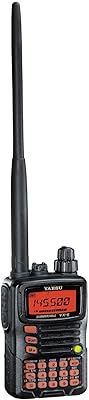
AnyTone AT-5888UV Dual Band Mobile Radio
69%
83%
RF Performance
78%
Build Quality
86%
Value for Money
81%
Cross-Band Repeat
74%
Display & Interface
More
TYT TH-8600 Dual Band Mobile Transceiver
76%
88%
Waterproof Protection
79%
RF Performance
83%
Build Quality
81%
Audio Clarity
61%
Ease of Programming
More
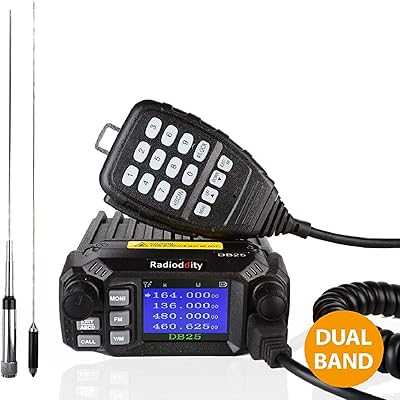
Yaesu VX-6R Tri-Band Ham Radio Transceiver
80%
93%
Build Quality & Durability
91%
Waterproofing & Weather Resistance
88%
Receiver Performance
86%
Audio Clarity
77%
Transmit Power & Range
More
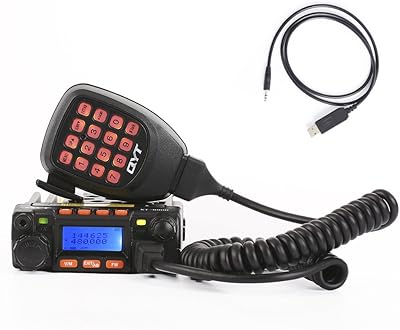
BTECH UV-50X2 Second Gen Mobile Radio
73%
88%
Transmission Performance
84%
Audio Clarity
79%
Build Quality
51%
Ease of Setup
47%
User Interface & Menu
More
Radioddity DB25 Pro Dual Band Mini Mobile Radio
88%
91%
Value for Money
87%
Signal Reception
89%
Ease of Use
92%
Display Quality
84%
Durability
More

FAQ

Yes, absolutely. This is a licensed amateur radio transceiver, and operating it on the air requires at minimum a Technician-class license issued by the FCC in the United States or the equivalent authority in your country. Purchasing the radio itself is legal without a license, but transmitting is not.

D-STAR is a digital voice and data protocol developed for amateur radio use. It allows cleaner audio compared to analog FM and enables repeater linking over the internet, so you can make contacts across very long distances on a local frequency. You do not need to use D-STAR — the ID-5100A operates perfectly well on standard analog FM — but if there are no D-STAR repeaters in your area, that feature will sit largely unused.

Honest answer: it takes patience, especially if you are coming from analog-only operation. You will need to register your callsign on a D-STAR gateway, program repeater information into the radio, and understand how linking and routing work. The manual covers it, and there are good community guides online, but expect to spend a few hours getting comfortable with it.

D-STAR is an Icom-developed protocol and is not cross-compatible with Yaesu's Fusion (C4FM) or Kenwood's NEXEDGE digital systems. You will need access to actual D-STAR repeaters or hotspots to use the digital features of this Icom transceiver.

The GPS receiver itself locks onto satellites relatively quickly once you have a clear sky view. However, to use D-PRS position reporting over D-STAR, you will need to configure your callsign, symbol, and reporting interval in the menu. It is not plug-and-play for position reporting, but the hardware side works well out of the box.

It is technically usable by a new licensee, but probably not the ideal starting point. The Icom ID-5100A Dual-Band Mobile Ham Radio Transceiver has a fairly deep feature set, and beginners often benefit from learning on a simpler, less expensive mobile before stepping up to a D-STAR-capable unit. If you are new to ham radio, getting comfortable with basic repeater operation first will make the learning curve here much more manageable.

Yes, with the right power supply. You will need a 13.8V DC regulated power supply rated for sufficient amperage to handle transmit current draw — a standard shack power supply in the 20–30 amp range works well. The dashboard-mount design translates easily to a desktop or shelf setup at home.

The radio includes an antenna in the package, which is a reasonable starting point. For better performance, most operators upgrade to a dedicated dual-band mobile antenna mounted on the vehicle roof or trunk lip. The specific antenna choice depends on your vehicle and operating priorities, but any quality NMO or mag-mount dual-band antenna in the 144/440 MHz range will work with this rig.

USB audio interfacing is supported, which does open the door to PC-based digital modes. However, D-STAR data modes and traditional sound card digital modes like FT8 are separate things — FT8 operation on VHF and UHF is possible but requires appropriate software and configuration. The USB connection is genuinely useful, but check the current firmware and software compatibility before assuming specific digital mode support.

Based on owner feedback from users who have run the ID-5100A for multiple years, reliability is generally reported as solid. The touchscreen holds up well under normal use, and the main unit handles vehicle temperature swings without apparent issues. As with any electronics mounted in a vehicle, keeping connections clean and avoiding moisture exposure goes a long way toward long-term performance.