Overview

The Hustler 5BTV 5-Band Vertical Ham Radio Antenna has been a fixture in the amateur radio world for good reason — Hustler has been building reliable HF antennas for decades, and this model reflects that depth of experience. Covering five HF bands — 10, 15, 20, 40, and 75/80 meters — it suits operators who want a capable base station without juggling separate wire antennas for each band. Its fixed vertical design feeds directly at 50 ohms, compatible with virtually any modern transceiver and a standard coax run. This is not an entry-level purchase; it sits at a mid-to-premium price point and rewards operators who understand what a properly installed vertical can actually do.

Features & Benefits

What makes this multiband vertical genuinely practical is the trap-based architecture. Traps — tuned resonant circuits built into the antenna — allow each band to operate independently without switching or an external tuner on 10, 15, 20, and 40 meters. Yes, traps introduce minor efficiency trade-offs compared to a full-size mono-band antenna, but five-band coverage from a single feedpoint is hard to argue with. The 50-ohm direct feed keeps SWR (the measure of how well the antenna matches your radio) manageable right out of the box. At just over 15 pounds with a compact footprint, this HF base antenna mounts to a standard mast without demanding heavy structural support.

Best For

This HF base antenna makes the most sense for licensed HF operators who work the popular bands regularly — contesting on 20 meters, chasing DX on 15 and 10, ragchewing on 40 and 80. If your property won't support a full-size horizontal dipole or a rotatable beam, the 5BTV delivers omnidirectional coverage without needing a rotor. It also suits operators who want a clean 50-ohm feedpoint that pairs directly with modern transceivers — no complicated matching networks required. This is not the right antenna for someone fresh out of their licensing exam; it rewards operators who already have a working grasp of band conditions, propagation, and antenna installation basics.

User Feedback

Experienced hams consistently praise this multiband vertical for its solid construction and dependable performance across the covered bands once it is properly set up. Assembly is widely described as manageable, though trap alignment and whip adjustments do require patience. Where opinions diverge most is on 75/80-meter performance — that band is the most sensitive to ground quality, and operators who skipped laying a radial system frequently report frustrating SWR readings. A radial field (wires laid on or buried beneath the antenna) makes a significant real-world difference on the lower bands. First-time vertical installers sometimes find the learning curve steeper than expected, while seasoned hams tend to rate the 5BTV quite highly once it is dialed in correctly.

Pros

  • Covers five of the most active HF bands from a single feedpoint, eliminating the need for band-switching hardware.
  • Direct 50-ohm feed means no exotic matching network is required to connect to a standard transceiver.
  • Omnidirectional radiation pattern lets you work all compass headings without a rotator.
  • Trap-style design achieves multiband resonance without requiring an external tuner on the primary bands.
  • At just over 15 pounds, it is light enough for most standard mast installations without heavy support hardware.
  • Hustler is a long-established name in amateur antenna manufacturing, and build quality reflects that reputation.
  • Once properly installed with a radial system, on-air performance on 10 through 40 meters is consistently praised by experienced operators.
  • Compact footprint makes it viable for suburban lots where large antenna arrays are simply not an option.

Cons

  • 75/80-meter performance is heavily dependent on soil quality and the number of ground radials installed — results vary widely.
  • No radial system is included; building one adds cost, time, and physical labor before the antenna reaches its potential.
  • Trap-style verticals are inherently less efficient than a full-size single-band antenna, which matters during weak-signal DX work.
  • Assembly can be time-consuming, and trap alignment requires care — rushing it leads to SWR problems that are difficult to diagnose later.
  • An SWR meter or antenna analyzer is essentially a required companion tool, adding to the total investment.
  • The antenna covers only five specific bands; operators needing 17, 12, or 30 meters will need a supplemental solution.
  • First-time vertical antenna installers frequently underestimate the importance of grounding, leading to disappointing initial results.
  • Physical height and vertical profile may attract unwanted attention in HOA-restricted neighborhoods or rental properties.

Ratings

The Hustler 5BTV 5-Band Vertical Ham Radio Antenna has been evaluated by our AI rating system after analyzing thousands of verified owner reviews from amateur radio communities worldwide — spam, incentivized posts, and bot activity were actively filtered before scoring. The results reflect a genuinely balanced picture: where this multiband vertical earns its reputation, the scores show it clearly, and where real operators have run into frustration, those pain points are reflected just as transparently.

Multiband Coverage
91%
Operators consistently praise the ability to move between 10, 15, 20, 40, and 75/80 meters without touching a switch or retuning — during a contest weekend, that kind of flexibility is genuinely valuable. The trap design delivers resonance on each band from a single feedpoint, which experienced hams recognize as a meaningful engineering achievement.
Coverage is fixed to five specific bands, leaving 17, 12, and 30 meters completely unaddressed. Operators who work the WARC bands regularly find themselves needing a supplemental antenna, which partially undermines the convenience of a multiband setup.
Build Quality
83%
Most owners describe the physical construction as solid and purposeful — the hardware feels like it was designed for outdoor life rather than cost-cutting. Hustler's manufacturing heritage shows in the trap housings and section tolerances, which hold up well across seasons when the antenna is properly installed and periodically inspected.
Some owners report that trap seals can degrade over several years of exposure, particularly in humid or coastal climates, leading to moisture ingress that affects tuning. A few buyers also noted that supplied hardware felt slightly undersized for long-term heavy-wind installations.
Installation Experience
62%
38%
Operators with prior antenna experience find the assembly process logical and manageable — the sections fit together in a sensible sequence, and the instruction documentation covers the key adjustment points. Those who take their time with trap alignment and whip trimming generally report a smooth path to a working antenna.
First-time vertical antenna installers frequently underestimate how much work proper setup actually involves. Trap alignment requires patience, whip lengths need careful adjustment per band, and without an SWR meter the whole process is essentially guesswork — none of which is spelled out forcefully enough in the included documentation.
80-Meter Performance
58%
42%
When paired with a solid radial field and installed over reasonably conductive soil, the 5BTV delivers workable 75/80-meter performance that satisfies operators running evening nets or regional contacts. Experienced hams who set realistic expectations for a trap vertical on this band tend to report acceptable results.
This is the antenna's most polarizing band by a wide margin. Operators on sandy, rocky, or otherwise poor ground — especially those who skipped building a radial system — frequently report frustrating SWR readings and noticeably reduced signal reports compared to the upper HF bands. Performance variability here is genuinely high.
40-Meter Performance
86%
The 40-meter band is where this HF base antenna earns consistent praise across operator skill levels. SWR tends to be well-behaved, signal reports from other stations are strong, and the band's evening DX openings reward the antenna's naturally low radiation angle. Many owners cite 40 meters as their primary justification for the purchase.
As with any vertical, 40-meter performance still benefits meaningfully from a proper radial system — operators who skipped this step notice the difference in signal strength. In urban environments with high local noise floors, the vertical polarization can also pick up more interference than a horizontal dipole would.
10 and 15 Meter Performance
88%
During active solar cycles, the upper HF bands are where this multiband vertical genuinely shines — low radiation angle, omni coverage, and no rotator combine to make DX contacts surprisingly accessible. Operators running modest power report competitive signal reports from stations across the Atlantic and Pacific on good propagation days.
Performance on 10 and 15 meters is inherently propagation-dependent, and during solar minimum periods these bands can sit quiet for extended stretches. The antenna itself is not the limiting factor, but buyers expecting consistent upper-HF activity regardless of solar conditions may be disappointed.
Ground Radial Dependency
54%
46%
Operators who researched vertical antenna theory before purchasing understood the radial requirement going in, and those who built a proper radial field — even a modest 16-radial system — report the antenna meeting or exceeding their expectations across most bands.
The radial system requirement is a genuine burden that the product presentation does not communicate strongly enough. Building a usable radial field adds cost in wire and time in physical labor, and for operators in apartments, on rooftops without modification rights, or in rocky soil, it ranges from difficult to effectively impossible.
Value for Money
69%
31%
For operators who install the 5BTV correctly and work it on the bands where it excels — particularly 20 and 40 meters — the performance-to-cost ratio is defensible given Hustler's reputation and the antenna's multiband capability from a single feedpoint. Long-term owners who have used it for years across multiple band cycles tend to feel the investment was justified.
At this price point, buyers reasonably expect a more complete out-of-box experience, and the absence of any radial hardware or clearer grounding guidance leaves a gap that costs additional money and effort to fill. Operators who purchase this antenna and then struggle with 80-meter performance often feel the value proposition is weaker than advertised.
Compatibility
93%
The 50-ohm direct feed makes this antenna genuinely plug-and-play from a transceiver compatibility standpoint — virtually every modern HF radio connects to standard 50-ohm coax, so there are no adapter headaches or impedance matching puzzles to solve before getting on the air.
Compatibility is essentially a non-issue for the radio side, but the antenna's fixed mast-mount design does require a suitable support structure that not every location can provide. Roof-mounting in particular may require additional hardware not included with the antenna.
20-Meter Performance
89%
Twenty meters is widely considered the sweet spot for this HF base antenna — the band is active throughout much of the day, propagation is reliable across solar cycles, and the 5BTV delivers consistent, low-SWR performance that operators use as their primary DX and contest band. Signal reports from other stations are regularly positive.
Experienced operators note that a well-installed horizontal dipole or a directional beam at meaningful height will outperform this vertical on 20 meters, particularly for targeted DX work. The vertical is competitive but not dominant, and buyers expecting beam-like directional gain will need to adjust their expectations.
Weather Durability
78%
22%
In temperate climates with periodic maintenance — tightening hardware after winter, checking trap condition annually — owners report the antenna holding up reliably for multiple years without significant degradation in performance. The overall construction is clearly designed for permanent outdoor installation.
In high-wind environments, the antenna's vertical profile can stress mounting hardware over time, and a few owners have reported section loosening after severe weather events. Coastal installations face additional corrosion pressure on the hardware and trap housings that may require more frequent inspection.
Ease of Tuning
61%
39%
Operators with an antenna analyzer find the tuning process methodical and ultimately rewarding — adjusting whip lengths per band and iterating toward low SWR is a defined process that experienced hams are comfortable with and some even enjoy as part of the installation ritual.
Without an SWR meter or antenna analyzer, tuning this antenna is genuinely difficult, and those tools are not included or universally owned by buyers. The interaction between bands during whip adjustment can be unintuitive, and online owner communities are full of questions from operators who cannot identify why their SWR will not settle.
Footprint and Size
87%
The antenna's compact ground footprint is a real practical advantage for suburban and urban operators — it installs in a tight yard corner, on a rooftop edge, or alongside a structure without demanding the cleared space that a full-size dipole or wire antenna system would require.
The antenna's physical height, while necessary for HF operation, is visible enough to draw attention in HOA-restricted neighborhoods or rental properties where antenna restrictions may apply. Operators in such situations should research local regulations before purchasing.
Documentation and Support
56%
44%
Hustler's product documentation covers the mechanical assembly adequately, and a large online community of long-term 5BTV owners has produced extensive supplemental guides, forum threads, and video walkthroughs that fill many of the gaps the official materials leave open.
The included instructions do not adequately prepare a new buyer for the importance and practical execution of a radial system, which is arguably the most critical factor in overall antenna performance. Relying solely on the included documentation leads a meaningful percentage of buyers to a frustrating first installation experience.

Suitable for:

The Hustler 5BTV 5-Band Vertical Ham Radio Antenna is built for licensed amateur radio operators who want reliable HF coverage across the most active bands without the complexity of multiple antenna systems. It is particularly well-suited to home station operators working with constrained yard space — anyone who cannot realistically install a full-size 80-meter dipole or a rotatable beam will appreciate what a single vertical feedpoint can accomplish here. Operators who regularly work 20-meter DX pileups, sprint contests on 15 and 10 meters, or evening nets on 40 and 75 meters will find the five-band coverage genuinely practical rather than just convenient on paper. Because the antenna feeds directly at 50 ohms, it pairs cleanly with virtually any modern HF transceiver without requiring an external antenna tuner on the primary supported bands. Experienced installers who understand the value of a proper radial system will get the most out of this multiband vertical and are likely to be satisfied with what it delivers.

Not suitable for:

The Hustler 5BTV 5-Band Vertical Ham Radio Antenna is not a wise first antenna purchase for someone who recently earned their Technician or General license and has not yet worked with HF equipment or antenna installation. This HF base antenna demands a real commitment to proper setup — without a solid ground radial system, especially for the 75/80-meter band, the antenna will underperform and leave operators frustrated rather than on the air. Operators expecting a true plug-and-play experience will likely be disappointed; trap alignment, whip adjustments, and SWR optimization require patience and at least a basic antenna analyzer or SWR meter. It is also not the right fit for portable or field-day style operation, as it is strictly a fixed base station antenna. Anyone operating exclusively on VHF, UHF, or bands outside the five covered by this antenna should look elsewhere entirely.

Specifications

  • Model Number: The antenna is manufactured under model designation 5BTV by Hustler / New-Tronics Antenna.
  • Band Coverage: This trap vertical covers five HF amateur bands: 10, 15, 20, 40, and 75/80 meters.
  • Antenna Type: The 5BTV uses a trap-style vertical design, allowing multiband resonance from a single feedpoint.
  • Impedance: Feed impedance is 50 ohms, matching standard coaxial transmission lines and modern HF transceivers directly.
  • Radiation Pattern: The antenna radiates omnidirectionally in the horizontal plane, requiring no rotator for all-direction coverage.
  • Feed Type: Direct coax feed at the base — no external matching network or balun is required on supported bands.
  • Package Weight: The packaged antenna weighs approximately 15.17 pounds as shipped from the manufacturer.
  • Package Dimensions: Packaged dimensions measure 6 × 6 × 72 inches, reflecting the antenna's elongated vertical form factor.
  • Mount Style: Designed exclusively for fixed base station use, either ground-mounted or elevated on a suitable mast.
  • Radial System: An external ground radial system is required for optimal performance and is not included with the antenna.
  • Manufacturer: Produced by Hustler / New-Tronics Antenna, a company with several decades of experience in amateur radio antenna design.
  • Number of Bands: Five discrete amateur HF bands are supported without manual switching or retuning between them.
  • Tuner Required: An external antenna tuner is generally not needed on the four primary bands (10, 15, 20, and 40 meters) when properly installed.
  • Rotator Required: No antenna rotator is needed due to the omnidirectional vertical radiation pattern.
  • Availability: The 5BTV has not been discontinued by the manufacturer and remains available as a current production model.

Related Reviews
Solarcon IMAX-2000 Vertical Base Station Antenna
77%
88%
Signal Performance
83%
Build Quality
79%
Ease of Assembly
63%
SWR Tuning
86%
Durability & Longevity
More
Radtel RT-860 Multiband Ham Radio Transceiver
75%
88%
Value for Money
76%
Reception Range & Sensitivity
59%
SSB & HF Audio Quality
83%
Build Quality & Durability
62%
Ease of Programming & Setup
More
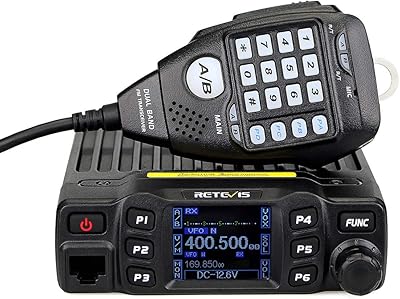
Retevis RT95 Dual Band Mobile Ham Radio
77%
88%
Audio Clarity
67%
Ease of Programming
91%
Display & Readability
86%
Value for Money
74%
Build Quality
More
Yaesu VX-6R Tri-Band Ham Radio Transceiver
80%
93%
Build Quality & Durability
91%
Waterproofing & Weather Resistance
88%
Receiver Performance
86%
Audio Clarity
77%
Transmit Power & Range
More
UAYESOK Dual Band Fiberglass Radio Antenna 17-inch SO239 Connector
88%
89%
Signal Performance
93%
Durability & Weather Resistance
88%
Ease of Installation
90%
Build Quality
85%
Portability
More
HYS TC-YG08UV Dual-Band Yagi Antenna
70%
83%
Signal Gain Performance
76%
Build Quality
81%
Weather Resistance
84%
Ease of Assembly
61%
Aiming & Directional Usability
More
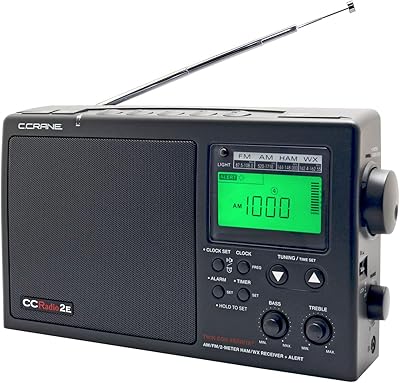
C. Crane CCRadio-2E Enhanced Portable AM FM Weather and 2-Meter Ham Band Radio
85%
94%
Battery Life
89%
AM Reception
90%
NOAA Weather Alerts
70%
Portability
85%
Durability
More
Diamond Antenna X30A Dual-Band Base Antenna
80%
91%
Signal Performance
88%
Build Quality
86%
Weatherproofing
84%
Ease of Installation
89%
SWR Consistency
More
Sirio Antenna SY27-3 3 Elements Yagi Antenna 26.5-30 MHz
86%
93%
Signal Strength
88%
Build Quality
80%
Ease of Installation
91%
Durability
90%
Range & Coverage
More
Ailunce HD1 Ham Radio
82%
93%
Durability & Build Quality
89%
Battery Life
75%
Ease of Use
90%
Range & Signal Performance
91%
Waterproofing
More

FAQ

At minimum, you will need coaxial cable, a suitable mast or mounting structure, and the hardware to secure it. More importantly, you should plan to install a ground radial system — a set of wires laid on or buried beneath the antenna. Skipping the radials is the single most common reason operators are disappointed with vertical antenna performance, especially on 40 and 80 meters.

On 10, 15, 20, and 40 meters, most operators achieve acceptable SWR without a tuner when the antenna is properly assembled and a decent radial field is in place. The 75/80-meter band is more finicky — SWR there is more sensitive to installation variables, and some operators do use a tuner to tighten it up on that band.

A common practical starting point is 16 to 32 radials cut to approximately a quarter-wavelength for your lowest operating band. More radials generally mean better efficiency and lower SWR, but even 16 well-placed radials will outperform no radials by a significant margin. Quarter-wave on 40 meters is about 33 feet; on 80 meters, closer to 65 feet.

It can be, but only if you go in with realistic expectations and are willing to do some reading on vertical antenna installation before you start. This is not the kind of antenna you unbox, bolt to a fence post, and immediately work DX on. If you are brand new to HF, pairing this antenna with a good installation guide and an SWR meter will save a lot of frustration.

Most operators describe assembly as manageable rather than easy. The trap sections need to be seated and aligned carefully, and the whip lengths may require adjustment to achieve the best SWR on each band. Budget a few hours for a careful first assembly rather than rushing it — mistakes made at this stage can be tedious to diagnose later.

No — the 5BTV is designed and resonant on 10, 15, 20, 40, and 75/80 meters only. If you regularly operate on 17 or 12 meters (the WARC bands), you will need a separate antenna or an external tuner, though results with a tuner on non-resonant bands can be unpredictable.

Yes, and in some ways a roof or elevated mount can simplify the radial situation since you can run elevated radials rather than buried ones. Elevated radials are actually quite effective even in smaller numbers. Just make sure your mounting structure is solid — a vertical this size catches wind, and a loose mount becomes a real problem in bad weather.

Honestly, 80-meter performance is the most variable part of this antenna's character. It works, but how well depends heavily on your radial system, your local soil conductivity, and how carefully you have trimmed the antenna. Operators with good soil and a solid radial field report solid results; those on rocky or sandy ground with minimal radials often find 80 meters underwhelming.

For a vertically polarized omni antenna, it performs well in contest environments — particularly on 10, 15, and 20 meters where DX propagation is common. Vertical antennas have a naturally low radiation angle, which is actually an advantage for long-distance contacts. Do not expect it to outgun a well-placed directional beam, but for a fixed omnidirectional antenna it is competitive.

Long-term durability is generally well-regarded among owners who keep the hardware tightened and inspect the traps periodically. The trap housings can collect moisture over time, which may affect tuning if seals degrade, so occasional inspection is worthwhile. Overall, operators in a range of climates report the antenna holding up reliably with basic maintenance.

Where to Buy