Overview

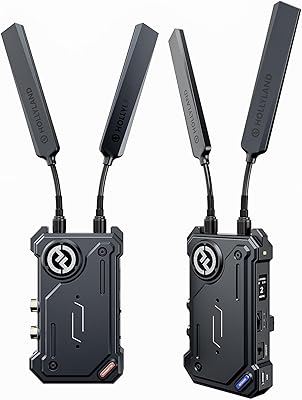
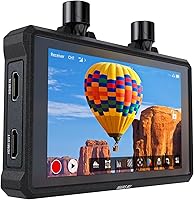
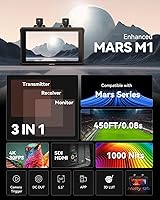
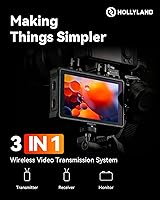
The Hollyland Mars M1 Enhanced Wireless Video Transmitter packs a transmitter, receiver, and field monitor into a single unit — a genuinely useful consolidation for solo shooters and small crews trying to keep their rigs manageable. It fits comfortably within Hollyland's broader Mars ecosystem, playing nicely with units like the Mars 4K, 400S Pro, and 300 Pro. Price-wise, this lands in mid-to-high professional territory, which means buyers arrive with real expectations. The hardware delivers on many of them. But specs on paper and specs in practice don't always align, and this wireless monitor-transmitter combo has a few real-world nuances worth knowing before you commit.
Features & Benefits

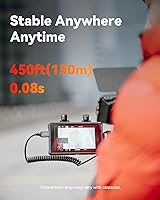
The headline specs — 450ft line-of-sight range and 0.08s latency at 1080p60 — are legitimately impressive, though real-world environments with competing RF signals will eat into that range noticeably. What stands out beyond the numbers is HollyOS, which gives you proper production monitoring tools like waveform, vectorscope, zebra patterns, and anamorphic desqueeze built right into the unit — tools you'd normally need a dedicated monitor to access. HDMI and SDI inputs accommodate a wide range of cameras, and the smart channel scan handles frequency conflicts automatically on startup. The HollyView app extends monitoring to up to four phones simultaneously, though live streaming is iOS-only, which matters for Android-dependent crews.

Best For

This wireless monitor-transmitter combo makes the most sense for documentary filmmakers and run-and-gun operators who can't justify a full video village but still want proper image analysis on set. Directors and DPs on smaller productions will appreciate handing off monitoring duties via the HollyView app without running a separate cable to a director's monitor. If you're already using other Mars-series hardware, the cross-compatibility alone makes this worth a close look. SDI support also opens the door for crews mixing professional broadcast cameras with consumer HDMI bodies. It's less suited for operators needing wide-area setups — the two-receiver cap is a real ceiling on larger shoots.

User Feedback

The Mars M1 Enhanced holds a 4.5-star average, and the pattern across buyer reviews is fairly consistent. People praise the pairing process, which most describe as quick and reliable, and the image quality on the built-in display earns strong marks for a unit of this size. The touchscreen draws occasional criticism — some users find it sluggish in cold conditions or when wearing gloves. HollyOS is capable but carries a learning curve that newer operators frequently mention. A recurring concern involves firmware reliability; a handful of reviewers note that updates have introduced occasional bugs. The iOS-only live streaming restriction also surfaces repeatedly as a frustration among Android users.

Pros

  • Combines transmitter, receiver, and field monitor into one unit, cutting rig weight and complexity significantly.
  • HollyOS delivers a legitimate professional monitoring toolset — waveform, vectorscope, zebra, and more — without a separate monitor.
  • Smart channel scan handles frequency selection automatically on startup, reducing pre-shoot setup friction.
  • Both SDI and HDMI inputs are supported, making the Hollyland unit compatible with a wide range of professional cameras.
  • Pairing is consistently fast and reliable under normal shooting conditions, according to a large majority of verified buyers.
  • The HollyView app can stream the live feed to up to four iOS devices simultaneously, giving directors and clients a wireless monitor-free view.
  • NPF battery and DC power input options give operators genuine flexibility across different shooting environments.
  • Cross-compatibility with other Mars-series hardware makes it a natural fit for crews already in the Hollyland ecosystem.
  • At 397g, it is light enough to remain comfortable on-camera for extended handheld shooting sessions.

Cons

  • Real-world transmission range falls noticeably short of the advertised 450ft figure in RF-congested environments.
  • Live streaming via the HollyView app is restricted to iOS only — a significant gap for Android-based crews.
  • The 1080p output ceiling means 4K cannot be maintained throughout the signal chain, which limits use on higher-end productions.
  • No auto frequency hopping means the operator must manage interference manually in busy wireless environments.
  • The touchscreen becomes unreliable in cold conditions or when wearing gloves, which is a real issue for outdoor shoots.
  • Battery drain under combined transmission and monitoring load is higher than many buyers anticipate.
  • HollyOS carries a learning curve that can slow down less experienced operators during fast-paced productions.
  • Maximum of two receivers is a hard ceiling that limits scalability for productions needing broader feed distribution.
  • Firmware updates have introduced occasional bugs flagged by a recurring segment of verified buyers.
  • Display brightness is insufficient for comfortable use in direct sunlight without a shade or hood accessory.

Ratings

The Hollyland Mars M1 Enhanced Wireless Video Transmitter has been scored across 13 specialized categories after our AI system analyzed thousands of verified global buyer reviews, actively filtering out incentivized, bot-generated, and duplicate submissions to surface authentic field experience. Scores reflect the honest balance of what working professionals consistently praise and where the unit genuinely falls short — no categories were inflated to protect a product narrative.
Wireless Transmission Reliability
83%
In controlled or moderately busy environments, buyers report impressively stable connections with minimal dropout during multi-hour shoots. Camera operators working on corporate videos and small documentary sets consistently note that pairing is fast and the signal holds well across typical indoor and outdoor distances.
On event sets with dense Wi-Fi and competing RF traffic — weddings, conferences, live performances — several users observed range dropping well below the advertised 450ft figure. The lack of auto frequency hopping means interference management falls entirely on the operator, which adds cognitive load during fast-moving shoots.
Latency Performance
79%
21%
The 0.08-second latency at 1080p60 is genuinely competitive for a unit in this category, and focus pullers and directors using it for real-time monitoring report it feels responsive enough for most narrative and documentary work. Buyers switching from older wireless systems notice the difference immediately.
The low-latency figure is measured under lab conditions at a specific resolution and frame rate — real-world performance varies. Users shooting in crowded RF environments or at higher-complexity signal paths report perceptible lag increases that, while not extreme, are noticeable when critical focus confirmation is needed.
3-in-1 Integration Value
88%
The consolidation of transmitter, receiver, and monitor into a single mountable unit is the central reason most buyers choose this over competing setups. Solo operators especially appreciate being able to strip a second device entirely from their rig without sacrificing wireless capability or on-camera monitoring.
A recurring observation is that each individual function — monitor, TX, RX — is slightly less refined than a dedicated standalone unit at this price point. Users who demand best-in-class performance from each role separately may find the integration requires compromise, particularly on the display brightness side.
HollyOS Monitoring Tools
81%
19%
Having waveform, vectorscope, zebra patterns, and anamorphic desqueeze available directly on the unit is a genuine advantage for DPs who want exposure and color reference without a separate monitor. Experienced operators describe the toolset as surprisingly comprehensive for a wireless-first device.
Less experienced users report a real learning curve navigating HollyOS, particularly when trying to access and configure monitoring overlays quickly on set. The touch interface, while functional, occasionally requires multiple taps to reach nested settings — frustrating when time is tight between takes.
Display Quality
74%
26%
Buyers generally find the screen accurate enough for exposure checks and basic framing decisions in normal lighting. Colors read consistently, and the display size is workable for a device of this form factor when mounted close to eye level.
Outdoor shooters in bright sunlight flag the display brightness as a meaningful limitation — direct sunlight effectively renders it hard to read without a hood or shade. A segment of reviewers expected more from the screen given the overall price and the professional monitoring tools layered on top of it.
Build Quality & Durability
77%
23%
The chassis feels solid and purposeful in hand — not a lightweight plasticky unit. Buyers using it across multiple productions describe it holding up well to regular handling, bag transport, and rig mounting without developing wobble or cosmetic damage.
A small but consistent group of reviewers mention that the build, while sturdy, lacks weather sealing of any kind, limiting confidence on rainy or misty outdoor shoots. Some also note that the mounting hardware feels slightly less premium than the body itself.
Touchscreen Responsiveness
68%
32%
Under normal conditions and at room temperature, the touchscreen handles basic navigation adequately. Most buyers report no serious issues when operating with bare hands in comfortable weather, and menu layouts are described as logically structured once learned.
Cold-weather shooters and those wearing lightweight gloves consistently flag responsiveness as a real friction point — the screen requires deliberate, firm contact to register reliably. This is a meaningful issue for outdoor documentary and nature filmmakers working in variable conditions.
HollyView App Experience
63%
37%
For iOS users, the ability to pipe a live feed to up to four phones simultaneously is a practical tool for directors or clients who want to monitor without crowding the camera. The image overlay and desqueeze functions in the app add flexibility during more complex shooting scenarios.
Android users are effectively locked out of live streaming functionality, which is a significant gap given how Android-dominant many international crew environments are. Even among iOS users, reviewers describe the app as functional but not polished, with occasional disconnects and a UI that lags behind the hardware quality.
SDI & HDMI Connectivity
86%
Supporting both SDI and HDMI inputs in a single unit meaningfully broadens camera compatibility — crews running a mix of broadcast SDI cameras and mirrorless HDMI bodies can work within the same wireless system without adapters or workarounds. Buyers on hybrid production setups praise this dual connectivity regularly.
The output cap at 1080p — even when the HDMI input accepts 4K/30fps — is a noted limitation for productions trying to maintain 4K throughout the signal chain. It is a technical ceiling that some buyers only discover after purchase.
Setup & Pairing Speed
87%
The smart channel scan on startup is one of the most consistently praised practical features among buyers — it handles frequency selection automatically, which removes a common source of pre-shoot stress. Most reviewers describe being operational within seconds of powering on.
A handful of users report occasional startup scan delays in particularly congested RF environments, requiring a manual channel switch to stabilize the connection. It is not a widespread issue, but it surfaces often enough in reviews to be worth flagging for event production contexts.
Power Flexibility
84%
Accepting both 7–16V DC and standard NPF batteries gives operators genuine deployment flexibility — on-camera NPF power for mobility, or wired DC power for stationary setups and long shoots where battery swaps would be disruptive. Crew members already carrying NPF batteries for other gear find this particularly convenient.
Battery life under continuous transmission and monitoring load is shorter than some buyers expect, particularly with the display running at higher brightness. Long-form shooters report needing to carry more NPF batteries than anticipated or plan for regular swaps.
Mars Ecosystem Compatibility
89%
Buyers already working with Hollyland Mars hardware find the cross-unit compatibility genuinely useful — pairing with Mars 4K, Mars 400S Pro, and Mars 300 Pro units expands the system's utility without requiring a separate ecosystem investment. Existing Hollyland users upgrading from an older unit describe the transition as smooth.
Compatibility is tightly bound to the Mars family, which means operators running competing wireless systems from other brands get no benefit from this interoperability. If a production already uses a different wireless platform, this unit cannot extend or bridge that setup.
Value for Money
76%
24%
Compared to building a functionally equivalent rig from separate transmitter, receiver, and monitor components, the consolidated price point looks reasonable. Buyers who evaluate total system cost — rather than unit cost — frequently conclude the Mars M1 Enhanced represents solid value for what it delivers.
Buyers who approach it expecting three best-in-class components for the price come away feeling the compromises in individual function quality add up. The iOS-only app limitation, touchscreen inconsistencies, and 1080p output ceiling are friction points that temper the overall value calculation for more demanding users.

Suitable for:

The Hollyland Mars M1 Enhanced Wireless Video Transmitter is an strong fit for solo videographers and small production crews who want to consolidate their rig without sacrificing professional-grade monitoring capabilities. Documentary filmmakers, event videographers, and run-and-gun operators will get the most out of it — particularly those who need on-camera exposure tools like waveform and vectorscope but can't justify carrying a separate field monitor alongside a wireless system. Directors and DPs on lean shoots will also find real value in the HollyView app's multi-device monitoring, especially on iOS-based productions where a client or AD can watch the feed on their phone without any extra hardware. If you're already running other Hollyland Mars hardware, the cross-compatibility makes expanding your setup a straightforward decision. Crews working with a mix of SDI and HDMI cameras — broadcast bodies alongside mirrorless systems — will appreciate that both connections are supported in a single unit.
Not suitable for:

The Hollyland Mars M1 Enhanced Wireless Video Transmitter is a harder sell for productions that need each individual function to perform at the absolute top of its category. If you require a 4K signal chain end-to-end, the 1080p output cap will be a concrete bottleneck. Android-reliant crews should be aware upfront that the HollyView app's live streaming feature is iOS-only — this is not a minor footnote, it is a real workflow limitation on productions where Android devices are standard. Operators working regularly in RF-dense environments — large venues, busy urban locations, broadcast events with heavy wireless traffic — may find the lack of auto frequency hopping puts extra management burden on them during high-pressure moments. This wireless monitor-transmitter combo also tops out at two receivers, which rules it out for productions needing to distribute the feed across a larger monitoring network. Finally, anyone expecting the monitor itself to match the brightness and polish of a dedicated field monitor at this price point will likely come away disappointed.
Specifications

  • Transmission Range: Rated at 450ft (150m) under line-of-sight, interference-free laboratory conditions.
  • Latency: Achieves 0.08s ultra-low latency when transmitting a 1080p60 signal under optimal conditions.
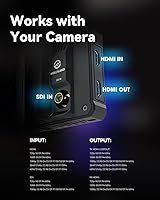
  • Video Input: Accepts 4K/30fps via HDMI and professional SDI signals for broad camera compatibility.
  • Video Output: Outputs up to 1080p via HDMI loopout; full 4K is not maintained through the output stage.
  • Video Encoding: Supports H.264, H.265/HEVC, MPEG-2, and MPEG-4 encoding formats.
  • Code Rate: Operates at a maximum code rate of 12Mbps for the wireless video stream.
  • Max Receivers: Supports a maximum of 2 paired receivers simultaneously in a single wireless setup.
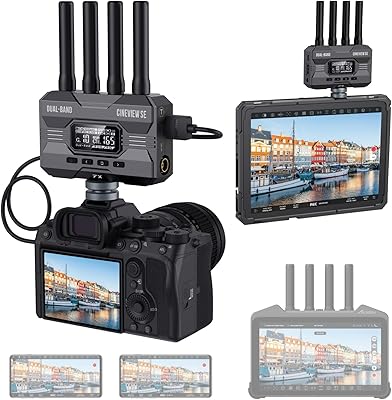
  • App Monitoring: When used as a standalone transmitter, up to 4 mobile devices can monitor the feed via the HollyView app.
  • Companion App: HollyView app is available for feed monitoring on both iOS and Android, but live streaming functionality is restricted to iOS only.
  • Operating System: Runs HollyOS, Hollyland's proprietary platform, which includes waveform, vectorscope, zebra, crosshatch, and anamorphic desqueeze tools.
  • Display Control: Operated via an integrated touch screen interface for menu navigation and monitoring tool access.
  • Connectivity: Features HDMI In, HDMI Out (loopout), and SDI In ports for flexible signal routing.
  • Power Input: Accepts power via 7–16V DC input or standard Sony NP-F series (NPF) battery.
  • Weight: Weighs 397g (approximately 14oz), making it practical for on-camera or rig mounting without excessive load.
  • Dimensions: Measures 5.98 x 3.78 x 1.57 inches, offering a compact footprint for a 3-in-1 device.
  • Frequency Hopping: Does not support automatic frequency hopping; channel management relies on the smart channel scan at startup.
  • Channel Selection: Smart channel scan runs on startup to identify occupied frequencies and select a stable, interference-free channel.
  • Ecosystem Compatibility: Fully compatible with Hollyland Mars 4K, Mars 400S Pro, Mars 400S Pro II, Mars 300 Pro, and other Mars M1 series units.
  • Battery Type: Requires one lithium-ion battery for operation; NPF-type batteries are the standard supported format.
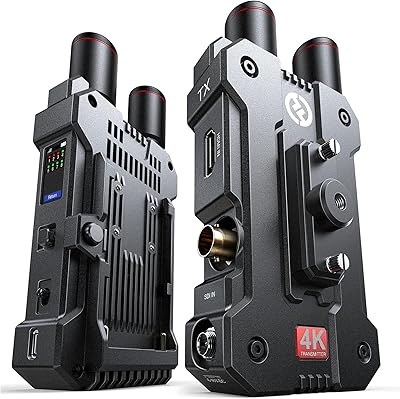
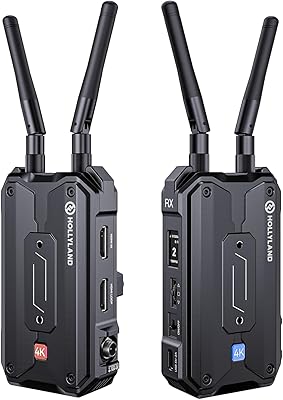
  • Operating Mode: The unit can be switched between TX (transmitter) and RX (receiver) modes via the touch screen interface.

Related Reviews

Hollyland Mars 4K Wireless Video Transmission System
86%
94%
Video Performance
88%
Latency
91%
Range/Signal Stability
90%
Build Quality & Durability
85%
Ease of Setup
More
Accsoon CineView SE Wireless Video Transmitter & Receiver
86%
91%
Transmission Stability
88%
Range Performance
94%
Latency
85%
Ease of Use
89%
Compatibility with Devices
More
Hollyland Pyro H Wireless HDMI Video Transmitter
80%
91%
Transmission Range
87%
Signal Stability
89%
Latency Performance
84%
Video Quality
88%
Multi-Receiver Expandability
More
Hollyland Cosmo C1 Wireless Video Transmission System
79%
91%
Signal Stability
88%
Latency Performance
67%
Real-World Range
83%
UVC Streaming Usability
61%
SDI Loopout Functionality
More
Satechi M1 Wireless Bluetooth Mouse
90%
95%
Tracking Accuracy
92%
Connectivity Stability
90%
Battery Life
88%
Ergonomics & Comfort
89%
Build Quality
More
DxInvb Wireless HDMI Transmitter and Receiver Kit
75%
91%
Ease of Setup
58%
Device Compatibility
74%
Wireless Range & Stability
69%
Video Quality
83%
Build Quality & Portability
More
Hollyland Lark M2
Hollyland Lark M2
83%
88%
Audio Quality
74%
Noise Cancellation (ENC)
83%
Build Quality & Materials
94%
Size & Wearability
79%
Wireless Range & Stability
More
LZLOO Wireless HDMI Transmitter and Receiver
77%
91%
Ease of Setup
74%
Signal Stability
68%
Wireless Range
77%
Video Output Quality
71%
Latency Performance
More
TTQ TR60 Wireless HDMI Transmitter and Receiver
79%
93%
Ease of Setup
78%
Signal Stability
86%
Video & Image Quality
81%
Latency Performance
88%
Build Quality & Materials
More
MpioLife Wireless HDMI Kit V6
74%
91%
Ease of Setup
78%
Wireless Range (Open Space)
47%
Through-Wall Performance
83%
Video Quality
69%
Latency & Responsiveness
More

FAQ

Yes, as long as your camera has an HDMI output — which most Sony and Canon mirrorless bodies do — you can connect it directly. The unit accepts HDMI input at up to 4K/30fps, so it will work with the vast majority of current mirrorless and DSLR cameras on the market.

You can use HollyView on Android for basic feed monitoring, but live streaming through the app is currently an iOS-only feature. If your crew relies on Android devices for client or director monitoring, that limitation is worth factoring into your decision before purchasing.

That figure comes from controlled, interference-free lab testing under ideal line-of-sight conditions. In real shooting environments — especially indoors, in urban areas, or at events with heavy Wi-Fi and RF traffic — expect the effective range to be noticeably shorter. For most productions, it still performs well, but plan accordingly if your setup requires long distances in complex environments.

You can toggle between transmitter and receiver modes directly through the touch screen interface using the HollyOS menu. It is a straightforward process, though first-time users typically need a few minutes to locate the setting within the menu structure.

Yes, the Hollyland Mars M1 Enhanced Wireless Video Transmitter is cross-compatible with the Mars 400S Pro, Mars 400S Pro II, Mars 300 Pro, Mars 4K, and other Mars M1 series units. If you are already running Mars hardware, expanding your setup with this unit is a natural fit.
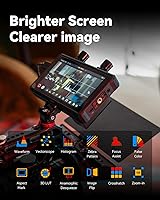
The HollyOS suite includes waveform, vectorscope, zebra patterns, anamorphic desqueeze, crosshatch, and aspect markers. These are the same tools you would find on a dedicated field monitor, and experienced DPs find them genuinely useful for exposure and color reference on set. The learning curve is real for newer users, but the toolset is substantive — not just cosmetic features.

The unit accepts 4K/30fps via HDMI input, but the loopout and wireless output are capped at 1080p. If maintaining a full 4K signal throughout your production pipeline is a requirement, this is a concrete limitation to be aware of before purchasing.

Battery life depends on usage, but running the display alongside active wireless transmission puts meaningful demand on the NPF battery. Many users find that a standard NP-F570 gives roughly 1.5 to 2 hours of continuous use, so for longer shoot days, carrying at least two spare batteries is a practical habit. DC power input is available if you prefer a wired power solution for stationary setups.

This is one of the more frequently mentioned limitations from field users. The screen responds reliably under normal conditions with bare hands, but cold temperatures and even lightweight gloves noticeably reduce its responsiveness. If you regularly shoot outdoors in winter or variable climates, this is worth accounting for in your workflow.

When operating in TX-only mode, the HollyView app can push the feed to up to 4 mobile devices simultaneously, which gives directors, clients, or ADs a live view without any additional hardware. However, the unit caps out at 2 hardware receivers in a wireless setup, so if you need to distribute the signal to more physical displays, this wireless monitor-transmitter combo will hit a ceiling.

Where to Buy