




Overview

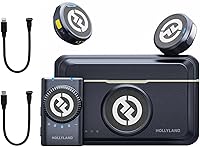
The Hollyland Lark M2 arrived in early 2024 as a genuinely compelling option for creators who want wireless audio without spending pro-level money. At just 9g per transmitter, it is one of the lightest clip-on wireless mics you can buy — light enough that you forget it is clipped to your collar mid-shoot. It comes pre-paired from the factory, so there is no fiddling with pairing modes before your first take. Connectivity covers both 3.5mm TRS for cameras and USB-C UAC for laptops, which means you can skip the external sound card entirely. That kind of practical flexibility is rare at this price tier.

Features & Benefits

The audio coming out of this wireless lav system is notably clean for the category — 48kHz/24-bit capture means dialogue holds up well in post without heavy correction. The one-click noise cancellation on the transmitter is genuinely handy for mild traffic or HVAC hum, though push it in heavy crowd noise and voices can sound slightly thinned out, so use it with some discretion. Range holds confidently across a large room or open plaza. The charging case keeps the kit powered through a full shoot day, and adjusting levels via the receiver knob beats hunting through a phone app every time.

Best For

This clip-on mic kit makes the most sense for creators who are tired of bad audio but are not ready to invest in a full broadcast rig. Solo vloggers, travel filmmakers, and anyone shooting run-and-gun style will appreciate how light and unobtrusive the transmitters are. Streamers and podcasters get a clean USB-C path straight into their computer — no interface, no drivers, just plug and record. It also suits educators recording course content in home offices where background noise stays manageable. If you are stepping up from a built-in mic for the first time, this lav system is a practical and well-rounded starting point.

User Feedback

Buyers are largely satisfied with the Lark M2, and the theme running through most positive reviews is consistent: impressive size-to-performance ratio and mics that feel nearly invisible once clipped on. On the flip side, a recurring note is that ENC can strip warmth from voices in loud environments, worth knowing before relying on it heavily. A handful of users report occasional RF dropouts in dense wireless settings like conference halls or busy markets. One practical limitation worth flagging is that the camera receiver uses a 3.5mm jack, which will not work natively with newer mirrorless bodies that have dropped the port. Despite those caveats, value for money dominates the overall verdict.

Pros

  • Transmitters weigh just 9g each, making them genuinely invisible on camera during interviews or vlogs.
  • Factory pre-pairing means you are recording within seconds of opening the box — no setup headaches.
  • USB-C UAC support lets streamers and podcasters skip the external audio interface entirely.
  • Battery life holds up across a full shooting day, with the charging case extending the total to 40 hours.
  • Audio quality at this price tier is strong enough that dialogue rarely needs heavy correction in post.
  • The physical volume knob on the receiver lets you adjust levels quickly without touching a phone.
  • Mono and stereo mode switching makes dual-mic interview setups straightforward for solo operators.
  • The LDS antenna design handles body-blocking better than older wireless mic designs at this price.
  • Wind covers and adapter cables are included, reducing the number of extras you need to buy separately.

Cons

  • ENC noticeably thins out voice quality when used in heavy noise — it is not a reliable fix for loud environments.
  • Occasional RF dropouts reported in crowded wireless environments make it risky for live event recording.
  • The 3.5mm-only camera receiver is incompatible with newer mirrorless bodies that have dropped the port.
  • No companion app means zero access to EQ, gain control, or any advanced audio settings.
  • Adapter cables for smartphone use are an extra link in the chain that can cause intermittent crackling if loose.
  • The charging case has no dedicated storage for accessories, so cables and wind covers end up loose in a bag.
  • Manual re-pairing when swapping units is less intuitive than the out-of-box auto-pairing experience suggests.
  • Wind protection is insufficient for sustained outdoor wind — aftermarket furry covers become a near-necessity for beach or hilltop shoots.

Ratings

The scores below for the Hollyland Lark M2 were generated by our AI engine after analyzing thousands of verified buyer reviews from global markets, with spam, bot-submitted, and incentivized feedback actively filtered out. Every category reflects a balanced synthesis of what real users praised and where they ran into friction — nothing is glossed over. Strengths are recognized where they are earned, and recurring pain points are called out just as plainly.

Audio Quality
88%
Most buyers are genuinely surprised by how clean the voice capture is for a mid-range wireless system. Dialogue recorded outdoors or in untreated rooms holds up well in editing, with enough dynamic detail that heavy post-processing is rarely needed.
A small number of users with more critical ears note a slight upper-midrange hardness compared to higher-end lav systems. It is not a dealbreaker for content creation, but audio purists doing scripted narrative work may notice the ceiling.
Noise Cancellation (ENC)
74%
26%
In everyday shooting conditions — a humming AC unit, light street traffic, or a busy cafe at low volume — the one-click ENC does a solid job of cleaning up the background without much manual intervention. Creators working indoors find it particularly reliable.
Push it into genuinely noisy environments like a crowded market or a loud event venue and voice texture starts to thin out noticeably. Several users describe the effect as making their voice sound slightly processed or distant when ENC is maxed out in heavy noise.
Build Quality & Materials
83%
The aluminum housing feels more substantial than the 9g weight suggests, and the clip mechanism on the transmitter grips fabric firmly without leaving marks. Users report no rattling or flex when handled daily across multiple shoots.
The charging case, while compact and functional, has a plastic feel that a few buyers describe as less premium than the mics themselves. Some also wish the connector port covers were tighter to better resist dust on outdoor shoots.
Size & Wearability
94%
This is where the Lark M2 genuinely stands out. At 9g, the transmitters disappear under a shirt collar or behind a lapel without creating visible bulk. Interview subjects who are uncomfortable with traditional lav mics tend to relax much faster when clipped with these.
The very small size does mean the physical controls — mute button, ENC toggle — require a deliberate press to avoid accidental activation. A handful of users have muted themselves mid-interview without realizing it simply by adjusting their clothing.
Wireless Range & Stability
79%
21%
For typical creator use — a single room, an outdoor plaza, or a rooftop shoot — the range holds confidently and reconnection after brief obstructions is fast. The LDS antenna design does a noticeably better job than older designs when the transmitter is body-blocked.
In RF-dense environments like trade show floors, concert venues, or crowded city streets, a subset of users report intermittent audio dropouts that are hard to predict. Those shooting in consistently busy wireless environments should factor this in before committing.
Battery Life
91%
Real-world reports largely back up the claimed figures. Most users comfortably get through a full-day conference, a long outdoor vlog session, or back-to-back podcast recordings on a single charge without reaching for the case mid-session.
The 40H total figure assumes the charging case is used optimally, which requires keeping it charged between sessions — a step some users admit they skip. A small number of buyers also note that battery drain accelerates noticeably when ENC is running continuously.
Ease of Setup
96%
Factory pre-pairing genuinely eliminates the most frustrating part of budget wireless mic ownership. Pull them out of the case, clip on the transmitter, plug in the receiver, and you are recording — no menus, no button sequences, no manual channel matching.
The auto-pairing is reliable for the included TX and RX pairs, but users who need to swap or replace a single unit report the manual re-pairing process is less intuitive than the out-of-box experience suggests. Documentation for this edge case could be clearer.
Camera Compatibility
71%
29%
For DSLRs and mirrorless bodies with a standard 3.5mm TRS input, the connection is direct and clean with no adapters needed. The mono/stereo mode switch on the receiver is a thoughtful addition for dual-mic interview setups going into a single camera channel.
Newer mirrorless cameras that have dropped the 3.5mm jack entirely are not natively supported by the camera receiver variant, which frustrates users who upgraded their body recently. This is not a fault of the system per se, but it is a real compatibility wall buyers need to check before purchasing.
Computer & Streaming Use
87%
The USB-C UAC functionality works cleanly across Windows and macOS without any driver installation. Streamers and podcasters who plug directly into a laptop appreciate skipping the external audio interface entirely, which simplifies the whole desk setup.
A few users note that the UAC input level can run slightly hot on some systems, requiring manual gain adjustment in recording software. It is a minor calibration step, but one that first-time users occasionally find confusing if they are not familiar with input gain settings.
Smartphone Compatibility
76%
24%
With the appropriate adapter cables, this clip-on mic kit connects reliably to a wide range of Android and recent iPhone models. Travel vloggers who shoot primarily on a phone find the size and weight combination particularly well-suited to handheld or gimbal shooting.
Adapter cables are included but the reliance on them introduces an additional point of failure — users report occasional crackling or signal loss when an adapter is slightly loose. Those who shoot exclusively on a phone may find the connection less dependable than a dedicated smartphone-native wireless mic.
Value for Money
93%
This is the category that dominates the overall buyer verdict. At its price point, the combination of audio quality, form factor, range, and battery life represents a compelling package that pushes well above what entry-level consumer mics deliver without crossing into professional pricing territory.
Buyers comparing it directly against slightly pricier competitors occasionally note that the gap in audio refinement and RF resilience is noticeable in demanding conditions. For casual creators the value equation is clear; for those pushing it in professional workflows the calculus gets closer.
Controls & Usability
82%
18%
The physical volume knob on the receiver is a practical choice that lets you dial in levels quickly without unlocking a phone or opening an app. The three LED indicators for volume and status are visible enough in bright outdoor light for a quick confirmation glance.
There is no companion app, which means advanced settings like EQ or gain structure are not accessible. For most users this is not an issue, but creators who want fine-grained control over their audio chain will hit a ceiling quickly with the hardware-only interface.
Charging & Case Design
81%
19%
The compact case charges the full kit twice over before needing a top-up, which makes it genuinely useful as a power buffer between location shoots. Charge time under two hours means a lunch break is enough to get back to full capacity.
The case holds the components snugly but offers no dedicated storage for the included adapter cables or wind covers, which tend to end up loose at the bottom of a camera bag. A small integrated organizer compartment would go a long way for traveling creators.
Wind Noise Resistance
68%
32%
In light outdoor breezes the included wind covers do enough to keep low-frequency rumble from overwhelming the dialogue. Clips on a jacket lapel in calm to moderate conditions tend to perform reasonably well without any additional accessories.
In sustained wind — beachside shoots, hilltop vlogging, or open vehicle setups — the standard wind covers are not sufficient and aftermarket furry covers become necessary. Users who shoot frequently outdoors in variable weather consider this a notable gap in the out-of-box kit.

Suitable for:

The Hollyland Lark M2 is a strong fit for independent content creators who need reliable wireless audio without the weight of a professional rig holding them back. Solo vloggers and travel filmmakers will appreciate how the transmitters disappear on camera — at 9g each, they clip onto a collar or lapel without creating any visible bulk or restricting movement. Streamers and podcasters who want a clean audio input straight into a laptop via USB-C will find the plug-and-play setup refreshingly frictionless, since there is no external interface or driver installation involved. Educators recording online courses from a home office get solid voice clarity in moderately controlled environments, and the one-click noise cancellation handles the usual background hum without requiring any technical know-how. Indie filmmakers running two-person interviews on a tight budget will find the dual-transmitter setup and mono/stereo switching genuinely useful for getting usable audio from both subjects without a dedicated sound operator. If you are making the jump from a built-in camera or phone mic for the first time, this clip-on mic kit is one of the most approachable and well-rounded entry points available at this price tier.

Not suitable for:

Buyers shooting in demanding or unpredictable RF environments should approach the Hollyland Lark M2 with realistic expectations — a subset of users have reported intermittent dropouts in crowded wireless settings like trade show floors, live events, or dense urban streets, which is a real risk for anyone doing event coverage or run-and-gun news-style work. Professionals who need broadcast-grade audio consistency and the ability to fine-tune EQ, gain structure, or compression on the fly will quickly find the hardware-only controls limiting, since there is no companion app and no advanced signal processing accessible to the user. The camera receiver relies on a 3.5mm TRS connection, so anyone using a newer mirrorless body that has dropped the headphone jack will face a compatibility wall without an adapter — and even with one, it introduces another potential failure point. Creators who push ENC hard in genuinely noisy environments should be aware that voice texture can suffer, making it a less reliable tool for high-stakes recordings where retakes are not possible. If your primary workflow demands robust performance in loud outdoor conditions or professional narrative film production, this wireless lav system sits below the threshold those use cases require.

Specifications

  • Transmitter Weight: Each transmitter weighs just 9g, making it one of the lightest wireless lavalier transmitters currently available on the consumer market.
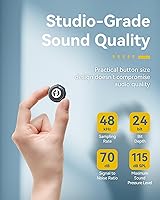
  • Audio Format: The system captures audio at 48kHz/24-bit, delivering high-resolution voice recordings suitable for professional post-production workflows.
  • Signal-to-Noise Ratio: A 70dB signal-to-noise ratio ensures voice signals remain clean and well-separated from the noise floor during recording.
  • Max SPL: The microphone can handle up to 115dB sound pressure level, making it capable of recording in loud environments without distorting the signal.
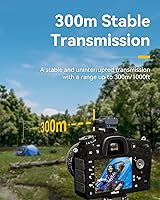
  • Wireless Range: The system supports up to 300m line-of-sight transmission, enabled by a high-gain LDS antenna designed to reduce body-blocking interference.
  • Battery Life: Each transmitter provides up to 10 hours of continuous use per charge with ENC disabled; the charging case extends total system battery life to 40 hours for the camera version.
  • Charge Time: A full charge of the complete kit takes under 2 hours, meaning a standard lunch break is sufficient to restore full operating capacity.
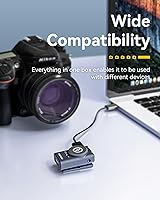
  • Connectivity: The receiver supports both 3.5mm TRS output for cameras and USB-C UAC for direct computer connection without requiring an external sound card or drivers.
  • Polar Pattern: Both transmitter microphones use an omnidirectional polar pattern, capturing voice evenly from all angles regardless of exact clip positioning.
  • Recording Modes: The camera version receiver supports both mono and stereo recording modes, switchable via a dedicated button when connected through the 3.5mm audio jack.
  • Channels: The system operates on 2 independent channels, supporting simultaneous dual-transmitter use for two-person interview or co-host recording setups.
  • Antenna Type: The receiver uses a high-gain LDS (Laser Direct Structuring) antenna that minimizes signal degradation caused by the human body obstructing the transmission path.
  • Housing Material: Both transmitters and the receiver are constructed from aluminum, providing a solid feel while keeping the overall system weight low.
  • Compatible Devices: The system is compatible with cameras, laptops, MacBooks, tablets, and a wide range of smartphones including recent iPhone and Android models via included adapter cables.
  • Noise Cancellation: Environmental Noise Cancellation (ENC) is toggled on or off with a single button press on the transmitter, with a green LED indicator on the receiver confirming its active status.
  • Pairing: The TX and RX units come factory pre-paired and reconnect automatically when powered on, requiring no manual channel setup under normal operating conditions.
  • Included Accessories: The kit ships with one audio receiver, one charging case, two button-size microphone transmitters, and a set of adapter cables and wind covers.
  • Warranty: Hollyland provides a 2-year EU spare part availability duration, with standard manufacturer warranty coverage applicable in supported regions.

Related Reviews
Ubiquiti NanoStation loco M2
86%
89%
Performance & Range
84%
Setup & Installation
91%
Build Quality & Durability
88%
Weather Resistance
87%
Connectivity Stability
More
BeaverLab Darwin M2 Kids Microscope
86%
92%
Value for Money
89%
Display Quality
88%
Ease of Use
70%
Magnification Clarity
93%
Portability
More
AGPTEK M2 64GB Clip MP3 Player
73%
88%
Portability & Clip Design
74%
Bluetooth Stability
91%
Storage & Capacity
83%
Ease of Use
67%
Sound Quality
More
Escort M2 Smart Dash Cam
84%
93%
Video Quality
88%
Ease of Setup
90%
Cloud Video Management
85%
Parking Mode Performance
91%
Integration with Escort Radar Detectors
More
MOTU M2
MOTU M2
92%
96%
Audio Conversion Quality
98%
Visual Monitoring
93%
Build Construction
91%
Driver Stability
94%
Loopback Functionality
More
Thronmax M2 Mdrill Ghost
79%
83%
Sound Clarity for Voice
78%
Polar Pattern Versatility
92%
Setup & Ease of Use
67%
Build Quality & Materials
81%
Value for Money
More
Rockville RVA-M2 Mono Car Amplifier
85%
91%
Bass Performance
94%
Power Output
89%
Ease of Installation
67%
Thermal Performance
86%
Build Quality
More
Hollyland Solidcom SE Wireless Intercom Headset System
87%
88%
Performance in Noisy Environments
91%
Battery Life
93%
Noise Cancellation
89%
Build Quality
90%
Comfort for Extended Use
More
Hollyland Mars 4K Wireless Video Transmission System
86%
94%
Video Performance
88%
Latency
91%
Range/Signal Stability
90%
Build Quality & Durability
85%
Ease of Setup
More
GAMDIAS HELIOS M2-850B 850W Power Supply
88%
88%
Performance
91%
Energy Efficiency
86%
Noise Level
89%
Build Quality
90%
Stability Under Load
More

FAQ

You will need an adapter cable for most smartphones, and the good news is that compatible cables are included in the box. For iPhones using Lightning or USB-C, and for Android devices with USB-C ports, the provided cables handle the connection. Just make sure you are using the correct cable for your specific phone model before you start shooting.

No drivers or software installation is needed. The receiver supports UAC (USB Audio Class), which means your Windows or macOS computer recognizes it as a standard audio input device the moment you plug it in via USB-C. It shows up just like any other microphone in your system audio settings.

The ENC works well for mild background noise — think air conditioning hum, light street traffic, or a quiet coffee shop. In those conditions it genuinely cleans up the recording without much noticeable impact on voice quality. That said, in genuinely loud environments like a crowded event or busy market, some users find it makes voices sound slightly thin or processed, so it is worth testing in your specific environment before relying on it for critical recordings.

It depends on whether your camera body has a 3.5mm audio input jack. The camera version receiver uses a 3.5mm TRS connection, so if your mirrorless body has that port, you are good to go. If your camera has dropped the 3.5mm jack — which some newer models have — you will need a compatible adapter, and that introduces an extra step that not every camera supports cleanly.

Yes, the system includes two transmitters designed to be used simultaneously. When both are active, you can record in stereo mode to capture each voice on a separate channel, or switch to mono if you want both voices mixed into one track. The mode switch is on the receiver and only works when connected to a camera via the 3.5mm jack.

Real-world reports from users are fairly consistent with the official claim of around 8 to 10 hours per charge when ENC is off. Running noise cancellation continuously does draw more power, so expect slightly shorter sessions if you keep it on all day. The charging case holds enough charge to fully power the kit twice, which gives you meaningful backup for multi-day shoots without hunting for a wall outlet.

The Hollyland Lark M2 comes pre-paired from the factory and reconnects automatically in normal use, but manual re-pairing is possible if needed. The process involves holding the pairing button on the receiver while the transmitter is in pairing mode — the exact steps are outlined in the included manual. It is worth noting that users find this process less intuitive than the automatic out-of-box experience, so keeping the manual handy is a good idea.

The standard camera version receiver does not include a dedicated headphone monitoring output — audio monitoring would need to happen through your camera body if it supports that. If direct headphone monitoring is important to your workflow, check your camera's capabilities before assuming the receiver itself will handle it.

In light breezes the included foam wind covers do a reasonable job of reducing low-frequency rumble. For sustained outdoor wind — beach shoots, hilltop locations, or shooting near moving vehicles — most users find the standard covers insufficient and end up adding aftermarket furry windscreens. If you shoot outdoors regularly in variable conditions, budgeting for a fur cover upgrade is a practical step.

This wireless lav system performs well in most everyday environments, but a portion of users have reported occasional audio dropouts in very RF-dense settings like trade show floors, live concert venues, or packed city streets. It is not a consistent or universal issue, but it is worth being aware of if you plan to use it in high-interference locations regularly. For those use cases, a system with dedicated frequency management or manual channel selection would offer more reliability.

Where to Buy

Best Buy
In stock $76.00
Walmart
In stock $88.00
eBay
In stock $89.00
B&H Photo-Video-Audio
In stock $99.00
newegg.com
In stock $111.99
Reverb
In stock $89.99
Full Compass Systems
In stock $99.00
Unique Photo
In stock $69.00
K&M Camera
In stock $76.00
Hot Rod Cameras
In stock $76.00