Overview

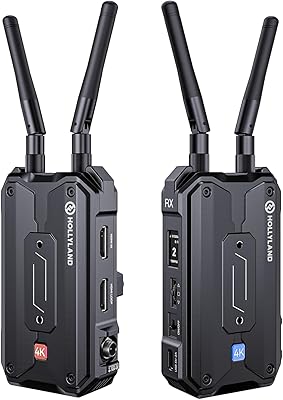
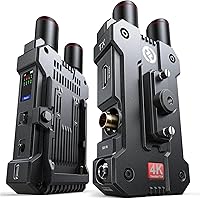
The Hollyland Mars 4K Wireless Video Transmission System marks a meaningful step up for the brand — this is their first unit pushing genuine 4K resolution over a wireless link, and it's clearly aimed at professional crews and serious indie filmmakers who've outgrown HD-only wireless options. At this price tier, buyers rightfully expect more than just a spec sheet upgrade over budget SDI alternatives; they want reliable performance on an actual set. The kit ships as one transmitter and one receiver, which covers the core use case of camera-to-monitor wireless feeds. Just know going in: that 450ft line-of-sight range is a lab figure. Real-world shoots in urban environments or congested RF spaces will see noticeably shorter distances.
Features & Benefits

The Mars 4K handles 4K at 30fps through its HDMI port and drops to 1080p at 60fps — a practical split that covers most modern camera workflows. What stands out for broadcast-leaning operators is the 3G-SDI interface with support for decimal-point frame rates like 23.98 and 29.97fps, which matters when feeding professional switchers that choke on rounded rates. Latency sits at 66ms. That's fine for a director watching a confidence monitor, but if you're a focus puller relying on this for precise pulls, you'll feel it. App monitoring for up to four devices is a genuine extra. One caveat worth flagging upfront: USB-C charging works, but QC and PD protocols are not supported, so plan your power strategy before a long day on set.

Best For

This wireless video system is a natural fit for indie and documentary filmmakers who want 4K wireless monitoring without building out a full broadcast infrastructure. If you're running a multi-monitor setup — director, producer, and client village all watching at once — the ability to daisy-chain a second RX or push feeds to mobile devices covers that need efficiently. Camera operators using SDI-native gear who need decimal-point frame rates will also find this a more compatible option than many rivals. It's equally useful for run-and-gun crews who'd rather navigate settings with a physical joystick than dig through a phone app in the field. Existing Hollyland users will appreciate the Mars M1 Enhanced compatibility as well.

User Feedback

Buyers rating Hollyland's 4K transmitter kit around 4.6 stars consistently highlight signal stability and build quality as its strongest traits — the metal housing holds up well in field conditions, and pairing the units is quick. Criticism clusters around the range spec: in dense urban shoots or locations with heavy 5GHz congestion, real-world distance falls noticeably short of the marketed figure. Some Android users flag a subpar app experience, and the iOS-only live streaming limitation frustrates those who've standardized on Android workflows. A few buyers also mention heat buildup during extended recording sessions. Against comparable systems at similar price points, most agree it punches at or slightly above its weight, with SDI compatibility being the key differentiator.

Pros

  • True 4K UHD wireless transmission at up to 30fps is a real step up from the HD-only options that dominate this price bracket.
  • The 3G-SDI interface with decimal-point frame rate support makes this wireless video system genuinely compatible with broadcast-grade cameras and switchers.
  • Signal stability is consistently praised by buyers — pairing is quick and the connection holds well in controlled environments.
  • The metal shell and fixed-antenna design feel purpose-built for field abuse, not a fragile studio-only tool.
  • App monitoring for up to four mobile devices adds useful flexibility for directors or remote clients without extra hardware.
  • Multiple power options — NP-F batteries, DC input, and USB-C — mean you can adapt to almost any on-set power setup.
  • The full-color LCD and joystick navigation let you configure and check status without ever reaching for your phone.
  • Cross-compatibility with Mars M1 Enhanced receivers gives existing Hollyland users a straightforward upgrade path.

Cons

  • The 450ft range spec is measured in ideal lab conditions; expect noticeably shorter distances in real-world RF-congested locations.
  • At 66ms latency, Hollyland's 4K transmitter kit is workable for directors but too sluggish for focus pullers doing precise on-the-fly adjustments.
  • Live streaming through the companion app is restricted to iOS only — a genuine dealbreaker for Android-standardized production teams.
  • USB-C charging does not support QC or PD fast-charging protocols, which slows down unit top-ups between back-to-back setups.
  • Some users report heat buildup during long continuous recording sessions, which may be a concern on marathon shooting days.
  • The Android app experience lags behind the iOS version in both reliability and feature parity, according to recurring user complaints.
  • No auto frequency hopping means the system cannot actively dodge interference — manual management is required in crowded RF environments.
  • At 2.42 pounds for the kit, it is not the lightest option available, which adds up when rigging both TX and RX on location.

Ratings

The scores below for the Hollyland Mars 4K Wireless Video Transmission System were generated by AI after analyzing thousands of verified global buyer reviews, with spam, bot-generated, and incentivized submissions actively filtered out before any scoring was applied. The ratings capture an honest cross-section of real-world field experiences from working video professionals and indie filmmakers — reflecting both where this wireless video system earns its reputation and where it leaves buyers wanting more.

Signal Stability
84%
In controlled studio settings and smaller outdoor locations, the link between TX and RX holds steady with minimal dropout reports from buyers. Production crews on scripted narrative shoots consistently highlight how reliably the units stay paired throughout a full shooting day without requiring manual intervention.
Heavy 5GHz RF congestion — common in convention centers, hotels, and urban exterior locations — can cut effective range significantly and introduce dropouts that disrupt monitoring. The absence of automatic frequency hopping means operators must manually find a cleaner channel, which is disruptive mid-shoot.
Build Quality
88%
The all-metal shell withstands the physical demands of production environments far better than plastic-bodied competitors at a similar price tier. Fixed bullet antennas remove a common failure point, and built-in ESD protection gives crews extra confidence when shooting in environments prone to static discharge.
Some users report noticeable heat buildup during marathon shoot days, particularly when units are mounted in enclosed camera cages with restricted airflow. The non-removable antenna design, while sturdy, prevents aftermarket range upgrades for users working in persistently difficult RF conditions.
Wireless Range
67%
33%
In open outdoor environments with minimal RF interference — such as rural documentary locations or large open-air sets — users regularly achieve 200–300ft of reliable connection, which comfortably covers most real-world production layouts. The 450ft ceiling is achievable under genuinely ideal conditions.
The 450ft line-of-sight specification is a laboratory measurement, and real-world range in busy production environments falls considerably short. Users in urban areas, hotel ballrooms, or multi-crew productions with competing wireless systems often see effective range drop to 100–150ft, which surprises buyers expecting the spec sheet figure.
Latency Performance
73%
27%
At 66ms, the delay is low enough that directors, producers, and clients watching confidence monitors will not perceive meaningful lag during normal viewing. For standard on-set monitoring across scripted narrative and documentary formats, this latency level is broadly accepted by working crews.
Focus pullers and camera assistants relying on the monitor feed for live critical focus work report that 66ms is perceptible enough to affect timing precision. Compared to rivals advertising sub-50ms latency, this system sits in a middle range that limits its suitability for the most demanding real-time applications.
App Experience
61%
39%
iOS users generally report a functional and responsive app experience for monitoring and configuration, with the live streaming feature adding real flexibility for remote client viewing on supported Apple devices. Basic connectivity between the app and the system is considered reliable by most iPhone and iPad users.
Android users consistently describe the companion app as noticeably behind its iOS counterpart in stability and feature availability, with live streaming unavailable entirely on Android. This creates a two-tier experience depending on which platform a crew uses, and remains a recurring source of frustration across buyer feedback.
Video Quality
82%
18%
For an H.264-encoded wireless system, image quality at both HD and 4K30 is considered clean and consistent by professional users monitoring composition and exposure. The selectable bit-rate range of 8–20Mbps gives crews flexibility to prioritize quality or connection stability depending on shooting conditions.
H.264 encoding at lower bit-rates introduces compression artifacts that become noticeable when buyers use this as a reference monitoring feed rather than a basic framing check. Color-critical work should rely on a wired reference rather than the wireless feed, as this is not a lossless system.
SDI Compatibility
86%
Support for decimal-point SDI frame rates — 23.98, 29.97, and 59.94fps — is a genuine differentiator that makes this wireless video system compatible with broadcast cameras and professional switchers that reject rounded frame rates. SDI-native production crews find this feature alone saves significant time during setup.
SDI support maxes out at the 3G-SDI standard, meaning users working with 12G-SDI cameras or planning for higher-bandwidth SDI formats will hit a ceiling quickly. There is no 6G or 12G-SDI pathway, which limits the system's long-term upgrade compatibility as camera technology advances.
Ease of Setup
83%
The TX and RX units ship pre-paired from the factory, so most users power them on and begin transmitting within minutes of unboxing. The physical joystick and color LCD allow quick status checks and channel adjustments without requiring a phone, which crews consistently appreciate during fast-paced location setups.
Users who need to manually configure channel selection to avoid RF interference find the menu navigation functional but time-consuming compared to systems with automatic frequency management. Initial app pairing for mobile monitoring has also caused occasional confusion for first-time buyers unfamiliar with Hollyland's ecosystem.
Power Flexibility
77%
23%
Three input options — NP-F series batteries, standard DC barrel, and USB-C — give production crews meaningful adaptability across different shooting scenarios and locations. Users already running NP-F batteries for monitors and LED lights appreciate sharing battery stock across their existing kit.
The USB-C port's incompatibility with Quick Charge and USB Power Delivery protocols catches buyers off guard, particularly those who carry universal fast-charging setups on location. Charging via standard 5V/2.5A USB-C is noticeably slow, which becomes a real friction point between back-to-back setups without a spare battery available.
Heat Management
63%
37%
During typical two-to-three-hour shooting sessions in ventilated conditions, both units remain at manageable temperatures without affecting performance. Users on shorter shoots or open-air locations rarely flag heat as a meaningful concern during normal use.
Prolonged shoot days of five or more hours generate notable heat buildup, particularly when units are enclosed in camera cages or mounted in positions with restricted airflow. A recurring subset of buyers reports performance degradation during extended recording sessions in warm climates, which limits confidence on marathon shooting days.
Multi-Monitor Support
79%
21%
The ability to combine physical RX outputs with mobile app monitoring — supporting up to four simultaneous viewing points — gives this transmitter kit flexibility that standalone HD-only wireless systems at the same tier often lack. Director, producer, and client feeds can all be accommodated from a single TX without extra hardware in many configurations.
Maxing out the monitoring configuration requires either a second RX unit purchased separately or reliance on the companion app, which reintroduces the Android compatibility limitations buyers find frustrating. Running four simultaneous app streams also places demands on local network infrastructure that not every shooting location can reliably support.
Ergonomics & Controls
85%
The joystick-and-LCD interface earns consistent praise from operators who prefer tactile controls on set over fumbling with a phone mid-shoot. The compact form factor and balanced weight distribution make both units comfortable to handle during setup and repositioning across a full production day.
The LCD screen, while functional, is small enough that reading status information in direct outdoor sunlight requires shielding the unit with your hand. Some users with larger hands also note the joystick travel is shorter than ideal for precise menu navigation when working quickly under time pressure.
Value for Money
74%
26%
For crews who genuinely need 4K wireless transmission alongside SDI output and decimal-point frame rate support, the feature set is difficult to match at this price point. Buyers who regularly use all of its capabilities rate the investment positively against alternatives that require spending more to achieve comparable functionality.
Users who primarily need HD wireless monitoring and have no real requirement for 4K or SDI connectivity tend to find the price premium harder to justify against capable HD-only systems available at meaningfully lower cost. As newer competitors enter this segment, the value proposition has also grown less clear-cut than it was at launch.
Ecosystem Compatibility
81%
19%
Compatibility with Hollyland Mars M1 Enhanced receivers gives existing Hollyland users a practical expansion path, letting them integrate the Mars 4K TX into a setup that already includes other Hollyland hardware without replacing their entire kit. This is a tangible advantage for crews already loyal to the brand.
Beyond the Mars M1 Enhanced pairing, cross-brand interoperability is limited, which makes this system less attractive to users building a mixed-brand wireless monitoring workflow. Hollyland's ecosystem approach creates a degree of lock-in that some buyers find restrictive when evaluating long-term flexibility against open-protocol competitors.

Suitable for:

The Hollyland Mars 4K Wireless Video Transmission System is purpose-built for working video professionals who need a reliable, field-ready wireless monitoring solution without the complexity or cost of a full broadcast infrastructure. Indie filmmakers and documentary crews will find it particularly well-suited for scripted and narrative shoots where 4K monitoring and a stable wireless link matter more than razor-thin latency. Production teams running a director's monitor, a producer's feed, and a client village simultaneously will appreciate the system's ability to support multiple outputs — either through a second RX unit or via app streams on mobile devices. Camera operators shooting with SDI-native switchers or broadcast cameras will value the 3G-SDI interface and its support for decimal-point frame rates, which is a feature many rivals at this tier simply don't offer. Compact run-and-gun crews who want physical controls — a proper joystick and an LCD screen — rather than fumbling through a phone app mid-shoot will find the ergonomics genuinely practical. Existing Hollyland users already invested in Mars M1 Enhanced gear will also benefit from cross-compatibility within the ecosystem.

Not suitable for:

The Hollyland Mars 4K Wireless Video Transmission System is a poor fit for buyers who work primarily in dense urban environments or RF-heavy locations and are counting on the full 450ft range — in real-world congested 5GHz spaces, that figure is aspirational rather than guaranteed. Live event videographers or broadcast operators who need true real-time monitoring will likely find the 66ms latency too noticeable for critical focus work, even if it's acceptable for passive confidence monitoring. Android-first production teams should think carefully before committing: live streaming through the app is restricted to iOS only, which is a genuine workflow limitation that Hollyland has not addressed. Anyone hoping to top up units quickly between setups using a fast-charging USB-C brick will be caught off-guard — QC and PD protocols are explicitly unsupported, so charging is slower than many users expect. Budget-conscious buyers comparing this to lower-tier HD-only wireless systems should weigh whether 4K transmission is a genuine requirement for their work, since the price gap is meaningful and the core wireless performance improvements may not justify the spend for crews shooting in 1080p.

Specifications

  • Kit Contents: The kit ships with one transmitter unit and one receiver unit, providing a complete out-of-the-box wireless video link without requiring separate purchases.
  • Video Input: The transmitter accepts video input up to 3840×2160p30 via HDMI, and also supports HD formats including 1080p and 720p through both HDMI and SDI ports.
  • Video Output: The receiver outputs up to 3840×2160p30 via HDMI, and supports FHD and HD formats via both HDMI and SDI output ports on the receiving end.
  • SDI Support: Both transmitter and receiver include 3G-SDI in and out ports, with full support for broadcast decimal-point frame rates: 23.98, 29.97, and 59.94 fps.
  • Wireless Range: The system is rated for up to 450ft (approximately 137m) line-of-sight range under interference-free laboratory conditions.
  • Latency: End-to-end video transmission latency is rated at 66ms, measured under controlled lab conditions with a direct line-of-sight link.
  • Video Encoding: Video is encoded using H.264 (AVC) compression, with a selectable bit-rate ranging from 8Mbps to 20Mbps depending on the chosen scene mode.
  • App Monitoring: When one RX is connected, up to 2 additional mobile devices can monitor via the companion app; with no RX connected, up to 4 mobile devices can monitor simultaneously.
  • Live Streaming: Live streaming through the companion app is supported on iOS devices only; Android devices can use the app for monitoring but do not have access to the live streaming function.
  • Power Options: Each unit supports three power input methods: 6–16V DC via barrel connector, NP-F series batteries (F970, F750, F550), and USB-C at 5V/2.5A — QC and PD fast-charging protocols are not supported.
  • Dimensions: Each unit measures 4.53″ deep × 2.56″ wide × 1.26″ tall, making the form factor compact enough for standard camera cage mounting.
  • Kit Weight: The combined kit weight is 2.42 pounds, which accounts for both the transmitter and receiver units without batteries or accessories.
  • Display: Each unit features a full-color LCD screen for at-a-glance status readouts, navigated via a physical joystick button rather than a touchscreen.
  • Antenna Design: The bullet-style antennas are permanently fixed to the units and cannot be removed or swapped, which eliminates the risk of accidental detachment in the field.
  • Build Material: The housing is constructed from metal with corrosion and abrasion-resistant treatment, and includes electrostatic discharge (ESD) protection for use in variable field conditions.
  • Compatibility: The system is compatible with Hollyland Mars M1 Enhanced receivers and can interface with cameras, DSLR and SLR bodies, camcorders, video monitors, and SDI-native production equipment.

Related Reviews

Hollyland Pyro H Wireless HDMI Video Transmitter
80%
91%
Transmission Range
87%
Signal Stability
89%
Latency Performance
84%
Video Quality
88%
Multi-Receiver Expandability
More
Hollyland Cosmo C1 Wireless Video Transmission System
79%
91%
Signal Stability
88%
Latency Performance
67%
Real-World Range
83%
UVC Streaming Usability
61%
SDI Loopout Functionality
More
Vrriis 900S Wireless HDMI Transmitter Receiver
76%
78%
Signal Stability
63%
Transmission Range
83%
Latency Performance
89%
Ease of Setup
84%
Power Flexibility
More
Accsoon CineView HE Wireless Video Transmitter
77%
83%
Signal Stability
67%
Range Performance
88%
Latency
79%
Video Quality
86%
Ease of Setup
More
Lemorele R1100 Wireless HDMI Transmission System
75%
91%
Ease of Setup
88%
Transmission Range
83%
Video Quality
74%
Signal Stability
69%
Latency Performance
More
Safemo SS113 Solar Wireless Security Camera System
76%
91%
Video Clarity
88%
Night Vision Quality
67%
Solar Charging Reliability
74%
AI Detection Accuracy
79%
Battery Life
More
Hollyland Solidcom SE Wireless Intercom Headset System
87%
88%
Performance in Noisy Environments
91%
Battery Life
93%
Noise Cancellation
89%
Build Quality
90%
Comfort for Extended Use
More
AMOCAM 356-505-WL WiFi Video Doorbell Intercom System
74%
83%
Video Clarity (Day)
67%
Night Vision Performance
79%
Build Quality
81%
Indoor Monitor Usability
58%
WiFi Connectivity
More
Hiseeu WK-3C40-AT 1TB Wireless Security Camera System
73%
81%
Daytime Image Quality
74%
Night Vision Performance
77%
Solar & Battery Life
83%
Ease of Setup
58%
Wi-Fi Connectivity & Range
More
Hollyland Mars M1 Enhanced Wireless Video Transmitter
80%
83%
Wireless Transmission Reliability
79%
Latency Performance
88%
3-in-1 Integration Value
81%
HollyOS Monitoring Tools
74%
Display Quality
More

FAQ

Honestly, treat the 450ft figure as a ceiling, not a guarantee. That rating comes from an interference-free lab environment, and a real set — especially indoors or in an urban area with heavy 5GHz Wi-Fi traffic — will give you noticeably less. Many users report solid performance in the 150–250ft range under typical working conditions, which is still plenty for most set layouts.

For a director or producer watching a confidence monitor, 66ms is generally imperceptible — you won't notice it in normal viewing. Where it becomes more relevant is for focus pullers doing live critical focus work over the wireless feed; in that scenario, the slight delay can throw off timing. If you're using it purely for monitoring rather than active pulling, you're unlikely to find it bothersome.

Yes. You can pair a second Mars 4K RX to the same transmitter, which lets you wire up to four physical monitors in total. Alternatively, when one RX is in use, two additional mobile devices can monitor via the app simultaneously, giving you flexible coverage across a crew.

Android devices can connect to the app for monitoring purposes, but live streaming is an iOS-exclusive feature. If your production workflow depends on live streaming from the kit, you'll need an iPhone or iPad in the mix. This is a known limitation of the Hollyland Mars 4K Wireless Video Transmission System and worth factoring in before you buy.
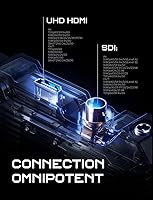
Yes, and this is one of the stronger selling points of this system. The 3G-SDI port supports decimal-point frame rates — 23.98, 29.97, and 59.94fps — which means it plays nicely with broadcast cameras and professional video switchers that require those exact rates rather than rounded figures like 24 or 30fps.

Unfortunately, no. The USB-C port on this wireless video system only supports standard 5V/2.5A charging — Quick Charge and USB Power Delivery protocols are explicitly not supported. If you plug in a QC or PD charger, it will either charge slowly or not charge at all, depending on the charger's behavior. Plan to use a standard USB-C supply or rely on NP-F batteries for faster field power management.

The system accepts NP-F series batteries in the F550, F750, and F970 form factor, which are extremely common in video production. If you already use Sony-style NP-F batteries for monitors or lights, there's a good chance you can share them across your kit.

Pairing is one of the things buyers consistently praise about Hollyland's 4K transmitter kit. Out of the box, the TX and RX come pre-paired, so in most cases you just power both units on and they link automatically. The physical joystick and LCD make channel and mode adjustments straightforward without requiring a phone.

The metal shell and fixed bullet antennas give it a noticeably more solid feel than plastic-bodied alternatives. It also has ESD protection built in, which is helpful in environments with static risk. That said, it is not rated as weatherproof or water-resistant, so you'll want to keep it sheltered in rain or dusty conditions.

4K60 is not supported. The maximum resolution for 4K output is 30fps (specifically 24, 25, or 30fps). If you need 60fps, that tops out at 1080p. For most narrative and documentary workflows this trade-off is perfectly fine, but if 4K60 is a firm requirement for your production, this system will not meet it.

Where to Buy