Overview

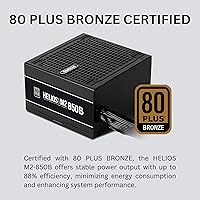
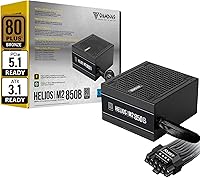
The GAMDIAS HELIOS M2-850B 850W ATX Power Supply landed in early 2025 as one of the more accessible options for builders who want ATX 3.1 compliance without stretching the budget. GAMDIAS built its reputation primarily in gaming peripherals and accessories, and the HELIOS M2 line marks a push into power supplies targeting mainstream builders. At its price point, this ATX 3.1 power supply offers 850W of capacity alongside PCIe 5.1 readiness, which is genuinely useful if you plan to run a current or next-gen GPU. The 80+ Bronze certification means it operates at roughly 82-85% efficiency under typical loads — not the most efficient tier, but adequate for keeping heat and electricity overhead reasonable. One honest caveat upfront: this is a non-modular design, so cable clutter is a real consideration depending on your case.
Features & Benefits

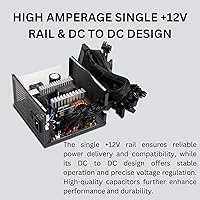
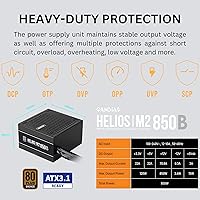
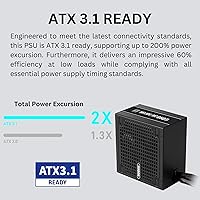
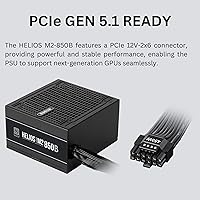
The most practically relevant spec here is ATX 3.1 compliance, which means this ATX 3.1 power supply can handle transient power spikes up to 200% of rated load — critical for modern GPUs that draw sudden bursts of power rather than a steady stream. The included PCIe 12V-2x6 connector is the updated standard replacing the older 12VHPWR, reducing melt-risk concerns when pairing with RTX 50-series or RX 9000-series cards. A single +12V rail simplifies power delivery and avoids the compatibility headaches that sometimes come with multi-rail configurations. The DC-to-DC voltage regulation keeps output stable as your load fluctuates, which matters for system stability during demanding workloads. The ECO fan control is a welcome addition, though GAMDIAS has not published capacitor origin details, so that remains an open question for scrutinizing buyers.

Best For

This 850W GAMDIAS unit makes the most sense for mid-range gaming builds where the GPU sits around the RTX 4070 Ti tier or a newer RTX 5070-class card — you get the 12V-2x6 connector you need without paying for features you may not use. It is also a solid pick for anyone upgrading from an older PSU that predates modern GPU power standards. Budget-conscious first-time builders will appreciate that ATX 3.1 readiness no longer demands a significant premium. That said, if you are working inside a tighter ATX case where cable management is already a challenge, the non-modular harness will test your patience. For workstation users or dual high-TDP GPU setups, stepping up to a gold-rated, fully modular option like a Seasonic or Corsair unit is worth the added spend.

User Feedback

The HELIOS M2-850B has earned a 4.5-star rating across nearly 380 reviews, which for a unit that only launched in early 2025 is a meaningful signal of buyer satisfaction. Owners consistently highlight easy installation and stable day-to-day performance as top positives, with several noting clean compatibility alongside current-gen NVIDIA and AMD cards. On the critical side, a recurring complaint is that the fixed cable bundle is stiff and awkward to route neatly, which is a fair gripe that applies to non-modular units at any price point. A smaller number of users flagged fan noise under load, though no notable pattern of early failures or dead-on-arrival units appears in the data. Long-term reliability remains unproven given the short time on market, so that is worth keeping in mind.

Pros

  • ATX 3.1 compliance handles transient power spikes up to 200% of rated load, protecting modern high-TDP GPUs from instability.
  • The PCIe 12V-2x6 connector delivers native compatibility with RTX 50-series and RX 9000-series cards straight out of the box.
  • A single +12V rail simplifies power delivery and removes the compatibility guesswork that multi-rail designs can introduce.
  • DC-to-DC voltage regulation keeps output stable under variable loads, which reduces crash risk during demanding gaming sessions.
  • At its price point, this ATX 3.1 power supply offers next-gen connector support that is genuinely rare in this tier.
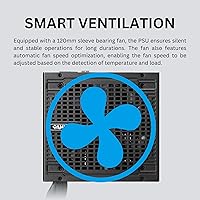
  • ECO fan control keeps the unit quiet during light use, only ramping up when the load actually calls for it.
  • Nearly 380 buyers report straightforward installation and reliable day-to-day performance alongside current-gen GPU builds.
  • 850W of capacity covers mainstream to upper-mid-range GPU pairings with enough overhead for a fully loaded system.

Cons

  • The non-modular design forces all cables into the case regardless of use, which complicates routing in tighter builds.
  • GAMDIAS does not disclose capacitor origin or brand, leaving long-term component quality partially unverified.
  • No ripple suppression figures or independent lab measurements are publicly available, making technical validation difficult.
  • Cable stiffness is a recurring complaint from buyers, making clean routing noticeably harder than with semi-modular alternatives.
  • 80+ Bronze efficiency is adequate but meaningfully less economical over years of use compared to gold-rated competitors.
  • The HELIOS M2-850B launched in early 2025, so long-term field reliability data is still too limited to draw firm conclusions.
  • Fan noise under heavy load has been flagged by multiple buyers, yet GAMDIAS has not published any decibel ratings.
  • There is no semi-modular variant in this lineup, removing a sensible middle-ground option for cable-conscious builders.

Ratings

Based on a global analysis of verified buyer experiences for the GAMDIAS HELIOS M2-850B 850W ATX Power Supply, the scores below were generated by AI after filtering out incentivized, duplicate, and suspected bot reviews to surface only genuine purchase feedback. Each category score reflects both what this ATX 3.1 unit does well in practice and where it genuinely falls short in real-world builds. From next-gen connector support to non-modular cable frustrations, no meaningful trade-off has been glossed over.

Value for Money
88%
Getting ATX 3.1 compliance and a native PCIe 12V-2x6 connector at this price bracket used to require a more significant budget stretch. Buyers building mid-range rigs consistently describe it as one of the most accessible ways to future-proof their power delivery without overpaying. That combination of 850W capacity and next-gen standards at this price tier is genuinely competitive in the current market.
While the price-to-feature ratio is attractive, you are giving up modular cabling and gold-tier efficiency to get here. If you run your system for long daily sessions, the slight efficiency gap compared to alternatives like the Corsair RM850e will start to register on electricity costs over a year of continuous use.
ATX 3.1 Compatibility
93%
The native PCIe 12V-2x6 connector and full ATX 3.1 compliance are the standout technical credentials here, and buyers pairing it with RTX 50-series and RX 9000-series GPUs report clean, adapter-free installation. The 200% transient excursion tolerance means the PSU can absorb sudden GPU power spikes without triggering protective shutdowns during intensive gaming or rendering workloads.
The 12V-2x6 output is a single cable, which covers standard single-GPU builds but leaves no flexibility for niche multi-card configurations. GAMDIAS has not published compatibility test results against specific GPU models, so buyers are relying on user-reported experiences rather than vendor-verified pairing data.
Cable Management
54%
46%
For open or full-tower builds where routing space is generous, the fixed cable harness is functional and gets the job done without notable complaint. Buyers who have built in larger, cable-management-friendly cases tend to rate the experience more favorably, noting the cable lengths are adequate for standard component layouts.
The non-modular design is the single most consistent frustration in buyer feedback, particularly for those working in mid-tower cases with limited behind-panel channels. Every unused SATA or peripheral lead must be bundled and stuffed somewhere in the chassis, which creates real airflow and aesthetic problems that a semi-modular unit at a modest price premium would eliminate.
Power Delivery
84%
Buyers report stable system operation across sustained gaming sessions, with no widespread complaints about voltage-related crashes or unexpected shutdowns under typical mid-range GPU loads. The single +12V rail and DC-to-DC voltage regulation appear to translate into consistent real-world output, with multiple users specifically noting reliable behavior when running current-gen NVIDIA and AMD cards at full load.
No independently verified ripple suppression figures or oscilloscope data are publicly available for this unit, making it difficult to confirm stability at a technical level. Budget PSUs in this class can occasionally show wider voltage variance under mixed heavy loads, and without third-party bench data, that remains an open question for the HELIOS M2-850B specifically.
Noise Level
71%
29%
Under light-to-moderate gaming loads, the ECO fan control keeps the unit running quietly, and many buyers describe it as effectively inaudible during everyday desktop tasks and idle periods. The auto speed regulation is a sensible approach for this price tier and works well during the casual use patterns that represent most builders' daily reality.
A meaningful subset of buyers flagged increased fan noise during sustained heavy gaming or GPU stress loads, though no published decibel measurement exists to quantify exactly how loud it gets. Whether that noise becomes intrusive depends on your case design and ambient conditions, but it appears consistently enough in feedback to be worth considering if a quiet build is a priority.
Efficiency Rating
67%
33%
80+ Bronze certification ensures the unit is not egregiously wasteful, and for secondary rigs or systems that run a few hours per day it is more than sufficient. At moderate loads efficiency hovers around 85%, which keeps heat generation manageable and internal component stress reasonable during typical mid-range gaming sessions.
Bronze is the lowest tier in the mainstream 80+ certification family, and the efficiency gap versus a gold-rated unit is meaningful for rigs that run many hours daily. Builders running content creation pipelines, AI workloads, or long competitive gaming sessions will see a noticeable difference in energy costs compared to a Seasonic Focus GX-850 over the course of a year.
Build Quality
73%
27%
Physical construction draws no major complaints from buyers in terms of casing rigidity or connector feel, and there are no widespread reports of bent pins or loose cable connections out of the box. The DC-to-DC internal architecture and single-rail topology suggest a reasonably considered design for the price tier.
GAMDIAS does not disclose capacitor brand or origin — notably whether Japanese-grade capacitors are used, which is a common benchmark for PSU longevity expectations. Without that transparency, it is genuinely difficult to assess how well the internal components will hold up over three to five years of daily operation in a warm case environment.
Installation Ease
86%
First-time builders and experienced builders alike consistently describe the installation as uncomplicated, with clearly distinguishable connectors and cable lengths that comfortably reach standard ATX motherboard and GPU positions. The 24-pin, EPS, and 12V-2x6 GPU power connections all seat firmly, with buyers rarely reporting physical fitment issues during assembly.
The non-modular harness does add friction to the experience compared to semi-modular alternatives, particularly when trying to tuck the unused cable bundle behind the motherboard tray. In cases with a shallower cable management channel, that extra bulk can make closing the side panel more of a battle than it should need to be.
Thermal Performance
78%
22%
Under normal mid-range gaming loads, the unit stays cool enough that heat is rarely mentioned as a concern by buyers, and the rear exhaust efficiently removes warm air from the PSU cavity. The ECO fan ramp strategy means the unit does not run unnecessarily hot or loud during light workloads, which is a sensible balance.
During sustained sessions pushing 80% or more of rated capacity, the fan must work harder to maintain safe temperatures, which feeds directly into the noise complaints noted by a portion of buyers. There is no published operating temperature range or thermal threshold data, so real-world behavior at the outer limits of the 850W output remains difficult to predict.
Voltage Regulation
82%
18%
The DC-to-DC converter design is a meaningful technical choice at this price point, providing tighter regulation on the 3.3V and 5V rails compared to older group-regulation designs. Buyers with diverse peripheral loads — multiple drives, high-RAM configurations, and varied storage — report stable operation without noticeable voltage-related anomalies.
Without published load regulation percentages or cross-load test results, it is impossible to confirm exactly how tightly the voltage holds under worst-case mixed-load scenarios. DC-to-DC designs still vary considerably in implementation quality at this budget tier, and until third-party bench data appears for this model, some uncertainty remains at the technical margins.
Connector Variety
61%
39%
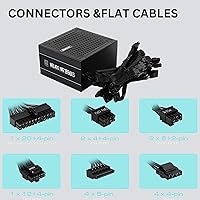
For a standard single-GPU gaming desktop, the fixed harness covers the essentials — the 24-pin motherboard connector, the EPS CPU power cable, one PCIe 12V-2x6 lead, and a reasonable set of SATA and peripheral connectors for drives and accessories. Most buyers building a conventional gaming configuration report no shortage of connections for their actual needs.
The non-modular layout means there is zero flexibility to tailor the cable set to your specific build, and every connector is present whether you need it or not. Minimalist single-drive setups and small-form builds will find the excess cable volume a genuine annoyance, and the absence of a second GPU power cable can be limiting for certain high-end single-card configurations.
Long-term Reliability
63%
37%
In the months since its January 2025 launch, no significant pattern of early failures, premature component degradation, or widespread dead-on-arrival reports has surfaced in buyer feedback. For a budget unit still in its first year on the market, that early track record is at least a reasonable baseline of reassurance.
A PSU needs several years of broad real-world use before meaningful reliability conclusions can be drawn with confidence, and the HELIOS M2-850B simply has not been on the market long enough to satisfy that bar. Buyers who place high value on a well-documented multi-year reliability history should consider established alternatives from Seasonic or Corsair that carry that track record.
Brand Credibility
69%
31%
GAMDIAS has a recognizable presence in the gaming peripheral space, and the HELIOS M2 line represents a serious push into power supplies backed by credible technical specifications. The unit's traction — landing in the top 150 Amazon power supply rankings within months of launch — signals that a meaningful number of buyers are finding the value proposition convincing enough to commit.
GAMDIAS is not yet in the same tier as dedicated PSU specialists like Seasonic or Super Flower, and the brand does not carry the deep manufacturing track record in power supplies that commands automatic buyer confidence. Enthusiast builders who research OEM supply chains, warranty service depth, and factory certifications may find the brand credibility score a limiting factor in their decision.

Suitable for:

The GAMDIAS HELIOS M2-850B 850W ATX Power Supply is a strong fit for budget-conscious builders who want a future-ready foundation without paying a premium for it. If you are pairing it with a current-gen mid-range GPU — something in the RTX 4070 Ti or RTX 5070 class — 850W gives you comfortable headroom with room to spare for the rest of the system. The included PCIe 12V-2x6 connector means you are covered for the latest GPU power standards out of the box, which is a real advantage if you are upgrading from an older unit still running legacy connectors. First-time builders will appreciate the no-fuss installation; with a fixed cable harness, there are fewer decisions to make during the build process. It is also a practical, low-friction choice for anyone who has been holding off on a GPU upgrade simply because their existing PSU lacked the right connector.
Not suitable for:

The GAMDIAS HELIOS M2-850B 850W ATX Power Supply is not the right call for every builder, and it is worth being straightforward about where it falls short. If you are assembling a high-end workstation, running a content creation rig with multiple power-hungry components, or considering a dual-GPU configuration, the 80+ Bronze efficiency rating and non-modular cable harness create real friction — not just theoretical inconvenience. Builders working inside compact mid-tower cases with limited routing space will find the fixed, stiff cable bundle a genuine challenge, since there is no option to omit connectors you do not need. Those who value long-term efficiency and lower operating costs will find gold-rated alternatives like the Seasonic Focus GX-850 or Corsair RM850e more compelling once cumulative electricity costs are factored in. And for buyers who rely on years of field reliability data before committing to a PSU, this unit simply has not been on the market long enough to provide that reassurance.
Specifications

  • Output Power: Delivers a continuous rated output of 850W, providing adequate capacity for mainstream to upper-mid-range ATX gaming desktop configurations.
  • Efficiency Rating: Certified 80+ Bronze, guaranteeing a minimum of approximately 82% efficiency at 20% load, 85% at 50% load, and 82% at 100% load under 115V AC input.
  • Form Factor: Standard ATX form factor, physically compatible with full-size and mid-tower ATX desktop chassis that accommodate a conventional PSU bay.
  • ATX Standard: Fully compliant with the ATX 3.1 specification, meeting updated power delivery timing, voltage tolerance, and transient excursion requirements.
  • GPU Connector: Includes one native PCIe 12V-2x6 connector conforming to the PCIe Gen 5.1 standard for discrete graphics card power delivery.
  • Power Excursion: Supports transient power excursions up to 200% of rated output for brief spike durations, as required by the ATX 3.1 specification.
  • Rail Design: Single +12V rail topology distributes power across all connected components without per-rail current caps, simplifying compatibility with high-draw devices.
  • Voltage Regulation: DC-to-DC converter architecture derives the 3.3V and 5V output rails from the primary +12V rail, improving cross-load voltage stability.
  • PFC Type: Equipped with Active Power Factor Correction, which reduces reactive power draw from the AC mains and improves overall input efficiency.
  • Fan Control: ECO automatic fan speed system adjusts cooling based on real-time thermal and load conditions, reducing audible noise during low-demand operation.
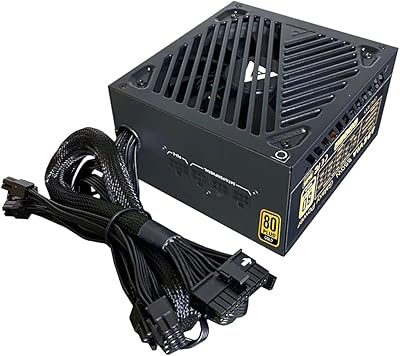
  • Modular Type: Non-modular design with all output cables permanently hardwired into the unit housing; no cables can be detached or omitted.
  • Dimensions: Unit measures 10.2 x 8.3 x 3.9 inches (L x W x H) as listed by the manufacturer.
  • Weight: Unit weight is 4.79 pounds (2.18 kg), consistent with typical non-modular ATX power supplies in the 850W class.
  • Cooling Method: Air-cooled via a single internal fan that exhausts heat through the rear ventilation grille of the PSU housing.
  • Compatibility: Designed for standard ATX desktop PC enclosures; not compatible with SFX, SFX-L, TFX, or other non-ATX small-form-factor chassis.
  • Model Number: Manufacturer model designation is HELIOS M2-850B, with the US retail variant carrying the identifier HELIOS M2-850B(US).
  • Release Date: First made available in January 2025, positioning it among the earlier retail ATX 3.1 compliant units offered at this price tier.

Related Reviews
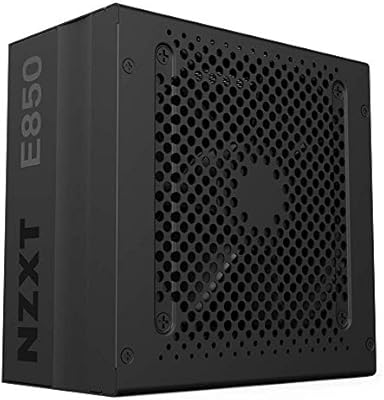
NZXT E850 850W ATX Gaming Power Supply
89%
92%
Energy Efficiency
89%
Noise Levels
94%
Build Quality
91%
Ease of Installation
93%
Warranty & Reliability
More
SAMA XP850W 850W Modular ATX Power Supply
81%
91%
Value for Money
84%
Power Delivery Stability
88%
Fan Noise & ECO Mode
89%
Cable Management & Modularity
74%
12VHPWR Connector Quality
More
Superer 850W ATX 3.1 Gaming Power Supply
87%
93%
Power Delivery & Stability
87%
Noise Levels
90%
Build Quality
91%
Efficiency & Energy Savings
80%
Cable Management
More
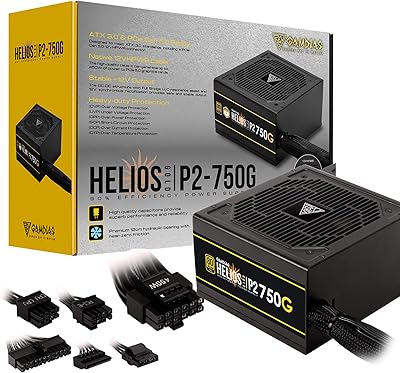
GAMDIAS Helios P2-750G 750W Modular Power Supply
81%
88%
Value for Money
91%
Cable Management
93%
GPU Compatibility
74%
Noise Level
84%
Efficiency & Heat Output
More
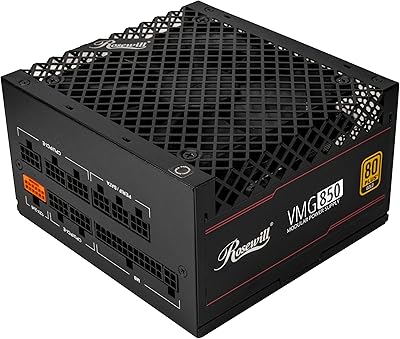
Rosewill VMG 850W 80+ Gold ATX 3.0 Power Supply
87%
89%
Performance
94%
Energy Efficiency
85%
Cooling/Noise Level
88%
Build Quality
92%
Cable Management
More
Seasonic CORE GX-850 850W 80+ Gold ATX Power Supply
90%
95%
Performance
90%
Build Quality
92%
Energy Efficiency
88%
Cooling and Noise
94%
Modular Cable Management
More
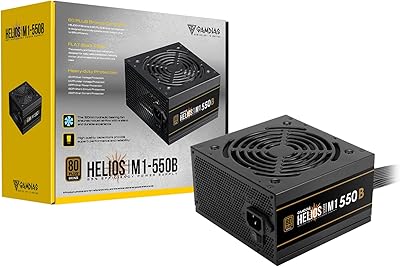
GAMDIAS Helios M1-550B 550W ATX Power Supply
75%
83%
Value for Money
88%
Installation Ease
67%
Noise Level
71%
Build Quality
78%
Thermal Performance
More
Apevia ATX-GX850W Galaxy 850W 80+ Gold Certified Semi-Modular Power Supply
87%
94%
Power Delivery Stability
91%
Efficiency (80+ Gold)
88%
Noise Reduction
89%
Cooling Performance
85%
Build Quality
More
MSI MPG A850G 850W ATX Power Supply
83%
91%
Build Quality
88%
Power Delivery Stability
83%
Noise Level
93%
Modularity & Cable Management
86%
Efficiency & Thermal Performance
More
Redragon RGPS-850W 850W Power Supply
80%
78%
Power Delivery Stability
81%
Build Quality & Components
86%
Noise Level & Fan Behavior
84%
Modular Cable System
88%
PCIe 5.1 & ATX 3.1 Compatibility
More

FAQ

For most mid-range to upper-mid builds featuring one of those cards alongside a modern CPU, 850W gives you comfortable headroom. A system pairing an RTX 4070 Ti Super with a Core i9 or Ryzen 9 processor typically draws well under 600W during gaming, leaving a reasonable buffer for the rest of the components. Where it gets tight is if you are running an RTX 5090 or a heavily overclocked platform with multiple storage drives — in those cases, 1000W or more would be more appropriate.

No, this is a strictly non-modular unit — all cables are permanently wired into the PSU housing and cannot be removed. That means you will need to manage whatever cables you are not using inside your case, which can be awkward in smaller mid-tower enclosures. If clean cable routing is a priority for you, a semi-modular or fully modular alternative would be a more practical choice.

ATX 3.1 tightens the rules around how a PSU handles short, sudden spikes in power demand — known as transient excursions — which modern GPUs generate constantly as they ramp rendering workloads up and down. This unit is rated to absorb spikes up to 200% of its rated output for these brief moments, which helps prevent system shutdowns or instability during GPU-intensive scenes. On older PSUs that predate this standard, those spikes could occasionally trip over-current protections and cause unexpected shutdowns.

The 12V-2x6 is the revised connector introduced with PCIe Gen 5.1, designed specifically to address the intermittent connector-melting issues that surfaced with some early 12VHPWR implementations. The sensing pins are recessed slightly, which ensures the connector is fully and correctly seated before high current flows. Having native 12V-2x6 support here means you do not need any adapter when pairing with a GPU that uses this standard.

GAMDIAS has not published an official decibel rating for this unit, so there is no verified figure to cite. Buyer feedback is mixed but generally positive at low and moderate loads — most users report it is quiet during everyday use. A subset of reviewers did flag noticeable fan noise under sustained heavy load, though how intrusive that is depends on your case, your GPU cooler, and your room acoustics.

The product listing does not specify warranty terms or duration, which is worth flagging before you buy. GAMDIAS does offer limited warranties on its products, but for exact coverage details — including what is and is not covered, and how to make a claim — you should confirm directly with GAMDIAS customer support or the retailer prior to purchase.

Yes, it follows the standard ATX PSU form factor, so it will drop into any case with a conventional ATX power supply bay. The one practical consideration is the permanently attached cable bundle, which can be bulkier and stiffer than modular cables and may require more effort to tuck away neatly, particularly in cases with limited cable management channels behind the motherboard tray.

An 80+ Bronze unit runs at roughly 82-85% efficiency at typical loads, while an 80+ Gold unit reaches around 87-90%. The gap translates to slightly more heat generated and marginally higher electricity costs with the Bronze unit. For a secondary or occasional-use build that is not running many hours per day, the difference is negligible; for a primary rig that runs eight or more hours daily, the efficiency delta becomes more meaningful over the course of a year.

It is a reasonable pick for a first build, particularly if your GPU uses the 12V-2x6 connector and you are working within a tighter budget. Installation follows the same steps as any other non-modular ATX PSU — connect the 24-pin motherboard cable, the CPU EPS connector, the GPU power cable, and any SATA or peripheral connectors your drives need. The main learning curve is managing the fixed cable bundle, but with a bit of patience it is very workable for a first-timer.

Nothing significant stands out in the available buyer feedback — there is no notable pattern of early failures or dead-on-arrival reports in the ratings. That said, the unit only launched in early 2025, which means long-term field reliability data spanning two or three years simply does not exist yet. If proven longevity is a top priority, an established unit with a multi-year track record from brands like Seasonic or Corsair may give you more peace of mind.