Overview

The BEAVERLAB Darwin M2C Digital Pocket Microscope sits in an interesting middle ground — it's not a flimsy toy, and it's not the kind of serious lab equipment you'd find in a classroom cabinet. It's a compact, screen-equipped science tool built for kids aged 8 to 12 who genuinely want to look at the world up close. What separates it from most kids' options is its own built-in IPS display, meaning no phone or laptop is required to get started. At its price point, buyers should expect solid everyday exploration capability, with a few honest trade-offs worth knowing before purchasing.
Features & Benefits

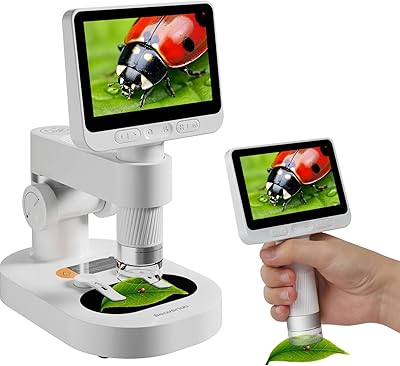
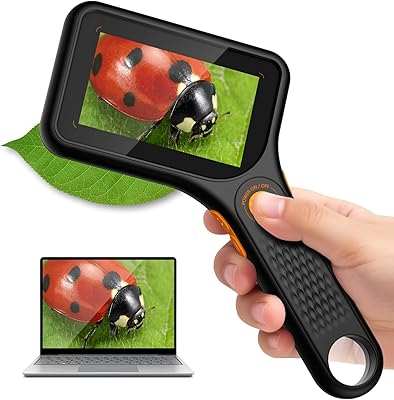
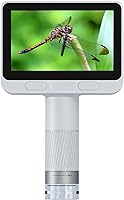
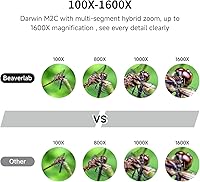
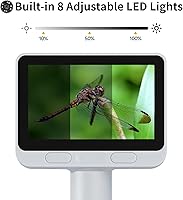
The 4.0-inch IPS screen is where this pocket microscope genuinely stands out. IPS panels produce noticeably richer colors and hold clarity even when viewed from an angle — which matters when two kids are hunched over the same specimen. The magnification range is advertised at 100X to 1600X, but be realistic: sharp, usable zoom sits comfortably in the lower end; the upper range softens considerably. Eight adjustable LEDs handle illumination well across different specimens, and the 2.0MP sensor captures 1080P photos and video — handy for school projects or sharing discoveries with family. Connectivity to Android, iOS, and Windows adds flexibility without a complicated setup.

Best For

This kids microscope is a strong pick for curious 8-to-12-year-olds who want to explore things at close range — bugs, coins, fabric, skin, whatever catches their attention that week. It's equally well suited to parents looking for a self-contained science gift that doesn't depend on a separate device to function. Students working on home science projects will appreciate the ability to save photos and video directly to the included memory card. Even adult hobbyists doing quick macro checks on circuit boards or stamps will find it surprisingly capable. If you need something portable, rechargeable, and genuinely easy to pick up and use, this fits that brief well.

User Feedback

With a 4.6-star average across over 140 ratings, the Darwin M2C has earned its reputation honestly. Buyers consistently praise the display quality and how intuitive it is for kids to use right out of the box — a meaningful detail when handing something to an eight-year-old. Build quality gets positive mentions too; it feels sturdier than the price tier might suggest. The main frustration is the magnification gap: the 1600X ceiling is largely a marketing figure, and some reviewers felt let down when high-zoom images turned blurry. App connectivity works but draws mixed feedback on reliability. As a birthday gift, first impressions from kids are reportedly very strong.

Pros

  • The built-in 4.0-inch IPS screen means kids can start exploring immediately without needing a phone or laptop nearby.
  • IPS panel quality is noticeably better than the LCD screens found on competing kids microscopes at this price tier.
  • Eight adjustable LEDs provide even, consistent lighting across a wide variety of specimen types.
  • At just over an ounce, this pocket microscope is genuinely portable — it fits in a jacket pocket or small backpack.
  • The aviation aluminum alloy rail gives it a sturdier feel than you would expect from a kids science gadget.
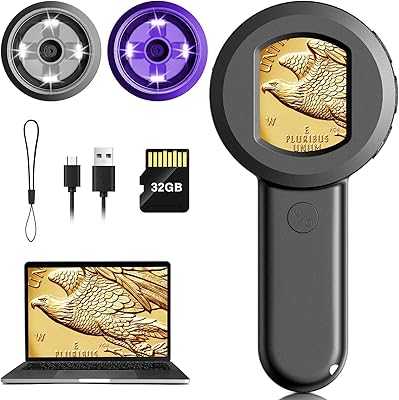
  • A 8GB memory card is included in the box, so kids can save photos and videos right away without extra purchases.
  • Cross-platform compatibility with Android, iOS, and Windows covers virtually every household device setup.
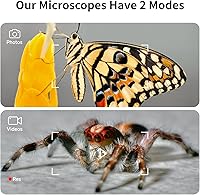
  • 1080P video capture makes it practical for recording school presentations or sharing discoveries with family.
  • The 4.6-star average across a meaningful number of real buyers reflects consistently solid satisfaction.
  • Kids report being genuinely excited by it as a gift, which is not something every science gadget manages to pull off.

Cons

  • The advertised 1600X magnification is highly misleading — usable sharp zoom is considerably lower in practice.
  • App connectivity works but has drawn mixed reliability feedback, which can frustrate parents trying to help kids troubleshoot.
  • The 2.0MP sensor produces decent but not impressive images; detail-oriented users will notice its limits quickly.
  • At higher zoom levels, image stabilization becomes a real challenge without a steady surface or stand.
  • No dedicated physical stand is included in the package, making consistent hands-free use harder than it needs to be.
  • Plastic components in the body may show wear with heavy daily use by younger or rougher-handling children.
  • The companion app experience on desktop feels less polished than the standalone screen mode.
  • Battery life has not been a widely praised point among reviewers, which matters for longer exploration sessions.

Ratings

Our editorial team used AI-assisted analysis to process verified buyer reviews for the BEAVERLAB Darwin M2C Digital Pocket Microscope from global marketplaces, actively filtering out incentivized, bot-generated, and low-signal feedback to surface what real users genuinely experience. The scores below reflect both the product's clear strengths and its honest limitations — nothing has been softened to protect the brand. If a category scored low, you will see exactly why.
Display Quality
88%
The IPS screen consistently earns praise from parents and kids alike — colors look vivid and accurate even when two children are crowding around the device together. Compared to the LCD panels found on similarly priced rivals, the difference is immediately noticeable in how well specimen details pop.
A small number of users found the screen slightly reflective under bright natural light, making outdoor use less comfortable. At 4.0 inches, the display is adequate but not large enough for groups of more than two to share comfortably.
Magnification Accuracy
54%
46%
At lower magnification levels — roughly in the 100X to 400X range — the Darwin M2C produces sharp, satisfying images that genuinely impress children and hobbyists inspecting coins, bugs, or fabric. For casual exploration, that usable range is more than sufficient.
The advertised 1600X ceiling is the most commonly cited frustration across buyer reviews — images become blurry and practically unusable well before reaching maximum zoom. Parents who bought this expecting real high-magnification science work felt misled, and rightfully so.
Ease of Use
91%
Kids aged 8 and up can figure this device out within minutes without any adult intervention — the button layout is intuitive and the standalone screen removes the usual friction of pairing to another device first. Multiple reviewers specifically noted how quickly their children became independent with it.
Younger children at the lower end of the target age range occasionally struggle with holding the microscope steady enough for clear images, especially at higher zoom levels. A bundled stand or grip accessory would meaningfully address this.
Build Quality
79%
21%
The aluminum alloy inner rail gives the Darwin M2C a noticeably more solid feel than purely plastic competitors at this price tier. Parents report it surviving reasonable drops and daily handling by school-age children without visible damage.
The outer plastic housing does show scuff marks and minor scratches with regular use, and a few reviewers noted that some joints feel slightly loose after extended handling. It is durable enough for normal kid use, but not built to withstand serious rough play.
Image & Video Capture
74%
26%
1080P video and photo capture works reliably for its primary purpose — saving school project documentation, recording interesting specimens, or showing findings to family members. Kids clearly enjoy the ability to create a personal library of discoveries.
The 2.0MP sensor produces images that look fine on the device screen but lose quality when viewed on a larger monitor. Buyers expecting crisp, shareable social media-quality macro photography will find the output underwhelming.
Lighting System
83%
Eight adjustable LEDs provide genuinely even illumination across most common specimen types, and the brightness adjustment button is simple enough that children use it without thinking. Reviewers examining coins and textured objects particularly appreciated the consistent, shadow-free lighting.
At maximum brightness, some lighter or reflective specimens can appear overexposed, washing out fine surface detail. Users examining translucent specimens note that the ring lighting style is not ideal for every type of biological sample.
Portability
93%
At just over an ounce, this pocket microscope is one of the lightest full-featured options in its category — kids slip it into a jacket pocket or small backpack without a second thought. The compact form factor makes nature walks and field exploration genuinely practical.
The small size, while great for portability, means the grip can feel slightly awkward for adults with larger hands during extended inspection sessions. The included storage solution is also minimal, so buyers may want to source a small protective pouch separately.
Device Connectivity
63%
37%
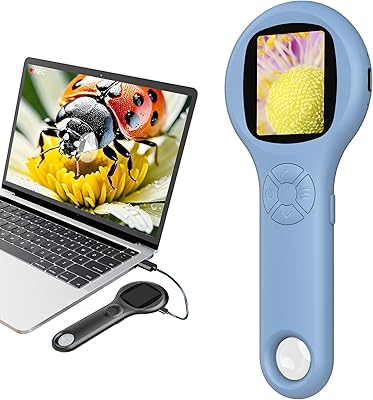
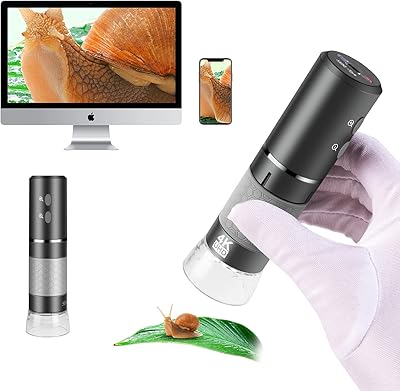
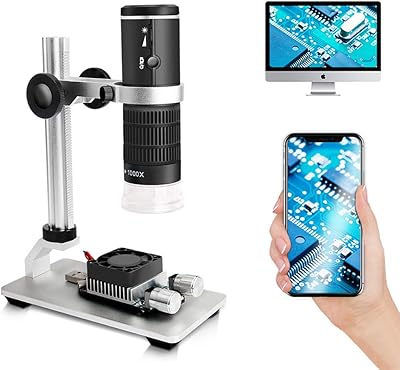
Cross-platform support for Android, iOS, and Windows means most families can connect without compatibility headaches. When it works smoothly, kids enjoy projecting their live view onto a laptop screen for group show-and-tell moments.
App connectivity is the most inconsistently reviewed feature — pairing hiccups, occasional lag in the live feed, and app interface issues on certain Android versions appear regularly in buyer comments. The standalone screen mode is noticeably more reliable than connected mode.
Value for Money
77%
23%
For a device that includes a built-in IPS screen, adjustable LEDs, cross-platform connectivity, and an 8GB memory card in the box, the overall package represents fair value relative to screen-free alternatives at similar prices. Most satisfied buyers feel they received more than expected.
Buyers who prioritize magnification performance and find the real-world zoom ceiling disappointing may feel the value proposition weakens considerably. If the magnification were more accurately represented, the price-to-performance ratio would feel considerably stronger.
Setup & Unboxing
86%
Multiple gift-context reviewers highlight that the device is ready to use within minutes of opening the box — the memory card is pre-included and the standalone mode requires no app download or account setup whatsoever. For a birthday morning, that immediacy matters.
The instruction manual has been noted as sparse, particularly for the device connectivity and app setup steps. Parents without a technical background may spend some time troubleshooting the wireless connection portion without clearer guidance.
Durability for Kids
72%
28%
The combination of aluminum alloy structural components and ABS plastic holds up well under the daily handling patterns of 8-to-12-year-olds. Real-world reviewers report no significant mechanical failures under normal school and home use.
It is not designed to be waterproof or heavily impact-resistant, and the lens area is vulnerable to scratches if stored loosely in a bag. Parents of particularly active or young-leaning children should manage expectations around longevity.
Gift Suitability
89%
Among the highest-scoring themes in buyer reviews is how well this lands as a birthday or holiday gift — children respond immediately and enthusiastically to the built-in screen, which makes the experience feel rewarding from the very first use. It avoids the disappointment often associated with science gifts that feel too complex or too simple.
Buyers gifting to older teens or academically advanced children may find the magnification limitations become apparent quickly, reducing long-term engagement. It is a stronger gift for curious beginners than for young people with prior microscopy experience.
Software & App Experience
58%
42%
The companion app extends the device's usefulness by enabling live viewing and file management on a larger screen, which is genuinely helpful for classroom-style presentations or when a child wants to share findings with a parent on a laptop.
App reliability feedback is consistently mixed — Android compatibility varies by device model, and the desktop software feels less polished than the hardware itself. Several reviewers suggest treating app connectivity as a secondary feature rather than a core one.
Specimen Versatility
81%
19%
The Darwin M2C handles a broad variety of surface-level specimens well — coins, insects, plant material, hair, fabric, and skin texture all produce engaging results at the lower magnification ranges. This versatility keeps children interested across a wide range of spontaneous curiosities.
It is not well suited for traditional biological slide work that requires transmitted light from below — the ring LED design works for surface specimens but struggles with thin-section microscopy. Buyers expecting a classical lab microscope experience will find this a poor fit.

Suitable for:

The BEAVERLAB Darwin M2C Digital Pocket Microscope is a genuinely well-matched pick for kids aged 8 to 12 who have started showing real curiosity about the natural world — the kind of child who wants to examine a beetle wing or a grain of sand rather than just watch someone else do it on YouTube. Because it has its own built-in screen, parents don't need to hand over a phone or set up a laptop every time their child wants to use it, which makes spontaneous exploration actually possible. It works equally well as a self-contained device and as one that connects to a smartphone or computer, so older kids can save and share their findings for school projects without friction. Gift-buyers will appreciate that it arrives ready to use without a steep learning curve — setup is minimal and the controls are approachable for middle schoolers. Adult hobbyists who occasionally need a portable macro tool for inspecting stamps, circuit boards, or fabric will also get practical value from this device.
Not suitable for:

Buyers expecting the BEAVERLAB Darwin M2C Digital Pocket Microscope to deliver genuinely sharp images at its advertised maximum magnification will likely walk away disappointed — the 1600X figure is a marketing ceiling, and real-world clarity drops off well before you get anywhere near it. This is not the right tool for serious young scientists or older students who need laboratory-grade precision for detailed biological specimens or academic coursework. Parents of younger children under 7 or 8 should also pause; the device is compact and relatively delicate in places, and smaller hands may struggle with steady handling. If your household already owns a capable dedicated microscope and you're hoping this replaces it, the image quality at high zoom won't meet that bar. Those who want seamless, consistently reliable wireless app performance across all devices may also encounter frustration, as connectivity feedback from real users is mixed.
Specifications

  • Display: Features a 4.0″ IPS panel that delivers wider viewing angles and more accurate colors compared to standard LCD screens used in competing devices.
  • Magnification: Hybrid zoom system covers a range of 100X to 1600X, though practical sharp magnification is notably lower than the advertised maximum.
  • Sensor: Equipped with a 2.0MP CMOS image sensor capable of capturing stills and video at 1920x1080 resolution.
  • Lighting: Eight built-in LED lights surround the lens and offer adjustable brightness to accommodate different specimen types and ambient conditions.
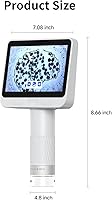
  • Weight: The unit weighs 1.13 ounces, making it genuinely pocketable and comfortable for children to handle for extended periods.
  • Dimensions: Packaged dimensions measure 8.54 x 5.59 x 2.32 inches, reflecting a compact form factor suited for storage in a bag or drawer.
  • Materials: Body is constructed from a combination of plastic, ABS, and aviation aluminum alloy for the inner rail, balancing lightweight design with structural durability.
  • Power Input: Powered via USB at 5 volts, compatible with standard USB chargers and power banks commonly found in most households.
  • Memory Storage: An 8GB memory card is included in the package, allowing immediate saving of captured photos and videos without any additional purchase.
  • Compatibility: Connects wirelessly or via cable to devices running Android 8.0 or later, iOS 12.0 or later, and Windows 7, 8, 10, or 11.
  • Model Number: The official model designation is DDL-M2C, produced under the BEAVERLAB Darwin product line by BeaverLab Beaver Technology.
  • Color: Available in white with aluminum alloy inner rail detailing, giving it a clean, modern appearance suited to both kids and adult hobbyists.
  • Target Age: Designed and recommended for children aged 8 to 12 years, though adult hobbyists also use it for casual macro inspection tasks.
  • Viewing Angle: The real angle of view is 45 degrees, which determines how much of a specimen is visible within the frame at a given distance.
  • Video Output: Records full HD video at 1920x1080 resolution, suitable for saving science project documentation or sharing observations with teachers and family.

Related Reviews

BEAVERLAB Darwin M2B Handheld Digital Microscope
76%
88%
Display Quality
84%
Portability & Form Factor
63%
Magnification Performance
79%
RGB Lighting System
81%
LED Illumination Control
More
MAXLAPTER Pocket 100X Digital Microscope
74%
91%
Portability & Form Factor
88%
Ease of Use
63%
Image & Optical Quality
71%
Screen Quality
74%
UV Light Performance
More
T TAKMLY 8910-355 Pocket Digital Microscope
77%
91%
Portability & Form Factor
74%
Magnification Performance
83%
Display Quality
88%
Ease of Use
61%
Battery Life
More
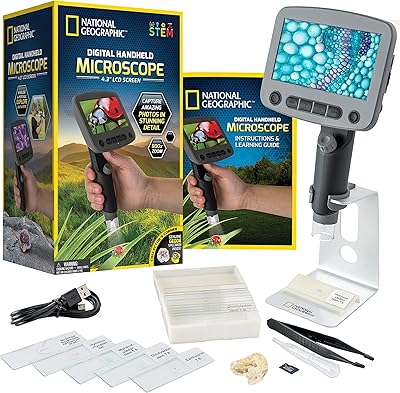
National Geographic Kids Digital Handheld Microscope
81%
88%
Ease of Use for Kids
83%
Image & Screen Quality
71%
Magnification Performance
79%
Battery Life
91%
Kit Completeness & Value
More
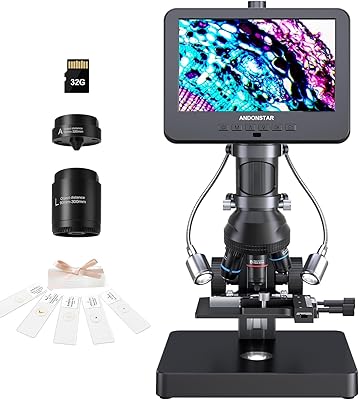
Andonstar AD266S 7-Inch 5-Lens Digital Microscope
74%
83%
Image Clarity
88%
Lens Versatility
81%
Build Quality
79%
Value for Money
76%
LCD Display
More
KEXWAXX KX-1000-CY Kids Pocket Digital Microscope
76%
91%
Ease of Setup
63%
Magnification Clarity
71%
Screen Quality
67%
Build Quality & Durability
78%
Battery Life
More
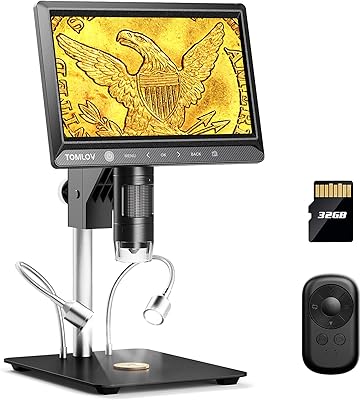
TOMLOV DM702 Digital Coin Microscope 10-inch
78%
88%
Display Quality
74%
Magnification Performance
83%
Build Quality & Durability
86%
Lighting System
84%
Stand & Working Space
More
Ahalfcit 500X Handheld Digital Microscope
75%
88%
Ease of Use
76%
Screen Quality
63%
Image & Magnification Quality
58%
Build Quality & Durability
82%
Battery Life
More
GOCHIFIX GM-0301 10.1″ Digital Microscope
81%
88%
Display Quality
82%
Magnification Range
79%
Image & Video Resolution
91%
Lighting System
63%
Stand Stability
More
TOMLOV DM9 Pro Digital Microscope
79%
83%
Image Clarity
67%
Magnification Range
91%
Built-in Screen
86%
Build Quality
88%
Lighting System
More

FAQ

It works completely on its own. The built-in 4.0″ IPS screen means your child can start exploring specimens right away without touching a phone or opening a laptop. The device connectivity to other devices is an added bonus, not a requirement.

This is worth being straightforward about: 1600X is the technical ceiling, but image sharpness degrades significantly well before you reach it. In practical use, the Darwin M2C delivers clear, usable images at lower magnification levels. Expect impressive close-up views, but don't plan around the maximum figure.

The BEAVERLAB Darwin M2C Digital Pocket Microscope is compatible with Android devices running version 8.0 or later, iPhones and iPads on iOS 12.0 or later, and Windows computers running Windows 7, 8, 10, or 11. It covers the vast majority of devices most families already own.

An 8GB memory card is included in the box, so saved images and videos go straight to that card. Kids can then transfer files to a computer or share them without needing to mess around with app syncing every time.

It holds up reasonably well for its size and weight class. The aluminum alloy inner rail adds meaningful structural stability, and the overall build feels solid rather than toy-like. That said, it's not drop-proof — if your child tends to be rough with gadgets, a protective pouch for storage is a smart addition.

It charges via USB at 5 volts, the same standard used by most phones and tablets. Any USB wall adapter or power bank you already own should work fine. There are no proprietary cables or special chargers required.

IPS panels handle off-angle viewing much better than LCD alternatives, so two kids leaning over the same specimen together is genuinely workable. The 45-degree field of view and wide-angle IPS display make shared viewing a practical experience rather than a frustrating one.

Quite a range, honestly. Insects and bug wings, coin surfaces, fabric textures, plant leaves, soil samples, hair strands, and fingertips are all popular starting points. Older kids and adult hobbyists also use it for inspecting circuit boards, stamps, or jewelry. It's most satisfying with specimens that have surface texture or color rather than thin biological slides.

Connectivity works, but it's one of the more mixed points in user feedback. Some families report a smooth experience; others encounter occasional hiccups during pairing or lag in the live view. The standalone screen mode is consistently more reliable, so treat device connectivity as a convenient extra rather than the primary feature.

For a child who genuinely shows curiosity about the natural world, this tends to land well as a gift. Reviews from parents who bought it for birthdays are largely positive about the initial reaction — kids find it engaging immediately because the screen makes results visible right away. It strikes a good balance between feeling like a real scientific instrument and being approachable enough for independent use.