Overview

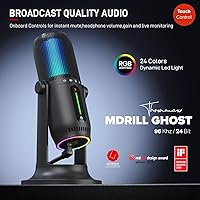
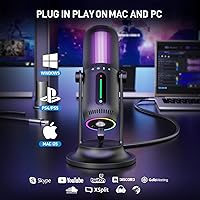
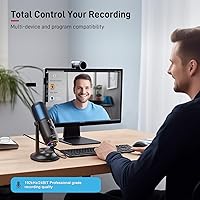
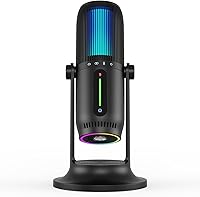
The Thronmax M2 Mdrill Ghost sits squarely in the mid-range USB-C condenser category, built for streamers, gamers, and home podcasters who want genuine recording flexibility without spending studio-level money. What separates it from a crowded field is the combination of four selectable polar patterns and RGB lighting packed into one desktop unit. Plug it into a Mac, Windows PC, Linux machine, or even a PS4 and it works instantly — no driver installation, no configuration headaches. It records at 24-bit/96kHz, which puts it ahead of many competitors at this price point. Just keep expectations grounded: this is a content creator tool, not a replacement for a proper studio chain.
Features & Benefits

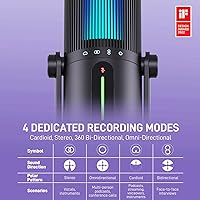
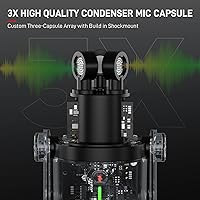
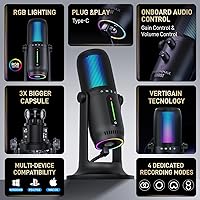
The four polar patterns are where this condenser mic earns its keep. Cardioid handles solo recording duties well, omnidirectional suits ambient or room capture, bidirectional works for face-to-face interviews, and stereo mode adds dimension for instrument recording — though results there are more variable. Thronmax calls their capsule tuning VERTIGAIN technology; strip away the branding and it essentially means the capsules are voiced to prioritize clarity and reduced background noise, which holds up in real use. The USB-C connection is genuinely useful — reversible cable, low latency, and zero-driver operation means setup takes under a minute. Onboard volume and mute controls round things out practically for live sessions.

Best For

This streaming microphone makes the most sense for solo content creators — Twitch streamers, YouTube vloggers, or anyone building a home setup who would rather own one versatile mic than three specialized ones. The driverless PS4 and Mac compatibility is a genuine convenience for console streamers who want to skip the typical audio interface hassle. Podcasters recording occasional two-person conversations will find the bidirectional mode useful. It also suits first-time mic buyers stepping up from a headset; the onboard controls and instant plug-in operation remove almost all the friction. The RGB lighting is a nice bonus for gamers who care about desk aesthetics, though it should not be the primary buying reason.

User Feedback

Among verified buyers, voice clarity and easy setup come up consistently as highlights — several users mention being surprised by how clean their recordings sounded straight out of the box. Cardioid mode draws the most praise; stereo mode gets mixed responses, with some finding the channel separation underwhelming. The most repeated criticism targets the integrated stand, which a few users describe as underpowered for the mic's weight and prone to tilting. RGB lighting lands well with the gaming crowd, though a handful wished for software to customize the colors. Given the 2023 release date, long-term durability data is still limited, but short-term impressions are solid, and some buyers favorably compare it to pricier alternatives for vocal recording.

Pros

  • Four selectable polar patterns cover most recording scenarios without needing a second microphone.
  • Driverless USB-C setup works instantly on Mac, PS4, Linux, and Windows — no configuration required.
  • 24-bit/96kHz recording captures noticeably more vocal detail than standard 48kHz USB microphones.
  • Physical mute button and volume knob allow quick adjustments mid-stream without touching software.
  • Cardioid mode delivers clean, focused voice recordings with solid off-axis rejection for desk use.
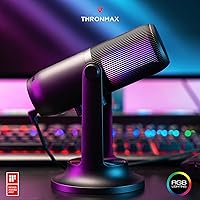
  • RGB lighting adds genuine visual polish to gaming and streaming desks without being distracting on camera.
  • Several buyers rate this streaming microphone favorably against more expensive competitors for vocal clarity.
  • Compact integrated stand keeps the desk footprint small — useful for tight or cluttered workspaces.
  • Bus-powered over USB means no separate power cable or adapter is needed to get started.

Cons

  • The integrated stand gradually tilts forward under the mic's weight — a recurring complaint across verified reviews.
  • No companion software means RGB colors and lighting effects cannot be customized to match other peripherals.
  • Stereo mode performance is inconsistent and underwhelming compared to dedicated stereo microphone options.
  • No USB-A adapter is included, which can catch buyers with older desktop systems off guard.
  • The volume knob lacks precise detent steps, making fine gain adjustments slightly imprecise in practice.
  • Omnidirectional and stereo patterns pick up significant room noise in untreated recording spaces.
  • Long-term durability is still an open question given the relatively recent market debut.
  • Mounting on a boom arm requires a separate adapter that is not mentioned clearly in the product listing.
  • Upper-frequency harshness can appear at higher gain settings, requiring EQ correction in post-production.

Ratings

The Thronmax M2 Mdrill Ghost earned its scores through AI analysis of verified global buyer reviews, with spam, bot-generated, and incentivized feedback actively filtered out before any category was scored. The result is an honest picture of where this condenser mic genuinely impresses content creators and where it still leaves room for improvement. Both the standout strengths and the recurring frustrations are reflected transparently in every scorecard below.
Sound Clarity for Voice
83%
Buyers upgrading from headset microphones consistently note a significant jump in voice intelligibility, particularly during live streams and podcast recordings. The capsule's tuning handles mid-range vocal frequencies well, making spoken content sound present and natural without heavy post-processing.
At higher input gain settings, some users report a subtle upper-frequency harshness that requires EQ correction in post. It handles voice cleanly in quiet rooms but struggles slightly in reflective home environments where room tone becomes audible.
Polar Pattern Versatility
78%
22%
Having four selectable patterns in one unit genuinely removes the need to own separate microphones for different recording scenarios. Streamers appreciate switching between cardioid for solo sessions and bidirectional for guest interviews without buying additional gear.
Stereo mode is the weakest of the four options — several users found the channel separation underwhelming compared to dedicated stereo microphones. The omnidirectional pattern also picks up significant room noise, which limits its usefulness unless the recording space is acoustically treated.
Setup & Ease of Use
92%
The driverless USB-C connection is one of the most praised aspects across all platforms — users on Mac, PS4, and Linux particularly appreciate that the mic simply works the moment it is plugged in. The onboard volume knob and mute button make it practical for live use without alt-tabbing out of a game or stream.
There is no companion software, which means users who want to fine-tune polar pattern behavior, apply EQ, or customize RGB lighting are out of luck beyond what the hardware offers. For beginners this is fine, but more experienced users may find the lack of software control limiting.
Build Quality & Materials
67%
33%
The microphone body itself feels reasonably solid for the price tier, with a mostly metal construction that gives it a premium look on camera and a satisfying weight in hand when repositioning it on the desk.
The integrated stand is the most consistent hardware complaint — multiple users describe it as underpowered for the mic's weight, leading to gradual forward tilt over time. The stand connection point also feels slightly loose on some units, which is a notable quality control concern.
Value for Money
81%
19%
Relative to competing USB microphones at this price point, the combination of 96kHz/24-bit resolution, four polar patterns, and onboard controls represents a strong feature-to-cost ratio. A small but vocal group of buyers explicitly mention it outperforms pricier alternatives for vocal recording tasks.
Buyers who primarily need one solid polar pattern for streaming may find more cost-effective options that do cardioid better for less money. The value equation is strongest for users who will actually rotate between recording modes — otherwise some of the premium feels unused.
RGB Lighting
74%
26%
The RGB lighting is a genuine visual asset for gamers building themed desktop setups, adding a polished look that many streaming microphones in this category skip entirely. The glow is consistent and not overpoweringly bright on camera.
There is no software control for the lighting, meaning users cannot change colors or effects beyond what the hardware cycles through by default. Several buyers who cared about RGB customization found this frustrating, especially when trying to match existing peripherals.
Cardioid Mode Performance
86%
Cardioid is clearly where this microphone was optimized — voice recordings in this mode are consistently clean, with good off-axis rejection that keeps keyboard and mouse noise from bleeding into the recording during gaming sessions.
The cardioid pattern is not as tight as some competing directional condensers, so very loud mechanical keyboards or nearby speakers can still creep into recordings. Users in noisier home environments may need a pop filter or acoustic panel to get the best results.
High-Resolution Audio Quality
79%
21%
Recording at 24-bit/96kHz captures noticeably more detail than standard 48kHz USB microphones, particularly in the upper vocal register and acoustic instrument recordings. Editors working with the raw files in DAW software find more headroom for mixing and correction.
The real-world gap between 96kHz and 48kHz is subtle for pure voice content and most listeners will not notice the difference in a finished podcast or stream. The higher sample rate also produces larger file sizes, which a few users on limited storage found inconvenient.
Platform Compatibility
91%
Windows, Mac, Linux, and PS4 support without any driver installation is a practical strength that saves time and eliminates a common frustration. PS4 compatibility in particular earns consistent praise from console streamers who want to avoid an audio interface entirely.
Xbox compatibility is not confirmed, which has tripped up a small number of buyers. There are also occasional reports of the mic not being recognized on certain Linux distributions without manual configuration, though these cases appear to be edge scenarios.
Noise Floor & Background Rejection
71%
29%
The 80dB signal-to-noise ratio delivers a reasonably quiet recording floor for a USB condenser at this price, and most users report that background hum and electronic interference are well controlled during standard desktop recording sessions.
In real-world home environments, the mic does pick up ambient room noise more than buyers initially expect, particularly with omnidirectional and stereo patterns active. Users in open-plan spaces or with HVAC noise nearby will notice the limitations more than those in quieter dedicated rooms.
Cable & Connectivity
84%
The USB-C connector is a practical upgrade over legacy micro-USB microphones — the reversible plug reduces wear and the cable management is cleaner on most modern desks. Direct monitoring through the headphone output works with minimal perceivable latency.
The included USB-C cable length may feel short for some desktop configurations, and a few users noted they needed a longer replacement cable to route it cleanly to their PC tower. No USB-A adapter is included in the box, which can catch buyers with older systems off guard.
Physical Controls
77%
23%
Having a real physical mute button and volume knob — rather than relying on software — is a tangible benefit during live streams or video calls where quick adjustments matter. The mute indicator is visible and responsive, which reduces the anxiety of accidentally going live with audio on.
The knob and button feel functional rather than premium, with a slightly plasticky resistance that does not inspire long-term confidence. The volume knob in particular lacks fine-tuned detent steps, making precise level adjustments a bit imprecise compared to higher-end competitors.
Portability & Desk Footprint
73%
27%
The compact integrated stand keeps the overall desk footprint small, which is useful for creators working on cluttered desks or in tight streaming corners. At just over two pounds, it is light enough to move between setups without hassle.
The integrated stand design means users who want to mount the mic on a boom arm need to purchase a separate adapter, adding cost and complexity that is not immediately obvious from the product listing. It is not a standalone arm-ready solution out of the box.
Durability & Long-Term Reliability
66%
34%
Short-term impressions across the review pool are broadly positive, with most buyers reporting no hardware failures within the first several months of regular use. The mostly metal mic body suggests reasonable resistance to incidental knocks and desk movement.
The 2023 release date means there is simply not enough long-term data to assess durability confidently beyond the first year. The stand joint and the USB-C port area are the two components most frequently flagged as potential weak points with extended daily use.

Suitable for:

The Thronmax M2 Mdrill Ghost is a strong fit for solo content creators — Twitch streamers, YouTube vloggers, and home podcasters — who want a single microphone that can handle multiple recording scenarios without the hassle of an audio interface or driver installation. If you are stepping up from a basic gaming headset and want noticeably cleaner voice audio without a steep learning curve, this condenser mic delivers that jump in quality immediately. PS4 and Mac users will appreciate the genuinely driverless plug-and-play experience, which removes a frustration that trips up many first-time microphone buyers. The bidirectional pickup mode makes it a practical choice for remote workers or podcasters who occasionally record face-to-face conversations at a single desk. Gamers who care about a cohesive, visually themed setup will also find the built-in RGB lighting a welcome addition rather than an afterthought.
Not suitable for:

The Thronmax M2 Mdrill Ghost is not the right tool for buyers who need professional-grade audio for music production, voice acting demos, or broadcast-quality podcasting. If your recording space is acoustically untreated — think hard walls, open-plan rooms, or heavy HVAC noise — this streaming microphone will expose those problems rather than mask them. Users who want deep software control over their audio chain, including EQ, compression, or RGB customization, will hit a wall quickly since there is no companion app of any kind. The integrated stand, while convenient for casual setups, is not robust enough for power users who want to mount the mic on a boom arm without purchasing additional hardware. If your primary use case is a single polar pattern — cardioid-only streaming, for example — there are more focused competitors that may outperform this condenser mic in that specific scenario for comparable or less money.

Specifications

  • Brand: Manufactured by THRONMAX, a brand focused on USB audio peripherals for content creators and gamers.
  • Model: M2 Mdrill Ghost, first made available in May 2023.
  • Connector: USB Type-C output for reversible, reliable connection to computers and supported consoles.
  • Polar Patterns: Four selectable pickup modes: cardioid, omnidirectional, bidirectional, and stereo.
  • Sample Rate: Records at up to 96kHz, capturing a wider frequency range than standard 48kHz USB microphones.
  • Bit Depth: 24-bit audio resolution, providing greater dynamic headroom and detail in raw recordings.
  • Signal-to-Noise Ratio: Rated at 80dB, indicating a relatively low noise floor for a USB condenser at this price tier.
  • Sensitivity: Microphone sensitivity is rated at 18dB, suited for close-proximity desktop voice recording.
  • Dimensions: The unit measures 11.02 x 6.69 x 5.12 inches including the integrated desktop stand.
  • Weight: Total weight is 2.38 lbs (approximately 1.08kg), which is moderately heavy for a desktop USB mic.
  • Power Source: Bus-powered entirely over USB, requiring no external power supply or separate adapter.
  • Driver Requirement: No drivers required; the microphone is plug-and-play on all supported platforms out of the box.
  • Platform Support: Compatible with Windows, Mac, Linux, and PS4 without requiring any software installation.
  • Onboard Controls: Includes a physical volume knob and a dedicated mute button mounted directly on the microphone body.
  • RGB Lighting: Built-in RGB lighting is present and active by default, though no software control app is available for customization.
  • Included Accessories: Package includes the microphone with an integrated desktop stand; no boom arm adapter or USB-A converter is included.
  • Headphone Output: Features a headphone monitoring output for low-latency direct monitoring of recorded audio.
  • Form Factor: Handheld-style condenser capsule housed in a desktop stand configuration, not designed for handheld use during recording.

Related Reviews
VERB Ghost Oil 4oz
VERB Ghost Oil 4oz
86%
86%
Effectiveness at Frizz Control
93%
Lightweight Texture for Fine Hair
88%
Hydration and Shine
79%
Scent and Fragrance Quality
90%
Absorption and Finish
More
Ubiquiti NanoStation loco M2
86%
89%
Performance & Range
84%
Setup & Installation
91%
Build Quality & Durability
88%
Weather Resistance
87%
Connectivity Stability
More
VERB Ghost Conditioner 16oz
88%
91%
Effectiveness for Fine Hair
88%
Hydration and Moisture
85%
Frizz Control
89%
Texture and Feel
92%
Sulfate-Free Formula
More
VERB Ghost Shampoo, 8.5oz
86%
89%
Effectiveness for Fine Hair
78%
Frizz Control
70%
Fragrance Longevity
91%
Shine Without Weight
96%
Sulfate-Free Formula
More
BeaverLab Darwin M2 Kids Microscope
86%
92%
Value for Money
89%
Display Quality
88%
Ease of Use
70%
Magnification Clarity
93%
Portability
More
Escort M2 Smart Dash Cam
84%
93%
Video Quality
88%
Ease of Setup
90%
Cloud Video Management
85%
Parking Mode Performance
91%
Integration with Escort Radar Detectors
More
AGPTEK M2 64GB MP3 Player
83%
88%
Battery Life
91%
Bluetooth Connectivity
85%
Build Quality
80%
Ease of Use
86%
Sound Quality
More
VERB Ghost Flexible Hairspray 7oz
86%
88%
Effectiveness for Frizz Control
85%
Hold Duration
91%
Lightweight Feel
76%
Scent Strength and Longevity
89%
Shine Enhancement
More
VERB Ghost Air Dry Whip 5oz
87%
91%
Frizz Control Effectiveness
94%
Lightweight Texture
88%
Scent/Fragrance
92%
Suitability for Fine Hair
87%
Moisturization & Hydration
More
MOTU M2
MOTU M2
92%
96%
Audio Conversion Quality
98%
Visual Monitoring
93%
Build Construction
91%
Driver Stability
94%
Loopback Functionality
More

FAQ

Yes, it does. Just plug it into your PS4 via USB-C and the console recognizes it automatically as an audio input device. No adapters or configuration menus are needed, which is one of the most frequently praised aspects by console users.

The mic uses a USB-C connector, so if your PC only has USB-A ports you will need a USB-C to USB-A adapter or cable. One is not included in the box, so it is worth picking one up before your first session if your setup is older.

There is a dedicated polar pattern selector on the microphone body itself. You cycle through cardioid, omnidirectional, bidirectional, and stereo directly on the unit — no software required. Each position is clearly marked so you always know which mode is active.

There is no companion software for this microphone. The RGB lighting runs on a default cycle and cannot be changed to a specific color or pattern. If RGB customization to match other peripherals is important to you, that is a genuine limitation to be aware of before buying.

In cardioid mode, the off-axis rejection is decent and handles moderate keyboard noise reasonably well, especially with a quieter mechanical or membrane keyboard. Louder clicky switches placed close to the mic will still bleed through, so some positioning adjustment may help. It is not noise-gated, so the raw signal will capture anything the capsule can hear.

Bidirectional mode is designed exactly for that scenario — it picks up audio from the front and rear while rejecting sound from the sides. It works well for casual podcast-style conversations between two people facing each other across a desk, though it is not a substitute for two separate microphones in a professional interview setup.

No, you do not. This condenser mic connects directly over USB and handles its own analog-to-digital conversion internally. It is a fully self-contained solution, which is part of what makes it appealing for users who want to avoid the complexity of an interface and XLR cables.

It is one of the most commonly mentioned hardware complaints in user reviews. The stand is functional for light daily use, but the mic's weight can cause slow forward drift over time, particularly if the desk surface is smooth. A small piece of grip padding under the stand base can help, or you can invest in a separate boom arm with a compatible adapter.

For voice content, the difference is subtle but real — higher sample rates capture more detail in the upper frequency range of your voice, giving editors more to work with when cleaning up or enhancing audio in post-production. For casual streaming and podcasting where you are not doing heavy post-processing, 48kHz is usually sufficient, but the extra resolution does not hurt and gives you headroom if your needs grow.

It can handle basic instrument recording, particularly in stereo or omnidirectional mode, but results are mixed compared to dedicated instrument microphones. Users looking to capture acoustic guitar with studio-quality results will find the limitations of the stereo mode noticeable. For casual demos or content creation where audio quality requirements are moderate, it gets the job done reasonably well.