Overview

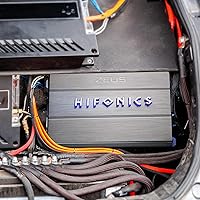
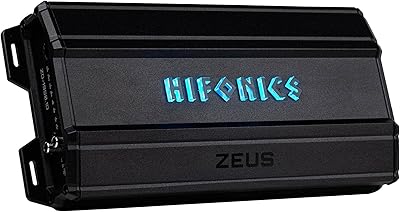
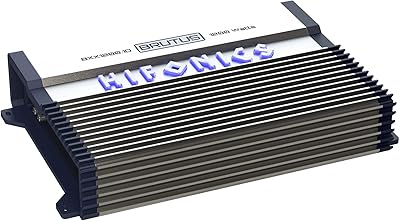
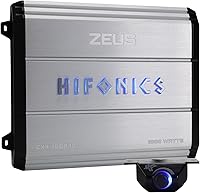
The Hifonics ZXX-1800.1D Monoblock Car Amplifier sits in a sweet spot that a lot of car audio shoppers are actually looking for — enough real power to move a subwoofer properly, without the price tag that comes with boutique or competition-grade gear. Hifonics, built under Maxxsonics USA, has long leaned into this value-focused lane with its Zeus lineup. Class D topology is the right call for a dedicated sub amp: it runs cooler and more efficiently than older Class AB designs, which matters when the amp is buried in a trunk. The chassis is surface-mount, measures about 15.7 x 10 x 2.4 inches — sizeable but not unwieldy — and targets daily drivers who want a meaningful bass upgrade without a weekend-long install.
Features & Benefits

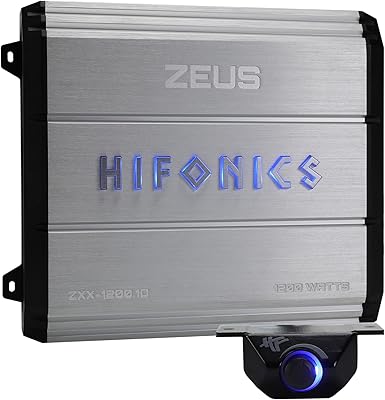
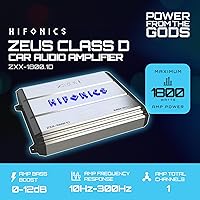
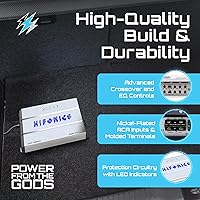
The headline spec is 1800 watts max, but the number that actually matters is 900W RMS at 2 ohms — that's the sustained output your subwoofer will actually live on. The variable low-pass crossover lets you dial in the exact frequency cutoff to match whatever sub you're running, which makes tuning straightforward even for first-timers. That wired bass remote is genuinely useful; being able to adjust levels from the driver's seat without crawling into the trunk is something you appreciate immediately. Nickel-plated RCA inputs resist corrosion well in dusty or humid environments. The dual 70A fuses suggest you'll want to run at least 4-gauge power wire — skimping on the wiring kit is the fastest way to create problems.

Best For

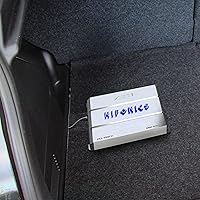
This Zeus monoblock is a strong fit for single subwoofer builds — particularly anything in a sealed or ported box where you want clean, controlled bass rather than sheer chaos. Trunk space is often a limiting factor in these installs, and at roughly 15 inches long, it won't eat your entire cargo area. It's also well-suited to anyone upgrading from a factory head unit who needs an amp that handles low-level RCA signals without picking up interference. Budget-conscious builders running a 2-ohm stable sub will find the headroom here reassuring — you're not constantly pushing the amp to its ceiling, which helps with long-term reliability.

User Feedback

Across more than 900 reviews, the ZXX-1800.1D holds a 4.4-out-of-5 rating — and that consensus is earned. Buyers consistently call out solid bass output for the price and praise how painless the wiring process is. The included remote knob gets specific mentions for feeling durable rather than cheap. On the downside, the manual draws regular complaints for being vague, which can frustrate first-time installers. The more substantive concern is heat: some users report this Hifonics amp running noticeably warm during long sessions. In many cases this traces back to inadequate airflow or undersized wiring, but it's worth planning your mount location carefully from day one.

Pros

  • Delivers 900W RMS at 2 ohms — real, usable power that genuinely moves a subwoofer.
  • Class D design runs efficiently, which means less heat and less strain on your electrical system.
  • The wired bass remote lets you adjust levels from the driver seat without touching the trunk.
  • Nickel-plated RCA inputs hold up well against corrosion in humid or dusty conditions.
  • Variable low-pass crossover makes it easy to match the amp to different subwoofer specs.
  • Surface-mount chassis fits comfortably in most mid-size trunks without dominating the space.
  • Rated stable at 1, 2, and 4 ohms — compatible with a wide range of subwoofer wiring configurations.
  • Consistently praised by buyers for straightforward wiring and a clean install experience.
  • Holds a 4.4-out-of-5 rating across more than 900 real-world reviews — hard to argue with that track record.
  • Strong value for the price bracket, especially for first-time amp buyers stepping up from factory audio.

Cons

  • The included manual is thin on detail — first-time installers will likely need outside help to fill the gaps.
  • This Hifonics amp runs noticeably warm during extended listening sessions if airflow around it is restricted.
  • Peak wattage figures are heavily marketed, which can mislead buyers unfamiliar with RMS vs. max ratings.
  • Dual 70A fuses demand proper 4-gauge wiring — cutting corners on the wiring kit creates real safety risks.
  • Not a fit for multi-sub builds; one channel means one subwoofer, full stop.
  • Buyers running very high-voltage preamp outputs may find the input stage less optimized for their setup.
  • Some users report inconsistency in out-of-box quality control, with occasional units needing replacement.
  • No onboard gain display or visual feedback — setting gain correctly requires a multimeter or trained ear.

Ratings

The scores below reflect an AI-driven analysis of verified buyer reviews for the Hifonics ZXX-1800.1D Monoblock Car Amplifier, drawn from thousands of real-world ownership experiences globally, with spam, bot-generated, and incentivized feedback actively filtered out. Both the genuine strengths that keep buyers coming back and the recurring frustrations that show up across independent accounts are transparently represented. This is an honest snapshot of what this Zeus monoblock actually delivers in daily use — not a curated highlight reel.

Power Output
83%
Buyers consistently report that the ZXX-1800.1D delivers noticeably strong, satisfying bass from a single subwoofer — the kind of low-end presence that makes a real difference on a daily commute. At 2 ohms, the 900W RMS output provides enough headroom that the amp rarely feels strained during normal listening.
The 1800W peak figure causes confusion and mild disappointment when buyers realize the sustained output is significantly lower. A handful of users running demanding 1-ohm loads have noted the amp doesn't always feel as authoritative as the spec sheet implies.
Value for Money
88%
This Hifonics amp consistently ranks as one of the better-performing units at its price point in the mono subwoofer category, and buyers regularly acknowledge that the bass output they get would cost considerably more from a premium brand. For first-time builders or daily drivers on a budget, the perceived return on investment is high.
Buyers who push the amp hard or need long-term competition-level reliability sometimes feel they hit the product's ceiling sooner than expected. A few noted that comparable off-brand options occasionally undercut the price without meaningfully sacrificing performance.
Thermal Management
61%
39%
In well-ventilated installs with correct wire gauges, many buyers report no heat issues whatsoever during normal daily listening sessions. The Class D design is inherently more efficient than older amplifier topologies, which gives it a structural thermal advantage in moderate-use scenarios.
Running warm during extended sessions is the single most consistent complaint across independent reviews, and it's hard to dismiss as purely installer error when it surfaces so repeatedly. Buyers who mount the amp in enclosed or cramped spaces — common in compact cars — are disproportionately affected, and the amp's protection circuit has triggered for some users during long highway drives.
Install Experience
79%
21%
Most buyers describe the physical wiring process as straightforward, with clearly labeled terminals and a layout that makes sense even for first-timers. The hex screw terminals accept wire securely and hold up well over repeated vibration cycles, which matters in a mobile audio environment.
The included manual is widely criticized for being too vague to guide a newcomer through a complete install without outside help. Several buyers reported spending additional time sourcing setup guidance online before they felt confident enough to power the unit on.
Bass Remote Usability
86%
The wired bass remote knob is one of the most consistently praised inclusions across buyer reviews — users love being able to adjust sub levels on the fly without pulling over or reaching into the trunk. The knob itself is reported to feel solid and durable rather than flimsy, which is not always the case with bundled accessories at this price.
A minority of users report that the remote knob's range of adjustment feels limited at the lower end, making very fine-tuned quiet settings harder to dial in. The cable length is adequate for most installs but has drawn occasional complaints in larger vehicles where the amp is mounted further from the front cabin.
Build Quality
74%
26%
The chassis feels appropriately solid for a mid-range amp, and the nickel-plated inputs hold up well against corrosion even in trunk environments that experience humidity swings. Buyers who have owned the unit for a year or more generally report no structural degradation or connector issues.
The overall fit and finish does not match what you'd expect from a flagship brand, and a small but notable percentage of buyers have received units with quality control inconsistencies out of the box. The housing materials feel functional rather than premium, which is acceptable at this price but worth knowing before purchase.
Signal Clarity
77%
23%
The low-noise preamp circuitry performs well in practice, with the majority of buyers reporting clean signal reproduction and no background hiss even when the amp is paired with a factory head unit outputting modest preamp voltage. For a subwoofer-only application, bass reproduction is described as punchy and defined rather than muddy.
A smaller subset of buyers — particularly those running the amp at higher gain settings — have noted a degree of distortion that becomes audible at sustained high volumes. Signal cleanliness appears to degrade more noticeably when the amp is already thermally stressed, compounding the heat concern.
Crossover Performance
80%
20%
The variable low-pass crossover gives buyers meaningful control over which frequencies reach their subwoofer, and most users find the sweep range wide enough to accommodate different sub and enclosure combinations without needing an external processor. It's a practical tool that makes tuning accessible without requiring technical expertise.
The crossover adjustment lacks the precision markings that more experienced installers prefer when dialing in a specific cutoff frequency. Buyers coming from higher-end amplifiers with parametric or more granular controls tend to find the onboard crossover somewhat rudimentary by comparison.
Compatibility
84%
Stable operation at 1, 2, and 4 ohms means the ZXX-1800.1D works with a wide variety of subwoofer wiring configurations without requiring the buyer to overthink impedance matching. It handles low-level RCA inputs reliably, making it a natural fit for nearly any head unit — factory or aftermarket — on the market.
The amp is purpose-built for subwoofer use only and offers no meaningful path to driving full-range speakers, which is a dealbreaker for buyers who later decide to expand their system beyond a single sub channel. High-voltage preamp sources from premium aftermarket decks may require careful gain-setting to avoid input clipping.
Longevity & Reliability
76%
24%
Buyers who get the install right from the start — proper wire gauge, adequate airflow, conservative gain setting — tend to report solid reliability over 12 months or more of daily use. Extended ownership reviews generally reflect satisfaction with the unit's continued performance over time.
The reliability picture is less consistent among buyers who encountered early heat issues or received a unit with a quality control defect. Replacement rates, while not alarming, are above what you'd hope for at this price, and warranty support experiences appear to vary depending on where the unit was purchased.
Documentation & Support
47%
53%
The product ships with a manual and basic documentation, which is sufficient as a loose reference point for experienced installers who already understand amp wiring fundamentals and don't rely on printed guides.
For anyone without prior amplifier install experience, the included manual is a genuine liability — it's consistently called out as unclear, incomplete, and poorly organized across dozens of independent reviews. There is no meaningful digital support resource linked from the packaging, leaving newcomers to piece together the install from YouTube and forums.
Physical Footprint
78%
22%
At 15.7 x 10 x 2.4 inches, the chassis strikes a reasonable balance — large enough to dissipate heat across its surface area, but compact enough to mount in a sedan or hatchback trunk alongside a subwoofer enclosure without consuming the entire cargo area.
It's not a compact amp by any stretch, and buyers with genuinely space-constrained installs in smaller vehicles occasionally struggle to find a clean mounting location. The surface-mount-only design also limits placement flexibility compared to amps that support under-seat or angled mounting options.

Suitable for:

The Hifonics ZXX-1800.1D Monoblock Car Amplifier is a smart pick for everyday drivers who want a genuine bass upgrade without overcomplicating their install or overspending. It works especially well for single-subwoofer setups — think one 10-inch or 12-inch sub in a sealed or ported box — where a dedicated mono amp is exactly what the system needs. If you're coming from a factory head unit and have never wired an external amp before, the straightforward RCA input handling and included bass remote make the learning curve far less steep. Builders working with tight trunk space will appreciate that the footprint, while not tiny, is manageable enough to tuck into most mid-size sedans or hatchbacks. At its price point and with 900W of real sustained output at 2 ohms, this Zeus monoblock gives budget-conscious enthusiasts meaningful headroom without asking them to compromise on core signal quality.
Not suitable for:

The Hifonics ZXX-1800.1D Monoblock Car Amplifier is not the right tool if your goal is running multiple subwoofers or powering full-range speakers — it is a single-channel amp designed exclusively for sub duty. Serious competition audio builders or anyone chasing SPL records will hit the ceiling here quickly; this is a daily-driver amp, not a showpiece. If your install environment has poor airflow — a fully enclosed compartment with no room for heat to escape — the thermal concerns flagged by real users become a legitimate problem rather than a manageable quirk. The included manual has drawn consistent criticism for lacking detail, so if you need step-by-step guidance to complete your first install, you should plan to supplement it with online resources. And if you are already running a high-powered head unit with strong preamp voltage output, you may find more value in spending up for an amp whose input stage is better matched to your source.
Specifications

  • Model Number: The official model designation is ZXX-1800.1D, part of Hifonics' Zeus series manufactured by Maxxsonics USA.
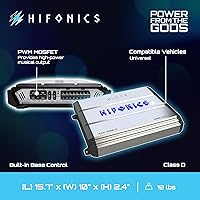
  • Amplifier Class: This is a Class D amplifier, a design that prioritizes power efficiency and reduced heat output compared to older Class AB designs.
  • Channels: Single-channel monoblock configuration, purpose-built for driving one subwoofer or a parallel subwoofer pair.
  • Peak Power: Maximum rated output is 1800W at 1 ohm, representing the absolute ceiling under ideal, momentary conditions.
  • RMS Power: Sustained RMS output is 900W at 2 ohms and 450W at 4 ohms — these are the figures that reflect real-world, continuous listening performance.
  • Impedance Range: Stable operation is rated at 1 ohm, 2 ohms, and 4 ohms, offering compatibility with a wide range of subwoofer wiring configurations.
  • Fuse Rating: Two 70A fuses (70A x 2) are fitted, indicating a total draw capacity that requires at minimum 4-gauge power and ground wiring for safe operation.
  • Input Type: Low-level RCA inputs with nickel-plated connectors accept signal from standard head unit preamp outputs and resist corrosion over time.
  • Crossover: An onboard variable low-pass filter lets the user set the frequency cutoff point to match the specific subwoofer in use.
  • Bass Remote: A wired bass level remote knob is included, allowing the driver to adjust gain output from the front seat without accessing the amplifier directly.
  • Mounting Type: Surface mount design intended for flat installation on trunk floors, amp racks, or enclosure exteriors.
  • Dimensions: The chassis measures 15.7 x 10 x 2.4 inches, placing it in the mid-size category for mono subwoofer amplifiers.
  • Input Circuitry: Low-noise preamp circuitry at the input stage is designed to minimize hiss and signal distortion when working with low-voltage source signals.
  • Manufacturer: Built by Maxxsonics USA, the parent company behind the Hifonics brand and several other car audio product lines.
  • Market Ranking: Holds a top-10 position in the Car Mono Amplifiers category on Amazon, ranked #10 at time of evaluation.
  • User Rating: Carries a 4.4-out-of-5 star aggregate rating based on over 900 verified buyer reviews on Amazon.

Related Reviews

Hifonics ZXX-1200.1D Monoblock Car Amplifier
80%
88%
Value for Money
83%
Bass Output Quality
91%
Ease of Installation
86%
Thermal Management
74%
Build Quality
More
Hifonics ZD-1950.1D Mono Car Amplifier
76%
78%
Power Output
61%
Heat Management
86%
Ease of Installation
74%
Build Quality
79%
Value for Money
More
Hifonics BXX1200.1D Mono Car Subwoofer Amplifier
79%
88%
Power Output Accuracy
91%
Thermal Management
86%
1-Ohm Stability
79%
Ease of Installation
74%
Build Quality
More
Hifonics BXX4000.1D Brutus 4000W RMS Mono Car Amplifier
86%
94%
Power Output
93%
Bass Performance
88%
Build Quality
86%
Ease of Installation
72%
Thermal Performance
More
CT Sounds CT-700.1D Monoblock Amplifier
80%
91%
Value for Money
88%
Bass Output
86%
Thermal Performance
87%
Ease of Installation
74%
Build Quality
More
CT Sounds CT-2000.1D Monoblock Amplifier
77%
88%
Value for Money
74%
Power Output
71%
Build Quality
69%
Thermal Management
86%
Ease of Installation
More
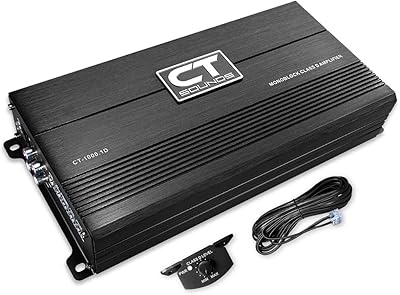
CT Sounds CT-1000.1D Monoblock Car Amplifier
77%
88%
Value for Money
79%
Power Output
84%
Thermal Management
72%
Build Quality
71%
Installation Ease
More
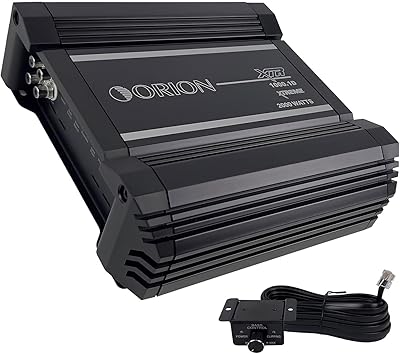
Orion XTR1000.1D Monoblock Class D Car Amplifier
79%
83%
Power Output Accuracy
88%
Bass Performance
61%
Thermal Management
79%
Build Quality
86%
Ease of Installation
More
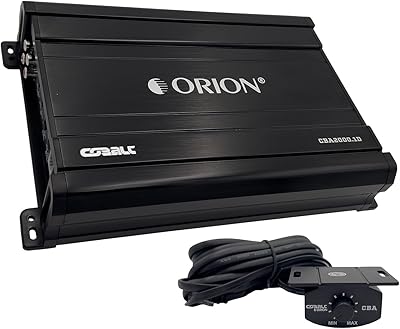
Orion CBA2000.1D Monoblock Car Amplifier
72%
83%
Value for Money
78%
Bass Output
41%
Power Accuracy
62%
Thermal Management
59%
Build Quality
More
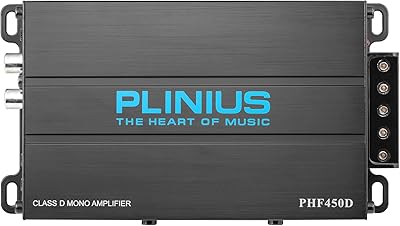
LKC PHF450D Car Audio Monoblock Amplifier
88%
91%
Power Output (2 Ohms)
87%
Power Output (4 Ohms)
93%
Heat Dissipation
88%
Build Quality
85%
Ease of Integration
More

FAQ

The 1800W figure is a peak or maximum rating, which represents an instantaneous ceiling rather than what the amp sustains during normal listening. The number that matters day-to-day is the RMS rating: 900W at 2 ohms and 450W at 4 ohms. Those are the figures you should use when matching this amp to a subwoofer.

Yes, the ZXX-1800.1D accepts low-level RCA inputs, which is exactly what most factory and aftermarket head units output. The low-noise input circuitry is specifically designed to handle modest preamp voltage without picking up hiss or interference, so a stock head unit is a perfectly reasonable pairing.

With dual 70A fuses — 140A of total fuse capacity — you should run a minimum of 4-gauge wire for both the power and ground runs. Using undersized wire is one of the most common causes of poor performance and potential safety issues with any amp in this power range, so don't cut corners there.

Heat complaints do show up in user reviews, and they're worth taking seriously rather than brushing off. In most documented cases, the issue traces back to restricted airflow — the amp is mounted in a fully enclosed space with no room for heat to escape — or undersized wiring causing extra resistance. Mount it somewhere with decent ventilation, use proper wire gauge, and set the gain correctly rather than maxing it out, and most buyers report no thermal problems during normal listening sessions.

It depends on how you wire them. The Hifonics ZXX-1800.1D Monoblock Car Amplifier has one output channel, so you can't run two independently powered subs. However, you can wire two subwoofers in parallel to a single voice coil configuration and present a combined load to the amp — just ensure the resulting impedance stays within the amp's 1-to-4-ohm stable range.
The included wired remote knob controls the gain level of the subwoofer channel from the driver seat. It lets you dial bass up or down depending on what you're listening to or how loud the cabin is, without ever touching the amp itself. Most buyers who bother to hook it up end up relying on it constantly — it's one of the more practically useful inclusions at this price.

The onboard low-pass crossover is variable, meaning you can sweep the cutoff frequency to filter out anything above a certain point before it hits your subwoofer. As a starting point, most subwoofer builds do well with the crossover set somewhere between 80Hz and 100Hz, but you should adjust by ear based on your specific sub and enclosure. The goal is to let bass frequencies through while keeping midrange out.

Honestly, the manual is one of the weaker points of this package — it comes up repeatedly in user feedback as vague and lacking in practical guidance. If this is your first amp install, plan to supplement it with online tutorials or car audio forums before you start running wires. The install itself is not especially complex, but the documentation won't hold your hand through it.

Users who review after extended ownership generally report positive durability, with many noting the amp still performs well after a year or more of regular use. The thermal complaints tend to come early in ownership and are usually resolved with better mounting choices. Buyers who get the install right from the start seem to have very few long-term reliability issues.

A single 10-inch or 12-inch subwoofer in a sealed or ported enclosure is the most common and well-matched pairing for this amp. A 2-ohm load at 900W RMS gives the subwoofer enough power to perform confidently without pushing the amp to its limits constantly. A quality 10-inch or 12-inch sub rated around 600W to 1000W RMS is the sweet spot — you get real output with room to breathe.