Overview

The Hauppauge WinTV-quadHD PCIe TV Tuner Card occupies a genuinely rare spot in the market — an internal card with four independent tuners designed for anyone serious about replacing cable with a fully functional PC-based DVR. Unlike USB tuners, which can suffer from bandwidth hiccups and signal dropout under heavy loads, a PCIe card sits directly on the motherboard bus, giving it a more stable and reliable connection. That said, this is not a budget purchase. It targets people committed to building a capable home theater PC, not casual experimenters. Having launched in 2016, it carries a long track record — a reassuring sign in a niche market full of here-today-gone-tomorrow hardware.
Features & Benefits

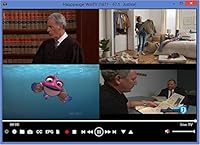
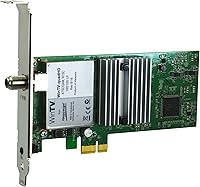
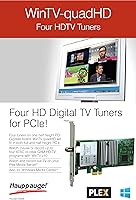
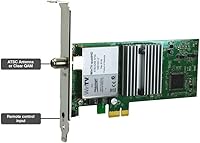
The WinTV-quadHD's headline capability is its ability to pull in and record up to four ATSC or clear QAM channels at the same time — something most tuner cards simply cannot do. It fits into a half-height PCIe x1 slot, so it works in compact HTPC builds as well as standard towers. The bundled WinTV v10 software handles picture-in-picture, an electronic program guide, and scheduled recordings without requiring third-party apps. An included IR remote and sensor cable let you control playback from the couch. One important note: this card has no analog inputs and no FM tuner, so if you were hoping to connect an old VCR or a composite-output device, it simply won't work here.

Best For

This quad-tuner card is purpose-built for a specific kind of user: someone who has already cut the cord, lives in a decent OTA reception area, and wants their desktop PC to function as a true multi-channel DVR. Home theater PC builders running Windows 10 or 11 will find the compatibility and software integration make it a natural fit. It also suits anyone who has outgrown single-tuner USB dongles and needs to record overlapping prime-time programming without conflicts. That said, if you rely on cable channels that don't carry clear QAM — worth verifying with your provider before buying — the four-tuner advantage shrinks considerably.

User Feedback

With over 400 ratings averaging 4.5 out of 5 stars, the WinTV-quadHD has earned genuine respect from buyers across nearly a decade on the market. Most praise centers on signal reliability and the convenience of running multiple recordings simultaneously without conflicts. The software, while capable, draws mixed reactions — some users find WinTV v10 intuitive, while others report a steep learning curve during initial setup, particularly around driver installation on newer systems. A handful of buyers have also flagged slot compatibility issues on certain compact motherboards. Hauppauge's customer support receives inconsistent marks. Overall, experienced builders tend to be satisfied; first-timers should budget extra time for getting everything configured properly.

Pros

  • Records up to four OTA channels simultaneously, eliminating prime-time scheduling conflicts for good.
  • Half-height PCIe design fits both full-size towers and compact HTPC cases without adapters.
  • Internal PCIe connection delivers noticeably more stable signal handling than USB tuner alternatives.
  • Bundled WinTV v10 software covers scheduling, live TV, and picture-in-picture without extra purchases.
  • Includes an IR remote and sensor cable, so couch control works straight out of the box.
  • Long market history since 2016 means driver maturity and a large community of users sharing solutions.
  • Compatible with Windows 7 through 11, giving it flexibility across a wide range of existing builds.
  • The WinTV-quadHD holds a strong average rating across hundreds of verified long-term buyers.

Cons

  • Driver installation on Windows 11 can be unreliable, especially after major OS updates break compatibility.
  • WinTV v10 software interface feels dated and has a learning curve that frustrates first-time users.
  • No analog inputs at all — legacy devices like VCRs or composite-output equipment simply cannot connect.
  • Clear QAM support is nearly useless for most cable subscribers, whose providers encrypt channels.
  • Signal sensitivity is mid-tier; fringe reception areas may require an additional amplified antenna.
  • Hauppauge customer support receives inconsistent reviews, with slow response times reported by some buyers.
  • The remote control works best within WinTV v10 and may need extra configuration for third-party players like Kodi.
  • Price is hard to justify for anyone who only needs one or two tuners at a time.

Ratings

The Hauppauge WinTV-quadHD PCIe TV Tuner Card has been scored across 12 performance categories by our AI system after analyzing hundreds of verified buyer reviews from global markets, with spam, bot-submitted, and incentivized feedback actively filtered out. The result is a transparent, balanced assessment that reflects both what this four-channel tuner genuinely excels at and where real users have run into friction.
Tuner Performance
91%
The four independent tuners handle simultaneous OTA recording without dropout or signal interference, which is the core reason most buyers choose this card over cheaper single-tuner alternatives. Users in suburban and urban areas consistently report clean, stable reception across all four channels at once.
In fringe reception areas, some buyers report that weaker signals become more apparent when all four tuners are active simultaneously. A quality pre-amplifier is often recommended to get the most out of the hardware in those edge cases.
Multi-Channel Recording
93%
Being able to record four different shows at the same time — while optionally watching a fifth live stream — is where this card genuinely separates itself from the competition. Prime-time scheduling conflicts that once required prioritizing recordings simply stop being a problem.
The four-tuner ceiling, while generous, still frustrates power users with large households who want to record and live-watch across even more channels. There is no expandability path within a single card.
Software Experience (WinTV v10)
67%
33%
WinTV v10 includes a functional electronic program guide, picture-in-picture, and scheduled recording without requiring any third-party software. For users who just want to get up and running with a basic DVR workflow, the bundled suite covers the essentials adequately.
The interface feels dated compared to modern media software, and the learning curve trips up a lot of first-time users during initial configuration. Complaints about EPG data reliability and occasional recording conflicts in the scheduler appear consistently across long-term user reviews.
Driver & Installation Ease
58%
42%
On systems where the installation goes smoothly, the card is typically recognized quickly and functional within a short setup window. Users who have worked with Hauppauge hardware before tend to navigate the process without major issues.
Driver installation on Windows 11 and certain recent motherboard configurations has caused real headaches for a notable share of buyers. Forum threads are filled with troubleshooting steps that should not be necessary for a product at this price point, and Hauppauge's documentation has not always kept pace with OS updates.
Build & Card Quality
84%
The card feels solid and well-manufactured for its half-height PCIe form factor. The included bracket options and tidy PCB layout reflect a product designed by engineers who understand the HTPC use case.
The physical size works well in most builds, but a small number of users report that the IR sensor cable feels flimsy compared to the card itself. Nothing catastrophic, but worth noting for longevity.
Signal Sensitivity
78%
22%
Under good antenna conditions, the card pulls in channels reliably and locks onto signals quickly after startup. Most users in moderate-to-strong reception areas report satisfying results without additional amplification.
Compared to some competing tuner cards, the WinTV-quadHD's raw sensitivity is considered mid-tier. Users in rural or obstructed locations sometimes need an external amplified antenna to get consistent results across all four tuners.
Clear QAM Support
62%
38%
For cable subscribers whose provider still transmits unencrypted QAM channels, this card unlocks the ability to receive those without a cable box. That is a genuine added value for people who can actually use it.
Clear QAM availability has declined sharply as cable operators encrypt more of their lineups. Many buyers discover post-purchase that their provider does not support it, effectively making this a pure OTA card for them. Hauppauge could do more to set expectations upfront.
Remote Control Usability
73%
27%
Including an IR remote and sensor cable in the box is a thoughtful touch that most competing cards skip entirely. For a living-room HTPC setup, having dedicated hardware control out of the box adds real convenience.
The remote is functional but basic, and its integration with WinTV v10 is tighter than with third-party players. Users running Plex, Kodi, or other media front-ends sometimes find the remote requires additional configuration to work correctly.
Windows 11 Compatibility
69%
31%
Hauppauge has released updated drivers that allow the card to function under Windows 11, which is more than some older tuner cards can claim. Users on clean Windows 11 installs have reported successful setups with the latest driver package.
Compatibility is not always plug-and-play on Windows 11, particularly after major OS updates. A recurring pattern in user reviews is that a Windows update breaks functionality temporarily until a new driver is released, creating an unreliable experience for less technical users.
Value for Money
71%
29%
As one of the few internal four-tuner cards available for Windows PCs, the WinTV-quadHD occupies a near-monopoly in its specific niche. For HTPC builders who need that exact capability, the price reflects the scarcity of alternatives rather than outright overpricing.
For casual users who only need one or two tuners, the cost is hard to justify when cheaper single or dual-tuner options exist. The value equation only makes strong sense if you genuinely need all four tuners simultaneously on a regular basis.
Form Factor Flexibility
86%
Half-height PCIe x1 compatibility means this card fits into a much wider range of desktop builds than full-height-only alternatives. Compact HTPC cases, which are common among living-room media center builders, accommodate it without issue.
It is still strictly a desktop card — laptops and all-in-ones are completely out of the picture. Users who want a portable or flexible tuner solution will need to look at USB-based alternatives instead.
Long-Term Reliability
83%
Having been available since 2016, this card has demonstrated staying power that many niche hardware products lack. A significant number of buyers report units running without hardware failure for multiple years, which speaks well of build consistency.
Some users note that software support, rather than hardware longevity, becomes the limiting factor over time. As Windows evolves, keeping drivers current requires Hauppauge to maintain active development — something that has been inconsistent in the past.

Suitable for:

The Hauppauge WinTV-quadHD PCIe TV Tuner Card is purpose-built for cord-cutters who have already committed to a desktop-based home theater setup and want a reliable, multi-channel DVR without paying for a cable subscription. If you live in a metro or suburban area with solid over-the-air reception and regularly face scheduling conflicts — sports overlapping with primetime dramas, or kids' programming running at the same time as the evening news — four independent tuners solve that problem decisively. HTPC enthusiasts who want a clean, integrated build will appreciate the internal PCIe connection over the clutter of USB dongles, and the half-height form factor makes it compatible with compact living-room cases. It also suits technically comfortable Windows users who are willing to spend time on initial driver and software setup in exchange for a more stable, long-term recording solution. Anyone building a Windows media center around Plex DVR, Windows Media Center alternatives, or WinTV v10 will find this card a natural hardware anchor.
Not suitable for:

The Hauppauge WinTV-quadHD PCIe TV Tuner Card is a poor fit for anyone expecting a plug-and-play experience right out of the box, particularly if they are not comfortable troubleshooting driver issues or navigating software configuration menus. It is strictly a desktop card, so laptop users, Mac users, and anyone on a non-Windows OS should look elsewhere entirely. If you were hoping to connect legacy analog devices — an old VCR, a camcorder via composite, or a cable box with an analog output — this card will disappoint you, since it has no analog inputs whatsoever. Cable subscribers who rely on encrypted digital channels will also find little value here, as clear QAM availability has sharply declined across most major cable providers; verifying with your operator before purchasing is essential. Finally, casual viewers who only want to record one channel at a time will find the price hard to justify when far cheaper single-tuner options exist.
Specifications

  • Number of Tuners: This card contains four fully independent tuners, each capable of receiving and processing a separate channel simultaneously without sharing bandwidth.
  • Digital Formats: Supports both ATSC (over-the-air digital broadcast) and clear QAM (unencrypted digital cable) signal formats.
  • Analog Support: No analog TV reception is supported; this is a purely digital tuner card with no NTSC or PAL capability.
  • Bus Interface: Uses a half-height PCI Express x1 connection, compatible with standard PCIe x1, x4, x8, and x16 slots on desktop motherboards.
  • A/V Inputs: No external audio or video inputs of any kind are present; the card receives signals exclusively via its RF coaxial antenna connectors.
  • FM Tuner: No FM radio tuner is included; the card is dedicated entirely to digital television reception.
  • Bundled Software: WinTV v10 is included and supports live TV viewing, picture-in-picture across multiple channels, a built-in electronic program guide, and timer-based scheduled recording.
  • Remote Control: A Hauppauge IR remote control and a dedicated IR sensor cable are included in the box, enabling wireless control from across the room.
  • Operating System: Officially compatible with Windows 11 and Windows 10, with additional support extending to Windows 8 and Windows 7 via available drivers.
  • Dimensions: The card measures 5.6 x 2.2 x 0.75 inches, making it suitable for installation in both full-height and half-height desktop enclosures.
  • Weight: The card weighs 10.4 oz, which is typical for a populated half-height PCIe card of this complexity.
  • MPEG-2 Encoder: No hardware MPEG-2 encoder is present; recording relies on software-based encoding through the bundled WinTV v10 application.
  • Model Number: The official Hauppauge model number for this card is 1609, which is used to identify the correct drivers and software downloads on the manufacturer's website.
  • Release Date: This card was first made available in April 2016 and has remained in active production and sale since then.
  • Amazon Rating: The card holds a 4.5 out of 5 star average rating based on 409 verified customer ratings on Amazon.
  • Market Rank: It currently ranks #85 in the Internal TV Tuner and Video Capture Cards category on Amazon, reflecting sustained buyer interest over several years.

Related Reviews
Hauppauge WinTV-SoloHD 01589
80%
88%
Ease of Setup
74%
Signal Reception Quality
61%
Software (WinTV v8)
83%
Picture Quality
82%
Build Quality & Durability
More
TBS6902 DVB-S/S2 Dual Tuner PCIe Card
78%
88%
Dual Tuner Performance
76%
Hardware Installation
54%
Software Setup & Configuration
68%
Operating System Compatibility
86%
Recording Reliability
More
MyGica A681B USB TV Tuner
65%
47%
Ease of Setup
71%
Reception & Signal Quality
76%
Video Quality
58%
Software Experience (HiDTV)
82%
Value for Money
More
MyGica PT681 USB TV Tuner
62%
74%
Value for Money
47%
Device Compatibility
53%
Signal Reception & Channel Scanning
51%
App Quality & Stability
67%
Time-Shift & DVR Performance
More
Geniatech MyGica PT682C
70%
71%
Signal Reception Quality
63%
App Experience (PAD TV HD)
66%
Device Compatibility
78%
Ease of Setup
67%
Antenna Performance
More
FOSA M5015 SAS SATA RAID Controller Card
68%
83%
Value for Money
78%
Compatibility
66%
Firmware Flashing Experience
61%
Build Quality
69%
Drive Detection Reliability
More
Hauppauge WinTV-dualHD
71%
83%
Ease of Setup
61%
Signal Reception & Sensitivity
86%
Dual Tuner Performance
74%
WinTV v10 Software Quality
68%
Plex Media Server Integration
More
WAVLINK 5GB PCIe Network Card
87%
89%
Installation Ease
91%
Performance (Speed)
90%
Value for Money
88%
Compatibility with OS
85%
Build Quality
More
BrosTrend 5Gbps PCIe Network Card
79%
91%
Installation Ease
83%
Real-World Speed Gains
58%
OS & Platform Compatibility
84%
Build & Component Quality
88%
Value for Money
More
StarTech 8-Port SATA III PCIe Expansion Card
80%
88%
Drive Detection Reliability
84%
Multi-Controller Architecture
79%
OS Compatibility
86%
Motherboard Compatibility
81%
Included Cables
More

FAQ

Yes, and that is genuinely its standout capability. Each of the four tuners operates independently, so you can record four separate over-the-air channels simultaneously without any of them interfering with the others. You can also watch a live channel while recordings are running in the background.

No cable subscription needed. The card works perfectly with a standard over-the-air antenna connected via a coaxial cable. That is actually the primary use case for most buyers — picking up free local broadcast channels in HD without paying for cable or satellite.

It depends entirely on your cable provider. The card supports clear QAM, which is unencrypted digital cable. However, most major cable operators have moved to fully encrypted lineups, which means clear QAM channels are no longer available on their networks. Call your provider and ask specifically whether they transmit any unencrypted clear QAM channels before counting on that feature.

Yes, Hauppauge has released updated drivers that support Windows 11. That said, some users have reported that major Windows 11 updates can temporarily break driver functionality until a new driver package is released. It is worth checking the Hauppauge support site for the latest driver version after any significant OS update.

Physically installing the card is straightforward — it slots into any available PCIe slot like any other expansion card. The trickier part is software setup. Driver installation and getting WinTV v10 configured correctly can take some time, and a small but vocal group of users have hit snags on certain system configurations. If you are comfortable doing basic PC hardware installs and following online troubleshooting guides, you should be fine. If not, it may be worth having a tech-savvy friend on call for the first setup.

No, unfortunately. This card has zero analog inputs — no composite, no S-Video, no audio jacks of any kind. It is strictly a digital RF tuner. If you need to capture video from legacy analog sources, you would need a separate USB video capture device in addition to this card.

It can, but with some caveats. Plex DVR and Kodi with a compatible PVR backend can use this card's tuners, though getting the integration set up requires more technical effort than just using the bundled WinTV v10. The included IR remote is also primarily designed to work with WinTV v10 and may need additional configuration to function correctly in third-party applications.

Most likely yes. The card is half-height, which is specifically the form factor used by compact HTPC enclosures. It also comes with a half-height bracket pre-installed. Just double-check that your case has an available PCIe slot and that the slot orientation matches before ordering.

In most real-world setups, this quad-tuner card performs comparably to dedicated single-tuner USB sticks in terms of raw sensitivity. Where it has a consistent edge is stability — because it connects directly via PCIe rather than through a USB controller, it is less susceptible to the signal dropouts and bandwidth-sharing issues that can plague multi-tuner USB solutions. Users in strong reception areas are unlikely to notice a huge difference, but those pushing the limits of their antenna setup tend to report better consistency from the internal card.

The card accepts a standard coaxial antenna input, so any quality UHF/VHF outdoor or indoor antenna will work. For users in strong reception areas, a decent amplified indoor antenna is typically sufficient. If you are more than 30 to 40 miles from broadcast towers or have physical obstructions like hills or dense buildings nearby, an outdoor directional antenna will give you a much more reliable signal across all four tuners simultaneously.

Where to Buy