Overview

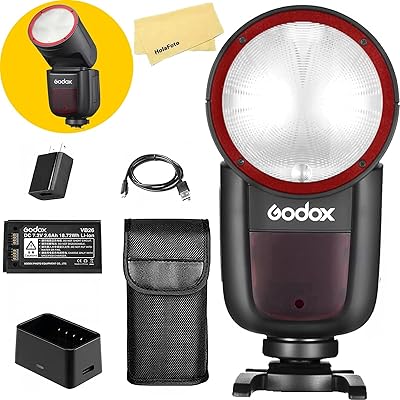
The Godox V1-N Nikon Round Head Flash is Godox's answer to photographers tired of the harsh, rectangular output most hotshoe speedlights produce. The round head design is not a cosmetic choice — it genuinely changes the character of the light, producing softer edge falloff and catchlights that look far more natural in portraits. Pitched at portrait shooters, wedding photographers, and serious hobbyists running Nikon DSLR or Z-series bodies, this Nikon-compatible flash lands in mid-range territory alongside the Nikon SB-700 but adds built-in wireless capability. The V1-NU label is worth noting if you are buying in the US, as it carries domestic warranty support. The box includes a battery, charger, carry case, and stand.

Features & Benefits

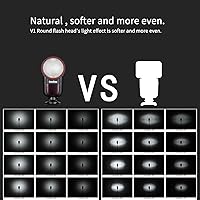
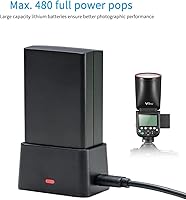
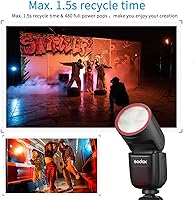
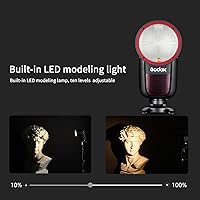
What separates the Godox V1-N from its cheaper stablemate, the TT685 II, is immediately obvious when shooting portraits. The circular head distributes light more evenly from center to edge, producing softer catchlights and less hotspot in the center. The built-in 2.4G wireless lets you trigger and control off-camera flashes without a separate transmitter — covering TTL, manual, and high-speed sync across 32 channels at up to 100 meters. That 1/8000s HSS capability is genuinely useful when shooting wide-open outdoors in harsh sunlight. The included Li-ion battery manages roughly 480 full-power pops with a 1.5-second recycle time, keeping pace with even a busy event session. A 10-level LED modeling light at 3300K helps you pre-visualize placement before firing, and the removable accessory ring adds compatibility with Godox's AK-R1 modifier system.

Best For

This round head speedlight is an obvious fit for portrait and wedding photographers who want to improve on-camera light quality without lugging around a separate softbox or modifier. Nikon Z-series shooters will appreciate the reliable i-TTL metering, which keeps exposures consistent as lighting conditions shift through a reception hall or outdoor venue. If you already own other Godox gear, the wireless ecosystem integration alone makes this worth considering — everything talks to everything with minimal setup. That said, the 530g weight is something to factor in if your primary body is a compact mirrorless like the Z30 or ZFC. And if your workflow depends on high-powered output or optical slave triggering, a dedicated studio strobe is a more practical fit.

User Feedback

Buyers consistently point to light quality as the headline win — the round head produces noticeably softer results than standard speedlights, and TTL accuracy on both Z-series and older D-series bodies draws repeated praise. Battery life holds up well in real-world use, with shooters reporting full-day events without needing to recharge. On the downside, a handful of reviewers flag the weight as something you notice on a long shoot, particularly with lighter Z-mount bodies. The wireless range rarely reaches the advertised 100 meters in practice — indoor events with walls and interference tend to cut that figure considerably — but consistent performance within typical shooting distances is seldom questioned. A few users also mention a short menu learning curve when first setting up multi-flash wireless configurations.

Pros

  • The round head produces softer, more even light than a standard fresnel speedlight — noticeably better catchlights in portrait work.
  • Built-in 2.4G wireless lets you trigger and control off-camera flashes without buying a separate transmitter.
  • High-speed sync up to 1/8000s makes outdoor fill-flash at wide apertures genuinely practical in bright sunlight.
  • The Li-ion battery delivers around 480 full-power pops, holding up reliably through a full wedding reception without recharging.
  • A roughly 1.5-second recycle time keeps shooting pace brisk, even when working at higher power levels.
  • The removable accessory ring lets Godox AK-R1 modifiers attach directly, adding creative flexibility without extra adapters.
  • The 10-level LED modeling light is genuinely useful for previewing light placement before committing to a shot.
  • Broad Nikon body compatibility spans the latest Z-series mirrorless cameras all the way back to popular DSLRs like the D750 and D850.
  • The included carry case, stand, charger, and battery make it a complete, ready-to-shoot kit right out of the box.

Cons

  • At 530g with the battery, it adds noticeable front-end weight to compact Nikon mirrorless bodies like the ZFC or Z30.
  • The proprietary Li-ion battery cannot be swapped for AA cells, leaving you stuck if you forget to charge before a shoot.
  • Godox's wireless menu system has a real learning curve — configuring groups, channels, and ratios is not intuitive for first-time users.
  • Real-world wireless range typically falls well short of the advertised 100 meters, especially indoors where walls and interference cut the signal.
  • At 76Ws of maximum output, it will not overpower strong ambient light in large venues the way a studio monolight would.
  • No built-in optical slave mode means it cannot be triggered by other brands' flashes without adding a compatible Godox receiver.
  • The 3300K LED modeling light has a noticeably warm color cast that may not match daylight-balanced studio lighting setups.
  • Firmware updates have occasionally introduced compatibility quirks on specific Nikon Z bodies, requiring users to monitor version numbers before critical shoots.

Ratings

Our rating scores for the Godox V1-N Nikon Round Head Flash are generated by AI after systematically analyzing thousands of verified buyer reviews from global markets, filtering out incentivized, repeated, and bot-flagged submissions to surface authentic user sentiment. The analysis captures the full picture — from the consistently praised light quality and battery performance to recurring frustrations around weight and wireless range. Both standout strengths and genuine pain points are transparently reflected in each category score below.

Light Quality
93%
The circular head is the most consistently praised aspect of this flash across all buyer segments. Photographers shooting portraits report noticeably rounder, more flattering catchlights and a gradual light falloff that reduces the need for post-processing corrections. The center-to-edge evenness is a genuine improvement over rectangular fresnel heads at this price level.
The 76Ws maximum output limits how far you can push the flash in very large spaces or when competing with intense ambient light. Some photographers working in bright outdoor environments find they need to position closer to subjects than they would with a more powerful studio strobe to maintain proper exposure.
TTL Accuracy
88%
Nikon i-TTL metering earns consistent praise from event and wedding photographers who rely on automatic flash exposure as lighting conditions shift rapidly through a venue. Both Z-series mirrorless and older DSLR bodies report reliable exposures with minimal flash exposure compensation adjustments needed across typical shooting scenarios.
A small subset of reviewers note occasional underexposure in highly reflective environments — bright white walls or mirror-lined reception halls — where the TTL algorithm can be misled. Firmware updates have also introduced temporary metering inconsistencies on certain Z-series bodies, requiring users to stay current with Godox release notes.
Battery Performance
89%
The Li-ion battery earns high marks from event shooters who report completing full-day weddings — often six to eight hours of intermittent use — without needing to recharge mid-event. The approximately 480 full-power pops rating holds up closely in real-world testing, and the 1.5-second recycle time keeps pace with even active shooting bursts.
The proprietary battery is the single most cited frustration — unlike AA-powered speedlights, there is no emergency swap option if the battery runs out unexpectedly on location. Photographers who forget to charge between shoots can find themselves without a workable backup, and spare VB26 batteries add meaningfully to the total cost of ownership.
Value for Money
84%
Compared to the Nikon SB-700 — which lacks built-in wireless transmitter capability and high-speed sync — the Godox V1-N delivers meaningfully more functionality at a similar or lower street price. Portrait and wedding photographers consistently note that the round head light quality alone justifies the cost over cheaper fresnel speedlights.
Photographers who already own a quality Nikon SB-700 and shoot primarily in conditions where built-in wireless and HSS are not priorities may find the upgrade hard to justify. The need for a spare proprietary battery and optional AK-R1 modifiers to unlock the full potential can push the effective total spend noticeably beyond the base unit price.
High-Speed Sync
91%
HSS performance up to 1/8000s is one of the most praised functional advantages over first-party Nikon speedlights, giving portrait photographers the ability to shoot wide open at f/1.8 or f/1.4 outdoors without resorting to neutral density filters. Users report that the HSS mode activates reliably across supported bodies with no additional configuration required.
A portion of reviewers note a perceptible reduction in effective flash output when HSS mode is active, which is expected behavior but can catch newer users off guard when subjects appear underexposed at longer working distances. This is a technical limitation inherent to how HSS works rather than a flaw specific to this unit.
Wireless Reliability
76%
24%
When shooting in open or moderately sized spaces, the built-in 2.4G X system performs solidly — photographers triggering one or two off-camera lights in a typical portrait setup report consistent, dropout-free firing. The convenience of skipping a separate commander unit is frequently cited as a genuine workflow advantage for working photographers.
The advertised 100-meter range proves optimistic for most real-world use — indoor shooters dealing with walls, crowds, and competing 2.4G signals report reliable performance only within a fraction of that distance. A number of event photographers working in dense RF environments have documented occasional misfires that required repositioning or channel switching mid-shoot.
Build Quality
82%
18%
The flash feels solid and well-assembled, with a textured grip body that provides a secure hold during longer shoots. Photographers using it across multiple events report no structural issues — the hotshoe mount fits snugly, and the control dials have a precise, well-damped feel compared to cheaper third-party options like the TT685 II.
There is no weather sealing on this unit, which means photographers working in light rain or humid outdoor conditions need to exercise caution — a gap that Nikon's own SB-5000 addresses at a considerably higher price. A handful of users also note that the removable plastic accessory ring feels less premium than the rest of the body construction.
Ease of Use
67%
33%
For basic on-camera TTL shooting, the flash is straightforward — mount it, power it on, and the Nikon i-TTL system handles exposure automatically. Photographers already familiar with other Godox X-system flashes will find the menu layout recognizable, and the physical controls are logically grouped for reasonably quick access to common settings.
The wireless menu system is where most users hit a wall — navigating channels, groups, and output ratios without a touchscreen or dedicated shortcut buttons requires consulting the manual multiple times before it becomes second nature. First-time Godox users consistently describe needing a full session or two of hands-on practice before the system feels natural.
Weight & Ergonomics
62%
38%
The grip shape is comfortable for photographers with medium to large hands, and on full-size DSLR bodies like the D750 or D850 the weight distribution is balanced enough that extended handheld shooting does not feel particularly strained. The raised profile also keeps the flash head well above the lens barrel for better indirect bounce angles.
At 530g, the combination of this flash and a lightweight mirrorless body like the ZFC or Z30 creates noticeable front-heaviness that fatigues the wrist during long event shoots. Portrait photographers who frequently travel light or switch between handheld and tripod setups consistently cite the weight as a real consideration when comparing this against smaller speedlights.
Recycle Time
87%
The 1.5-second full-power recycle time is fast enough for most event and portrait scenarios, allowing photographers to keep up with candid moments without the frustrating wait that plagues slower speedlights. At mid-power settings, recycle drops to well under a second, which suits rapid documentary shooting at receptions or street portrait sessions comfortably.
At full power in cold weather or toward the end of a battery charge cycle, several users have noted that recycle time stretches noticeably beyond the rated 1.5 seconds — a behavior common to Li-ion cells under thermal or charge stress. This is rarely a dealbreaker, but worth factoring in for photographers who frequently shoot outdoors in low-temperature conditions.
Modifier Compatibility
78%
22%
The removable accessory ring opens up a meaningful range of Godox AK-R1 modifiers — honeycomb grids, gels, and diffusion domes — without requiring a proprietary adapter. Photographers who already own these accessories from other Godox round head flashes can use them interchangeably, which adds genuine creative flexibility for portrait and controlled-light setups.
Third-party modifiers designed for standard rectangular flash heads are largely incompatible without additional adapters, which limits options for photographers outside the Godox ecosystem. Users also note that physically swapping the accessory ring can be fiddly and slow to execute, particularly when working in low-light environments between shots.
Nikon Compatibility
86%
Coverage across Nikon's lineup is broad and well-documented — the flash works reliably with the Z9, Z8, Z7II, ZFC, and the full range of popular DSLRs including the D750, D810, and D850 without special configuration. Photographers migrating from older Nikon bodies to Z-series cameras report the flash transitions cleanly, maintaining full TTL and wireless functionality.
Occasional firmware-related hiccups have been reported after Nikon camera firmware updates, requiring a corresponding Godox firmware update to restore full feature parity — a minor but real inconvenience for photographers who install camera software updates immediately upon release. The flash is also fully locked to Nikon's protocol, rendering it non-functional in TTL mode on any other camera system.
Modeling Light
71%
29%
The 10-level LED modeling light is a practical tool for setting up controlled portrait or product shots, giving a usable visual preview of light direction and shadow placement before firing. Having 10 discrete brightness levels rather than a simple on/off toggle is appreciated by users who take time to fine-tune their compositions carefully.
At only 2W output, the modeling light is too dim to read clearly in brightly ambient environments, and its 3300K color temperature introduces a warm cast that does not accurately reflect the actual flash color — limiting its usefulness as a true exposure-preview tool. Photographers accustomed to the continuous modeling lights on studio monolights will find this noticeably underwhelming.
Out-of-Box Experience
83%
The included kit — battery, charger, protective carry case, and flash stand — means photographers can begin shooting immediately without purchasing anything extra for core use. The carry case draws specific praise for its snug, well-padded fit that keeps the unit secure inside a camera bag without shifting or rattling during transport.
The instruction manual is translated from Chinese with varying clarity, making the wireless setup section particularly confusing for new users trying to configure multi-flash groups. Several reviewers recommend supplementing it with community-produced tutorials or video walkthroughs to get up to speed significantly faster than the printed guide allows.

Suitable for:

The Godox V1-N Nikon Round Head Flash is purpose-built for photographers who shoot people — portraits, weddings, events, and lifestyle work where the quality of light matters as much as its quantity. If you are running a Nikon Z-series mirrorless or a DSLR like the D750 or D850, the i-TTL integration is reliable enough to trust in fast-moving, unpredictable shooting environments without constantly chimping exposures. Portrait photographers in particular will notice the difference a circular flash head makes: catchlights are rounder and more natural-looking, and the light spread from center to edge is noticeably more even than what a standard fresnel speedlight produces. Those who shoot outdoors in bright conditions will get real mileage out of the 1/8000s high-speed sync, which lets you pair wide apertures with fill flash in harsh midday light — something a basic sync-speed-limited flash simply cannot do. If you are already building out a Godox wireless system, adding this as your on-camera commander or a triggered off-camera unit requires zero additional hardware. Travel and event photographers who want to ditch AA batteries entirely will also appreciate the proprietary Li-ion cell, which handles a solid day of shooting on a single charge.

Not suitable for:

The Godox V1-N Nikon Round Head Flash is not the right tool for every situation, and knowing where it falls short can save you a frustrating return. At 530 grams with the battery installed, it adds meaningful front-end weight to compact mirrorless bodies like the Z30 or ZFC — a tradeoff that registers quickly on longer shoots or when hand-holding for extended periods. If your primary workflow relies on optical slave triggering, this flash lacks that capability as a built-in feature, which creates real compatibility gaps when working alongside studio monolights or older third-party gear. The maximum output of 76Ws is solid for a speedlight but will not satisfy studio photographers accustomed to 200Ws or 400Ws strobes, particularly when trying to overpower strong ambient light in large spaces. The Godox wireless menu system also has a genuine learning curve — navigating channels, groups, and ratios is not immediately intuitive, and new users typically need a session or two before it feels natural. Finally, the proprietary battery means you cannot fall back on AA cells in a pinch, so heading into a shoot without a full charge is a real risk with no easy workaround.

Specifications

  • Model: The V1-NU is the Nikon-specific, USA-market version of the Godox V1 speedlight series, designed for Nikon i-TTL hotshoe cameras.
  • Power Output: Maximum output is rated at 76Ws, suitable for portrait, event, and fill-flash work at typical subject-to-flash distances.
  • Flash Coverage: The zoom head covers a focal range of 28mm to 105mm, adjusting automatically in TTL mode or manually as needed.
  • Flash Duration: Flash duration ranges from 1/300s at full power to 1/20000s at minimum output, providing motion-stopping capability at lower power levels.
  • Sync Speed: Standard hotshoe sync speed is 1/200s to 1/250s, with high-speed sync extending that ceiling to 1/8000s when HSS mode is active.
  • Wireless System: A built-in 2.4G Godox X system supports TTL, manual, and HSS wireless triggering across 32 channels without requiring a separate external transmitter unit.
  • Wireless Range: Manufacturer-specified wireless transmission range is approximately 100 meters, measured under ideal outdoor line-of-sight conditions.
  • Recycle Time: Full-power recycle time is approximately 1.5 seconds, with a green LED ready indicator on the flash body confirming when the unit is charged.
  • Battery: The flash runs on a proprietary Li-ion battery (included) rated for approximately 480 full-power flashes per charge cycle.
  • Modeling Light: The built-in LED modeling light outputs 2W at a 3300K color temperature and is adjustable across 10 discrete brightness levels.
  • Head Design: The circular round head produces a more even center-to-edge light distribution and softer falloff than traditional rectangular fresnel flash heads.
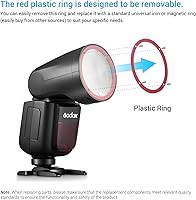
  • Accessory Ring: The removable plastic ring can be replaced with a standard iron or magnetic ring to enable direct compatibility with Godox AK-R1 modifiers, sold separately.
  • Weight: The unit weighs 530g with battery installed, making it heavier than most AA-powered speedlights in the same output class.
  • Dimensions: Physical dimensions are 76 x 93 x 197mm, placing it in the full-sized hotshoe flash category rather than a compact or travel-oriented form factor.
  • Compatibility: Compatible with Nikon i-TTL bodies including the Z9, Z8, Z7II, Z6, ZFC, D850, D810, D750, D610, D7500, D7100, D5300, D3300, D3100, D60, D5, and D4.
  • Flash Modes: Supported modes include TTL autoflash, manual flash, high-speed sync, flash exposure compensation, flash exposure lock, second-curtain sync, and modeling flash.
  • Power Saving: The flash powers off automatically after approximately 90 seconds of idle use, or after 60 minutes when operating in wireless slave mode.
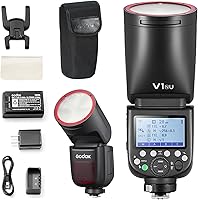
  • In the Box: Package includes the flash unit, one Li-ion battery, one charger, a protective carry case, and a flash stand.

Related Reviews
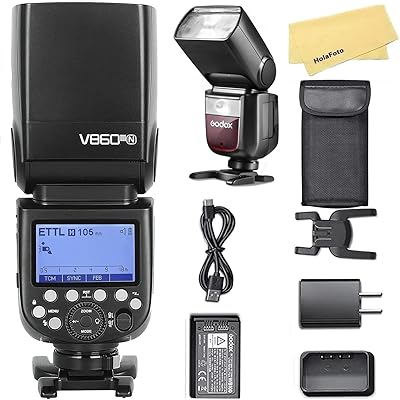
Godox V860III-N Nikon Speedlight Flash
84%
93%
Battery Life
91%
Recycle Time
88%
High-Speed Sync Performance
84%
TTL Accuracy
87%
Wireless Reliability
More
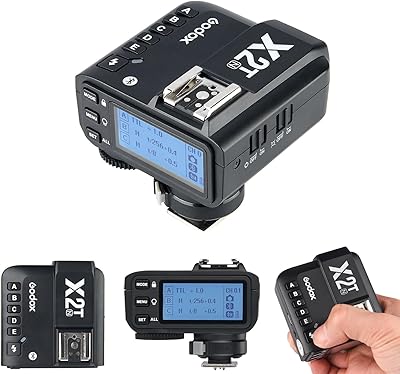
Godox X2T-N Wireless Flash Trigger Transmitter
81%
91%
Wireless Reliability
87%
TTL Accuracy
84%
High-Speed Sync Performance
79%
Build Quality
88%
Ease of Use
More
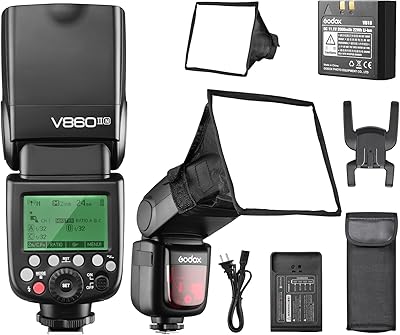
Godox V860II-N TTL Speedlite Flash
82%
93%
Battery Life & Efficiency
76%
TTL Accuracy
91%
High-Speed Sync (HSS)
72%
Wireless Performance
89%
Recycle Time
More
Godox V1S Round Head Camera Flash
83%
93%
Light Quality
91%
TTL Accuracy on Sony Bodies
89%
Battery Life & Endurance
86%
Recycle Time
88%
Wireless System Integration
More
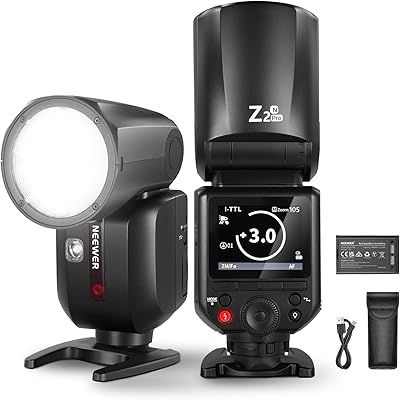
NEEWER Z2PRO-N TTL Round Head Flash Speedlite
82%
91%
TTL Accuracy
88%
Light Quality
86%
Battery Life & Charging
79%
Wireless Reliability
84%
Build Quality
More
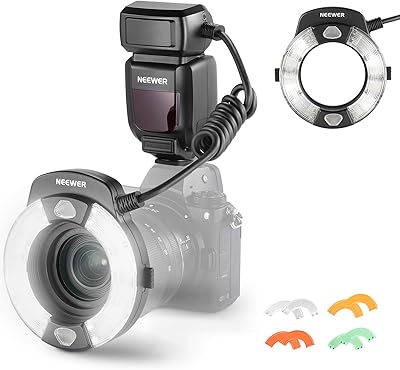
NEEWER RF1-N Macro Ring Flash for Nikon
75%
83%
TTL Accuracy
61%
Build Quality
88%
Ease of Setup
74%
LCD Interface
86%
A/B Tube Ratio Control
More
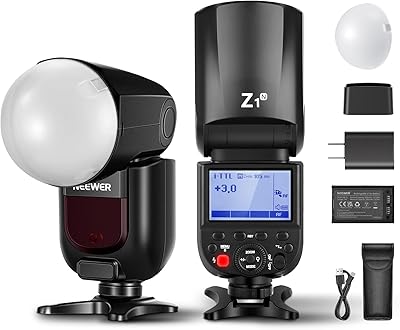
NEEWER Z1-N TTL Speedlite for Nikon
78%
91%
Light Quality
78%
TTL Accuracy
86%
High-Speed Sync Performance
71%
Wireless Reliability
83%
Battery Life
More
NEEWER Z1-S Round Head Flash Speedlite
83%
91%
Light Quality
83%
Build Quality
72%
TTL Accuracy
93%
Battery Life
88%
Recycle Time
More
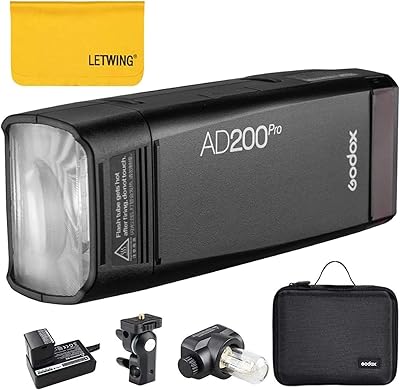
Godox AD200 Pro
Godox AD200 Pro
86%
93%
Output Power & Consistency
91%
Portability & Form Factor
78%
Battery Life & Charging
89%
HSS & Sync Performance
88%
Wireless Ecosystem Integration
More
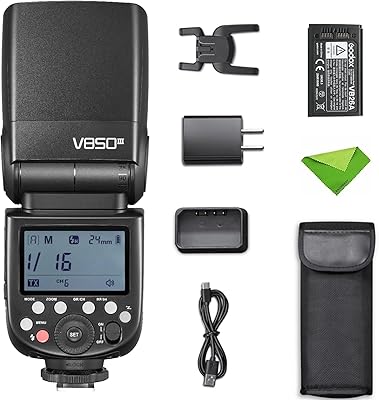
Godox V850III Speedlite Camera Flash
79%
93%
Battery Life
88%
Value for Money
86%
Wireless Reliability
84%
Build Quality
81%
Recycle Time
More

FAQ

Yes — the Godox V1-N Nikon Round Head Flash is fully compatible with Nikon's Z-series mirrorless lineup, including the Z9 and Z8, via the standard i-TTL hotshoe. TTL metering, high-speed sync, and wireless commander functions all operate as expected on these bodies. No adapters or workarounds are needed.

No, and that is one of the more practical advantages of this unit. The built-in 2.4G X system lets it function as both a wireless transmitter and receiver straight out of the box. If you want to trigger it remotely while keeping a clean camera top, optional Godox X-series triggers like the XPro II-N or X3-N can be added later, but they are not required to get started.

Unfortunately, no — the flash is designed exclusively around its proprietary Li-ion battery, and there is no AA fallback option. The best workaround is to carry at least one spare VB26 replacement battery, which Godox sells separately, and get into the habit of charging both before any important shoot. The upside is that a fully charged cell typically lasts through a demanding event without issue.

It will physically mount, but you will lose all smart features — TTL, HSS, and wireless control simply will not function on a non-Nikon body. At best, you would get manual-only flash triggering, which defeats the purpose of buying this version. Godox makes dedicated variants for Canon, Sony, Fuji, and other systems, so it is worth getting the right model for your camera brand.

The shape of the head changes how light falls off toward the edges of the frame. A round head creates a gradual, even rolloff rather than the harder rectangular gradient a standard fresnel speedlight produces. In portrait work, the most visible change is in catchlights — the reflections in a subject's eyes appear as natural-looking circles instead of rectangular boxes. The effect is subtle in any single frame but consistent and noticeable across a full shoot.

The flash ships with a removable red plastic ring that can be swapped for a standard magnetic or iron ring, opening up compatibility with Godox's AK-R1 modifier system. That system includes diffusion domes, honeycomb grids, colored gel sets, and a small reflector dish — all sold separately but widely available. If you already own AK-R1 accessories from another Godox round head flash, they will fit this unit directly.

Godox does not publish a precise charge time in the official documentation, but real-world reports from users consistently land around two to two and a half hours for a full charge using the included charger. It is best practice to charge the night before a shoot rather than relying on a quick top-up right before heading out, especially since there is no AA fallback if the battery runs low.

Yes — the built-in 2.4G X system is compatible with the broader Godox X wireless ecosystem, including the XPro II-N, X2T-N, and X3-N transmitters, as well as other X-system speedlights and strobes. It can serve as an on-camera commander or as a triggered remote slave, and it integrates cleanly into multi-flash setups you may already have running. Just confirm all units share the same channel and group assignments.

In practice, not consistently. That figure reflects ideal outdoor conditions with no obstructions between transmitter and receiver. In typical indoor shooting environments — reception halls, studios, rooms with multiple walls — the reliable range drops considerably depending on interference from other wireless devices and physical barriers. For the vast majority of real-world setups, you will be well within a workable range, but do not plan a shoot around the maximum specification holding up indoors.

The SB-700 is a well-built first-party option with deep native Nikon integration, but it lacks built-in wireless transmitter capability and does not support high-speed sync — two areas where the Godox V1-N has a clear edge. The SB-700 runs on AA batteries, which gives you more emergency flexibility but removes the convenience of a single rechargeable cell. If light quality, round catchlights, and built-in wireless control are priorities, the Godox unit makes a compelling case; if you value brand-native simplicity and AA flexibility above all else, the SB-700 still holds up.

Where to Buy