Overview

The Godox V1S Round Head Camera Flash represents a genuine shift in how shoe-mount flashes approach light quality — the circular head produces a softer, more gradual falloff compared to the harsh rectangular beam traditional speedlights throw. Godox has carved out serious credibility in the third-party flash market over the past decade, and the V1S sits comfortably in their enthusiast-to-semi-pro tier. What sets this Sony-compatible flash apart is native TTL support, meaning the flash communicates directly with Sony mirrorless and DSLR bodies to calculate exposure automatically. If you shoot Sony and want noticeably better light without hauling studio gear, this round head speedlight is worth a close look.
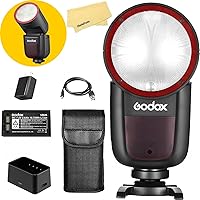
Features & Benefits

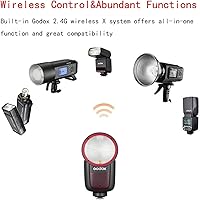
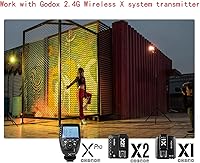
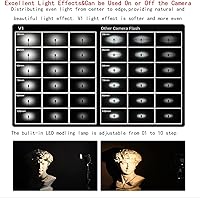
The circular head is not just aesthetic — light distributed evenly from center to edge translates directly into more flattering portraits and cleaner event shots without heavy post-processing. At 76Ws, this Sony-compatible flash carries real power, and the high-speed sync up to 1/8000s lets you shoot wide-open in direct sun without blowing out the background. Battery life is a genuine strength: the built-in lithium-ion cell handles roughly 480 full-power flashes on a charge, with a 1.5-second recycle time that keeps pace in fast-shooting situations — a clear step up from AA-battery flashes that slow under pressure. The Godox 2.4G X wireless system is baked in, so triggering off-camera or controlling other Godox units needs no separate transmitter. A 10-step LED modeling lamp lets you preview light placement before committing to a shot.

Best For

This round head speedlight is a natural fit for portrait and wedding photographers who care about how light falls on a face, not just how much of it there is. Sony mirrorless shooters across the a7, a6000, A9, and FX3 lines get full native TTL without any adapter workarounds. It also makes a strong case for photographers stepping up from basic on-camera flash — the built-in wireless system means you can start experimenting with off-camera setups without additional investment. If you already own other Godox X-system gear, adding the Godox V1S to your kit is straightforward. Event and travel photographers will appreciate not worrying about battery life mid-shoot.

User Feedback

Owners consistently praise the light quality this Sony-compatible flash produces — many report a visible difference in skin tones and background gradients compared to their old rectangular-head units. TTL accuracy on Sony bodies draws specific positive mention, with shooters citing reliable auto-exposure results across varied conditions. Battery longevity comes up repeatedly as a practical win for longer sessions. On the critical side, the menu system has a learning curve that occasionally frustrates first-time Godox users expecting more intuitive navigation. One cosmetic note worth keeping in perspective: the red decorative ring is plastic and ships uninstalled, which some buyers find underwhelming, though it has no effect on performance. Against the Sony HVL-F60RM, most reviewers favor the Godox V1S for light quality, though Sony's native integration edges ahead in reliability for demanding situations.

Pros

  • The round head produces noticeably softer, more even light compared to standard rectangular speedlights — ideal for portraits.
  • Native Sony TTL delivers reliable automatic exposure across a wide range of mirrorless and DSLR bodies without adapters.
  • Roughly 480 full-power flashes per charge means the battery holds through a full wedding or portrait session comfortably.
  • Built-in Godox 2.4G wireless eliminates the need for a separate trigger when starting off-camera flash setups.
  • High-speed sync up to 1/8000s lets you shoot wide apertures in bright outdoor light without blowing out backgrounds.
  • A 1.5-second recycle time keeps pace with fast-moving event coverage better than most AA-powered competitors.
  • The 10-step LED modeling lamp helps dial in light direction before firing, saving time during portrait setups.
  • Coverage from 28mm to 105mm handles most portrait and event focal lengths without manual zoom adjustments.
  • This Sony-compatible flash competes well against the Sony HVL-F60RM on light quality while offering more wireless flexibility.
  • Pairs naturally with other Godox X-system gear, making it easy to scale into a multi-light setup over time.

Cons

  • The menu system has a genuine learning curve that frustrates first-time Godox users navigating wireless and TTL modes.
  • The red decorative ring is plastic and ships uninstalled, which feels underwhelming relative to the overall price point.
  • Sony-only TTL means multi-brand shooters will need a separate flash for any non-Sony body in their kit.
  • Flash output drops noticeably at very high shutter speeds in HSS mode, limiting effectiveness in harsh direct sunlight.
  • The 90-second auto-off timeout is too aggressive for deliberate, slow-paced shooting styles with no apparent way to adjust it.
  • At 530g, the unit feels front-heavy on compact Sony bodies like the ZV-E10 or a6100 during extended handheld sessions.
  • No field-replaceable battery option means a dead cell during a long shoot cannot be resolved without a power source nearby.
  • The LED modeling lamp is too dim to be useful outdoors or in brightly lit indoor spaces where ambient light dominates.

Ratings

The scores below for the Godox V1S Round Head Camera Flash were generated by AI after analyzing verified buyer reviews from multiple global markets, with automated filtering applied to remove incentivized, bot-generated, and outlier submissions. The result is a balanced picture that captures what real photographers — from wedding shooters to solo portrait artists — consistently praise and where they feel the unit falls short. Both strengths and friction points are reflected transparently across every category.
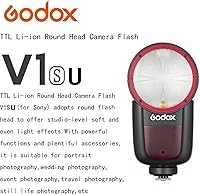
Light Quality
93%
The round head is the single most praised aspect across reviews. Photographers shooting portraits report noticeably softer shadows and more even skin tones compared to rectangular speedlights, with several wedding shooters noting they needed less diffusion gear to achieve flattering results on location.
A small number of users working in large venues found the spread slightly less punchy than higher-output strobes when bouncing off high ceilings. Light quality is outstanding up close but marginal in spaces that demand maximum throw distance.
TTL Accuracy on Sony Bodies
91%
Sony mirrorless users across the a7 and a6000 series consistently describe TTL exposure as reliable and predictable, even in mixed-lighting event environments. Many shifted from third-party flashes that required constant manual correction, and the native hot shoe communication is credited for the improvement.
A handful of reviewers using older Sony DSLR bodies reported occasional exposure inconsistencies in high-contrast scenes. TTL performance is strong but not infallible — users shooting critical one-chance moments like ceremonies still recommend knowing how to switch to manual quickly.
Battery Life & Endurance
89%
The built-in lithium-ion cell delivers around 480 full-power flashes per charge, which translates to covering a full wedding reception or a multi-hour portrait session without needing a backup. The integrated battery also eliminates the mid-shoot frustration of swapping AAs that many event photographers know well.
Recharging takes time, and unlike AA-powered flashes, you cannot swap to a fresh set of batteries when power runs low in the field. A small number of users reported the battery indicator dropping faster than expected after extended heavy use over several months.
Recycle Time
86%
At approximately 1.5 seconds for a full-power recycle, this round head speedlight keeps pace confidently during bursts of candid portraits or fast-moving event coverage. Photographers who previously used AA-battery flashes found the consistency noticeably better, particularly when the battery dips below half charge.
At maximum output in continuous shooting, some users observed the recycle time creeping closer to 2 seconds after prolonged heavy use in a single session. It is not a dealbreaker, but shooters expecting strobe-like consistency at 100 percent power for long stretches should temper expectations slightly.
Wireless System Integration
88%
The built-in Godox 2.4G X system is a genuine convenience for photographers already invested in the Godox ecosystem. Being able to trigger off-camera lights or control a remote Godox unit directly from the flash — without carrying a separate transmitter — simplifies a typical portrait or event setup considerably.
The wireless integration shines within the Godox family but offers limited cross-brand compatibility. Photographers using a mixed lighting kit that includes non-Godox strobes will need a separate controller, and the 32-channel system, while flexible, can feel over-complicated to configure for users new to wireless flash.
Build Quality & Durability
74%
26%
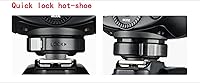
The overall chassis feels solid for its weight class, and the hot shoe mount locks firmly onto Sony bodies without noticeable play. Most buyers report no issues after regular use at events, and the unit handles the incidental bumps of bag-to-camera transitions without concern.
The red decorative ring around the flash head is plastic and ships uninstalled, which comes as a minor disappointment at this price tier. It is purely cosmetic, but several buyers called it out as feeling cheap relative to the rest of the unit — worth knowing before unboxing.
LED Modeling Lamp
78%
22%
The 10-step modeling lamp is genuinely useful for checking light direction and shadow placement before firing a shot, particularly during indoor portrait setups where getting the angle right before a subject sits down saves time. The warm 3300K tone gives a reasonable preview of how the flash will complement ambient light.
At 2W, the LED is not bright enough to be useful in well-lit rooms or outdoor settings where ambient light overpowers it. Photographers used to studio modeling lights may find it more of a rough guide than a precision preview tool.
High-Speed Sync Performance
84%
HSS up to 1/8000s opens up real creative options for outdoor portrait work, allowing photographers to shoot at f/1.8 or wider in bright midday sun without the background blowing out. Users doing fill-flash work in daylight consistently highlight this as one of the more practical features for location shooting.
High-speed sync does reduce effective flash output as shutter speed climbs, so users pushing past 1/2000s will notice the flash contributing less than expected. At maximum shutter speeds, the Godox V1S covers moderate distances well but struggles to compete with ambient light in very harsh direct sun without a modifier.
Menu & Controls Usability
67%
33%
Once familiar with the interface, navigating between TTL, manual, and wireless modes is reasonably fast. Experienced Godox users report the button layout follows the same logic as other X-system units, making the transition straightforward if you already own something from the lineup.
New Godox users frequently describe the menu system as unintuitive, with some functions buried several button presses deep and the manual not always clarifying the logic clearly. This is one of the more consistent complaints from buyers who are new to the brand rather than upgrading within it.
Weight & Portability
81%
19%
At 530g with battery, this Sony-compatible flash is substantial enough to feel well-built without becoming a fatigue issue during a full day of shooting. Travel and event photographers report it balances well on Sony mirrorless bodies without making handheld shooting feel front-heavy.
It is noticeably heavier than compact or budget speedlights, and users pairing it with smaller bodies like the ZV-E10 or a6100 occasionally mentioned the size difference feeling slightly awkward. Not a serious issue, but worth considering if you prioritize a minimal travel kit.
Flash Coverage Range
82%
18%
Coverage from 28mm to 105mm suits the majority of portrait and event focal lengths without requiring manual zoom adjustments during a typical shoot. Wide-angle coverage at 28mm is especially appreciated by photographers shooting environmental portraits or small group shots with shorter lenses.
Photographers using ultra-wide lenses below 24mm will find the coverage falls short and may need a wide-angle diffuser panel. The zoom range is solid for standard use cases but does not match the flexibility offered by a few competing flashes in the same price bracket.
Value for Money
79%
21%
Relative to Sony-branded alternatives, this round head speedlight delivers a compelling set of features — native TTL, built-in wireless, HSS, and a lithium-ion battery — at a more accessible price. Photographers comparing it to the Sony HVL-F60RM frequently conclude the Godox V1S offers more creative flexibility per dollar.
At its price point, buyers expect a level of fit and finish that the plastic decorative ring and slightly busy menu system undercut. It is competitive value in the context of its feature set, but it does not feel like a premium product in every respect when inspected closely out of the box.
Compatibility Breadth
87%
The list of supported Sony bodies is extensive, covering everything from the budget-oriented ZV-E10 to the professional A9III and FX3. Mirrorless and SLR users alike benefit from the same native TTL experience, which is rarely true for third-party flashes that tend to prioritize one system format.
Compatibility is Sony-only in this version, so photographers who shoot across multiple brands — Sony and Fujifilm, for instance — would need separate flash units. The Godox V1S does not offer multi-brand support in a single body the way some universal manual flashes do.
Auto Power-Off & Power Management
76%
24%
The 90-second idle auto-off helps conserve battery during slower-paced portrait shoots where the flash sits unused between setups. The longer 60-minute timeout in slave mode is practical for multi-light setups where one flash is positioned off-camera and not triggered continuously.
A few users found the 90-second window too aggressive during deliberate, slow-paced shoots — landscape photographers using flash for fill occasionally returned to a unit that had already powered down. There does not appear to be a user-configurable timeout adjustment, which would have addressed this cleanly.

Suitable for:

The Godox V1S Round Head Camera Flash is purpose-built for Sony photographers who have outgrown basic on-camera flash and want meaningfully better light without jumping to a full studio setup. Portrait and wedding photographers will get the most out of it — the round head produces a softer, more even spread that flatters subjects and reduces the heavy editing needed to fix harsh flash shadows. Sony mirrorless shooters across the a7, a6000, A9, and FX3 lines benefit from native TTL, which means the camera and flash communicate directly to handle exposure automatically, making it genuinely useful in unpredictable event lighting. Photographers already invested in the Godox X-system ecosystem will find the built-in 2.4G wireless integrates cleanly with their existing triggers and lights. Travel and event shooters who need reliable battery endurance across a full day will also find the lithium-ion cell a practical upgrade over carrying spare AA sets.
Not suitable for:

The Godox V1S Round Head Camera Flash is the wrong choice for photographers who shoot across multiple camera brands, since this version is Sony-only and does not offer cross-brand TTL compatibility. Buyers who prioritize raw output above all else — large venue event photographers bouncing light off high ceilings, for instance — may find 76Ws limiting compared to more powerful monolights or high-output speedlights. If you are new to flash photography in general and expecting a simple plug-and-shoot experience, the menu system has a learning curve that can be frustrating early on, particularly when navigating wireless modes. Photographers who prefer the flexibility of swapping in fresh AA batteries mid-shoot will find the integrated lithium-ion cell a constraint when no charging option is available. Finally, buyers hoping for a premium unboxing experience at every touchpoint should know the red decorative ring around the head is plastic and arrives uninstalled — it works fine but does not feel high-end.
Specifications

  • Output Power: The flash delivers 76Ws of maximum output, providing sufficient power for portrait, event, and fill-flash work in most indoor and outdoor environments.
  • Flash Head: A circular round head design distributes light more evenly from center to edge compared to traditional rectangular flash heads, producing softer shadow transitions.
  • Sync Speed: Supports high-speed sync (HSS) up to 1/8000s, as well as first-curtain and second-curtain sync modes for creative exposure control.
  • Flash Duration: Flash duration ranges from 1/300s at full power to 1/20000s at lower power settings, with shorter durations helping freeze fast subject movement.
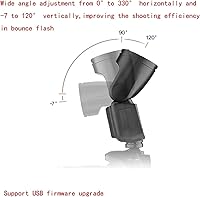
  • Flash Coverage: Zoom range covers 28mm to 105mm, accommodating wide-angle through short telephoto focal lengths without requiring manual head adjustment during typical shoots.
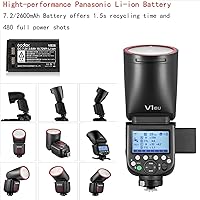
  • Battery: Powered by a built-in 7.2V/2600mAh lithium-ion rechargeable battery — not user-replaceable in the field — which eliminates the need for AA cells.
  • Full-Power Shots: The battery delivers approximately 480 full-power flashes per full charge under standard operating conditions.
  • Recycle Time: Full-power recycle time is approximately 1.5 seconds, with a green LED indicator confirming when the flash is ready to fire again.
  • Wireless System: Features a built-in Godox 2.4G X wireless system supporting transmitter, receiver, and off modes across 32 selectable channels (1 through 32).
  • Transmission Range: Wireless transmission range reaches approximately 100m in open conditions, though real-world range varies with obstacles and radio interference.
  • Modeling Lamp: A 2W LED modeling lamp with 10 adjustable brightness steps operates at approximately 3300K color temperature for previewing light placement before shooting.
  • Flash Modes: Supports TTL autoflash, manual flash, flash exposure compensation, flash exposure lock, second-curtain sync, and modeling flash modes.
  • Mounting: Fits Sony-compatible hot shoe mounts with full TTL communication, compatible with both Sony SLR and mirrorless camera systems.
  • Auto Power-Off: The unit powers down automatically after approximately 90 seconds of idle operation, or after 60 minutes when configured as a wireless slave.
  • Dimensions: The flash body measures 76 x 93 x 197mm, a compact form factor suited for on-camera use and portable off-camera lighting setups.
  • Weight: With the battery installed, the unit weighs 530g (approximately 1.17 lbs), balanced for use on Sony mirrorless bodies without requiring additional support.
  • Compatible Bodies: Natively compatible with a broad range of Sony mirrorless and SLR cameras including the a7 series, a6000 series, A9III, A7C, A7CII, FX3, and ZV-E10, among others.
  • Power Source: The unit charges via the integrated lithium-ion battery; no external battery pack is required, and no AA battery option is available.

Related Reviews
Godox TT600S Speedlight Camera Flash
79%
93%
Value for Money
88%
Wireless Performance
84%
Build Quality
91%
Output Consistency
76%
High-Speed Sync
More
Godox TT520III Hot Shoe Flash
80%
91%
Value for Money
88%
Ease of Setup
84%
Wireless Performance
79%
Light Output & Power
86%
Manual Control Precision
More
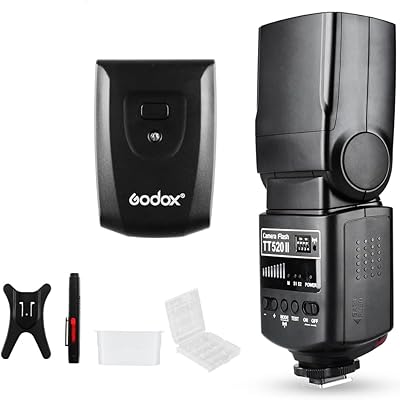
Godox TT520II Speedlite Flash
76%
91%
Value for Money
78%
Build Quality
84%
Wireless Performance
82%
Flash Output Consistency
76%
Ease of Use
More
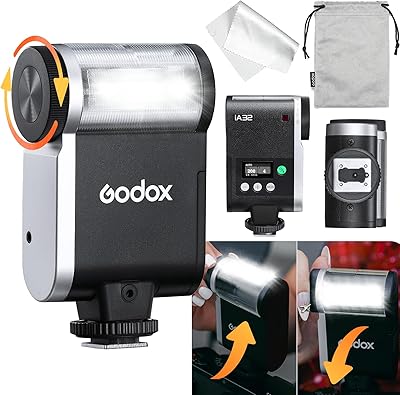
Godox iA32 Mini Camera Flash
85%
88%
Ease of Use
92%
Portability
85%
Flash Power Control
91%
Recycling Time
80%
Build Quality
More
Godox V100S Camera Flash for Sony
86%
89%
Performance & Reliability
92%
Ease of Use
87%
Battery Life & Power
85%
Build Quality
90%
Wireless Connectivity
More
Godox V860III Canon Speedlite Flash
83%
93%
Battery Life & Endurance
91%
Recycle Time
74%
TTL Accuracy & Consistency
78%
Wireless Reliability
82%
Build Quality & Durability
More
Godox V860III-S Speedlight Flash
81%
93%
Battery Life
84%
TTL Accuracy on Sony Bodies
88%
High-Speed Sync Performance
89%
Recycle Time
81%
Build Quality & Durability
More
Godox TT350S Mini Speedlite Flash
81%
83%
TTL Accuracy
88%
High Speed Sync (HSS)
86%
Wireless Performance
93%
Portability & Form Factor
78%
Build Quality
More
Godox TT350O Flash for Olympus/Panasonic Cameras
87%
90%
Ease of Use
91%
Wireless Control Functionality
95%
Portability/Size
85%
Flash Power/Guide Number
80%
Battery Life
More
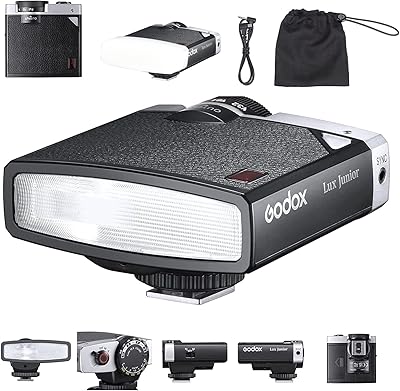
Godox Lux Senior Retro Camera Flash
86%
93%
Design & Aesthetics
89%
Portability & Storage
85%
Lighting Performance
87%
Battery Life
82%
Ease of Use
More

FAQ

Yes, it connects directly to the Sony hot shoe and communicates natively with the camera for TTL autoflash. No adapters or additional transceivers are needed for on-camera use on supported bodies including the a7 IV and a7R V.

You can, within the Godox X-system ecosystem. The built-in 2.4G wireless system lets it operate as a receiver when triggered by a compatible Godox transmitter on your camera, or as a transmitter controlling other Godox X-system units. For completely standalone off-camera use, you will need a compatible Godox trigger on the camera side.

The red ring is a purely decorative plastic accent that ships detached from the unit and needs to be installed manually. It has no effect whatsoever on the flash output, light quality, or any functional aspect of the unit — it is entirely cosmetic.

A full charge from empty typically takes around 2.5 hours using the included charging cable. The flash cannot be used while charging, so it is worth planning charging between sessions rather than relying on top-up charging mid-shoot.

It takes some getting used to. The core functions — power level, TTL mode, switching on and off — are straightforward, but navigating wireless group settings and flash modes involves button combinations that are not always intuitive without reading the manual. Most new users find their footing within a session or two, but expect a brief adjustment period.

The practical difference is most visible in portraits and close-range shooting. Rectangular heads tend to produce a slightly hotter center spot with harder shadow edges. The round head spreads light more consistently from the center outward, which means softer transitions between lit and shadow areas on faces and surfaces — generally requiring less diffusion gear to achieve a natural result.

Yes, that is one of its most practical real-world uses. By syncing up to 1/8000s, you can shoot at f/1.8 or f/2 in bright daylight and use the flash to fill shadows or add catchlights without the background overexposing. Keep in mind that output drops as shutter speed increases in HSS mode, so extremely bright conditions may still require a modifier or closer flash placement.

For most photographers, yes. A typical wedding ceremony and reception involves far fewer full-power flashes than 480, especially if you are mixing ambient light with flash rather than relying on maximum output for every frame. That said, carrying a charged spare battery or a power bank compatible with the charging port is a sensible backup for longer coverage days.

The TTL functions are Sony-specific in this version, but the 2.4G X wireless system is cross-compatible with other Godox X-system units regardless of the brand they were purchased for. You can mix it with Godox flashes made for Canon or Nikon systems in a manual wireless setup, though TTL will only function with Sony-compatible equipment.

The Sony HVL-F60RM has the advantage of being a first-party unit with tight native integration and weather sealing, which matters in unpredictable outdoor event conditions. The Godox V1S edges ahead on light quality thanks to the round head and offers more wireless flexibility through the X-system. For pure event reliability and durability in adverse conditions, the Sony unit has a real argument; for light quality and creative versatility at a lower price, most photographers favor the Godox.

Where to Buy