Overview

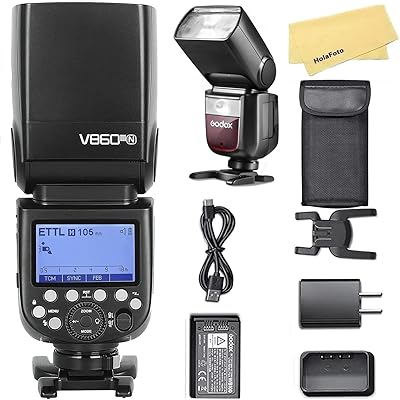
The Godox V860II-N TTL Speedlite Flash sits in an interesting spot — capable enough for serious work, affordable enough that you won't lose sleep if it takes a knock on location. What separates it from the crowded pack of AA-dependent speedlites is the built-in Li-ion battery, which means faster recycling and far more shots per charge without fumbling for fresh cells mid-shoot. The built-in 2.4G wireless transceiver removes the need for a separate radio trigger, keeping your kit lean. It consistently holds a top-100 ranking in shoe-mount flashes on Amazon — notable for a flash this age. The bundled accessories, including a bracket, color gels, snoot, and bounce card, round out the package with tools most photographers will actually reach for.

Features & Benefits

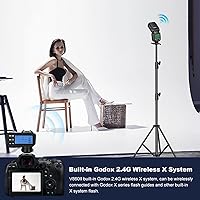
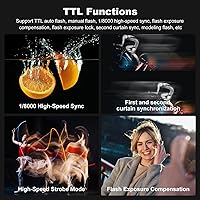
A guide number of 60 at ISO 100 gives this Nikon speedlite enough punch to handle most portrait and event scenarios without pushing power to maximum. The real standout feature is high-speed sync up to 1/8000s — shoot wide open at f/1.8 in direct sunlight without a neutral density filter and the flash keeps pace. TTL with Nikon I-TTL II handles exposure automatically, so you're not constantly reviewing the histogram after every frame. The zoom head adjusts automatically between 20mm and 200mm to match your lens, which is one less thing to manage during fast-moving shoots. Running as master or slave wirelessly, the V860II-N can anchor an entire multi-flash setup without adding a trigger to your hot shoe.

Best For

This Godox flash makes the most sense for Nikon DSLR shooters who've outgrown their camera's pop-up flash or a basic entry-level speedlite and want a meaningful step up without studio-level spend. Wedding and portrait photographers will appreciate the HSS and TTL combination most — it handles the unpredictability of real events without constant manual intervention. For hobbyists building a first off-camera system, the Godox X ecosystem means this flash can grow with you: add a second unit, a trigger, or a larger strobe later and they all communicate together. One firm note for buyers: this flash is Nikon-only. Canon, Sony, or Fujifilm shooters need a different variant — cross-brand compatibility does not apply here.

User Feedback

The most consistent praise buyers offer centers on how the Li-ion battery changes the shooting experience — faster recycling and no need to carry spare AAs through a long wedding day are mentioned repeatedly. Build quality draws more mixed reactions: the plastic construction feels lighter than Nikon's own SB series, though most working photographers report it holds up fine under regular use. TTL accuracy is a split point — reliable on popular bodies like the D750 and D800, but some users on older Nikon cameras report occasional misfires. Real-world wireless range falls short of the official spec, though 30 to 40 meters indoors is still workable for most setups. Firmware updates are available and buyers generally find the process straightforward.

Pros

  • Li-ion battery delivers 650 full-power shots per charge — no more mid-event battery swaps.
  • Recycle time of up to 1.5 seconds keeps pace with fast-moving portrait and event work.
  • High-speed sync up to 1/8000s enables wide-aperture shooting in bright outdoor light.
  • Built-in 2.4G wireless means off-camera flash is possible straight out of the box.
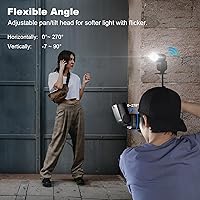
  • Auto-zoom from 20mm to 200mm adjusts light coverage to match your lens automatically.
  • The V860II-N can act as master or slave, anchoring a full multi-flash setup without extra triggers.
  • Bundled accessories include gels, snoot, bounce card, and a bracket for immediate creative use.
  • GN60 output handles both indoor bounce flash and outdoor fill without pushing to maximum power.
  • Consistent top-100 Amazon ranking reflects sustained long-term buyer confidence in this flash.
  • Godox X ecosystem compatibility means this speedlite can grow with your lighting kit over time.

Cons

  • Proprietary Li-ion battery cannot be substituted with standard AAs if you forget the charger.
  • TTL accuracy is inconsistent on older or less common Nikon bodies, requiring manual compensation.
  • Real-world wireless range falls well short of the 100-meter specification in typical shooting environments.
  • Plastic build feels noticeably less solid than Nikon SB-series flashes at a similar price point.
  • Applying firmware updates requires a manual download process that less tech-savvy users find frustrating.
  • Bundled modifiers are thin and functional at best — most serious photographers will replace them quickly.
  • Zoom head mechanism can feel loose or audibly noisy compared to more premium speedlites.
  • Output at high HSS sync speeds drops significantly, limiting effective range in very bright conditions.
  • Large venue shooting can expose the limits of GN60, particularly when bouncing off high ceilings.

Ratings

The Godox V860II-N TTL Speedlite Flash has been evaluated by our AI rating system after analyzing thousands of verified global purchases, with spam, bot-submitted, and incentivized reviews actively filtered out before scoring. The results below reflect an honest cross-section of real shooter experiences — from weekend hobbyists to working wedding photographers — and both the strengths and recurring frustrations are represented without sugarcoating.

Battery Life & Efficiency
93%
The Li-ion battery is the single most praised aspect of this flash across buyer feedback. Photographers report completing full wedding receptions or portrait sessions without needing a recharge, something AA-powered competitors simply cannot match. The 650 full-power shots per charge translates to real-world confidence during long shoots.
The proprietary battery means you cannot swap in standard AAs as a backup in a pinch, which some event photographers find limiting when traveling without access to a charger. A spare battery is essentially a must-buy for anyone shooting multi-day assignments.
TTL Accuracy
76%
24%
On popular mid-range Nikon bodies like the D750, D610, and D800, TTL metering performs reliably and reduces the need for constant manual corrections. Portrait photographers working in consistent indoor environments report exposure results that hold steady across entire sessions without much intervention.
TTL consistency drops noticeably on older or less common Nikon bodies, with some users reporting occasional overexposure or misfires that require manual compensation. It is not the most bulletproof TTL system on the market, and photographers shooting critical paid work may want to run test shots before committing.
High-Speed Sync (HSS)
91%
HSS up to 1/8000s is a genuine capability that opens up outdoor portrait work at wide apertures without reaching for a neutral density filter. Photographers shooting in bright afternoon sun with an 85mm lens wide open consistently highlight this as the feature that justifies the purchase over cheaper alternatives.
At higher HSS sync speeds, flash output power drops noticeably, which can limit effective range in very bright daylight. Users shooting subjects more than a few meters away in full sun may find they need to push the flash harder than expected to achieve balanced fill light.
Wireless Performance
72%
28%
The built-in 2.4G transceiver is a genuine convenience advantage — no extra trigger needed on the hot shoe for basic off-camera setups. Indoors, the range is reliable enough for studio-style portrait work across a standard-sized room, and switching between master and slave modes is straightforward.
The advertised 100-meter wireless range is aspirational rather than practical. Real-world user reports consistently place reliable triggering closer to 30 to 40 meters indoors, with outdoor performance depending heavily on interference and obstructions. Buyers expecting the full rated range outdoors on large sets may be disappointed.
Recycle Time
89%
A maximum recycle time of 1.5 seconds at full power is meaningfully faster than most AA-powered speedlites, which routinely stretch past 3 seconds under heavy load. Event photographers note they can keep pace with fast-moving moments without the flash becoming a bottleneck between frames.
Recycle speed is rated at maximum capacity, and real-world performance can vary slightly depending on battery charge level and ambient temperature. In cold outdoor conditions, a handful of users have noted slightly slower recycling compared to warm indoor environments.
Build Quality
67%
33%
The V860II-N holds up well under regular working conditions despite being predominantly plastic construction. Photographers who use it across event seasons report no significant structural failures, and the hot shoe mount feels solid enough for frequent attachment and removal.
Compared to Nikon's own SB-series flashes, the plastic body feels noticeably lighter and less premium in hand. Users who have owned both describe the Godox as functional but not confidence-inspiring in terms of tactile durability, particularly around the zoom head mechanism after extended use.
Ease of Use
84%
The LCD control panel is well-organized and clearly readable even in dim shooting environments. Photographers transitioning from basic speedlites find the learning curve manageable, and switching between flash modes does not require consulting the manual after a short familiarization period.
The menu structure for wireless group configuration can feel unintuitive at first, particularly for users new to multi-flash setups. A few buyers mention the button layout takes some muscle memory to navigate quickly during live shoots when there is no time to look down.
Output Power (GN60)
86%
Guide number 60 at ISO 100 gives this flash meaningful reach for indoor events and outdoor fill scenarios. Portrait photographers working in medium-sized venues report clean, well-exposed results without pushing the flash to maximum output, which also helps preserve recycle speed.
Against large venues or very high ceilings, the output can feel taxed, especially when trying to bounce flash off a distant surface. Photographers covering large ballrooms or expansive outdoor receptions may wish for just a bit more headroom than GN60 provides.
Zoom Head Range
82%
18%
Auto-zoom from 20mm to 200mm covers virtually any lens a Nikon DSLR shooter is likely to mount, and the automatic matching to focal length works reliably without manual adjustment. Telephoto shooters especially appreciate the concentrated beam at longer focal lengths for more efficient light delivery.
The zoom motor mechanism has drawn occasional comments about feeling slightly loose or noisy compared to higher-end flashes. Nothing that affects performance in most cases, but it is a tactile reminder that this is a mid-tier product rather than a professional-grade unit.
Value for Money
92%
At its price point, the combination of Li-ion battery, HSS, built-in 2.4G wireless, and the bundled accessory kit represents a package that would cost considerably more if assembled from brand-name alternatives. Buyers consistently describe it as punching above its weight for the money.
The value equation assumes you are buying into the Godox X ecosystem for the long term. If you later want to mix with Nikon-brand flashes or triggers, compatibility can become complicated, and the ecosystem lock-in is a real consideration for photographers with existing gear investments.
Accessory Bundle
78%
22%
The included bracket, color gels, honeycomb grid, snoot, and bounce card are genuinely useful additions rather than box-filler accessories. Hobbyists and portrait photographers note that having modifiers in the box immediately expands creative options without a separate purchase.
The modifier quality is functional rather than impressive — the gels and honeycomb in particular feel thin compared to standalone aftermarket accessories. Photographers who regularly use modifiers in professional settings will likely replace most of the bundled items fairly quickly.
Nikon Compatibility
81%
19%
I-TTL II support covers a wide range of Nikon DSLR bodies, and integration with cameras like the D7100, D800, and D750 is well-documented by buyers. The ability to also interact with Nikon SB-series flashes in wireless configurations adds useful flexibility.
Compatibility is strictly Nikon — there is no cross-brand functionality, and buyers occasionally purchase the wrong variant by mistake. Nikon mirrorless bodies have shown mixed results depending on firmware versions, and Godox does not always document compatibility updates clearly.
Firmware & Updates
71%
29%
Godox does release firmware updates for the V860II-N, and the process is straightforward enough that most technically comfortable photographers handle it without issues. Updates have historically added feature improvements and compatibility fixes rather than just bug patches.
Finding and applying firmware updates is not plug-and-play — it requires downloading files and following a manual process that less tech-savvy buyers find frustrating. A small but consistent group of reviewers report confusion around where to find the correct firmware version for their specific unit.

Suitable for:

The Godox V860II-N TTL Speedlite Flash is a strong match for Nikon DSLR shooters who have outgrown their camera's built-in flash and want a meaningful step up without committing to a much larger budget. Wedding and portrait photographers in particular will find the combination of TTL automation, high-speed sync, and Li-ion battery well-suited to the unpredictability of real events — one less thing to worry about when moments are moving fast. Hobbyists and enthusiasts building their first off-camera lighting setup will also get genuine value here, since the built-in 2.4G transceiver means you can start experimenting with off-camera flash immediately without buying a separate trigger. On-location photographers who have been burned by AA batteries dying mid-shoot will appreciate a flash that reliably handles hundreds of full-power shots on a single charge. The bundled accessories — gels, a snoot, bounce card, and a speedlite bracket — give new flash users a starter kit for creative lighting without additional spend.

Not suitable for:

The Godox V860II-N TTL Speedlite Flash is not the right tool for photographers shooting with Canon, Sony, Fujifilm, or any non-Nikon system — this flash is Nikon I-TTL II only, and there is no workaround for cross-brand TTL functionality. Photographers with older or less mainstream Nikon bodies should also manage their expectations around TTL consistency, as metering reliability drops on certain cameras compared to current mid-range Nikon DSLRs. If you are a working professional who needs absolute confidence in exposure accuracy for critical paid work — think commercial product shoots or high-stakes editorial assignments — the TTL system here may require more babysitting than a Nikon SB-series flash would. The proprietary Li-ion battery, while an advantage for capacity, means you cannot fall back on AA cells in an emergency, which could be a real problem on a destination shoot far from charging options. Anyone expecting true 100-meter wireless range in real-world conditions will also be disappointed, as actual reliable triggering distances fall considerably short of the official specification.

Specifications

  • Guide Number: Maximum guide number of 60m at ISO 100, providing sufficient output for indoor portraits and outdoor fill flash scenarios.
  • Sync Speed: Supports high-speed sync up to 1/8000s, as well as first-curtain and second-curtain sync modes.
  • Battery Type: Powered by an included 2000mAh Li-ion rechargeable battery, charged via the included USB-compatible charger.
  • Shot Capacity: Delivers up to 650 full-power flashes on a single battery charge under standard operating conditions.
  • Recycle Time: Maximum recycle time of 1.5 seconds at full power, significantly faster than typical AA-powered speedlites under load.
  • Zoom Range: Auto and manual zoom head covers 20mm to 200mm in the 135 system, or 10mm to 100mm for Four Thirds systems.
  • Wireless System: Built-in 2.4G wireless transceiver operates across 32 channels with a manufacturer-rated range of up to 100 meters.
  • Optical Wireless: Optical transmission supports 4 channels with an effective indoor range of approximately 12 to 15m and outdoor range of 8 to 10m.
  • Flash Modes: Supports TTL autoflash, manual flash, and multi-flash stroboscopic mode with up to 100 pulses at up to 199Hz.
  • Slave Groups: Can control up to three independent wireless slave groups (A, B, and C) when operating in master mode.
  • Color Temperature: Flash output is rated at 5600K with a tolerance of plus or minus 200K for consistent color across frames.
  • Power Output: Offers 22 steps of manual power output ranging from full power (1/1) down to 1/128 in precise increments.
  • Flash Duration: Flash duration ranges from 1/300s at full power down to 1/20000s at minimum power output.
  • Exposure Comp: Flash exposure compensation and flash exposure bracketing adjustable in 1/3-stop increments across a plus or minus 3-stop range.
  • Dimensions: Body measures 64 x 76 x 190mm and weighs 540g with the battery installed, or 420g without.
  • Compatibility: Designed exclusively for Nikon I-TTL II DSLR cameras; not compatible with Canon, Sony, Fujifilm, or other mount systems.
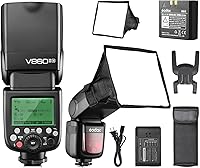
  • Included Items: Package includes the flash unit, Li-ion battery, charger, speedlite bracket, color gels, honeycomb grid, snoot, bounce card, stand, carry bag, and instruction manual.
  • Wireless Frequency: 2.4G wireless operates within a frequency range of 2413.0MHz to 2464.5MHz with a maximum transmitting power of 5dBm.

Related Reviews
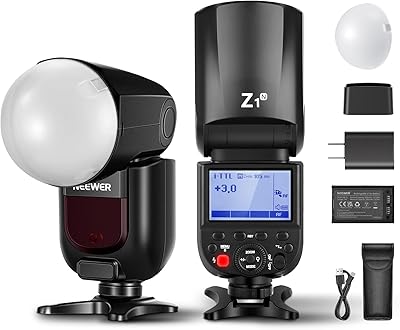
NEEWER Z1-N TTL Speedlite for Nikon
78%
91%
Light Quality
78%
TTL Accuracy
86%
High-Speed Sync Performance
71%
Wireless Reliability
83%
Battery Life
More
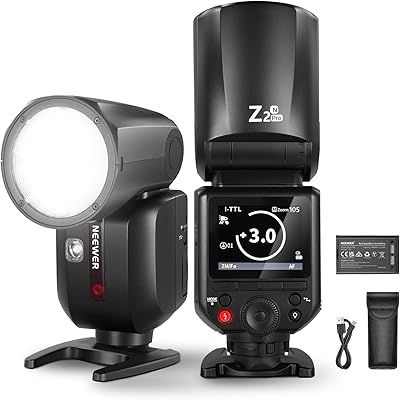
NEEWER Z2PRO-N TTL Round Head Flash Speedlite
82%
91%
TTL Accuracy
88%
Light Quality
86%
Battery Life & Charging
79%
Wireless Reliability
84%
Build Quality
More
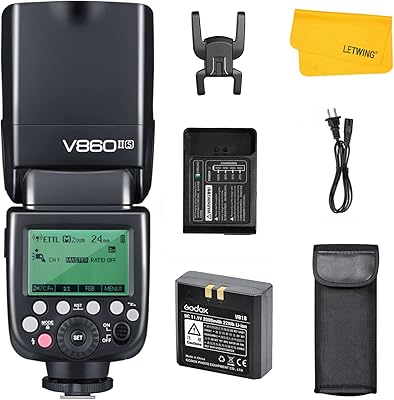
Godox V860II-S Flash for Sony
86%
88%
Value for Money
91%
Flash Performance
84%
Build Quality
87%
Ease of Use
90%
Battery Life
More
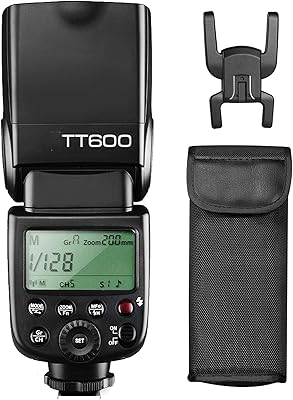
Godox TT600 Wireless Flash Speedlite
85%
89%
Performance & Power
84%
Build Quality
90%
Battery Life
87%
Wireless Range
91%
Compatibility
More
Godox V860III-N Nikon Speedlight Flash
84%
93%
Battery Life
91%
Recycle Time
88%
High-Speed Sync Performance
84%
TTL Accuracy
87%
Wireless Reliability
More
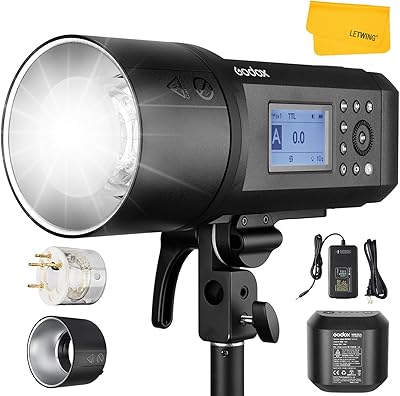
Godox AD600Pro Outdoor Studio Strobe Flash
81%
93%
Output Power & Consistency
78%
High-Speed Sync Performance
71%
Battery Life & Real-World Endurance
89%
Build Quality & Durability
84%
Wireless System & TTL Accuracy
More
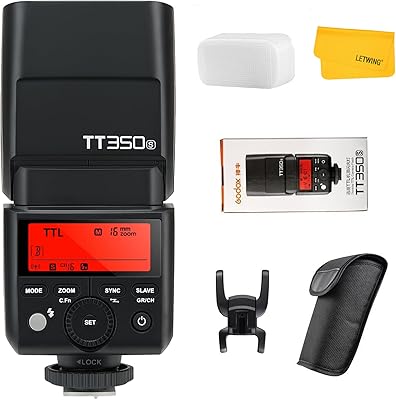
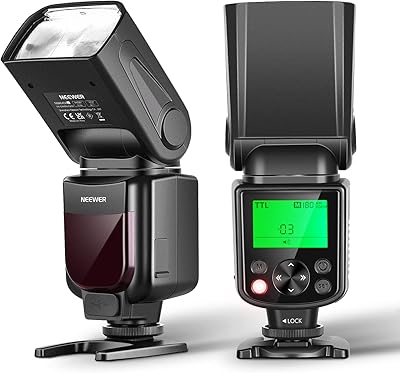
Godox TT350S Mini Speedlite Flash
81%
83%
TTL Accuracy
88%
High Speed Sync (HSS)
86%
Wireless Performance
93%
Portability & Form Factor
78%
Build Quality
More
NEEWER NW645II-S TTL Flash Speedlite
81%
86%
TTL Accuracy
83%
High-Speed Sync Performance
78%
Build Quality
61%
Optical Slave Reliability
81%
Recycle Speed
More
NEEWER 750II TTL Camera Flash Speedlite
84%
88%
Flash Power & Performance
85%
Ease of Use
72%
Build Quality
90%
TTL Functionality
80%
Portability & Weight
More
Godox X2T-N Wireless Flash Trigger Transmitter
81%
91%
Wireless Reliability
87%
TTL Accuracy
84%
High-Speed Sync Performance
79%
Build Quality
88%
Ease of Use
More

FAQ

No — the Godox V860II-N TTL Speedlite Flash is built specifically for Nikon I-TTL II and will not provide TTL functionality on Canon, Sony, Fujifilm, or any other camera system. Godox does make dedicated variants for other mounts, so make sure you are purchasing the correct version for your camera brand before ordering.

Yes, and this is one of the more useful aspects of this flash. The built-in 2.4G wireless transceiver means you can place it off-camera and trigger it wirelessly from another Godox X-system flash or a compatible Godox trigger — no additional purchase required for a basic off-camera setup. If you already own a Godox X1T-N or XPro-N transmitter, it integrates cleanly into that system as well.

Most photographers report getting through a full wedding ceremony and reception on a single charge without issue, which is a meaningful advantage over AA-powered speedlites that can drain quickly during bursts of shooting. That said, buying a spare Li-ion battery is worth considering if you are covering multi-session events or back-to-back assignments — the proprietary battery means you cannot fall back on standard AAs if the charge runs out.

In practice, no. Real-world photographers consistently report reliable triggering at around 30 to 40 meters indoors, which is still more than enough for studio and event work. Outdoor range can vary depending on interference and obstructions, so treat the 100-meter figure as a best-case specification rather than a guaranteed working distance.

It depends on which body you are using. On popular mid-range bodies like the D750, D800, and D610, TTL metering performs consistently well. On older or less common Nikon cameras, a small number of users report occasional TTL misfires or inconsistent exposures. If you are shooting with an older body, it is worth running some test shots in your typical conditions before relying on TTL during paid work.

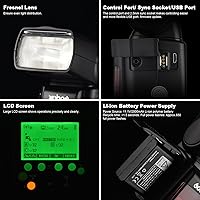
A full recharge from empty typically takes around 2.5 hours using the included charger. The charger connects via a standard port, and the flash displays battery status on its LCD panel so you can monitor charge level without guesswork.

Yes — when set to master mode, this Godox flash can control compatible Nikon speedlites such as the SB-900 and SB-910 via optical wireless transmission. It can also operate as a slave unit under the control of those same Nikon flashes or compatible Nikon pop-up flash commanders, giving you decent flexibility if you already own Nikon-brand gear.

Nikon mirrorless compatibility is mixed and depends heavily on firmware versions for both the camera and the flash. Some users report full TTL functionality on certain Z-series bodies with a hot shoe adapter, while others experience limited or unreliable performance. Godox does not always publish clear mirrorless compatibility documentation, so checking current user reports for your specific camera model before purchasing is advisable.

Firmware updates are available through the Godox website and require downloading the correct file for your specific flash model, then transferring it to the flash via USB. The process is straightforward for photographers comfortable with basic computer tasks, but a handful of buyers find the instructions unclear — particularly around identifying the correct firmware version for their unit. Keeping the flash updated is worth doing, as Godox has historically used updates to improve compatibility and performance.

They are genuinely functional for getting started with creative lighting, though not the most durable accessories you will ever own. The color gels and snoot snap onto the flash head easily and are perfectly usable for portrait work and experimental lighting. Most working photographers will eventually replace the bundled modifiers with sturdier aftermarket versions, but for hobbyists or those just building their first kit, having them included right out of the box is a real practical benefit.

Where to Buy