Overview

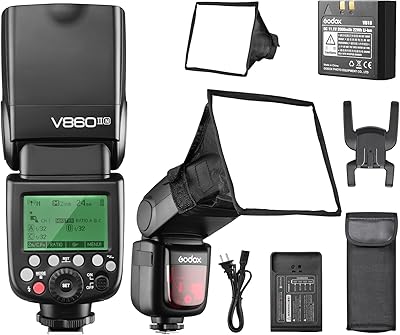
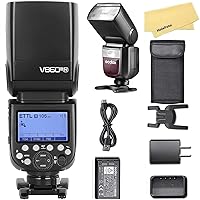
The Godox V860III-N Nikon Speedlight Flash is the third-generation Li-ion speedlight in Godox's lineup, built specifically for Nikon's i-TTL system. This Godox speedlight sits in the mid-to-high range of the market — serious enough for working photographers, yet approachable for dedicated enthusiasts who want more than a basic pop-up flash. Compared to its predecessor, it brings a faster recycle time, a redesigned locking lever, and an LED modeling lamp the V860II simply didn't offer. The swiveling, tiltable head makes bounce lighting genuinely practical, and its #15 ranking in shoe-mount flashes on Amazon reflects real-world popularity rather than novelty.

Features & Benefits

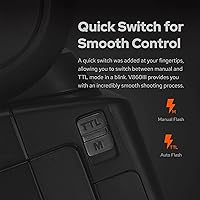
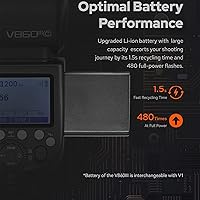
The battery situation is where this Nikon-dedicated flash genuinely stands out. A single charge handles roughly 480 full-power pops — enough to cover a full wedding reception without reaching for a spare — and the 1.5-second recycle time means you're rarely caught waiting between shots. High-speed sync up to 1/8000s is a practical asset when shooting outdoors in harsh midday light, letting you use wide apertures without blowing out the background. The built-in 2.4G wireless connects natively with the Godox X ecosystem, no receiver dongle needed. The quick-release lever and the dedicated TTL/manual toggle are small ergonomic wins that add up fast during a hectic shoot.

Best For

Portrait and wedding photographers will find this Godox speedlight particularly well-suited to their workflow — fast recycling and dependable TTL exposure mean fewer throwaway frames during unpredictable moments. Outdoor event shooters benefit directly from the high-speed sync capability, which lets you overpower the sun without stopping down to f/11. If you're already running Godox triggers or other X-system units, adding the V860III-N as a primary or secondary light is a natural extension of your kit. It's also a smart entry point for photographers stepping into studio-style lighting; the 10-level modeling lamp helps you visualize shadows and direction before committing to a full monolight setup. Nikon mirrorless users will appreciate dedicated i-TTL support without paying Nikon's brand premium.

User Feedback

The V860III-N carries a limited number of reviews under this specific ASIN, though the broader V860III series has accumulated strong feedback across thousands of buyers. Recurring praise points to battery endurance and wireless reliability as standout strengths — photographers consistently report getting through full-day shoots without a single battery swap. On the critical side, some users find the menu system less intuitive than Nikon's own SB-series flashes, and a handful note the unit can run warm during extended rapid-fire sequences. Compared to the Nikon SB-700, this Nikon-dedicated flash offers a more capable feature set at a lower price point, making the value case fairly straightforward for photographers not locked into Nikon's ecosystem. Build quality generally draws positive remarks.

Pros

  • The Li-ion battery comfortably handles a full wedding day on a single charge, with roughly 480 full-power flashes available.
  • Recycle time of around 1.5 seconds keeps up with fast-moving candid moments that cheaper flashes would miss.
  • High-speed sync up to 1/8000s lets you shoot wide-open apertures outdoors without blowing out backgrounds.
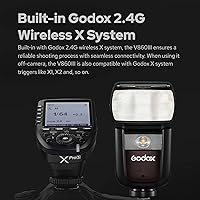
  • Built-in 2.4G wireless integrates natively with the Godox X ecosystem — no receiver dongles required.
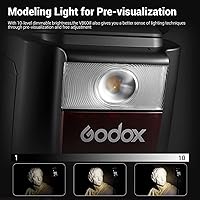
  • The 10-level LED modeling lamp is a practical teaching tool for photographers learning how direction and quality of light work.
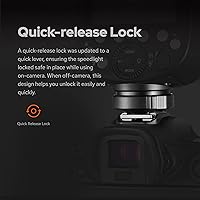
  • Quick-release lever lock makes switching between on-camera and off-camera use fast and genuinely low-hassle.
  • TTL accuracy on Nikon bodies is consistent enough that most event photographers trust it without constant manual override.
  • At its price point, the V860III-N offers a broader feature set than the Nikon SB-700, which costs more for less capability.
  • The 330-degree head swivel gives real flexibility for bouncing light off ceilings and walls in varied venue layouts.
  • Color temperature sits at a neutral 5300K, making batch white balance correction in post-processing straightforward.

Cons

  • The flash is not weather-sealed, making it a liability in rain, humidity, or dusty outdoor environments.
  • Menu navigation has a steeper learning curve than Nikon's native SB-series interface, which can frustrate first-time Godox users.
  • Power output drops noticeably when using HSS at maximum shutter speeds, requiring flash exposure compensation adjustments.
  • The unit can run warm during extended rapid-fire sequences, occasionally stretching recycle times beyond the rated spec.
  • Full off-camera wireless control requires a separate Godox trigger purchase, adding to the total system cost.
  • Tilt mechanism lacks firm click stops at commonly used bounce angles like 45 and 60 degrees.
  • Battery capacity may degrade after a year or more of heavy daily event shooting.
  • Wireless connections can occasionally drop in environments with dense 2.4G interference, such as large convention spaces.
  • The flash head adds considerable height on-camera, which can draw unwanted attention at discreet or low-key events.
  • ASIN-level review volume is limited, so long-term durability data is less conclusive than for more established listings.

Ratings

The Godox V860III-N Nikon Speedlight Flash has been evaluated by our AI rating system after deep analysis of verified global buyer reviews, with spam, bot-submitted, and incentivized feedback actively filtered out. Scores reflect the honest consensus of real-world photographers — from weekend portrait shooters to working wedding pros — and transparently capture both where this Nikon-dedicated flash excels and where it falls short.

Battery Life
93%
Photographers consistently report making it through full wedding receptions and extended portrait sessions on a single charge, with roughly 480 full-power flashes available before needing a reload. The Li-ion cell holds up well over repeated charge cycles, and users appreciate that the included battery is ready to go out of the box.
A small number of users noted capacity degradation after a year of heavy daily use, though this appears more common among photographers shooting multi-hour events back-to-back. Cold-weather outdoor shooters also report a modest reduction in available flashes compared to controlled indoor conditions.
Recycle Time
91%
The roughly 1.5-second recycle at full power is a genuine practical advantage during fast-moving shoots — users covering candid wedding moments or fast-paced event work report far fewer missed frames compared to NiMH-powered alternatives. At reduced power settings, recycling drops to nearly instant, which portrait photographers find invaluable for rapid bracketing.
A handful of reviewers noted that recycle time stretches noticeably when the unit heats up during prolonged rapid-fire sequences, occasionally creeping toward two seconds or more. This is unlikely to affect typical session shooting but matters during extended multi-burst commercial work.
High-Speed Sync Performance
88%
Outdoor portrait and lifestyle photographers frequently call out the HSS capability as one of the primary reasons they chose this Nikon-dedicated flash over cheaper alternatives. Being able to shoot at 1/2000s or faster in bright sun while maintaining a wide aperture opens up creative options that are otherwise impossible with standard sync speeds.
Some users observed a noticeable power drop when pushing HSS at maximum shutter speeds, requiring flash exposure compensation adjustments to maintain consistent exposures. This is a physics limitation of HSS technology broadly, not unique to this unit, but it can catch newer users off-guard.
TTL Accuracy
84%
Nikon i-TTL integration is described as reliable and consistent by the majority of reviewers shooting portraits and events in mixed or changing lighting. Users transitioning from Nikon's own SB-series flashes often note that TTL accuracy feels comparable, which speaks well to Godox's calibration work on the Nikon variant specifically.
A recurring complaint from event photographers involves occasional exposure inconsistency when the flash is used at close range with highly reflective subjects, such as white wedding dresses or mirrored backdrops. Fine-tuning FEC helps, but it adds a step that should ideally not be required in TTL mode.
Wireless Reliability
87%
Photographers working with multiple off-camera lights in large venues consistently praise the 2.4G X system for maintaining a solid connection up to and beyond 30 meters in typical indoor environments. The native compatibility with XPro triggers means no proprietary adapters are needed, which simplifies kit management during busy shoots.
A small but persistent group of reviewers reported occasional missed triggers in environments with heavy wireless interference, such as convention halls or large wedding venues with multiple photographers. Switching channels usually resolves it, though doing so mid-shoot adds friction.
Build Quality
78%
22%
Most photographers describe the physical construction as solid enough for regular professional use, with a reassuring weight to the unit and a hotshoe foot that fits securely without wobble. The updated quick-release lever is specifically called out as an improvement over the older twist-lock design.
Long-term durability feedback is mixed — a subset of users report cosmetic wear on the rubber grip and zoom mechanism after 18 or more months of heavy use. The unit is not weather-sealed, which frustrates outdoor and destination wedding photographers working in unpredictable conditions.
Ease of Use
71%
29%
Experienced speedlight users typically find the control layout logical and appreciate the dedicated TTL/manual toggle that lets you switch modes without wading through menus mid-shoot. The LED indicators and control wheel are well-positioned for one-handed operation on camera.
Photographers new to off-camera flash or the Godox ecosystem frequently describe the menu structure as less intuitive than Nikon's SB-series interface, with a steeper learning curve for configuring wireless groups and channels. The manual, while functional, has been called sparse by several first-time Godox buyers.
Modeling Lamp
76%
24%
Studio beginners and portrait photographers working in controlled environments find the 10-level LED modeling lamp genuinely useful for previewing shadow direction and intensity before firing. It also doubles as a focus-assist aid in low-light conditions, which a number of reviewers specifically appreciated.
At full brightness the modeling lamp is useful but not powerful enough to stand in for a dedicated constant light source on larger sets. Photographers accustomed to monolight modeling lamps may find the output underwhelming for previewing light fall-off on backgrounds at longer distances.
Value for Money
89%
The most common sentiment across review pools is that this Godox speedlight punches well above its price bracket when compared directly to the Nikon SB-700 or SB-5000, both of which cost considerably more for a similar or narrower feature set. Buyers who switched from proprietary flashes frequently describe the value ratio as one of the best decisions they made for their kit.
A smaller group of buyers who primarily shoot studio work feel the price is harder to justify when dedicated monolights or bare-bulb strobes offer more power for comparable investment. The value case is strongest for on-location and event photographers, less so for those permanently studio-bound.
Off-Camera Flash Capability
86%
Photographers using the V860III-N as part of a multi-light wireless setup praise how naturally it integrates as both a transmitter and receiver within the Godox X ecosystem. Being able to control groups and power ratios from a single XPro trigger on camera significantly reduces time spent adjusting individual units on stands.
Without a dedicated Godox trigger, off-camera functionality requires purchasing the XPro or X2T separately, which adds to the overall system cost. A few users also noted that using the unit as a receiver requires enabling the correct wireless mode, which is easy to forget and not prominently documented.
Flash Coverage & Zoom Range
82%
18%
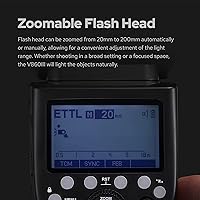
The auto-zoom function covering 20 to 200mm is broad enough to match almost any lens a working photographer is likely to use, and reviewers note that the coverage transitions are smooth without jarring exposure jumps when focal lengths change during a shoot. Telephoto shooters appreciate the tight beam at 200mm for precise subject targeting.
At the widest 20mm setting, a few reviewers noted uneven light distribution toward the edges of the frame, requiring a diffusion panel for consistent coverage on ultra-wide shots. Manual zoom adjustments work reliably but require extra attention when shooting with adapted lenses that do not communicate focal length to the flash.
Portability
85%
At just over a pound, this Nikon-dedicated flash is light enough to carry all day without adding noticeable fatigue to a shoulder-mounted camera rig. Travel photographers specifically appreciate the compact footprint when packing into carry-on bags alongside a full lens kit.
The flash head adds meaningful height when mounted on camera, which can be awkward in tight spaces or when trying to work discreetly at low-key events. It is also slightly taller than some competing models, making certain low-profile holsters a snug fit.
Color Consistency
81%
19%
The 5300K color temperature is described as neutral and predictable by photographers who batch-edit large event galleries, reducing the time spent correcting white balance shot to shot. Mixed-light environments where the flash needs to blend with ambient tungsten sources are handled reasonably well with manual white balance adjustments.
A small number of photographers doing critical color work in fashion or product shooting noted slight color temperature shifts between early and late flashes in a long session as the battery depletes. While minor enough to fix in post-processing, it adds a step for color-critical workflows.
Head Flexibility
83%
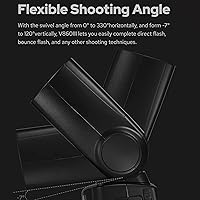
The 330-degree horizontal swivel and near-vertical tilt range give photographers genuine creative flexibility for bouncing light off ceilings, walls, and reflectors without repositioning the camera. Event photographers working in varied venue layouts specifically praise how quickly the head repositions between shots.
The tilt mechanism, while functional, lacks click stops at some intermediate angles that photographers frequently use — notably around 45 and 60 degrees — making it harder to replicate a precise bounce angle across shots without eyeballing it each time.

Suitable for:

The Godox V860III-N Nikon Speedlight Flash is a strong match for portrait and wedding photographers who need a dependable, fast-recycling i-TTL flash that can keep up with unpredictable shooting conditions without the premium pricing of Nikon's own SB-series lineup. If you regularly shoot outdoor portraits or lifestyle sessions where balancing flash against bright ambient light is a constant challenge, the high-speed sync capability is a practical asset rather than a spec-sheet novelty. Event photographers covering long receptions or multi-hour gatherings will appreciate not needing a battery swap mid-shoot, and the broad wireless range makes multi-light off-camera setups manageable in large venues. Photographers already building out a Godox X ecosystem will find the V860III-N slots in naturally as a primary or secondary unit without requiring additional adapters or proprietary triggers. Even photographers newer to off-camera lighting will benefit from the modeling lamp, which gives you a tangible sense of how light is falling before you fire a single shot.

Not suitable for:

The Godox V860III-N Nikon Speedlight Flash is not the right tool for photographers who need a weather-sealed flash for consistently harsh outdoor conditions — shooting in rain or dusty environments carries real risk, and there are more ruggedized options available at comparable price points. Photographers who are deeply embedded in Nikon's menu logic and prefer the SB-series interface may find the Godox control layout requires a genuine adjustment period, which can be frustrating during high-pressure paid work early in the learning curve. If your primary workspace is a controlled studio where you are already running monolights or battery-powered strobes, a speedlight at this price tier is unlikely to replace or meaningfully supplement what you have. Commercial photographers doing critical color work — fashion, product, or food — may find the occasional color temperature shifts across a long session adds an unwanted variable to their editing pipeline. Finally, buyers expecting plug-and-play wireless functionality without investing in a separate Godox trigger should know that the full off-camera experience does require additional hardware.

Specifications

  • Compatible System: Designed exclusively for Nikon cameras using the i-TTL autoflash exposure system, covering both DSLR and mirrorless Nikon bodies.
  • Guide Number: Delivers a maximum output of 76Ws at full power, providing sufficient reach for most portrait, event, and wedding shooting distances.
  • Flash Coverage: Auto-zoom covers focal lengths from 20 to 200mm, automatically adjusting beam width to match the attached lens.
  • Head Rotation: The flash head swivels 0 to 330° horizontally and tilts from -7° to 120° vertically for flexible bounce lighting in any direction.
  • Flash Duration: Flash duration ranges from 1/300 to 1/20000 seconds depending on power level, with shorter durations at reduced output settings.
  • Sync Speed: Supports high-speed sync up to 1/8000s as well as standard first-curtain and second-curtain sync modes.
  • Battery: Powered by a included 7.2V / 2600mAh Li-ion rechargeable battery pack that charges via the supplied cable.
  • Flash Capacity: Rated for approximately 480 full-power flashes on a single full charge under standard operating conditions.
  • Recycle Time: Recycles in approximately 1.5 seconds at full power, with a green LED indicator confirming when the flash is ready to fire.
  • Wireless System: Built-in Godox 2.4G X wireless system supports 32 channels and 99 IDs, with a rated transmission range of approximately 100 meters.
  • Wireless Modes: Can operate as a transmitter, receiver, or standalone unit within the Godox X ecosystem, compatible with X1, X2, and XPro triggers.
  • Controllable Groups: Supports wireless control of flash groups A, B, C, D, and E, with D and E groups requiring an X-series trigger for full control.
  • Modeling Lamp: Integrated LED modeling lamp with 10 adjustable brightness levels for previewing light direction and quality before firing.
  • Color Temperature: Rated at 5300K ±200K, producing a neutral daylight-balanced output suitable for standard white balance presets.
  • Exposure Control: Supports i-TTL II autoflash, manual flash, and flash exposure compensation of ±3 stops in 1/3-stop increments.
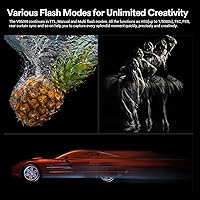
  • Multi Flash: Stroboscopic multi-flash mode fires up to 100 times per sequence at frequencies up to 199Hz for motion-study and creative effects.
  • Power Save: Automatically powers off after approximately 90 seconds of idle use in standalone mode, or after 60 minutes when set as a wireless receiver.
  • Dimensions: Measures 7.68 × 2.95 × 2.32 inches (approximately 195 × 75 × 59mm), consistent with a standard full-size hotshoe speedlight form factor.
  • Weight: Weighs 1.17 pounds (approximately 530g) including the battery, which is within the typical range for Li-ion powered speedlights.
  • Sync Connection: Supports triggering via hotshoe or a 2.5mm sync port, providing a wired backup option when wireless is not practical.

Related Reviews
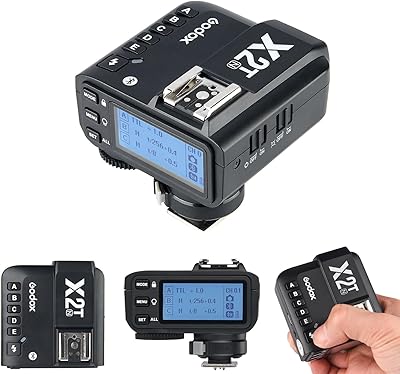
Godox X2T-N Wireless Flash Trigger Transmitter
81%
91%
Wireless Reliability
87%
TTL Accuracy
84%
High-Speed Sync Performance
79%
Build Quality
88%
Ease of Use
More
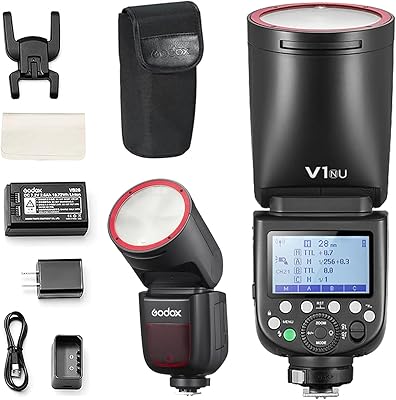
Godox V1-NU Flash for Nikon
88%
91%
Value for Money
89%
Flash Performance
88%
Build Quality
87%
Battery Life
92%
Ease of Use
More
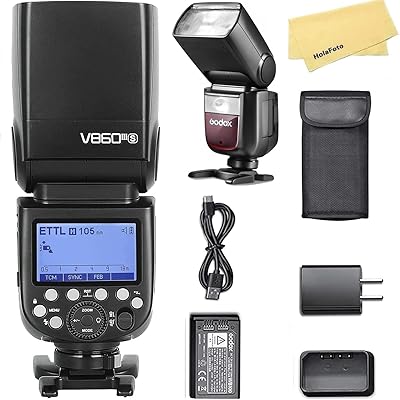
Godox V860II-N TTL Speedlite Flash
82%
93%
Battery Life & Efficiency
76%
TTL Accuracy
91%
High-Speed Sync (HSS)
72%
Wireless Performance
89%
Recycle Time
More
Godox V860III Canon Speedlite Flash
83%
93%
Battery Life & Endurance
91%
Recycle Time
74%
TTL Accuracy & Consistency
78%
Wireless Reliability
82%
Build Quality & Durability
More
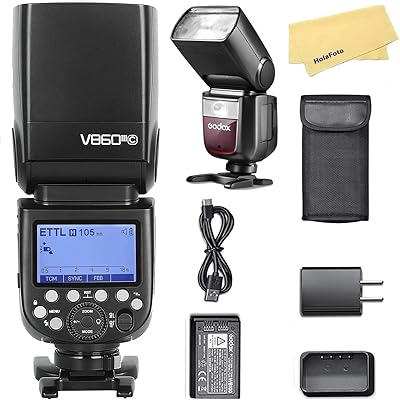
Godox V860III-S Speedlight Flash
81%
93%
Battery Life
84%
TTL Accuracy on Sony Bodies
88%
High-Speed Sync Performance
89%
Recycle Time
81%
Build Quality & Durability
More
NEEWER RF1-N Macro Ring Flash for Nikon
86%
87%
Lighting Performance
91%
Ease of Use
83%
Build Quality
90%
Portability
78%
Battery Life
More
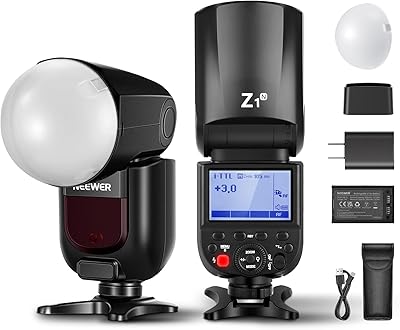
NEEWER Z1-N TTL Speedlite for Nikon
78%
91%
Light Quality
78%
TTL Accuracy
86%
High-Speed Sync Performance
71%
Wireless Reliability
83%
Battery Life
More
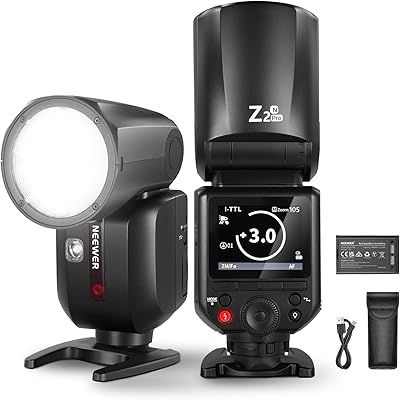
NEEWER Z2PRO-N TTL Round Head Flash Speedlite
82%
91%
TTL Accuracy
88%
Light Quality
86%
Battery Life & Charging
79%
Wireless Reliability
84%
Build Quality
More
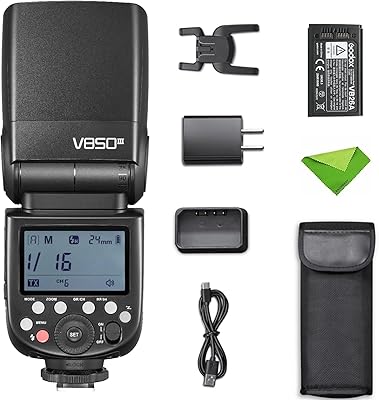
Godox V850III Flash
Godox V850III Flash
85%
88%
Performance
92%
Battery Life
86%
Ease of Use
84%
Build Quality
89%
Speed and Recycle Time
More
Godox AD200 Pro
Godox AD200 Pro
86%
93%
Output Power & Consistency
91%
Portability & Form Factor
78%
Battery Life & Charging
89%
HSS & Sync Performance
88%
Wireless Ecosystem Integration
More

FAQ

It works with both. The V860III-N communicates over the standard Nikon hotshoe, which is shared across the Z-series mirrorless lineup and older F-mount DSLRs. TTL and HSS both function correctly on Z-mount bodies, though it is always worth checking Godox's compatibility list for your specific camera model if you are using a newer release.

Yes, for full off-camera wireless control you will need a Godox X-series trigger such as the XPro-N or X2T-N mounted on your camera. The flash itself has a built-in 2.4G receiver, so no additional receiver is needed on the flash end — just the trigger on the hotshoe. If you only need wired off-camera use, the 2.5mm sync port works without any extra purchases.

Most photographers covering a full wedding day — ceremony, portraits, and reception — report getting through the entire event on one charge without issue. The rated 480 full-power flashes is a conservative real-world estimate, and if you are mixing in reduced-power fill shots between full-power bursts, the count stretches even further. Carrying a spare battery is still good practice for multi-day jobs or back-to-back bookings.

Yes, it is backward compatible with the X1T-N as well as newer X2T and XPro triggers. The 2.4G X system is consistent across Godox's trigger lineup, so existing X1 users can add this flash without replacing their triggers. For the best experience and access to all group control features, the XPro-N is the recommended pairing.

No — this specific version is calibrated for Nikon's i-TTL system, and using it on a Sony or Canon body will not give you TTL or HSS functionality. Godox produces camera-specific variants for Sony, Canon, Fuji, and others, each with a different model suffix. If you shoot multiple brands, you would need the corresponding variant for each system.

Under typical event shooting conditions — a mix of TTL, reduced power fills, and occasional full blasts — heat buildup is minimal. Where it becomes noticeable is during sustained rapid-fire sequences at full power, such as back-to-back group shots. In those situations, some photographers report slightly extended recycle times as the unit warms up, but it does not overheat or shut down under normal professional use.

Yes, when paired with an XPro-N or X2T-N trigger on your hotshoe, you can adjust power output, switch between TTL and manual modes, and control wireless groups directly from the trigger interface without walking to the flash. This is genuinely useful when the flash is on a stand in a hard-to-reach spot or when you need to make quick adjustments between shots.

They are broadly comparable in terms of physical robustness, though neither unit is weather-sealed. The Godox feels slightly more plasticky in hand compared to the SB-700, but the functional components — hotshoe foot, zoom mechanism, and buttons — hold up well under regular professional use. Long-term durability over multiple years of heavy shooting is where the SB-700 has a slight edge based on its longer track record.

It is genuinely useful for previewing the direction and shape of light before you fire, especially when positioning the flash on a stand for a portrait setup. It is bright enough to see shadow placement on a subject at close to mid range, but it is not powerful enough to substitute for a proper constant light source or to preview fall-off on a large background at distance. Think of it as a targeting aid, not a video light.

The V860III-N retains your last used settings when powered off, so your channel, group, power level, and mode carry over to the next session. This is a small but genuinely appreciated feature for photographers who keep consistent lighting setups across multiple shoots. The auto power-off after 90 seconds of idle time activates without losing those saved settings, so you are not starting from scratch every time it wakes back up.

Where to Buy