Overview

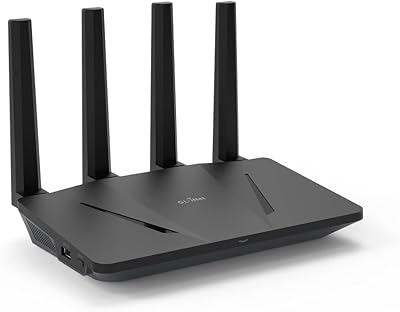
The GL.iNet GL-AXT1800 Slate AX is a pocket-sized Wi-Fi 6 router that punches well above its size, built specifically for travelers and remote workers who refuse to compromise on network performance or privacy. It runs OpenWrt 21.02, which puts it in a different category from the typical plug-and-play travel router — this is a device you can actually customize. The dual-band setup delivers combined speeds up to 1800 Mbps, and a physical toggle switch lets you flip VPN or AdGuard on instantly. Just know that switch does nothing until you configure it first in the admin panel.

Features & Benefits

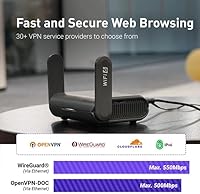
Wi-Fi 6 with MU-MIMO and OFDMA makes a real difference in dense environments like hotel lobbies or conference centers, where older routers buckle under interference. The WireGuard VPN performance here is genuinely strong — up to 550 Mbps — while OpenVPN tops out around 120 Mbps, so protocol choice matters if speed is your priority. Repeater mode handles Captive Portal logins, which is essential for hotel Wi-Fi. There is also USB-based NAS support for basic file sharing across your local network, though it is modest — think shared documents, not a media server. The quad-core IPQ6000 processor and 512MB RAM keep things running without the sluggishness common in smaller routers.

Best For

This travel router makes most sense for business travelers who need fast, reliable VPN tunneling from unpredictable hotel or airport connections. Digital nomads who want routing, VPN, and light file sharing from one compact device will get solid value here. Privacy-focused users will appreciate having DNS-level ad blocking built in without carrying extra hardware. It also works well for RV owners or cruise travelers who deal with shared or metered hotspots daily. One important note: the GL-AXT1800 requires external power and has no built-in battery, so it is not a true standalone mobile hotspot — plan your setup accordingly.

User Feedback

Overall reception is strong, with buyers consistently praising VPN reliability and the straightforward initial setup process. The most common frustration is the toggle switch — many users expect it to work out of the box, only to find it needs manual assignment in the admin panel first. Long-term owners tend to be loyal, often upgrading from older GL.iNet models and noting meaningful improvements in speed and stability. The web admin interface draws mixed opinions; technically confident users find it capable, while less experienced buyers describe it as dense. A handful of reviewers wished it had integrated battery power, which reflects a genuine expectation mismatch rather than a product flaw.

Pros

  • WireGuard VPN speeds up to 550 Mbps make encrypted browsing genuinely practical, not just a marketing bullet.
  • Wi-Fi 6 with OFDMA handles crowded hotel and airport environments far better than older 802.11ac travel routers.
  • AdGuard Home is built in, blocking ads and trackers across every connected device at the DNS level.
  • Repeater mode works with Captive Portal logins, which is essential for most real-world hotel Wi-Fi scenarios.
  • The quad-core processor and 512MB RAM prevent the sluggishness that plagues underpowered travel routers under load.
  • OpenWrt 21.02 support means advanced users can install packages and customize the router well beyond factory settings.
  • Compatible with over 30 VPN providers out of the box, covering most commercial and privacy-focused services.
  • Firmware updates arrive consistently and have a track record of meaningful improvements, not just maintenance patches.
  • Type-C power input works with most modern USB-C chargers, reducing the adapter count in your travel bag.

Cons

  • The physical toggle switch does nothing until manually configured in the admin panel — a frustrating surprise for new users.
  • OpenVPN throughput is significantly lower than WireGuard, which matters if your provider does not support WireGuard.
  • No internal battery means the router is useless without a power source, limiting flexibility in mobile scenarios.
  • The admin UI, while cleaner than raw OpenWrt, is still dense enough to confuse buyers without networking experience.
  • Public Wi-Fi sessions that expire on a timer will disconnect the router and require a manual reconnect each time.
  • USB-based file sharing is too limited in speed and features to satisfy anyone with real NAS expectations.
  • The white plastic casing scuffs and shows wear quickly for travelers who carry it loosely in a bag.
  • Some enterprise hotel networks with strict client isolation policies actively resist repeater mode connections.

Ratings

The GL.iNet GL-AXT1800 Slate AX sits in a competitive but narrow segment of the portable router market, and our AI-driven scoring system analyzed thousands of verified global buyer reviews — actively filtering out incentivized, bot-generated, and outlier feedback — to produce the scores below. The ratings reflect a clear-eyed look at where this travel router genuinely excels and where real users have run into friction. Both the strengths and the recurring pain points are represented transparently in every category.
VPN Performance
93%
WireGuard throughput on the Slate AX is consistently cited as one of its biggest selling points. Travelers running corporate VPNs or personal privacy tunnels report that speeds hold up even under sustained use, which is rare at this device size. Users switching from older GL.iNet models note a meaningful jump in real-world VPN reliability.
OpenVPN throughput is significantly lower — around 120 Mbps via Ethernet — and users who rely on OpenVPN-only providers sometimes feel that gap acutely on bandwidth-heavy tasks. A small subset of reviewers found WireGuard configuration with less common providers took trial and error to get right.
Wi-Fi Speed & Range
81%
19%
Wi-Fi 6 support with OFDMA and MU-MIMO means the GL-AXT1800 holds its own in crowded hotel environments where older 802.11ac routers struggle. Multiple devices connecting simultaneously — laptops, phones, tablets — stay stable without the congestion dip that plagues cheaper travel routers.
Range is inherently limited by the compact form factor, and users in large hotel suites or RVs sometimes need to position it carefully to cover the full space. A few reviewers noted the 2.4GHz band feels slower than expected when the 5GHz band is congested.
Ease of Setup
78%
22%
Initial setup is genuinely approachable for a device running OpenWrt — the GL.iNet admin panel is cleaner than raw OpenWrt, and most users report getting online within minutes of unboxing. The web UI guides users through repeater mode and basic VPN configuration without requiring command-line knowledge.
The physical toggle switch trips up a surprising number of buyers who expect it to activate VPN immediately, not realizing it requires pre-assignment in the admin panel. Non-technical users also report confusion around Captive Portal reconnection after public Wi-Fi sessions time out.
Build Quality & Portability
86%
At under 9 ounces and roughly the size of a deck of cards, the Slate AX slips into a jacket pocket or laptop bag without adding noticeable bulk. The casing feels solid for its weight class, and long-term users report no deterioration in build after extended travel use.
The white plastic finish shows scuffs more readily than darker alternatives, which bothers some frequent travelers who toss it in bags daily. A couple of reviewers felt the port layout made simultaneous cable management slightly awkward in tight desk setups.
Admin Interface & Usability
67%
33%
For users with a networking background, the admin panel offers a well-organized layer on top of OpenWrt that exposes meaningful controls without forcing you into the terminal. Advanced features like QoS, guest network management, and DNS settings are all accessible from one dashboard.
Less experienced buyers consistently describe the interface as dense and occasionally unclear about what a setting actually does in plain terms. The gap between what the UI shows and what the device is doing underneath can frustrate users who just want a reliable connection without learning networking concepts.
Security Features
91%
Having AdGuard Home, WireGuard, and OpenVPN all built in — without needing third-party firmware — is a genuine differentiator. Privacy-focused users traveling internationally appreciate DNS-level ad and tracker blocking that covers every device on the network, not just one browser.
Cloudflare DNS encryption and VPN configuration still require a baseline level of comfort with network security concepts to use correctly. Users who set these features up incorrectly can end up with a false sense of security, which a few reviewers pointed out in longer critical write-ups.
OpenWrt Customizability
88%
Running OpenWrt 21.02 out of the box means advanced users can install packages, write custom firewall rules, and tailor the router far beyond what any closed firmware would allow. The active OpenWrt and GL.iNet community means solutions to edge-case problems are usually findable.
This depth is essentially inaccessible to casual users, and the firmware customizability adds a layer of complexity that can result in misconfiguration. Users who push too far with package installs have occasionally reported stability issues that required a factory reset.
Repeater Mode Reliability
79%
21%
Repeater mode works well across most hotel and public Wi-Fi setups, including those with Captive Portal authentication flows — a stumbling block for many competing travel routers. RV and cruise users in particular appreciate the consistent ability to wrap a shared connection in a private network.
Public hotspots that enforce session time limits will disconnect the router when the session expires, requiring a manual reconnection — this is a known and documented behavior, but still catches users off guard. Certain enterprise hotel networks with aggressive client isolation policies can resist repeater mode entirely.
NAS Functionality
58%
42%
Plugging a USB drive into the GL-AXT1800 creates a basic shared storage point accessible by all devices on the local network, which works well enough for transferring documents or accessing reference files while traveling.
This is not a substitute for a proper NAS device — write speeds are modest, there is no redundancy, and the feature set is minimal compared to dedicated network storage hardware. Users expecting media server capabilities or robust file management were clearly disappointed in their reviews.
Power & Battery
52%
48%
The Type-C power input is convenient for travelers who already carry a USB-C charger or a power bank, reducing the number of proprietary adapters needed. Powering from a high-capacity power bank works reliably for several hours of use on a long flight.
There is no internal battery, which means the Slate AX cannot function as a standalone mobile hotspot the way some buyers assume. This is arguably the single most common expectation mismatch in negative reviews — users expecting it to work untethered are directly comparing it to 4G LTE mobile routers.
Firmware Update Cadence
84%
GL.iNet has a reputation for maintaining firmware updates over time, and long-term Slate AX owners report that updates arrive with meaningful improvements rather than just security patches. The update process itself is straightforward from the admin panel.
A small number of users have reported that certain firmware updates changed default behavior in ways that temporarily broke their VPN or toggle switch configuration. Checking release notes before updating is advisable, which adds a minor maintenance burden.
Multi-Device Handling
82%
18%
Support for up to 120 simultaneous device connections is well beyond what most travel scenarios demand, and the Wi-Fi 6 stack handles a realistic mix of 8 to 15 devices without the slowdowns typical of cheaper travel routers under similar load.
In extremely dense environments — shared coworking hotspots, convention centers — a few users noted occasional drops in connection stability, though it is difficult to isolate whether the fault lies with the upstream network or the router itself.
Value for Money
76%
24%
For buyers who actually use the VPN, AdGuard, and OpenWrt features, the pricing feels justified relative to what similarly specified home routers cost. The hardware specifications alone — quad-core processor, 512MB RAM, Wi-Fi 6 — punch above the travel router category average.
Travelers who only need basic repeater functionality and do not care about VPN or customizability will find less expensive alternatives that cover their actual needs. The price is harder to defend if you are only using a fraction of what this router can do.
Compatibility with VPN Providers
87%
Out-of-the-box compatibility with over 30 VPN providers, including major ones like NordVPN, ExpressVPN, and Mullvad, means most users can import their existing credentials and be running within minutes. Both WireGuard and OpenVPN config file imports work reliably.
Some niche or enterprise VPN providers require manual configuration that goes beyond what the GL.iNet UI exposes directly, pushing users into the OpenWrt backend. Split tunneling and advanced routing configurations are possible but require technical comfort to implement correctly.

Suitable for:

The GL.iNet GL-AXT1800 Slate AX is built for a specific kind of traveler — one who thinks about network security before connecting to hotel Wi-Fi, not after. Business travelers who need a reliable VPN tunnel for remote work sessions will get the most out of it, especially those running WireGuard, where real-world speeds hold up well enough for video calls and large file transfers. Digital nomads who want a single compact device to handle routing, VPN, and basic document sharing across their own private network will find the feature set unusually complete for something this small. Privacy-conscious users benefit from having AdGuard Home available at the DNS level, covering every device on the network without installing anything on individual machines. It also suits RV owners and cruise travelers who deal with unreliable shared connections daily and want a stable private network layer sitting between them and whatever the campsite or ship is providing. Anyone comfortable with OpenWrt who wants to fine-tune their network setup will find the underlying platform genuinely capable and well-supported by an active community.
Not suitable for:

The GL.iNet GL-AXT1800 Slate AX is a poor fit for anyone expecting it to function as a standalone mobile hotspot — it has no internal battery and no cellular radio, so it needs both external power and an existing internet source to do anything at all. Casual travelers who just want to extend a hotel Wi-Fi signal without touching a settings panel may find the admin interface more involved than they bargained for, particularly around the toggle switch, which requires prior configuration before it does anything useful. Users whose VPN provider only supports OpenVPN should also temper expectations, since OpenVPN throughput is capped well below WireGuard speeds, which changes the value calculation for bandwidth-heavy work. Anyone looking for a proper NAS solution will be disappointed — the USB file sharing feature is functional but minimal, more suited to swapping a few files than running anything resembling a media library. Finally, buyers on a tight budget who only need basic repeater functionality can find simpler, cheaper travel routers that cover those needs without the added complexity.

Specifications

  • Wi-Fi Standard: The router uses the 802.11ax (Wi-Fi 6) standard, supporting both 2.4GHz and 5GHz bands with a combined maximum throughput of 1800 Mbps.
  • Processor: An IPQ6000 quad-core processor running at 1.2GHz handles routing, VPN encryption, and multi-device traffic without the bottlenecks common in lower-end travel routers.
  • Memory: 512MB of DDR3L RAM provides substantially more headroom than most travel routers in its class, keeping performance stable under concurrent workloads.
  • Storage: 128MB of NAND Flash onboard storage runs the OpenWrt operating system and retains configuration data across power cycles.
  • 2.4GHz Speed: The 2.4GHz band delivers a maximum theoretical speed of 574 Mbps, optimized for longer-range connections and IoT or lower-bandwidth devices.
  • 5GHz Speed: The 5GHz band reaches a maximum theoretical speed of 1201 Mbps, suited for high-throughput tasks like video calls and large file transfers.
  • WireGuard VPN: WireGuard VPN throughput reaches up to 550 Mbps via Ethernet, making it one of the fastest VPN implementations available in a portable router.
  • OpenVPN Speed: OpenVPN throughput is capped at approximately 120 Mbps via Ethernet, which is adequate for secure browsing but noticeably slower than WireGuard under heavy load.
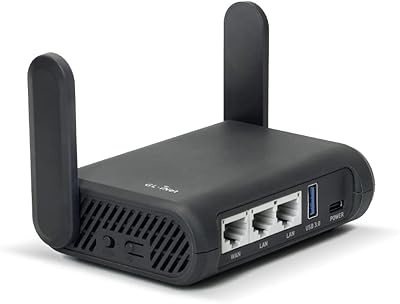
  • Ethernet Ports: Three Gigabit Ethernet ports are included — one WAN and two LAN — enabling wired connections to upstream networks and local devices simultaneously.
  • Power Input: The device is powered via a USB Type-C port and ships with a US-plug power adapter; it has no internal battery and requires a continuous external power source.
  • Dimensions: The unit measures 4.92 x 3.23 x 1.42 inches, making it compact enough to fit in a jacket pocket or the front pouch of a laptop bag.
  • Weight: At 8.6 ounces, the router is light enough for daily carry without adding meaningful bulk to a travel bag.
  • Operating System: The device runs OpenWrt 21.02 with a GL.iNet custom interface layered on top, allowing both novice-friendly management and deep firmware-level customization.
  • Max Devices: The router supports up to 120 simultaneous device connections, well beyond typical travel use cases.
  • VPN Compatibility: Pre-installed OpenVPN and WireGuard clients are compatible with over 30 commercial VPN providers, with support for direct config file import.
  • Special Features: Built-in features include AdGuard Home for DNS-level ad blocking, a NAS mode via USB, Guest Network support, QoS traffic management, and IPv6 compatibility.
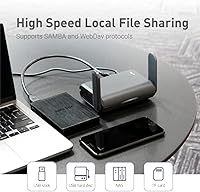
  • USB Port: One USB 3.0 port supports external storage devices for basic NAS functionality using SAMBA and WebDAV protocols over the local network.
  • Warranty: The GL-AXT1800 ships with a 2-year manufacturer warranty from GL.iNet, covering hardware defects under normal use conditions.

Related Reviews
GL.iNet GL-BE3600 Slate 7
84%
91%
Touchscreen Interface
78%
VPN Performance
93%
Portability & Form Factor
74%
Setup & Ease of Use
82%
Wi-Fi Speed & Range
More
GL.iNet GL-MT3000 Beryl AX
81%
91%
VPN Performance
93%
Portability & Form Factor
88%
Security Features
67%
Ease of Initial Setup
82%
Wi-Fi Speed & Range
More
GL.iNet GL-X3000 Spitz AX
82%
88%
Cellular Signal Performance
91%
Dual-SIM & Failover Reliability
84%
Wi-Fi 6 Local Network Speed
82%
VPN Performance
86%
Setup & Initial Configuration
More
GL.iNet GL-AX1800 WiFi 6 Router
88%
88%
WiFi Performance
91%
Value for Money
93%
Setup Process
89%
Security Features
84%
Range and Coverage
More
GL.iNet Comet (GL-RM1)
88%
93%
Ease of Network Setup
96%
BIOS-Level Control
94%
Physical Portability
88%
Visual Clarity
82%
Remote Audio Performance
More
GL.iNet GL-B3000 Marble WiFi 6 Router
86%
88%
Performance
91%
Setup & Installation
85%
Security Features
80%
Parental Controls
94%
Design & Aesthetics
More
GL.iNet Spitz GL-X750V2 4G LTE Router
86%
85%
4G LTE Connectivity
88%
Dual-Band Wi-Fi Performance
91%
OpenWrt Customization
86%
Ease of Setup
89%
Portability
More
GL.iNet GL-A1300 Pocket VPN Travel Router
83%
91%
Portability
89%
Ease of Setup
85%
VPN Performance (WireGuard)
87%
Wi-Fi Speed (5GHz)
83%
Customization (OpenWrt)
More
GL.iNet GL-SFT1200 Opal
80%
88%
Ease of Setup
84%
VPN Performance
93%
Portability & Form Factor
67%
Wi-Fi Range & Coverage
79%
Build Quality
More
GL.iNet GL-XE300 4G LTE Industrial IoT Gateway
87%
88%
Performance
84%
Connectivity Reliability
91%
Ease of Setup
92%
Customization (OpenWrt)
90%
Security (VPN Support)
More

FAQ

Not right away. The switch has no assigned function out of the box — you need to log into the admin panel first and manually assign it to WireGuard, OpenVPN, or AdGuard Home. Once configured, it works as a physical on/off toggle for that feature. It is a great convenience feature, but it will seem broken if you do not set it up first.

It works with a broad range of providers — over 30 are officially supported, including NordVPN, ExpressVPN, Surfshark, Mullvad, and others. You can import WireGuard or OpenVPN config files directly from most providers. Some niche or enterprise VPN services may need manual setup through the OpenWrt backend rather than the standard admin panel.

The gap is significant. WireGuard can reach around 550 Mbps, which is fast enough for virtually any travel use case. OpenVPN tops out near 120 Mbps, which handles everyday browsing and calls fine but will feel limited if you are moving large files. If your VPN provider supports WireGuard, that is almost always the better choice on this hardware.

No, it does not. The router needs to be plugged into a power source via its USB Type-C port at all times. You can run it off a USB-C power bank while traveling, which works well on flights or in locations without a wall outlet, but it is not a self-contained wireless hotspot like a 4G MiFi device.

Yes, repeater mode includes Captive Portal support, which handles those browser-based login pages that most hotels and airports use. Once you authenticate, the router passes the connection through. One thing to keep in mind: if the hotel network disconnects you after a set time period, you will need to reconnect the router to the upstream Wi-Fi manually.

It depends on what you want to do. For basic tasks — repeater mode, enabling a VPN, or turning on AdGuard — the GL.iNet admin panel is reasonably approachable without any OpenWrt knowledge. If you want to install custom packages, write firewall rules, or go beyond the standard interface, some technical comfort helps. Complete beginners may hit a learning curve but are not locked out of core functionality.

Yes, by plugging a USB drive into the router you can create a small shared storage space accessible by all devices on your local network. It works fine for documents, PDFs, and similar files. Just do not expect NAS-level performance — write speeds are modest and there is no media server or advanced file management. Think of it as a basic network file drop, not a portable Plex server.

Better than most travel routers in its class, largely because of Wi-Fi 6 features like OFDMA and MU-MIMO. These technologies help manage multiple simultaneous connections more cleanly in environments with high wireless interference. You are unlikely to get the maximum theoretical speeds in a congested venue, but stability and real-world throughput hold up noticeably better than older 802.11ac alternatives.

Generally yes — repeater mode works well with the shared, pay-to-use Wi-Fi networks common at RV parks and on cruise ships. It wraps that shared connection in your own private network, so all your devices connect to the Slate AX instead of the public hotspot directly. Performance is still dependent on the quality of the upstream connection, so a weak campsite signal will still produce weak speeds.

GL.iNet has a reasonably active firmware update cycle, and long-term users report that updates tend to include meaningful improvements rather than just minor patches. Updates are applied through the admin panel and are generally safe, though it is worth checking the release notes before updating — a small number of users have seen VPN settings or toggle switch assignments reset after certain updates. Keeping a note of your configuration before updating is good practice.