Overview

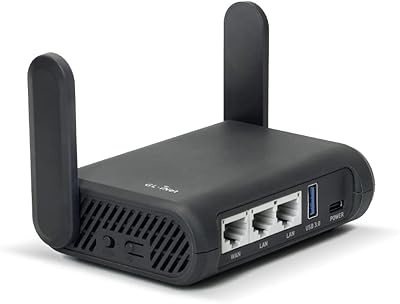
The GL.iNet GL-XE300 Puli 4G LTE IoT Gateway is a compact, purpose-built device aimed at field engineers, mobile IT professionals, and hands-on network builders — not everyday home users looking to replace their living room router. It pairs a nano-SIM 4G LTE connection with a built-in 5000mAh battery, making it genuinely practical for off-grid or temporary deployments. What separates it from consumer-grade hardware is OpenWrt pre-installed with full root access, enabling real customization rather than the locked-down firmware most people are used to. One honest caveat up front: the Puli gateway runs single-band 2.4GHz only, topping out at 300Mbps — a genuine constraint for bandwidth-intensive tasks.
Features & Benefits

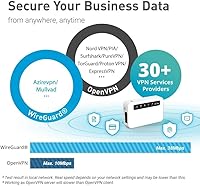
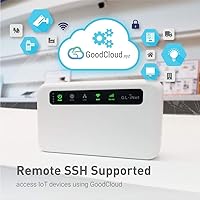
The Puli gateway's most practical capability is automatic 4G LTE failover — if the wired Ethernet connection drops, it switches to cellular without manual intervention, which is critical for unattended deployments. OpenWrt gives technically inclined users full root access to install packages, run scripts, and reshape the device's behavior entirely. VPN configuration is handled through a clean web UI with both OpenVPN and WireGuard built in, covering over 30 providers out of the box. GoodCloud adds remote SSH and real-time monitoring from any browser, a genuine time-saver for managing distributed hardware. Dual 10/100 Ethernet ports, a USB 2.0 port, and reserved SMA antenna mounts leave meaningful room for expansion beyond the stock build.

Best For

This 4G IoT router makes the most sense for IT and field engineering teams who need reliable, remotely managed connectivity at job sites where fixed broadband is not guaranteed. It also fits well into IoT deployment scenarios — think remote kiosks, industrial sensors, or point-of-sale terminals that need cellular failover baked in at the hardware level. Privacy-focused travelers who want to run their own VPN tunnel on the road will find the WireGuard and OpenVPN setup compelling. Developers wanting a hackable embedded Linux box in a pocket-friendly form factor will appreciate the hardware headroom. The GL-XE300 is not, however, the right pick for anyone expecting a straightforward home Wi-Fi upgrade.

User Feedback

Across roughly 123 reviews, the GL-XE300 holds a 4.2 out of 5 — solid for a niche device, and the tone of feedback skews heavily technical. Reviewers consistently highlight LTE failover reliability and how easy it is to spin up a WireGuard tunnel through the web UI. The criticisms are worth noting: several users flag that 2.4GHz-only Wi-Fi becomes a real bottleneck when pushing significant data, and first-time OpenWrt setup can be disorienting without prior Linux router experience. In active LTE use, battery life tends to land around 6–8 hours depending on load — workable for day deployments. SIM compatibility is broadly good globally, though a handful of users needed manual APN configuration to get their carrier working.

Pros

  • Automatic 4G LTE failover keeps deployments running without any manual intervention when wired connections drop.
  • Fully unlocked OpenWrt installation gives technical users complete control over routing behavior, packages, and scripts.
  • WireGuard and OpenVPN come pre-installed with a clean web UI that makes VPN client setup genuinely fast.
  • GoodCloud enables remote SSH access and real-time device monitoring without requiring a static IP or complex firewall rules.
  • The 5000mAh battery sustains roughly 6 to 8 hours of active LTE use — enough for a full field workday.
  • Reserved SMA antenna mount holes allow external antenna upgrades in marginal signal environments without major modifications.
  • WPA3, IPv6, and Cloudflare DNS support provide a modern, security-forward baseline that consumer routers at this size rarely match.
  • At 223.5g and pocketable dimensions, this 4G IoT router travels easily alongside standard field or travel gear.
  • GL.iNet maintains active firmware updates and a responsive community forum that addresses real deployment issues over time.
  • Dual Ethernet ports handle simultaneous WAN input and downstream device connection without requiring an additional switch.

Cons

  • Single-band 2.4GHz Wi-Fi is a genuine bottleneck — there is no 5GHz band available under any configuration.
  • The 100Mbps Ethernet port ceiling is increasingly outdated compared to Gigabit-equipped competitors at similar price points.
  • OpenWrt setup can overwhelm buyers without prior Linux router experience, especially when diagnosing carrier or APN issues.
  • Running multiple simultaneous workloads — VPN tunnel, traffic shaping, additional packages — can push the 650MHz CPU to its limits.
  • GoodCloud depends on an external cloud service, which is a potential concern for security-sensitive or offline-first deployments.
  • Cellular functionality is completely restricted in several countries due to modem limitations, a non-trivial issue for internationally mobile users.
  • Some firmware updates have introduced regressions in cellular reconnection behavior, requiring rollbacks that are not beginner-friendly.
  • Documentation for advanced configurations and edge-case deployments is patchy, often leaving users to rely on community forum searches.
  • The plastic enclosure shows wear over time in field conditions and offers little protection in physically demanding environments.

Ratings

The GL.iNet GL-XE300 Puli 4G LTE IoT Gateway has been evaluated by our AI rating system after analyzing verified buyer reviews from global markets, with spam, bot-generated, and incentivized submissions actively filtered out. Scores reflect the honest consensus of a predominantly technical audience — field engineers, network developers, and IoT deployers — whose expectations are measurably higher than casual consumers. Both the standout strengths and the recurring frustrations are weighted transparently in every category below.
4G LTE Connectivity & Failover
88%
The automatic failover from Ethernet to cellular is the feature technical users cite most often as working exactly as advertised. In unattended deployments — remote kiosks, field sensors, temporary job sites — the switch happens without manual intervention, which is precisely what professionals need when they cannot be on-site to troubleshoot.
A subset of users in less common LTE bands reported inconsistent signal handoff, particularly in regions where the EG25G module's frequency coverage is thinner. Manual APN configuration is sometimes required, which is not a dealbreaker for engineers but adds friction that should not exist out of the box.
OpenWrt Flexibility & Customization
91%
Having a fully unlocked OpenWrt installation on hardware this compact is genuinely unusual at this price tier. Developers and network engineers appreciate being able to install packages, write startup scripts, and reshape routing behavior entirely — treating the device as a programmable Linux node rather than a fixed-function appliance.
The QCA9531 CPU running at 650MHz and 128MB of RAM do impose a ceiling on what you can realistically run simultaneously. Stacking multiple OpenWrt packages, active VPN tunnels, and traffic shaping rules at once can push the hardware close to its limits, something a few power users discovered the hard way.
VPN Performance & Setup
84%
WireGuard and OpenVPN both come pre-installed, and the web UI makes configuring a client connection genuinely straightforward even by router standards. Users running WireGuard tunnels for remote work reported stable throughput with noticeably lower overhead compared to OpenVPN, which matters on a modest CPU.
OpenVPN throughput under load is constrained by the processor — users pushing significant traffic through an encrypted tunnel will hit a ceiling faster than expected. The 30+ provider compatibility claim holds up well, but provider-specific quirks occasionally require digging into config files rather than relying solely on the UI.
Battery Life & Portability
76%
24%
For day-long field deployments, the 5000mAh battery generally delivers around 6 to 8 hours of active LTE use, which covers a standard workday without needing a power source. The compact 223.5g form factor makes it genuinely pocketable, and reviewers doing site surveys or temporary installations found it practical to carry alongside other gear.
Standby figures look better than active-use reality — when the LTE modem is continuously transmitting, battery drain accelerates noticeably. Users running the device around the clock for unattended monitoring either rely on a constant USB power feed or accept that the battery is more of a buffer than a primary power strategy.
Wi-Fi Speed & Coverage
58%
42%
For the target use cases — connecting a handful of IoT devices, a laptop, or a point-of-sale terminal — the 2.4GHz 802.11n connection is functionally adequate. At close range the throughput is stable, and 2.4GHz range penetrates walls and obstacles better than 5GHz, which is occasionally an advantage in industrial environments.
Single-band 2.4GHz capped at 300Mbps is the most consistently cited limitation across reviews, and it deserves plain acknowledgment: this hardware will not satisfy anyone expecting modern Wi-Fi performance. Interference in crowded 2.4GHz environments — offices, apartment buildings, trade show floors — can visibly degrade speeds, and there is no 5GHz band to fall back on.
Remote Management (GoodCloud)
79%
21%
GoodCloud gives IT managers a centralized dashboard to monitor multiple GL-XE300 units, push configuration changes, and open remote SSH sessions without needing a static IP or complex firewall rules on the client side. For teams managing distributed hardware across multiple sites, this substantially reduces the need for on-site visits.
GoodCloud is a cloud-dependent service, which introduces a single point of failure that some security-conscious users are uncomfortable with. There are also reports that the dashboard's interface, while functional, feels less polished than the local web UI, and the feature set has gaps compared to what you can do directly via SSH.
Build Quality & Hardware Design
77%
23%
The plastic enclosure is more purposeful than premium, but it feels solid enough for the industrial IoT context it is designed for. The reserved SMA antenna mount holes are a thoughtful addition — users running deployments in marginal signal areas can attach external antennas without major modifications.
The enclosure will not impress anyone used to metal-bodied networking hardware, and a few long-term users noted cosmetic wear on the casing after months of field use. The form factor prioritizes function over durability, so it is not ideally suited for genuinely harsh physical environments without additional protection.
Security Features
86%
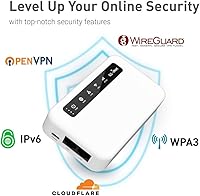
WPA3 support, IPv6 readiness, and Cloudflare DNS integration together represent a meaningfully modern security baseline for a device in this class. Privacy-focused users deploying the GL-XE300 as a personal VPN travel router found the combination of encrypted DNS and WireGuard tunneling easy to configure into a coherent security setup.
While the built-in security features are solid for most use cases, the device relies on the user to actually configure and maintain them correctly — OpenWrt's flexibility cuts both ways. Default settings out of the box are reasonably secure, but organizations with strict compliance requirements will still need to harden the configuration manually.
Setup & Initial Configuration
63%
37%
For users already familiar with OpenWrt or GL.iNet's ecosystem, initial setup is quick and the web UI is cleaner than most open-source router interfaces. The included documentation points to detailed online guides, and the GL.iNet community forums are active enough to find answers to most configuration questions.
Non-technical users frequently describe the first setup experience as overwhelming, particularly if they expect the simplicity of a consumer router. Getting cellular working with a less common carrier, configuring VPN clients manually, or troubleshooting a failed APN setting requires a level of comfort with networking that many buyers underestimate upfront.
SIM & Carrier Compatibility
74%
26%
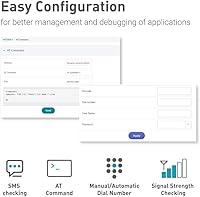
The Quectel EG25G module covers a broad set of LTE bands relevant to most global markets, and the majority of users across North America, Europe, and Asia reported straightforward SIM insertion and automatic carrier detection. The ability to check signal strength and send AT commands directly from the web UI is a useful diagnostic feature for field work.
Band coverage is not universal, and users in specific regions — particularly parts of Southeast Asia and Africa — reported needing to manually select bands or found their carrier partially unsupported. The noted regional restrictions (Russia, Belarus, Iran, and others) due to modem limitations are a real consideration for internationally mobile buyers.
Ethernet Port Performance
71%
29%
Two independent 10/100 Ethernet ports provide meaningful physical flexibility — one can serve as a WAN input from a fixed broadband source while the other outputs to a downstream device or switch. For IoT gateway use cases where wired reliability is prioritized, having both ports available without a separate switch is convenient.
The 100Mbps ceiling on both ports is a bottleneck for anyone connecting a high-bandwidth wired source. In 2024, Fast Ethernet feels like an area where the hardware has aged — competing devices at comparable price points increasingly offer Gigabit ports, making this a noticeable spec concession.
Value for Money
82%
18%
Stacked against the feature set — OpenWrt, built-in battery, dual VPN protocols, cellular failover, and remote management — the GL-XE300 represents reasonable value for the professional or technical buyer it is designed for. There are few alternatives that combine this level of programmability with integrated LTE and battery in a form factor this compact.
For a casual buyer or someone who just needs portable Wi-Fi, the price is hard to justify against simpler mobile hotspot alternatives. The value proposition is tightly conditional on actually using the advanced features; if you only need basic LTE sharing, significantly cheaper options exist.
Software Stability & Firmware Updates
78%
22%
GL.iNet maintains an active firmware update track, and several reviewers noted that issues present at launch were resolved through subsequent OTA updates. The underlying OpenWrt base means the device benefits from a broad upstream community, not just the vendor's own development roadmap.
A handful of users reported stability regressions after specific firmware updates, particularly around cellular reconnection behavior. Rolling back firmware is possible but requires comfort with the GL.iNet recovery process, which is not especially user-friendly for those encountering it for the first time.
Documentation & Support
67%
33%
GL.iNet's online documentation is reasonably thorough for a company of its size, covering first-time setup, VPN configuration, and GoodCloud onboarding with step-by-step guides. The community forum is active, and technical questions often get answered by both GL.iNet staff and experienced community members.
The documentation quality is uneven across topics — common setup scenarios are well covered, but edge cases like advanced OpenWrt configurations, AT command usage, or multi-device GoodCloud management are sparsely documented. Users with niche deployment requirements often have to piece together answers from forum posts and third-party OpenWrt resources.

Suitable for:

The GL.iNet GL-XE300 Puli 4G LTE IoT Gateway is purpose-built for technically proficient users who need dependable, programmable connectivity in environments where fixed broadband is unreliable or unavailable. Field engineers deploying remote sensors, IT professionals managing distributed hardware across multiple sites, and network developers who want a fully hackable OpenWrt platform in a portable enclosure will find this device genuinely well-suited to their work. It also makes a strong case for privacy-conscious travelers who want to run their own WireGuard or OpenVPN tunnel on the road rather than trusting hotel or public Wi-Fi. Small businesses running kiosks, pop-up retail, or temporary office setups benefit directly from the automatic 4G LTE failover — the device keeps operations running when a wired connection drops without anyone needing to intervene. If you are comfortable with Linux-based networking and need cellular backup baked into the hardware, the Puli gateway hits a combination of features that is genuinely hard to find at this size.
Not suitable for:

Anyone expecting a straightforward home or office Wi-Fi upgrade should look elsewhere — the GL.iNet GL-XE300 Puli 4G LTE IoT Gateway is not designed for that role, and its single-band 2.4GHz Wi-Fi will frustrate users accustomed to modern dual-band or Wi-Fi 6 performance. The setup process assumes a baseline familiarity with networking concepts; non-technical buyers who want a plug-and-play experience will likely find OpenWrt configuration and manual APN setup more demanding than anticipated. Households or small teams needing fast wireless speeds for video calls, large file transfers, or streaming will hit the 300Mbps ceiling quickly, particularly in environments with 2.4GHz interference. The 100Mbps Ethernet ports also limit throughput for wired connections, which matters if the deployment involves a high-speed broadband source. If you are based in a region where the Quectel EG25G module has restricted or limited band support — or in one of the countries where cellular functionality is blocked entirely — the core use case of this device essentially disappears.
Specifications

  • Brand & Model: Manufactured by GL.iNet under the model designation GL-XE300, marketed under the Puli product name.
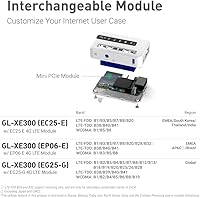
  • 4G Module: Equipped with a Quectel EG25G 4G LTE modem supporting a broad range of global LTE bands in the international version.
  • Wi-Fi Speed: Single-band 2.4GHz 802.11b/g/n wireless with a maximum theoretical throughput of 300Mbps; no 5GHz band is available.
  • CPU: Powered by a Qualcomm Atheros QCA9531 system-on-chip running at 650MHz.
  • Memory: 128MB DDR2 RAM with 16MB NOR Flash and 128MB NAND Flash for storage.
  • Battery: Built-in 5000mAh lithium polymer battery providing approximately 6 to 8 hours of runtime under active LTE use.
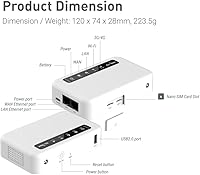
  • SIM Card: Accepts a standard nano-SIM card; manual APN configuration is supported through the web UI for carrier flexibility.
  • Ethernet Ports: Two 10/100Mbps Fast Ethernet ports supporting simultaneous WAN and LAN connections without a separate switch.
  • USB Port: One USB 2.0 port available for peripheral attachment or storage expansion.
  • Antenna: Internal antennas are standard, with reserved SMA mount holes on the enclosure for optional external antenna upgrades.
  • Operating System: Ships with fully unlocked OpenWrt pre-installed, providing root access and support for third-party package installation.
  • VPN Support: OpenVPN and WireGuard are both pre-installed, with compatibility confirmed across more than 30 VPN service providers.
  • Security: Supports WPA3 wireless encryption, IPv6 networking, and Cloudflare encrypted DNS for a modern layered security configuration.
  • Remote Management: GoodCloud platform enables remote SSH access, real-time device statistics, and VPN management from any web browser.
  • Dimensions & Weight: Measures 120 x 74 x 28mm and weighs 223.5g, making it compact enough to carry in a jacket pocket or field bag.
  • Power Input: Powered via a 5V/2A adapter; regional plug variants for US, EU, and UK are included in the box.
  • Package Contents: Box includes the GL-XE300 unit, one Ethernet cable, a multi-region power adapter, and a printed user manual.
  • Warranty: Covered by a 2-year manufacturer warranty from GL.iNet.
  • Regional Restrictions: Cellular functionality is restricted in Russia, Belarus, Cuba, Iran, North Korea, Syria, and the Crimean Peninsula due to modem-level limitations.
  • Release Date: First made available for purchase in January 2024.

Related Reviews
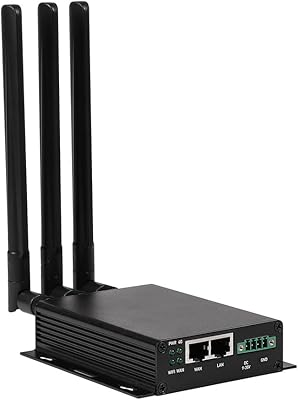
GL.iNet GL-X300B (Collie) 4G LTE VPN Industrial Wireless Gateway
85%
92%
Value for Money
88%
Connectivity Reliability
85%
Ease of Setup
90%
Build Quality
91%
Performance in Harsh Environments
More
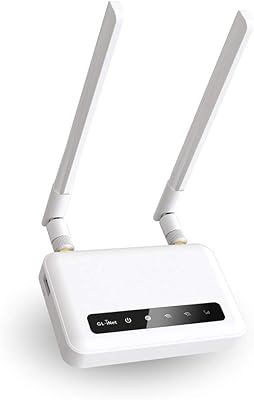
GL.iNet Spitz GL-X750V2 4G LTE Router
74%
83%
LTE Connectivity & Signal Reliability
74%
Wi-Fi Performance
91%
VPN Integration
78%
Setup & Ease of Use
88%
OpenWrt Customization
More
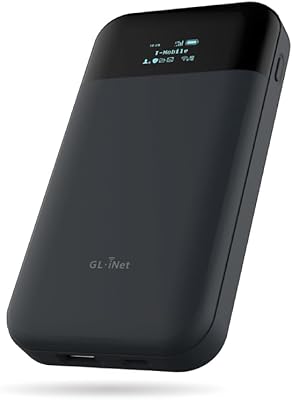
GL.iNet GL-E750V2 4G LTE Mobile Hotspot
74%
88%
VPN Performance
84%
Build Quality
51%
Setup & Ease of Use
63%
Battery Life
72%
LTE Connectivity
More
GL.iNet GL-X3000 Spitz AX
82%
88%
Cellular Signal Performance
91%
Dual-SIM & Failover Reliability
84%
Wi-Fi 6 Local Network Speed
82%
VPN Performance
86%
Setup & Initial Configuration
More
InHand Networks IR302 Industrial 4G LTE Router
80%
91%
Connection Reliability
88%
Build Quality & Durability
93%
Dual-SIM Failover
87%
Carrier Compatibility
86%
Security & VPN Capability
More
GL.iNet GL-AX1800 Flint WiFi 6 Router
79%
93%
VPN Performance
91%
Firmware Flexibility
74%
Wireless Speed & Range
58%
Ease of Setup
89%
Wired Connectivity
More
GL.iNet Comet (GL-RM1)
88%
93%
Ease of Network Setup
96%
BIOS-Level Control
94%
Physical Portability
88%
Visual Clarity
82%
Remote Audio Performance
More
GL.iNet GL-A1300 Slate Plus Travel Router
78%
83%
VPN Performance
88%
Ease of Setup
91%
Portability & Form Factor
76%
Wireless Speed & Range
79%
Build Quality
More
GL.iNet GL-B3000 Marble WiFi 6 Router
86%
88%
Performance
91%
Setup & Installation
85%
Security Features
80%
Parental Controls
94%
Design & Aesthetics
More
GL.iNet GL-BE3600 Slate 7
84%
91%
Touchscreen Interface
78%
VPN Performance
93%
Portability & Form Factor
74%
Setup & Ease of Use
82%
Wi-Fi Speed & Range
More

FAQ

The GL-XE300 is carrier-unlocked out of the box and works with nano-SIM cards from most global LTE providers. The majority of users report automatic carrier detection on insertion, but if your provider uses a non-standard APN, you will need to enter those details manually through the web UI — a straightforward process if you have your carrier's APN settings on hand.

With the LTE modem actively transmitting and a few devices connected over Wi-Fi, most users report somewhere between 6 and 8 hours of use per charge. Standby time is considerably longer, but if you are running it continuously as a live gateway, plan around that 6 to 8 hour window. For unattended or 24/7 deployments, keeping it plugged into USB power and treating the battery as a backup buffer is the more practical approach.

If you just want basic 4G LTE sharing and a simple VPN client, the GL.iNet web UI is actually friendlier than raw OpenWrt and does not require any command-line work. Where things get more complex is if you want to install custom packages, write scripts, or configure advanced routing rules — that is where Linux familiarity starts to matter. The online documentation covers the common scenarios well, and the GL.iNet community forum is active enough to get you unstuck on most issues.

Not comfortably, no. It only has 2.4GHz Wi-Fi at up to 300Mbps, the Ethernet ports are capped at 100Mbps, and it is designed primarily for field and IoT deployments rather than whole-home coverage. If you need something to run video calls, stream content, and cover a multi-room home, you will want a dedicated dual-band or Wi-Fi 6 router instead.

The Puli gateway continuously monitors the primary Ethernet WAN connection, and if it detects a loss of connectivity, it automatically switches to the cellular LTE connection without requiring any manual input. The switchover is designed to be transparent to connected devices, which is exactly what you need for unattended deployments like remote kiosks or sensors where someone cannot be on-site to intervene.

Both WireGuard and OpenVPN come pre-installed, and the device is compatible with more than 30 commercial VPN providers out of the box. You do need your own VPN subscription or server credentials — the device provides the client and server software, not the VPN service itself. WireGuard is the better choice for most users due to its lower CPU overhead, which matters on the modest processor this device runs.

GL.iNet offers a free tier for GoodCloud that covers basic remote monitoring and SSH access, which is sufficient for most individual users and small deployments. Larger-scale management with more devices may push you toward a paid plan, but the free tier is a reasonable starting point to evaluate whether the platform fits your needs.

Yes — the enclosure has reserved SMA antenna mount holes specifically for this purpose, which is a useful design decision for deployments in marginal signal areas. You will need to source a compatible external antenna and install it yourself, but the hardware provision is there. Users in rural or basement deployments have reported meaningful signal improvement after adding an external LTE antenna.

The global version with the Quectel EG25G module is designed to cover a wide range of LTE bands used across North America, Europe, and Asia, so it travels well for most destinations. That said, there are specific countries — including Russia, Iran, and North Korea among others — where the modem's cellular functionality is restricted entirely due to hardware-level limitations. Always verify that your target country is not on that restricted list before purchasing for international deployment.

Quite hackable, within the constraints of the hardware. With full OpenWrt root access, you can install packages from the OpenWrt repository, run shell scripts, set up cron jobs, and configure the device as a programmable Linux node. The 650MHz CPU and 128MB RAM do impose practical limits on what you can run concurrently, but for lightweight automation, custom routing rules, or IoT edge processing tasks, there is meaningful headroom to work with.

Where to Buy