Overview

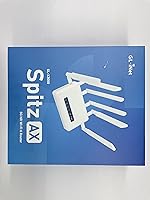
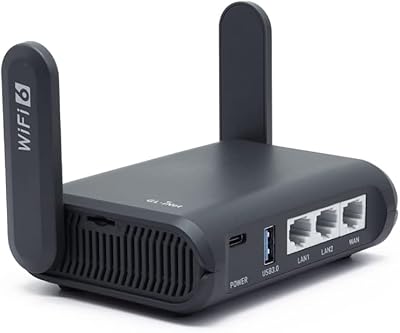
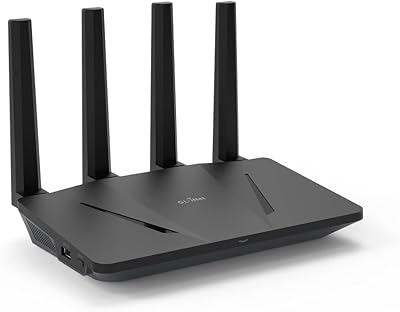
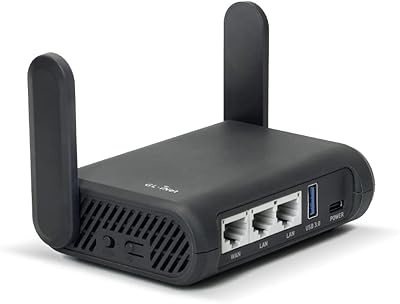
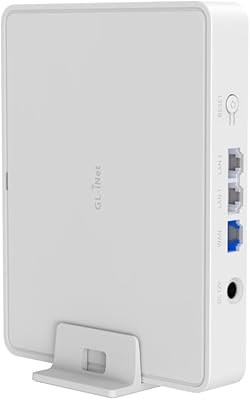
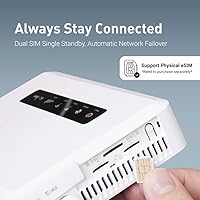
The GL.iNet GL-X3000 Spitz AX is built for people who've given up waiting for a cable company to run fiber to their street — or who simply need reliable internet wherever they park for the night. This 5G gateway bridges the gap between cellular networks and a proper home or mobile setup, and it does so with hardware that doesn't cut corners. The dual-SIM design alone sets it apart from most consumer routers; if one carrier drops out, the other takes over automatically. Wi-Fi 6 support future-proofs the local network side, and the compact, well-built chassis is equally at home wall-mounted in a rural house or bolted into an RV cabinet.

Features & Benefits

On the connectivity side, the Spitz AX covers a lot of ground. The six detachable antennas — four dedicated to cellular, two to Wi-Fi — make a noticeable difference in areas where signal is marginal, giving you more usable bandwidth without an immediate external antenna upgrade. Local Wi-Fi tops out at 574 Mbps on 2.4 GHz and a considerably faster 2402 Mbps on 5 GHz, backed by a dual-core processor and 512 MB of RAM that handles multiple simultaneous connections without slowing down. Multi-WAN lets you stack cellular, Ethernet, and tethering together, and the pre-installed OpenVPN and WireGuard mean you're not piecing together third-party software just to get a secure VPN connection running.

Best For

This cellular router was clearly designed with a specific kind of buyer in mind. Rural households on slow DSL or unreliable fixed wireless will likely notice the biggest difference — pair this gateway with a solid 5G signal and you have a genuine broadband alternative. RV travelers benefit from dual-SIM flexibility, making it easy to favor whichever carrier covers the current region best. Remote workers get reliable, encrypted connectivity without relying on hotel or campground Wi-Fi. That said, if you already have dependable cable internet and rarely leave home, the depth of features here goes well beyond what most casual users will ever actually configure or need.

User Feedback

Across nearly 700 ratings, this 5G gateway holds a 4.3-star average — a strong result for hardware in this tier. Verified buyers frequently mention how quick the initial SIM setup is and how much better the signal holds compared to older LTE routers they replaced. The admin interface divides opinion: OpenWrt veterans appreciate the depth, but newcomers to open-source firmware describe a steeper learning curve than anticipated. A handful of users have reported minor firmware update hiccups, though GL.iNet support draws generally positive mentions in follow-up comments. On value, opinions split predictably — enthusiasts feel the price reflects the capability, while more casual buyers openly question whether they need this much router.

Pros

  • Dual-SIM automatic failover keeps you connected when one carrier drops, without any manual switching required.
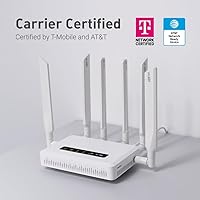
  • Certified by AT&T and T-Mobile, so activation on those networks is straightforward and well-tested.
  • Six detachable antennas make a real difference in fringe coverage areas where signal is marginal.
  • Wi-Fi 6 support handles multiple simultaneous devices without the slowdowns common on older router hardware.
  • WireGuard VPN comes pre-installed and performs well enough for daily remote work without feeling like a bottleneck.
  • Multi-WAN capability lets you stack cellular, Ethernet, and tethering for layers of redundancy most routers can't match.
  • OpenWrt firmware opens up deep customization through thousands of plugins for users who want granular network control.
  • Initial SIM setup is fast — most buyers report being online within minutes of unboxing.
  • Compact enough to mount in an RV cabinet or on a wall bracket without requiring a dedicated equipment shelf.
  • GL.iNet's support team earns consistently positive mentions from buyers who needed help working through configuration issues.

Cons

  • Single-standby dual-SIM means only one SIM is active at a time, which surprises buyers expecting true simultaneous operation.
  • Advanced features like load balancing and VPN cascading require networking knowledge that the admin UI alone doesn't teach.
  • Firmware updates have caused temporary unresponsiveness for a noticeable minority of users, requiring a manual reset to recover.
  • No built-in battery means the device must stay wired to power — it cannot function as a portable hotspot on its own.
  • The OpenWrt layer and GL.iNet interface can feel like two overlapping systems rather than one cohesive experience.
  • Buyers on MVNOs or regional carriers may face APN configuration challenges not covered in the official documentation.
  • Antenna swivel joints can loosen gradually with repeated repositioning or road vibration over extended mobile use.
  • The premium price tier is hard to justify if you only intend to use a fraction of the available feature set.
  • Official documentation has meaningful gaps around advanced configurations, pushing users toward community forums for answers.
  • Real-world speeds are entirely dependent on local carrier coverage — strong hardware cannot compensate for a weak signal environment.

Ratings

The GL.iNet GL-X3000 Spitz AX has been evaluated by our AI system after analyzing hundreds of verified global purchases, with spam, incentivized reviews, and bot activity actively filtered out before scoring. The ratings below reflect what real buyers experienced across diverse use cases — from off-grid rural homes to cross-country RV trips — and they don't shy away from the friction points. Every score, high or low, is grounded in patterns that emerged from authentic user feedback.

Cellular Signal Performance
88%
Buyers in weak-signal rural areas consistently report that this cellular router outperforms the LTE devices it replaced, often pulling in usable 5G where competitors barely managed 4G. The six detachable antennas make a tangible difference, and several users noted they could finally stream reliably from locations that previously required a hotspot held out a window.
A minority of users in particularly remote areas found that even with all antennas optimized, the hardware is still constrained by underlying carrier coverage — no router can conjure a signal that isn't there. A small number also reported inconsistent band-locking behavior that required manual intervention to stabilize.
Dual-SIM & Failover Reliability
91%
The automatic failover between SIM slots is one of the most praised features among buyers who depend on uninterrupted connectivity for remote work or business operations. Most users describe the switchover as fast enough that video calls and VPN sessions survived the transition without dropping entirely.
The dual-SIM setup operates in single-standby mode, meaning only one SIM is active at a time — a nuance that surprises buyers expecting true simultaneous dual-SIM operation. A few users also noted that configuring failover thresholds required digging into admin settings that aren't immediately intuitive for first-time users.
Wi-Fi 6 Local Network Speed
84%
On the local network side, buyers with Wi-Fi 6 compatible devices report noticeably cleaner performance in crowded environments — particularly in campgrounds or shared office spaces where interference from neighboring networks is common. The 5 GHz band holds up well under simultaneous connections from laptops, tablets, and streaming devices.
The real-world benefit of Wi-Fi 6 is naturally capped by the cellular uplink speed, which means users in areas with limited 5G throughput won't see the full local network potential. A handful of buyers also noted that the 2.4 GHz range, while functional, didn't dramatically outperform older routers in the same band.
VPN Performance
82%
18%
Having WireGuard and OpenVPN pre-installed and configurable through the admin panel removes a significant barrier for remote workers who need encrypted tunnels without setting up a separate device. WireGuard in particular draws praise for maintaining usable speeds that don't make the VPN feel like a bottleneck during normal workday tasks.
OpenVPN throughput is capped lower than WireGuard and users running bandwidth-heavy applications through it occasionally noticed the speed ceiling. A few buyers also found that some third-party VPN provider configurations required manual file imports and command-line edits that went beyond what the UI alone could handle.
Setup & Initial Configuration
86%
Getting a SIM card recognized and the basic network running is genuinely quick — multiple verified buyers mention being online within minutes of unboxing. GL.iNet's no-code admin panel handles the essentials cleanly, and the included accessories mean most buyers have everything they need to get started without a separate parts order.
The initial simplicity can be misleading. Buyers who wanted to move beyond basic setup — setting custom failover rules, configuring VLANs, or installing OpenWrt plugins — quickly found themselves in territory that assumes prior networking knowledge. The documentation helps, but it doesn't fully close that gap for non-technical users.
Admin Interface & Usability
71%
29%
For buyers with a networking background, the OpenWrt-based admin panel is genuinely powerful — access to over 5,000 plugins means the device can be shaped to fit very specific deployment needs that a consumer router simply couldn't accommodate. The GL.iNet overlay on top of OpenWrt does soften the experience for common tasks.
Buyers coming from consumer routers like those from TP-Link or ASUS describe the admin interface as functional but not particularly friendly. Several reviews specifically mention confusion around where certain settings live, and the OpenWrt layer beneath the GL.iNet UI can feel like two overlapping systems rather than one cohesive experience.
Build Quality & Design
83%
The physical build earns consistent praise for feeling solid without being heavy — at around 520 grams with antennas attached, it's sturdy enough for permanent mounting but light enough to pack into an RV storage compartment without much thought. The included wall mount kit is a practical touch that buyers appreciate.
The all-white plastic exterior, while clean-looking, shows scuffs and handling marks over time — a minor gripe but one that comes up among buyers who keep the unit in high-traffic spaces. The antenna connections feel secure but a small number of users flagged that the swivel joints loosened after repeated repositioning.
Multi-WAN & Load Balancing
79%
21%
Buyers who use this cellular router in setups that combine a cellular SIM with a wired Ethernet backup genuinely value the multi-WAN capability — it provides a level of redundancy that typically requires enterprise hardware. The ability to set custom bandwidth proportions across connection types is a feature that heavy users actively take advantage of.
Load balancing configuration is not beginner territory. Several buyers noted they enabled the feature without fully understanding the priority settings, which led to unexpected behavior where the router defaulted to a slower connection. Better in-app guidance at this stage would reduce the friction considerably.
Firmware Stability & Updates
73%
27%
GL.iNet maintains an active firmware development cycle, and buyers who stay current with updates generally report a stable experience over time. The company's responsiveness to reported bugs through firmware patches is mentioned positively across multiple long-term user reviews.
The update process itself has tripped up a meaningful number of buyers — some report the router becoming temporarily unresponsive mid-update, requiring a manual reset to recover. These incidents appear to be edge cases rather than a systemic issue, but they're consistent enough across reviews to warrant a note of caution.
Carrier Compatibility
87%
AT&T and T-Mobile IoT device certification gives buyers on those networks real confidence that the hardware has been tested and validated — not just assumed to work. Multiple buyers confirm smooth activation on both carriers without the SIM rejection issues that plague some third-party cellular routers.
Buyers on smaller MVNOs or regional carriers report more mixed results, with some experiencing APN configuration challenges that required manual input and community forum research to resolve. The certification story is strong for the two major carriers but thins out beyond them.
Value for Money
68%
32%
For buyers who genuinely need 5G cellular routing with dual-SIM failover, VPN support, and Wi-Fi 6 in a single portable device, the pricing reflects a real capability premium over budget alternatives that compromise on one or more of those features. Enthusiasts and power users tend to feel the investment is well-placed.
Casual buyers — those who primarily want better home internet and aren't particularly invested in VPN, multi-WAN, or OpenWrt flexibility — frequently question whether the full feature set justifies the cost difference over cheaper options. If you only need half of what this router offers, that math gets harder to defend.
RV & Mobile Deployment
89%
This is one of the product's clearest strengths in practice. RV buyers praise the combination of detachable antennas, dual-SIM flexibility, and the ability to connect an external dome antenna for extra signal reach in remote parks. The compact dimensions mean it fits neatly into most dashboard or cabinet setups without requiring custom mounting solutions.
The device requires a constant power source, which means it needs to be wired into the RV's electrical system for full-time use — there's no battery backup built in. A small number of mobile users also noted that vibration from road travel gradually loosened antenna connections over extended trips.
Remote Work Suitability
85%
For professionals working from locations without reliable broadband, this cellular router provides the kind of connection stability that makes video conferencing and cloud-based work genuinely viable. The VPN integration means accessing corporate networks from a campsite or rural property doesn't require a separate appliance or complicated workarounds.
The overall experience still depends heavily on local 5G or LTE coverage quality, and on days when the signal dips, remote workers feel that dependency acutely. A few buyers also noted that certain enterprise VPN configurations — particularly those tied to proprietary clients — required workarounds that weren't immediately obvious.
Customer Support & Documentation
76%
24%
GL.iNet maintains an active community forum and a responsive support team that buyers frequently credit for helping them work through configuration issues that would have otherwise been dealbreakers. For a relatively niche networking brand, the support infrastructure is more robust than many buyers expected.
The official documentation, while improving, still has gaps — particularly around advanced features like VPN cascading and custom multi-WAN rules. Buyers who aren't comfortable with community forum research sometimes find themselves stuck waiting for support responses rather than finding answers independently.

Suitable for:

The GL.iNet GL-X3000 Spitz AX was built for a specific kind of buyer, and for that buyer, it genuinely delivers. If you live in a rural area where cable or fiber simply isn't available, this 5G gateway can serve as a legitimate primary internet source rather than a stopgap. Full-time RV travelers and van-lifers will find the dual-SIM flexibility particularly valuable — being able to lean on whichever carrier has better coverage in a given region removes a real logistical headache. Remote workers who need a dependable, encrypted connection regardless of physical location will appreciate having WireGuard and OpenVPN built in and ready to configure without hunting for a separate device. Small construction sites, pop-up offices, or temporary job locations that need fast deployment of a functional network are also well served here. And if you're technically comfortable — someone who enjoys tinkering with network configs, installing custom plugins, or building out a layered multi-WAN setup — the OpenWrt foundation gives you a level of control that consumer routers simply don't offer.
Not suitable for:

The GL.iNet GL-X3000 Spitz AX is genuinely the wrong tool for certain buyers, and it's worth being direct about that. If you already have reliable broadband at home and you're just looking for a faster or more attractive router, the full feature set here goes far beyond what you'll ever use — and the price reflects capabilities you'd be paying for but leaving idle. Buyers who are uncomfortable with networking concepts like APN settings, VPN client configuration, or multi-WAN priority rules will likely find the admin interface more frustrating than empowering, despite the no-code overlay GL.iNet has added. This cellular router also has no built-in battery, so it's not a grab-and-go hotspot replacement — it needs to be wired into a power source, which matters if your use case is truly mobile rather than semi-permanent. Users on smaller regional carriers or obscure MVNOs may encounter compatibility friction that requires community forum research to resolve, as the certified carrier support is concentrated around AT&T and T-Mobile. Finally, anyone primarily motivated by simplicity and plug-and-play ease of use will find that this device rewards patience and technical confidence — qualities not every buyer brings to the table.

Specifications

  • Processor: Powered by a MediaTek dual-core MT7981A CPU running at 1.3 GHz, providing sufficient headroom for simultaneous VPN, routing, and multi-WAN tasks.
  • Memory & Storage: Equipped with 512 MB of DDR4 RAM and 8 GB of eMMC internal storage, supporting firmware, plugins, and logging without external media.
  • 5G Standards: Supports both NSA (Non-Standalone) and SA (Standalone) 5G architectures, as well as fallback to 4G LTE and 3G networks.
  • Wi-Fi Standard: Dual-band Wi-Fi 6 (802.11ax) with maximum theoretical speeds of 574 Mbps on 2.4 GHz and 2402 Mbps on 5 GHz.
  • SIM Slots: Features two Nano-SIM card slots operating in single-standby mode, with support for manual carrier switching and automatic failover.
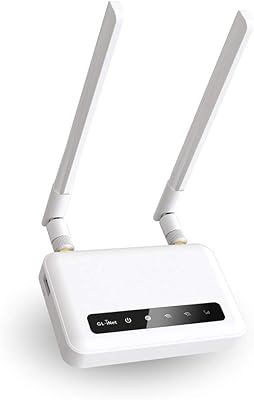
  • Antennas: Includes six detachable antennas in total — four dedicated to cellular signal and two for Wi-Fi coverage — all with standard SMA-type connectors.
  • Ethernet Ports: Provides one 2.5G WAN port for high-speed wired uplink and one Gigabit LAN port for connecting wired client devices.
  • Multi-WAN Support: Supports four simultaneous WAN input types — Ethernet, cellular, Wi-Fi repeater, and USB tethering — with configurable load balancing and failover priority.
  • VPN Support: Comes with OpenVPN (up to 150 Mbps) and WireGuard (up to 300 Mbps) pre-installed, supporting over 30 compatible VPN service providers.
  • Firmware: Runs GL.iNet's proprietary interface built on OpenWrt v21.02, giving access to more than 5,000 community plugins for advanced network customization.
  • Carrier Certification: Officially certified as an IoT device by both AT&T and T-Mobile, ensuring validated compatibility and smoother activation on those networks.
  • IPv6 Support: Full IPv6 protocol support is included, making the router compatible with modern network infrastructure and future-ready ISP configurations.
  • Dimensions: The unit measures 155 x 95 x 36 mm and weighs 520 g without packaging, making it compact enough for RV cabinet installation or desktop placement.
  • Power Supply: Powered via an included AC adapter available in US, EU, UK, and AU plug formats; no internal battery is present.
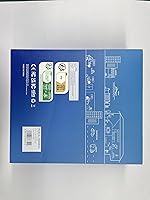
  • In-Box Contents: Package includes the router, six antennas, an Ethernet cable, a wall mount kit, a multi-region power adapter set, and a printed user manual.
  • Warranty: GL.iNet includes a 2-year manufacturer warranty with the GL-X3000, covering hardware defects under normal operating conditions.
  • MU-MIMO: Supports MU-MIMO technology on the Wi-Fi 6 radio, allowing multiple client devices to communicate with the router simultaneously rather than sequentially.
  • External Antenna Port: Includes a dedicated connector port for attaching an optional external wired dome antenna, useful for improving signal in very remote or obstructed locations.

Related Reviews

GL.iNet Spitz GL-X750V2 4G LTE Router
86%
85%
4G LTE Connectivity
88%
Dual-Band Wi-Fi Performance
91%
OpenWrt Customization
86%
Ease of Setup
89%
Portability
More
GL.iNet GL-MT3000 Beryl AX
81%
91%
VPN Performance
93%
Portability & Form Factor
88%
Security Features
67%
Ease of Initial Setup
82%
Wi-Fi Speed & Range
More
GL.iNet GL-AXT1800 Slate AX
79%
93%
VPN Performance
81%
Wi-Fi Speed & Range
78%
Ease of Setup
86%
Build Quality & Portability
67%
Admin Interface & Usability
More
GL.iNet Comet (GL-RM1)
88%
93%
Ease of Network Setup
96%
BIOS-Level Control
94%
Physical Portability
88%
Visual Clarity
82%
Remote Audio Performance
More
GL.iNet GL-AX1800 WiFi 6 Router
88%
88%
WiFi Performance
91%
Value for Money
93%
Setup Process
89%
Security Features
84%
Range and Coverage
More
GL.iNet GL-B3000 Marble WiFi 6 Router
86%
88%
Performance
91%
Setup & Installation
85%
Security Features
80%
Parental Controls
94%
Design & Aesthetics
More
GL.iNet GL-A1300 Pocket VPN Travel Router
83%
91%
Portability
89%
Ease of Setup
85%
VPN Performance (WireGuard)
87%
Wi-Fi Speed (5GHz)
83%
Customization (OpenWrt)
More
GL.iNet GL-XE300 4G LTE Industrial IoT Gateway
87%
88%
Performance
84%
Connectivity Reliability
91%
Ease of Setup
92%
Customization (OpenWrt)
90%
Security (VPN Support)
More
GL.iNet GL-SFT1200 Opal
80%
88%
Ease of Setup
84%
VPN Performance
93%
Portability & Form Factor
67%
Wi-Fi Range & Coverage
79%
Build Quality
More
GL.iNet GL-BE3600 Slate 7
84%
91%
Touchscreen Interface
78%
VPN Performance
93%
Portability & Form Factor
74%
Setup & Ease of Use
82%
Wi-Fi Speed & Range
More

FAQ

It works with a wide range of carriers globally, but it has been officially certified for AT&T and T-Mobile in the US, which means activation on those two tends to be the smoothest experience. For other carriers — including MVNOs — it typically works fine, but you may need to manually enter the correct APN settings, which usually takes a few minutes of research to sort out.

Not simultaneously — the GL.iNet GL-X3000 Spitz AX uses a single-standby dual-SIM setup, meaning only one SIM is active and connected at any given moment. The second SIM kicks in automatically if the primary connection fails, but it isn't pulling data in parallel. This is worth knowing upfront if you were expecting true dual-active operation.
Getting the basics running — inserting a SIM and connecting devices to Wi-Fi — is genuinely quick and doesn't require networking experience. Where things get more involved is if you want to configure VPN tunnels, set up multi-WAN load balancing, or install OpenWrt plugins. Those features are powerful but do assume some comfort with network settings, so non-technical users should be prepared for a learning curve beyond the initial setup.

It's actually well-suited for full-time RV use. The detachable antennas give you flexibility to optimize signal direction, the dual-SIM setup lets you switch between carriers based on regional coverage, and the multi-WAN options mean you can add a wired connection at RV parks that offer Ethernet hookups. Just keep in mind it needs a stable 12V or AC power source — there's no internal battery, so you'll want it wired into your rig's electrical system.

Yes, and this is actually one of the strongest use cases for the Spitz AX. If you have a usable 5G or LTE signal in your area but no access to cable or fiber, this cellular router can serve as a proper home gateway rather than a temporary workaround. Real-world performance depends heavily on your carrier's signal strength at your location, so it's worth checking coverage maps before committing.

Yes — there's a dedicated port for connecting an external wired dome antenna, which is particularly useful in very remote locations or when the router is mounted inside a structure that blocks some signal. Several buyers in challenging coverage areas have used this port with aftermarket antennas to meaningfully improve their usable bandwidth.

The router comes with both OpenVPN and WireGuard pre-installed and supports over 30 VPN providers out of the box, including popular options like NordVPN, ExpressVPN, Mullvad, and Surfshark. WireGuard is the faster of the two protocols and is the better choice for everyday remote work use. If your company uses a proprietary VPN client rather than a standard protocol, compatibility may require additional configuration steps.

For most users, firmware updates apply cleanly and preserve existing settings. However, a noticeable minority of buyers have reported the router becoming temporarily unresponsive during an update, requiring a manual reset to recover. It's a good habit to back up your configuration before applying any major firmware update, which the admin panel makes straightforward to do.

You can configure the router to distribute bandwidth across multiple active connections — for example, splitting traffic between a cellular SIM and a wired Ethernet uplink — according to custom proportions you define. You can also set failover priorities so that if your primary connection drops, traffic automatically reroutes to the next available option without manual intervention. It's a genuinely useful feature, but configuring the proportions and priorities correctly does require spending some time in the admin panel.

The chassis is sturdy plastic that holds up well to regular handling and light travel use. The antenna connections are secure under normal conditions, though a handful of buyers who use it in vehicles have noted that road vibration over long periods can gradually loosen the swivel joints. Giving the antennas a gentle check and tighten every month or so is a reasonable precaution for mobile deployments.