Overview

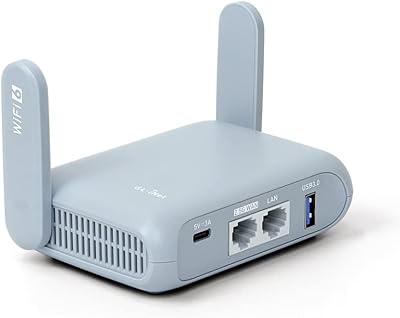
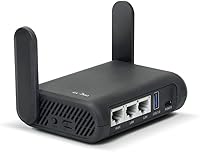
The GL.iNet GL-A1300 Slate Plus Travel Router is a compact dual-band device built for one specific job: keeping your internet connection private when you're relying on hotel or café Wi-Fi. It sits in the middle of GL.iNet's lineup — more capable than entry-level options, but without the Wi-Fi 6 premium of the Beryl AX or Slate AX. What sets it apart from similarly priced competitors is the combination of OpenWrt 21.02 and a physical toggle switch that lets you flip on your VPN or AdGuard Home without touching the admin panel. That kind of hardware-level convenience is genuinely rare in this category.
Features & Benefits

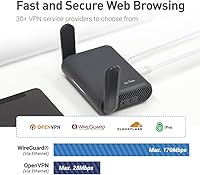
The most important thing to understand about this pocket VPN router is that not all VPN protocols perform equally on it. WireGuard reaches 170Mbps, which handles HD streaming and video calls without issue. OpenVPN, however, tops out around 28Mbps — functional for browsing and light transfers, but not ideal for bandwidth-heavy work. The VPN Kill Switch is a genuine standout: if the VPN drops, all traffic cuts off immediately rather than quietly reverting to the unsecured network. On top of that, VPN policy routing lets you decide which apps or domains use the tunnel and which stay on the local connection directly.

Best For

This travel router makes the most sense for people who want a hardware privacy layer rather than relying on a software app alone. Frequent travelers hitting hotels, airports, and cafés will get the most out of it — especially those already subscribed to a VPN service, since the Slate Plus supports over 30 providers out of the box. Remote workers will appreciate the USB network storage option, which turns the device into a basic file-sharing server on the go. And for buyers comfortable with OpenWrt customization, there is real room to go deeper than the factory defaults allow.

User Feedback

Buyers consistently highlight how fast initial setup is — most have it running in under ten minutes using the web interface, and build quality for the size earns consistent praise. Where things get more mixed is around the toggle switch: it ships with no assigned function by default, and users who skip the documentation are often frustrated when pressing it does nothing. Some reviewers note the unit runs noticeably warm during sustained VPN sessions, though serious overheating complaints remain uncommon. The admin interface is generally well-received, but less technical buyers occasionally find the VPN terminology harder to navigate than expected.

Pros

  • WireGuard VPN performance reaches 170Mbps — fast enough for HD streaming and video calls on hotel Wi-Fi.
  • The VPN Kill Switch cuts all traffic instantly if the tunnel drops, preventing silent data exposure on public networks.
  • Compatible with 30-plus VPN providers out of the box, so most subscribers can get running in minutes.
  • VPN policy routing lets you choose which apps or sites use the tunnel and which stay on the local connection.
  • Compact enough to fit in a jacket pocket or tech pouch without adding meaningful weight to your bag.
  • OpenWrt 21.02 gives power users a fully customizable, open-source platform that goes well beyond factory defaults.
  • Three gigabit ports and a quad-core CPU give this pocket VPN router more headroom than most direct competitors.
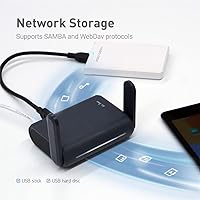
  • USB network storage via SAMBA means you can share files across devices without relying on a cloud service.
  • The physical toggle switch offers genuine one-press control once configured — a convenience most travel routers skip entirely.
  • Setup for standard use cases is fast; most buyers are up and running well within fifteen minutes.

Cons

  • OpenVPN throughput tops out around 28Mbps, which will bottleneck bandwidth-heavy tasks like large file transfers or HD video calls.
  • The toggle switch ships with no assigned function and does nothing until manually configured in the admin panel — this is not explained clearly during setup.
  • Only a US plug power adapter is included, requiring international travelers to source a separate adapter or compatible USB power source.
  • The plastic casing scratches easily without a protective sleeve, which matters for gear that spends time loose in bags.
  • Sustained VPN sessions push the unit noticeably warm, and users in hot or poorly ventilated spaces occasionally report stability issues.
  • WebDAV configuration for network storage requires manual setup steps that casual users are unlikely to complete without help.
  • Non-technical users can find the admin interface terminology confusing once they move past basic VPN activation.
  • Official customer support response times are inconsistent, and the included printed manual covers only the most basic use cases.
  • Proprietary VPN protocols from certain providers are simply not supported — there is no workaround short of switching providers.
  • Buyers wanting Wi-Fi 6 speeds will need to step up to a newer model in the same lineup.

Ratings

The GL.iNet GL-A1300 Slate Plus Travel Router has been evaluated by our AI system after processing thousands of verified global buyer reviews, with spam, incentivized, and bot-generated feedback actively filtered out. Scores reflect real-world usage patterns from frequent travelers, remote workers, and privacy-focused users across multiple regions. Both the genuine strengths and the recurring frustrations are represented transparently in every category below.
VPN Performance
83%
Users who run WireGuard consistently report fast, stable tunnels that hold up well even on congested hotel networks — 170Mbps headroom means streaming and video calls rarely suffer. For a device this small, that throughput surprised a lot of buyers who had been burned by slower travel routers before.
OpenVPN performance is a different story. At around 28Mbps, it works for basic browsing and email, but users trying to transfer large files or join bandwidth-heavy video conferences on OpenVPN-only providers noticed the ceiling quickly. It is a real limitation if your VPN service does not support WireGuard.
Ease of Setup
88%
Most buyers have the Slate Plus connected and routing traffic through their VPN within ten minutes of unboxing. GL.iNet's web interface walks you through the essentials clearly, and the visual layout is considerably friendlier than typical router admin panels — even less technical users get there eventually.
The toggle switch catches a surprising number of users off guard: it ships with no assigned function and does nothing until you configure it manually in the admin panel. It is a minor issue once you know, but the out-of-box experience leaves some buyers wondering if their unit is defective.
Portability & Form Factor
91%
At roughly the size of a deck of cards and weighing under 450g, this pocket VPN router genuinely fits into a jacket pocket or toiletry bag without issue. Buyers travelling with carry-on-only luggage specifically mention how easy it is to tuck into a tech pouch alongside cables and a power bank.
The included power adapter uses a US plug only, which means international travelers need a separate adapter or a USB-C power source — a minor but consistent complaint from European and Asian buyers. The physical build feels solid, though the plastic casing does show scuffs after extended travel use.
Wireless Speed & Range
76%
24%
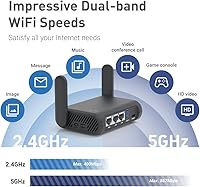
For a hotel room or small café setup, dual-band AC1300 performance is more than adequate. The 5GHz band handles multiple devices simultaneously without noticeable slowdown, and buyers working from Airbnb rentals report stable connections across a small apartment without needing to reposition the router.
This is not a device built for range — it covers a room well, not a floor. Users expecting to share a connection across a large suite or multiple rooms have reported drop-offs. It is a travel router, so that trade-off is expected, but buyers should set realistic expectations before purchase.
Build Quality
79%
21%
The compact chassis feels purposefully constructed rather than cheap, and the port placement — three gigabit ports plus USB — is thoughtfully laid out for a device this size. Multiple long-term owners report using the same unit across dozens of trips without hardware failures.
The plastic casing picks up scratches easily when tossed into a bag without a sleeve, and a few buyers noted the Ethernet ports feel slightly loose after extended use. Nothing that affects function, but it does not feel premium in hand the way the price point might suggest.
Thermal Management
67%
33%
Under normal browsing and light VPN use, the Slate Plus runs warm but not alarmingly so. Most users in temperate environments never encounter any throttling or heat-related instability during typical travel workloads lasting a few hours at a time.
Extended WireGuard sessions — think full workdays with active tunneling — push the unit noticeably hot to the touch. A handful of buyers in warmer climates or poorly ventilated spaces reported occasional disconnects that resolved after cooling down. Leaving it flat on a desk rather than on soft surfaces helps.
Admin Interface & Firmware
82%
18%
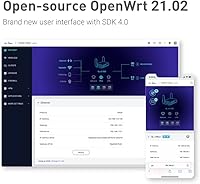
GL.iNet's custom interface on top of OpenWrt is one of the cleaner admin panels in this router category. Common tasks like switching VPN profiles, enabling the kill switch, or setting up split tunneling are a few clicks away rather than buried in configuration files.
Non-technical users occasionally hit a wall when moving beyond the basics — terminology like EAP, SAMBA shares, or VPN policy routing is not explained in the interface itself. The documentation online is decent but scattered, and firmware update notes can be sparse on what actually changed.
VPN Provider Compatibility
86%
Out of the box support for over 30 VPN providers means most subscribers can import their credentials directly without manual configuration. Buyers using popular services like NordVPN, ExpressVPN, Mullvad, or ProtonVPN report the setup process taking just a few minutes.
Less mainstream providers sometimes require manual WireGuard or OpenVPN configuration, which is straightforward for experienced users but frustrating for those expecting a one-click import. A few buyers also noted that provider apps with proprietary protocols — rather than standard WireGuard or OpenVPN — simply do not work with this approach.
Network Storage Functionality
63%
37%
Plugging in a USB drive and accessing it over SAMBA works reliably for basic file sharing between devices on the same network. Remote workers who need a lightweight shared drive during a trip without relying on cloud storage find this feature genuinely useful.
Transfer speeds over the USB connection are modest, and WebDAV setup requires more manual configuration than most casual users are comfortable with. Buyers expecting NAS-level performance or easy mobile app integration tend to be disappointed — this feature works, but it is not polished.
Security Features
89%
The VPN Kill Switch is one of the most consistently praised features among privacy-focused buyers. Knowing that a VPN drop will cut all traffic rather than silently leak your real IP is reassuring when working from untrusted public networks in hotels or airports.
AdGuard Home, while available, requires manual activation and some configuration to be useful — it does not ship pre-configured with sensible defaults. A few security-aware users also noted that advanced firewall customization requires dropping into OpenWrt's terminal, which goes beyond what most buyers will attempt.
Value for Money
78%
22%
Compared to other travel routers in the same price bracket, the Slate Plus offers a noticeably stronger VPN stack, a proper quad-core processor, and open-source firmware — a combination that is hard to match at this price. For users who will actually use the VPN features, the value equation is clear.
Buyers who just want a simple travel router without VPN complexity may feel the price is hard to justify versus simpler options. And those eyeing Wi-Fi 6 performance will find GL.iNet's own Beryl AX offers a meaningful upgrade for a moderate step up in cost.
OpenWrt Customizability
84%
Running OpenWrt 21.02 means this pocket VPN router is essentially a full Linux-based networking platform in a travel-friendly shell. Power users have installed custom packages, set up Pi-hole equivalents, configured Tor routing, and even run lightweight services — all without voiding anything.
This depth is only an asset if you know what to do with it. For the majority of buyers, OpenWrt is simply the engine running quietly in the background. Those who venture into it without networking experience can accidentally misconfigure the device in ways that require a factory reset to fix.
Documentation & Support
61%
39%
GL.iNet maintains an active community forum and a reasonably detailed wiki that covers most common configurations. For standard VPN setup questions, answers are usually findable within a few minutes of searching, and the community responds to less common problems fairly quickly.
Official support response times vary considerably, and some buyers report waiting days for replies to specific firmware or compatibility questions. The user manual included in the box covers only the basics, and the online documentation occasionally references older firmware versions without clear version labeling.
Toggle Switch Usability
58%
42%
Once properly configured through the admin panel, the physical toggle switch is a genuinely convenient one-press way to enable or disable your VPN client or AdGuard Home without opening any interface. Buyers who took the time to set it up correctly appreciate having a tactile control.
The default out-of-box state — no function assigned — is a confusing first impression that triggers a disproportionate number of negative reviews. It requires a visit to the admin panel before it does anything at all, which is not made clear in the included documentation or during initial setup.

Suitable for:

The GL.iNet GL-A1300 Slate Plus Travel Router is purpose-built for frequent travelers who have grown tired of trusting whatever Wi-Fi a hotel or airport hands them. If you already subscribe to a VPN service — especially one that supports WireGuard — this router lets you extend that protection to every device in your room without installing anything on each one individually. Remote workers who move between Airbnbs, co-working spaces, and hotel rooms will find the combination of reliable VPN tunneling and USB network storage particularly practical, since it reduces how many separate tools you need to carry. Privacy-conscious users who want a kill switch and per-app traffic routing at the hardware level, without the complexity of building a custom home router setup, will feel right at home here. And for technically inclined buyers comfortable with OpenWrt, the Slate Plus is essentially a hackable Linux networking device that fits in a jacket pocket — a genuinely rare combination at this price point.

Not suitable for:

The GL.iNet GL-A1300 Slate Plus Travel Router is a poor fit for buyers who simply want a plug-and-play device to extend their hotel Wi-Fi range without any configuration involved. If your VPN provider relies on a proprietary protocol rather than standard WireGuard or OpenVPN, you will hit a hard compatibility wall — the router cannot run provider apps the way a phone or laptop can. OpenVPN users specifically should go in with measured expectations: 28Mbps is workable for email and light browsing, but it will frustrate anyone who needs to stream in HD or transfer large files regularly on the road. Buyers chasing the latest wireless performance should also look elsewhere — this is Wi-Fi 5 hardware, and GL.iNet's own newer models offer Wi-Fi 6 for a moderate price step up. Finally, if networking terminology feels foreign and you have no interest in learning it, the admin panel and documentation will likely feel more intimidating than empowering.
Specifications

  • CPU: Powered by a Qualcomm IPQ4018 quad-core processor running at 717MHz, providing reliable headroom for simultaneous VPN encryption and wireless routing.
  • RAM: Equipped with 256MB of DDR3L memory, which is above average for travel routers in this class and helps maintain stability under sustained VPN workloads.
  • Storage: Internal storage consists of 4MB NOR Flash for the bootloader and 128MB NAND Flash for the OpenWrt operating system and user configurations.
  • 2.4GHz Speed: The 2.4GHz band delivers wireless speeds of up to 400Mbps, suitable for lower-bandwidth devices and better wall penetration in hotel environments.
  • 5GHz Speed: The 5GHz band reaches up to 867Mbps, providing faster throughput for laptops and devices located close to the router.
  • VPN Speeds: WireGuard VPN throughput reaches up to 170Mbps via Ethernet, while OpenVPN is capped at approximately 28Mbps under the same conditions.
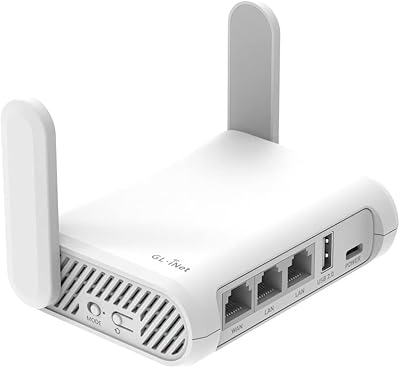
  • Wired Ports: Three gigabit Ethernet ports are included: one WAN port for the upstream connection and two LAN ports for wired device connections.
  • Wi-Fi Standards: Supports IEEE 802.11a, 802.11b, 802.11g, 802.11n, and 802.11ac (Wi-Fi 5) across both frequency bands.
  • Operating System: Runs OpenWrt 21.02, an open-source Linux-based firmware that allows advanced customization, package installation, and scripting beyond factory defaults.
  • Dimensions: The unit measures 118 x 84 x 33mm (L x W x H), making it compact enough to fit in a jacket pocket or small tech pouch.
  • Weight: The router weighs 429g including the unit itself, though total carry weight will increase with the included power adapter and Ethernet cable.
  • USB Storage: A single USB port supports external drives for network-attached storage using SAMBA and WebDAV protocols across connected devices.
  • Toggle Switch: A physical hardware toggle switch can be assigned in the admin panel to enable or disable AdGuard Home, OpenVPN Client, or WireGuard Client with a single press.
  • Security Features: Includes a VPN Kill Switch that blocks all internet traffic if the active VPN tunnel drops, preventing any unencrypted data from leaving the network.
  • VPN Routing: VPN policy routing allows users to define which specific websites, IP addresses, or applications route through the VPN tunnel versus the standard connection.
  • VPN Compatibility: Compatible with more than 30 VPN service providers out of the box, with OpenVPN and WireGuard pre-installed and ready for credential import.
  • Network Protocols: Supports IPv6, EAP (Extensible Authentication Protocol), SAMBA, and WebDAV, covering both modern network requirements and enterprise Wi-Fi authentication scenarios.
  • In the Box: Package includes the router unit, a US plug power adapter, one Ethernet cable, and a printed user manual, with a 2-year limited warranty.

Related Reviews
GL.iNet GL-BE3600 Slate 7
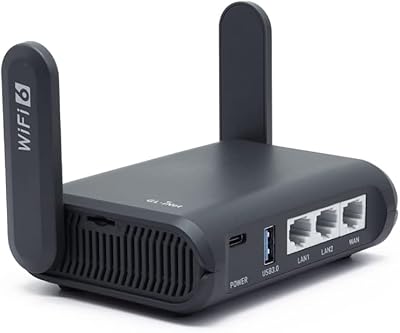
84%
91%
Touchscreen Interface
78%
VPN Performance
93%
Portability & Form Factor
74%
Setup & Ease of Use
82%
Wi-Fi Speed & Range
More
GL.iNet GL-AXT1800 Slate AX
79%
93%
VPN Performance
81%
Wi-Fi Speed & Range
78%
Ease of Setup
86%
Build Quality & Portability
67%
Admin Interface & Usability
More
GL.iNet GL-MT3000 Beryl AX
81%
91%
VPN Performance
93%
Portability & Form Factor
88%
Security Features
67%
Ease of Initial Setup
82%
Wi-Fi Speed & Range
More
GL.iNet GL-SFT1200 Opal
80%
88%
Ease of Setup
84%
VPN Performance
93%
Portability & Form Factor
67%
Wi-Fi Range & Coverage
79%
Build Quality
More
GL.iNet GL-AR300M16-Ext Mini Travel Router
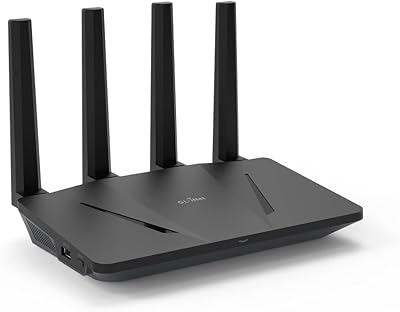
80%
91%
VPN Setup & Integration
94%
Portability & Form Factor
88%
Hotel & Public Network Bridging
58%
Wi-Fi Speed & Throughput
89%
OpenWrt Customizability
More
GL.iNet GL-MT300N-V2 (Mango)
76%
94%
Portability & Form Factor
89%
VPN Integration
83%
Ease of Setup
58%
Wi-Fi Performance
74%
Build Quality
More
GL.iNet GL-AX1800 Flint WiFi 6 Router
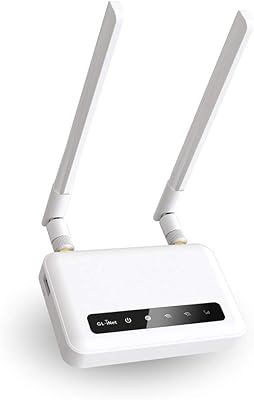
79%
93%
VPN Performance
91%
Firmware Flexibility
74%
Wireless Speed & Range
58%
Ease of Setup
89%
Wired Connectivity
More
GL.iNet Spitz GL-X750V2 4G LTE Router
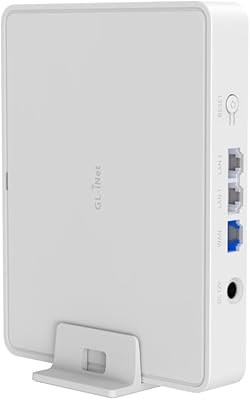
74%
83%
LTE Connectivity & Signal Reliability
74%
Wi-Fi Performance
91%
VPN Integration
78%
Setup & Ease of Use
88%
OpenWrt Customization
More
GL.iNet GL-B3000 Marble WiFi 6 Router
86%
88%
Performance
91%
Setup & Installation
85%
Security Features
80%
Parental Controls
94%
Design & Aesthetics
More
GL.iNet GL-X3000 Spitz AX
82%
88%
Cellular Signal Performance
91%
Dual-SIM & Failover Reliability
84%
Wi-Fi 6 Local Network Speed
82%
VPN Performance
86%
Setup & Initial Configuration
More

FAQ

It works with any VPN provider that supports WireGuard or OpenVPN — those two protocols cover the vast majority of mainstream services. Over 30 providers have dedicated setup guides in GL.iNet's interface, so importing your credentials is usually straightforward. The one exception is providers that rely on proprietary apps or protocols, like some configurations of NordVPN's NordLynx or Hotspot Shield — those won't work here since the router can't run provider apps directly.

It is not broken — this trips up a lot of new users. The toggle switch ships with no function assigned by default. You need to log into the admin panel first and manually assign it to either AdGuard Home, your OpenVPN client, or your WireGuard client before it does anything. Once configured, it works exactly as you'd expect.

It depends heavily on which protocol your VPN uses. WireGuard can reach around 170Mbps, which is more than enough for HD and even 4K streaming in most hotel rooms. OpenVPN, however, maxes out near 28Mbps — that's workable for standard definition or light browsing, but it will struggle with HD video or large file downloads. If streaming matters to you, make sure your VPN provider supports WireGuard before buying.

Yes, this is one of its primary use cases. The Slate Plus includes a built-in repeater mode that lets it connect to the hotel's Wi-Fi as a client. When you first connect, the admin panel will help you pass through to the hotel's captive portal login page so you can authenticate. After that, all your devices connect to the router's own secure network instead of directly to the hotel's.

Under normal use — browsing, light VPN tunneling, a few connected devices — it runs warm but not concerning. If you're running an active WireGuard tunnel for a full workday, especially in a warm room, it can get noticeably hot to the touch. Most users never experience actual instability from heat, but keeping it on a hard, flat surface with decent airflow rather than buried under blankets or in a closed bag is a good habit.

Yes, plugging in a USB drive enables basic network storage that's accessible via SAMBA (which works natively on Windows and macOS) and WebDAV (useful for mobile devices or remote access). It is not high-speed NAS performance, but for sharing documents, photos, or smaller files between devices on the same local network during a trip, it works well. WebDAV does require a bit more manual configuration to set up properly.

The router itself works globally — it supports standard international voltages and the radio frequencies used in most countries. The issue is the power adapter included in the box has a US plug only. International travelers will need either a plug adapter or a USB power source that matches the router's input requirements. It's a minor but genuinely frustrating oversight for a device marketed at frequent travelers.

Honestly, it depends on what you need it to do. For basic use — connecting to hotel Wi-Fi and routing everything through a popular VPN provider — the setup process is pretty approachable and takes maybe ten to fifteen minutes. Where it can get confusing is if you want to use advanced features like split tunneling, custom DNS, or the network storage — those require more time and comfort with networking concepts. If you just need a travel VPN router and are willing to follow a setup guide once, you should be fine.

GL.iNet doesn't publish a hard device limit for this router, but in practical terms users comfortably connect five to eight devices simultaneously without noticeable performance degradation. A laptop, phone, tablet, and a smart TV or streaming stick is a typical hotel room setup that works well. If you're planning to connect many high-bandwidth devices at once, the WireGuard tunnel headroom of 170Mbps gives you meaningful breathing room.

A software VPN app on each device gets the job done, but using a travel router adds a layer of reliability and coverage that apps can't match. Every device that connects — including smart TVs, gaming consoles, or IoT gadgets that can't run VPN apps — gets protected automatically. The kill switch at the router level is also more dependable than relying on each app to handle drops consistently. If you travel with multiple devices or value having a single point of control, the hardware approach has real advantages.

Where to Buy