
Overview

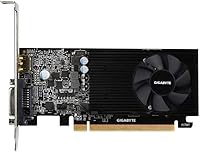
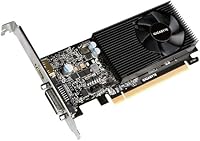
The GIGABYTE GeForce GT 1030 2GB Graphics Card sits firmly in the entry-level GPU market, designed for users who need a reliable step up from integrated graphics rather than a powerhouse for demanding workloads. This low-profile GPU measures just 150mm in length, making it one of the few dedicated cards that actually fits inside slim desktops and compact chassis. One thing worth flagging upfront: this is the DDR4 memory variant, not the faster GDDR5 version, and that distinction matters more than the model number suggests. Set expectations accordingly — it handles display output and light multimedia well, but it was never built to push modern games.

Features & Benefits

At just 150mm long, this entry-level graphics card slots into slim desktops and mini-ITX builds where standard cards simply won't fit — and it draws all its power directly from the PCIe slot, so no external power connector is needed. That alone removes a real headache for systems with older or lower-wattage power supplies. The HDMI and DVI outputs let you run two monitors without any adapters. Clock speeds reach up to 1417 MHz in OC mode, which is adequate for video playback and productivity work. Cooling is minimal and quiet, well-suited to living room or office environments where fan noise matters. Just keep in mind the 64-bit memory bus does create a bandwidth ceiling under any sustained load.

Best For

This low-profile GPU is a practical choice for anyone upgrading a pre-built office machine or slim home desktop that shipped with no dedicated graphics at all. If your system struggles with video playback, stutters across two displays, or simply lacks an HDMI port, this card solves those problems cleanly. HTPC builders will appreciate the 4K-capable HDMI output and the quiet thermal profile. It also works well for anyone running older casual games or doing light photo editing. What it is not — and this is worth stating plainly — is a card for modern gaming or GPU-intensive creative workloads. Match it to the right use case and it delivers; ask too much of it and it will disappoint.

User Feedback

Owners of the GT 1030 DDR4 card frequently highlight how painless the installation process is — no power cables to route, no bracket swapping — and many note the card runs completely silent in lightly ventilated cases. On the critical side, the most common complaint centers on memory bandwidth: buyers who unknowingly purchased this DDR4 variant expecting performance on par with the GDDR5 model tend to feel misled. A smaller group reports that in very confined enclosures, the card gets warm enough to throttle under extended use. Driver stability and compatibility with older Windows versions receive consistent praise, though. Overall, feedback skews positive when expectations are calibrated correctly, and most frustration traces back to a mismatch between what the buyer expected and what this hardware was actually built to do.

Pros

  • Fits inside slim desktops and small form factor cases where full-height cards physically cannot go.
  • No external power connector required, making installation clean and compatible with low-wattage power supplies.
  • Dual HDMI and DVI outputs allow two-monitor setups without adapters or extra hardware.
  • Runs quietly, making it a natural pick for living room HTPCs or noise-sensitive office environments.
  • Driver support is stable and works reliably with older operating systems including Windows 7.
  • Installation is genuinely straightforward — most buyers report a plug-and-play experience with no complications.
  • 4K output over HDMI makes it viable for high-resolution video playback on a budget.
  • At just 150mm long, this entry-level graphics card is among the most compact dedicated GPUs available.

Cons

  • The DDR4 memory variant is noticeably slower than GDDR5 versions of the GT 1030, yet both often sell at similar prices.
  • 2GB of VRAM on a 64-bit bus creates a hard performance ceiling that shows up quickly under any real workload.
  • In very tight, poorly ventilated cases, the card can run warm enough under sustained load to throttle performance.
  • Modern games, even mid-tier titles from the last few years, are largely out of reach at playable settings.
  • The product listing contains spec inconsistencies that can mislead buyers researching before purchase.
  • No upgrade path — once you outgrow this card, you are replacing it entirely rather than building on it.
  • The GT 1030 DDR4 card offers minimal advantage over strong integrated graphics solutions found in newer CPUs.

Ratings

The scores below for the GIGABYTE GeForce GT 1030 2GB Graphics Card were generated by our AI rating engine after processing verified global buyer reviews, actively filtering out incentivized, bot-generated, and spam submissions to surface what real users genuinely experienced. Both the strengths that keep this card ranked highly in its niche and the pain points that frustrate buyers who expected more are reflected transparently in every category score.

Ease of Installation
93%
Buyers across a wide range of technical skill levels consistently describe the installation as one of the smoothest they have experienced with any add-in card. No external power cables to route, no bracket hunting, and plug-and-play recognition in Windows make the process approachable even for first-timers upgrading a slim office PC.
A small number of users in very tight slim desktops reported awkward physical access to the PCIe slot, though this is a chassis issue rather than a card design flaw. The included documentation is minimal, which could trip up complete beginners who have never opened a desktop before.
Form Factor & Fit
91%
At 150mm long and built in a true low-profile configuration, this entry-level graphics card fits inside slim desktops and compact builds where the vast majority of dedicated GPUs simply cannot go. For buyers constrained by case dimensions, this is one of the most practical cards available in its class.
The card is designed exclusively for specific use cases, and buyers who later want to upgrade to a more capable GPU will almost certainly need a larger case as well. There is essentially no room to grow within the low-profile form factor at meaningful performance levels.
Memory Performance
41%
59%
For basic display output, video playback, and driving dual monitors, the 2GB DDR4 memory is adequate and does its job without causing visible issues in those specific workloads. Buyers using this card purely for multimedia consumption in an HTPC setup rarely run into memory-related bottlenecks.
The DDR4 memory variant carries a substantial bandwidth disadvantage compared to GDDR5 versions of the same chip, a difference that shows up clearly in any task beyond light display work. Many buyers felt misled purchasing this variant at a similar price point, only to discover the performance gap was far more impactful than they anticipated.
Gaming Capability
34%
66%
Older titles released before 2014 can run at low-to-medium settings with tolerable frame rates, which covers a specific niche of casual retro gamers or buyers wanting to revisit older libraries on a repurposed PC. For that narrow audience, the card is at least functional.
Any expectation of running modern games, even moderately demanding titles from the last five years, is simply unrealistic with this hardware. The combination of the 64-bit memory bus, DDR4 bandwidth limitations, and the GT 1030 architecture means this card was never designed for gaming and performs accordingly.
Multimedia & Video Playback
84%
Hardware-accelerated 4K video playback is genuinely reliable on this low-profile GPU, and HTPC builders who use it primarily for streaming services or local media report a consistently smooth experience. The HDMI output handles 4K at 60Hz cleanly, which is the core requirement for most living room media setups.
Very high-bitrate 4K HDR content and multi-stream playback scenarios can push the card closer to its limits, occasionally causing minor stutters in demanding media applications. Users running dedicated media center software with heavy plugin loads may find performance less consistent than with a purpose-built media decoder.
Thermal Performance
62%
38%
In open or reasonably ventilated cases, the card runs at acceptable temperatures under typical multimedia workloads, and the cooling solution is genuinely quiet — a real advantage for living room and office environments where fan noise is noticeable.
In very cramped slim desktops with restricted airflow, sustained workloads push temperatures high enough to trigger throttling, which users have observed as stuttering during long video encoding sessions or extended playback. The cooling solution has little thermal headroom and relies heavily on the surrounding case environment.
Noise Level
88%
The low-noise fan design is one of the most consistently praised aspects of this card among office and home theater users. Running near-silently during everyday tasks, it disappears acoustically into the background in a way that many louder, higher-performance cards simply cannot.
Under sustained load the fan does spin up audibly, which is noticeable in very quiet room environments even if it never becomes loud by objective standards. A small number of users reported fan bearing noise developing after extended use in high-temperature conditions.
Driver Stability
86%
NVIDIA driver support for the GT 1030 architecture is mature and well-tested across Windows 7, 8.1, and 10, with buyers on older operating systems particularly appreciating the reliable compatibility. Crashes and driver-related instability are rarely mentioned in user feedback for this card.
Windows 11 driver support, while functional, has generated a handful of reports of minor compatibility quirks on older hardware pairings. NVIDIA has also shifted focus toward newer architectures, meaning long-term driver update cadence for this card will naturally slow over time.
Dual Monitor Support
81%
19%
The combination of HDMI and DVI outputs covers the most common dual-monitor scenario for office and productivity users without requiring any adapters, and buyers consistently report that both displays are recognized and configured without issues straight out of the box.
The absence of a DisplayPort output limits flexibility for users with newer monitors that lack DVI inputs, requiring an adapter that adds cost and potential compatibility uncertainty. Power users wanting three or more displays will find this card insufficient regardless of adapter use.
Value for Money
58%
42%
For buyers who genuinely need a low-profile card for a slim desktop with no existing GPU, the specific utility this card delivers — dual monitor support, 4K playback, stable drivers — is real and justifies the purchase within that narrow scenario. There is limited competition at this exact form factor.
The DDR4 variant at its typical retail price sits in uncomfortable territory where the GDDR5 version of the same card, when available, offers meaningfully better performance for comparable or lower cost. Outside of strict low-profile requirements, the value proposition weakens considerably against newer budget alternatives.
Build Quality
77%
23%
The card feels solid for its size and weight class, and Gigabyte's manufacturing quality at this tier is generally reliable based on long-term user reports. The PCIe bracket is sturdy and the overall construction holds up well in daily-use desktop environments.
The cooling shroud and fan housing use lightweight plastic components that feel less premium compared to mid-range cards, though this is entirely expected at this price tier. A few users have noted cosmetic finish inconsistencies, though none that affect functionality.
Compatibility
89%
The standard PCIe x16 interface and broad driver support mean this GT 1030 DDR4 card works with an impressively wide range of systems, including desktops going back well over a decade. Buyers dropping it into older HP, Dell, and Lenovo slim desktops report near-universal compatibility.
Systems with very old BIOS versions occasionally require a firmware update to correctly initialize the card at boot, which is a minor but real friction point for less technical users. Compatibility with non-standard PCIe implementations in certain brand-specific slim desktops is not guaranteed without verification.
Product Listing Accuracy
39%
61%
The core physical specifications — card length, outputs, and memory capacity — are accurately represented and match what buyers receive in the box. For users who research specifically around form factor requirements, the listing does answer the most critical sizing questions correctly.
The product listing contains notable inconsistencies, including references to a different GPU model as the coprocessor and conflicting resolution specifications, which have confused a meaningful number of buyers during the research phase. This erodes trust and has contributed to mismatched expectations, particularly around performance.

Suitable for:

The GIGABYTE GeForce GT 1030 2GB Graphics Card is a strong fit for a narrow but real group of buyers who know exactly what they need. If you own a slim desktop, a small form factor PC, or a pre-built office machine with no dedicated GPU, this low-profile card slots in where virtually nothing else will. It is equally well-suited to home theater PC builders who want stable 4K video playback without routing extra power cables or replacing their power supply. Office users who need dual-monitor support but whose motherboard can only drive one display will find this entry-level graphics card solves that problem cleanly and without fuss. Older systems running Windows 7 or Windows 10 on modest hardware will also benefit from the stable driver support this card consistently receives.

Not suitable for:

The GIGABYTE GeForce GT 1030 2GB Graphics Card is the wrong choice if gaming performance is anywhere on your priority list. The DDR4 memory variant carries a significant bandwidth disadvantage compared to GDDR5 versions of the same chip, meaning even modest titles from the last several years will struggle to run at acceptable frame rates. Anyone building or upgrading a system with gaming, video editing, 3D rendering, or GPU-accelerated computing in mind should look at a meaningfully faster card — the performance gap is not subtle. This low-profile GPU also has limited headroom in very cramped, poorly ventilated enclosures, where thermal throttling under sustained workloads is a documented concern. If your current integrated graphics already handles your daily tasks without issue, the performance uplift here may not justify the spend.

Specifications

  • GPU: Powered by the NVIDIA GeForce GT 1030 graphics processor built on the Pascal architecture.
  • Memory: Equipped with 2GB of DDR4 video memory running at 2100 MHz.
  • Memory Bus: Uses a 64-bit memory interface, which limits memory bandwidth compared to wider-bus alternatives.
  • Boost Clock: Reaches a boost clock of 1417 MHz in OC mode and 1379 MHz in standard gaming mode.
  • Base Clock: Base clock runs at 1177 MHz in OC mode and 1151 MHz in standard gaming mode.
  • Card Length: Measures 150mm in length, qualifying as a low-profile card suitable for slim and compact enclosures.
  • Form Factor: Low-profile design ships with a bracket compatible with both full-height and slim desktop chassis.
  • Video Outputs: Provides one HDMI port and one DVI port, supporting simultaneous dual-monitor configurations.
  • Max Resolution: Supports a maximum output resolution of 4096x2160 at 60Hz over HDMI.
  • Power Connector: Draws power entirely from the PCIe slot and requires no external power connector.
  • PCIe Interface: Connects via a standard PCIe x16 slot, compatible with most desktop motherboards.
  • Weight: The card weighs 8.2 ounces, making it lightweight and easy to handle during installation.
  • Dimensions: Physical dimensions are approximately 5.91″ x 2.72″ x 0.1″ (L x W x H).
  • Manufacturer: Designed and manufactured by GIGABYTE, model number GV-N1030D4-2GL.
  • OS Support: Compatible with Windows 10, Windows 8.1, and Windows 7, with stable driver availability across all three.
  • API Support: Supports DirectX 12, OpenGL 4.5, and Vulkan, covering the baseline needs of modern display and multimedia applications.
  • Cooling: Uses a low-noise single-fan cooling solution designed for quiet operation in office and home theater environments.
  • Multi-Display: Supports connection of up to two displays simultaneously using the onboard HDMI and DVI outputs.

Related Reviews
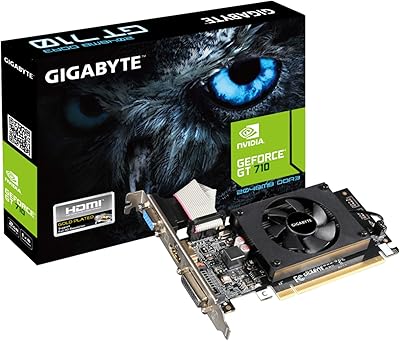
GIGABYTE GeForce GT 710 2GB Graphics Card
78%
88%
Value for Money
93%
Installation Ease
91%
Form Factor & Physical Fit
82%
Display Output Quality
89%
Thermal Performance
More
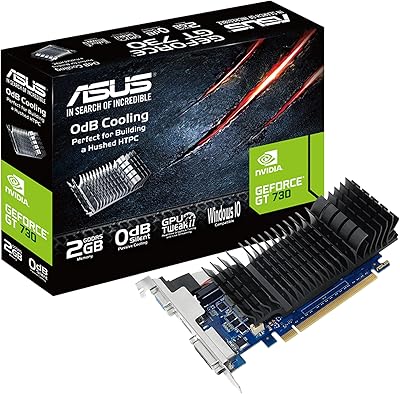
ASUS GeForce GT 730 2GB GDDR5 Graphics Card
85%
88%
Performance for Multimedia
94%
Silent Operation
90%
Value for Money
92%
Ease of Installation
89%
Power Consumption
More
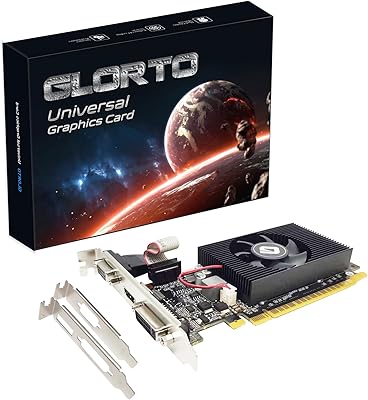
Glorto GeForce GT 610 2GB Graphics Card
76%
88%
Form Factor & Fit
91%
Installation Experience
86%
Display Output Versatility
83%
Display Resolution Support
67%
Thermal Performance
More
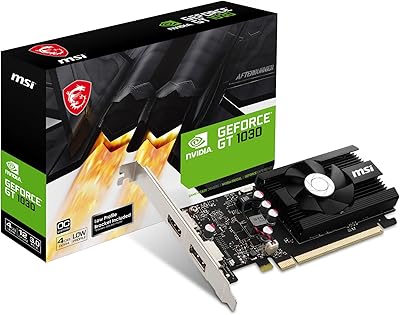
MSI GeForce GT 1030 4GB Graphics Card
79%
94%
Form Factor & Compatibility
91%
Installation & Setup
88%
4K Display Output
51%
Memory Performance
38%
Gaming Capability
More
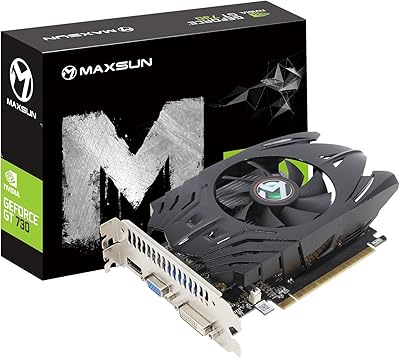
Maxsun GeForce GT 730 4GB Graphics Card
75%
83%
Value for Money
91%
Multi-Monitor Support
88%
Installation & Compatibility
89%
Form Factor & Physical Fit
31%
Gaming Performance
More
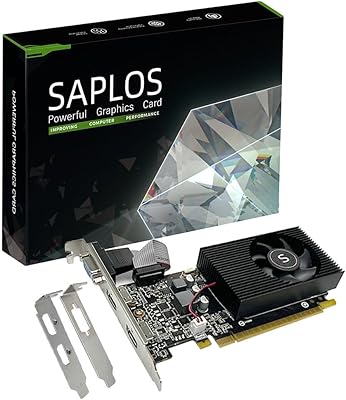
SAPLOS GT 730 2GB DDR3 Graphics Card
83%
91%
Value for Money
88%
Performance for Basic Tasks
94%
Quiet Operation
85%
Installation & Setup
62%
Driver Compatibility
More
QTHREE GeForce GT 730 4GB Graphics Card
74%
91%
Ease of Installation
88%
Multi-Monitor Support
86%
Form Factor Compatibility
89%
Power Efficiency
52%
Memory Bandwidth (DDR3 vs GDDR5)
More
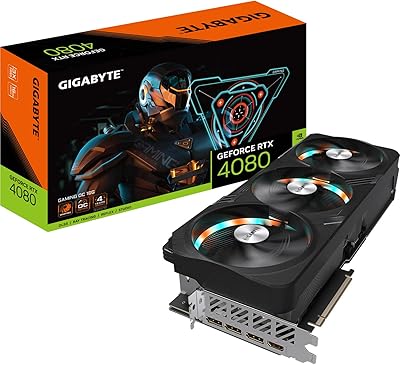
GIGABYTE GeForce RTX 4080 Gaming OC 16GB Graphics Card
87%
94%
Performance for 4K Gaming
91%
Cooling Efficiency
84%
Ease of Installation
78%
Value for Money
88%
Build Quality and Durability
More
Gigabyte GeForce RTX 4080 SUPER WINDFORCE V2 Graphics Card
88%
94%
Overall Performance
93%
Gaming Performance (4K/8K)
90%
Cooling and Thermals
91%
DLSS 3 Technology
88%
Build Quality
More
GIGABYTE GeForce RTX 5080 WINDFORCE OC SFF 16G
78%
93%
Gaming Performance
91%
DLSS 4 & AI Features
89%
SFF Compatibility & Fit
86%
Thermal Performance
84%
Noise Levels
More

FAQ

Honestly, it depends on what you mean by gaming. Older titles from ten or more years ago can run at modest settings, but anything modern will struggle badly. The DDR4 memory version of this chip is slower than the GDDR5 variant, and the 64-bit memory bus is a real bottleneck. If gaming is your goal, this is the wrong card — there are better options available even at a similar budget.

The difference is significant and often overlooked. GDDR5 memory offers substantially higher bandwidth than DDR4 at this bus width, which translates to noticeably better performance in nearly every scenario. Both cards carry the same GT 1030 name and look similar on spec sheets, so always check the memory type before buying. This DDR4 variant is better suited to display output and video playback rather than any graphics-intensive work.

In most cases, yes — that is exactly the use case this card was designed for. At 150mm long and built in a low-profile form factor, it fits in the majority of slim and small form factor desktops from major manufacturers. That said, always confirm your case has a low-profile PCIe slot available and enough internal clearance. The card ships with a low-profile bracket already attached.

No, and that is one of the more practical advantages of this low-profile GPU. It draws all the power it needs directly from the PCIe slot, so no additional power cables or power supply upgrades are required. Most standard 300W or higher power supplies found in office PCs will handle it without issue.

Yes. The card has both an HDMI and a DVI output, which lets you drive two displays at the same time. There are no adapters needed for that basic dual-monitor setup, which is a genuine convenience for office or productivity use.

NVIDIA does provide driver support for the GT 1030 on Windows 11, so compatibility is generally fine. That said, if you are running very old hardware alongside this card, the system itself may not meet Windows 11 requirements — the card alone is not the limiting factor there.

It runs quietly. Under typical workloads like video playback, web browsing, or desktop use, the fan is barely noticeable. Even under moderate sustained load, most users describe it as quiet enough for a bedroom or living room setup. Only in very cramped, poorly ventilated cases does heat become a concern.

Yes, this is one of the tasks it handles well. Hardware-accelerated 4K video playback is within comfortable reach for this entry-level graphics card, and the HDMI output supports 4K resolution at 60Hz. For HTPC use focused on streaming, it performs reliably without much fuss.

It uses a standard PCIe x16 slot, which has been the dominant graphics card interface for well over a decade. Compatibility with older motherboards is generally very good, even going back to systems built around 2008 or later. As long as your board has a PCIe x16 slot, this card should work.

The low-profile bracket comes included in the box. GIGABYTE ships this model ready for slim desktop installation, so you should not need to hunt down a separate bracket. It is still worth double-checking your specific case dimensions before purchase, but for most standard slim desktops, the included hardware is all you need.

Where to Buy