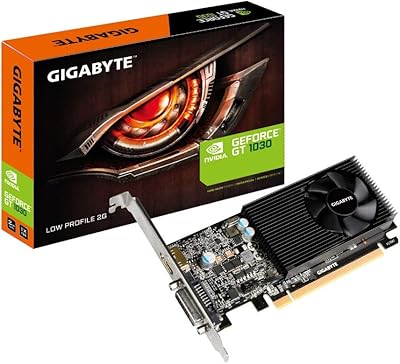
Maxsun GeForce GT 730 4GB Graphics Card
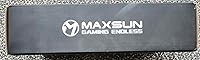
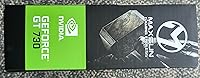
Overview
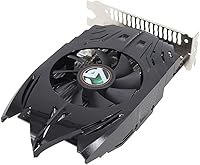
The Maxsun GeForce GT 730 4GB Graphics Card is a no-frills, budget-tier GPU built for users who simply need reliable display output without spending serious money. Maxsun positions itself as a value-focused manufacturer, and this card fits that philosophy well. Built on NVIDIA's aging Fermi architecture, the GT 730 is not a modern gaming card — not even close. But that is not the point. The ITX form factor makes it genuinely useful for compact PC builds where full-size cards will not physically fit. Think of it as a practical tool for specific everyday computing needs rather than a raw performance upgrade.
Features & Benefits
The standout feature of this budget GPU is its triple-display support — HDMI, DVI-I, and VGA outputs all active simultaneously, which is genuinely uncommon at this price point. The 4GB of DDR3 memory handles multiple monitors at office resolutions without complaint. It can push a 4K signal over HDMI, though capped at 30Hz, making it suitable for digital signage or passive media playback rather than fast-moving content. Best of all, the card draws only 49 watts, meaning no external power connector is needed — just slot it in and you are done. Solid capacitors and a compact PCB round out a well-built, dependable package.
Best For
This entry-level graphics card earns its place in a fairly specific set of situations. If you have an older desktop with no dedicated GPU — or one that has given up — this is a straightforward fix that avoids a full rebuild. Small office environments running multiple monitors for spreadsheets, browsers, and communication tools will find it more than capable. It also works well in home theater PC setups focused on 1080p video playback. Digital signage displays on a tight power budget are another strong fit. If your power supply is older or underpowered, the low wattage draw here is a real, tangible benefit worth considering.
User Feedback
Among buyers, the GT 730 card earns consistently solid marks when used as intended. Installation gets frequent praise — most people report it working straight out of the box on Windows 10 and 11 with minimal driver friction. The multi-monitor capability is the most commonly celebrated feature, particularly among home office users. On the downside, a few buyers note the fan produces a noticeable hum in very quiet rooms. There is also real confusion in the market between the DDR3 and GDDR5 versions of this chip — they are not the same, and the DDR3 variant is the slower of the two. Long-term stability earns positive mentions from users running it continuously for months.
Pros
- Runs three monitors simultaneously via HDMI, DVI-I, and VGA — rare at this price point.
- No external power connector required, making installation genuinely plug-and-play.
- The ITX form factor fits compact and mini-ITX cases where larger cards cannot.
- Works out of the box on Windows 10 and 11 with minimal driver setup required.
- Draws only 49 watts, making it safe for older or underpowered power supplies.
- Solid capacitors and a silver-plated PCB contribute to long-term stability under continuous use.
- Multiple long-term users report consistent, trouble-free operation after months of daily use.
- Supports Linux and FreeBSD in addition to the full Windows lineup from 7 through 11.
- The GT 730 card is a practical fix for desktops with no GPU or a failed graphics chip.
- 4K signal output works well for static digital signage displays that do not need high refresh rates.
Cons
- Modern games from the last several years are effectively unplayable on this entry-level graphics card.
- The DDR3 version is notably slower than the GDDR5 variant of the same chip — easy to confuse when shopping.
- The 4K output is capped at 30Hz, making any dynamic or fast-moving content look choppy.
- The cooling fan is audible enough to be distracting in very quiet office or bedroom environments.
- No HDR support, which is an increasingly standard feature on modern displays and content.
- VGA output limits compatibility with newer monitors that have dropped analog inputs entirely.
- GPU-accelerated creative workloads like video rendering or photo editing are not viable on this hardware.
- The legacy Fermi architecture will not receive future driver feature updates from NVIDIA.
- Buyers needing more than basic 1080p display output will quickly outgrow what this card can offer.
- Fan bearings on budget coolers like this one can develop noise over extended long-term use.
Ratings
The ratings below for the Maxsun GeForce GT 730 4GB Graphics Card were generated by our AI system after analyzing hundreds of verified global buyer reviews, with spam, bot activity, and incentivized feedback actively filtered out. Scores reflect how this budget GPU actually performs in real-world conditions — not how it looks on paper. Both the genuine strengths and the recurring frustrations are represented transparently across every category.
Value for Money
Multi-Monitor Support
Installation & Compatibility
Form Factor & Physical Fit
Gaming Performance
Power Efficiency
Thermal Management
Build Quality & Component Quality
4K Output Capability
Driver Stability
Video Playback Quality
DDR3 Memory Performance
Long-Term Reliability
Suitable for:
The Maxsun GeForce GT 730 4GB Graphics Card is a genuinely smart pick for a specific and underserved group of buyers — people who need a dependable, low-effort GPU without any of the complexity or cost that comes with modern discrete cards. If your desktop has no dedicated graphics at all, or the one it had just died, this budget GPU gets you back up and running quickly without requiring a PSU upgrade or a large investment. Small business owners and office managers will find real value in the triple-display capability, which lets employees run three monitors across a single, affordable card — something that is surprisingly hard to achieve at this price tier. The ITX form factor also makes it one of the very few options for compact or slim desktop cases where a standard-length card simply will not fit physically. Digital signage operators who need a stable, always-on display solution at low wattage will also find this card well-suited to continuous, unattended operation. Home theater PC builders focused on clean 1080p playback rather than gaming will get exactly what they need here.
Not suitable for:
The Maxsun GeForce GT 730 4GB Graphics Card is the wrong tool if gaming — even casual, modern gaming — is anywhere in your plans. The Fermi-era architecture is simply too old and too underpowered to run titles released in the last several years at any playable frame rate, and no amount of lowering settings will change that fundamental reality. Content creators, video editors, and anyone working with GPU-accelerated software will also hit a hard wall quickly, as the DDR3 memory bandwidth and legacy compute architecture are not equipped for those workflows. Users who want smooth 4K video output should also look elsewhere — the 30Hz ceiling at 4K resolution makes motion look choppy and scrolling uncomfortable for anything beyond a static display. If your existing system already has capable integrated graphics from a recent Intel or AMD processor, this card may not add meaningful value and could actually feel like a step sideways. Buyers who need modern HDR support, high-refresh-rate output, or any form of ray tracing should skip this card entirely and budget for something from the current generation.
Specifications
- GPU Chip: The card is built on the NVIDIA GeForce GT 730 processor using the Fermi (GF108) architecture manufactured on a 40nm process.
- VRAM: It carries 4GB of DDR3 video memory, which is sufficient for driving multiple monitors in standard office and productivity workloads.
- Memory Bus: The memory interface is 128-bit wide, providing adequate bandwidth for display output and light media tasks but not for GPU-intensive workloads.
- Core Clock: The GPU core runs at 700 MHz, a modest frequency that reflects the card's positioning as a low-power, entry-level display adapter.
- Memory Clock: Video memory operates at 1333 MHz, consistent with DDR3 specifications and appropriate for the card's intended office and signage use cases.
- TDP: Total board power is rated at 49W, meaning no external PCIe power connector is required — the card draws everything it needs directly from the motherboard slot.
- Display Outputs: The card provides three simultaneous outputs: one HDMI port, one DVI-I port, and one VGA port, all active at the same time.
- Max Resolution: The maximum supported output resolution is 3840x2160 (4K UHD) at 30Hz over HDMI, or 1920x1080 at 60Hz for standard full HD use.
- Form Factor: The PCB follows an ITX design measuring 7.48 x 4.33 inches, making it compatible with compact and mini-ITX desktop enclosures.
- Bus Interface: The card connects via a PCI Express 2.0 x16 slot and is backward compatible with older PCIe slots that may be present in legacy desktop systems.
- API Support: Supported graphics APIs include DirectX 12, DirectX 11, Shader Model 5.0, OpenGL 4.5, and OpenGL 4.6.
- OS Compatibility: The card is officially supported on Windows Vista, 7, 8, 8.1, 10, and 11, as well as Linux and FreeBSD x86 operating systems.
- Cooling: Cooling is handled by an 8cm fan mounted on an eagle-style radiator heatsink designed to balance airflow and noise at low power levels.
- PCB Construction: The board features a silver-plated PCB and all-solid capacitors, which Maxsun states contribute to improved thermal stability and component longevity.
- Weight: The card weighs 12.3 ounces, making it one of the lighter discrete GPUs available and easy to handle during installation in any case orientation.
- CUDA Cores: The GT 730 on this specific GF108 silicon provides 96 CUDA stream processor cores, which is notably lower than some other GT 730 board variants using different chips.
- PhysX & CUDA: The card supports NVIDIA PhysX physics acceleration and NVIDIA CUDA for compute tasks, though its legacy architecture limits practical usefulness in modern CUDA workflows.
- Power Requirement: A minimum 250W system power supply is required, with no dedicated GPU power connector needed — just a free PCIe x16 slot on the motherboard.
Related Reviews
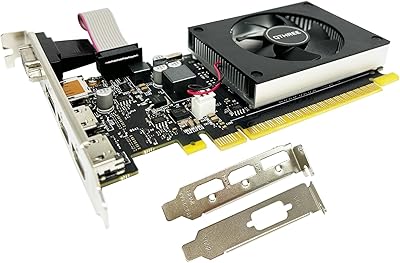
QTHREE GeForce GT 730 4GB Graphics Card
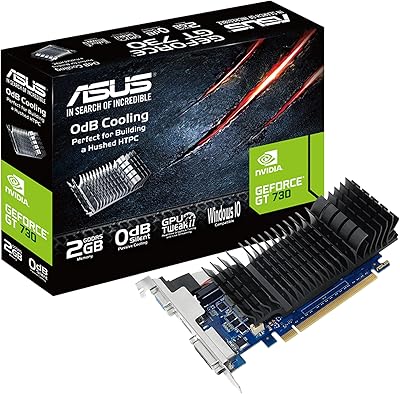
ASUS GeForce GT 730 2GB GDDR5 Graphics Card
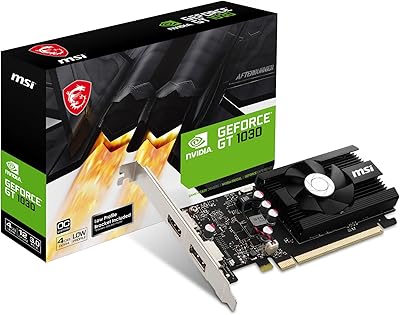
MSI GeForce GT 1030 4GB Graphics Card
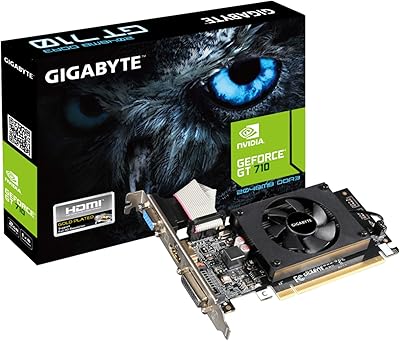
GIGABYTE GeForce GT 710 2GB Graphics Card
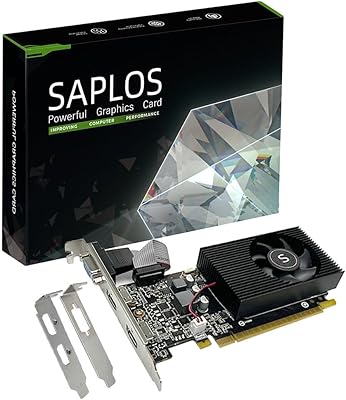
SAPLOS GT 730 2GB DDR3 Low Profile Graphics Card
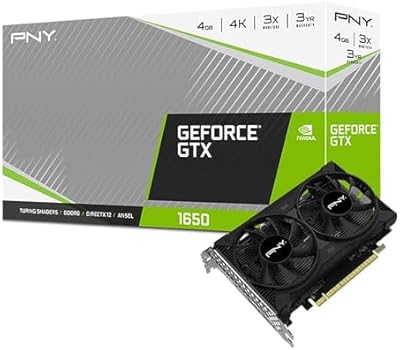
PNY GeForce GTX 1650 4GB GDDR6 Graphics Card
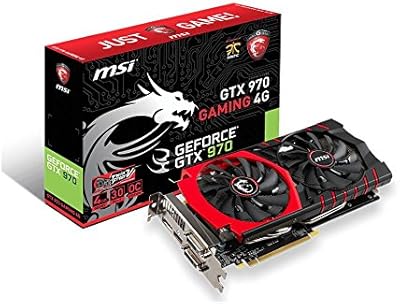
MSI GTX 970 Gaming 4G Graphics Card
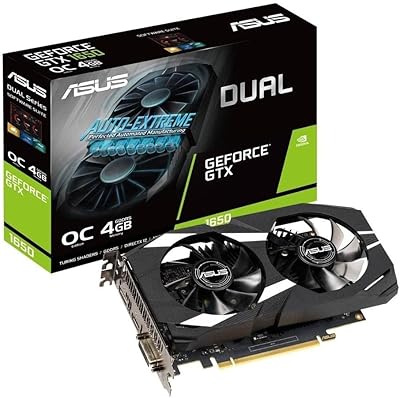
ASUS GeForce GTX 1650 Dual-Fan 4GB Graphics Card
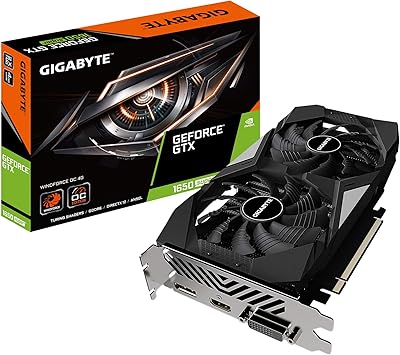
GIGABYTE GeForce GTX 1650 Super Graphics Card