Overview

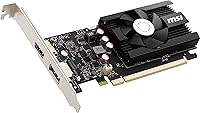
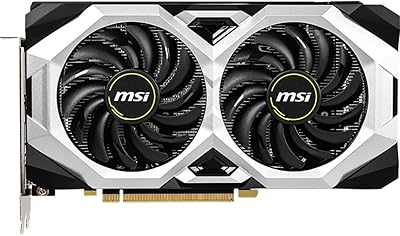
The MSI GeForce GT 1030 4GB Graphics Card is a no-frills, low-profile GPU built for one specific job: giving older or slim desktops a dedicated display output without requiring a full-size slot or an external power connector. One critical distinction to flag upfront — this is the DDR4 memory variant, not the faster GDDR5 version, and that difference genuinely matters if you expect snappy graphics throughput. MSI's manufacturing pedigree does add a layer of confidence, with solid build quality and reliable driver support baked in. But set expectations accordingly: this entry-level graphics card is a display and multimedia upgrade, not a gaming powerhouse.
Features & Benefits

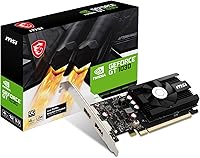
The GT 1030 4GB card runs on a 64-bit memory bus with DDR4 at a boost clock of 1430 MHz — functional for everyday tasks, though the narrower memory bandwidth is the core trade-off versus GDDR5 editions. On the output side, you get both DisplayPort 1.4a and HDMI 2.0b, supporting resolutions up to 3840x2160, which is genuinely useful for connecting a 4K TV or monitor. The low-profile single-fan design slots into machines that would otherwise reject anything larger. Throw in DirectX 12 and HDCP support and you have a card that handles modern OS environments and protected media playback without any fuss.

Best For

This low-profile GPU is a natural fit for anyone working with a slim or SFF desktop — think Dell OptiPlex, HP EliteDesk, or similar compact machines — where a full-height card simply won't fit. It also works well in a home theater PC setup, where quiet 4K playback matters far more than raw processing muscle. Office users looking to drive a second monitor or step up from integrated graphics will find it more than capable. That said, if PC gaming is anywhere in your plans, look elsewhere. Even older, undemanding titles can push this entry-level graphics card to its limits, and the DDR4 bandwidth constraint makes modern gaming effectively off the table.

User Feedback

Across more than 360 ratings, the GT 1030 4GB card holds a strong 4.6 out of 5, and the feedback pattern tells a consistent story. Buyers repeatedly praise how painless installation is — plug-and-play on Windows 10 and 11 with no driver drama. The compact low-profile bracket gets frequent shoutouts from people upgrading slim machines that previously had no dedicated GPU option at all. On the downside, some buyers feel the DDR4 version underperforms relative to expectations, and a few note that used GDDR5 alternatives can deliver better raw performance near the same price. For its intended purpose, though, the overall satisfaction rate speaks clearly.

Pros

  • Fits slim and SFF desktops where full-height cards physically cannot go.
  • No external power connector needed, making it compatible with low-wattage office PCs.
  • Supports 4K output via both HDMI 2.0b and DisplayPort 1.4a out of the box.
  • HDCP support means protected content from streaming services and Blu-ray plays without issues.
  • Installation is genuinely plug-and-play on Windows 10 and 11 with no driver headaches reported.
  • DirectX 12 compatibility keeps the GT 1030 4GB card relevant for modern operating environments.
  • Single-fan design runs quietly, a real advantage in living room or office settings.
  • MSI build quality adds reliability and longevity over generic or off-brand alternatives.
  • A strong 4.6-star average across hundreds of real buyers confirms satisfaction within its intended use case.
  • Enables 4K display output on machines that previously had absolutely no path to upgrade.

Cons

  • The DDR4 memory variant delivers noticeably less bandwidth than the GDDR5 version of the same card.
  • Raw graphics performance lags behind even modestly priced used GPUs from more recent generations.
  • The 64-bit memory bus is a structural bottleneck that no driver or software update can work around.
  • Price-to-performance ratio looks weak when stacked against secondhand GDDR5 alternatives at similar price points.
  • Only a single fan means thermal headroom is limited under sustained or unexpected workloads.
  • No PCIe power connector also means performance is capped by slot power delivery alone.
  • 4GB of DDR4 VRAM sounds generous on paper but underperforms due to the narrow memory interface.
  • Not suitable for video editing, GPU compute, or any task requiring meaningful graphics throughput.

Ratings

Our AI rating engine analyzed verified global buyer reviews for the MSI GeForce GT 1030 4GB Graphics Card, actively filtering out incentivized, duplicate, and bot-generated feedback to surface what real users actually experience. Scores reflect a balanced synthesis of both consistent praise and recurring frustrations — nothing is glossed over. Where this low-profile GPU excels within its intended niche, the scores reflect that; where it falls short of broader expectations, that is reflected just as transparently.

Form Factor & Compatibility
94%
Buyers upgrading slim desktops like Dell OptiPlex or HP EliteDesk machines consistently describe the physical fit as perfect — no bracket modifications, no clearance issues. The single-slot low-profile design solves a real problem for users who have zero alternatives in the full-height card market.
The compact size that makes this card so useful in SFF builds also limits its thermal headroom under any sustained load. Users in poorly ventilated small cases occasionally report the single fan working harder than expected during long media playback sessions.
Installation & Setup
91%
A recurring theme across hundreds of reviews is just how painless installation is — plug it in, let Windows Update or the NVIDIA installer handle drivers, and you are running within minutes. Users on both Windows 10 and Windows 11 report no compatibility hiccups or manual driver hunting required.
A small subset of buyers with older motherboards or legacy BIOS configurations reported needing to manually disable integrated graphics before the card was correctly recognized. It is an uncommon issue, but worth knowing before assuming it will always be completely automatic.
4K Display Output
88%
For users whose main goal is driving a 4K monitor or TV from a machine that previously had no such option, this entry-level graphics card genuinely delivers. HDMI 2.0b handles 4K at 60Hz cleanly, and buyers setting up living room HTPCs specifically praise how sharp and stable the output looks.
The 4K capability is largely limited to display output and video playback — do not expect smooth 4K performance in any graphically demanding application. A handful of buyers assumed 4K gaming was on the table and were quickly disappointed by the card's actual throughput at that resolution.
Memory Performance
51%
49%
For basic desktop tasks, web browsing, and video playback, the 4GB DDR4 memory is functionally adequate. Users who bought the card strictly for display upgrade purposes report no noticeable lag or stuttering during everyday use cases like multi-tab browsing or HD video streaming.
This is the card's most significant weakness, and buyers who researched the GT 1030 using GDDR5 benchmarks felt genuinely misled. The 64-bit DDR4 memory bus creates a real and measurable bottleneck in anything beyond light workloads, and several reviewers explicitly warned others to understand this distinction before purchasing.
Gaming Capability
38%
62%
The GT 1030 4GB card can handle very old titles — games from the early 2010s and older indie games at low settings run acceptably. For users who just want basic desktop gaming like casual browser or emulator-based play, it provides a step up from integrated graphics.
Modern gaming is effectively off the table, and even titles from a few years back struggle at playable frame rates. Multiple buyers who picked up this card hoping to run mid-tier games at 1080p were disappointed, and the DDR4 memory constraint makes performance noticeably worse than the GDDR5 version even in older titles.
Power Efficiency
92%
With a TDP of around 30 watts and no external power connector required, this low-profile GPU is one of the most system-friendly dedicated cards available. Users with slim pre-built systems that ship with undersized PSUs report no power-related instability whatsoever after installation.
The low power draw is partly by design and partly a consequence of the card's modest GPU capabilities — there is not much headroom to push performance even if more power were available. Users looking to get more out of the card via overclocking will find the power limit a firm ceiling.
Noise & Thermals
79%
21%
Under typical workloads — office tasks, 4K video, multi-monitor display — the single fan runs quietly enough that most buyers describe the card as near-silent in day-to-day use. This is a meaningful advantage in living room HTPC setups where fan noise is particularly noticeable.
The single-fan cooling solution shows its limits during extended or back-to-back playback sessions, particularly in compact cases with restricted airflow. A few users noted the fan spinning up audibly during prolonged GPU activity, though it rarely reaches distracting levels under normal conditions.
Driver & Software Support
87%
NVIDIA's driver ecosystem is a genuine strong point here — the GT 1030 chipset receives regular driver updates alongside much newer cards, meaning users are not left stranded on aging software. Compatibility with Windows 10 and 11 is consistently confirmed across a wide range of hardware configurations.
Users on Linux reported a more involved setup process, with some needing to manually select or compile drivers depending on their distribution. While not a dealbreaker for most buyers, it is worth flagging for anyone planning to use this card outside a standard Windows environment.
Build Quality
83%
MSI's manufacturing standards show in the feel and finish of this card — it does not feel cheap or flimsy the way some budget GPU alternatives do. Buyers frequently mention the solid PCIe connector seating and the overall construction as confidence-inspiring for a card at this price tier.
The heatsink and fan assembly is relatively basic, which is acceptable given the card's thermal demands but does not leave much room for long-term durability under dusty or high-heat conditions. A few long-term users suggest cleaning the fan annually to maintain consistent cooling performance.
Value for Money
62%
38%
For buyers with a very specific problem — a slim desktop that needs any dedicated GPU — the GT 1030 4GB card solves it without requiring a fortune or a full system rebuild. Within that narrow use case, the value equation works reasonably well given the form factor constraints of the alternatives.
Outside of that specific scenario, the value proposition weakens considerably. Buyers who compare it to used GDDR5 GT 1030 cards or entry-level options from more recent GPU generations often conclude they could have gotten meaningfully more performance for the same or slightly more money.
Multi-Monitor Support
86%
Running two displays simultaneously via DisplayPort and HDMI is smooth and reliable — productivity users who just want an extended desktop report this working exactly as expected from day one. It unlocks multi-monitor setups on machines that integrated graphics simply could not support at all.
The card is limited to two simultaneous outputs, which is fine for most users but rules it out for anyone needing three or more displays from a single card. There is also no active adapter support for adding a third screen, so the dual-display ceiling is firm.
HDCP & Media Playback
89%
HDCP support means protected streaming and Blu-ray content plays without signal handshake errors, which is a practical necessity for HTPC builds. Buyers who set up this card specifically for a media center PC praised how reliably it handled 4K HDR content over HDMI.
HDCP compatibility can occasionally be finicky depending on the display, cable, and streaming app combination in use. A small number of buyers reported needing to update firmware on their TV or monitor before HDCP negotiation worked consistently with certain streaming services.
Low-Profile Bracket Quality
81%
19%
The included low-profile bracket fits cleanly and feels sturdy — buyers replacing the standard bracket describe the swap as quick and the fitment as precise. For a slim desktop upgrade, getting the bracket right out of the box saves time and avoids aftermarket sourcing headaches.
Some retail units ship with only one bracket configuration installed, requiring the buyer to manually swap to the other. A few users noted the included screws were slightly undersized for their specific case, requiring a trip to a hardware store for replacements.

Suitable for:

The MSI GeForce GT 1030 4GB Graphics Card is purpose-built for a specific and underserved audience: people with slim or small form factor desktops who need a dedicated GPU but have no room for a standard full-height card. If you own a compact office machine like a Dell OptiPlex or HP EliteDesk and want to add a second monitor, push 4K output to a living room TV, or simply escape the limitations of integrated graphics, this low-profile GPU fits the bill cleanly. It requires no external PCIe power connector, which means it works in systems with modest power supplies — a practical reality in many corporate and home office builds. HTPC enthusiasts will also find it appealing: the single-fan design runs quietly, HDMI 2.0b handles 4K at 60Hz, and HDCP support means protected streaming and Blu-ray content plays back without issue. For light media consumption, basic productivity, and multi-display setups in constrained cases, this entry-level graphics card genuinely delivers on its promise.
Not suitable for:

The MSI GeForce GT 1030 4GB Graphics Card should be a hard pass for anyone whose primary motivation is gaming. Even titles from several years ago can expose the card's limitations quickly, and the DDR4 memory on a 64-bit bus compounds that problem — the bandwidth simply is not there for anything beyond the most undemanding workloads. Buyers who have seen the GDDR5 version of the GT 1030 benchmarked online and are expecting similar results will be disappointed; the DDR4 variant meaningfully trails its sibling in graphics-intensive scenarios. This entry-level graphics card is also not the right tool for video editors, 3D rendering, or any creative workload where GPU compute power matters. If your desktop has a standard full-size PCIe slot and enough case clearance, stretching the budget toward a used or entry mid-range card from a more recent generation will almost always produce better results for the money.
Specifications

  • GPU Chipset: This card is built on the NVIDIA GeForce GT 1030 graphics processor, a Pascal-architecture chip designed for entry-level display and multimedia tasks.
  • Video Memory: It carries 4GB of DDR4 memory — notably not GDDR5 — which is sufficient for display output but more bandwidth-limited than the GDDR5 variant of the same GPU.
  • Memory Interface: The memory bus runs at 64-bit width, a narrow interface that limits peak memory throughput compared to wider-bus cards in higher performance tiers.
  • Boost Clock: The GPU boost clock is rated at 1430 MHz, providing stable, modest performance headroom for everyday computing and media playback workloads.
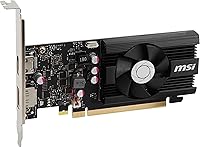
  • Display Outputs: The card offers one DisplayPort 1.4a and one HDMI 2.0b output, supporting simultaneous dual-display configurations at up to 3840x2160 resolution.
  • Max Resolution: Maximum supported output resolution is 3840x2160 (4K UHD), enabling sharp display output on modern 4K monitors and televisions.
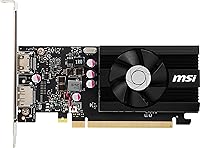
  • Form Factor: This is a low-profile, single-slot card measuring 5.91 x 0.75 x 2.72 inches, designed to fit slim and small form factor desktop cases.
  • Cooling: Cooling is handled by a single dedicated fan, keeping the card quiet and compact while managing thermals under typical low-load usage conditions.
  • Power Connector: The card draws power entirely from the PCIe slot with no external power connector required, making it compatible with systems that have modest power supplies.
  • DirectX Support: Full DirectX 12 support is included, ensuring compatibility with modern operating system environments and current software that leverages GPU acceleration.
  • HDCP Support: HDCP (High-bandwidth Digital Content Protection) is supported, enabling playback of protected content from streaming services and Blu-ray sources without signal issues.
  • Card Dimensions: Physical dimensions are 5.91 inches in length, 0.75 inches in width, and 2.72 inches in height, sized for low-profile case slots.
  • Card Weight: The card weighs 9.6 ounces, a lightweight build that puts minimal strain on the PCIe slot in vertically mounted or compact configurations.
  • Brand & Series: Manufactured by MSI under the GeForce GT 1030 4GD4 LP OC series, a product line targeting low-profile desktop upgrade applications.
  • Model Number: The official MSI model number for this card is G103044PC, useful for verifying compatibility documentation and sourcing replacement parts or support.
  • Availability Date: This card was first made available in July 2023, representing MSI's current-generation offering within the low-profile GT 1030 product lineup.
  • API Support: Beyond DirectX 12, the card supports OpenGL and Vulkan APIs, broadening software compatibility across creative, productivity, and media applications.
  • Multi-Display: The dual-output configuration allows two monitors to run simultaneously, useful for productivity users wanting an extended desktop on a single entry-level card.

Related Reviews
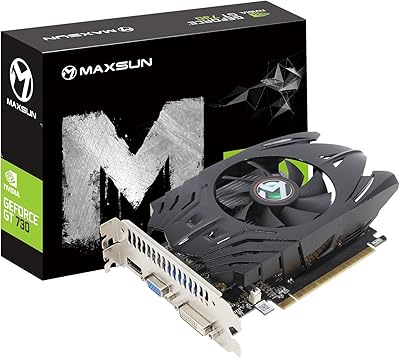
Maxsun GeForce GT 730 4GB Graphics Card
75%
83%
Value for Money
91%
Multi-Monitor Support
88%
Installation & Compatibility
89%
Form Factor & Physical Fit
31%
Gaming Performance
More
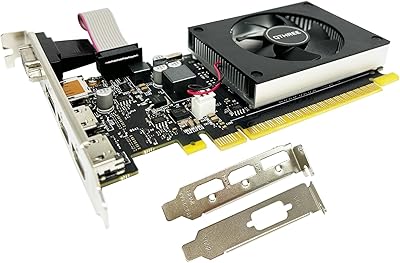
QTHREE GeForce GT 730 4GB Graphics Card
74%
91%
Ease of Installation
88%
Multi-Monitor Support
86%
Form Factor Compatibility
89%
Power Efficiency
52%
Memory Bandwidth (DDR3 vs GDDR5)
More
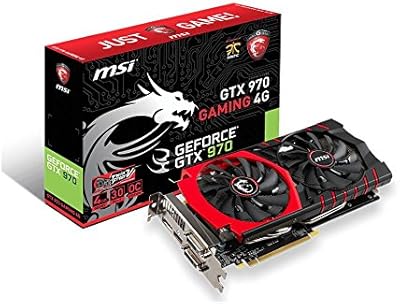
MSI NVIDIA GeForce GTX 970 Gaming 4GB Graphics Card
85%
88%
Gaming Performance (1080p/1440p)
93%
Cooling System Noise
91%
Price-to-Performance Ratio
85%
Installation Ease
72%
Driver Compatibility
More
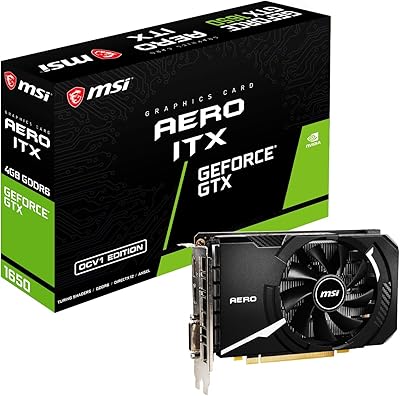
MSI GeForce GTX 1650 D6 AERO ITX 4GB Graphics Card
85%
85%
Performance at 1080p
88%
Noise Levels
87%
Cooling Efficiency
90%
Ease of Installation
79%
VR Performance
More
GIGABYTE GeForce GT 1030 2GB Graphics Card
71%
93%
Ease of Installation
91%
Form Factor & Fit
41%
Memory Performance
34%
Gaming Capability
84%
Multimedia & Video Playback
More
GIGABYTE GeForce GT 710 2GB Graphics Card
78%
88%
Value for Money
93%
Installation Ease
91%
Form Factor & Physical Fit
82%
Display Output Quality
89%
Thermal Performance
More
ASUS GeForce GT 730 2GB GDDR5 Graphics Card
85%
88%
Performance for Multimedia
94%
Silent Operation
90%
Value for Money
92%
Ease of Installation
89%
Power Consumption
More
PNY GeForce GTX 1650 4GB GDDR6 Graphics Card
85%
87%
Gaming Performance (1080p)
92%
Value for Money
84%
Cooling & Thermals
90%
Setup & Installation
82%
Noise Levels
More
MSI GeForce RTX 2060 VENTUS 6G OC Graphics Card
86%
91%
Performance at 1080p
87%
Performance at 1440p
90%
Ray Tracing and DLSS Support
89%
VR Performance
88%
Cooling and Noise Levels
More
ASUS GeForce GTX 1650 Dual-Fan 4GB Graphics Card
84%
88%
Performance at 1080p
91%
Cooling Efficiency
92%
Value for Money
80%
VR Gaming Experience
85%
Multi-Display Support
More

FAQ

Most likely yes, as long as your machine has an available PCIe x16 or x4 slot and supports a low-profile card. The GT 1030 4GB card ships with a low-profile bracket already installed, so it should physically fit without modification in most SFF and slim desktops from Dell, HP, and Lenovo. Just double-check your case's available slot height before ordering.

No, it does not. This card draws all of its power directly from the PCIe slot, which means you do not need a dedicated GPU power cable from your power supply. This makes it a practical choice for pre-built office desktops that often ship with compact PSUs lacking spare connectors.

Yes. The card has one DisplayPort 1.4a and one HDMI 2.0b output, and both can be used simultaneously for a dual-display setup. It is a straightforward way to add a second screen to a compact machine that previously only had integrated graphics.

For media consumption — streaming services, YouTube, or local video files — yes, it handles 4K playback quite well. HDMI 2.0b supports 4K at 60Hz, and HDCP support means protected content from services like Netflix (where supported by the browser or app) plays without issue.

The GDDR5 variant is meaningfully faster due to its higher memory bandwidth, even though both cards share the same GPU chip and clock speeds on paper. If you have a choice between the two at a similar price, the GDDR5 version will perform better in any graphics-intensive scenario. The DDR4 version trades bandwidth for affordability and is best understood as a display upgrade, not a performance GPU.

Not really, and it is worth being direct about that. The low-profile GPU can handle very old or extremely undemanding titles at low settings, but modern games — even ones a few years old — will likely run poorly or not at all at acceptable frame rates. If gaming is your goal, this card is not the right tool, even at its price point.

The card uses a PCIe x16 connector but is also electrically compatible with x8, x4, and even x1 slots in most cases — it will just run at a reduced lane count. For a display-focused use case like this, the practical performance difference from running at fewer lanes is negligible.

Yes, buyers consistently report smooth driver installation and stable operation on both Windows 10 and Windows 11. NVIDIA provides ongoing driver support for the GT 1030 chipset, so you are unlikely to hit compatibility walls on current operating systems.

The low-profile bracket typically comes pre-installed on this card, though some retail configurations include both the full-height and low-profile brackets in the box. If yours ships with the standard bracket attached, swapping to low-profile usually takes under five minutes with a small Phillips screwdriver.

The GT 1030 4GB card has a TDP of around 30 watts, which is very low for a dedicated GPU. Most desktops — including compact pre-built systems with 200 to 300 watt power supplies — can handle this without any concern. It is one of the least power-hungry dedicated graphics cards available, which is part of what makes it so well-suited to slim office machines.

Where to Buy