GIGABYTE AORUS GP-AG4500G 500GB NVMe SSD
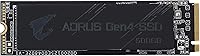
Overview
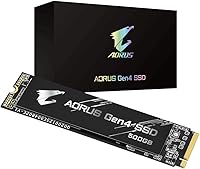
The GIGABYTE AORUS GP-AG4500G 500GB NVMe SSD is one of those drives that quietly earned a reputation rather than shouting about it. Built around a Phison E16 controller and running on a PCIe 4.0 NVMe interface, it was one of the earlier consumer drives to tap into that extra bandwidth. The 500GB capacity isn't huge, so think of it as a home for your OS and a few demanding titles rather than your entire Steam library. What sets this AORUS SSD apart from typical budget options is its onboard DDR4 cache buffer, a feature you don't often see at this price. Released back in 2020, it's since racked up a long track record with buyers, which says something on its own.
Features & Benefits
On paper, this NVMe drive is built for speed: sequential reads claimed up to 5000 MB/s translate into noticeably quicker boot times and snappier load screens in everyday use. Write performance, rated up to 2500 MB/s, benefits from that DDR4 cache buffer smoothing out larger transfers. The random IOPS numbers (400K read, 550K write) matter more than people realize, especially if you're juggling several applications or moving big files around while gaming in the background. Under the hood, 3D TLC NAND strikes a reasonable balance between long-term endurance and keeping costs down. And because it runs on a PCIe 4.0 x4 interface with NVMe 1.3, it's compatible with a wide range of current systems while leaving room to grow into newer hardware.
Best For
This Gigabyte drive makes the most sense for PC gamers who want faster level loads without paying flagship prices. If you're coming from an older SATA SSD, the jump in responsiveness alone is enough to justify the upgrade for plenty of builders. Owners of newer motherboards with proper PCIe 4.0 support will get the most out of it, since that's where the bandwidth advantage actually shows up. Where it falls short is as a single, do-it-all drive for anyone with a sprawling game library — 500GB fills up fast once a few modern titles are installed. A smarter setup pairs this 500GB SSD as a dedicated game or boot drive alongside a larger secondary drive for everything else.
User Feedback
Real-world impressions tend to back up the spec sheet. People upgrading from SATA drives consistently report a tangible difference in everyday speed, not just synthetic benchmarks. That said, feedback isn't uniformly glowing: a number of owners mention the drive runs warm during sustained workloads, which makes sense given there's no included heatsink, so a case with decent airflow or an aftermarket cooler is worth considering. A smaller group of buyers also point out they had to update their motherboard's BIOS before seeing full PCIe 4.0 speeds, which is a useful heads-up rather than a dealbreaker. Taken together, long-term reliability feedback skews positive, and overall satisfaction holds up well against the asking price.
Pros
- Sequential speeds up to 5000 MB/s noticeably cut down boot and load times
- DDR4 cache buffer helps this AORUS SSD handle large file transfers smoothly
- Strong random IOPS numbers make multitasking and background loads feel responsive
- PCIe 4.0 x4 interface gives this NVMe drive room to grow with newer hardware
- 3D TLC NAND balances solid endurance with a reasonable price point
- Long sales history and consistently strong ratings suggest dependable long-term reliability
- Real-world reviewers report a clear, tangible upgrade over older SATA drives
- NVMe 1.3 support means broad compatibility across current gaming PCs
Cons
- No included heatsink, so this Gigabyte drive can run warm under heavy, sustained use
- 500GB capacity fills up fast once a few modern game installs are added
- Some owners needed a BIOS update before reaching full PCIe 4.0 speeds
- Not ideal as sole storage for users with sprawling game libraries
- Older motherboards without PCIe 4.0 support won't unlock its full performance
- Best paired with a secondary drive, adding to overall build cost
- Thermal management may require extra case airflow or an aftermarket heatsink
Ratings
Our scorecard for the GIGABYTE AORUS GP-AG4500G 500GB NVMe SSD is generated by AI after analyzing verified user reviews from buyers worldwide, with spam, bots, and incentivized feedback filtered out before scoring. Both the strengths gamers rave about and the real-world friction points show up here without any sugarcoating.
Sequential Speed Performance
Random IOPS & Multitasking
Thermal Management
Build Quality & Reliability
Capacity Practicality
Compatibility & Setup
Compatibility & Setup
Value for Money
Value for Money
Cache Buffer Performance
NAND Endurance
Future-Proofing
Future-Proofing
Overall Buyer Satisfaction
Suitable for:
The GIGABYTE AORUS GP-AG4500G 500GB NVMe SSD makes the most sense for PC gamers who want a real, noticeable speed bump without spending flagship money. Anyone still running a SATA SSD as their main drive will feel the difference immediately in boot times and load screens. It's also a smart pick for builders with a PCIe 4.0 motherboard who want to actually use that bandwidth instead of leaving it on the table. Because of the onboard DDR4 cache buffer, it handles bursts of heavy file activity better than many drives in its price range, which matters if you're also editing media or running multiple apps alongside games. Used as a dedicated boot or game drive, it's a dependable, well-priced upgrade.
Not suitable for:
Buyers with massive game libraries should think twice before relying on the GIGABYTE AORUS GP-AG4500G 500GB NVMe SSD as their only storage, since 500GB fills up quickly with modern titles. Anyone building a compact system without much airflow may run into thermal issues, as this drive has no included heatsink and can run warm under sustained load. People with older motherboards lacking PCIe 4.0 support, or who aren't willing to check and update their BIOS, won't see the drive's full potential and may end up disappointed. If your priority is maximum capacity per dollar rather than speed, a larger SATA or budget NVMe drive will likely serve you better.
Specifications
- Capacity: This drive offers 500GB of usable storage space.
- Form Factor: It uses the M.2 2280 form factor common in modern desktops and laptops.
- Interface: It connects via PCIe 4.0 x4 using the NVMe 1.3 protocol.
- Controller: A Phison E16 controller manages data flow and drive performance.
- NAND Type: It uses 3D TLC NAND flash memory for storage cells.
- Cache Buffer: An external DDR4 512MB cache buffer assists with sustained read and write operations.
- Sequential Read Speed: Sequential read speeds reach up to 5000 MB/s under optimal conditions.
- Sequential Write Speed: Sequential write speeds reach up to 2500 MB/s under optimal conditions.
- Random Read IOPS: Random read performance is rated at up to 400K IOPS.
- Random Write IOPS: Random write performance is rated at up to 550K IOPS.
- Brand: The drive is manufactured by GIGABYTE under its AORUS gaming sub-brand.
- Model Number: The official model number is GP-AG4500G.
- Weight: The drive weighs approximately 2.4 ounces.
- Heatsink: The drive ships without an integrated heatsink.
- Compatibility: It is compatible with any system featuring an available M.2 NVMe slot, though full speeds require PCIe 4.0 support.
- Release Date: The drive first became available in August 2020.
Related Reviews
Gigabyte AORUS Gen4 7000s 1TB NVMe SSD
WD_BLACK SN770M 500GB NVMe SSD
Crucial P3 500GB NVMe M.2 SSD
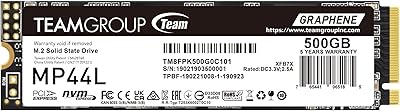
TEAMGROUP MP44L 500GB Gen4 NVMe SSD
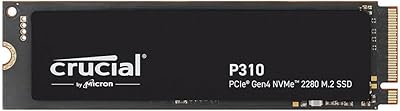
Crucial P310 500GB NVMe SSD
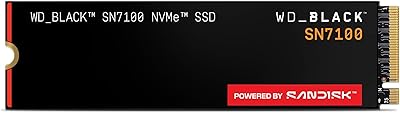
WD_BLACK SN7100 500GB NVMe SSD
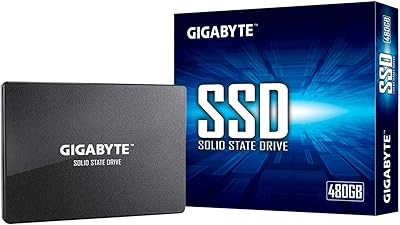
GIGABYTE GP-GSTFS31480GNTD 480GB SATA SSD

fanxiang S880E 500GB NVMe SSD
KLEVV CRAS C910 500GB NVMe SSD