Overview

The Garmin inReach SE+ Satellite Communicator is built for one specific purpose: keeping you connected when every cell tower is miles behind you. This is not a navigation gadget dressed up with an SOS button — it is a serious two-way messaging device running on the Iridium network, which covers the entire planet, poles included. Worth knowing upfront: a satellite subscription is required to actually use the messaging and SOS functions, so factor that into your total budget. The SE+ sits one step below the Explorer+, which adds preloaded topo maps and onboard sensors, but for pure communication capability, this backcountry messaging device holds its own.
Features & Benefits

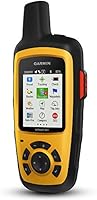
The standout here is the two-way SOS system. Unlike older personal locator beacons that fire a distress signal into the void, the inReach SE+ connects you directly to a staffed rescue coordination center — and they can message you back. That back-and-forth capability matters when rescuers need your exact situation before deploying a team. Beyond emergencies, MapShare lets friends and family watch your position update in real time. Pair the device with the free Earthmate app and you unlock NOAA charts, downloadable maps, and aerial imagery on your phone. The 2.3-inch screen reads well in sunlight, and at 8 ounces, it clips to a pack strap without being noticed.

Best For

This satellite communicator suits anyone who regularly pushes beyond cell coverage — solo hikers on multi-day routes, mountaineers on technical terrain, or paddlers running remote river canyons. Overlanders spending weeks on unmaintained tracks will appreciate a reliable fallback that requires no carrier signal. It also makes practical sense for families sending a member into the wilderness; real-time location sharing via MapShare gives people at home something concrete to follow. Search-and-rescue volunteers and expedition teams will value the two-way coordination. Essentially, if your outdoor plans put you out of reach for more than a day, this backcountry messaging device earns its place on your kit list.

User Feedback

Owners are largely satisfied, and the SOS system draws consistent praise — multiple reviewers mention how reassuring it is knowing a real person can respond from the monitoring center. The ongoing subscription cost is the most common frustration, and it is a fair one; budget for it before you commit. The messaging interface is functional but takes some getting used to, particularly for anyone expecting smartphone-level ease. Battery life in tracking mode varies considerably depending on how frequently you configure the device to ping your location. Bluetooth pairing with Earthmate is generally reliable, though occasional sync drops are reported. If onboard maps matter to you, most experienced reviewers steer toward the Explorer+ instead.

Pros

  • Two-way SOS connects you to a live rescue coordinator, not just a passive distress signal receiver.
  • Iridium satellite coverage works anywhere on the planet, including remote polar and oceanic routes.
  • MapShare lets family or teammates follow your position in real time without any app account required.
  • At 8 ounces, the inReach SE+ is light enough to forget about until you actually need it.
  • The transflective screen stays readable in direct sunlight, which matters when you are actually outdoors.
  • Earthmate app integration adds NOAA charts and downloadable maps without extra hardware cost.
  • The carabiner clip makes it easy to attach to a shoulder strap or hip belt for quick access.
  • Garmin's monitoring center has earned consistent praise from buyers for responsiveness during real emergencies.
  • Bluetooth pairing is straightforward for most users and connects reliably under typical conditions.
  • The device is ready to use out of the box with battery and carabiner clip included.

Cons

  • A satellite subscription is required on top of the hardware cost, adding a recurring monthly or annual expense.
  • No preloaded topographic maps means you are reliant on your smartphone and app for trail navigation.
  • The messaging interface has a noticeable learning curve and is not intuitive for first-time users.
  • Battery life in active tracking mode varies significantly based on how often location updates are configured.
  • Occasional Bluetooth sync drops with the Earthmate app have been reported, typically requiring a manual reconnect.
  • No built-in compass, barometric altimeter, or accelerometer — features available on the pricier Explorer+ model.
  • Sending and reading messages on the small physical interface is slow compared to any smartphone keyboard.
  • Subscription plan tiers can be confusing to navigate when first setting up the device and account.

Ratings

The scores below reflect an AI-driven analysis of verified global buyer reviews for the Garmin inReach SE+ Satellite Communicator, with spam, bot-generated, and incentivized feedback actively filtered out before scoring. Each category is evaluated against real-world usage patterns reported by backcountry hikers, overlanders, paddlers, and expedition teams worldwide. Both the strengths that drive loyalty and the pain points that generate frustration are transparently weighted in every score.

SOS Reliability
94%
The two-way SOS system is the single most praised aspect of this backcountry messaging device. Buyers who have activated it in genuine emergencies consistently report fast response times and clear back-and-forth communication with the monitoring center, which dramatically outperforms one-way beacon alternatives in real distress situations.
A small number of users report anxiety about testing the SOS feature before trips, since accidental activation carries a potential cost and causes unnecessary alarm. First-timers occasionally find the activation sequence confusing under pressure without prior practice.
Satellite Coverage
91%
Running on the Iridium network means the inReach SE+ reaches places where no other consumer communicator can — remote Alaskan valleys, open Pacific crossings, and high-altitude Himalayan routes all fall within its operational footprint. Users consistently note that it performed when absolutely nothing else would.
While coverage itself is near-universal, message delivery speed can vary depending on satellite geometry and terrain obstruction. Users in deep canyon environments or dense forest occasionally report slight delays between send and receipt of messages.
Two-Way Messaging
78%
22%
The ability to send and receive actual replies over satellite — not just fire off a one-way ping — is genuinely useful on extended wilderness trips. Buyers appreciate being able to coordinate logistics, check in with family, or receive weather updates without needing any cell connection.
The physical button interface makes composing messages notably slow and error-prone compared to typing on a phone. Several users on multi-week expeditions describe the messaging experience as functional but tedious, especially for longer or more nuanced communications.
MapShare Tracking
83%
MapShare is consistently praised by families and trip coordinators who follow a traveler's progress from home. The web-based viewer requires no app install or account on the recipient's end, making it easy for non-technical contacts to stay informed during a partner's remote river trip or solo summit.
Tracking interval settings directly affect how smooth and current the position display appears to followers at home. Users who set longer ping intervals to conserve battery report that their contacts sometimes see position dots that feel stale or jumpy rather than a smooth moving track.
Earthmate App Integration
74%
26%
When the pairing works well, the Earthmate app meaningfully extends the device's usefulness by adding downloadable maps, aerial imagery, and NOAA charts that the hardware alone cannot display. Paddlers and coastal travelers in particular find the chart access genuinely valuable for route planning on the water.
Bluetooth sync between the device and the app is a recurring frustration, with a notable share of users reporting dropped connections that require manual re-pairing. The experience is inconsistent enough that some buyers stop relying on the app integration for critical navigation decisions.
Value for Money
61%
39%
For buyers who genuinely operate in remote terrain on a regular basis, the hardware cost is defensible against the alternative of having no communication capability at all. The SOS function alone provides a level of safety assurance that experienced wilderness travelers consider worth a premium.
The mandatory subscription adds a recurring cost that many buyers did not anticipate, and this is the most common source of post-purchase dissatisfaction. Occasional users who take one or two backcountry trips per year often find it difficult to justify the annual subscription relative to how infrequently they actually use the device.
Build Quality
82%
18%
The physical construction feels solid and purposeful — buyers who carry this satellite communicator through rain, dust, and rough trail conditions generally report that it holds up without issues over extended periods of field use. The carabiner clip is sturdy and stays secure when clipped to pack straps.
The device is not the most elegant piece of hardware, and the button-based interface can feel stiff or imprecise in cold weather with gloves on. A handful of users report minor cosmetic wear on the casing after heavy use, though structural integrity holds well.
Screen Readability
79%
21%
The transflective display is one of the smarter design choices on this backcountry messaging device — it remains clearly legible in direct alpine sunlight where a typical backlit screen would wash out entirely. Buyers who have used it at high altitude on snow consistently mention this as a genuine advantage.
The resolution and physical screen size are modest, which makes the display feel cramped when viewing any kind of map or detailed location data. Users coming from modern smartphones find the visual experience underwhelming, particularly when trying to parse map information through the Earthmate app bridge.
Battery Performance
67%
33%
Under conservative tracking settings with longer intervals between position pings, the battery holds up reasonably well for multi-day trips. Users who configure the device thoughtfully before departure and carry a small USB power bank report being able to extend operational life through a week-long expedition.
Battery life in active tracking mode with frequent ping intervals disappoints a meaningful portion of buyers. Those who expected continuous tracking without careful power management found themselves running low mid-trip, and the lack of a clear, predictable battery life estimate for different usage modes adds to the frustration.
Setup Experience
69%
31%
Most buyers get the device paired, subscribed, and sending test messages within an hour of opening the box. The Earthmate app walks through the initial registration process step by step, and Garmin's account portal is functional enough for basic plan selection.
Choosing the right subscription plan during setup is a genuinely confusing process that multiple reviewers flag as poorly explained. Users who need to switch plans mid-subscription or pause service during off-season report that the account management interface is not particularly intuitive.
Size and Portability
86%
At 8 ounces and roughly the footprint of a small walkie-talkie, the inReach SE+ disappears into a kit bag without adding meaningful pack weight. Ultralight hikers and multi-sport athletes who count grams appreciate that it does not force a meaningful trade-off against other gear.
While compact for what it does, it is bulkier than a standard GPS watch, which some buyers had hoped to replace with this device. Users who wanted a truly pocketable everyday carry option find the form factor slightly inconvenient for quick-access retrieval during active movement.
Navigation Features
58%
42%
Basic navigation functions — waypoints, breadcrumb trail, and rudimentary route support — are present and useful for keeping rough track of a path in and out of a location. For simple point-to-point reference in familiar terrain, these tools adequately complement a paper map.
The absence of preloaded topographic maps is a real limitation compared to the Explorer+ sibling and some competing devices at similar price points. Buyers who expected standalone trail navigation capability are frequently disappointed, as the SE+ is heavily dependent on a paired phone for any meaningful map-based guidance.
Weather Access
71%
29%
Access to weather forecasts via satellite subscription gives users in remote locations data that would otherwise require cell or internet connectivity. Expedition teams and sailors report finding the weather update function useful for day-to-day planning when conditions are unpredictable.
Weather data is delivered as text-based forecasts rather than visual radar imagery, which some users find less intuitive to interpret quickly. The refresh frequency and detail level of forecasts are also tied to subscription plan tier, which limits utility for budget-plan subscribers.
Learning Curve
63%
37%
Buyers with prior experience using dedicated GPS devices or satellite communicators tend to get comfortable with the inReach SE+ relatively quickly. The physical interface follows a logical enough structure that regular users report it becoming second nature after a few dedicated practice sessions before a trip.
For first-time satellite communicator users, the combination of subscription setup, device pairing, messaging interface, and SOS protocols can feel overwhelming. Several buyers note that they wished the included documentation were more practical and scenario-based rather than spec-heavy and technical.

Suitable for:

The Garmin inReach SE+ Satellite Communicator is built for people who routinely operate in places where a cell signal is simply not an option. Solo backcountry hikers, mountaineers tackling multi-day routes, and paddlers navigating remote river systems will find real, practical value in two-way satellite messaging and a live SOS link to a staffed rescue center. Overlanders spending weeks on unmaintained tracks benefit from a dependable emergency fallback that works independent of any carrier infrastructure. Families with a loved one heading into the wilderness will appreciate MapShare, which lets them follow a live position track from home without needing to exchange a single message. Expedition teams and search-and-rescue volunteers will value the ability to coordinate in both directions over satellite when radios fall short. If your outdoor plans regularly take you out of cell range for more than a day at a time, this backcountry messaging device fits the bill.

Not suitable for:

The Garmin inReach SE+ Satellite Communicator is a poor fit for anyone expecting a standalone navigation device — unlike the Explorer+ sibling, it ships without preloaded topographic maps, so you are dependent on your phone and the Earthmate app for anything beyond basic breadcrumb tracking. Buyers who venture into the backcountry occasionally, or only on well-traveled trails with decent cell coverage, will likely find the mandatory satellite subscription hard to justify as a recurring cost on top of the hardware price. The messaging interface is functional but not particularly intuitive, which means less tech-comfortable users may need a meaningful learning curve before they feel confident using it in the field. Anyone prioritizing onboard compass, barometric altimeter, or accelerometer data should look at the Explorer+ instead, as those sensors are absent here. If your primary goal is turn-by-turn GPS navigation rather than communication, this satellite communicator is not the right tool for that job.

Specifications

  • Brand: Manufactured by Garmin, a established name in GPS and navigation technology.
  • Model: The inReach SE+ carries the official model number 010-01735-00.
  • Satellite Network: Operates exclusively on the Iridium satellite constellation, providing 100% global coverage including polar regions.
  • Dimensions: The device measures 1.5 x 2.7 x 6.5 inches, keeping it compact enough to fit in a jacket pocket.
  • Weight: At 8 ounces, the unit is light enough for extended pack carry without meaningful burden.
  • Display: Features a 2.3-inch transflective color TFT screen with a resolution of 200 x 265 pixels, readable in direct sunlight.
  • Connectivity: Pairs with smartphones via Bluetooth to sync with the free Earthmate app on iOS and Android.
  • Battery: Powered by an included rechargeable Lithium Polymer battery, charged via the included USB cable.
  • SOS System: Activating SOS opens a two-way interactive session with a staffed 24/7 search and rescue monitoring center.
  • Tracking: Supports real-time location tracking and sharing with designated contacts through Garmin's MapShare platform.
  • Messaging: Enables two-way text messaging via satellite, functioning independently of any cellular or Wi-Fi network.
  • Map Support: When paired with the Earthmate app, users can access downloadable maps, U.S. NOAA charts, and color aerial imagery on their phone.
  • Preloaded Maps: The SE+ does not include preloaded topographic maps; that feature is exclusive to the Explorer+ model.
  • Mounting: Includes both a carabiner clip for gear attachment and supports wrist mounting for hands-free carry.
  • In-Box Contents: Package includes the inReach SE+ unit, a USB charging cable, a carabiner clip, and product documentation.
  • Subscription: A paid satellite subscription through Garmin is required to activate messaging, tracking, and SOS functionality.
  • Input Method: The device is operated via physical buttons, with no touchscreen interface.
  • Color: Available in a black and yellow colorway designed for high visibility in outdoor environments.

Related Reviews
Garmin InReach Mini Satellite Communicator
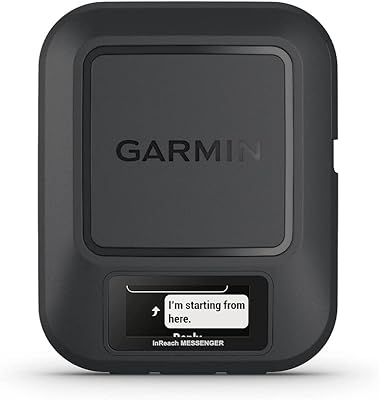
75%
91%
Satellite Coverage & Reliability
88%
SOS & Emergency Performance
93%
Portability & Form Factor
84%
Battery Life
53%
Messaging Usability
More
Garmin inReach Messenger Satellite Communicator
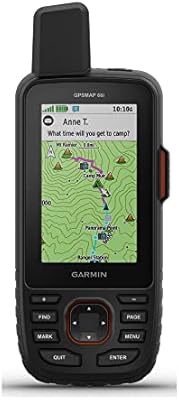
77%
88%
Satellite Reliability
93%
SOS Effectiveness
84%
Two-Way Messaging
91%
Portability & Form Factor
54%
Subscription Value
More
Garmin GPSMAP 66i GPS Satellite Communicator
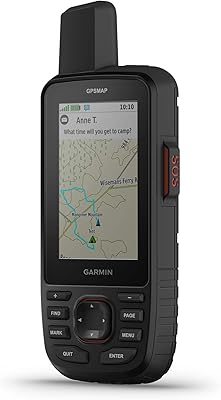
82%
93%
Satellite Communication Reliability
89%
GPS Accuracy & Lock Speed
84%
Battery Life
91%
Map Quality & Coverage
82%
Display Legibility
More
Garmin GPSMAP 67i Satellite GPS Handheld
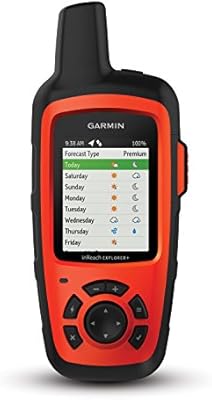
79%
93%
GPS Accuracy
89%
Satellite Communication
91%
Battery Life
88%
Display Quality
92%
Build Quality & Durability
More
Garmin inReach Explorer+ Satellite Communicator
76%
93%
Satellite Reliability
88%
Two-Way Messaging
96%
SOS & Emergency Response
78%
Navigation & Mapping
61%
Value for Money
More
Garmin eTrex SE Handheld GPS Navigator
81%
97%
Battery Life
91%
GPS Accuracy
88%
Build Quality
63%
Display Quality
79%
Ease of Use
More
Garmin dezl OTR620 6-Inch Truck GPS Navigator
76%
88%
Display Quality
82%
Truck Routing Accuracy
58%
App Dependency
79%
PrePass Integration
84%
BirdsEye Satellite Imagery
More
Garmin Approach S12 GPS Golf Watch
79%
91%
GPS Accuracy
93%
Battery Life
89%
Course Library
71%
Display Readability
88%
Ease of Use
More
Garmin Vívoactive 5 GPS Smartwatch
77%
88%
Display Quality
91%
Battery Life
74%
Health Tracking Accuracy
78%
GPS Performance
83%
Sleep Tracking
More
Firewalla Purple SE
Firewalla Purple SE
86%
91%
Value for Money
88%
Ease of Setup
93%
Protection Against Cyber Threats
85%
Parental Controls
87%
App Interface
More

FAQ

Yes, and this is important to know before you buy. The Garmin inReach SE+ Satellite Communicator requires an active satellite subscription through Garmin to use any of its core functions, including messaging, location tracking, and SOS. Garmin offers several plan tiers depending on how frequently you plan to use it, ranging from lower-cost recreational plans to more data-heavy options for heavy users. Factor that ongoing cost into your budget from day one.

That is exactly what it is built for. The device connects to the Iridium satellite network, which covers the entire surface of the Earth, including oceans and polar regions. It does not rely on cell towers at all, so remote canyons, open ocean, and high-altitude mountain routes are all within its operational range.

It is more capable than a traditional one-way beacon. When you activate SOS, the device opens a two-way communication session with a staffed rescue coordination center that operates around the clock. They can message you back to assess your situation, confirm your location, and coordinate the appropriate response — which can make a meaningful difference in how quickly and accurately help is dispatched.

No special equipment required on their end. You can set up MapShare, which gives your designated contacts a web link they can open in any browser to follow your position as it updates. They do not need the app or any Garmin account to view your track.

Not on this model. The SE+ does not include preloaded topographic maps. For on-device navigation beyond a basic breadcrumb trail, you would need to look at the Explorer+, which includes DeLorme topo maps and onboard navigation sensors. The SE+ does support navigation basics like routes and waypoints, but detailed map display requires pairing with the Earthmate app on your smartphone.

Battery life varies considerably depending on how frequently you configure the device to send location updates. More frequent tracking intervals drain the battery faster. Users who set longer intervals between pings can extend runtime significantly, while those tracking every few minutes will see shorter life. It is worth testing your specific settings before a long trip to understand your personal usage pattern.

Yes, the Earthmate app is free to download and is available on both iOS and Android. It connects to the inReach SE+ via Bluetooth and gives you access to downloadable maps, NOAA nautical charts, and aerial imagery. Keep in mind that some map downloads may require in-app purchases depending on the region and map type.

The inReach SE+ is built to handle outdoor conditions, but you should verify the specific IP or waterproofing rating against your intended use case before any serious water exposure. For kayaking or paddling trips, many users attach it to their PFD or dry bag strap using the included carabiner clip to minimize direct water contact during active paddling.

The main differences come down to built-in navigation tools. The Explorer+ adds preloaded DeLorme topographic maps, an onscreen GPS routing display, a digital compass, a barometric altimeter, and an accelerometer — none of which are present on the SE+. If you plan to navigate primarily from your phone and mainly want reliable two-way messaging and SOS, the SE+ handles that well at a lower price point. If you want a more self-contained device that works without a paired phone, the Explorer+ is worth the additional cost.

Setup involves creating a Garmin account, activating a subscription plan, registering the device, and pairing it with the Earthmate app via Bluetooth. Most users get through this in under an hour, though the subscription plan selection can be a bit confusing at first. The physical messaging interface on the device itself has a learning curve compared to typing on a phone, so it is worth practicing at home before your first trip rather than figuring it out in the field.

Where to Buy