Overview

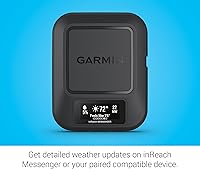
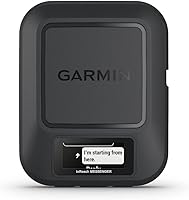
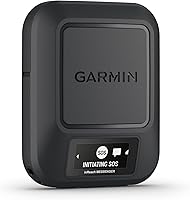
The Garmin inReach Messenger Satellite Communicator is built with one job in mind: keeping you connected when every cell tower is miles behind you. This isn't a navigation computer or a smartwatch add-on — it's a dedicated messaging device designed for people who routinely end up where networks don't reach. At just 4 ounces and smaller than a deck of cards, the footprint is genuinely trail-worthy. Before you buy, know this: every core function requires an active subscription, which adds a recurring monthly cost to your budget. Think of the hardware price as the entry fee, not the full cost of ownership.
Features & Benefits

Where this satellite messenger earns its keep is in the two-way communication model. Unlike one-way trackers that only broadcast your position, the inReach Messenger lets your contacts reply directly through the free Garmin Messenger app — no satellite hardware required on their end. If things go seriously wrong, the interactive SOS connects you to a staffed coordination center, not an automated alert system. Preset check-in messages are a smart addition; they don't draw from your monthly message allotment, which matters on a basic plan. The hybrid routing logic — using cellular first, satellite when needed — helps keep delivery efficient without burning through your plan unnecessarily.

Best For

This handheld communicator fits a specific profile, and knowing that upfront saves you from the wrong purchase. Solo backcountry hikers, mountaineers, and long-distance paddlers are the obvious match — anyone whose route puts them beyond realistic cell signal for extended stretches. It's also a natural fit for remote field professionals: researchers, journalists, and aid workers who operate where local telecom infrastructure simply can't be counted on. Families with a member heading deep into the wilderness often buy one primarily for the peace-of-mind check-in capability. That said, if your adventures rarely take you out of cell range, the ongoing subscription cost is hard to justify.

User Feedback

Owners consistently point to the compact, durable build and the reliability of message delivery in remote locations as standout strengths. The SOS feature draws particular praise — there's real comfort in knowing a trained human coordinator, not an automated system, receives your distress signal. Where buyers push back is on value: subscription plans feel steep to users who only check in occasionally, and the cost compounds over a long season. The Garmin Messenger app works smoothly for most, but a portion of users flag occasional Bluetooth sync hiccups between phone and device. Real-world battery life also tends to fall below the rated 28 days once active messaging and tracking are in regular use.

Pros

  • At just 4 ounces, this satellite messenger is light enough to carry on every trip without second-guessing the weight.
  • Two-way messaging means your contacts can actually reply, unlike one-way trackers that only broadcast your location.
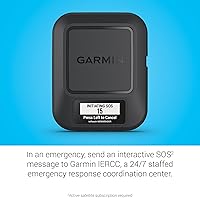
  • The interactive SOS connects you to a staffed 24/7 coordination center — a real person responds, not an automated system.
  • Preset check-in messages are free and don't draw from your monthly subscription allotment, saving money on basic plans.
  • GPS location sharing works entirely independent of cell infrastructure, keeping contacts informed anywhere on Earth.
  • Hybrid routing automatically tries cellular first before switching to satellite, which helps preserve your message plan.
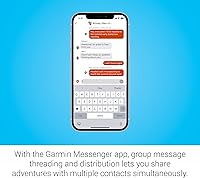
  • Group messaging through the companion app lets multiple contacts follow your journey simultaneously.
  • Battery life is genuinely long, easily lasting multi-day trips even with regular check-ins.
  • The Garmin Messenger app is free for recipients, so contacts don't need any special hardware to stay in touch.
  • Physical button controls are reliable with gloves on — practical in cold or wet conditions where touchscreens fail.

Cons

  • An active satellite subscription is required for every feature; the device is essentially non-functional without one.
  • Subscription costs accumulate fast, making the inReach Messenger expensive for users who only go off-grid occasionally.
  • There is no map or navigation display, so buyers expecting turn-by-turn guidance will be disappointed.
  • Some users report intermittent Bluetooth sync issues between the device and the Garmin Messenger app.
  • Message delivery speed varies with terrain and satellite visibility, meaning delays are possible in dense canopy or deep valleys.
  • Real-world battery life under active use typically falls noticeably short of the rated 28-day figure.
  • The screen is very small at 2.74 cm, making on-device text reading difficult without pairing to a phone.
  • Certain jurisdictions restrict or outright prohibit the use of satellite communication devices, requiring research before travel.
  • No onscreen keyboard — composing custom messages relies heavily on the paired smartphone app.
  • Compared to basic emergency PLBs, the total cost of ownership over several years is substantially higher.

Ratings

The scores below for the Garmin inReach Messenger Satellite Communicator were generated by our AI system after analyzing thousands of verified global buyer reviews, with spam, bot-submitted, and incentivized feedback actively filtered out. Each category reflects the honest distribution of real user experiences — strengths are credited where earned, and recurring frustrations are not softened. The result is a transparent, balanced picture of what this satellite messenger actually delivers in the field.
Satellite Reliability
88%
Users consistently report that messages get through in genuinely remote locations — deep wilderness, open ocean, and high-altitude terrain where no cellular signal exists. The Iridium network backing the inReach Messenger draws repeated praise for global reach that holds up in practice, not just on a spec sheet.
Dense forest canopy and steep canyon walls can introduce noticeable delays or require repositioning to get a clear sky view. A small but vocal group of users in heavily wooded regions report that delivery times occasionally stretch to several minutes, which can be frustrating in time-sensitive check-in situations.
SOS Effectiveness
93%
The interactive SOS system draws some of the strongest praise in any category — knowing a trained human coordinator is on the other end, rather than an automated alert, gives users genuine confidence when heading into serious terrain. Several reviewers specifically cite the two-way SOS dialogue as the deciding factor in their purchase.
A minority of users note that the SOS activation sequence requires deliberate steps to prevent accidental triggering, which can feel cumbersome under real stress. The quality of local rescue coordination after the initial IERCC handoff also varies by region, which is outside Garmin's control but still affects the real-world outcome.
Two-Way Messaging
84%
The ability to receive replies — not just send one-way pings — is a meaningful practical upgrade over basic trackers, and users appreciate that their contacts only need the free app, not satellite hardware. Families tracking a member on a solo expedition especially value the back-and-forth capability for genuine peace of mind.
Message composition without a phone is limited to presets since there is no on-device keyboard, which is a real constraint if your phone battery dies in the field. Some users also note that longer messages occasionally arrive fragmented, requiring recipients to mentally reassemble the content.
Portability & Form Factor
91%
At 4 ounces and roughly the size of a thick credit card stack, this handheld communicator is genuinely easy to forget you're carrying. Ultralight backpackers and cyclists who obsess over gram counts consistently highlight the dimensions as a major reason they chose it over bulkier satellite communication options.
The compact size comes with a very small screen that is difficult to read in direct sunlight without angling the device carefully. Users with larger hands also report that the physical button layout feels slightly cramped, particularly when operating with winter gloves.
Subscription Value
54%
46%
Garmin's tiered plan structure at least offers some flexibility — seasonal plans are available for users who only need coverage a few months a year, and preset check-in messages are genuinely free within any plan, which helps occasional users manage costs.
The subscription model is the single most complained-about aspect across all user feedback. Buyers who go off-grid infrequently find it hard to justify year-round plan costs, and the total ownership expense over two or three years significantly exceeds the initial hardware price. Several users describe feeling locked in once they've committed to the ecosystem.
Battery Life
71%
29%
Under light use with longer tracking intervals, the inReach Messenger comfortably outlasts a typical multi-day backpacking trip without needing a recharge. Users on week-long expeditions with moderate check-in frequency generally report coming home with charge to spare.
The rated 28-day figure is treated skeptically by most experienced users, as it assumes a 10-minute tracking interval and minimal messaging — conditions that rarely match real use. With frequent messaging and shorter tracking intervals, many users report draining the battery in 5 to 8 days, which requires planning around power sources on longer trips.
App Experience
67%
33%
When the Garmin Messenger app is working well, users describe it as intuitive for managing conversations, sharing location with contacts, and composing messages before sending via satellite. The fact that recipients can use the app for free without any hardware lowers the barrier for family members to stay connected.
Bluetooth pairing between the device and the app generates a disproportionate share of complaints, with some users reporting that the connection drops mid-session or requires repeated re-pairing after phone restarts. App update cadence has also drawn criticism, with some versions introducing instability that took several weeks to be patched.
Ease of Setup
76%
24%
Initial hardware setup is straightforward — the device is ready to pair quickly, and the companion app guides new users through account creation and subscription activation without requiring technical expertise. Most buyers report being operational within 20 to 30 minutes of unboxing.
Navigating Garmin's subscription portal and understanding the difference between plan tiers is a friction point for many new users, with some reporting confusion about which plan features count preset messages versus custom texts. The onboarding documentation in the box is minimal, pushing users toward online resources.
Durability & Build
86%
The rugged housing earns consistent praise from users who subject it to rough trail conditions, rain, and the general abuse of outdoor use over multiple seasons. Several long-term owners report using the same unit across hundreds of trip days without any structural issues.
The USB-C charging port cover, while functional, is noted by some users as a potential weak point over extended use in wet environments. A small number of reviewers also report cosmetic scratching on the housing surface after heavy pack use, though this has no reported effect on functionality.
Message Delivery Speed
69%
31%
Under open sky conditions — on ridgelines, alpine meadows, or open water — message delivery is fast enough to feel close to real-time communication, often arriving within 60 to 90 seconds. This meets the practical expectations of most users for non-emergency check-ins.
Forested and canyon environments consistently produce slower delivery, and users accustomed to cellular text speed can find the variability frustrating during group coordination. The lack of a delivery confirmation visible to the sender in all scenarios adds an extra layer of uncertainty when timing matters.
Location Sharing
82%
18%
GPS location sharing works reliably across diverse terrain and is appreciated by contacts tracking a family member's progress on a remote route. The ability to share a live track without any cellular dependency is a core strength that consistently meets user expectations.
Location update frequency is tied to the subscription plan and tracking interval settings, meaning contacts may see a position that is several minutes old depending on how the plan is configured. Some users find the default tracking interval settings less intuitive to adjust than expected.
Value vs. Alternatives
61%
39%
For buyers who specifically need two-way messaging plus staffed SOS in a sub-5-ounce package, the inReach Messenger sits in a competitive spot relative to devices with similar network coverage. The free recipient app also reduces friction compared to platforms that require both parties to own hardware.
When total cost of ownership is calculated across device plus multi-year subscription, some buyers find that competing satellite communication platforms offer comparable functionality at a lower aggregate cost. Casual or first-time off-grid users frequently question whether the investment is justified for the number of trips they actually take.
Glove-Friendly Controls
78%
22%
Physical buttons are a deliberate design choice that pays off in cold-weather scenarios where touchscreens become unreliable — mountaineers and winter hikers specifically call this out as a practical advantage. Basic functions like sending a preset check-in can be executed without removing gloves.
The limited number of physical buttons means that more complex interactions require multiple button presses and menu navigation, which is less intuitive under stress or fatigue. New users especially report a learning curve with the button-based interface before muscle memory develops.
Group Messaging
72%
28%
The group messaging capability through the app is well-received by teams coordinating multi-person expeditions, allowing a single outbound update to reach all members simultaneously without burning through individual message allotments for each recipient.
Group message threads can become difficult to manage when multiple contacts reply in quick succession, and the interface for distinguishing individual replies within a group thread draws complaints about clarity. For large groups, the experience is noticeably less polished than mainstream consumer messaging apps.

Suitable for:

The Garmin inReach Messenger Satellite Communicator is the right tool for anyone whose outdoor plans regularly take them past the last cell signal. Solo hikers tackling multi-day backcountry routes, mountaineers on remote ascents, and long-distance paddlers on open water all fall squarely into its target audience — these are people for whom a missed check-in isn't just inconvenient, it's a genuine safety concern. Remote field professionals like wildlife researchers, documentary crews, or international journalists working in areas with unreliable telecom infrastructure will also find it a dependable communication lifeline. It's equally well-suited for families who want a practical way to stay in contact with a member on an extended expedition, even if that family member is the only one who owns the hardware. If your trips routinely end up in true dead zones and you want both two-way messaging and a credible SOS option in a package light enough to forget you're carrying it, this satellite messenger is purpose-built for exactly that.
Not suitable for:

The Garmin inReach Messenger Satellite Communicator is a harder sell for anyone whose adventures stay within reliable cell coverage the majority of the time. The hardware cost is only part of the picture — every feature that makes this device useful requires an active satellite subscription, and that recurring expense adds up quickly for occasional or seasonal users who might activate it only a few times a year. It's also not the right choice for buyers who expect full navigation functionality; this handheld communicator has no map display, no turn-by-turn routing, and should not be confused with Garmin's more capable inReach Explorer or inReach Mini Pro models, which include topographic mapping. Travelers who primarily visit destinations with strong cellular networks will find little practical value here. And if budget is a primary concern, the combination of device cost plus ongoing subscription may simply be too steep compared to alternatives that charge only for the occasional message.
Specifications

  • Dimensions: The device measures 3.1 x 2.5 x 0.9 inches, making it small enough to fit in a shirt pocket or clip to a pack strap.
  • Weight: At 4 ounces including the battery, it adds minimal load to any pack or kit.
  • Battery Life: Rated up to 28 days in 10-minute tracking mode; active messaging and shorter tracking intervals will reduce this figure in real-world use.
  • Display Size: The built-in screen measures 2.74 cm and is primarily used for status indicators; detailed messaging is handled through the paired smartphone app.
  • Display Resolution: The screen runs at 160 x 68 pixels, sufficient for basic on-device readouts but not intended for extended text reading.
  • Connectivity: The device supports Bluetooth and ANT+ wireless protocols in addition to its core satellite communication link.
  • Satellite Network: Communication is routed through the Iridium satellite network, providing truly global coverage including polar regions.
  • SOS System: Triggering SOS initiates an interactive two-way exchange with the Garmin IERCC, a 24/7 staffed emergency response coordination center.
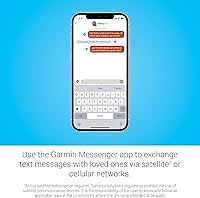
  • Messaging: Supports two-way global satellite text messaging when paired with the free Garmin Messenger smartphone app.
  • Preset Messages: Pre-programmed check-in messages can be sent without drawing from the monthly subscription message allotment.
  • Group Messaging: Group text conversations are supported through the Garmin Messenger app, allowing multiple contacts to receive and respond simultaneously.
  • Location Sharing: GPS-based location can be shared with contacts independently of any cellular network connection.
  • Input Method: All on-device controls use physical buttons, which remain operable with gloves in cold or wet conditions.
  • Charging Port: The device charges via a USB Type-A to USB Type-C cable, which is included in the box.
  • Battery Type: Powered by a built-in rechargeable lithium-ion battery that is included and pre-installed.
  • Subscription: An active satellite airtime subscription is required for all communication features, including messaging, location sharing, and SOS activation.
  • In-Box Contents: The package includes the inReach Messenger unit, a USB-A to USB-C charging cable, and product documentation.
  • Color: Available in black with a rugged housing designed to withstand the physical demands of outdoor environments.
  • OS Compatibility: The Garmin Messenger companion app is compatible with both iOS and Android smartphones for full messaging functionality.
  • Hybrid Routing: The device intelligently routes outgoing messages through available cellular networks first, switching to satellite only when cellular is unavailable, helping to manage subscription usage.

Related Reviews

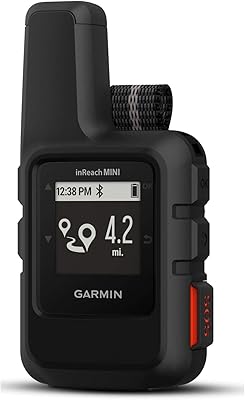
Garmin InReach Mini Satellite Communicator
75%
91%
Satellite Coverage & Reliability
88%
SOS & Emergency Performance
93%
Portability & Form Factor
84%
Battery Life
53%
Messaging Usability
More
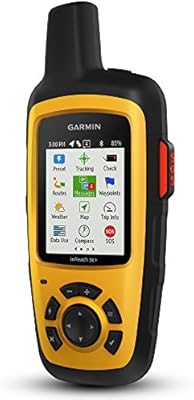
Garmin inReach SE+ Satellite Communicator
75%
94%
SOS Reliability
91%
Satellite Coverage
78%
Two-Way Messaging
83%
MapShare Tracking
74%
Earthmate App Integration
More
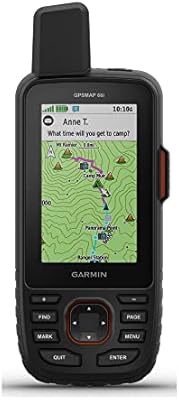
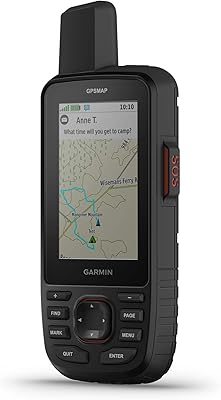
Garmin GPSMAP 66i GPS Satellite Communicator
82%
93%
Satellite Communication Reliability
89%
GPS Accuracy & Lock Speed
84%
Battery Life
91%
Map Quality & Coverage
82%
Display Legibility
More
Garmin GPSMAP 67i Satellite GPS Handheld
79%
93%
GPS Accuracy
89%
Satellite Communication
91%
Battery Life
88%
Display Quality
92%
Build Quality & Durability
More
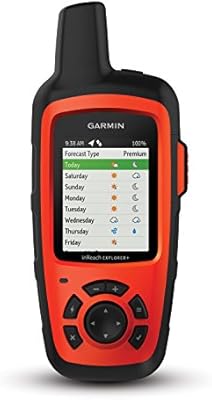
Garmin inReach Explorer+ Satellite Communicator
76%
93%
Satellite Reliability
88%
Two-Way Messaging
96%
SOS & Emergency Response
78%
Navigation & Mapping
61%
Value for Money
More
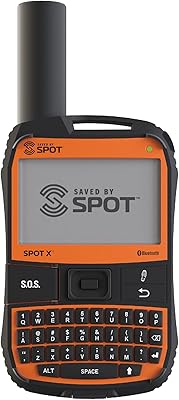
SPOT X Bluetooth Satellite Messenger
72%
91%
SOS Reliability
68%
Satellite Network Coverage
83%
Two-Way Messaging
54%
Subscription Value
61%
Physical Keyboard Usability
More
Garmin Forerunner 255 GPS Running Smartwatch
83%
93%
Battery Life
88%
GPS Accuracy
91%
Training Intelligence
79%
Sleep & Recovery Tracking
92%
Comfort & Wearability
More
Garmin Striker Cast Castable Sonar Fish Finder
79%
91%
Ease of Setup
71%
App Performance & Stability
84%
Sonar Accuracy
78%
Wireless Range
88%
Battery Life
More
Garmin Approach S12 GPS Golf Watch
79%
91%
GPS Accuracy
93%
Battery Life
89%
Course Library
71%
Display Readability
88%
Ease of Use
More
Garmin GT15M Transducer
87%
91%
Performance at High Speeds
89%
Ease of Installation
94%
Accuracy of Depth Readings
88%
Hull Compatibility
85%
Build Quality
More

FAQ

The hardware is a one-time purchase, but every communication feature — messaging, location sharing, and SOS — requires an active satellite subscription. Garmin offers several airtime plan tiers, including seasonal options, so you can match the plan to how often you actually go off-grid. Just factor that recurring cost into your budget before buying.

They can actually text you back, which is one of the key advantages of the inReach Messenger over basic one-way trackers. Your contacts download the free Garmin Messenger app on their phone and can reply to your messages directly — no satellite hardware or subscription required on their end.

It's more involved than that. When you trigger an SOS, you open an interactive two-way communication channel with the Garmin International Emergency Response Coordination Center, which is staffed around the clock by trained coordinators. They can assess your situation, coordinate with local rescue services, and stay in contact with you throughout the response — it's a real conversation, not just a flare going up.

It does not replace a dedicated GPS navigator. The Garmin inReach Messenger Satellite Communicator shares your GPS coordinates and supports basic location functions, but it has no map display and no turn-by-turn navigation. If you need topographic maps on-device, you should look at the inReach Mini Pro or inReach Explorer models instead, which are separate products with mapping capabilities.
Yes. The device uses the Iridium satellite network, which provides genuine pole-to-pole global coverage. Open ocean, polar expeditions, and deep wilderness areas are all within its operational range, which is exactly the use case it was designed for.

The rated 28-day figure is based on a 10-minute tracking interval with minimal active messaging. In practice, if you're sending messages regularly or using shorter tracking intervals, expect noticeably less. Many users report 5 to 10 days of realistic heavy use. It's still solid battery life for a communicator, but plan your charging stops accordingly on longer trips.

Delivery is generally fast — often within a minute or two under open sky. That said, dense tree canopy, canyon walls, or terrain that limits your view of the sky can slow things down. It's satellite-based, not cellular, so there's an inherent dependency on line-of-sight to the satellite constellation. In most conditions it performs well, but it's not instant like a cell text.

You can send preset check-in messages directly from the device using the physical buttons, which is handy when your phone is dead or packed away. However, composing custom text messages requires pairing with a smartphone and using the Garmin Messenger app, since there is no keyboard on the device itself.

This handheld communicator is built with outdoor conditions in mind and carries a rugged, weather-resistant construction. It's designed to handle rain, splashing, and the general abuse of trail use. For extended kayaking or immersion scenarios, checking the current official IP rating specification from Garmin before your trip is a reasonable precaution.

Some countries do regulate or outright prohibit the use of satellite communicators, so this is worth researching before any international trip. Garmin notes this in their documentation, but the responsibility to comply with local laws is on the user. A quick check with the destination country's telecommunications authority — or a travel forum focused on that region — will give you a clear answer before you pack it.

Where to Buy