Overview

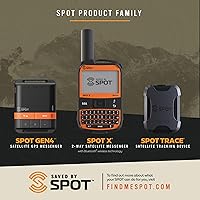
The SPOT X Bluetooth Satellite Messenger is built for one core purpose: keeping you connected when cell towers are nowhere in sight. Unlike your phone, which depends entirely on carrier infrastructure, this satellite messenger routes messages through the Globalstar network — meaning it works in deep canyons, open ocean, and remote backcountry where no signal exists. It functions as a standalone device with its own dedicated US mobile number, but can also pair via Bluetooth to your phone for easier typing. One thing to set straight upfront: a subscription is required, and that ongoing cost is something every buyer needs to factor in before committing.
Features & Benefits

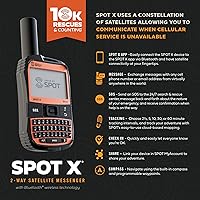
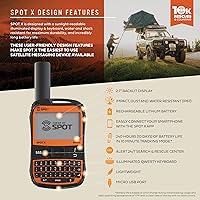
The SPOT X's standout capability is genuine two-way satellite messaging, which means you're not just broadcasting your location into the void — you can hold an actual back-and-forth conversation via text. Anyone can reach the device by texting its US mobile number; they don't need an app or special account. The SOS function connects you directly to the GEOS emergency response center, where trained staff coordinate rescue and confirm help is on the way — critically, you can describe your situation in real time rather than just triggering a silent alert. Bluetooth pairing with the companion app makes composing messages far less tedious, though the built-in QWERTY keyboard is cramped for larger hands or gloved fingers.

Best For

This off-grid communicator is a strong fit for hikers, backpackers, and anyone spending serious time in terrain where cell service simply doesn't exist. Boaters and paddlers benefit from the SOS and GPS combination, which can be critical on open water. Families with a solo traveler heading into the wilderness often cite this as the reason they finally feel comfortable letting someone go — the ability to exchange actual messages, not just track a dot on a map, changes things significantly. Remote professionals like field researchers, forestry workers, and wilderness guides find real operational value in a device that functions as a communication tool, not just a safety beacon.

User Feedback

Among the 700-plus reviews, themes are consistent. Buyers who've actually needed the SOS in the field — or used it during a real emergency — tend to become loyal advocates. Build quality earns positive marks; the device has held up across multi-week expeditions. On the other side, message delivery delays draw repeated complaints, and Globalstar's coverage gaps catch some buyers off guard, particularly in parts of Europe and remote polar regions. The subscription cost remains the loudest ongoing frustration. Battery life gets mixed feedback on longer trips, and the companion app, while functional, has drawn criticism for occasional syncing hiccups and a less-than-polished interface.

Pros

  • Two-way SOS communication lets you describe your emergency to responders in real time — not just trigger a silent alert.
  • Anyone can text the device from a regular phone number; no app or account needed on the recipient's end.
  • The SPOT X holds up well in harsh field conditions, with durable construction that handles extended outdoor use.
  • GPS coordinate sharing gives family members and emergency services your exact location, not just a general area.
  • Bluetooth pairing makes composing longer messages much easier using your smartphone keyboard.
  • Functions as a fully standalone device — no phone required to send or receive messages.
  • At 7 oz, this satellite messenger is light enough to carry daily without noticeably adding pack weight.
  • The carabiner clip and slim profile make it easy to keep accessible on a bag strap or vest pocket.
  • Reliable performance within North American Globalstar coverage zones, with strong user confidence after years of real-world use.

Cons

  • The mandatory subscription adds a significant ongoing cost that casual users often find hard to justify.
  • Message delivery delays of several minutes are common and frustrating when timely communication matters.
  • Globalstar coverage has real dead zones — parts of Europe and remote international regions are not reliably served.
  • The physical keyboard is cramped and genuinely difficult to use with gloves in cold conditions.
  • The companion app feels dated and has recurring syncing issues that require re-pairing on some trips.
  • Micro USB charging is an outdated connector choice compared to USB-C on newer competing devices.
  • Battery life on trips longer than three days requires active management and likely a backup power bank.
  • Subscription plan selection and activation involves a website experience that multiple users describe as confusing.
  • The painted exterior shows cosmetic wear relatively quickly under regular outdoor use.

Ratings

The SPOT X Bluetooth Satellite Messenger has been scored by our AI system after analyzing hundreds of verified global buyer reviews, with spam, bot-generated, and incentivized feedback actively filtered out. Scores reflect the honest spread of real-world experiences — the wins and the frustrations alike — so you get a picture that's actually useful before you buy. Both the strengths that make this off-grid communicator worth considering and the recurring pain points that give buyers pause are transparently represented below.
SOS Reliability
91%
Buyers who have tested or genuinely needed the SOS function consistently report that it works when it counts. The two-way communication loop with the GEOS response center — being able to describe an injury or situation rather than just triggering a silent alert — is repeatedly called out as a meaningful advantage over one-way beacons.
A small number of users in areas with weaker Globalstar satellite visibility reported longer-than-expected SOS acknowledgment times. While rare, any delay in an emergency context registers strongly with reviewers, and a handful noted the experience was more stressful than anticipated.
Satellite Network Coverage
68%
32%
For North American users — particularly those hiking in the Rockies, paddling coastal waters, or overlanding through the Southwest — coverage is generally solid and message delivery reliable. Many buyers in these regions complete entire multi-week trips without a single failed transmission.
Globalstar's network has well-documented dead zones, and buyers in parts of Europe, Southeast Asia, and polar-adjacent regions have reported dropped messages or failed check-ins. This is arguably the device's biggest structural limitation, and it catches some international buyers off guard after purchase.
Two-Way Messaging
83%
The ability to hold a real back-and-forth text conversation from a remote canyon or open ocean is the feature most buyers point to first. Family members at home can reply directly by texting the device's US number — no app download, no account setup — which dramatically lowers the friction of staying in touch.
Message delivery is not instantaneous, and delays of several minutes are common enough to be a recurring complaint. For casual check-ins this is manageable, but buyers expecting near-real-time exchanges have found the latency frustrating on longer expeditions.
Subscription Value
54%
46%
For frequent backcountry travelers or professionals who rely on the device regularly, the subscription cost spreads across enough usage to feel defensible. Several long-term owners note that having a dedicated satellite communication line justifies the annual commitment when weighed against the alternative of having no contact capability at all.
The subscription is the single most complained-about aspect across all reviews. Casual or occasional users who take one or two trips per year find the ongoing cost hard to justify, especially when plans auto-renew or require minimum commitments. This is a deal-breaker for a meaningful portion of potential buyers.
Physical Keyboard Usability
61%
39%
Having a built-in QWERTY keyboard means the device functions completely independently — no phone required, no Bluetooth pairing needed. For buyers who want a no-fuss standalone tool, being able to type a message directly on the unit without fumbling for a phone is genuinely appreciated in the field.
The keys are small and closely spaced, and typing with gloves — which is precisely when you might need this device most — is a real struggle. Multiple reviewers with larger hands describe the keyboard as fiddly, and cold-weather use compounds the problem. It works, but not comfortably.
Bluetooth & App Experience
67%
33%
Pairing the SPOT X to a smartphone and composing messages through the companion app is noticeably easier than pecking out text on the physical keyboard. The app works on both iOS and Android, and initial pairing is straightforward enough that most users get it running without consulting a manual.
The app interface feels dated compared to modern smartphone apps, and occasional syncing hiccups — where the device and app fall out of step — appear consistently in reviews. Some users report needing to re-pair the device periodically, which is a minor but recurring annoyance on multi-day trips.
GPS Accuracy & Location Sharing
78%
22%
GPS lock is described as fast and accurate by the majority of users, and the ability to share exact coordinates with family or emergency services is one of the features buyers cite most when explaining why they chose this over simpler one-way trackers. Location data transmits cleanly alongside messages.
A handful of users noted slower GPS acquisition in dense tree cover or deep canyon environments, which is partly a physics limitation rather than a device flaw. Still, buyers heading into heavily forested terrain should set realistic expectations about lock times.
Build Quality & Durability
82%
18%
The SPOT X has a reputation for holding up under real field conditions. Reviews from multi-week expeditions, river trips, and dusty overland routes consistently describe the device as solid — no cracked screens, no water ingress complaints, and the carabiner attachment point appears to survive sustained daily use.
The painted exterior shows wear over time, with scuffs and scratches appearing after extended outdoor use. A small number of buyers reported button feel degrading slightly after a year or more of regular use, though functional failures are rare in the review pool.
Battery Life
71%
29%
For day hikes and weekend trips, battery life is rarely a concern — most users report the charge lasting well through a two to three day outing with regular message checking and GPS use. The rechargeable lithium polymer battery holds a meaningful charge and recharges fully overnight via micro USB.
On week-long or longer expeditions, battery management becomes an active concern. Several long-trip reviewers note the need to carry a power bank and ration usage, particularly when tracking is active continuously. The micro USB port feels like a dated choice compared to USB-C on newer competitors.
Ease of Setup & Activation
73%
27%
Most buyers describe initial setup — activating the subscription plan, registering the device, and getting the app connected — as manageable without technical expertise. The quick start guide covers the basics, and the device is ready to use within a reasonable amount of time out of the box.
Subscription activation occasionally involves navigating a website that users describe as clunky, and a portion of reviewers found the plan selection process confusing. A few international buyers encountered friction around service plan availability in their region.
Portability & Form Factor
77%
23%
At 7 oz and a slim profile, the SPOT X fits comfortably in a hip belt pocket or jacket chest pocket without adding noticeable bulk to a pack. The included carabiner clip means it can hang accessibly from a bag strap rather than being buried at the bottom of a pack.
It is longer than some competing devices, which makes certain low-profile storage spots a tight fit. Buyers transitioning from smaller one-way trackers sometimes find the form factor slightly bulkier than expected, especially when stored in a stuffed vest pocket.
Value for Money
59%
41%
For buyers who use the device regularly and have experienced a genuine communication need in the field, the price-to-capability ratio feels justified. The hardware cost is competitive relative to alternatives like the Garmin inReach Mini, and first-time satellite communicator buyers often cite relief at the relatively accessible entry price.
When the subscription cost is factored into the full picture, the total annual outlay stacks up quickly. Buyers who purchase for infrequent trips and then face a recurring plan fee often feel the overall value proposition erodes fast, particularly if they encounter coverage limitations in their specific region.
Emergency Documentation & In-Box Experience
74%
26%
The included SOS mirrored sticker — designed to be placed on a helmet or gear for visibility to rescuers — is a small but thoughtful touch that buyers notice. The quick start guide covers critical functions clearly enough that most users can locate and confirm the SOS process before their first trip.
The documentation does not go deep on subscription plan differences or coverage map specifics, which are arguably the two things new buyers most need to understand before committing. Several reviews mention wishing the setup materials had been more explicit about what the subscription actually includes.

Suitable for:

The SPOT X Bluetooth Satellite Messenger is a strong fit for anyone who regularly spends time in places where cell service simply does not exist and needs more than a one-way tracker to feel secure. Serious hikers and backpackers heading into remote mountain terrain, boaters navigating coastal or open-water routes, and overlanders running multi-day trips through isolated desert or forest roads will find the two-way messaging and SOS combination genuinely useful rather than just theoretical. It also makes a lot of sense for families with a loved one traveling solo in the backcountry — the fact that a worried parent or partner can reply to a check-in message from their regular phone number, without downloading anything, removes a real barrier to communication. Remote professionals like wilderness guides, field researchers, and forestry workers who need a reliable way to coordinate with colleagues or supervisors outside cell range will find the standalone functionality and dedicated device number practical for daily use. If you are a North American user traveling primarily within Globalstar's stronger coverage zones and you will use the device often enough to offset the subscription cost, this off-grid communicator earns its place in the pack.
Not suitable for:

The SPOT X Bluetooth Satellite Messenger is not the right call for occasional adventurers who take one or two trips per year and are not prepared for a recurring subscription cost on top of the hardware price — that total annual commitment adds up fast and will feel disproportionate if the device spends most of its time in a drawer. Travelers heading primarily to parts of Europe, Southeast Asia, or high-latitude regions should research Globalstar coverage maps carefully before buying, because the network has documented gaps in those areas that make reliable communication far from guaranteed. Anyone expecting instant message delivery will find the latency frustrating; this is satellite communication with real-world transmission delays, not a push notification. If your priority is international coverage without compromise, competing devices on the Iridium network cover more of the globe and are worth the comparison. Users with larger hands or who anticipate typing in cold conditions should also weigh the keyboard limitation honestly — gloved operation is genuinely awkward, and if you expect to compose frequent messages in winter conditions, that friction is a daily reality rather than a minor footnote.

Specifications

  • Weight: The device weighs 7 oz, making it light enough for daily carry in a pack hip belt pocket or jacket.
  • Dimensions: It measures 2.9 x 0.94 x 6.54 inches, giving it a slim but elongated profile suited to vertical pocket storage.
  • Satellite Network: Communication is routed through the Globalstar satellite network, which provides strong coverage across North America and portions of other regions.
  • Communication Type: The device supports genuine two-way satellite messaging, allowing both sending and receiving of text messages without cellular infrastructure.
  • SOS Function: A dedicated SOS button connects users to the GEOS 24/7 emergency response center, which coordinates with local rescue authorities and maintains two-way contact throughout the incident.
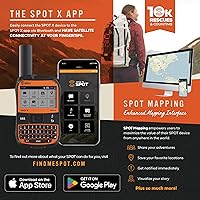
  • Bluetooth: Bluetooth connectivity allows pairing with iOS and Android smartphones so users can compose messages using their phone keyboard via the companion app.
  • Keyboard: A built-in physical QWERTY keyboard enables fully standalone message composition without requiring a paired phone.
  • Mobile Number: Each device is assigned a dedicated US mobile number, so contacts can send messages directly via standard SMS without downloading any app.
  • Battery Type: The device runs on a rechargeable lithium polymer battery, which is included in the box and integrated into the unit.
  • Charging Port: The device charges via micro USB, using the data and power cable included in the box.
  • GPS: Built-in GPS determines the device's location and allows coordinates to be shared with designated contacts or transmitted to emergency responders.
  • Subscription: Active use requires a separate Globalstar service plan subscription, which is purchased independently and billed on a recurring basis.
  • Companion Apps: Official apps are available for both iOS and Android, enabling Bluetooth-paired messaging, contact management, and device settings configuration.
  • In-Box Contents: The package includes the SPOT X device, a carabiner, a strap, a micro USB cable, a quick start guide, an SOS mirrored sticker, a kickstand, and a warranty card.
  • Release Year: The device was first made available in June 2018 and has not been discontinued by the manufacturer as of available records.
  • Exterior Finish: The outer casing has a painted finish, which provides a clean look but is prone to cosmetic scuffing under regular outdoor use.
  • Power Source: The device is powered by its internal rechargeable battery and does not support standard replaceable AA or AAA batteries.
  • Supported Platforms: The device is compatible with Android and iOS operating systems through its dedicated companion application for Bluetooth-enhanced functionality.

Related Reviews

Spot Trace Satellite Tracking Device
81%
90%
Tracking Accuracy
95%
Global Coverage
92%
Battery Life
88%
Ease of Setup
94%
Portability
More
Garmin inReach Messenger Satellite Communicator
77%
88%
Satellite Reliability
93%
SOS Effectiveness
84%
Two-Way Messaging
91%
Portability & Form Factor
54%
Subscription Value
More
RØDE X Streamer X
RØDE X Streamer X
83%
94%
Audio Quality
90%
Video Capture Performance
88%
Build Quality
91%
Portability
86%
Connectivity Options
More
Fender x Teufel ROCKSTER CROSS Portable Bluetooth Speaker
86%
94%
Sound Quality
90%
Durability
85%
Battery Life
88%
Water Resistance
75%
Portability
More
Micool BT-X Easy Bluetooth 5.4 On-Ear Headphones
85%
79%
Sound Quality
88%
Comfort and Fit
92%
Battery Life
81%
Noise Cancellation (ANC)
85%
Dual-Device Connectivity
More
SOL REPUBLIC Deck Bluetooth Wireless Speaker
75%
83%
Sound Clarity
61%
Bass Performance
78%
Build Quality
86%
Bundled Case
88%
Connectivity & Pairing
More
Sony SRS-XG500 Portable Bluetooth Speaker
78%
86%
Sound Quality
89%
Bass Performance
91%
Battery Life
93%
Water & Dust Resistance
62%
Portability
More
Lineco 4x6 Archival Photo Card Storage Box
80%
91%
Build Quality
93%
Archival Protection
58%
Ease of Assembly
74%
Lid Functionality
77%
Value for Money
More
Amazon Basics 25x30 Photo Studio Light Box
81%
88%
Lighting Quality
93%
Setup & Ease of Use
86%
Image Quality Output
67%
Build Quality & Durability
71%
Interior Size & Capacity
More
GDSTIME 17251 172mm AC Axial Fan
78%
93%
Build Quality
91%
Airflow Performance
41%
Noise Level
89%
Durability & Longevity
67%
Ease of Installation
More

FAQ

No, the SPOT X Bluetooth Satellite Messenger works completely on its own. The built-in keyboard lets you type and send messages directly on the device without a phone anywhere nearby. Pairing your phone via Bluetooth just makes composing messages more comfortable, especially for longer texts.
It is fully two-way. The device gets its own US mobile number, so your family or friends can reply by simply texting that number from their regular phone — no app, no account, nothing to set up on their end. Their reply comes straight to your device via satellite.

For weekend trips of two to three days, battery life is generally not a concern under typical use. On longer expeditions of a week or more, you will want to carry a small power bank and be intentional about when you check messages or have tracking active, as continuous GPS use drains the battery faster.

Not reliably everywhere. The Globalstar network, which this device runs on, has solid coverage across North America and parts of South America, Europe, and Australia, but has documented gaps in parts of Southeast Asia, northern regions, and some remote international areas. Before relying on it for international travel, check Globalstar's current coverage map for your specific destination.

Pressing and holding the SOS button initiates a connection to the GEOS emergency response center, which operates around the clock. Crucially, this is not a silent one-way alert — you can type back and forth with the response center to describe your situation, your injuries, or your exact circumstances. GEOS then coordinates with local emergency services and sends you a confirmation when help has been dispatched.

It depends on your hands and conditions. People with average-sized hands in normal conditions find it workable for short messages. In cold weather or with gloves on, it becomes genuinely difficult — the keys are small and closely spaced. If you plan to type frequently or in winter conditions, using the Bluetooth app with your phone keyboard is a much better experience.

Subscription plans vary and are managed separately through SPOT's website rather than being included with the hardware purchase. Plans range from basic tracking tiers to full two-way messaging plans at different price points, and some require annual commitments. There is no true pay-as-you-go option for casual users, which is a real consideration if you only take a few trips per year.

The most meaningful difference is the satellite network — this off-grid communicator runs on Globalstar, while the inReach uses Iridium, which has more consistent global coverage including polar regions. The inReach also has a longer track record for international travelers. The SPOT X has a price advantage at the hardware level and includes a dedicated phone number that makes it easier for non-technical family members to reach you. Your specific travel destinations and how often you leave North America should drive that decision.

Generally yes — user experiences from multi-week backcountry trips consistently describe the build as solid. The casing handles dust and incidental rain without reported functional issues. The painted exterior does pick up scuffs over time, but structural durability complaints are rare across the review pool.

The app works well enough for most users, but it does have a dated interface and occasional Bluetooth syncing hiccups that require re-pairing the device. It is not as polished as modern smartphone apps, and a handful of users report needing to troubleshoot the connection on longer trips. It functions, but you should not expect a flawless, consumer-grade app experience.

Where to Buy