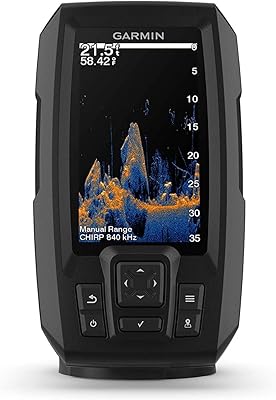
Overview

The Garmin Striker Cast Castable Sonar Fish Finder brings fish-finding technology to anglers who've never had a boat-mounted transducer in their lives. Unlike traditional fish finders bolted to a hull, this castable sonar gets lobbed into the water like a lure, then streams sonar data wirelessly to your phone through the free STRIKER Cast app, available on both iOS and Android. Garmin has spent decades earning its reputation in marine electronics, and this device fits naturally into that legacy while targeting a different crowd entirely — shore anglers, weekend warriors, and anyone fishing without a vessel. Setup takes minutes, not hours.
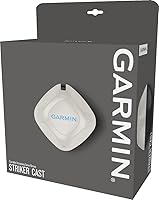
Features & Benefits

The Striker Cast streams sonar wirelessly up to 200 feet away — in practical terms, that means casting well past a weed edge or drop-off and still getting a clear read on your screen. Two sonar modes cover most fishing scenarios: traditional 2-D for open water, and an ice fishing flasher that makes this a year-round tool. Tap into the Garmin Quickdraw Community for contour maps with up to 1-foot resolution, genuinely useful when you're fishing an unfamiliar lake. Battery life clears 10 hours of real use, it charges over USB, and the unit switches on automatically the moment it touches water.

Best For

This Garmin device was built for anglers who fish without a boat — or at least without one big enough to justify a mounted transducer. Bank and shore fishers get the most obvious value here, but kayak anglers will appreciate having sonar without drilling a hole or rigging a single mount. Ice fishers gain a portable flasher alternative that tucks into a jacket pocket. Even traveling anglers hiking into backcountry lakes can pack this castable sonar without noticing the added weight. No complicated wiring, no installation headaches — just download the app and start fishing.

User Feedback

Most buyers point to quick, painless pairing and solid shallow-water accuracy as the standout strengths. Battery life holds up well in real-world use, generally matching the advertised figure. The friction tends to show up elsewhere: some Android users report occasional app instability, which matters more here than on a conventional fish finder since the sonar is entirely app-dependent — if the software misbehaves, you're fishing blind. The 20-foot tether splits opinion, with some anglers wishing for more length on deeper retrieves. Ice fishing users like the flasher mode but generally agree it doesn't fully replace a dedicated ice unit. Note that this covers the non-GPS version specifically.

Pros

  • Out-of-the-box setup genuinely takes under five minutes — no tools, no installation, no wiring.
  • At 75 grams, this castable sonar fits in a jacket pocket and adds almost nothing to a kayak or backpack load.
  • Smart water-activation means the battery only drains when the unit is actually fishing, not sitting in your bag.
  • Dual sonar modes make the Striker Cast a year-round tool usable from open-water season straight through ice fishing.
  • Access to Garmin Quickdraw Community maps with 1-foot contours helps anglers read unfamiliar lakes with real confidence.
  • Battery life holds up to 10-plus hours in real-world use, matching what Garmin actually claims.
  • Shore and bank anglers gain genuine fish-finding technology without needing a vessel of any kind.
  • Compatible with both iOS and current Android devices, making it accessible to most smartphone users.
  • The free STRIKER Cast app interface is readable with polarized sunglasses and wet hands — practical details that matter on the water.
  • Wireless sonar range of up to 200 feet covers the realistic distance of most practical casting scenarios on calm water.

Cons

  • App instability on older and mid-range Android devices can render the entire device useless mid-session.
  • Wind and surface chop meaningfully reduce the wireless range, sometimes cutting reliable signal range by half.
  • The included 20-foot tether frustrates anglers who cast long distances and want more drift room.
  • This non-GPS model cannot plot your position, record tracks, or mark waypoints — buyers often discover this after purchase.
  • Sonar performance in deep water or heavy weed cover loses definition and becomes harder to interpret accurately.
  • The device is completely app-dependent — a dead phone battery or software crash ends your fish-finding session entirely.
  • Cold-weather battery performance under true ice fishing conditions gets cautionary mentions from dedicated ice anglers.
  • The carrying bag included in the box feels noticeably cheaper than the device it is meant to protect.
  • Quickdraw Community map coverage is sparse or absent on remote and less-fished bodies of water.
  • Buyers expecting GPS functionality are often caught off guard by the distinction between the GPS and non-GPS variants at the point of purchase.

Ratings

The Garmin Striker Cast Castable Sonar Fish Finder earns its place near the top of the castable sonar category, and these scores reflect exactly that — the genuine highs and the honest frustrations. Our AI has analyzed thousands of verified global user reviews, actively filtering out incentivized submissions and bot activity, to produce a balanced picture of real-world performance. Both the standout strengths and the recurring pain points are transparently captured below.
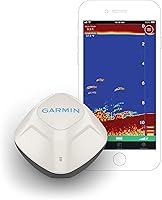
Ease of Setup
91%
Anglers consistently report being on the water and reading sonar within five minutes of opening the box. Downloading the free app, pairing via Bluetooth, and making a first cast is genuinely as quick as advertised — a rare claim that actually holds up.
A small number of users on older Android devices hit pairing snags on the first attempt and needed to reinstall the app or toggle Bluetooth. This is uncommon, but worth knowing if your phone is a few generations behind.
App Performance & Stability
71%
29%
On iOS devices and current Android flagships, the STRIKER Cast app runs cleanly — sonar feeds refresh in near-real time, and the interface is logically laid out for someone standing on a bank with wet hands and polarized sunglasses on.
This is the Striker Cast's most debated weakness. Several Android users report crashes, delayed sonar refreshes, and occasional disconnects mid-session. Because the entire experience depends on the app functioning correctly, any instability here effectively kills your fish-finding session.
Sonar Accuracy
84%
In shallow-to-mid-depth water — the typical range for shore and kayak fishing — the sonar reads bottom structure and fish arches with solid reliability. Users fishing lakes under 30 feet deep report confident, consistent readings that match what they pull up.
Performance in deeper water or heavy vegetation gets mixed reviews. Some users note the 2-D sonar can struggle to separate fish from dense weeds, and very deep readings lose definition compared to a permanently mounted transducer.
Wireless Range
78%
22%
On calm, open water the 200-foot wireless range is genuinely achievable — anglers casting from piers or flat reservoir banks report holding a stable connection well past the length of most practical casts.
Wind is this device's enemy. Users fishing on choppy days or in areas with significant interference note signal dropout starts well before the 200-foot limit. In real-world conditions with wind and surface chop, a more conservative 100-to-150-foot expectation is safer.
Battery Life
88%
The 10-plus-hour battery claim is one of the few specs that real-world users broadly confirm. The smart water-activation feature — where the unit powers on when it hits water and shuts off when removed — genuinely extends charge across multi-session fishing days.
Heavy continuous sonar streaming and bright app screen usage can edge the battery closer to 8 hours in practice. Users who forget to pull the device from the water between extended breaks also occasionally drain it faster than expected.
Portability & Form Factor
93%
At 75 grams, this is genuinely pocketable. Kayak anglers, backpackers hiking into mountain lakes, and ice fishers drilling multiple holes all cite its compact size as a major practical advantage over any mounted or handheld fish finder alternative.
The compact size means the unit itself can be tricky to locate in the water after a long cast without the tether attached and taut. A few users mention the carrying bag, while included, feels like a budget afterthought compared to the device itself.
Tether & Retrieval
66%
34%
The included 20-foot tether does its job for standard retrieval and prevents the sonar from drifting too far from your line. Anglers fishing from piers or docks in relatively calm water find the tether length perfectly adequate.
Twenty feet frustrates anglers who cast long distances and want to let the sonar drift naturally with current. Several buyers have purchased longer aftermarket tethers to compensate, which is an added inconvenience that Garmin could address with an optional extended version.
Ice Fishing Flasher Mode
69%
31%
The flasher mode is a genuine bonus that makes this castable sonar a year-round tool. Ice anglers who want a no-frills flasher display on their phone without buying dedicated ice electronics find it functional and easy to read.
Experienced ice fishing purists tend to rate it as a capable substitute, not a replacement. The display lacks the instantaneous real-time responsiveness of a dedicated ice flasher, and cold-weather battery performance under sub-zero conditions gets a few cautionary mentions.
Quickdraw Map Integration
77%
23%
Access to the Garmin Quickdraw Community maps — with contours down to 1-foot resolution — is a legitimately useful feature for fishing unfamiliar lakes. Anglers who scout new water regularly appreciate having crowd-sourced depth charts directly in the app.
Map availability is entirely community-dependent, so remote or less-popular lakes may have sparse or no Quickdraw data at all. Users in heavily fished regions with active Garmin communities get much more value out of this feature than those fishing off-the-beaten-path waters.
Value for Money
79%
21%
For shore anglers and kayakers who would otherwise fish blind, the Striker Cast delivers genuine fish-finding capability at a price that undercuts any comparable mounted transducer setup. The no-installation, no-extra-hardware approach adds real perceived value.
At its price point, buyers expect flawless app performance, and the Android stability issues make some feel the asking price isn't fully justified. A small but vocal group also finds the non-GPS model limiting when they later realize GPS mapping requires the pricier variant.
Build Quality & Durability
82%
18%
The housing feels solid and purpose-built for fishing conditions. Users report the unit surviving accidental drops on rocks, repeated casting impact, and prolonged submersion without any functional degradation — reassuring for a device that gets abused in the field.
Some users question long-term durability after a full season of heavy use, particularly around the USB charging port area. No widespread structural failure reports exist, but the rugged appearance slightly outpaces the rugged reality for the most aggressive users.
Shallow Water Performance
86%
This is where the Striker Cast genuinely shines. Anglers targeting bass, panfish, and trout in water ranging from a few feet to around 20 feet deep consistently report accurate bottom readings and reliable fish detection — exactly the use case the device was designed for.
Performance edges down in water with high vegetation density or significant suspended sediment, where some users report cluttered sonar returns that make it hard to distinguish fish from debris. It handles typical lake conditions well but isn't engineered for murky river bottoms.
GPS vs. Non-GPS Clarity
61%
39%
Buyers who research before purchasing and consciously choose the non-GPS version — understanding that map plotting and location tracking require the GPS variant — report being satisfied with what they get for the price.
A recurring frustration in reviews comes from buyers who assumed the non-GPS model included basic location plotting and felt misled after purchase. The product differentiation between variants is not prominently communicated, leading to real post-purchase disappointment.
Compatibility Across Devices
74%
26%
iOS compatibility is consistently smooth across all recent iPhone and iPad generations. Android users on Samsung, Google Pixel, and other current flagship devices also report clean pairing and stable sonar feeds during normal conditions.
Compatibility drops off noticeably on mid-range Android devices running older OS versions, and the STRIKER Cast app update cadence doesn't always keep pace with Android version changes. Users on budget Android phones are the most likely to encounter pairing failures.

Suitable for:

The Garmin Striker Cast Castable Sonar Fish Finder is purpose-built for anglers who fish without a traditional boat setup — and that covers a much wider group than you might expect. Shore and bank fishers get the most obvious value, finally gaining access to depth and fish data that was previously locked behind a vessel requirement. Kayak and canoe anglers who want sonar without drilling a single hole or rigging a transducer mount will find this Garmin device slots into their kit almost invisibly at just 75 grams. Ice fishers who want a portable flasher-style display without investing in a dedicated ice unit get a functional, packable alternative that handles basic flasher duties through the same app. Casual weekend anglers who want to understand the water column beneath them — without reading a manual the size of a small novel — will appreciate how quickly the whole system gets them fishing. Backpackers and traveling anglers who hike into remote lakes also stand to benefit enormously, since this castable sonar adds almost no burden to a pack while delivering real fish-finding capability on water that has never seen a mounted transducer.

Not suitable for:

The Garmin Striker Cast Castable Sonar Fish Finder has genuine limitations that make it a poor fit for certain buyers, and it is worth being direct about them before any purchase decision. Serious tournament anglers or anyone regularly fishing deep water will likely find the 2-D sonar output too limited compared to a full side-imaging or down-imaging unit permanently mounted to a boat. Buyers who fish primarily from a power boat with space and power for a proper chartplotter should put their budget toward that instead — this device does not replace a real marine electronics setup, it fills the gap where one cannot exist. Android users running older or mid-range phones face a meaningful risk of app instability, and since the sonar is entirely dependent on the app, an unreliable phone equals an unreliable fish finder. Anyone expecting GPS-based map plotting and track recording should know that this non-GPS model does not include those features — that requires the separate GPS variant, which carries a higher price. Dedicated ice fishing enthusiasts who depend on split-second flasher responsiveness in extreme cold will likely find the flasher mode here functional but not up to the standard of purpose-built ice electronics.

Specifications

  • Brand & Model: Manufactured by Garmin under model number 010-02246-00, marketed as the STRIKER Cast.
  • Dimensions: The unit measures 2.99″L x 2.99″W x 2.36″H, making it compact enough to fit in a shirt pocket.
  • Weight: The device weighs 75 grams (2.65 oz), light enough to cast repeatedly without affecting your rod action.
  • Battery Type: Powered by an internal lithium polymer battery that recharges via USB — no disposable batteries required.
  • Battery Life: Rated at 10-plus hours per charge under normal operating conditions, with battery drain varying by sonar usage intensity.
  • Smart Activation: The unit automatically powers on when submerged in water and powers off when removed, conserving battery between casts.
  • Wireless Range: Streams sonar data wirelessly to a paired smartphone or tablet from up to 200 feet away under optimal conditions.
  • Sonar Modes: Supports traditional 2-D sonar for open-water fishing and an ice fishing flasher mode for year-round versatility.
  • Companion App: Operates exclusively through the free STRIKER Cast app, compatible with Apple iOS and Android devices.
  • Map Support: Integrates with the Garmin Quickdraw Community, providing access to crowd-sourced contour maps with up to 1-foot resolution.
  • Connectivity: Uses wireless Bluetooth-based streaming to the smartphone app; USB connection is used only for battery charging.
  • In-Box Contents: Package includes the STRIKER Cast sonar unit, a carrying bag, a 20-foot tether, a USB charging cable, and documentation.
  • Power Source: Fully self-contained with an internal rechargeable battery — no external power source or boat connection is needed.
  • Display: No onboard screen; all sonar and map data is displayed on the user's paired smartphone or tablet via the app.
  • GPS: This model (010-02246-00) does not include GPS; a separate GPS-enabled variant is available for position tracking and waypoint marking.
  • Best Sellers Rank: Ranked #24 in Fish Finders and Depth Finders on Amazon at time of listing, placing it in the top tier of its category.
  • Mounting Type: Requires no permanent mounting — the unit is cast directly into the water and retrieved by line or tether.
  • UPC: Universal Product Code for this variant is 753759229054, useful for verifying authenticity at retail.

Related Reviews
Garmin Striker 4cv Fish Finder
86%
93%
Sonar Imaging Clarity
89%
Ease of Use
91%
Portability
84%
Battery Life
85%
Build Quality
More
Garmin Striker Vivid 5cv Fish Finder
80%
88%
Sonar Clarity & Target Separation
91%
Real-Time Jig Tracking
86%
Display Visibility Outdoors
62%
Battery Life in Cold Conditions
93%
Bundle Completeness & Out-of-Box Readiness
More
Lixada Wired Fishing Finder Sonar Sensor
70%
88%
Ease of Setup
76%
Display Clarity
63%
Depth Detection Accuracy
72%
Bottom & Structure Detection
58%
Audible Fish Alarm
More
Garmin STRIKER Vivid 9sv Fishfinder
83%
93%
Sonar Image Clarity
91%
Display Quality
88%
GPS Accuracy
86%
Sonar Coverage Range
84%
Ease of Installation
More
Deeper START Castable Fish Finder
75%
88%
Ease of Setup
93%
Portability & Form Factor
67%
App Experience
71%
Sonar Accuracy & Fish Detection
76%
Battery Life
More
Garmin Striker Plus 9SV Fish Finder
79%
93%
Sonar Image Quality
88%
Display Readability
86%
GPS Accuracy
84%
Ease of Use
81%
Value for Money
More
Venterior VT-FF005 Portable Castable Fish Finder
80%
91%
Ease of Setup
78%
Sonar Accuracy
84%
Display Readability
77%
Wireless Range & Connectivity
73%
Battery Life
More
RICANK F12 Fish Finder
86%
89%
Ease of Use
92%
Portability
91%
Water Resistance
87%
Fish Location Accuracy
82%
Battery Life
More
Garmin Striker Vivid 7cv 7-inch Fishfinder
80%
88%
Display Clarity
84%
Sonar Performance
91%
GPS Accuracy
83%
Quickdraw Contours Mapping
79%
Ease of Setup
More
HawkEye Fishtrax 1C Fish Finder
83%
91%
Portability
87%
Sonar Accuracy
89%
Ease of Use
72%
Screen Size
68%
Battery Life
More

FAQ

Not at all — that is exactly the point of the Garmin Striker Cast Castable Sonar Fish Finder. You cast it out like a lure from shore, a dock, a kayak, or even the ice, and it streams sonar data back to your phone wirelessly. No boat, no transducer mount, no wiring required.

Download the free STRIKER Cast app from the App Store or Google Play, power on the sonar unit, and pair it to your phone via the app. Most users are up and reading sonar within five minutes. The unit turns on automatically when it hits water, so there is no power button to remember once you are on the water.

It works well with current Android flagship devices from brands like Samsung and Google Pixel. That said, older Android phones or budget mid-range models running outdated OS versions have a track record of app instability — crashes, pairing delays, and dropped connections. If your phone is more than three or four years old, it is worth checking the app compatibility list before buying.

No, this specific model does not include GPS. You will not be able to mark waypoints, record your path, or see your position overlaid on a map. Garmin does offer a GPS-enabled variant of the Striker Cast if those features matter to you — just make sure you are buying the right one, because the product listings look nearly identical at a glance.

The official wireless range is up to 200 feet, and on calm, open water many users do hit that. In practice, expect reliable signal somewhere between 100 and 150 feet when there is wind or surface chop involved. Most fishing casts land well within that range anyway, so it is rarely a dealbreaker — but worth knowing if you fish wide-open reservoirs on breezy days.

Yes, the Striker Cast includes a dedicated ice fishing flasher mode accessible through the app. It works as a portable alternative to a standalone ice flasher, which is a genuine bonus for anglers who do not want to invest in a separate ice-specific device. Hardcore ice fishing enthusiasts do note that it is not quite as responsive as a purpose-built flasher, but for casual ice fishing it performs solidly.

Garmin rates it at 10-plus hours, and real-world user feedback broadly confirms that figure under normal fishing conditions. The smart water-activation feature helps stretch battery life — the unit only draws power when it is actually in the water, so it is not draining in your bag between spots. Heavy continuous streaming can edge the runtime closer to 8 hours, but a full day of fishing is well within reach.

For most fishing situations — docks, ice holes, short casts into a weed edge — yes, the included tether does its job. Where it frustrates people is on longer casts where anglers want to let the sonar drift freely with current or wind. A few users have bought longer aftermarket tethers to solve this, which is a workable fix but an added step Garmin could make unnecessary.

Shallow water is honestly where this castable sonar performs best. Most users targeting bass, panfish, or trout in lakes under 25 to 30 feet deep report accurate bottom readings and reliable fish detection. Performance gets more mixed as depth and vegetation density increase, so if you mostly fish deep reservoirs or heavily weedy water, temper your expectations a little.

The sonar unit itself keeps working, but you will have no way to see or interpret the data — everything runs through the app on your phone. This is the fundamental trade-off of any smartphone-dependent device. Bringing a small portable power bank is a smart habit if you plan on long sessions, since a dead phone means a very expensive, very silent fishing companion.

Where to Buy