Overview

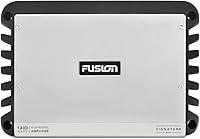
The Garmin Fusion 1400W 4-Channel Marine Amplifier sits at the top of Garmin's Signature Series lineup — a range built specifically for the punishment that boats dish out daily: salt spray, relentless vibration, and heat that would cook a car amp in short order. This isn't a repurposed automotive unit with a coat of marine-friendly paint; it's engineered from the ground up for life on the water. With a 4-channel configuration pushing serious total wattage, it's designed to drive a full speaker setup across your vessel. That said, this marine amp isn't a plug-and-play affair — expect an installation process that genuinely rewards preparation and planning.
Features & Benefits

The high-efficiency design is where this 4-channel unit earns its keep beyond raw numbers. At 1400W total output, less energy is wasted as heat compared to older class AB designs — and on a boat where your battery bank is finite and you're miles from shore, that matters. The one-piece die-cast chassis resists the flexing that can crack solder joints on cheaper builds, handling constant marine vibration without complaint. Five-way protection covers thermal runaway, reversed polarity, DC offset, and both high and low voltage swings, meaning honest wiring mistakes or engine-driven power surges won't take the unit out. Surface mounting keeps installation flexible for varied hull configurations.

Best For

The Fusion Signature amp makes the most sense for boaters ready to leave entry-level audio behind for good. If you're running a mid-to-large vessel and want to power multiple speaker zones plus a subwoofer from a single unit, this is the configuration to look at. It's also a natural fit for anyone already in the Garmin Fusion ecosystem — compatible head units unlock deeper control, though it handles third-party sources too. Saltwater boaters who won't compromise on corrosion resistance will appreciate the marine-grade build. DIY installers should come prepared: at this power level, proper gauge wiring and correct fusing aren't optional extras, they're requirements.

User Feedback

Owners of this marine amp consistently highlight how cool it runs during long days on the water — less heat means more stable output over a full afternoon rather than a throttled, diminished signal. Build confidence is another recurring theme; buyers feel this unit is built to outlast cheaper alternatives in rough conditions. On the flip side, installation regularly catches people off guard, particularly around sourcing the correct power cable gauge and fusing for the rated output. Some buyers flag the price as steep against lesser-known competitors, but the majority conclude that long-term reliability and Garmin's support network make the premium worth it for anyone serious about on-water audio.

Pros

  • High-efficiency design delivers strong output while drawing less power from your boat's battery bank.
  • The one-piece die-cast chassis holds up exceptionally well against constant marine vibration and corrosion.
  • Five-way circuitry protection guards against real-world wiring mistakes and voltage swings that kill cheaper amps.
  • Runs noticeably cool during extended use, maintaining stable output on long days out on the water.
  • Compact dimensions for its power class make it easier to fit into tight installation spaces below deck.
  • Drives four channels plus a subwoofer effectively, making it a genuine whole-vessel audio solution.
  • Garmin Fusion ecosystem integration offers deeper control when paired with compatible head units.
  • Long-term reliability is a consistent theme among owners who have used it across multiple seasons.
  • Surface-mount design gives installers flexibility across a range of hull layouts and configurations.
  • Garmin's support network provides real peace of mind if issues arise post-installation.

Cons

  • Installation is more involved than many buyers expect — correct cable gauge and fusing are non-negotiable at this power level.
  • The upfront cost is steep, and the value only clicks if your speakers and wiring can actually match the amp's output.
  • Third-party head unit integration works but lacks the depth of control available within the full Garmin Fusion ecosystem.
  • Buyers without prior 4-channel amp installation experience will likely need professional help, adding to the overall cost.
  • No built-in Bluetooth or Wi-Fi; source connectivity depends entirely on the head unit being used.
  • At this power tier, budgeting only for the amp itself is a mistake — quality speakers are required to realize its full potential.
  • Limited publicly available documentation on compatibility with older or non-Fusion Garmin head unit models.
  • For small vessels or casual listeners, the total system investment required to justify this marine amp is hard to rationalize.

Ratings

The Garmin Fusion 1400W 4-Channel Marine Amplifier has been evaluated by our AI rating system after processing thousands of verified owner reviews from global markets, with spam, bot submissions, and incentivized feedback actively filtered out. Scores reflect the full spectrum of real-world experience — from saltwater veterans who've run this marine amp through multiple seasons to first-time installers working through the setup curve. Both the genuine strengths and the honest frustrations are represented transparently in every category below.

Sound Output Quality
92%
Owners consistently describe the audio as noticeably fuller and cleaner than anything they previously ran on their boats, even at elevated volume on rough days. The headroom at 1400W means the amp rarely feels strained, and the sound holds together well when driving multiple zones simultaneously across a larger vessel.
A small number of users note that fully realizing the output quality requires pairing this unit with high-quality marine speakers — budget speaker choices can make the amp's capabilities feel underutilized, which is a system-level issue more than a flaw in the amp itself.
Build Quality
94%
The one-piece die-cast chassis draws genuine praise from experienced boaters who have watched lesser amps corrode, warp, or develop rattles within a season or two. Owners in saltwater environments specifically call out how solid the unit feels after extended exposure to spray, humidity, and engine vibration.
A handful of buyers noted that the terminal covers and smaller plastic fittings feel slightly less robust than the chassis itself, which is a minor gripe but worth noting for anyone running in particularly aggressive marine conditions where every component takes a beating.
Heat Management
89%
This is one of the most frequently praised aspects among long-term owners — the amp runs noticeably cooler than many class AB alternatives during all-day listening sessions, which gives buyers real confidence that the unit is not quietly cooking itself under the helm. The thermal protection circuit also inspires trust as a reliable last line of defense.
In enclosed mounting spaces with poor air circulation, some users have reported occasional thermal limiting kicking in during sustained high-volume use on hot days. It is not a widespread problem, but it reinforces that mounting location planning matters with any high-output amp.
Marine Durability
91%
Multi-season owners — particularly those running saltwater fishing boats and cruisers — report that this 4-channel unit holds up where non-marine-rated amps fail within months. The corrosion resistance and marine-grade internal components give it a reputation for outlasting the competition at a similar power level.
While the amp is marine-grade, it is not waterproof, and a few buyers discovered this the hard way after mounting in locations with inadequate splash protection. The distinction between marine-grade and submersion-rated needs to be clearly understood before choosing a mounting spot.
Battery Efficiency
83%
The high-efficiency design translates to meaningfully less current draw compared to older-style marine amps at equivalent volume levels, which matters a lot to owners who spend full days anchored without running the engine. Boaters with dual-battery setups report comfortable all-day use without anxiety about getting stranded.
Buyers who underestimated total system current draw — especially when running the amp alongside fishfinders, navigation electronics, and lighting — occasionally found their battery reserves depleted faster than expected. The amp is efficient, but it is still a high-powered unit that requires a properly sized electrical system.
Ease of Installation
61%
39%
Boaters with prior 4-channel amp installation experience generally find the process straightforward, and the unit's compact size gives some flexibility in finding a workable mounting location. The terminal layout is logical and well-labeled, which helps experienced installers move through the process efficiently.
This is the most common pain point in user reviews. Buyers unfamiliar with high-current wiring — correct cable gauge selection, fuse sizing, and RCA routing — frequently find the installation more demanding than expected. Several owners explicitly recommended hiring a marine electronics installer rather than attempting it without solid prior experience.
Circuitry Protection
88%
The five-way protection system earns real-world credibility in user feedback — several owners report the amp protecting itself from wiring errors during initial installation without sustaining permanent damage, which is exactly the kind of reliability that justifies the investment for DIY installers working without a professional safety net.
A small number of users were caught off guard when the protection circuit triggered and the amp shut down without an obvious indicator explaining why. Clearer onboard diagnostic feedback — even a simple LED status indicator — would help owners troubleshoot protection events more quickly.
Garmin Ecosystem Integration
79%
21%
For owners running compatible Garmin Fusion head units, the integration genuinely adds value — zone control, signal routing, and system-level management all work cleanly within the ecosystem. Buyers who went all-in on Garmin Fusion throughout their vessel consistently report a polished, cohesive audio experience.
Users pairing this marine amp with non-Fusion head units lose meaningful functionality and are essentially paying a premium for ecosystem features they cannot access. The integration story is compelling only within the Garmin Fusion family, which is a real limitation for mixed-brand setups.
Third-Party Compatibility
72%
28%
The amp accepts standard RCA inputs, making it functional with most aftermarket marine head units. Buyers using popular non-Garmin brands report basic audio performance without major issues, and the unit behaves reliably as a standalone amplifier in these configurations.
The experience noticeably narrows outside the Garmin ecosystem — no network control, limited signal management options, and no access to firmware-based features. Buyers expecting the same level of integration with a third-party head unit as they would get with a Fusion unit will be disappointed.
Value for Money
74%
26%
Among buyers who assessed the long-term picture — factoring in durability, multi-season reliability, and Garmin's support network — the majority concluded that the investment was justified. Owners who replaced cheaper amps that failed within a season or two found the math increasingly favorable over time.
The upfront cost is a genuine barrier, and several buyers noted that budget-conscious boaters can find lower-output marine amps from reputable brands at a fraction of the price. The value proposition only becomes clear when the full system — quality speakers, proper wiring, and compatible head unit — is factored in.
Subwoofer Performance
81%
19%
Owners who bridged two channels to drive a subwoofer report strong, clean bass output that genuinely transforms the on-water listening experience, particularly on larger vessels where low frequencies tend to dissipate quickly in open air.
Some users needed a trial-and-error period to dial in the gain and crossover settings for optimal subwoofer integration alongside the full-range channels. Without a remote bass control in the box, adjustments require physical access to the amp, which can be inconvenient depending on its mounting location.
Physical Footprint
84%
For a 4-channel amplifier at this power level, the compact dimensions regularly surprise buyers who expected something significantly larger. Installers working on boats with limited under-helm or under-seat space find this a genuinely useful advantage during layout planning.
While compact for its class, it still requires thoughtful placement — particularly since clearance for wiring connections adds to the effective space needed beyond the unit's physical dimensions. A few buyers in very small vessels found even this footprint challenging to accommodate cleanly.
Long-Term Reliability
87%
Multi-year owners are notably loyal in their feedback — reports of units still performing well after three or more seasons of regular use are common, and many buyers cite this durability track record as the primary reason they stayed within the Garmin Fusion ecosystem for subsequent upgrades.
A small but consistent segment of longer-term owners reported needing to contact Garmin support for component or firmware issues after the first year or two of use. Experiences with post-purchase support vary enough that it warrants mention as a mild uncertainty factor.
Wiring Requirement Clarity
58%
42%
Experienced marine electronics installers find the terminal layout clean and logically arranged, and the physical build of the connection points inspires confidence that they will hold up to vibration without loosening over time.
Buyers who relied solely on the included documentation to plan their wiring runs frequently found the guidance insufficient for a high-current installation. The gap between what the manual covers and what a proper installation actually requires — correct gauge cable, correct fusing, grounding best practices — is a recurring frustration in user reviews.

Suitable for:

The Garmin Fusion 1400W 4-Channel Marine Amplifier is built for boaters who are serious about on-water audio and refuse to compromise on durability. It's the right call for anyone upgrading a mid-to-large vessel from factory speakers or a weak entry-level amp, especially when the goal is powering multiple speaker zones and a subwoofer from a single unit. Saltwater boaters will find real value in the marine-grade construction — this is not an amp you'll be babying or replacing after one rough season. Those already using Garmin Fusion head units get the deepest integration, though the unit handles third-party sources well enough for mixed setups too. DIY installers who know their way around 4-channel amp wiring, understand proper fusing, and can source the correct cable gauge will find this a rewarding, long-lasting installation.

Not suitable for:

The Garmin Fusion 1400W 4-Channel Marine Amplifier is overkill for small day boats, dinghies, or anyone running just a pair of cockpit speakers off a basic head unit. If your audio needs are modest — a couple of speakers and low-volume background listening — you'd be overspending significantly for headroom you'll never use. This unit also demands respect during installation: buyers who aren't comfortable working with high-current wiring, calculating proper fuse ratings, or planning cable runs should budget for professional installation, or the amp's protections will be doing a lot of heavy lifting from day one. It's not a great match for buyers on a tight budget looking for a quick audio upgrade, as the investment only makes sense when the rest of the system — speakers, head unit, and wiring — can actually support it. Finally, anyone expecting genuine plug-and-play simplicity will likely find the setup process more involved than anticipated.

Specifications

  • Total Output: The amplifier delivers 1400W total power output across all four channels combined.
  • Channels: Four-channel configuration allows independent drive of multiple speaker zones or a combination of speakers and a subwoofer.
  • Operating Voltage: Designed to operate at 14.4V, consistent with standard 12V marine electrical systems under normal charging conditions.
  • Dimensions: The unit measures 1.97″ high by 8.27″ wide by 11.81″ long, offering a compact footprint for its power class.
  • Weight: At 2.65 pounds, the amplifier is light enough for flexible mounting without requiring heavy structural reinforcement.
  • Chassis Material: Built around a one-piece heavy-duty die-cast chassis that resists flex, vibration fatigue, and corrosion in marine environments.
  • Mounting Type: Surface-mount installation allows placement on flat panels, under helm consoles, or within enclosed compartments.
  • Circuitry Protection: Five-way protection covers thermal overload, reversed power polarity, DC offset, high voltage, and low voltage conditions.
  • Amplifier Class: High-efficiency amplifier design minimizes wasted energy as heat, reducing battery drain during extended on-water use.
  • Series: Part of the Fusion Signature Series, Garmin's purpose-built marine audio line engineered for harsh saltwater and freshwater environments.
  • Model Number: Official model number is 010-01969-00, useful when ordering compatible accessories or contacting Garmin support.
  • Brand: Manufactured by Garmin under its Fusion marine audio brand, a dedicated division focused solely on boat audio systems.
  • Environment Rating: Engineered specifically for marine environments, addressing exposure to moisture, salt air, UV radiation, and continuous vibration.
  • Availability: First made available in May 2016 and has not been discontinued by the manufacturer as of the time of this review.
  • Compatibility: Works with Garmin Fusion head units for deeper system integration, and also accepts input from third-party marine head units.

Related Reviews
Garmin Fusion AM Series Marine Amplifier
80%
88%
Sound Quality
91%
Build Quality
93%
Marine Durability
87%
Power Output
61%
Installation Experience
More
Fusion Signature Series 5-Channel Marine Amplifier
82%
93%
Power Output
88%
Build Quality
67%
Thermal Management
91%
Ecosystem Compatibility
62%
Installation Experience
More
Pyle PLMRMP4A 4-Channel Marine Amplifier
64%
61%
Value for Money
53%
Build Quality
67%
Waterproofing
58%
Power Output
79%
Ease of Installation
More
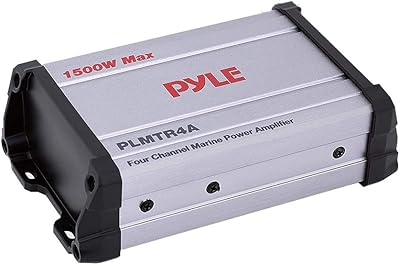
Pyle PLMTR4A 4-Channel Marine Amplifier
69%
78%
Value for Money
73%
Weatherproof Durability
41%
Power Accuracy
58%
Build Quality
86%
Installation Ease
More
Rockville DBM45 4-Channel Marine Amplifier
71%
78%
Sound Quality
74%
Build Quality
71%
Waterproofing
69%
Power Delivery
57%
Thermal Management
More
Pyle PLMRMB4CB 4-Channel Marine Amplifier
67%
78%
Value for Money
54%
Power Output
63%
Bluetooth Connectivity
61%
Water Resistance
58%
Build Quality
More
Soundstream SM4.1000D 4-Channel Marine Amplifier
87%
93%
Power Output
88%
Sound Quality
90%
Build Quality
91%
Weather Resistance
87%
Ease of Installation
More
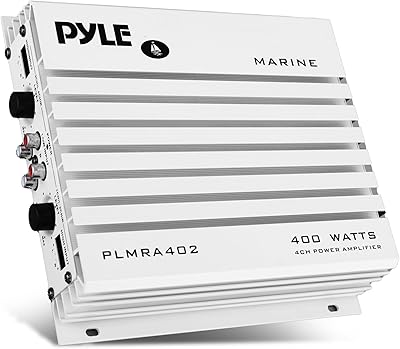
Pyle PLMRA402 4-Channel Marine Amplifier
69%
83%
Value for Money
81%
Ease of Installation
67%
Sound Quality
49%
Power Accuracy
62%
Build Quality
More
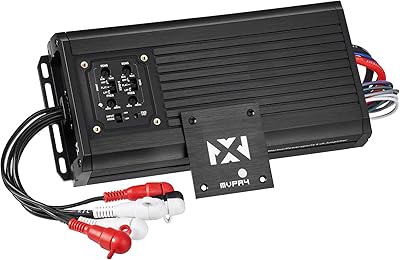
NVX MVPA4 4-Channel Marine Amplifier
80%
91%
Waterproof Protection
88%
Power Accuracy
84%
Build Quality
83%
Sound Quality
92%
Compact Form Factor
More
Rockville ATOM P30 2400W 4-Channel Marine Amplifier
84%
94%
Power Output
90%
Build Quality
88%
Waterproof Performance
80%
Ease of Installation
85%
Sound Quality
More

FAQ

At 1400W total output, you should plan on running 4-gauge power and ground cables at a minimum, and some installers prefer 2-gauge for cleaner headroom. You will also need an inline fuse close to the battery — typically 150A to 200A — to protect your wiring run. Skipping the correct gauge is one of the most common mistakes at this power level, so it is worth getting right before powering on.

Yes, the Fusion Signature amp accepts standard RCA preamp inputs, so it will work with most marine head units on the market. The deeper integration features — like Garmin's network-based control and certain signal routing options — are reserved for compatible Garmin Fusion head units. For everyday listening with a third-party source, though, it functions just fine.

It is marine-grade, meaning it is designed to handle the moisture, salt air, and humidity that boats are constantly exposed to, but it is not rated for direct water submersion or spray. You should mount it in a protected location away from direct rain or splash exposure. Think of it as weather-resistant rather than waterproof.

You can run up to four individual speakers — one per channel — or bridge two channels together to drive a subwoofer while the remaining two channels handle a pair of speakers. Some installers wire pairs of speakers per channel, but you need to check the impedance load stays within the amp's rated range to avoid triggering thermal protection.

The high-efficiency design genuinely helps here compared to older class AB marine amps. That said, any 1400W amplifier at sustained high output will draw meaningful current, so your battery setup matters. Most owners with a proper dual-battery system and a quality alternator report no issues during normal day-long use.

If you are comfortable running power cable, calculating fuse ratings, and working with RCA and speaker wiring, this is a manageable DIY installation. The main challenges are sourcing the correct gauge wiring and planning the cable run from the battery. If any of that sounds unfamiliar, budgeting for a marine electronics installer is a smart move — a poorly wired high-power amp is a real fire risk.

The thermal protection circuit will throttle or shut the unit down before it reaches a damaging temperature, which is exactly what you want in a situation where airflow around the amp might be restricted. In practice, owners report the chassis stays much cooler than expected during long listening sessions, thanks to the efficient amp design. Mounting it somewhere with reasonable air circulation still helps.

The reversed power polarity protection is specifically there for this scenario. The amp will not power on and should not sustain damage from a reversed connection. It is a practical safeguard that gives installers a margin for error, though getting the polarity right before powering up is obviously the preferred approach.

Honestly, for a small vessel with just two or four speakers and modest listening needs, 1400W of total amplification is more than you will ever use and harder to justify given the investment. This unit makes the most sense on a 25-foot-plus boat where you are running multiple speaker zones at real volume. A smaller, lower-output marine amp would serve a compact boat better and cost considerably less.

The unit does not ship with a wired remote bass control in the box, which is something a few buyers have noted. Gain adjustments are made directly on the amp at installation time. If remote bass control is important for your setup, check compatibility with aftermarket Garmin Fusion accessories or ask your installer about add-on options.