Overview

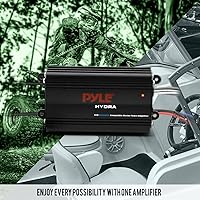
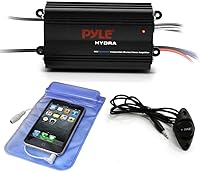
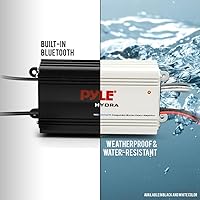
The Pyle PLMRMB4CB 4-Channel Marine Amplifier is a compact, budget-conscious option for anyone looking to upgrade audio on a boat, small watercraft, or outdoor vehicle without spending a lot. This marine amp sits in the value tier of the market, where expectations should be calibrated accordingly — but it performs reasonably well for what it costs. Its slim dimensions make it genuinely easy to tuck into tight compartments during installation, and the water-resistant coating on both the PCB and casing makes it a practical choice for humid or splash-prone environments. Bluetooth 2.0 with a claimed 30-plus-foot wireless range rounds out a straightforward, no-frills feature set.
Features & Benefits

On the spec sheet, this compact boat amplifier is rated at 200W max per channel across four channels — but the more meaningful number for real listening is the RMS figure of 100W per channel at 4 ohms, or 300W at 2 ohms. Bluetooth 2.0 streaming handles wireless audio without requiring an app or complicated pairing steps, and RCA inputs plus an included wiring harness give you flexibility for wired sources as well. The 12V DC requirement is standard for marine and car systems, so integration is uncomplicated. A simple bass control knob and LED status lights round things out — nothing elaborate, but genuinely practical on the water.

Best For

This marine amp makes the most sense for pontoon or small boat owners who want to replace a basic factory audio setup without committing to a high-end overhaul. It also fits well in situations where tight installation space is a real constraint — the slim build slides into spots where larger amps simply will not fit. DIY installers who want a straightforward hookup will appreciate the included harness and uncomplicated wiring process. If you need audiophile-grade clarity or deep bass extension, this is not the right tool. But for casual weekend boating with wireless phone streaming, it strikes a fair balance between functionality and cost.

User Feedback

The Pyle 4-channel amp holds a 3.6-star average, which reflects a genuinely divided audience — and both sides have reasonable points. Buyers frequently praise the compact footprint, easy Bluetooth pairing, and solid overall value relative to what it costs. Where opinions start to split is on power output: the advertised MAX wattage is a peak figure, not a sustained one, and some users feel the real-world performance falls short of expectations set by the marketing. Durability after prolonged saltwater exposure is another recurring concern. A portion of buyers also report inconsistent results with customer support when problems arise. Going in with calibrated expectations will largely determine whether this feels like a smart buy or a letdown.

Pros

  • Compact dimensions make installation viable in tight spaces where larger amps cannot fit.
  • Built-in Bluetooth allows quick, cable-free streaming from phones and tablets without any app setup.
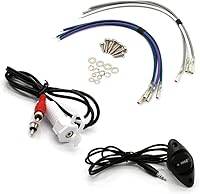
  • Includes RCA inputs and a wiring harness, reducing the need to source additional hardware separately.
  • Water-resistant coating on the PCB and casing adds meaningful protection for outdoor and marine use.
  • Four-channel output gives you flexibility to power multiple speakers across different zones on a small boat.
  • Bass control adjustment lets you tune low-end response without needing an external equalizer.
  • LED indicator lights make it easy to confirm the amp is powered on at a glance.
  • Standard 12V compatibility means it drops into most marine or automotive electrical systems without conversion.
  • Solid value for the price tier, especially for casual listeners upgrading from no amplification at all.

Cons

  • Advertised peak wattage is significantly higher than actual sustained RMS output, which can mislead buyers during research.
  • Bluetooth 2.0 is an older standard that may produce occasional dropouts compared to newer wireless implementations.
  • Water resistance is a coating-level protection only — not a waterproof rating suitable for heavy spray or near-submersion conditions.
  • Long-term durability in saltwater environments has drawn concern from a portion of real-world buyers.
  • Customer support and warranty handling from the manufacturer has received inconsistent reviews.
  • Four channels of modest power may struggle to drive larger or less efficient marine speakers at satisfying volume levels.
  • The slim build, while convenient for installation, limits heat dissipation under sustained high-volume use.

Ratings

The scores below for the Pyle PLMRMB4CB 4-Channel Marine Amplifier were generated by our AI system after analyzing verified buyer reviews from multiple global markets, with spam, bot-submitted, and incentivized feedback actively filtered out. Each category reflects the honest balance of real praise and recurring frustrations found across hundreds of documented ownership experiences. Where this marine amp earns trust and where it falls short are both represented transparently.
Value for Money
78%
22%
For buyers entering the marine audio market on a tight budget, this compact boat amplifier punches above its price class in terms of feature count. Getting four channels, built-in Bluetooth, RCA inputs, and a wiring harness included at this price tier is genuinely difficult to beat.
The value equation shifts if you expect performance matching the peak wattage figures advertised. Buyers who feel misled by the MAX power claims often revise their value perception downward once they hear the real-world output, which is notably more modest.
Power Output
54%
46%
The amp delivers enough sustained power to run four small to mid-efficiency marine speakers at comfortable volumes for casual listening on a pontoon or small boat. At 2-ohm loads it does squeeze out more headroom, which helps in setups where speakers are wired accordingly.
The gap between the advertised 200W MAX and the 100W RMS per channel figure frustrates technically informed buyers regularly. At higher volumes with demanding speakers, compression and distortion become noticeable, and the amp simply cannot replicate the loudness some buyers anticipate based on the spec sheet alone.
Bluetooth Connectivity
63%
37%
Pairing is quick and uncomplicated — most users report connecting a phone or tablet within seconds on first use, with reliable auto-reconnection on subsequent trips. For casual streaming on open water, the wireless range holds up well enough that you can move around the deck freely.
Bluetooth 2.0 is a dated standard, and it shows. A segment of users reports intermittent dropouts, particularly when operating near other wireless devices or within enclosed cabin spaces where signal interference is more common. Codec support is limited compared to newer Bluetooth versions.
Water Resistance
61%
39%
The treated PCB and coated casing provide meaningful protection against the everyday moisture hazards of marine life — humidity, condensation, and light spray from waves or rain. Buyers who mount the unit in a reasonably sheltered location report no water-related issues during normal seasonal use.
This is a resistant coating, not a waterproof certification, and real-world durability in saltwater-heavy environments has drawn consistent concern. Users who operate in heavy spray zones or who store their boats outdoors without covers have reported premature corrosion and failure after one to two seasons.
Build Quality
58%
42%
The slim aluminum-style casing feels solid enough during handling, and the unit's compact footprint means it avoids the cheap, hollow feel that plagues some ultra-budget amps. The LED indicators and control knob have a functional, no-nonsense quality to them.
Long-term structural durability is a recurring concern, particularly around the connectors and terminal points after repeated exposure to moisture. Several buyers note that the casing shows wear faster than expected, and the overall construction does not inspire confidence for buyers expecting multi-season heavy-use reliability.
Installation Ease
74%
26%
The included wiring harness removes one of the most common friction points in a DIY amp install, and the 12V standard means there are no compatibility surprises with typical marine or automotive electrical systems. Most buyers with basic wiring knowledge report a clean installation without needing professional help.
The instruction documentation leaves something to be desired — a few buyers found the included guide vague on grounding best practices and speaker wiring configurations. Without prior audio install experience, the process can become trial and error, especially when optimizing for four-channel output.
Audio Clarity
57%
43%
At moderate volumes with efficient speakers, the Pyle 4-channel amp produces reasonably clean sound for background music during a relaxed day on the water. The onboard bass control gives a usable degree of low-end adjustment without requiring an external processor.
Audio clarity deteriorates noticeably as volume increases, and the amp lacks the signal processing depth to compete with mid-tier or premium marine amplifiers on fidelity. Buyers who care about sound quality beyond casual background listening will find the output flat, thin, and prone to distortion at higher gain levels.
Compact Design
86%
At just over five inches long and under two inches tall, this marine amp fits into mounting spots that simply rule out larger competitors. Buyers on small boats, center consoles, and kayaks consistently highlight the slim profile as the single biggest practical advantage during installation.
The compact size is a trade-off against thermal management — sustained high-volume use in warm conditions causes the unit to run noticeably warm. There is no active cooling, and a small number of buyers have reported thermal shutoff events during extended use on hot summer days.
Device Compatibility
81%
19%
The amp connects wirelessly to virtually any Bluetooth-enabled device, and the RCA inputs provide a reliable wired fallback for source units, radios, or older devices. Cross-platform compatibility with iOS, Android, and legacy iPod hardware makes it versatile for mixed-device households.
Bluetooth 2.0 limits compatibility with newer audio profiles and higher-quality codecs, meaning the wireless listening experience does not fully reflect what modern smartphones are capable of delivering. Buyers using premium streaming services may notice the wireless connection is the weakest link in their audio chain.
LED Indicators
77%
23%
The built-in LED power indicator is a small but practical touch that lets you confirm at a glance that the unit is receiving power — particularly useful during initial installation testing or when troubleshooting in a dim engine bay or storage compartment.
The LEDs serve a purely functional role and offer no diagnostic value beyond confirming power status. Buyers who encounter performance issues get no visual feedback to help pinpoint whether the problem is the amp itself, the source signal, or the speaker connections.
Bass Control
69%
31%
Having an onboard bass adjustment knob means you can dial in low-end presence to match your speaker setup without adding an external equalizer to your wiring chain. Buyers with smaller marine speakers find it useful for compensating for the natural bass rolloff that comes with compact driver sizes.
The control range is limited compared to even a basic external equalizer, and at maximum bass boost, distortion becomes audible at moderate volumes. It is a convenience feature rather than a precision tool, and buyers expecting meaningful sound shaping will quickly hit its ceiling.
Wireless Range
66%
34%
In open-deck scenarios on smaller boats, the 30-plus-foot claimed range holds up well enough for practical use — you can move to the bow or stern without losing the connection on a typical center console or pontoon layout.
Enclosed cabin environments, fiberglass hulls, and nearby electronics all degrade the effective range noticeably. Buyers on larger vessels or those who regularly operate from below deck report that the real-world range falls short of the advertised figure under these common conditions.
Customer Support
44%
56%
Some buyers who contacted Sound Around with straightforward warranty inquiries report receiving responses and resolution within a reasonable timeframe, particularly for clear manufacturing defect cases backed by purchase documentation.
The overall pattern in buyer feedback around post-purchase support is concerning — slow response times, difficulty reaching a representative, and inconsistent warranty outcomes are cited frequently enough to represent a genuine risk for buyers who experience early failures. This is one of the more dependable pain points in the ownership experience.

Suitable for:

The Pyle PLMRMB4CB 4-Channel Marine Amplifier is a practical fit for casual boaters and small watercraft owners who want noticeably better audio than a stock setup provides, without committing to a high-budget overhaul. Pontoon boat owners, weekend anglers, and kayak enthusiasts who deal with splashes and humidity will appreciate the water-resistant PCB coating that adds a layer of protection most bare-bones amps skip entirely. Its slim, under-six-inch footprint is a genuine advantage on smaller vessels where mounting real estate is limited and bulky gear simply does not fit. DIY-minded installers will find the included wiring harness and straightforward 12V hookup approachable, even without professional audio experience. Anyone who primarily streams music wirelessly from a phone or tablet will find the built-in Bluetooth connection convenient enough for everyday use on the water.
Not suitable for:

The Pyle PLMRMB4CB 4-Channel Marine Amplifier is not the right choice for buyers chasing serious, high-fidelity marine audio. The real-world sustained power output is considerably lower than the advertised peak wattage, which means anyone expecting to drive large or power-hungry speakers to loud, distortion-free levels will likely be disappointed. Boaters who regularly expose their equipment to heavy spray, direct submersion risk, or prolonged saltwater saturation should look for a fully sealed, marine-rated amplifier with certified waterproofing rather than relying on a resistant coating alone. Bluetooth 2.0 is functionally dated compared to newer wireless standards, so users who are sensitive to occasional audio dropouts or limited codec support may find it frustrating. If long-term durability in genuinely harsh marine conditions is a top priority, spending more on a purpose-built unit from a dedicated marine audio brand is the smarter path.
Specifications

  • Model Number: This amplifier is manufactured by Sound Around under the model designation PLMRMB4CB.
  • Channels: The unit provides four independent output channels for driving multiple speakers simultaneously.
  • RMS Power (4Ω): Each channel delivers 100W RMS at 4 ohms, representing the sustained real-world power output under normal operating conditions.
  • Peak Power (4Ω): Each channel is rated at 200W maximum at 4 ohms, reflecting the brief peak ceiling rather than continuous output.
  • RMS Power (2Ω): When wired at 2 ohms, each channel is rated at 300W RMS, allowing more output with compatible lower-impedance speakers.
  • Input Voltage: The amplifier operates on a 12V DC supply, consistent with standard marine and automotive electrical systems.
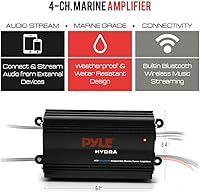
  • Dimensions: The unit measures 5.32″ in length, 3.31″ in width, and 1.38″ in height, making it genuinely compact for tight mounting locations.
  • Weight: At 1.96 pounds, this marine amp is lightweight enough to mount in overhead or side-panel locations without significant structural concern.
  • Bluetooth Version: Onboard wireless connectivity uses Bluetooth 2.0 for audio streaming from compatible smartphones, tablets, and other devices.
  • Wireless Range: The manufacturer claims a Bluetooth range of 30 or more feet under open conditions, though real-world range will vary with obstructions.
  • Audio Inputs: RCA line-level inputs are included alongside an auxiliary wiring harness for connecting wired audio sources.
  • Weather Protection: The PCB and mechanical casing are treated with a waterproof and rust-resistant coating designed to withstand moisture and humidity exposure.
  • Bass Control: An onboard bass control adjustment knob allows basic low-frequency tuning without requiring a separate equalizer.
  • Status Indicator: LED indicator lights are built into the unit to provide a quick visual confirmation that the amplifier is powered and operating.
  • Device Compatibility: The amp pairs wirelessly with iOS and Android smartphones, tablets, iPods, and most other Bluetooth-enabled audio sources.
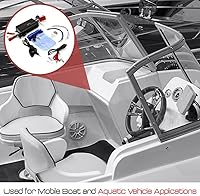
  • Application: Designed primarily for marine vessels, it is also compatible with automotive and other 12V outdoor vehicle installations.
  • Manufacturer: Sound Around is the parent manufacturer responsible for producing and distributing this amplifier under the Pyle brand.

Related Reviews
Pyle PLMTR4A 4-Channel Marine Amplifier
69%
78%
Value for Money
73%
Weatherproof Durability
41%
Power Accuracy
58%
Build Quality
86%
Installation Ease
More
Pyle PLMRMP4A 4-Channel Marine Amplifier
64%
61%
Value for Money
53%
Build Quality
67%
Waterproofing
58%
Power Output
79%
Ease of Installation
More
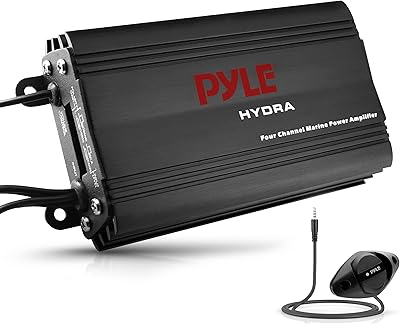
Pyle PLMRA402 4-Channel Marine Amplifier
69%
83%
Value for Money
81%
Ease of Installation
67%
Sound Quality
49%
Power Accuracy
62%
Build Quality
More
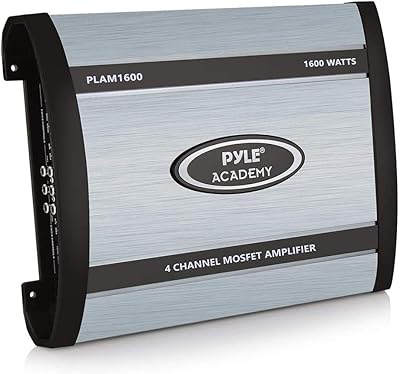
Pyle PLMRMP3B 4-Channel Marine Amplifier
68%
83%
Ease of Installation
71%
Value for Money
62%
Sound Quality
68%
Waterproof Performance
44%
Actual Power Output
More
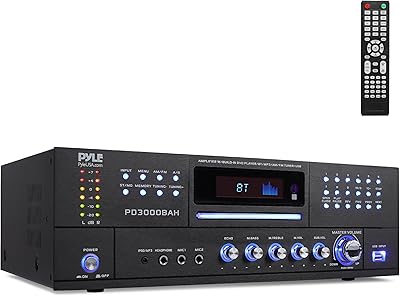
Pyle PLAM1600 4-Channel Car Amplifier
69%
74%
Value for Money
67%
Sound Quality
51%
Power Output Accuracy
83%
Ease of Installation
59%
Build Quality
More
Soundstream SM4.1000D 4-Channel Marine Amplifier
87%
93%
Power Output
88%
Sound Quality
90%
Build Quality
91%
Weather Resistance
87%
Ease of Installation
More
Pyle PLMRA630BT 6-Channel Bluetooth Marine Amplifier
83%
88%
Build Quality and Durability
90%
Bluetooth Connectivity
85%
Power Output
91%
Ease of Setup
83%
Sound Performance
More
NVX MVPA4 4-Channel Marine Amplifier
80%
91%
Waterproof Protection
88%
Power Accuracy
84%
Build Quality
83%
Sound Quality
92%
Compact Form Factor
More
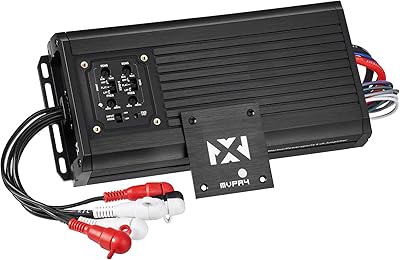
Pyle PD3000BAH 4-Channel Bluetooth Amplifier
73%
83%
Value for Money
61%
Power & Amplification
88%
Connectivity & Input Range
74%
Bluetooth Performance
77%
CD/DVD Player Functionality
More
Rockville DBM45 4-Channel Marine Amplifier
71%
78%
Sound Quality
74%
Build Quality
71%
Waterproofing
69%
Power Delivery
57%
Thermal Management
More

FAQ

It is water-resistant rather than fully waterproof. The PCB and casing have a protective coating that handles humidity, light splashes, and the general moisture of a marine environment reasonably well. That said, you should not submerge it or mount it somewhere it will take direct, sustained water exposure — it is not rated for that level of protection.

The honest answer is to focus on the RMS figures rather than the peak numbers. Each channel puts out 100W RMS at 4 ohms during normal sustained use. The 200W MAX rating reflects brief peak bursts, not what you will consistently get during a full day on the water. If you need to drive large, power-hungry speakers loudly, temper your expectations accordingly.

Yes, it pairs with both iOS and Android devices without any app required. The Bluetooth 2.0 connection is straightforward — find it in your phone's Bluetooth menu, pair once, and it reconnects automatically. Just keep in mind that Bluetooth 2.0 is an older standard, so if you are used to newer wireless audio, occasional minor dropouts are possible.

For a basic DIY install, it is manageable. The unit runs on 12V DC, which is standard on boats and most vehicles, and a wiring harness is included to reduce the number of parts you need to source separately. Most buyers with basic electrical knowledge report getting it up and running without major issues, though anyone unfamiliar with marine wiring should consider professional installation to avoid safety concerns.

The water-resistant coating provides a reasonable level of protection, but saltwater is particularly corrosive over time. Some buyers who use this amp in heavy saltwater conditions have reported durability concerns after extended periods. If your boat regularly operates in salt air or sees heavy spray, inspecting the unit periodically and keeping it away from direct exposure will extend its lifespan.

With four channels, you can connect up to four individual speakers, or wire pairs of speakers per channel depending on your impedance setup. Just make sure your speaker impedance matches what the amp supports — 4 ohms per channel is the standard configuration, though it can also handle 2-ohm loads for higher output.

It comes with a wiring harness and RCA inputs, which covers the basics. However, depending on your boat layout and the head unit or source you are connecting to, you may still need speaker wire, additional RCA cables of the right length, and mounting hardware. It is worth planning your install before ordering so you have everything on hand.

Under ideal open conditions, the claimed range is plausible, but real-world results vary. Obstacles like walls, cabin partitions, or other electronic interference can reduce the effective range noticeably. For most open-deck boat scenarios, you should be fine staying within a reasonable distance, but do not count on the maximum range inside an enclosed cabin.

Absolutely — it is designed for any 12V application, so car, truck, or SUV installations work just fine. Some buyers use it as a secondary zone amp in a vehicle, particularly where a compact footprint matters. The weather-resistant coating is a nice bonus if you are installing it in a trunk or under-seat location prone to moisture.

Start by checking your power connections and fuse, as loose wiring or a blown fuse accounts for many early failures. If the unit itself appears defective, contact Sound Around's customer support directly with your purchase information. Reviews on support responsiveness are mixed, so keeping your order details and proof of purchase handy from the start will make that process smoother if you need to pursue a warranty claim.

Where to Buy