Overview

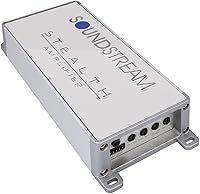
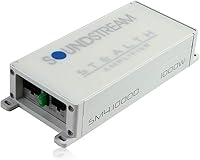
The Soundstream SM4.1000D 4-Channel Marine Amplifier sits in a practical sweet spot — compact enough for tight installs, capable enough to meaningfully upgrade a boat's audio. Part of Soundstream's Stealth Series, marine-grade construction here means real resistance to humidity, salt mist, and UV exposure that would kill a standard car amp within a season. At just 7.5 x 3.88 x 1.5 inches and barely over two pounds, it tucks behind a dash panel or under a seat with minimal fuss. One thing worth clarifying upfront: the 1000W headline is a peak marketing figure. The honest RMS rating is 90 watts per channel at 4 ohms — still solid for most boat speaker setups, but worth understanding before you commit.
Features & Benefits

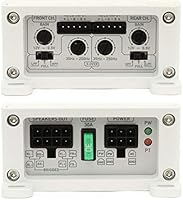
The MOSFET power supply is one of this marine amp's more practical selling points — it helps maintain consistent output even when your boat's 12V system is fluctuating from engine draw or multiple accessories running at once. The onboard variable filters cover 35 to 250 Hz at 12 dB per octave, letting you dial in high- or low-pass filtering for different speaker positions without any external crossover hardware. Critically, the SM4.1000D accepts both RCA preamp signals and speaker-level inputs, so it connects cleanly to older or simpler head units. Bridging two channels unlocks 250 watts per pair, which is useful if you want to add a compact subwoofer down the line. The quick-disconnect harness makes pulling the amp for off-season storage a five-minute job.

Best For

This Soundstream unit is a natural match for boaters ready to move past the flat, compressed audio that most stock head units push through. Space is a real constraint on smaller vessels, and at under two pounds with a footprint smaller than most paperbacks, it fits where full-size amps simply can't. Pontoon and wake boat owners will find it especially useful — four speakers covered across the deck, with the option to bridge two channels for a compact subwoofer. DIY installers tend to do well with it too, since the quick-disconnect harness removes a lot of the wiring complexity. If you need serious output for a full wake tower setup, you will want something more powerful — but for everyday on-water listening, it handles the job well.

User Feedback

Buyers frequently call out installation ease as a highlight — many report getting the unit running in a single afternoon, particularly when connecting via the RCA inputs. The quick-disconnect harness earns its own praise from seasonal boaters who pull their electronics before winter. The most persistent criticism, though, is around power expectations: buyers who latched onto the 1000W figure occasionally feel let down once they understand the actual RMS output. A smaller number of reviewers mention the unit running warm during long, sunny days on the water, which is worth noting if ventilation in your install location is limited. Warranty support comes up as a mixed bag — some owners report smooth service, others found Soundstream harder to reach when they needed help.

Pros

  • Genuinely compact build fits underseat compartments and tight dash spaces where most full-size amps simply won't go.
  • The quick-disconnect harness makes seasonal removal and winter storage far less frustrating than hardwired alternatives.
  • Speaker-level and RCA inputs mean the SM4.1000D works with a wide range of existing head units straight out of the box.
  • Class D efficiency keeps power draw lean, which matters when running multiple accessories from a single boat battery.
  • Bridgeable to two-channel mode for subwoofer duty, giving real flexibility to expand your audio setup later.
  • Variable onboard crossover filters eliminate the need to purchase a separate unit to manage speaker frequency ranges.
  • Marine-grade construction handles humidity, salt air, and UV exposure that degrades standard car electronics quickly.
  • Has been in continuous production since 2015, suggesting a stable product with a reasonably known reliability track record.
  • Four channels of clean, functional marine audio at this price point is genuinely difficult to match in this size class.

Cons

  • The 1000W max rating is a marketing figure; real sustained output is 90W RMS per channel at 4 ohms.
  • Heat buildup during extended use on hot, sunny days is a concern if the mounting location has limited airflow.
  • Warranty and customer support experiences are inconsistent — some buyers report real difficulty getting help from Soundstream directly.
  • Only the amplifier and manual are included; mounting hardware and all wiring must be sourced and purchased separately.
  • Sound quality at higher volumes shows audible limitations compared to pricier marine amplifiers in the same channel count.
  • Not well-suited for sustained 2-ohm operation across all four channels during prolonged high-volume sessions.
  • The included documentation is minimal, making advanced tuning or troubleshooting difficult without prior installation experience.
  • The white finish looks clean on paper but may clash with certain boat interiors or existing hardware color schemes.

Ratings

Our scores for the Soundstream SM4.1000D 4-Channel Marine Amplifier are generated by AI after analyzing verified purchase reviews from buyers across multiple global markets, with spam, bot-generated, and incentivized feedback actively filtered out before any scoring takes place. Each category honestly reflects both the genuine strengths and the real pain points that surface consistently across that broader pool — nothing has been softened to protect the product's image. Where buyers have had strong opinions, positive or critical, those patterns are directly reflected in the numbers below.
Sound Quality
74%
26%
At moderate listening volumes — the kind most boaters actually use on a lake or river — the SM4.1000D delivers clean, well-defined audio across four channels. Users consistently report a noticeable improvement over factory head unit output, especially in mid-range clarity when the onboard filters are properly tuned.
Push this marine amp toward its upper volume limits and the sound starts to lose definition, with some harshness creeping in that more expensive amplifiers avoid. Audiophile-grade listening on the water is not what this unit is tuned for, and buyers with high-fidelity expectations may find it underwhelming.
Marine Durability
71%
29%
The marine-grade construction handles the day-to-day exposure most recreational boaters encounter — humidity, salt air residue, and the UV bombardment that comes from sitting in open sun all season. Several owners in coastal environments report it holding up through multiple seasons without visible corrosion or functional degradation.
A handful of long-term users have reported performance issues after two to three seasons of heavy use, suggesting the marine-grade protection has real limits under sustained harsh exposure. Units installed in poorly sealed compartments where condensation collects appear to be more vulnerable than those in ventilated, protected locations.
Power Output Accuracy
42%
58%
For buyers who go in understanding the actual RMS ratings — 90 watts per channel at 4 ohms — the real-world output is consistent with those numbers. It proves sufficient for powering four standard marine speakers at comfortable listening volumes, and buyers who set realistic expectations tend to report genuine satisfaction.
The 1000W max headline is the single most complained-about aspect of this marine amp across user reviews worldwide. Buyers who purchased based on that figure and later discovered the true 90W RMS rating feel misled, and the gap between the marketing claim and real sustained output is difficult to justify at any price point.
Ease of Installation
88%
The quick-disconnect harness earns consistent praise from DIY installers who completed clean, working installs in a single afternoon without professional help. The dual input options — RCA and speaker-level — remove the compatibility barriers that trip up most entry-level amp installs, especially on older boats without dedicated preamp outputs.
The included manual is thin on detail, and first-time installers have occasionally struggled with gain setting and filter tuning without additional online resources. A more comprehensive setup guide would significantly reduce the volume of support questions that come up repeatedly in user forums and review comment sections.
Value for Money
77%
23%
At this price tier, landing a 4-channel marine-rated amplifier with built-in crossover filters, dual input types, and a quick-disconnect harness represents genuine value for the features on offer. Boaters upgrading from no external amplifier at all tend to rate the audible improvement-to-cost ratio quite highly.
Buyers comparing this unit against slightly pricier alternatives often find that build consistency and long-term durability tell a different story about true cost of ownership. A recurring pattern of units failing or needing replacement within two seasons quietly undermines the appeal of the lower upfront price.
Thermal Management
58%
42%
Class D operation keeps the unit running more efficiently than older amplifier designs, and in well-ventilated install locations the thermal performance holds up reasonably during typical weekend outings on the water. Most users who planned their install with some airflow in mind report no issues during standard day trips.
Extended sessions on hot, sunny days — think a full afternoon on a lake with air temperatures in the high 80s or above — push this Soundstream unit noticeably warm, and users have flagged thermal shutdowns in poorly ventilated installs. Heat management is the most consistently flagged engineering limitation across negative reviews.
Input Flexibility
83%
The combination of RCA preamp and speaker-level inputs makes this marine amp compatible with an unusually wide range of head units, including older factory stereos that were never equipped with RCA outputs. This flexibility saves buyers from having to invest in a head unit upgrade just to get the amplifier functional.
While the dual input design is practical, the speaker-level input sensitivity adjustments are not particularly fine-grained, making precise gain matching more trial-and-error than it should be. Users pairing this marine amp with higher-powered head units occasionally report difficulty landing on a clean gain setting without introducing clipping.
Filter Performance
76%
24%
The variable high- and low-pass filters covering 35 to 250 Hz let users dial in each channel to their specific speaker setup without purchasing a separate external crossover unit. For a boat running a mix of full-range deck speakers and a bridged sub channel, having this capability onboard is a real practical advantage.
The 12 dB per octave filter slope is moderate and handles most recreational setups without issue. However, users trying to achieve tighter, more precise crossover points for demanding multi-speaker configurations may find the adjustment resolution too coarse compared to a dedicated outboard crossover processor.
Bridging Versatility
79%
21%
The ability to bridge down to two channels and push 250 watts per pair at 4 ohms gives this marine amp meaningful flexibility for system expansion. Most notably, it lets boaters add a compact marine subwoofer to their setup without purchasing a separate dedicated mono amplifier.
Bridging reduces available channels from four to two, which forces a trade-off between full speaker coverage and subwoofer output that not every buyer is willing to accept. Users who want all four speakers running simultaneously plus a dedicated sub will need an additional amplifier regardless of how this one is configured.
Form Factor
91%
At 7.5 x 3.88 x 1.5 inches and barely over two pounds, this is one of the more compact 4-channel marine amplifiers available at this price point. Owners of smaller vessels — center consoles, bass boats, and PWCs — frequently cite the physical size as the deciding factor in their purchase decision.
The compact chassis naturally limits the available heat dissipation surface area, which connects directly to the thermal concerns flagged by some users. Those running the unit in warm climates at higher volumes may feel the size trade-off more acutely than buyers in cooler or more temperate conditions.
Harness & Connectivity
86%
The quick-disconnect wire harness is one of the most practically useful features on this unit for seasonal boaters. Pulling the amplifier for winter storage — and reinstalling it in spring — takes minutes rather than an hour of rewiring, a benefit that compounds meaningfully over years of repeated seasonal use.
The harness covers RCA and high-level inputs but does not extend to the power and ground connections, meaning a full seasonal disconnect still requires handling those cables separately. For boaters doing thorough annual teardowns, this partial solution leaves a few extra steps that a more complete harness system would eliminate.
Long-term Reliability
63%
37%
The SM4.1000D has remained in continuous production since 2015, which speaks to consistent market demand and at least baseline product stability. A solid portion of buyers report multiple seasons of trouble-free service when the unit is installed in a properly ventilated, protected location away from direct water exposure.
A recurring pattern in longer-term reviews involves units developing distortion or failing to power on after two to three years of regular marine use, particularly in hotter climates. The failure rate appears noticeably higher than comparable units from competing marine audio brands operating at a similar price point.
Warranty & Support
47%
53%
A segment of buyers has reported receiving warranty replacements from Soundstream without significant friction, suggesting the process can work when the circumstances align. This tends to be the experience when purchase documentation is in order and the original transaction was made through a recognized, reputable retailer.
Inconsistent after-sales support is one of the most persistent themes in negative reviews for this product. Multiple users describe difficulty reaching the support team, slow or absent response times, and unresolved warranty claims — a pattern that raises the overall ownership risk profile meaningfully, especially for buyers using smaller or third-party channels.
Documentation Quality
53%
47%
The manual covers the basic wiring diagram and filter adjustment process adequately for most straightforward installs. Most intermediate DIYers report completing a working setup using only what is in the box, with the quick-disconnect harness helping offset some of the gaps in written guidance.
Beyond the basics, the documentation falls short on depth. There are no guidance notes on gain structure, no clear bridged-mode wiring instructions, and no troubleshooting section — gaps that regularly push inexperienced installers toward online forums for answers that should have been included in the box from the start.

Suitable for:

The Soundstream SM4.1000D 4-Channel Marine Amplifier is a strong fit for recreational boaters who want a genuine audio upgrade without committing to a complex, expensive install. It's particularly well-matched to small and mid-size boat owners — pontoon cruisers, wake boat enthusiasts, and fishing regulars — who need to power four speakers cleanly from a single compact unit. At under two pounds and barely bigger than a thick paperback, this marine amp slides into tight compartments where a full-size unit simply won't go. The dual input options — RCA and speaker-level — make it practical for anyone whose existing head unit lacks dedicated preamp outputs, eliminating the need for a head unit swap just to get the amp working. Seasonal boaters will also appreciate the quick-disconnect harness, which turns the annual winterization process from a wiring headache into a quick task. If your goal is clean, reliable audio across the deck at normal listening volumes without spending heavily, this Soundstream unit delivers solid value for what you pay.
Not suitable for:

The Soundstream SM4.1000D 4-Channel Marine Amplifier is not the right tool for anyone serious about high-output marine audio builds. If you're running a performance wake tower system with multiple tower speakers, or trying to fill a large open vessel at real volume, the 90W RMS per channel ceiling will leave you well short on headroom. Buyers who anchor their expectations on the 1000W marketing figure without reading the actual RMS specs tend to feel misled — that peak number reflects theoretical draw, not sustained output, and the gap is significant enough to cause real disappointment. This marine amp also runs warm during prolonged use in hot, sun-exposed conditions, so installing it in a poorly ventilated spot creates a thermal management problem that can shorten its lifespan. Post-sale support from Soundstream has drawn inconsistent feedback, which matters if reliable warranty coverage is a priority for you. Anyone planning to push demanding 2-ohm speaker loads across all four channels at high volume for extended sessions will find more stability and headroom in a higher-tier dedicated marine amplifier.

Specifications

  • Model Number: The amplifier carries the manufacturer designation SM4.1000D, part of Soundstream's Stealth Series marine product lineup.
  • Amplifier Class: Operates as a Class D amplifier, prioritizing power efficiency and reduced heat generation compared to traditional Class A/B designs.
  • Power Supply: A MOSFET-based power supply provides stable current delivery and resilience against the voltage fluctuations common in marine 12V electrical systems.
  • 4-Ohm Output: Rated at 90 watts RMS per channel when all four channels are driven simultaneously into a 4-ohm load.
  • 2-Ohm Output: Output increases to 125 watts RMS per channel when all four channels are driven into a 2-ohm speaker load.
  • Bridged Output: In bridged 2-channel configuration, the amplifier delivers 250 watts RMS per channel at 4 ohms, suitable for driving a compact marine subwoofer.
  • Peak Power: The manufacturer lists a 1000W peak figure, which represents a theoretical maximum draw rather than sustained continuous RMS output.
  • Channels: Four independent amplifier channels allow simultaneous operation of up to four discrete marine speakers across different zones of a vessel.
  • Dimensions: The chassis measures 7.5 x 3.88 x 1.5 inches, a slim profile specifically designed for installation in space-restricted marine compartments.
  • Weight: The unit weighs 2.15 pounds, placing it among the lighter options available in the 4-channel marine amplifier category.
  • Input Types: Accepts both RCA preamp-level and high-level speaker-level inputs, ensuring compatibility with head units that lack dedicated RCA preamp outputs.
  • Filter Range: Onboard variable high-pass and low-pass filters are continuously adjustable across a frequency range of 35 to 250 Hz.
  • Filter Slope: The crossover filters operate at a 12 dB per octave roll-off slope, providing a moderate transition rate suited to general marine speaker tuning.
  • Marine Rating: Built to marine-grade construction standards, with protection designed to resist moisture ingress, salt air corrosion, and prolonged UV exposure.
  • Mounting Type: Designed specifically for boat-mount installation, with appropriate hardware provisions for securing the chassis within a marine environment.
  • Wire Harness: Includes a Quick Disconnect RCA and high-level wire harness that simplifies installation and allows for fast seasonal removal without individual rewiring.
  • Color: The amplifier is finished in white, consistent with the Stealth Series marine product aesthetic.
  • Box Contents: Package includes the amplifier unit and a user manual; mounting hardware and signal or power cabling are not included.

Related Reviews
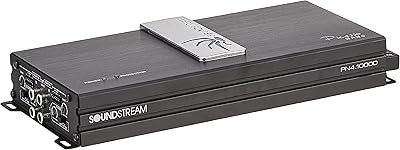
Soundstream PN4.1000D 1000W 4-Channel Class D Amplifier
85%
87%
Performance
92%
Value for Money
85%
Build Quality
89%
Ease of Installation
83%
Power Output
More
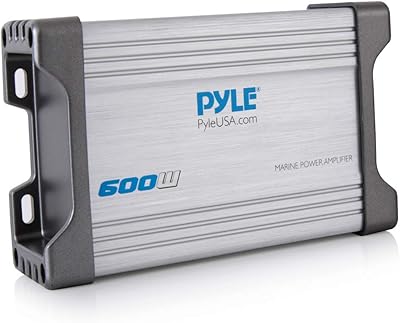
Pyle PLMTR4A 4-Channel Marine Amplifier
69%
78%
Value for Money
73%
Weatherproof Durability
41%
Power Accuracy
58%
Build Quality
86%
Installation Ease
More
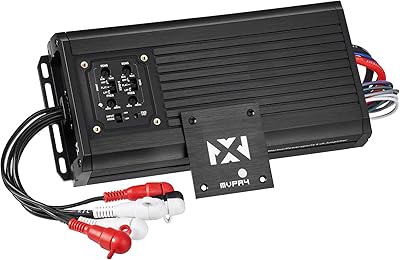
Pyle PLMRMP4A 4-Channel Marine Amplifier
64%
61%
Value for Money
53%
Build Quality
67%
Waterproofing
58%
Power Output
79%
Ease of Installation
More
Pyle PLMRMB4CB 4-Channel Marine Amplifier
67%
78%
Value for Money
54%
Power Output
63%
Bluetooth Connectivity
61%
Water Resistance
58%
Build Quality
More
Rockville DBM45 4-Channel Marine Amplifier
71%
78%
Sound Quality
74%
Build Quality
71%
Waterproofing
69%
Power Delivery
57%
Thermal Management
More
Pyle PLMRA402 4-Channel Marine Amplifier
69%
83%
Value for Money
81%
Ease of Installation
67%
Sound Quality
49%
Power Accuracy
62%
Build Quality
More
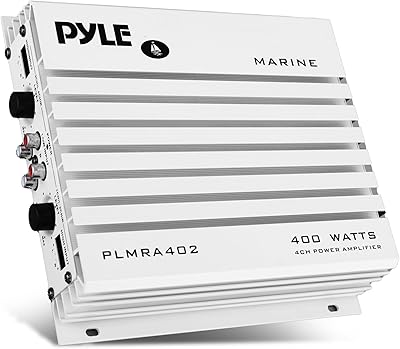
NVX MVPA4 4-Channel Marine Amplifier
80%
91%
Waterproof Protection
88%
Power Accuracy
84%
Build Quality
83%
Sound Quality
92%
Compact Form Factor
More
Velex VX-505 4-Channel Marine Bluetooth Amplifier
75%
88%
Ease of Installation
74%
Audio Output Quality
71%
Waterproof Protection
76%
Bluetooth Performance
69%
Wired Remote Usability
More
Rockville ATOM P30 4-Channel Marine Amplifier
76%
86%
Build Quality
88%
Weather Resistance
71%
Power Output
83%
Value for Money
84%
Ease of Installation
More
Rockville RXM-F4 2400W Marine 4-Channel Amplifier
87%
89%
Sound Performance
94%
Durability & Weather Resistance
84%
Ease of Installation
91%
Build Quality
92%
Power Output
More

FAQ

The 1000W figure is a peak rating, not a continuous output number — so treat it as a marketing headline, not a spec to build around. The Soundstream SM4.1000D 4-Channel Marine Amplifier is rated at 90 watts RMS per channel into 4 ohms, or 125 watts RMS per channel into 2 ohms. Those are the numbers that reflect real-world listening performance. For four typical marine speakers on a recreational boat, 90W per channel is genuinely sufficient, but if you came in expecting concert-level output, you'll want to recalibrate expectations before purchasing.

Yes, and this is actually one of the more practical aspects of the SM4.1000D. It accepts high-level speaker-level inputs, meaning you can tap directly off the speaker wire outputs from your head unit without needing dedicated RCA jacks. This is a common situation on boats with older or factory-installed stereos, and the dual-input design means you won't have to replace your head unit just to add an amplifier.

For someone comfortable with basic 12V wiring, this marine amp is on the manageable end of the installation spectrum. The quick-disconnect harness consolidates the RCA and high-level input connections into a single plug, which removes a fair amount of the fiddly connector work. You will still need to run a proper power cable from the battery, a ground connection, and remote turn-on wire, and you'll want to set the gain and filters correctly before you start listening. Budget a few hours, work carefully, and keep the manual close.

Marine-grade construction means it's designed to handle the real conditions on a recreational boat — humidity, salt air, light spray, and UV from sitting in the sun. It is not rated for submersion or sustained direct water contact. If you're mounting it somewhere that takes regular direct spray, some additional shielding is a good idea. For protected installs under a dash, in a console, or inside a storage compartment, the marine-grade build should hold up reliably over time.

Not in a traditional 4-plus-sub configuration, but you can bridge two of the four channels into a single high-power output — around 250 watts at 4 ohms — to drive a compact marine subwoofer. That leaves the remaining two channels handling a pair of speakers. It's a common setup on smaller boats and works cleanly with the onboard low-pass filter to roll off the frequencies the sub handles. Just keep in mind you're trading two full-range channels for the sub output.

Heat is worth thinking about with this unit. Class D operation is efficient and generates less heat than older amp designs, but several real-world users have noted the chassis runs warm during extended sessions on hot, sun-exposed days. In a well-ventilated install location, normal daily use should be fine. The issue tends to surface when the amp is boxed into a completely sealed, unventilated compartment with no airflow on a very hot day — if that's your situation, leave some breathing room around the unit.

Four ohms is the more stable and reliable operating point for this marine amp during regular use. The 2-ohm rating does deliver more power on paper, but running all four channels into 2-ohm loads for extended periods increases heat output and puts more stress on the amplifier. Most off-the-shelf marine speakers are 4-ohm loads anyway, so unless you've specifically built a 2-ohm speaker system, 4 ohms is where this unit performs most consistently day to day.

It's a real and practical feature. The harness bundles the RCA and high-level input connections into a single connector that unplugs from the amplifier in one step, without touching any individual wires. For seasonal boaters who remove their electronics before winter, this turns a 30-plus-minute rewiring job into a few-minute task. When spring comes and you're reinstalling this Soundstream unit, you just plug it back in. If you leave your boat in the water year-round, the benefit is less obvious — but for anyone who winterizes, it's genuinely time-saving.

Soundstream has been producing car and marine audio equipment for decades, and the SM4.1000D has been on the market since 2015 without being discontinued — which suggests reasonable product stability. That said, post-sale support experiences from buyers are genuinely mixed. Some owners report smooth, responsive warranty service; others have found it slow or difficult to get a resolution. Buying from a retailer with a solid return policy provides a useful backstop, and keeping your purchase receipt is always a smart move regardless of brand.

No special tools required. The high-pass and low-pass filters are controlled by adjustment dials directly on the amplifier, and for a typical recreational install, setting them by ear works perfectly well. A reasonable starting point for door or deck speakers is to engage the high-pass filter around 80 to 100 Hz, which rolls off the low frequencies those speakers struggle to reproduce cleanly. For a bridged subwoofer channel, set the low-pass filter in a similar range and adjust from there through listening. Most boat audio installs never need anything more technical than that.

Where to Buy