Overview

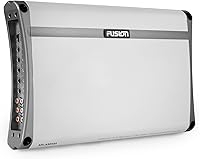
The Garmin Fusion AM Series Marine Amplifier is Fusion's answer to boaters who are tired of underwhelming factory audio and want something built specifically for life on the water. This is a 500-watt, 4-channel Class-AB unit — not a repurposed car amp with a marine sticker slapped on it. The Class-AB design means you get a reasonable balance of power output and heat generation, which matters when the amp is tucked into a confined space below deck. It supports multi-speaker arrays and subwoofer combinations, so it scales naturally with your system. If you're serious about boat audio, this marine amplifier is worth a hard look.

Features & Benefits

What separates this boat audio unit from cheaper alternatives comes down to a few deliberate engineering choices. Conformal-coated circuit boards seal the internal electronics against salt air, condensation, and the general abuse that comes with saltwater boating — that alone extends useful life significantly. A dedicated external heat sink handles thermal load during long days of cranked-up playback, reducing the risk of thermal shutdowns. The built-in variable bass boost and crossover filters mean you can dial in your low end and protect your speakers without adding a separate processor. Running 2-ohm stable, it handles demanding speaker loads without straining.

Best For

This marine amplifier is a natural fit for boaters moving past a basic single-zone setup. If you're running four speakers across bow and stern, or pairing two speaker zones with a subwoofer, this amp handles both configurations without compromise. It's especially well-suited for anyone already invested in the Garmin or Fusion ecosystem — integration with Fusion head units is straightforward. That said, this isn't the right pick for someone looking to spend minimally; it's aimed at buyers who want long-term reliability in rough saltwater conditions and understand that proper marine audio requires a real investment in hardware.

User Feedback

Owners who've put the Fusion AM amp through a full boating season tend to come away impressed with its clean power delivery and the quality of the build. The conformal coating and heat management hold up well in real-world conditions, and integration with Fusion head units draws consistent praise. Where criticism surfaces, it usually centers on installation: the unit is fairly large and wiring demands are not trivial — you'll want appropriately gauged power cables and adequate ventilation clearance. A few buyers note the on-board controls take some trial-and-error to optimize. Overall, it competes favorably against similarly priced marine amps, but expect to spend time on a proper install.

Pros

  • Delivers clean, distortion-low power across all four channels even at high volume levels on the water.
  • Conformal-coated circuit boards provide genuine protection against salt spray, humidity, and vibration.
  • The external heat sink manages thermal load effectively during long continuous-use days.
  • Built-in crossover filters and subsonic filter remove the need for a separate signal processor in many setups.
  • 2-ohm stereo-stable design gives real flexibility when pairing different speaker configurations.
  • Variable bass boost lets you fine-tune low-end response directly on the amp without extra hardware.
  • Integrates cleanly with Fusion head units, reducing wiring complexity for existing Fusion users.
  • Build quality is noticeably above what you typically find in generic or budget marine amps at this size.
  • Supports mixed configurations — four speakers or two speaker pairs plus a subwoofer — in one unit.
  • Long-term durability holds up well after full boating seasons in both saltwater and freshwater environments.

Cons

  • The physical footprint is substantial — finding a proper mounting location on smaller boats can be genuinely difficult.
  • Installation is not beginner-friendly; correct wiring gauge and ventilation clearance require planning and effort.
  • The on-board bass boost and crossover controls take trial-and-error to dial in optimally for your specific speakers.
  • At over 7 pounds, this boat audio unit adds meaningful weight in installations where that matters.
  • Buyers outside the Garmin or Fusion ecosystem may not fully leverage the integration advantages they are partly paying for.
  • No built-in Bluetooth or wireless control — all signal management is handled through wired connections and on-unit controls.
  • The price premium over non-brand marine amps is real, and the gap narrows if you are not using marine-specific features heavily.
  • Heat clearance requirements mean you cannot install this in a fully enclosed space without risk of thermal issues.

Ratings

The Garmin Fusion AM Series Marine Amplifier earns consistently strong marks across verified buyer reviews worldwide, with our AI-driven scoring system filtering out incentivized and bot-generated feedback to reflect genuine ownership experiences. Scores here capture both what this boat audio unit does exceptionally well and where real users have run into friction — nothing is glossed over. The result is a transparent, balanced picture that reflects the full range of buyer sentiment from first-time installers to seasoned marine audio enthusiasts.

Sound Quality
88%
Owners repeatedly describe the output as clean and controlled even at higher volumes, which is meaningful on a boat where wind and engine noise compete with audio. The Class-AB design keeps distortion noticeably lower than cheaper marine amps, and the difference becomes obvious when running all four channels simultaneously during a full day on the water.
A small number of users note that achieving the best sound quality requires careful tuning of the onboard crossover and bass controls, which is not always straightforward for buyers without prior amp setup experience. Out of the box, default settings do not always flatter every speaker pairing.
Build Quality
91%
The physical construction consistently draws praise — the chassis feels solid and the conformal-coated boards are a genuine indicator of build intent rather than a marketing claim. Buyers who have opened up cheaper marine amps for comparison describe the internal component layout and soldering quality as noticeably superior.
A handful of users report minor cosmetic imperfections on the housing finish upon arrival, and a few note that the control knobs feel slightly less premium than the rest of the unit, which stands out given the overall build caliber.
Marine Durability
93%
After full boating seasons in saltwater environments, the vast majority of long-term owners report no corrosion, circuit failure, or moisture-related issues — which is the core test for any marine electronics investment. The conformal coating and heat sink combination holds up in conditions where unprotected amps routinely fail within a year.
Durability is contingent on correct installation; users who mounted the unit in poorly ventilated spaces or areas prone to direct splash report premature issues that proper placement would likely have prevented. The amp's protection is robust but not unconditional.
Power Output
87%
500 watts across four channels provides ample headroom for multi-zone speaker setups, and owners running both bow and stern speakers simultaneously appreciate that volume levels stay consistent without audible strain. The 2-ohm stability means users can run more demanding speaker loads without triggering protection circuits.
A few buyers running high-efficiency speakers in smaller boats feel the power output is more than they realistically need, raising questions about whether a lower-output amp would have served them just as well at a lower price. Peak output performance is strong, but not every install fully utilizes it.
Installation Experience
61%
39%
Users already familiar with marine amplifier installation find the wiring layout logical and the labeling on inputs and controls reasonably clear. Fusion's documentation is more thorough than many competitors, and buyers in the Garmin ecosystem benefit from head unit integration that reduces setup time.
For less experienced installers, the size of the unit, the wiring gauge requirements, and the need for proper ventilation clearance make this a surprisingly demanding install. Multiple buyers note unexpected time and cost overruns when professional installation was ultimately required, which is not always anticipated at purchase.
Thermal Management
84%
The external heat sink does its job effectively during extended playback sessions — owners who run audio continuously on all-day fishing trips or pontoon cruises report no thermal shutdowns under normal vented mounting conditions. This is a meaningful differentiator compared to budget marine amps that rely on passive chassis cooling alone.
The heat sink's effectiveness is entirely dependent on having adequate airflow around the unit, and users who installed the amp in tight, enclosed spaces report thermal protection triggering during peak summer use. Ventilation requirements should be treated as a hard constraint, not a suggestion.
Value for Money
72%
28%
For buyers who fully utilize the four channels, the built-in filters, and the marine-grade construction, the price-to-feature ratio holds up well against similarly specified competitors. Owners who would have otherwise needed a separate signal processor to access crossover controls find additional savings embedded in the feature set.
Buyers who only need two channels, or who are not operating in harsh marine conditions, often feel the premium over generic alternatives is harder to justify in their specific use case. The value equation is real but only for the right buyer — it is not universally compelling across all boating scenarios.
Crossover & Filter Controls
74%
26%
Having variable high-pass and low-pass crossover filters built directly into the amp removes the need for an add-on processor in many setups, which buyers running a speaker-plus-subwoofer system genuinely appreciate. When properly dialed in, the crossover control meaningfully improves speaker protection and overall system balance.
The physical controls are small and the adjustment range is not always clearly delineated, leading to a trial-and-error setup process that frustrates some users. Buyers without prior experience tuning crossover points often find the process time-consuming and occasionally end up with suboptimal settings they stick with out of convenience.
Bass Boost Performance
76%
24%
The onboard variable bass boost is a practical inclusion that lets users add low-end warmth without routing through additional hardware, and boaters who enjoy music with strong bass lines while underway find it a usable and responsive control. The range of adjustment covers most real-world use cases without overloading the signal.
At higher boost settings, some users detect a slight muddiness in the low-mid range, particularly when paired with entry-level marine speakers that are not well-suited to handling boosted bass signals. The control works best in moderation and with speakers that have enough excursion capability to match.
Ecosystem Integration
89%
Within the Garmin and Fusion ecosystem, the integration experience is a genuine selling point — pairing with a Fusion head unit reduces wiring complexity, enables cleaner control, and tends to produce fewer signal noise issues than mixing brands. Long-time Garmin users describe the compatibility as one of the key reasons they chose this unit over alternatives.
Outside the Fusion ecosystem, the integration advantages largely disappear, and the amp functions as a standard wired unit with no special connectivity benefits. Buyers using third-party head units should not factor ecosystem compatibility into their purchase rationale.
Size & Form Factor
63%
37%
The relatively flat profile at just over 2 inches tall makes surface mounting under dashboards or in shallow compartments feasible on many mid-size and larger vessels. The footprint, while large, is consistent with what experienced marine installers expect from a 500-watt 4-channel unit in this class.
On smaller boats or vessels with compact bilge and under-dash spaces, the 14.41″ length and 9.02″ width present a real mounting challenge that some buyers discover only after purchase. The size is not unusual for the power class, but it does create genuine compatibility problems in tighter installations.
Channel Flexibility
82%
18%
The ability to configure channels either as four independent speaker outputs or as two speaker pairs plus a subwoofer gives this boat audio unit real adaptability across different vessel setups and personal audio preferences. Upgrading from a four-speaker config to adding a sub later requires no new hardware, just reconfiguration.
The four-channel architecture is a strength for complex systems but overkill for simple two-speaker setups, and buyers who only need two channels of amplification are paying for capacity they will never use. There is no two-channel variant in this product line to address that gap.
Brand Reputation
86%
Fusion's standing as a purpose-built marine audio brand backed by Garmin provides meaningful reassurance that warranty claims and customer support will be handled professionally, which matters when you are investing in electronics exposed to harsh conditions. The brand track record in the marine audio space is well established and consistently cited by buyers as a confidence factor.
A small number of buyers feel that the brand premium built into the price reflects marketing position as much as hardware advantage, and that comparable non-branded components might deliver similar technical performance at lower cost. Brand trust is real but not unlimited justification for the price gap.

Suitable for:

The Garmin Fusion AM Series Marine Amplifier is purpose-built for boaters who have outgrown their factory audio and want a reliable, high-output upgrade that can handle real marine conditions. It's a strong match for anyone running a multi-zone speaker setup across a larger vessel — think four speakers spread from bow to stern, or two speaker pairs combined with a subwoofer for a fuller sound profile. Saltwater boaters in particular will appreciate the conformal-coated PCBs and robust heat management, which are not afterthoughts here but core engineering priorities. If you're already using Fusion head units or other Garmin marine electronics, integration is notably straightforward and saves real time during install. Freshwater boaters who spend long days on the water with music running continuously will also find the thermal design holds up under sustained load better than many competitors in this tier.

Not suitable for:

The Garmin Fusion AM Series Marine Amplifier is not the right fit for casual boaters who just want to nudge the volume up a little on a small day cruiser. At its price point and physical size — over 14 inches long and weighing more than 7 pounds — it demands both budget commitment and adequate mounting space, which smaller boats or tight bilge compartments simply may not offer. Buyers expecting a plug-and-play experience may also be caught off guard: proper installation requires planning around wiring gauge, heat clearance, and surface mounting, and that work adds up in both time and cost. If you're not running at least four speakers or a subwoofer, the four-channel capacity is wasted headroom you're paying for. Budget-focused buyers or those upgrading a modest pontoon or jon boat would likely be better served by a simpler, lower-output marine amp.

Specifications

  • Power Output: This amplifier delivers 500 watts of total power distributed across four channels.
  • Amplifier Class: Class-AB topology is used, balancing power efficiency with low signal distortion during sustained playback.
  • Channels: Four independent channels allow flexible speaker configuration across a vessel.
  • Speaker Impedance: The unit is 2-ohm stereo stable, supporting demanding speaker loads without performance degradation.
  • Speaker Capacity: Supports up to four speaker pairs, or two speaker pairs combined with one subwoofer.
  • Bass Control: A built-in variable bass boost allows direct low-frequency adjustment without requiring an external equalizer.
  • Filters: Includes both a subsonic filter and variable high-pass and low-pass crossover filters for system protection and tuning.
  • PCB Protection: All printed circuit boards are conformal coated to resist salt air, moisture, and vibration common in marine environments.
  • Thermal Design: A dedicated external heat sink dissipates heat generated during extended operation, reducing the risk of thermal shutdown.
  • Dimensions: The unit measures 14.41″ long, 9.02″ wide, and 2.09″ tall.
  • Weight: The amplifier weighs 7.17 pounds, which should be factored into mounting and installation planning.
  • Operating Voltage: Designed to operate at 12.25V DC, consistent with standard 12-volt marine electrical systems.
  • Max Supply Voltage: The maximum allowable supply voltage is 16V DC; exceeding this risks damage to internal components.
  • Mounting Type: Surface mount installation is required, meaning a flat, stable, ventilated mounting surface must be identified before purchase.
  • Model Number: The official model number is 010-01500-00, useful for warranty registration and sourcing compatible accessories.
  • Manufacturer: Produced by Fusion, which operates as a dedicated marine audio brand under the Garmin umbrella.
  • Availability Status: This product has not been discontinued by the manufacturer as of the most recent product data available.

Related Reviews
Fusion Signature Series 5-Channel Marine Amplifier
82%
93%
Power Output
88%
Build Quality
67%
Thermal Management
91%
Ecosystem Compatibility
62%
Installation Experience
More
Garmin Fusion 1400W 4-Channel Marine Amplifier
81%
92%
Sound Output Quality
94%
Build Quality
89%
Heat Management
91%
Marine Durability
83%
Battery Efficiency
More
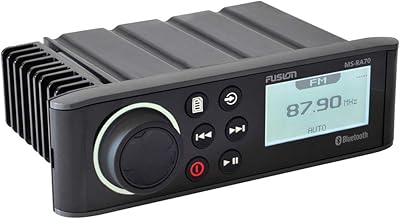
Fusion MS-RA70 Marine Stereo
76%
91%
Ease of Installation
86%
Bluetooth Performance
88%
Garmin Ecosystem Integration
82%
Dual-Zone Audio
84%
Water Resistance
More
Garmin Fusion Apollo RA670 Marine Stereo
81%
88%
Sound Quality
91%
Build Quality
93%
Water Resistance
92%
Ecosystem Integration
74%
Wireless Streaming
More
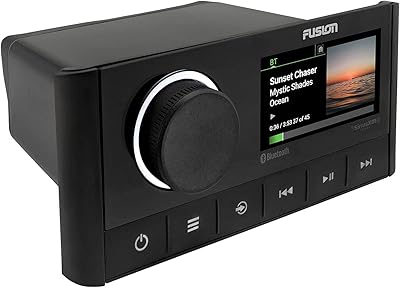
Garmin Fusion Apollo MS-RA770 Marine Stereo
83%
92%
Audio Streaming Quality
67%
Wi-Fi Setup & Connectivity
94%
Garmin Ecosystem Integration
71%
Touchscreen Usability
89%
Build Quality & Weather Resistance
More
Rockville DBM25 Marine Amplifier
75%
88%
Value for Money
83%
Marine Durability
79%
Power Accuracy
74%
Audio Quality
82%
Crossover Flexibility
More
Pyle PLMRA200 2-Channel Marine Amplifier
71%
83%
Value for Money
81%
Ease of Installation
57%
Power Output
63%
Build Quality
61%
Water Resistance
More
Rockville DBM12 Marine Amplifier
86%
89%
Performance
91%
Durability
86%
Audio Quality
78%
Ease of Installation
92%
Build Quality
More
Pyle PLMRMB2CW Marine Amplifier
86%
85%
Sound Quality
92%
Waterproof Durability
88%
Bluetooth Connectivity
80%
Power Output
87%
Installation Ease
More
Pyle PLMRA400 4-Channel Marine Amplifier
75%
88%
Value for Money
86%
Ease of Installation
71%
Water Resistance
63%
Power Output
79%
Build Quality
More

FAQ

It works with any head unit that provides standard RCA preamp outputs — you are not locked into the Fusion ecosystem for basic operation. That said, if you are running a Fusion head unit, you get tighter integration and easier control, which is a genuine advantage worth factoring in if you are building a system from scratch.

For a 500-watt amplifier, you should generally plan on 4-gauge power and ground wiring at minimum, though some installers prefer 2-gauge for runs over ten feet. Check the installation manual for Fusion's specific recommendations, and do not cut corners here — undersized wiring causes voltage drop and can create safety hazards on a boat.

Not without adequate ventilation. The external heat sink needs airflow to do its job, and installing the unit in a sealed space will lead to overheating and potential damage over time. Plan for at least a few inches of clearance around the heat sink, and consider a small bilge blower if your mounting location is borderline.

No, it is not waterproof or designed for direct water exposure. The conformal-coated PCBs protect the internal electronics from moisture, salt air, and humidity, but this amp should always be mounted in a location shielded from direct splash or rain. Think protected bilge or under-dash mounting, not open cockpit installation.

The product documentation should be consulted for bridged mono specifications, but many 4-channel marine amps in this class do support bridging pairs of channels to drive a subwoofer with more headroom. Just confirm the minimum impedance requirements before bridging, as the load tolerance changes when running in mono mode.

The variable crossover filters let you set a high-pass filter for your main speakers (cutting out low frequencies they cannot handle) and a low-pass filter for a subwoofer (cutting out high frequencies). They are adjusted via physical controls on the amp itself. Most buyers find them functional but note that finding the right settings takes some experimentation — it is not always immediately intuitive if you are new to amplifier tuning.

It depends entirely on your boat's layout. At over 14 inches long and just over 9 inches wide, this is not a compact unit. Many ski boats and mid-size pontoons have enough under-dash or in-compartment space, but you should measure your available mounting area carefully before ordering. Tight bilge spaces on smaller boats can make this a real challenge.

A built-in bass boost on the amplifier operates at the signal level closest to your speakers, which tends to produce a cleaner and more controlled low-end response compared to boosting bass at the head unit and running an already-boosted signal through the amp. It also means you do not need a separate equalizer to add warmth or punch to your system.

Based on consistent owner feedback, it does hold up well when installed correctly and kept out of direct water exposure. The conformal coating on the circuit boards is a meaningful layer of protection that cheaper amps often skip. Owners running it through multiple seasons in saltwater environments report no major reliability issues when installation and ventilation are done properly.

The unit is rated to handle up to 16V DC, which gives it comfortable headroom above the typical 12- to 14-volt range you see in a healthy marine electrical system. Normal charging system fluctuations will not be a problem, but it is always a good practice to ensure your boat's charging system and batteries are in good condition to avoid abnormal voltage behavior.

Where to Buy