Overview

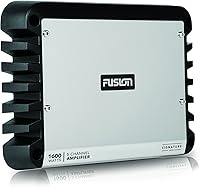
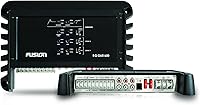
The Fusion Signature Series 5-Channel Marine Amplifier is built for boaters who take their onboard audio seriously — not the kind of person who settles for tinny factory speakers and calls it done. Fusion has spent years earning credibility in the marine audio world, and Garmin's backing adds a meaningful layer of confidence. The core appeal is consolidation: one amp handles all your zones, running four channels for speaker pairs while a fifth drives the sub. That compact die-cast chassis packs serious power into a footprint that won't eat your storage space. This is a professional-grade install, priced to reflect it.
Features & Benefits

Class D efficiency is the right foundation for a marine amp, and here is why it matters on the water: it runs cooler and draws less from your boat's battery than older amp designs — not a trivial concern when you are hours from shore. The Fusion 5-channel unit pushes 1,600 watts across five channels, four for speaker pairs wired in parallel and one dedicated to the MS-SW10 subwoofer. Frequency response runs from 10Hz to 50kHz, covering low-end rumble through crisp highs that hold up against wind noise. A 5-way protection circuit handles thermal overload, reversed polarity, DC offset, and voltage swings — exactly what a demanding marine install requires.

Best For

This onboard amplifier makes the most sense if you are already in — or actively building toward — the Fusion ecosystem. Pairing it with Fusion marine speakers and the MS-SW10 sub is genuinely straightforward; the components are designed to work together, and that shows during install. It is also the right call for mid-to-large vessel owners who need consistent, full-range sound across multiple zones without stacking separate amps throughout the boat. If you are outfitting a small day boat with just a couple of speaker pairs, this is more amp than you need. But for whole-boat coverage that holds up season after season, it is a well-matched choice.

User Feedback

With 53 ratings and a 4.2-star average, the reception for this marine amp is positive, though the sample size is modest enough that trends should be read with some care. Buyers who installed it into a full Fusion setup consistently highlight clean power output and how naturally it slots into the ecosystem. Build quality draws genuine praise — the chassis feels solid and purposeful. On the critical side, a handful of users flag heat management during extended high-volume sessions as something worth planning for, and a few mention the setup process benefits from professional installation experience. Price comes up occasionally, but most long-term owners feel the durability earns it back.

Pros

  • 1,600 watts of class D power handles full-boat audio from a single unit efficiently.
  • Five-channel layout covers up to four speaker pairs plus a dedicated subwoofer channel.
  • Class D design runs cooler and draws less battery power than older amplifier classes.
  • 5-way protection circuitry guards against thermal overload, voltage swings, and wiring mistakes.
  • Native compatibility with Fusion speakers and the MS-SW10 sub makes installation straightforward.
  • Heavy-duty die-cast chassis holds up well against vibration and harsh marine environments.
  • Wide frequency response from 10Hz to 50kHz delivers full-range sound in open-air conditions.
  • Compact footprint relative to its output makes finding a mounting location more manageable.
  • Garmin's backing adds brand accountability and long-term parts and support confidence.
  • Buyers consistently praise the clean, strong output once the system is dialed in.

Cons

  • Significant investment that is hard to justify for small boats or minimal speaker setups.
  • Best results depend heavily on pairing with Fusion-branded speakers and subwoofer.
  • Heat buildup during prolonged high-volume sessions requires thoughtful placement and ventilation.
  • Professional installation is practically necessary for most buyers to get the full benefit.
  • The 53-review sample size makes it harder to draw confident long-term reliability conclusions.
  • Parallel speaker wiring configuration may confuse buyers without prior marine audio experience.
  • No bundled wiring kit or mounting hardware included, adding to total install cost.
  • Surface-mount only; no option for flush or recessed mounting in tighter compartments.

Ratings

The Fusion Signature Series 5-Channel Marine Amplifier earned its scores through AI analysis of verified global buyer reviews, with spam, bot-submitted, and incentivized feedback actively filtered out before any scoring was applied. Ratings span the full experience — from real-world install conditions to long-season performance on the water — so both the strengths and the friction points are honestly represented. Buyers who found this onboard amplifier transformative and those who ran into frustrations both shaped these numbers equally.
Power Output
93%
Buyers consistently describe the output as genuinely impressive in open-water conditions, where wind and engine noise compete with the speakers. Running 1,600 watts through a single unit means the system never feels underpowered, even across multiple speaker zones on larger center consoles and cruisers.
A small number of buyers note that realizing the full rated output requires careful gain staging during setup, and without that tuning, the system can sound compressed at high volumes. Those who skipped professional calibration reported not getting everything the amp is capable of.
Build Quality
88%
The one-piece die-cast chassis draws consistent praise from boaters who have dealt with cheaper amps warping or rattling loose after a season of vibration. Several owners on fishing boats specifically mention that the unit feels purpose-built for a demanding environment rather than repurposed from a car audio design.
A handful of reviewers expressed mild concern that portions of the outer housing feel less premium than the metal chassis beneath, which can give a slightly inconsistent impression during handling. It does not affect function, but buyers expecting an all-metal exterior may notice it.
Thermal Management
67%
33%
The 5-way protection circuit does its job reliably — when heat builds up in a tight compartment, the amp shuts down cleanly before any damage occurs, and buyers report it recovers quickly once temperatures drop. The class D topology does run meaningfully cooler than older amp designs under normal listening conditions.
During extended high-volume sessions on warm days, heat buildup is the most frequently cited frustration in user feedback. Several owners learned the hard way that installing the unit in a sealed or poorly ventilated compartment leads to repeated thermal shutdowns, which interrupts playback and raises durability questions over time.
Ecosystem Compatibility
91%
For boaters already running Fusion speakers and a Fusion head unit, the integration is about as clean as marine audio gets — channel matching, impedance, and system tuning all work predictably out of the box. Owners pairing this with the MS-SW10 subwoofer specifically highlight how well the dedicated fifth channel handles low-end output.
The tight ecosystem focus is a double-edged reality. Buyers who tried pairing the Fusion 5-channel unit with non-Fusion speakers reported a noticeably steeper configuration curve, and a few felt the amp did not justify its cost when used outside the native ecosystem.
Installation Experience
62%
38%
Buyers with prior marine or car audio install experience describe the process as logical and well-documented. The surface-mount design keeps placement options flexible, and the native Fusion compatibility reduces guesswork around speaker wiring and channel assignment for those already in the ecosystem.
For less experienced installers, the parallel speaker wiring configuration and gain setup requirements create a steep learning curve. Multiple reviewers recommend budgeting for professional installation, and those who went DIY without prior amplifier experience reported frustrating troubleshooting sessions before getting clean sound.
Value for Money
74%
26%
Buyers who completed a full Fusion system build tend to view this marine amp as a fair investment given what it replaces — multiple separate amplifiers, additional wiring runs, and the complexity of managing several power sources. Long-term durability reports from multi-season owners reinforce the cost-per-year argument.
For buyers who are not committed to the Fusion ecosystem, the price is harder to defend against competitors offering comparable wattage at lower cost. A segment of reviewers felt the value proposition weakened when they realized how much of the premium is tied specifically to Fusion-native integration.
Battery Efficiency
86%
Class D architecture delivers a real-world benefit that boaters anchored away from shore genuinely appreciate — the amp draws significantly less current than equivalent class A/B designs, extending time on battery before needing to run the engine. Several offshore fishing boat owners specifically cited this as a deciding factor.
At peak output across all five channels simultaneously, current draw still climbs high enough that smaller boats with modest battery banks may notice the impact during extended anchored listening. This is physics more than a design flaw, but buyers with minimal battery capacity should size their setup accordingly.
Sound Quality
84%
When properly tuned and paired with Fusion speakers, the audio output earns genuine praise for clarity and dynamic range across the 10Hz to 50kHz frequency window. Buyers who run it on pontoon boats and cabin cruisers describe full-range sound that holds up even at elevated listening volumes in open-air conditions.
A few audiophile-oriented reviewers note that the class D implementation, while efficient, lacks the warmth some associate with class A/B amps at moderate listening levels. This is a nuanced critique and unlikely to matter to most marine listeners, but it is a real observation from buyers with high reference points.
Protection Circuitry
89%
The 5-way protection system — covering thermal overload, reversed polarity, DC offset, and both voltage extremes — provides meaningful real-world insurance in an environment where wiring mistakes and voltage spikes from engine starts are genuine hazards. Buyers report the amp surviving accidental polarity errors during install without damage.
When the protection circuit does engage due to heat or voltage issues, the amp requires a cool-down period before it comes back online, which can be disruptive mid-outing. A small number of buyers wished for a status indicator light to confirm which protection mode had triggered rather than having to diagnose by elimination.
Mounting & Footprint
78%
22%
For an amp generating this level of output, the physical dimensions are compact enough that most mid-size and larger boats can find a practical mounting location without major modification. The surface-mount design keeps the install straightforward, and the 7.94-pound weight is manageable for a single installer.
The surface-mount-only design limits flexibility on boats where recessed or flush mounting would be a cleaner aesthetic solution. Buyers with tighter install compartments also note that finding adequate clearance for airflow around the unit while keeping it secure requires more planning than the footprint alone suggests.
Brand Reliability
87%
Fusion's dedicated marine audio heritage, combined with Garmin's backing and support infrastructure, gives buyers measurable confidence that warranty claims and parts availability are not at risk of disappearing. Several reviewers explicitly cited brand trust as part of their purchase rationale alongside the hardware specs.
With only 53 verified reviews on record, long-term reliability data is thinner than buyers would ideally want for a product at this price point. The brand reputation carries weight, but the sample size is too limited to draw firm multi-year durability conclusions from user-reported evidence alone.
Documentation & Support
71%
29%
The included owner's manual is generally rated as clear and serviceable for professional installers, and Garmin's support infrastructure provides a more accessible escalation path than many niche marine audio brands can offer. Buyers who contacted support for setup guidance reported reasonably helpful responses.
DIY buyers without prior amp install experience found the documentation insufficient for navigating parallel wiring configurations and gain calibration without supplemental research. A more detailed quick-start guide or access to video install resources would meaningfully reduce the friction reported by this segment of buyers.
Subwoofer Integration
90%
The dedicated fifth channel paired with the MS-SW10 subwoofer is one of the most consistently praised aspects of this onboard amplifier among buyers who completed a full Fusion build. Low-end output is described as tight and well-matched to the upper channels, creating a cohesive sound profile rather than a disjointed bass add-on.
Buyers who wanted to run a third-party subwoofer on the fifth channel found the experience less plug-and-play, requiring manual crossover adjustments that the Fusion-native pairing handles automatically. It works, but the native optimization clearly favors staying within the Fusion product family.

Suitable for:

The Fusion Signature Series 5-Channel Marine Amplifier is purpose-built for boaters who want a single, capable amp to power an entire onboard audio system — speakers across multiple zones plus a dedicated subwoofer — without juggling separate units. It fits naturally into mid-to-large vessels where full-boat sound coverage is a real priority, not an afterthought. If you are already running Fusion marine speakers or planning to build out a Fusion ecosystem, this onboard amplifier slots in with a level of native compatibility that saves real time and frustration during install. The class D design is a practical choice for anyone who spends long days on the water and cannot afford to drain their battery chasing volume. Buyers who value long-term durability and marine-grade protection over the lowest possible upfront cost will find the investment justified across multiple seasons.

Not suitable for:

The Fusion Signature Series 5-Channel Marine Amplifier is not the right fit for casual boaters who only need a modest audio upgrade for a small day boat or jon boat with one or two speaker pairs. At this power and price tier, it is overbuilt for simple installs where a basic 2-channel amp would do the job cleanly and affordably. Buyers who are not already in the Fusion ecosystem should also think carefully — this marine amp is optimized for native Fusion components, and pairing it with third-party speakers may not unlock its full potential or justify its cost. If you are new to marine audio installs and planning a DIY setup without professional help, the configuration complexity could be a frustrating obstacle. Those who run their system at high volume for extended periods and do not have good airflow around the amp may also encounter heat management challenges worth planning for in advance.

Specifications

  • Output Power: This amplifier delivers a total of 1,600 watts across all five channels using a class D topology.
  • Channels: Five channels are provided: four for speaker pairs and one dedicated channel for a subwoofer.
  • Amplifier Class: Class D design maximizes power efficiency and minimizes heat generation compared to class A/B amplifiers.
  • Frequency Response: The unit reproduces audio across a wide range from 10Hz to 50kHz, covering deep bass through extended high frequencies.
  • Dimensions: The chassis measures 1.97 x 8.27 x 11.81 inches, making it compact relative to its power output.
  • Weight: At 7.94 pounds, the unit is manageable for a single-person install in most boat compartments.
  • Chassis Build: A one-piece heavy-duty die-cast construction provides structural rigidity and resistance to marine vibration.
  • Mounting Type: Designed exclusively for surface mounting; no flush or recessed mounting option is supported.
  • Protection: A 5-way protection circuit guards against thermal overload, reversed power polarity, DC offset, and both high and low voltage conditions.
  • Speaker Support: Up to four pairs of Fusion speakers can be connected by running them in parallel across the four speaker channels.
  • Sub Compatibility: The fifth channel is optimized to drive the Fusion MS-SW10 marine subwoofer natively within the Fusion ecosystem.
  • Certification: The amplifier carries FCC certification, confirming it meets US electromagnetic interference standards for consumer electronics.
  • Color: Available in black only, with no alternative color options listed by the manufacturer.
  • Material: The outer housing incorporates plastic elements alongside the die-cast chassis for weight management.
  • Brand: Manufactured by Fusion, a marine audio brand operating under Garmin since its 2014 acquisition.
  • In the Box: Package includes the amplifier unit, an owner's manual, and a warranty card; no wiring kit or mounting hardware is included.
  • Model Number: The official manufacturer model number is 010-01968-00, useful for referencing warranty claims and compatibility charts.

Related Reviews
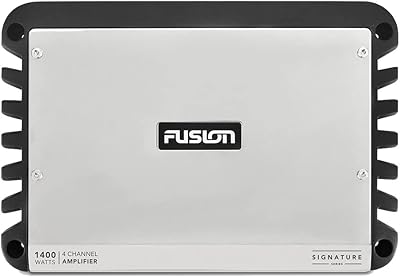
Garmin Fusion 1400W 4-Channel Marine Amplifier
81%
92%
Sound Output Quality
94%
Build Quality
89%
Heat Management
91%
Marine Durability
83%
Battery Efficiency
More
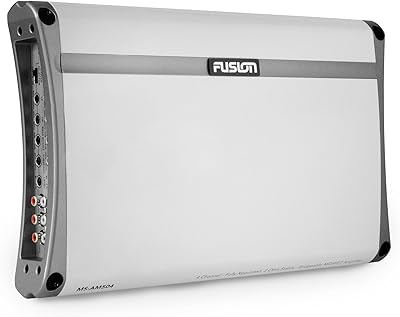
Garmin Fusion AM Series Marine Amplifier
80%
88%
Sound Quality
91%
Build Quality
93%
Marine Durability
87%
Power Output
61%
Installation Experience
More
Soundstream MR5.2000D 5-Channel Marine Amplifier
70%
78%
Value for Money
67%
Power Output
74%
Build Quality
82%
Thermal Management
63%
Ease of Installation
More
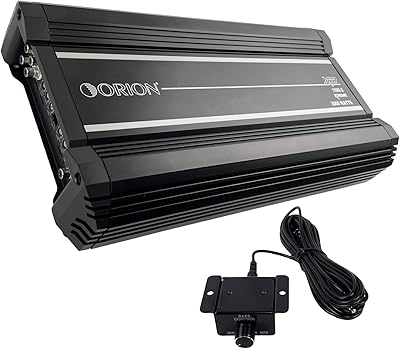
Orion XTR1500.5 5-Channel Car Amplifier
80%
88%
Sound Quality
91%
Bass Performance
86%
Build Quality
84%
Thermal Management
79%
Power Output Accuracy
More
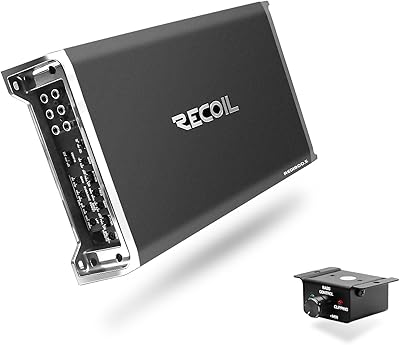
Recoil RED1800.5 5-Channel Car Amplifier
77%
91%
Value for Money
88%
Mono Channel Power
86%
Installation Experience
63%
Gain Calibration Ease
74%
Full-Range Channel Performance
More
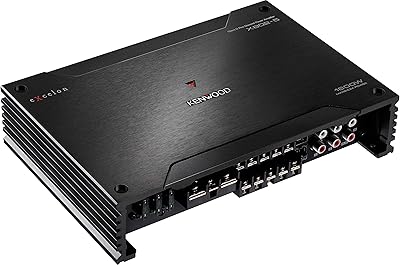
Kenwood X802-5 eXcelon 5 Channel Car Audio Amplifier
88%
92%
Sound Quality
85%
Installation Ease
88%
Build Quality
90%
Performance at High Volume
87%
Bass Enhancement
More
Stinger MT-1000.5 5-Channel Car Amplifier
75%
81%
Value for Money
84%
Ease of Installation
58%
Real-World Power Output
63%
Thermal Management
88%
Built-in Crossover Filters
More
Rockville DBM65 6-Channel Marine Amplifier
73%
88%
Value for Money
83%
Power Output
71%
Waterproofing & Weather Resistance
91%
Channel Flexibility
67%
Build Quality
More
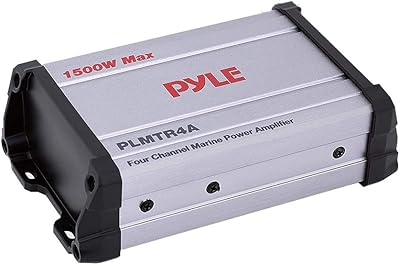
Pyle PLMTR4A 4-Channel Marine Amplifier
69%
78%
Value for Money
73%
Weatherproof Durability
41%
Power Accuracy
58%
Build Quality
86%
Installation Ease
More
Pyle PLMRMP4A 4-Channel Marine Amplifier
64%
61%
Value for Money
53%
Build Quality
67%
Waterproofing
58%
Power Output
79%
Ease of Installation
More

FAQ

You can technically connect third-party marine speakers, as the amp uses standard speaker connections. That said, the Fusion 5-channel unit is genuinely optimized for Fusion's own speaker lineup, and you will get the most predictable results — in terms of impedance matching and tonal balance — when you stay within that ecosystem. If you are mixing brands, just verify that your speakers' impedance ratings are compatible before wiring in parallel.

On a boat, it matters quite a bit. Class D amplifiers are far more efficient than older class A/B designs, meaning less of the power drawn from your battery is wasted as heat. When you are anchored for a full afternoon with the engine off, that efficiency directly extends how long you can run your audio system before draining your house battery. It also means the amp runs cooler, which is a meaningful durability factor in enclosed marine compartments.

Not without compromising performance. The four speaker channels are each designed to handle speaker pairs wired in parallel, and pushing beyond the supported load risks dropping impedance below safe levels, which can trigger the amp's protection circuitry or cause damage over time. Stick to four pairs maximum for reliable, long-term operation.

Like most high-power amplifiers, this onboard amplifier does generate meaningful heat at sustained high volumes, and a few owners have flagged this in their feedback. Mount it in a location with decent airflow — avoid completely sealed compartments with no ventilation. The 5-way protection circuit will shut the amp down before it overheats, but repeated thermal shutdowns are not great for long-term health, so placement matters.

The Fusion Signature Series 5-Channel Marine Amplifier is built to marine standards with a rugged die-cast chassis, but it is not rated for direct water exposure. It should be installed in a protected location — under a dash, in a storage compartment, or behind a panel — where it is shielded from direct spray, rain, and standing water. Marine-grade does not mean waterproof in this context.

Experienced DIYers who have installed car or marine audio before can handle it, but it is not a beginner-friendly project. Running power cables correctly, setting gain levels, and wiring speakers in parallel all require some working knowledge to do safely. If you are new to amplifier installs, having a marine electronics shop do it will save you headaches and protect your investment.

You get the amplifier itself, an owner's manual, and a warranty card. Wiring kits, RCA cables, mounting hardware, and fuse holders are not included, so budget for those separately before install day.

The fifth channel on this marine amp is specifically designed with the MS-SW10 in mind, so you do not need a separate mono amplifier for the sub. It is one of the cleaner aspects of the Fusion ecosystem — the whole system is engineered to work as a unit, and the subwoofer channel delivers enough output to let the MS-SW10 perform as intended.

Marine electrical systems are messier than most people expect — voltage spikes when starting engines, accidental polarity mistakes during install, and heat buildup in summer are all real scenarios. The protection circuitry covers thermal overload, reversed polarity, DC offset, and both high and low voltage conditions, meaning the amp can shut itself down safely rather than sustaining damage when something goes wrong. It is not a substitute for a clean install, but it is a meaningful safety net.

At the time of this writing, the amp has 53 ratings averaging 4.2 stars. That is a respectable score, but the sample size is smaller than you would want for high confidence. The feedback that does exist skews positive around output quality and build, with some notes on heat management and install complexity. It is worth reading through the individual reviews rather than just relying on the aggregate number.

Where to Buy