Overview

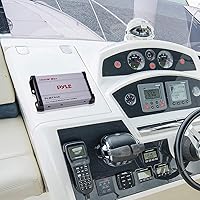
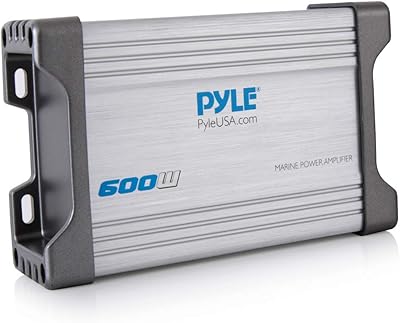
The Pyle PLMTR4A 4-Channel Marine Amplifier is a budget-conscious option for boaters who want to upgrade their on-water audio without spending serious money. Made by Sound Around under the Pyle banner, it competes in the same crowded value tier as Boss and Lanzar. What makes this marine amp worth a look is its IP-65 waterproof rating, which means it can handle direct water spray — wave splash, rain, or a careless rinse-down — without frying the internals. At roughly 6 by 3.6 by 2 inches and under 1.5 pounds, it tucks neatly under a seat or behind a dash panel where space is always tight.
Features & Benefits

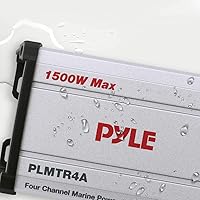
The PLMTR4A runs four channels of output, letting you power a full speaker spread across bow and stern, or bridge it down to two channels for a punchier configuration. Input options are practical — RCA, AUX, and MP3 line-in cover most head unit and portable device combinations without adapters. Worth flagging: the product title claims 1500W while the spec sheet lists 1200W max, and either figure represents peak power rather than continuous RMS output, so real-world usable wattage is considerably lower. A built-in heatsink and short-circuit protection handle thermal and electrical safety, while the soft turn-on circuit spares your speakers from startup thump.

Best For

This Pyle unit is a natural fit for boaters just getting into aftermarket audio — someone pulling a factory head unit off a pontoon or fishing boat and wanting four speakers running without a complicated install. The wiring is straightforward enough that most DIYers can handle it in an afternoon. It makes particular sense for PWC and small vessel owners where a compact, splash-resistant amp is a genuine requirement and budget matters. Seasonal boaters who store their boats over winter and aren't putting the amp through year-round punishment will likely get solid mileage from it. For a serious offshore build, look elsewhere — but for casual weekend use, the value trade-off is honest.

User Feedback

With a 3.9 out of 5 rating across over 300 reviews, the reception for this marine amp is best described as cautiously positive. Easy installation and decent sound quality for the price come up repeatedly in favorable reviews, and several buyers noted the weatherproofing held up through rain and salt spray without issue. On the flip side, a meaningful number of reviewers flagged the power claims as exaggerated — which ties directly to the inconsistent wattage figures in the listing. A handful reported early unit failures, a known risk at this price tier. It's not a resounding endorsement, but buyers who go in with realistic expectations mostly seem to walk away reasonably satisfied.

Pros

  • IP-65 waterproof rating handles real-world spray and rain without issue.
  • Four-channel output gives you a complete front-and-rear speaker setup in one compact unit.
  • At under 1.5 pounds and barely 6 inches long, it fits in surprisingly tight install spots.
  • RCA, AUX, and MP3 inputs cover most head units and portable devices without extra adapters.
  • Soft turn-on circuit protects speakers from startup thump, which extends speaker life over time.
  • Thermal overload and short-circuit protection add a layer of electrical safety most budget amps skip.
  • Installation is genuinely straightforward — most DIYers report getting it running without professional help.
  • Sound quality at this price point earns consistent praise from buyers who set realistic expectations.
  • Lightweight design makes repositioning or swapping during a seasonal refit quick and low-effort.

Cons

  • Wattage claims are inconsistent across the listing — the title and specs do not agree.
  • Max power figures are peak ratings, not RMS, so actual sustained output is considerably lower than advertised.
  • A notable portion of reviewers reported unit failures within the first season of use.
  • Long-term durability in high-heat or salt-air environments is not well-supported by user evidence.
  • No Bluetooth connectivity, which is a real gap given how common wireless audio sources are today.
  • The PLMTR4A offers no bass boost or crossover controls, limiting tuning flexibility for speaker setups.
  • Brand reputation for quality control is inconsistent, and warranty support can be difficult to navigate.
  • Not suitable for bridged subwoofer use in any demanding configuration without likely hitting power limits fast.

Ratings

The scores below reflect our AI-driven analysis of verified global buyer reviews for the Pyle PLMTR4A 4-Channel Marine Amplifier, with spam, bot-generated, and incentivized feedback actively filtered out before scoring. We evaluated real-world performance across categories that matter most to boaters — from weatherproofing and installation ease to power honesty and long-term reliability. Both the genuine strengths and the recurring frustrations are represented transparently so you can make a confident buying decision.

Value for Money
78%
22%
For boaters who just want four speakers running on a modest budget, the PLMTR4A delivers a functional upgrade without a painful outlay. Buyers consistently note that the sound quality relative to price is hard to argue with at this tier, especially compared to leaving factory audio in place.
The value equation softens when units fail within a season, turning a budget buy into a replacement headache. A few buyers noted they ultimately spent more total after replacing the unit than if they had bought a more durable mid-range amp from the start.
Weatherproof Durability
73%
27%
The IP-65 rating earns its keep in practical boating conditions — rain showers, bow spray, and the occasional rinse-down are not a problem. Multiple reviewers specifically noted the unit survived full seasons of open-water use without moisture-related failures.
IP-65 is splash and jet protection, not submersion tolerance, so mounting location still matters. A handful of reviewers in especially humid or salty coastal environments reported corrosion-related issues after extended use, suggesting the weatherproofing has limits under sustained exposure.
Power Accuracy
41%
59%
The amp does move four speakers simultaneously without audible strain at moderate listening volumes, which is adequate for casual cruising and background music on a pontoon or small fishing boat.
The wattage marketing is a genuine problem: the listing title claims 1500W while the spec sheet says 1200W max, and both are peak figures — not the continuous RMS output that actually governs real-world performance. Buyers who expected concert-level output on the water were consistently disappointed.
Build Quality
58%
42%
The heatsink feels solid to the touch and the chassis does not flex noticeably during handling. For a unit this light and inexpensive, the physical construction is respectable enough that most buyers do not flag it as a concern right out of the box.
A meaningful portion of reviews mention early unit failures — some within the first few months — pointing to inconsistent quality control at the factory level. The internal components appear to be the weak link, even when the exterior holds up fine.
Installation Ease
86%
This is where the PLMTR4A earns some of its strongest praise. The wiring layout is intuitive, the unit is light enough to maneuver into tight spots solo, and the multiple input options mean most people do not need adapters to get going. DIYers report clean installs in under two hours.
The included documentation is sparse and could do more to guide first-timers through bridging configuration or remote turn-on wiring. A few buyers had to rely on online forums to clarify details that should have been in the manual.
Sound Quality
71%
29%
At moderate volumes, audio reproduction is clean and balanced across four channels — wind noise on the water is a bigger enemy than distortion from this amp. The S/N ratio above 95 dB keeps background hiss low enough that it is not noticeable in normal listening conditions.
Push the volume closer to the upper range and clarity starts to soften, particularly in the high frequencies. Buyers comparing it directly to name-brand marine amps noted the soundstage felt narrower and less defined at higher output levels.
Compact Form Factor
88%
At just over 6 inches long and under 1.5 pounds, this Pyle unit fits comfortably behind dash panels, under bench seats, and in console compartments where larger amps simply cannot go. Installers on small PWCs and center-console boats particularly appreciate the flexibility this size allows.
The compact design does limit heatsink surface area, which can be a factor if you are running the amp hard for extended periods in a poorly ventilated enclosure. Thermal shutoffs under sustained high-volume use were reported by a small number of buyers in hot climates.
Input Connectivity
76%
24%
Having RCA, 3.5mm AUX, and MP3 line-in available on a single unit covers nearly every source scenario — head units, smartphones, and dedicated marine media players all connect without fuss. The flexibility genuinely reduces install complexity for mixed-source setups.
The absence of Bluetooth is a real omission by current standards, especially as wireless audio becomes the default expectation even on budget electronics. Buyers who anticipated wireless connectivity were caught off guard by the wired-only design.
Speaker Protection
79%
21%
The anti-thump startup circuit works as advertised — speakers come on smoothly without the jarring pop that can stress tweeters over time. Short-circuit protection has also saved a few buyers from wiring mistakes during install, which is a practical safety net for DIYers.
Thermal overload protection, while present, has triggered prematurely for some users running the amp at sustained moderate volume in warm weather — suggesting the protection threshold may be calibrated conservatively relative to the amp's rated capacity.
Long-Term Reliability
52%
48%
A solid portion of buyers do report the unit running without issue through one or more full boating seasons, particularly those who installed it in well-ventilated, sheltered locations away from direct saltwater exposure.
The early failure rate reported across reviews is higher than average for the category, and warranty resolution through Pyle has been inconsistent according to multiple buyers. For a unit installed in a seasonal-use boat, the risk is manageable — but it is not negligible.
Thermal Management
63%
37%
The heatsink dissipates heat effectively during normal use, and the amp stays manageable to the touch during extended listening sessions at reasonable volume levels. In shaded, ventilated installs, thermal performance is generally not a complaint.
In direct sun exposure — which is unavoidable on many boat installations — heat buildup accelerates noticeably. A few buyers reported the thermal protection cutting audio during peak afternoon hours on hot summer days, which is a frustrating experience mid-cruise.
Channel Configuration Flexibility
69%
31%
The ability to switch between 4-channel stereo and 2-channel bridged mode gives installers a bit of flexibility to adapt the amp to different speaker layouts without buying additional hardware. It handles straightforward front-rear speaker splits cleanly.
There are no onboard crossover controls or bass boost adjustments, which limits fine-tuning for anyone who wants more control over the audio signal. Buyers running a mixed speaker-and-sub setup found the lack of a built-in high-pass filter a meaningful gap.
Packaging and Unboxing
66%
34%
The unit arrives adequately protected and the packaging is tidy enough for a budget product. Most buyers reported no transit damage, and the box contents were consistent with expectations.
Accessories are minimal — no mounting hardware, no RCA cables, and no wiring harness — so first-time installers may be caught short if they did not plan ahead. The sparse documentation leaves some gaps that a better-written quick-start guide could easily address.

Suitable for:

The Pyle PLMTR4A 4-Channel Marine Amplifier is a solid pick for boaters who are stepping up from whatever came stock on their vessel and want a meaningful improvement without committing to a high-end audio budget. If you own a pontoon, small fishing boat, or personal watercraft and just want four speakers running cleanly across the boat, this unit covers that job without overcomplicating the install. DIY-friendly wiring and multiple input types mean most people can get it running in an afternoon using standard tools and basic electrical knowledge. The IP-65 rating offers real protection against rain and spray, which matters on open water where moisture is constant — not just an occasional nuisance. Seasonal boaters who store their boats over winter and put modest hours on the water each summer will likely find the value trade-off makes good practical sense.

Not suitable for:

Serious audio enthusiasts building a high-output marine system should look past the Pyle PLMTR4A 4-Channel Marine Amplifier and invest in a brand with stronger reliability credentials and honest power specifications. The wattage figures listed across this unit's marketing materials are inconsistent — 1500W in the title, 1200W in the specs — and neither number reflects continuous RMS output, which is the figure that actually tells you how hard an amp can work day to day. Boaters running larger vessels with multiple speaker zones, subwoofers, or demanding audio loads will hit the limits of this unit quickly. If your boat is in the water year-round, exposed to extreme heat, salt air, and constant vibration, the long-term durability of a budget-tier amp like this becomes a real concern. Buyers who have experienced early failures from value-brand electronics before may want to spend more upfront rather than risk a mid-season replacement.
Specifications

  • Waterproof Rating: Rated IP-65, meaning it is fully protected against dust ingress and can withstand sustained water jets from any direction.
  • Max Power Output: Rated at 1200W maximum peak power across all four channels combined — note that continuous RMS output will be significantly lower.
  • Channels: 4-channel amplifier that can also be configured in a 2-channel bridged mode for higher output to a single pair of speakers.
  • Speaker Impedance: Compatible with speakers rated between 2 and 4 Ohms, covering the most common aftermarket marine speaker configurations.
  • Audio Inputs: Accepts signal via RCA line-level input, a 3.5mm AUX jack, and a dedicated MP3 line-in connection.
  • Power Supply: Operates on 12V DC, consistent with standard boat electrical systems, and is protected by a 10A fuse.
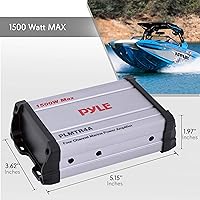
  • Dimensions: Measures 6.03″ long by 3.63″ wide by 1.93″ tall, making it one of the more compact options in its class.
  • Weight: Weighs 1.39 pounds, light enough to mount in locations where heavier amps would require additional structural support.
  • Frequency Response: Handles audio frequencies from 10 Hz to 40 kHz, which comfortably covers the full range of human hearing and beyond.
  • Signal-to-Noise Ratio: S/N ratio exceeds 95 dB, indicating a low noise floor relative to the output signal for cleaner audio reproduction.
  • Total Harmonic Distortion: THD is rated at 0.1%, which represents a low level of audio signal distortion at rated output.
  • Channel Separation: Channel separation exceeds 65 dB, which keeps left and right audio channels acoustically distinct from one another.
  • Output Modes: Supports both stereo and mono output modes, giving installers flexibility depending on speaker layout and application.
  • Thermal Protection: Equipped with a heavy-duty heatsink and an automatic thermal overload shutoff to prevent damage from overheating.
  • Short Circuit Protection: Built-in short-circuit protection prevents electrical faults from damaging the amplifier or the boat's wiring system.
  • Turn-On Circuit: Features a soft turn-on and anti-thump startup circuit that gradually brings the amp online to protect connected speakers.
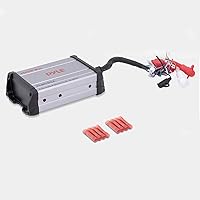
  • In the Box: Package includes the amplifier unit only; speaker wire, RCA cables, and mounting hardware are not included.
  • Manufacturer: Produced by Sound Around, a New York-based consumer electronics distributor that markets audio products under the Pyle brand name.

Related Reviews

Pyle PLMRMP4A 4-Channel Marine Amplifier
64%
61%
Value for Money
53%
Build Quality
67%
Waterproofing
58%
Power Output
79%
Ease of Installation
More
Pyle PLMRA402 4-Channel Marine Amplifier
69%
83%
Value for Money
81%
Ease of Installation
67%
Sound Quality
49%
Power Accuracy
62%
Build Quality
More
Pyle PLMRMB4CB 4-Channel Marine Amplifier
67%
78%
Value for Money
54%
Power Output
63%
Bluetooth Connectivity
61%
Water Resistance
58%
Build Quality
More
Pyle PLMRMP3B 4-Channel Marine Amplifier
68%
83%
Ease of Installation
71%
Value for Money
62%
Sound Quality
68%
Waterproof Performance
44%
Actual Power Output
More
Pyle PLAM1600 4-Channel Car Amplifier
69%
74%
Value for Money
67%
Sound Quality
51%
Power Output Accuracy
83%
Ease of Installation
59%
Build Quality
More
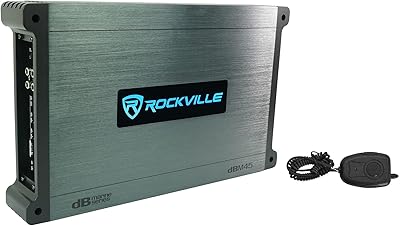
Rockville DBM45 4-Channel Marine Amplifier
71%
78%
Sound Quality
74%
Build Quality
71%
Waterproofing
69%
Power Delivery
57%
Thermal Management
More
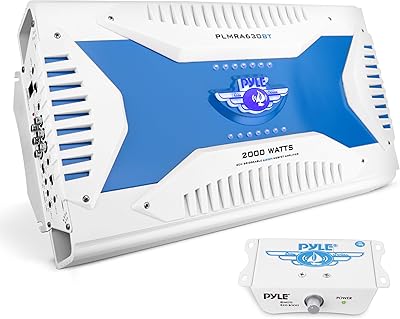
Pyle PLMRA630BT 6-Channel Bluetooth Marine Amplifier
83%
88%
Build Quality and Durability
90%
Bluetooth Connectivity
85%
Power Output
91%
Ease of Setup
83%
Sound Performance
More
Pyle PD3000BAH 4-Channel Bluetooth Amplifier
73%
83%
Value for Money
61%
Power & Amplification
88%
Connectivity & Input Range
74%
Bluetooth Performance
77%
CD/DVD Player Functionality
More
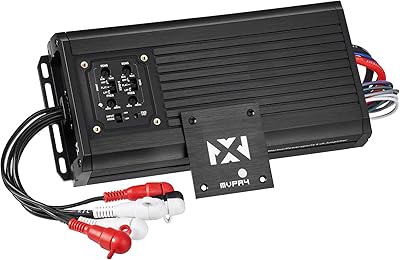
NVX MVPA4 4-Channel Marine Amplifier
80%
91%
Waterproof Protection
88%
Power Accuracy
84%
Build Quality
83%
Sound Quality
92%
Compact Form Factor
More
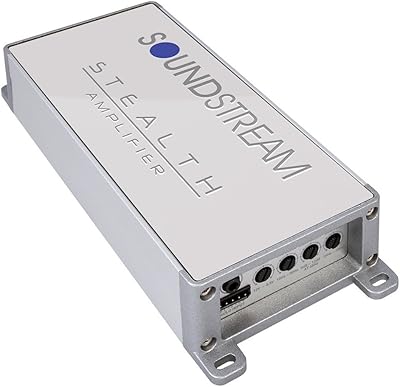
Soundstream SM4.1000D 4-Channel Marine Amplifier
87%
93%
Power Output
88%
Sound Quality
90%
Build Quality
91%
Weather Resistance
87%
Ease of Installation
More

FAQ

The IP-65 rating covers protection against dust and directed water jets, so splashing, rain, and spray from the bow wave should not be a problem. It is not rated for submersion, so you would not want it mounted in a location where it could sit in pooled water. Multiple buyers have confirmed the weatherproofing held up through regular on-water use.

That inconsistency is worth flagging — the product title references 1500W while the spec sheet lists 1200W max, and neither figure is the one you should base your speaker matching on. Both are peak or burst ratings. The continuous RMS output, which is the number that actually tells you how hard the amp runs day to day, is not officially published for this unit. Expect real-world usable power to be a fraction of the advertised maximum, which is normal for budget-tier amplifiers.

You can bridge two channels together to drive a subwoofer, but given the modest RMS output and the 2-to-4 Ohm impedance range, do not expect to shake the hull. It will move a small sub in a casual setup, but this marine amp was not designed for dedicated bass applications.

The Pyle PLMTR4A 4-Channel Marine Amplifier does not have Bluetooth built in, so you cannot pair it wirelessly to anything directly. If your head unit has Bluetooth for streaming music, you would run the audio output from the head unit into the amp via RCA or the 3.5mm AUX jack — that is the standard setup for most installs.
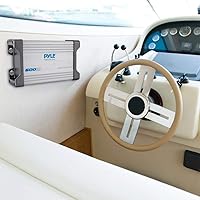
Most people with basic DIY comfort can handle it without hiring a marine installer. The wiring is straightforward — power, ground, speaker outputs, and your audio input — and the compact size makes it easy to work with in tight spaces. If you are comfortable doing basic electrical work on a boat, you should be fine.

Any aftermarket marine speakers rated between 2 and 4 Ohms will be compatible. Most standard 6.5-inch and 6x9-inch marine speakers fall right in that range. Just make sure the speakers you choose have a peak power rating that reasonably matches what the amp can deliver so you are not underpowering or overdriving them.

Yes, the PLMTR4A is a reasonable match for a pontoon setup — particularly if you are running four speakers at modest volume for background music while cruising. The compact size works well for under-seat mounting, and the waterproof rating covers the exposure you would typically get on a pontoon deck. Just keep expectations calibrated: it is a budget amp and performs like one.

Yes, this Pyle unit supports remote turn-on via a standard 12V trigger wire from your head unit, which is the typical way marine and car amplifiers are wired. When your head unit powers on, it sends a signal to the amp and everything comes up together. The soft turn-on circuit means the amp ramps up gradually rather than snapping on all at once.

The heatsink and thermal overload protection are both present and functional, but mounting location matters. If you install it in an enclosed space with no airflow and run it hard for hours on a 95-degree day, you may trigger the thermal shutoff. Give it some ventilation clearance and it should manage normal operating temperatures without issue.

Pyle typically offers a one-year limited warranty through Sound Around, though the support experience varies based on buyer reports. If you encounter an early failure, reaching out to the seller or Pyle directly is your first step. It is worth keeping your purchase receipt and noting that the warranty covers manufacturing defects, not water damage or improper installation.

Where to Buy