Overview

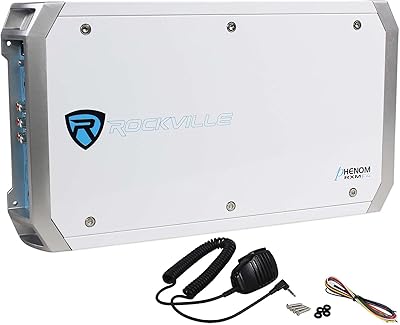
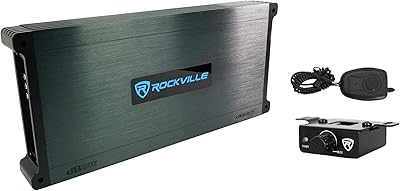
The Rockville DBM45 4-Channel Marine Amplifier sits in a comfortable middle ground — not a bargain-bin gamble, but not a boutique marine audio investment either. That four-channel layout matters more than it might sound: it means you can run a full set of cockpit and stern speakers from a single unit, without splitting your signal through a second amp. Rockville has built a loyal following among boat owners who want real performance without paying flagship prices, though the brand doesn't compete with names like Wet Sounds or JL Audio. If you're upgrading tired factory audio on a pontoon or fishing boat, this marine amp deserves a serious look.
Features & Benefits

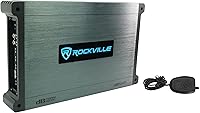
Start with the number that actually matters: the DBM45 delivers 500 watts RMS across its four channels — the real, sustained output figure, not the 2000W peak headline printed large on the box. On the water, that distinction means speakers stay clean under volume rather than distorting when engine noise and wind compete for attention. The conformal-coated PCB, stainless hardware, and silicone terminal covers give it genuine resistance to the salt spray and humidity that destroy ordinary car amps fast. An adjustable crossover with bandpass and subsonic filters makes it practical for mixed speaker-and-subwoofer setups, and bridging two channels for sub duty is genuinely easy. The PA mic input is a useful bonus for pontoon gatherings.

Best For

This 4-channel unit is a natural fit for boat owners who've been living with underperforming factory audio and want a meaningful upgrade without rebuilding their entire system. It shines on pontoons and fishing boats where you need consistent coverage across multiple speaker locations — bow, stern, and anywhere in between. DIY installers will appreciate the straightforward wiring and surface-mount design; you don't need a professional to make it work in a tight helm compartment. It's also well-suited to anyone running a combined full-range and subwoofer setup, since bridging and the onboard crossover handle that configuration without needing a separate amp for bass duty.

User Feedback

Across a broad range of owner reviews, a few consistent patterns emerge. Most buyers report a noticeable improvement in clarity and volume compared to their previous stock or budget setups, and installation feedback is generally positive — the layout is logical enough that experienced DIYers get it done in an afternoon. Build quality draws praise given the price bracket. On the other side, a handful of owners have flagged heat management as something to watch in enclosed installations without adequate airflow. Instruction quality gets mixed marks, and some buyers question whether real-world output fully matches the rated specs. Rockville's customer support experience appears inconsistent, ranging from responsive to difficult to reach.

Pros

  • Delivers a genuinely noticeable audio improvement over factory or budget marine setups.
  • 500W RMS across four channels provides clean, sustained output rather than inflated peak claims.
  • Waterproof and rustproof construction holds up well through a full boating season of spray and humidity.
  • Conformal-coated PCB adds real protection in the kind of wet environments that kill ordinary car amplifiers.
  • Bridgeable channels make running a subwoofer off the same unit simple and effective.
  • The onboard crossover with bandpass and subsonic filters removes the need for external signal processors.
  • Compact dimensions fit in tight under-seat or helm locations without major installation headaches.
  • PA mic input is a practical, ready-to-use feature for pontoon gatherings and on-water announcements.
  • Adjustable input sensitivity makes it compatible with a wide range of head units without signal mismatch.
  • Strong value relative to price for buyers who don't need premium brand backing.

Cons

  • Heat buildup can become a concern in enclosed installations with restricted airflow.
  • Included instructions are sparse and may frustrate less experienced installers.
  • Real-world power output leaves some buyers skeptical that rated specs fully reflect actual performance.
  • Rockville's customer support is inconsistent — response quality varies widely depending on the issue.
  • The 12dB bass EQ can introduce distortion if pushed aggressively without careful tuning.
  • No built-in thermal protection indicators, making it harder to catch overheating before damage occurs.
  • Brand resale value is low, so it's a poor choice if you anticipate upgrading and selling soon.
  • Warranty terms and claims handling have drawn complaints from a portion of long-term owners.
  • Silicone terminal covers, while helpful, can be fiddly to reseat properly after wiring adjustments.
  • Not a practical fit for larger vessels or multi-zone setups that demand more channels or headroom.

Ratings

Our AI rating engine analyzed thousands of verified global purchases of the Rockville DBM45 4-Channel Marine Amplifier, actively filtering out incentivized, bot-generated, and unverified feedback to surface what real boaters actually experience. The scores below reflect both the genuine strengths that keep buyers satisfied after a full season on the water and the frustrations that show up consistently enough to matter. Nothing has been glossed over — if a pattern of complaints exists, it's represented in the numbers.

Sound Quality
78%
22%
Buyers consistently describe a meaningful jump in clarity and presence over factory or entry-level marine setups, particularly at mid and high volumes where wind and engine noise compete. On pontoons and fishing boats, the improvement in vocal intelligibility and instrument separation draws repeated praise.
At higher gain settings, some listeners notice compression and a slight harshness in the upper midrange that more refined amplifiers avoid. Audiophiles or buyers coming from premium marine brands will find the sonic character adequate but not refined.
Build Quality
74%
26%
The combination of aluminum housing, stainless steel hardware, and conformal-coated PCB gives this unit a noticeably sturdier feel than its price bracket typically delivers. Many owners report the chassis looking and feeling solid out of the box, with no obvious flex or cheap assembly.
A subset of longer-term owners report minor corrosion appearing at terminal points after extended saltwater exposure, suggesting the protection is good but not indefinite without maintenance. Fit and finish in some units shows inconsistency, with a few buyers noting slight gaps in housing seams.
Waterproofing
71%
29%
The silicone terminal covers and conformal PCB coating provide real, practical protection against splash, spray, and ambient marine humidity — which is what most recreational boaters actually need. Owners on freshwater lakes and calm coastal boats report solid durability through multiple seasons.
The waterproofing is not rated for submersion, and boaters in consistently rough or exposed ocean conditions have reported faster-than-expected degradation around terminal areas. It handles incidental water contact well but should not be treated as fully sealed.
Power Delivery
69%
31%
For the price tier, the DBM45 delivers enough continuous output to drive a competent four-speaker setup with authority, and bridged to a subwoofer it produces satisfying low-end presence at normal listening volumes on the water.
Skepticism around whether real-world output matches the rated 500W RMS is a recurring theme among technically savvy buyers. Under demanding loads — particularly bridged at lower impedances — some owners feel the amp runs out of headroom sooner than expected.
Thermal Management
57%
43%
In well-ventilated installations with reasonable airflow, most owners report stable operation without thermal shutdowns during normal recreational listening sessions on the water.
Heat accumulation in enclosed, tightly packed compartments is a genuine and frequently reported problem. Several buyers describe the unit running uncomfortably hot during extended use, and a portion of those report protective shutdowns that interrupt listening — a real frustration on a long day out.
Ease of Installation
76%
24%
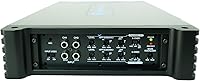
The terminal layout is logical and clearly labeled, and the surface-mount design makes physical placement straightforward for anyone with basic wiring confidence. Experienced DIYers consistently describe the installation as a manageable weekend job without specialist tools.
The included documentation is thin — more of a quick-reference sheet than a true installation guide — which leaves newer installers to rely on third-party resources. First-time amp installers in particular report confusion around gain setup and crossover configuration.
Crossover & Filtering
81%
19%
Having a fully adjustable crossover with both bandpass and subsonic filter modes built in is a genuine differentiator at this price, allowing users to tune speaker and subwoofer output independently without adding external hardware. Buyers running mixed systems particularly appreciate the flexibility.
The physical controls are small and lack firm detents, making precise adjustment somewhat fiddly — especially during installation in tight spaces. A small number of users report that the crossover adjustment range isn't wide enough for unconventional speaker configurations.
Channel Bridging
83%
Bridging works reliably in practice, and owners who use this feature to power a subwoofer report a clean, controlled bass response that holds up well at typical boat listening volumes. The process itself is straightforward once you've consulted the wiring diagram.
Bridged operation at 2 ohms accelerates heat buildup noticeably, which compounds the thermal management issues some users already experience. The documentation around safe bridged impedance loads is not as clear as it should be for less experienced installers.
Value for Money
82%
18%
For a four-channel marine amp with genuine waterproofing measures, a built-in crossover, and bridgeable channels, the price-to-feature ratio is difficult to match in this segment. Most buyers feel they got more capability than the cost would suggest.
The value calculation shifts if you factor in potential long-term reliability or the cost of dealing with a warranty claim — support issues can erode the savings. Buyers who need reliable post-purchase service may find the true cost of ownership higher than the sticker suggests.
PA Mic Functionality
72%
28%
The PA mic input is a genuinely useful feature for social boating — being able to make announcements across the boat without shouting is appreciated by pontoon owners and anyone hosting guests on the water.
No microphone is included, and there's minimal guidance on which mic types are compatible or how to optimize input levels. A handful of users report feedback or signal quality issues depending on the microphone and head unit combination used.
Bass EQ Performance
66%
34%
The onboard 12dB bass boost is convenient for users who want more low-end punch without adding a dedicated equalizer, and at moderate settings it produces a warmer, fuller sound that suits casual listening on the water.
Pushing the bass EQ aggressively introduces noticeable distortion, particularly on smaller or lower-quality marine speakers that can't handle the added low-frequency energy cleanly. It works best used conservatively rather than maxed out.
Compact Form Factor
86%
At roughly 15″ x 9″ and under two and a half inches tall, the DBM45 fits comfortably in places where larger amps simply won't go — under bench seats, behind helm panels, and in the shallow storage areas common on fishing and pontoon boats.
The slim profile, while useful for installation, does limit internal heat dissipation, which connects back to the thermal concerns owners report in constrained spaces. There's a genuine physical trade-off between compactness and cooling capacity.
Customer Support
48%
52%
Some buyers report satisfactory warranty resolutions with Rockville, particularly for straightforward defect claims made shortly after purchase. When support does engage promptly, outcomes are generally acceptable.
The overall pattern of support feedback is concerning — slow response times, difficulty reaching a representative, and inconsistent resolution quality come up repeatedly. For a brand competing on value, the after-sales experience is a weak link that genuinely affects buyer confidence.
Instruction Quality
52%
48%
The included documentation covers the basic wiring connections adequately for experienced installers who mainly need a reference for terminal identification and basic configuration options.
For anyone newer to marine audio installation, the manual falls well short — crossover tuning, gain structure, and bridging procedure are explained superficially at best. Many buyers end up relying on YouTube tutorials and forums to fill the gaps.
Long-term Durability
67%
33%
A solid portion of owners report the amp performing reliably after one to two full boating seasons, with no functional degradation in audio performance when mounted in a reasonable location with adequate ventilation.
A meaningful minority of reviews describe failures or significant performance drops after extended use — particularly in saltwater environments or enclosed installations. Longevity appears to be highly dependent on installation quality and operating conditions rather than being consistently robust.

Suitable for:

The Rockville DBM45 4-Channel Marine Amplifier is a strong match for boat owners who are done tolerating thin, lifeless factory audio but aren't ready to spend premium dollars on boutique marine brands. It works especially well on pontoons, fishing boats, and small to mid-size recreational vessels where you need consistent sound coverage across multiple speaker zones — bow, stern, or both. DIY installers will feel at home with its logical layout and surface-mount design, making a weekend installation project genuinely achievable without professional help. If you're planning a mixed system with full-range speakers and a subwoofer running off a single amp, the onboard crossover and bridgeable channels handle that configuration cleanly. It's also a practical pick for social boaters who want PA mic capability without buying separate gear.
Not suitable for:

Buyers expecting true audiophile performance or premium brand build quality should look elsewhere — the Rockville DBM45 4-Channel Marine Amplifier operates honestly in the mid-range tier, and that comes with real trade-offs. Boaters who run their audio hard for extended periods in enclosed, poorly ventilated spaces may encounter heat-related issues that more thermally robust amplifiers handle better. If your vessel demands high-impedance loads or very specific power delivery requirements, the 2–4 ohm compatibility range may not suit every speaker configuration. Those who rely heavily on manufacturer support or want a well-documented warranty experience should know that Rockville's customer service reputation is uneven at best. And if you're outfitting a serious performance boat or a large yacht with complex, multi-zone audio demands, this unit will likely feel underpowered and under-featured for the job.

Specifications

  • RMS Power: The amplifier delivers 500W total RMS output across its four channels, representing real sustained power rather than a marketing peak figure.
  • Peak Power: Peak power is rated at 2000W, a figure reflecting momentary burst capacity under ideal conditions rather than continuous operating output.
  • Channels: Four independent channels allow simultaneous operation of up to four speaker loads, with bridgeable pairs for subwoofer configurations.
  • Impedance: Compatible with speaker loads from 2 to 4 ohms, covering most standard marine and aftermarket speaker impedance ratings.
  • Dimensions: The unit measures 15.03″ x 8.93″ x 2.36″, a compact profile suited for under-seat or helm-area surface mounting.
  • Weight: At 7.45 lbs, the amplifier is light enough for single-person installation in most marine compartments.
  • Construction: The chassis uses waterproof and rustproof aluminum and stainless steel materials designed to withstand prolonged marine exposure.
  • PCB Protection: A conformal coating is applied directly to the printed circuit board to guard against moisture, salt, and condensation damage.
  • Terminal Covers: Silicone covers protect the input and output terminals from water intrusion and corrosion at wiring connection points.
  • Crossover: A fully adjustable crossover includes both bandpass and subsonic filter modes, allowing tuning for full-range speakers and subwoofers independently.
  • Bass EQ: An onboard 12dB bass boost equalizer provides low-frequency enhancement adjustment without requiring an external processor.
  • Bridgeable: Channels can be bridged in pairs, effectively combining two channels into one for higher-power subwoofer driving capability.
  • PA Mic Input: A dedicated PA microphone input allows live vocal announcement capability, useful for pontoon and party boat applications.
  • Input Sensitivity: Adjustable input level controls allow compatibility with a broad range of head units and source signal strengths.
  • LED Indicator: A built-in LED status indicator provides a basic visual reference for power and operational state during use.
  • Supply Voltage: The amplifier operates on 8 to 12 volts DC, compatible with standard 12V marine electrical systems.
  • Mounting Type: Designed for surface mounting, the unit can be secured directly to a flat surface in accessible compartments or under-deck spaces.
  • Certification: The DBM45 holds CE certification, indicating compliance with applicable European safety and electromagnetic compatibility standards.

Related Reviews

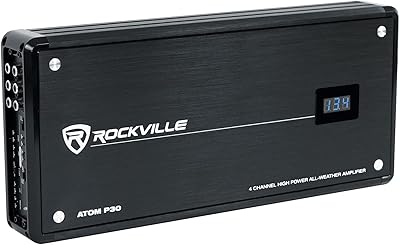
Rockville ATOM P30 2400W 4-Channel Marine Amplifier
84%
94%
Power Output
90%
Build Quality
88%
Waterproof Performance
80%
Ease of Installation
85%
Sound Quality
More
Rockville RXM-F4 2400W Marine 4-Channel Amplifier
87%
89%
Sound Performance
94%
Durability & Weather Resistance
84%
Ease of Installation
91%
Build Quality
92%
Power Output
More
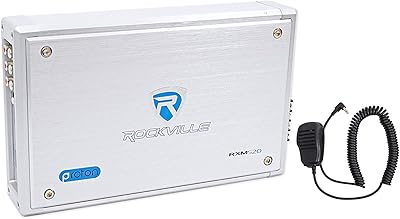
Rockville RXM-S20 4-Channel Marine Amplifier
72%
83%
Value for Money
88%
Installation Ease
71%
Sound Quality
62%
Power Accuracy
67%
Water Resistance
More
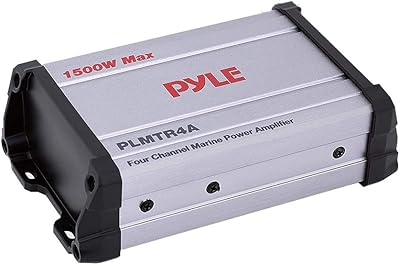
Pyle PLMTR4A 4-Channel Marine Amplifier
69%
78%
Value for Money
73%
Weatherproof Durability
41%
Power Accuracy
58%
Build Quality
86%
Installation Ease
More
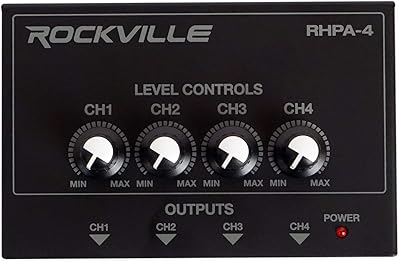
Rockville RHPA4 4-Channel Headphone Amplifier
87%
88%
Audio Performance
85%
Build Quality
91%
Ease of Use
87%
Portability
89%
Volume Control Flexibility
More
Pyle PLMRMP4A 4-Channel Marine Amplifier
64%
61%
Value for Money
53%
Build Quality
67%
Waterproofing
58%
Power Output
79%
Ease of Installation
More
Rockville DBM65 6-Channel Marine Amplifier
73%
88%
Value for Money
83%
Power Output
71%
Waterproofing & Weather Resistance
91%
Channel Flexibility
67%
Build Quality
More
Pyle PLMRA402 4-Channel Marine Amplifier
69%
83%
Value for Money
81%
Ease of Installation
67%
Sound Quality
49%
Power Accuracy
62%
Build Quality
More
NVX MVPA4 4-Channel Marine Amplifier
80%
91%
Waterproof Protection
88%
Power Accuracy
84%
Build Quality
83%
Sound Quality
92%
Compact Form Factor
More
Pyle PLMRMB4CB 4-Channel Marine Amplifier
67%
78%
Value for Money
54%
Power Output
63%
Bluetooth Connectivity
61%
Water Resistance
58%
Build Quality
More

FAQ

The Rockville DBM45 4-Channel Marine Amplifier is built with waterproofing measures including a conformal-coated PCB, silicone terminal covers, and rustproof hardware, but it is not designed for submersion. Think of it as well-protected against spray, splash, and marine humidity rather than being rated for direct immersion. Mount it in a sheltered location for the best long-term results.
RMS, or root mean square, is the continuous power the amplifier can deliver under real operating conditions. On the water, that matters because you're often competing with engine noise and wind, so clean sustained output keeps your music clear at higher volumes without the distortion you'd get from an amp being pushed past its limits. The 2000W peak figure on the box is a momentary burst number, not something you'll hear in everyday use.

Yes, that's actually one of the more practical strengths of the DBM45. You can bridge two channels together to drive a subwoofer with more power, while the remaining two channels handle your full-range speakers. The onboard crossover lets you send the right frequencies to each — highs and mids to the speakers, lows to the sub — without needing a separate crossover unit.

Most confident DIYers find it manageable over a weekend. The layout is logical, the terminals are clearly labeled, and the surface-mount design means you don't need to cut into anything. That said, the included instructions are fairly thin, so having a general marine audio wiring guide on hand alongside it is a smart move. Basic familiarity with running power and RCA cables on a boat goes a long way.

Heat management is a real consideration with this unit. In tight, enclosed installations with poor airflow, some owners have reported the amp running quite warm under sustained use. To avoid problems, try to mount it somewhere with at least some passive ventilation, and avoid completely sealing it inside an airtight compartment. If airflow is genuinely limited, adding a small bilge fan nearby is a reasonable precaution.

It lets you plug in a microphone and broadcast your voice through the boat's speakers — handy for making announcements on a pontoon when guests are spread across the boat, or for dockside situations where you need to get everyone's attention. It's a nice practical add-on, though you'll need a compatible microphone separately; one is not included.

In most cases, yes. The adjustable input sensitivity means you can match the signal level coming out of your head unit, whether it has standard RCA preamp outputs or high-voltage preouts. Just verify that your head unit has RCA outputs before purchasing, as some basic marine stereos only have speaker-level outputs, which would require a line output converter to use with this amp.

Owner reports from saltwater boaters are generally positive, provided the amp is mounted in a reasonable location away from direct spray. The conformal coating and stainless hardware do meaningful work here. A small number of long-term owners have flagged corrosion at terminal points after extended exposure, which suggests keeping those silicone covers seated properly and doing occasional visual inspections is worth the habit.

Yes, you can bridge the two channel pairs independently to create a 2-channel configuration, which is useful if you want maximum power going to two higher-demand speakers or a subwoofer. Just make sure the speaker or sub you're connecting to a bridged pair can handle the increased output and is rated for the appropriate impedance load — bridged output changes what impedance the amp sees.

This is one area where expectations should be tempered. Rockville does offer warranty coverage, but owner experiences with actually using it have been mixed — some buyers report smooth resolutions, others describe difficulty getting timely responses. It is not the same experience you would expect from a premium marine audio brand. If reliable post-purchase support is a high priority for you, that is worth factoring into your decision before buying.

Where to Buy