Overview

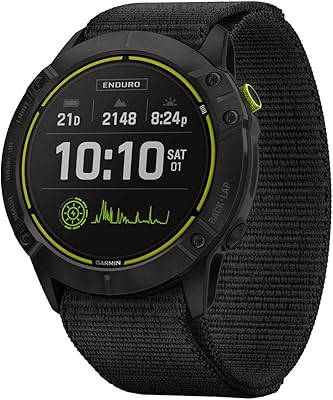
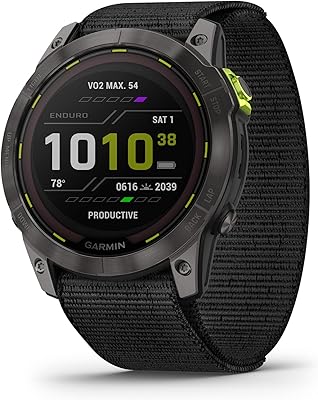
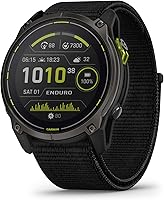
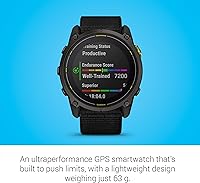
The Garmin Enduro 3 GPS Smartwatch is built for one kind of person: the athlete who pushes past normal limits and needs gear that keeps up. At 63 grams, it sits lighter on the wrist than most competitors in its class, without sacrificing the titanium bezel and sapphire lens that make it genuinely tough. The headline story, though, is battery life. Solar charging combined with Garmin's efficient hardware means this watch can run for weeks — or even months — between charges. That single capability separates it from nearly everything else available. Just know going in: this is not a lifestyle watch. It is a serious tool for serious athletes.

Features & Benefits

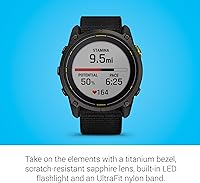
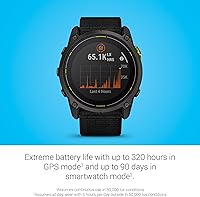
The solar-assisted battery is the defining feature: up to 90 days in smartwatch mode and over 300 hours in GPS mode means you can cover a week-long mountain traverse without once thinking about a charger. Preloaded TopoActive maps handle remote terrain where your phone has no signal, and dynamic round-trip routing actively recalculates to get you home on schedule — genuinely useful for anyone whose runs turn into unplanned adventures. The built-in LED flashlight adds real safety value for early-morning starts. With 32 GB of storage, you can load maps and music without a phone nearby. The UltraFit nylon band stays comfortable across brutally long efforts.

Best For

This solar-powered endurance watch is purpose-built for ultra-distance athletes — think 100-mile runners, thru-hikers spending weeks in the backcountry, and cyclists logging enormous training blocks. If you rely on detailed topographic maps in places where cell service is a distant memory, the Enduro 3 handles that without hesitation. Triathletes and cyclists chasing advanced metrics beyond basic pace will find the training load tools and stamina tracking genuinely useful. The flashlight makes it practical for athletes who regularly train before sunrise. If you tend to keep a quality watch for years rather than chasing every new release, this is that watch.

User Feedback

Athletes who have taken this ultraperformance GPS watch on multi-day expeditions consistently praise the battery performance — solar charging holds up well even under heavy GPS use, though buyers in persistently overcast climates report more modest gains from the panel. Band comfort across 24-plus-hour efforts gets strong marks. The complaint that surfaces most reliably is the 240x240 screen resolution, which feels underwhelming at this price tier — text and maps are readable, but the display is not a standout. Garmin Connect integration is generally well-regarded, though some users flag occasional firmware quirks. Most buyers view the overall package as a sound long-term investment given its durability and feature depth.

Pros

  • Solar charging delivers genuinely multi-week battery life under real GPS use, not just in lab conditions.
  • At 63 grams, the Enduro 3 is impressively light for a watch this capable — barely noticeable during long efforts.
  • Preloaded TopoActive maps work reliably in remote areas with zero cell coverage.
  • Dynamic round-trip routing actively recalculates to keep you on schedule, not just pointing you in a direction.
  • The built-in LED flashlight is a practical, thoughtful feature for pre-dawn and post-sunset athletes.
  • Titanium bezel and sapphire lens hold up to the kind of abuse endurance athletes routinely inflict on gear.
  • 32 GB of onboard storage means maps and music travel with you without needing a phone nearby.
  • The UltraFit nylon band earns consistent praise for staying comfortable through 24-plus-hour race efforts.
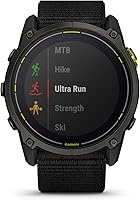
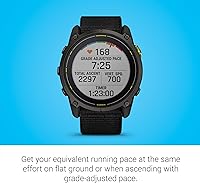
  • Sport-specific training plans and real-time stamina tracking go well beyond what most GPS watches offer.
  • Garmin Connect ecosystem is mature and data-rich for athletes who take training analysis seriously.

Cons

  • The 240x240 screen resolution feels underwhelming relative to the price — fine for data, but not sharp by modern standards.
  • Solar charging provides limited benefit in cloudy or heavily forested environments where direct sunlight is scarce.
  • Smart notifications and third-party app support are basic compared to more connected smartwatch platforms.
  • The deep feature set comes with a learning curve; new users can feel overwhelmed getting everything configured.
  • Occasional firmware updates have introduced minor bugs that required rollbacks or patches, according to some users.
  • The price point is hard to justify for athletes who train primarily on roads or indoors without needing maps.
  • Screen size and resolution make fine map detail harder to read at a glance during fast-moving activities.
  • No built-in cellular connectivity means emergency communication still depends on carrying a separate device.

Ratings

The Garmin Enduro 3 GPS Smartwatch earns its reputation as a top-tier ultra-endurance tool, but how it performs across every dimension is more nuanced than the spec sheet suggests. The scores below were generated by AI after systematically analyzing thousands of verified global buyer reviews, with spam, bot activity, and incentivized feedback actively filtered out. Both the standout strengths and the recurring frustrations are reflected honestly in each category.

Battery Life
96%
Athletes consistently describe the battery performance as the single biggest reason they chose this watch, with many reporting multi-week use between charges even under heavy GPS and notification loads. For expeditions lasting several days or week-long cycling tours, the freedom from carrying a charger is a genuine operational advantage that competing watches cannot match.
The top-tier figures are conditional on meaningful daily solar input, and users in northern climates or dense forest environments report significantly shorter real-world results. A handful of buyers felt the advertised numbers created expectations that cloudy-region performance could not realistically meet.
GPS Accuracy
91%
Multi-band GPS support earns consistent praise from trail runners and cyclists who push through dense tree cover and canyon terrain where single-band watches regularly drift. Reviewers doing back-to-back comparisons with other premium watches noted the Enduro 3 held tighter track lines on technical mountain routes.
A small segment of users flagged occasional satellite acquisition delays in deep valley environments, and a few firmware versions drew complaints about GPS lock stuttering during the first minutes of a workout. These issues appear intermittent rather than systematic, but they surface often enough to note.
Build Quality
93%
The titanium and sapphire combination inspires real confidence among buyers who have previously scratched or cracked lesser watches mid-race. Several ultramarathon runners and adventure cyclists describe the watch surviving rock impacts, falls, and weeks of continuous outdoor exposure without cosmetic damage.
At this build tier, complaints are minor — a few buyers noted the DLC coating can show micro-abrasions near button edges over extended heavy use. Nothing structural, but noticeable for owners who keep their gear in pristine condition.
Comfort & Wearability
88%
The UltraFit nylon band receives strong marks from athletes who have worn it through 24-hour-plus races, noting minimal skin irritation and no pressure points even when the wrist swells slightly during long efforts in heat. The 63 g weight means most users stop noticing it within the first hour of a run.
Some buyers with smaller wrists found the 51 mm case visually large and slightly awkward for daily non-sport wear. A narrow group also reported the nylon band retaining moisture longer than silicone alternatives during back-to-back wet-weather training days.
Navigation & Mapping
89%
Preloaded TopoActive maps work exactly as advertised in areas with zero cell coverage, and the dynamic round-trip routing feature drew particular praise from runners who use it to explore unfamiliar trail systems without pre-planning every detail. Cyclists appreciated the ability to set distance targets and let the watch build a route automatically.
The 240x240 screen resolution limits fine map detail at a glance — contour lines and trail intersections can feel cramped, requiring users to slow down or stop to read complex terrain accurately. A higher-resolution display would meaningfully improve navigation comfort at speed.
Display Quality
58%
42%
The always-on MIP display performs well in direct sunlight, which is exactly the environment this watch is built for — bright outdoor conditions where OLED screens can wash out. Athletes training in full daylight rarely have visibility complaints.
Indoors or in low ambient light, the screen looks noticeably dim and the 240x240 resolution feels dated against rivals at a similar price point. This is the most consistently cited disappointment in buyer reviews, particularly from users coming from higher-resolution Garmin or Apple Watch displays.
Training Features
92%
Ultrarunners and cyclists specifically call out the real-time stamina tracking and sport-specific training plans as features that have meaningfully shaped their training cycles, not just passive data collection. The depth of performance metrics — training load, body battery, VO2 max trending — satisfies athletes who analyze their data seriously.
The sheer volume of metrics and configuration options creates a steep learning curve that frustrates new Garmin users in the early weeks. Some reviewers noted that navigating the menus during a workout requires enough familiarity that mistakes happen in the field until the layout becomes second nature.
Solar Charging
74%
26%
In sunny climates, buyers describe the solar panel as a genuine battery extender that shifts charging habits — some report going weeks without ever touching the cable during high-training summer months. For athletes regularly running or hiking above the treeline in strong sunlight, the solar contribution is meaningfully real.
In overcast climates, heavy forest cover, or winter latitudes, the solar contribution drops to marginal and buyers in those regions consistently report it adds little practical benefit. The dependency on 50,000 lux conditions to hit rated figures is a real limitation that Garmin's marketing arguably understates.
App & Ecosystem
79%
21%
Garmin Connect is a mature, data-rich platform that experienced users appreciate for its depth of historical tracking, training load analysis, and third-party integrations with platforms like Strava and TrainingPeaks. The Connect IQ store adds watchfaces and data fields for users who want to customize their setup.
Occasional firmware updates have introduced bugs affecting features like heart rate accuracy or notification syncing, and the app interface is not as intuitive as some competitors for users who are new to the Garmin ecosystem. Customer support response for software issues has drawn mixed reviews.
Flashlight Utility
82%
18%
Athletes who train in the early morning or post-sunset consistently mention the flashlight as a small but genuinely useful feature — it handles map checks, kit adjustments, and path identification without requiring a separate device. Several ultramarathon runners praised it during night race segments where managing extra gear is a real burden.
The wrist-mounted beam angle is limited compared to a dedicated headlamp, and it cannot replace proper lighting for technical nighttime navigation. A few users also noted the flashlight activation button placement occasionally triggered it unintentionally during bag packing.
Value for Money
71%
29%
Buyers who log serious mileage in demanding terrain and plan to use the watch for several years tend to view the price as justified, particularly given the titanium construction and the depth of the feature set that covers everything from navigation to strength training in a single device.
For athletes who do not regularly push into multi-day territory or remote off-grid navigation, the premium feels harder to justify against more affordable Garmin models that handle everyday training just as capably. The screen resolution at this price tier continues to be a sticking point for buyers doing direct comparisons.
Water Resistance
94%
The 10 ATM rating holds up well in practice — triathletes completing open-water swim legs and trail runners caught in heavy downpours report zero issues with water ingress. Swimmers using it for pool sets appreciate that it tracks lap data reliably without any seal concerns.
There are no meaningful real-world complaints about water resistance performance at this rating level, though buyers who dive recreationally should note the watch is not rated for pressurized underwater use beyond surface swimming depths.
Notification & Smart Features
61%
39%
Basic smartphone notifications — calls, texts, calendar alerts — come through reliably during training, which is enough for athletes who primarily want awareness without distraction. The watch pairs stably with both iOS and Android for this core use case.
Smart features are clearly secondary to athletic function, and buyers expecting a well-rounded smartwatch experience will find the interface thin. Third-party app support is limited, contactless payment availability varies by region, and the overall smart experience lags meaningfully behind dedicated smartwatch platforms.
Weight & Profile
87%
At 63 g, the Enduro 3 sits noticeably lighter than several direct competitors in the expedition GPS category, and athletes who have switched from heavier watches describe it as a real comfort improvement during multi-hour activities where wrist fatigue accumulates. The weight reduction was a deliberate design priority and it shows.
The 51 mm case diameter is not small, and buyers with slender wrists occasionally find the proportions awkward for everyday non-athletic wear. It is competitive within the ultra-endurance category, but buyers cross-shopping with smaller sport watches will notice the difference.

Suitable for:

The Garmin Enduro 3 GPS Smartwatch is purpose-built for athletes who operate at the extreme end of endurance sport — ultramarathon runners, thru-hikers covering hundreds of miles, and cyclists logging serious backcountry distance. If you regularly find yourself days from the nearest power outlet, the solar-assisted battery fundamentally changes what a watch can do for you on a long expedition. Trail runners and hikers who navigate off-grid terrain will appreciate having detailed topographic maps loaded directly on the wrist, with no cell signal required. Triathletes and multi-sport athletes chasing granular training data — stamina curves, sport-specific load metrics, structured strength plans — will find tools here that most competing watches simply do not offer at this depth. It also suits buyers who prefer investing once in something built to last years, rather than cycling through mid-range gear every eighteen months.

Not suitable for:

The Garmin Enduro 3 GPS Smartwatch is honestly a poor fit for anyone who does not train seriously or frequently in demanding outdoor environments. At this price tier, casual runners or gym-goers would be paying for a deep feature set they will rarely touch, and several more affordable Garmin models cover everyday fitness tracking just as well. The 240x240 display resolution is functional but not impressive, so if a sharp, vibrant screen matters to you — for navigation readability or general daily use — this watch will feel dated compared to some rivals. Smart notification handling and app integration are present but barebones; this is not a watch designed to replace your phone in any meaningful way. And if you live somewhere with persistently overcast weather, expect the solar charging gains to be modest rather than transformative.

Specifications

  • Weight: The watch body weighs 63 g, making it one of the lighter options in the premium ultra-endurance GPS category.
  • Dimensions: The case measures 2.01 x 2.01 x 0.62 inches, with a 51 mm diameter profile.
  • Case Material: The bezel is constructed from titanium with a DLC (Diamond-Like Carbon) coating for enhanced scratch and corrosion resistance.
  • Lens: A scratch-resistant sapphire crystal lens protects the display from abrasion during rugged outdoor use.
  • Display: The round 1.4″ always-on display runs at 240x240 pixel resolution, supporting both button and touchscreen input.
  • Battery — Smartwatch: In smartwatch mode with solar charging, battery life reaches up to 90 days, assuming roughly 3 hours of daily outdoor exposure at 50,000 lux.
  • Battery — GPS Mode: In continuous GPS mode with solar charging, the watch can run for up to 320 hours under equivalent solar conditions.
  • Band: The included UltraFit nylon strap is designed for extended wear comfort and is compatible with standard 26 mm replacement bands.
  • Storage: Onboard storage of 32 GB supports offline maps, music, and activity data without requiring a connected phone.
  • Connectivity: The watch connects via Bluetooth, Wi-Fi, and USB, enabling data sync, software updates, and media transfers.
  • GPS System: Built-in multi-band GPS supports multiple satellite constellations for improved positional accuracy in challenging terrain.
  • Maps: Preloaded TopoActive maps cover a wide range of regions and are optimized for trail running, hiking, and cycling navigation.
  • Flashlight: An integrated LED flashlight is built into the watch face, usable directly from the wrist without a separate device.
  • Operating System: The watch runs Garmin OS, giving access to the full Garmin Connect IQ app ecosystem for additional widgets and data fields.
  • Sensors: The watch includes a wrist-based heart rate monitor, pulse oximeter, barometric altimeter, compass, and gyroscope.
  • Water Rating: The Enduro 3 carries a 10 ATM water resistance rating, suitable for swimming and exposure to heavy rain.
  • In the Box: Each unit ships with the Enduro 3 watch, a magnetic charging and data cable, and product documentation.
  • Battery Type: The internal rechargeable battery uses lithium polymer chemistry and is not user-replaceable.

Related Reviews
Garmin Enduro 2 GPS Running Watch
81%
93%
Battery Life
91%
GPS Accuracy
89%
Build Quality & Durability
82%
Comfort & Fit
88%
Navigation & Mapping
More
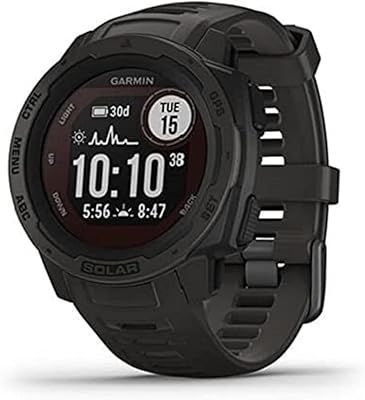
Garmin Instinct Solar Rugged Smartwatch
78%
88%
Battery Life
93%
Build Quality
91%
GPS Accuracy
89%
Navigation Features
74%
Solar Charging
More
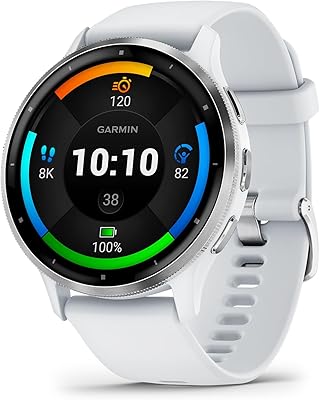
Garmin Venu 2 GPS Smartwatch
87%
94%
Battery Life
88%
Health Tracking Accuracy
91%
Display Quality
80%
Ease of Use
86%
Fitness Features
More
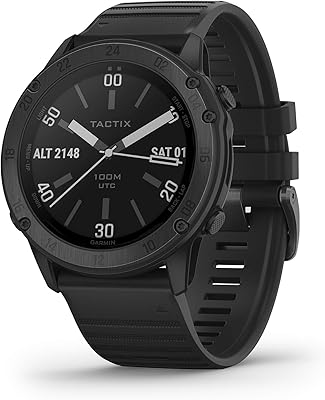
Garmin tactix Delta Tactical GPS Smartwatch
78%
93%
Battery Life
91%
Durability & Build
89%
GPS & Navigation Accuracy
88%
Tactical Features
84%
Sports & Fitness Tracking
More
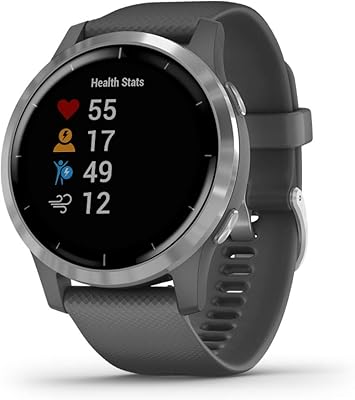
Garmin vivoactive 4 GPS Smartwatch
88%
90%
Battery Life
94%
Fitness & Health Tracking
86%
Music Storage & Playback
88%
Build Quality
85%
Ease of Use
More
Garmin Fenix Enduro GPS Watch
85%
96%
Battery Life
92%
Build Quality & Durability
89%
Solar Charging Efficiency
88%
Activity Tracking Accuracy
75%
Ease of Use
More
Garmin Venu 3 45mm Smartwatch
78%
93%
Display Quality
91%
Battery Life
88%
Health & Fitness Tracking
82%
GPS Accuracy
84%
Build Quality
More
Garmin quatix 7 Marine GPS Smartwatch
79%
93%
Marine Integration
89%
Battery Life
91%
Build Quality & Durability
87%
Display Readability
67%
Touchscreen Performance
More
Garmin Instinct E 45mm GPS Smartwatch
84%
94%
Battery Life
90%
Build Quality
85%
Fitness Tracking Accuracy
88%
Water Resistance
89%
GPS Navigation
More
Garmin Forerunner 245 GPS Running Smartwatch
75%
92%
GPS Accuracy
89%
Battery Life
88%
Training Plan Quality
71%
Running Dynamics
91%
Comfort and Wearability
More

FAQ

That figure comes with specific conditions attached — about 3 hours of daily outdoor time in strong direct sunlight. In practice, most users in sunny climates report genuinely exceptional battery life stretching several weeks between charges. If you live somewhere cloudy or mostly train indoors, expect the solar benefit to shrink noticeably, but the base battery performance without solar is still strong by any standard.

Yes. The Enduro 3 carries a 10 ATM water resistance rating, which means it handles swimming, rain, and splashing without issue. It is not rated for scuba diving, but for triathlon swim legs, open-water training, or getting caught in a storm on the trail, you have nothing to worry about.

It pairs with both iPhone and Android devices via Bluetooth through the Garmin Connect app. Full functionality — notifications, music syncing, software updates — is available on both platforms, though some minor features may behave slightly differently depending on your phone's operating system.

The preloaded TopoActive maps live entirely on the watch's 32 GB internal storage, so they work completely offline. You do not need your phone or a data connection to navigate. The dynamic round-trip routing feature also runs locally, recalculating your path back based on your current position using GPS satellite data alone.

Actually, the always-on display is designed to be quite readable outdoors. Garmin's transflective MIP display technology performs better in direct sunlight than typical OLED or LCD panels — it uses ambient light to its advantage rather than fighting it. The trade-off is that the screen looks less vivid indoors or in low light compared to a bright OLED display.

This is a genuine limitation worth knowing upfront. The 240x240 resolution is functional and perfectly readable for data and maps, but it trails behind some competitors at a similar price point that now offer higher-density displays. If a sharp, crisp screen is a priority for you, this watch will feel modest. For most ultraendurance athletes it is a minor trade-off, but it is worth weighing honestly.

Yes, the 32 GB of storage supports music, and the watch can sync with services like Spotify, Amazon Music, and Deezer for offline playback through Bluetooth headphones. You can also transfer personal audio files via the Garmin Express desktop app.

The LED flashlight activates directly from the watch face with a button hold, projecting a usable beam from your wrist. It is not going to replace a dedicated headlamp for technical nighttime navigation, but it is genuinely handy for reading a map, finding gear in your pack, or managing a quick trail obstacle without stopping to dig through your kit.

The UltraFit nylon band is removable and replaceable. The watch uses a 26 mm band width, which is a standard size with broad third-party support. Garmin also sells several official alternative bands including silicone and titanium options if the nylon strap is not your preference.

Both watches share much of the same GPS accuracy and training feature set, but the Enduro 3 is specifically tuned for maximum battery longevity and minimal weight — two things that matter more as race distances get longer. The Fenix 7 is a more well-rounded daily driver with a somewhat better display, while the Enduro line prioritizes keeping you going for days on end. If your events regularly exceed 24 hours, the Enduro 3 makes a stronger case.

Where to Buy