Overview

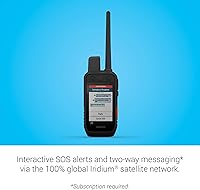
The Garmin Alpha 200i Dog Tracking Handheld GPS is built for one type of buyer: the serious hunter or field handler who needs far more than a basic pet tracker. This is a purpose-built system that combines long-range dog tracking with two-way satellite messaging through Garmin's inReach integration — all packed into a single rugged handheld you can carry deep into the backcountry. It holds up in rough terrain and harsh weather, designed to function where cell service simply doesn't exist. That capability comes at a significant cost, and an ongoing satellite subscription is required to unlock the inReach features, so factor that into your budget from the start.
Features & Benefits

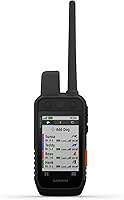
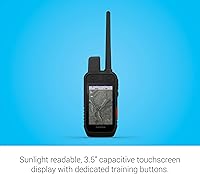
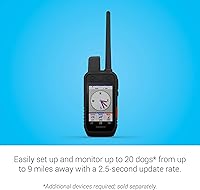
The 3.6-inch touchscreen on this Garmin Alpha handheld is one of those things that sounds minor until you're squinting at a display in midday sun — it genuinely holds up. Physical buttons run alongside the touch interface, which matters when you're wearing gloves in November. It tracks up to 20 dogs across a 9-mile range with 2.5-second position updates, fast enough to follow a hound pushing hard through thick brush. The preloaded TopoActive maps and BirdsEye imagery give you real terrain context, while the built-in barometric altimeter and three-axis compass keep you oriented even when satellite lock gets unreliable in deep draws or heavy canopy.

Best For

The Alpha 200i makes the most sense for upland and hound hunters managing multiple dogs across large tracts of remote land where a cell signal is a pipe dream. Professional trainers who want tracking data and 18-level correction tools consolidated into one device will find genuine value here. If you're already running older Garmin Alpha hardware, the upgrade path to this dog tracking GPS is fairly logical. That said, this isn't a casual pet tracker. If you just want to know where your dog wandered in the neighborhood, this is significant overkill — and the recurring subscription cost will add up fast.

User Feedback

Hunters consistently praise the GPS accuracy and screen readability in direct sunlight — two things that sound basic but matter enormously in the field. The inReach SOS feature earns frequent mentions as a genuine safety net rather than a marketing checkbox. On the flip side, the mandatory satellite subscription catches buyers off guard; it's a real recurring expense that should factor into your decision upfront, not after the fact. New users also report a noticeable learning curve with the menu system before it clicks. Battery life draws mixed reactions — the 20-hour figure drops to around 15 hours with inReach running, which is how most hunters actually use it. Build quality, though, rarely draws a complaint.

Pros

  • Tracks up to 20 dogs across a 9-mile range with 2.5-second position updates — fast enough for hard-running hounds.
  • The Iridium satellite SOS and two-way messaging capability provides genuine emergency communication in areas with zero cell service.
  • Multi-GNSS tracking using both GPS and Galileo improves position reliability across varied and challenging terrain.
  • The sunlight-readable touchscreen holds up in direct midday light where most competing handhelds struggle to stay visible.
  • Physical button controls alongside the touchscreen make quick adjustments practical when wearing gloves in cold conditions.
  • Preloaded TopoActive maps with BirdsEye Satellite Imagery give hunters meaningful terrain context without relying on a cell connection.
  • The user-replaceable battery design allows a charged pack swap mid-hunt, keeping the device operational across long field days.
  • Built-in barometric altimeter and three-axis compass provide reliable navigation backup when satellite lock gets unreliable in dense cover.
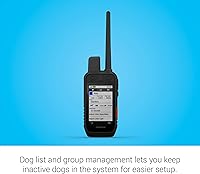
  • Dog list and group management lets you keep inactive dogs stored in the system, saving real setup time at the trailhead.
  • Field durability is consistently praised — the build handles mud, rain, drops, and temperature swings without complaint.

Cons

  • The inReach satellite subscription is a mandatory recurring cost that many buyers don't fully account for before purchasing.
  • Real-world battery life drops from the advertised 20 hours to closer to 15 hours when inReach features are actively running.
  • First-time Alpha users face a steep learning curve; initial setup and menu navigation can consume multiple field sessions before it feels intuitive.
  • Effective tracking range drops noticeably in heavily forested or broken terrain, with some users reporting 4 to 5 miles in practical conditions.
  • The device is bulky and over a pound — not something you'll forget you're carrying over a long day in a hunting vest.
  • BirdsEye Satellite Imagery must be downloaded over Wi-Fi in advance, which is inconvenient for spontaneous or last-minute hunts in new areas.
  • Accessing correction controls mid-hunt requires more menu navigation than many users prefer during fast-moving field situations.
  • Compatibility is limited to supported Garmin collar systems, meaning non-Garmin collar users face additional hardware costs on top of the handheld price.
  • The touchscreen can be less responsive in wet or extremely cold conditions, which is exactly when reliable control matters most.
  • The overall cost of entry — hardware plus subscription plus compatible collars — can add up quickly for hunters who aren't fully committed to the Garmin ecosystem.

Ratings

The Garmin Alpha 200i Dog Tracking Handheld GPS earns its scores from an AI-driven analysis of verified global buyer reviews, with spam, bot activity, and incentivized feedback actively filtered out before any scoring is applied. The ratings below reflect what real hunters, professional trainers, and field handlers consistently report across thousands of purchases — both the aspects they trust with their dogs' safety and the friction points that give some buyers pause. Strengths and shortcomings are weighted equally so you can make a genuinely informed decision.
GPS Tracking Accuracy
93%
Hunters working large properties in open terrain consistently describe the tracking accuracy as one of the most reliable they've used in this category. The multi-GNSS system pulling from both GPS and Galileo satellites gives the Alpha 200i a real edge in maintaining lock across varied landscapes.
In heavily canopied terrain like dense pine forests or deep creek draws, a handful of users report occasional position drift or brief signal interruptions. It's not a dealbreaker for most, but hunters who run dogs exclusively in thick timber should temper expectations slightly.
Tracking Range
88%
The 9-mile range claim holds up well for most open-country upland and hound hunters, with many reporting consistent performance across 6 to 8 miles in real field conditions. For the majority of practical hunting scenarios, that headroom is more than enough.
Range drops noticeably in hilly or forested terrain, which is expected but still frustrating when a dog runs a ridge line and disappears from the screen. Users in heavily broken country report effective range closer to 4 to 5 miles, which should be factored in before purchase.
Satellite Messaging & SOS
91%
The inReach-powered two-way messaging and interactive SOS capability via the Iridium network is the feature that genuinely separates this from every standard dog tracker on the market. Hunters working remote backcountry land in particular cite it as a real safety net — not just a selling point.
All of this requires an active satellite subscription, and that recurring cost catches a surprising number of buyers off guard after purchase. Without the subscription, the inReach features are entirely locked, which effectively reduces the device's value proposition for buyers on tighter annual budgets.
Display & Screen Readability
89%
The sunlight-readable touchscreen holds up genuinely well in direct afternoon light, a scenario where many competing handhelds wash out completely. Users who hunt through midday regularly call this out as one of the most practical real-world advantages of the device.
A small number of users find the touchscreen less responsive in cold or wet conditions, though the physical button layout does compensate for this. Those wearing thick gloves may still prefer button-only navigation for quick adjustments while moving through cover.
Battery Life
71%
29%
The user-replaceable battery design is genuinely appreciated — being able to swap in a charged pack in the field rather than hunting for an outlet is a practical advantage on multi-day trips. At 20 hours without inReach active, it covers a full hunt day with room to spare.
Real-world battery life with inReach running drops to around 15 hours, and that is the realistic use case for most buyers. Users who hunt long consecutive days report needing a backup battery pack or a mid-day charge, which adds both cost and logistical hassle.
Ease of Use & Menu Navigation
62%
38%
Once the learning curve is cleared, experienced Garmin users describe the interface as logical and well-organized, especially for managing multiple dogs across different groups. The dog list and group management system works efficiently once you've spent time with it.
First-time Alpha users frequently flag the menu depth and initial setup process as genuinely confusing, with several reporting it took multiple field sessions before the workflow clicked. There's no shortcut here — this is a complex device and the interface reflects that.
Build Quality & Durability
87%
The physical build draws consistent praise across buyer feedback, with hunters noting the handheld holds up well to the kind of abuse field use actually delivers — drops, rain, mud, and temperature swings. It feels purpose-built rather than consumer-grade.
At just over a pound, it's not a lightweight option, and a small number of users find it bulky for all-day carry in a vest or pack. The size is a trade-off for the rugged construction and internal hardware, but it is worth acknowledging for buyers prioritizing portability.
Multi-Dog Management
86%
Managing up to 20 dogs simultaneously is a feature that professional trainers and large-pack hound hunters describe as genuinely transformative versus older generation handhelds. The ability to keep inactive dogs in the system without clearing them saves real time at the trailhead.
Navigating between a large number of active dogs on a smaller screen can feel cluttered during fast-paced hunts when you need information quickly. A few users suggest the interface could benefit from better at-a-glance differentiation between dogs in dense tracking scenarios.
Correction System
82%
18%
Eighteen levels of correction including vibration and adjustable tone options gives trainers meaningful granularity for dogs at different stages of development. The ability to dial in correction intensity precisely rather than working with a handful of fixed levels is a practical training advantage.
Some users note that accessing correction controls mid-hunt requires more menu navigation than they'd prefer, especially in the middle of an active chase. A dedicated shortcut button for correction adjustment would make this feature more fluid under field conditions.
Map Quality & Navigation Tools
84%
Preloaded TopoActive maps combined with BirdsEye Satellite Imagery downloads give hunters a genuinely useful picture of the land they're working. The barometric altimeter and three-axis compass add real-world navigation value in areas where satellite lock alone isn't sufficient.
Downloading BirdsEye imagery requires Wi-Fi and advance planning, which means hunters who forget to pre-load areas before a trip are working with base topo only. For those who hunt spontaneously or travel frequently to new properties, this requires a habit change.
Connectivity & Integration
78%
22%
Bluetooth, ANT+, and Wi-Fi connectivity allow the Alpha 200i to integrate with compatible Garmin dog tracking collars, smartphones, and other Garmin devices fairly smoothly. Existing Garmin ecosystem users report the pairing process is straightforward and reliable once configured.
Users outside the Garmin ecosystem who are new to the platform report the initial device pairing and app integration can be time-consuming to sort out. Compatibility is also limited to supported Garmin collar systems, which means non-Garmin collar users face additional hardware costs.
Value for Money
67%
33%
For a serious hunter who routinely hunts remote land with multiple dogs and genuinely needs satellite communication capability, the cost is defensible against what this hardware actually delivers. The consolidation of tracking, navigation, and satellite messaging into one device does eliminate the need to carry separate tools.
For casual hunters or those who run one or two dogs close to home, the price combined with the subscription fee is difficult to justify against simpler, far less expensive alternatives. The value equation depends almost entirely on how remote and how serious your hunting actually is.
Setup & Initial Configuration
59%
41%
For users upgrading from older Alpha models, the configuration process is familiar enough that onboarding is relatively quick. Garmin's documentation and app support provide a reasonable path for buyers willing to invest time upfront.
Out-of-box setup for new Alpha users involves activating the inReach subscription, registering the device, pairing collars, and configuring maps — a process that multiple buyers describe as longer and more involved than expected. It's not plug-and-play by any measure.
Portability & Ergonomics
73%
27%
The belt clip included in the box makes one-handed access practical during active hunts, and the button layout is reasonably thoughtful for single-hand operation when the other hand is occupied with a gun or brush.
The overall footprint is noticeably larger than basic handheld trackers, and hunters with smaller hands or those who prefer vest-pocket carry report it feels awkward over long days in the field. Weight is manageable but not something you'll forget you're carrying.

Suitable for:

The Garmin Alpha 200i Dog Tracking Handheld GPS was built for a specific type of buyer, and it delivers most convincingly when that buyer shows up. Upland bird hunters and hound hunters managing multiple dogs across large, remote properties will find this is one of the few systems that can genuinely keep pace with the demands of a serious hunt day. If you regularly push into backcountry land where cell service is nonexistent, the combination of long-range dog tracking and Iridium satellite messaging in a single handheld is a practical safety and operational upgrade that's hard to replicate with separate devices. Professional trainers who want granular correction control alongside real-time position data will appreciate having both tools consolidated without compromising on either. Hunters already running older Garmin Alpha hardware will find the upgrade path logical, with meaningful improvements in range, screen quality, and satellite communication capability that justify the transition.
Not suitable for:

The Garmin Alpha 200i Dog Tracking Handheld GPS is genuinely not the right tool for a wide range of buyers, and being clear about that matters more than padding a sale. If you run one or two dogs within a few miles of a road, hunt close to home on familiar ground, or simply want to know where your dog wandered in the backyard, this level of hardware is significant overkill and the price will be difficult to rationalize. The mandatory inReach satellite subscription adds a recurring annual cost on top of the already substantial hardware investment — buyers who overlook this consistently report frustration after purchase. New users with no prior experience in the Garmin Alpha ecosystem should also be prepared for a real learning curve; the menu system is deep and the initial setup process involving subscription activation, collar pairing, and map loading takes time and patience. Anyone hoping to pair this with non-Garmin collar hardware will face additional compatibility costs that compound the total investment further.
Specifications

  • Screen: Features a 3.6″ sunlight-readable capacitive touchscreen display designed to remain clearly visible in direct outdoor light.
  • Tracking Range: Capable of monitoring dogs from distances of up to 9 miles under open-sky conditions using multi-GNSS satellite systems.
  • Dogs Supported: Supports simultaneous tracking of up to 20 dogs, with inactive dogs storable in the system for faster field setup.
  • Update Rate: Delivers dog position updates every 2.5 seconds for near-real-time tracking during active hunts.
  • Navigation Systems: Uses a combination of GPS and Galileo satellite constellations to improve positioning reliability across diverse terrain types.
  • Satellite Network: Two-way messaging and SOS alerts operate via the Iridium satellite network, which provides 100% global coverage independent of cellular infrastructure.
  • Battery Life: Offers up to 20 hours of runtime on a full charge, reduced to approximately 15 hours when inReach satellite features are actively enabled.
  • Battery Type: Powered by a user-replaceable rechargeable lithium-ion battery pack, allowing field swaps on extended multi-day hunts.
  • Preloaded Maps: Comes with TopoActive topographic maps preloaded and supports direct-to-device BirdsEye Satellite Imagery downloads over Wi-Fi.
  • Onboard Sensors: Includes a built-in barometric altimeter and three-axis electronic compass for navigation accuracy in GPS-challenged environments.
  • Connectivity: Supports Bluetooth, ANT+, and Wi-Fi connectivity for collar pairing, app integration, and wireless map downloads.
  • Correction Levels: Provides 18 levels of remote correction, including vibration and adjustable audible tones, for precise field training control.
  • Dimensions: Measures 12.1 x 10.5 x 2.8 inches, reflecting a purpose-built field device rather than a compact consumer handheld.
  • Weight: Weighs approximately 1 pound with the battery installed, which is typical for feature-rich GPS handhelds in this category.
  • Subscription Required: Full inReach satellite messaging and SOS functionality requires an active Garmin inReach satellite subscription, sold separately with jurisdiction restrictions.
  • Included Items: Package includes the Alpha 200i handheld, rechargeable lithium-ion battery pack, belt clip, AC adapter, microUSB cable, and documentation.
  • Operating System: Compatible with Android for companion app connectivity and device management via Garmin's mobile platform.
  • Mounting Type: Designed as a handheld device with an included belt clip for secure body carry during active field use.

Related Reviews

Garmin GPS 73
Garmin GPS 73
80%
93%
Battery Life
88%
SailAssist Features
91%
Build Quality & Durability
54%
Display Quality
82%
Ease of Use
More
Garmin Alpha 10 Handheld
86%
93%
Tracking Accuracy
89%
Battery Life
91%
Range/Connectivity
87%
Ease of Use
85%
Build Quality/Durability
More
Garmin GPSMAP 64sc Handheld GPS
78%
93%
GPS & Satellite Accuracy
89%
Battery Life & Flexibility
91%
Build Quality & Durability
58%
Built-in Camera & Geotagging
82%
Display Readability
More
Garmin GPSMAP 86Sci Handheld GPS
87%
92%
Durability & Build Quality
88%
Display Quality
85%
Battery Life
90%
Ease of Use
93%
Water Resistance & Floating Design
More
Garmin GPSMAP 65s Handheld GPS
80%
93%
GPS Accuracy
88%
Battery Performance
91%
Build Quality
74%
Display Readability
89%
Satellite Lock Speed
More
Garmin Montana 750i GPS Handheld
84%
94%
Build Quality & Durability
72%
Battery Life
85%
Ease of Use
88%
Screen Visibility
90%
Navigation Accuracy
More
Garmin GPSMAP 79s Marine Handheld GPS
78%
93%
GPS Accuracy
91%
Floatation Design
74%
Battery Life
78%
Water Resistance
63%
Display Quality
More
Garmin eTrex Touch 25 Handheld GPS
79%
91%
GPS Accuracy
88%
Battery Performance
84%
Build Quality
71%
Touchscreen Usability
58%
Map Detail
More
Garmin eTrex Solar Handheld GPS Navigator
80%
91%
Battery Life
88%
GPS Accuracy
93%
Build Quality
58%
Display Quality
67%
Solar Performance
More
Garmin Astro 430 GPS Dog Tracker
85%
94%
Tracking Accuracy
91%
Range Performance
89%
Durability & Waterproofing
84%
Battery Life
88%
Ease of Use
More

FAQ

No — the core GPS dog tracking functions work without a subscription. However, the inReach features, specifically two-way satellite messaging and the interactive SOS capability, require an active Garmin inReach satellite plan. If you're buying the Alpha 200i specifically for off-grid communication, factor that recurring cost into your budget before purchasing.

The Alpha 200i is designed to work with Garmin's TT and T5 series dog tracking and training collars. It is not compatible with third-party collar systems, so if you're coming from a different brand, you'll need to budget for compatible Garmin collars alongside the handheld.

Nine miles is achievable in open, flat terrain with clear line of sight — think large prairies or open agricultural land. In practice, most hunters working forested or hilly ground report reliable range closer to 4 to 6 miles. Terrain, tree cover, and elevation changes all affect signal, so treat the 9-mile figure as a ceiling rather than an average.

The 20-hour battery figure applies when inReach satellite features are turned off. In real hunting use with inReach active — which is how most buyers actually run this device — expect closer to 15 hours per charge. On long hunt days or multi-day trips, carrying a spare battery pack is a practical precaution.

It works fine with one or two dogs technically, but the Garmin Alpha 200i Dog Tracking Handheld GPS is engineered for hunters and handlers managing larger packs across serious remote territory. If you're running a small number of dogs close to home or within cell coverage, there are considerably less expensive trackers that will meet your needs without the complexity or ongoing subscription cost.
Expect a meaningful time investment upfront. You'll need to activate the inReach subscription, register the device, pair your collars, and load any desired map imagery — none of which is particularly technical, but it adds up. Most first-time users report it takes a few sessions before the menu system feels natural, so plan to spend some time at home before your first hunt rather than figuring it out at the trailhead.

The Iridium satellite network used for SOS and messaging does provide global coverage, but jurisdiction restrictions apply in some regions — meaning the SOS function may be limited or unavailable in certain countries due to local regulations. If you hunt internationally, it's worth verifying coverage rules for your specific destinations before relying on this feature.

The capacitive touchscreen can struggle with thick hunting gloves, which is exactly why Garmin included physical buttons alongside it. Most experienced users default to the button controls for quick adjustments during active hunts and use the touchscreen more for setup or detailed map navigation when their hands are free. It's a practical design compromise that works well once you get used to it.

In most cases, yes — existing TT and T5 series collars from the Garmin Alpha lineup are compatible with the Alpha 200i. That said, it's worth confirming collar compatibility specific to your model before assuming a clean transition, as firmware or feature support can vary between generations.

If your subscription expires, the satellite messaging and SOS features stop working entirely — the device will still track your dogs via GPS, but you lose all inReach capability until you renew. Garmin does not offer a grace period for satellite communication, so if you depend on the SOS feature for safety while hunting remote land, keeping the subscription current is essential.

Where to Buy