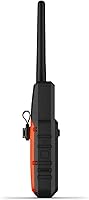
Overview

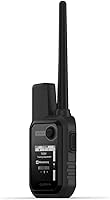
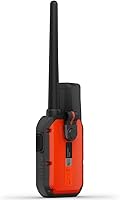
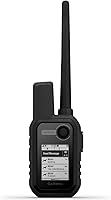
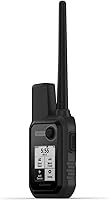
The Garmin Alpha 10 Dog Tracking Handheld is Garmin's answer to hunters and field trainers who want serious Alpha-series capability without hauling a brick around all day. At roughly the footprint of a thick TV remote and tipping the scale at under six ounces, this compact tracking handheld punches well above its size. It works standalone out of the box, but it really shines when paired with the broader Garmin ecosystem — smartphones, DriveTrack navigators, even compatible wrist units. This is a premium, specialized tool; if you're expecting a casual pet finder, look elsewhere. Buyers at this price point are working with demanding field conditions, and that's exactly the audience Garmin designed it for.

Features & Benefits

Range is the headline stat — up to 9 miles with a 2.5-second update rate when conditions cooperate. In open terrain, that figure holds up well; in thick woods or rolling hills, expect real-world numbers to come in shorter, as with any GPS system. The Alpha 10 supports tracking up to 20 dogs simultaneously when paired with compatible T 5 or TT 15 collars, which matters if you're running a pack for pheasant or quail. Training controls offer real depth — 18 levels of stimulation in both continuous and momentary modes, plus tone and vibration, let you dial in corrections precisely per dog. Tack on 40 hours of battery in a sub-6-ounce body and the Alpha 10 earns its field credentials.

Best For

This compact tracking handheld is a strong fit for upland bird hunters and waterfowl hunters who cover serious ground and need reliable, real-time dog locations without juggling a bulky unit. It's also well-suited to professional trainers or serious amateurs who need per-dog stimulation control — not just a generic remote. Hunters already embedded in the Garmin ecosystem get extra mileage: pairing the Alpha 10 with a DriveTrack lets you monitor dogs from the cab between drives, while a compatible Garmin watch gives you wrist-level updates when your hands are full. It is not the right call for someone just wanting a basic pet tracker. The value proposition is aimed squarely at working dog handlers who demand field-grade performance.

User Feedback

Most owners who've put Garmin's Alpha 10 handheld through real hunting seasons report strong satisfaction with the size-to-performance ratio. The lighter body draws frequent praise — after a full day in the field, that difference in pocket weight is hard to ignore. The main recurring concern is range in heavy cover; timber and thick brush will knock real-world performance well below the spec maximum, so buyers new to the Alpha line should set realistic range expectations. The pairing process has a learning curve for first-timers. Durability feedback is generally positive — it handles wet, cold days without complaint. Where opinion splits is on value versus cost: buyers who compared it to the larger Alpha 200 note you're trading screen size and features for portability, which may or may not be the right trade depending on how you hunt.

Pros

  • At under six ounces, this compact tracking handheld is far easier to carry all day afield than bulkier Alpha units.
  • Tracking up to 20 dogs simultaneously gives serious hunting parties real flexibility when running larger packs.
  • The 40-hour battery life holds up across multi-day hunts without needing a mid-trip recharge.
  • Eighteen stimulation levels across continuous and momentary modes allow precise, per-dog training corrections.
  • DriveTrack integration lets you monitor dog locations from the cab between hunting drives without stepping outside.
  • Wrist-based tracking updates via compatible Garmin wearables free your hands during active fieldwork.
  • Multi-GNSS support improves satellite acquisition and positioning accuracy compared to single-network GPS devices.
  • Works as a fully standalone unit — no smartphone required — so it stays reliable in areas with no cell signal.
  • The included carabiner clip, belt clip, and spine mount cover most field carry preferences without extra purchases.

Cons

  • Compatible dog collars are sold separately, adding significant cost on top of an already premium price point.
  • Real-world tracking range in thick timber or broken terrain falls well short of the 9-mile line-of-sight specification.
  • First-time Alpha users report a noticeable learning curve when pairing devices and navigating the menu system.
  • The screen is smaller than on the Alpha 200 or Alpha 300, which limits map readability during fast-moving field situations.
  • Charging uses a microUSB cable rather than the more current USB-C standard found on newer field devices.
  • Maximum capability requires owning additional Garmin hardware, making it a weaker choice for buyers outside the ecosystem.
  • Running a larger pack means purchasing multiple collar devices, pushing the total system cost substantially higher.
  • Some users report occasional friction with firmware updates and Garmin Connect app integration requiring troubleshooting.

Ratings

The Garmin Alpha 10 Dog Tracking Handheld earned its scores through AI-powered analysis of verified buyer reviews gathered worldwide, with spam, bot-generated, and incentivized submissions actively filtered out before any category was rated. The results reflect the full picture — what real hunters and professional trainers praised after extended seasons in the field, alongside the friction points and trade-offs they reported with equal candor. Every score is calibrated to show precisely where this compact tracking handheld over-delivers for its audience and where it falls short of what the investment implies.

Tracking Accuracy
84%
Hunters running multiple dogs across open fields consistently report that location data is reliable and repositions quickly after breaks in cover. The 2.5-second update rate translates well to fast-moving dogs in pheasant or quail habitat, where knowing a dog's precise location — not just a general direction — makes a real difference in how you work the ground.
In thick timber or dense brush, reported accuracy drops noticeably as satellite signal gets interrupted by heavy canopy cover, with some users noting positioning can lag by several seconds. A handful of buyers flagged occasional GPS drift in deep hollows or steep terrain, which is a known limitation of any multi-GNSS system operating at extended range.
Training Controls
91%
Serious trainers consistently highlight the 18-level stimulation system as one of the most granular available in a handheld this size, letting them fine-tune corrections per dog without switching devices. The ability to assign different stimulation levels, tone alerts, and vibration settings to individual dogs in a mixed pack is a standout capability that experienced handlers specifically seek out.
Buyers new to e-collar training found the range of options initially overwhelming, requiring real time to understand which mode suits which correction scenario in practice. The physical buttons for cycling through stimulation levels mid-hunt also take practice to operate quickly with heavy hunting gloves on, which draws frustration in the first few field sessions.
Portability & Form Factor
93%
At 5.6 ounces and roughly the footprint of a thick TV remote, the Alpha 10 is noticeably lighter than the Alpha 200, and hunters who switched frequently report that after a full day afield, the reduced pocket weight makes a real and cumulative difference. The included belt clip and carabiner cover most carry preferences right out of the box without requiring additional accessories.
The compact design necessarily means a smaller screen than larger Alpha units, which some hunters find limiting when trying to read map details quickly in bright sunlight or while moving through cover. Users who frequently manage five or more dogs note that switching between dog profiles on the smaller display takes more deliberate button presses than on the larger-screened alternatives.
Battery Life
87%
The 40-hour rated battery consistently holds up across full multi-day hunting trips without requiring a mid-hunt charge, which owners running two or three consecutive days in the field specifically appreciate. Several buyers note they regularly get through back-to-back long days on a single charge, treating it more like a weekend-ready device than something requiring nightly attention.
Cold-weather hunting can noticeably reduce battery performance, with a subset of buyers in sub-freezing conditions reporting shorter-than-expected run times during late-season hunts. The microUSB charging port is also a friction point for many — it is an older standard, and hunters who carry USB-C chargers for all their other gear find the mismatch genuinely inconvenient in the field.
Tracking Range
73%
27%
In open agricultural land, wide prairie, or marshland — typical upland and waterfowl habitat — real-world range holds up impressively, with many owners tracking dogs well beyond a mile or two without any signal interruption. For hunters who work dogs in open country, range performance in those conditions largely delivers on what the specification suggests.
In wooded terrain — hardwood forests, thick pine country, or areas with significant elevation changes — buyers consistently report that real-world range falls well short of the 9-mile spec, which is a line-of-sight figure that rarely applies in typical hunting environments. Several hunters described losing signal on dogs under half a mile away when cover was particularly heavy.
Multi-Dog Management
82%
18%
Hunters running three to five dogs simultaneously report that pulling up individual dog locations on a single screen — without juggling multiple devices — changes the whole rhythm of a hunt in a practical way. The ability to track a full pack and apply individual training corrections from one handheld is a feature that multi-dog hunters specifically seek out in an Alpha-series device.
Navigating between dog profiles on the compact screen requires more deliberate effort than on larger-display alternatives, and users managing more than four or five dogs in active cover note it demands more attention mid-hunt than they would prefer. The collars required for each additional dog also add substantially to the total system cost, which limits practical scale for some buyers.
Ecosystem Integration
86%
For hunters already using Garmin gear, the payoff is immediate — pairing with a DriveTrack lets you monitor dog positions from the truck cab between drives, and compatible Garmin watches push location updates to your wrist while you work cover. Buyers already embedded in the Garmin ecosystem consistently cite this connected workflow as a primary reason they chose this unit over competing systems.
Buyers who do not already own other Garmin hardware get considerably less value from this unit — wrist integration, vehicle display, and app-based features all require additional devices that push total setup cost well beyond the handheld alone. First-time Garmin users also report a noticeable friction period when syncing devices and navigating the Connect app for the first time.
Build Quality
81%
19%
Most hunters who put the Alpha 10 through a full season — wet fields, cold mornings, rough brush — report it holds up without issue, and overall durability feedback is solidly positive across varied conditions. The construction feels appropriately rugged for the price tier, with very few buyers reporting physical damage from normal hunting use across multiple seasons.
The unit is water-resistant but not rated for submersion, and a small number of buyers reported concern after accidental drops into shallow water crossings or extended exposure to heavy rain. The microUSB charging port is also perceived as a potential long-term weak point by some users who subject it to repeated daily field use.
Interface & Usability
66%
34%
Experienced Alpha users who transitioned from earlier models generally find the interface logically organized, with key tracking functions reachable without digging through nested menus. Once past the initial learning period, most hunters describe day-to-day navigation as efficient for the core tasks of switching between dogs and adjusting training settings quickly on the fly.
First-time Alpha users frequently cite the setup and pairing process as frustrating, particularly when configuring multiple collar devices and individual dog profiles without hands-on guidance. The smaller physical buttons also draw consistent complaints from users wearing heavy hunting gloves, where quick mid-hunt adjustments require more deliberate effort than the pace of active field work allows.
Value for Money
71%
29%
For hunters already committed to a premium tracking and training setup, the Alpha 10 delivers real Alpha-series performance in a significantly more portable package — a combination that justifies the premium for the right buyer. Owners who regularly hunt multiple dogs across large acreage report feeling the investment is well-matched to actual field performance over a full season.
The handheld's price combined with required, separately sold dog collars means the real entry cost for a functional single-dog setup is considerably higher than the sticker alone suggests. Casual hunters or those running just one dog often find the total system cost harder to justify against simpler and less expensive alternatives currently available on the market.
Setup & Pairing
62%
38%
Hunters who worked through the initial setup at home — pairing collars, labeling dog profiles, and exploring menu options before their first hunt — reported the process pays off quickly once in the field. Most users who followed the setup steps methodically and kept firmware current reported no persistent pairing issues after the first session.
Buyers who attempted initial setup in the field — or without reading the documentation carefully — often describe the pairing process as confusing, with multiple steps required to connect each collar device correctly. A meaningful share of critical reviews specifically cite the setup experience as a source of early frustration, with some users needing several attempts before achieving a stable pairing.
Software & Updates
77%
23%
Garmin's track record for firmware updates on Alpha-series devices is generally positive, and most owners report that updates roll out through Garmin Express without major disruption. Buyers who keep their firmware current note that software stability has improved over the device's lifecycle, with interface refinements arriving through periodic updates.
A recurring subset of reviews flags occasional bugs following firmware updates, with some users reporting that updates briefly disrupted pairing or display behavior before a follow-up patch resolved the issue. Garmin Connect app integration also draws mixed feedback, with some users finding the mobile app experience inconsistent compared to the handheld's own operational stability.
Wrist Integration
79%
21%
For hunters who already wear a compatible Garmin watch, receiving dog location updates at a wrist glance — without pulling out the handheld — is a workflow improvement that earns specific praise in buyer reviews. Users running active flushes or pushing through dense cover particularly appreciate not having to break stride to check a dedicated screen.
The wrist integration only works with select Garmin wearables, so buyers with a different watch brand or an older Garmin model outside the compatibility range get none of this benefit and must rely entirely on the handheld. The information displayed on the wrist is also more limited than the full handheld screen, making it good for quick checks but not detailed map use.

Suitable for:

The Garmin Alpha 10 Dog Tracking Handheld is purpose-built for serious upland bird hunters, waterfowl hunters, and field trainers who put working dogs through demanding conditions and need dependable, real-time tracking without the bulk of a larger unit. If you're regularly running two, three, or even five dogs through open fields or broken terrain and want to monitor each one with a 2.5-second location update rate from a single handheld, this unit covers that scenario well. It's equally strong for professional or advanced amateur trainers who need genuine per-dog control — 18 stimulation levels across continuous and momentary modes means you're not applying generic corrections but actually calibrating to each animal. Hunters already invested in the Garmin ecosystem get compounding value: pair the Alpha 10 with a DriveTrack navigator for in-cab dog monitoring between drives, or sync it with a compatible Garmin wearable for wrist-level updates when your hands are occupied. If your goal is portable Alpha-series performance without carrying the full footprint of a larger flagship unit, this compact tracking handheld is exactly what Garmin designed it to be.

Not suitable for:

The Garmin Alpha 10 Dog Tracking Handheld is a poor match for anyone expecting a ready-to-go system straight out of the box, because the compatible dog collars — T 5 or TT 15 devices — are sold separately and add meaningful cost on top of an already premium price point. Buyers who hunt primarily in dense timber, heavy brush, or hilly terrain should also set realistic expectations around range: the 9-mile figure is a line-of-sight ideal, and real-world performance in thick cover can come in considerably shorter. First-time Alpha users should be prepared for a learning curve — the pairing process and menu navigation take time to get comfortable with, and the smaller screen compared to the Alpha 200 or Alpha 300 offers less visual real estate when you need to act quickly in the field. If you're simply looking for a casual GPS tracker for a wandering pet, the level of complexity and investment here is hard to justify. And if you're not already embedded in the Garmin device ecosystem, you'll get far less out of it than someone who is.

Specifications

  • Brand: Garmin is the manufacturer, a company with a long-established reputation in GPS navigation and outdoor tracking technology.
  • Model Number: The official model designation is Alpha 10, with item model number 010-02290-50.
  • Dimensions: The handheld measures 2.3 x 4.8 x 1.1 inches, making it one of the most compact options in the entire Alpha product lineup.
  • Weight: At 5.6 oz, the unit is light enough to carry comfortably in a jacket pocket throughout a full day afield.
  • Battery Life: The built-in rechargeable battery delivers up to 40 hours of use per charge under typical field operating conditions.
  • Battery Type: Power comes from one included lithium-ion battery, recharged via the included microUSB cable.
  • Tracking Range: Maximum tracking range reaches up to 9 miles under optimal, unobstructed line-of-sight conditions.
  • Update Rate: Dog location data refreshes at a 2.5-second interval, providing near-real-time positioning during active field use.
  • Dogs Tracked: When paired with additional compatible collar devices, the handheld can simultaneously track the locations of up to 20 dogs.
  • Compatible Collars: The unit is designed to pair with Garmin T 5 and TT 15 dog collar devices for both tracking and training functions.
  • Stimulation Levels: The e-collar training system provides 18 levels of stimulation, available in both continuous and momentary delivery modes.
  • Training Modes: Three training feedback modes are supported: electronic stimulation, audible tone, and vibration, each configurable per individual dog.
  • GNSS Support: Multi-GNSS technology draws on multiple global satellite networks to improve location accuracy and signal reliability across varied terrain.
  • Connectivity: Built-in Wi-Fi enables wireless map downloads and over-the-air firmware updates without requiring a computer connection.
  • Vehicle Integration: The handheld is compatible with Garmin DriveTrack GPS navigators, allowing dog location data to display on an in-vehicle screen.
  • Wrist Integration: Select Garmin wearables can be paired to push dog location updates directly to the handler's wrist during active fieldwork.
  • Color: The device is available in black.
  • In-Box Contents: The package includes the Alpha 10 handheld, a spine mount with wrench kit, a carabiner clip, a belt clip, a microUSB cable, and product documentation.

Related Reviews
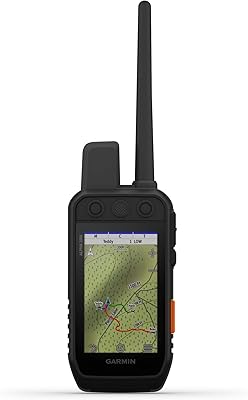
Garmin Alpha 200i Dog Tracking Handheld GPS
79%
93%
GPS Tracking Accuracy
88%
Tracking Range
91%
Satellite Messaging & SOS
89%
Display & Screen Readability
71%
Battery Life
More
Garmin PRO 550 Handheld
85%
94%
Battery Life
91%
Range
89%
Ease of Use
86%
Build Quality
83%
Control Options
More
Garmin GPSMAP 86Sci Handheld GPS
87%
92%
Durability & Build Quality
88%
Display Quality
85%
Battery Life
90%
Ease of Use
93%
Water Resistance & Floating Design
More
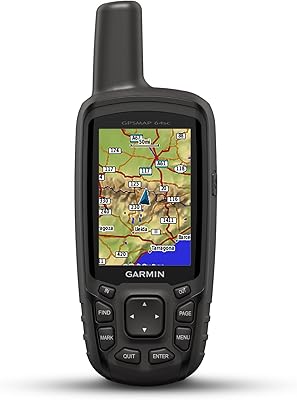
Garmin GPSMAP 64sc Handheld GPS
78%
93%
GPS & Satellite Accuracy
89%
Battery Life & Flexibility
91%
Build Quality & Durability
58%
Built-in Camera & Geotagging
82%
Display Readability
More
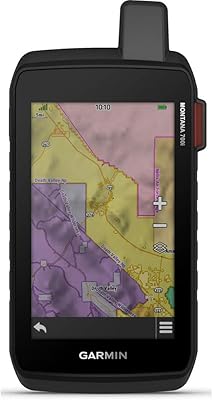
Garmin Montana 750i GPS Handheld
84%
94%
Build Quality & Durability
72%
Battery Life
85%
Ease of Use
88%
Screen Visibility
90%
Navigation Accuracy
More
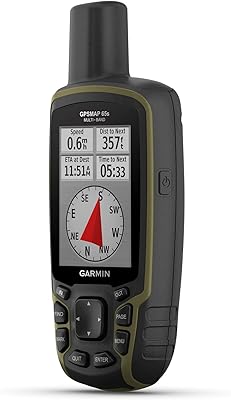
Garmin GPSMAP 65s Handheld GPS
80%
93%
GPS Accuracy
88%
Battery Performance
91%
Build Quality
74%
Display Readability
89%
Satellite Lock Speed
More
Garmin inReach SE+ Satellite Communicator
75%
94%
SOS Reliability
91%
Satellite Coverage
78%
Two-Way Messaging
83%
MapShare Tracking
74%
Earthmate App Integration
More
Garmin eTrex 32x Handheld GPS Navigator
78%
93%
Satellite Performance
91%
Battery Life
88%
Build & Durability
74%
Map Quality & Coverage
89%
Navigation Accuracy
More
Garmin eTrex Solar Handheld GPS Navigator
80%
91%
Battery Life
88%
GPS Accuracy
93%
Build Quality
58%
Display Quality
67%
Solar Performance
More
Garmin Astro 430 GPS Dog Tracker
85%
94%
Tracking Accuracy
91%
Range Performance
89%
Durability & Waterproofing
84%
Battery Life
88%
Ease of Use
More

FAQ

The collar devices are sold separately — the handheld does not come with a T 5 or TT 15 collar included. That is an important cost consideration upfront, since you will need at least one compatible collar per dog you plan to track or train. Factor that into your total budget before purchasing.

The 9-mile figure is the maximum under ideal, open line-of-sight conditions. In real hunting scenarios — thick timber, rolling hills, dense brush — range will come in meaningfully shorter, which is normal for any GPS-based tracking system. Most hunters working in wooded terrain report solid performance well within those conditions, but going in with realistic expectations matters.

With enough compatible collar devices, the Alpha 10 can track up to 20 dogs simultaneously. Each dog shows up as an individual tracked point on screen, so you can monitor multiple locations at once. For most hunters running a small pack, that ceiling is more than sufficient.

No — it operates as a fully standalone unit and does not depend on a smartphone or cellular connection to function. This is a real advantage when you are hunting in remote areas with no coverage. Smartphone pairing is optional and adds some convenience, but it is not required for core tracking and training functions.

Yes, the Alpha 10 pairs with select Garmin wearables to push dog location updates directly to your wrist. This is particularly handy when you are moving through cover and do not want to fish the handheld out of your pocket every couple of minutes. Check Garmin's current compatibility list to confirm your specific watch model is supported before assuming it will work.

The handheld supports 18 stimulation levels in both continuous and momentary modes, plus tone and vibration as non-stimulation alternatives. Importantly, you can configure those settings individually per dog, so if you are running two dogs with different temperaments or training histories, you are not locked into one setting for the whole pack. That per-dog customization is one of the things that distinguishes this unit from simpler GPS-only trackers.

The battery is rated for up to 40 hours, which comfortably covers a full hunting day and then some. Keep in mind that extreme cold can reduce lithium-ion performance, so if you are out in freezing temperatures, you may see slightly shorter run times. Starting each outing with a full charge is a good habit regardless of conditions.

The Alpha 10 is built to handle standard field exposure, including rain and the general wet conditions you encounter during a typical hunting day. Owner feedback on weather durability is generally positive. It is not rated for submersion, so treat it the way you would any quality handheld electronics — confident in wet weather, but not dropped in a creek.

The main trade-offs are screen size and feature depth. The larger Alpha units offer a bigger display and additional functionality, which some hunters prefer when navigating complex terrain or managing a larger pack over long distances. The Alpha 10 gives up some of that in exchange for a significantly smaller and lighter form factor. If portability is your priority and you are comfortable with a more compact screen, the Alpha 10 is a strong fit; if you want maximum display real estate and a broader feature set, stepping up to a larger unit may be worth it.

There is a learning curve, particularly around pairing collar devices and navigating the menu system for the first time. Most users report that once everything is set up and you have spent a session getting familiar with the interface, it becomes intuitive. The practical advice is to do your initial pairing and configuration at home before your first hunt, so you are not troubleshooting in the field when you should be focusing on your dogs.