Overview

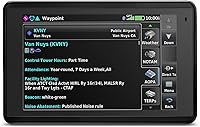
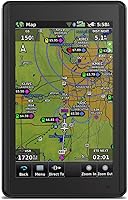
The Garmin aera 660 Portable Aviation GPS is a dedicated moving-map device built from the ground up for general aviation pilots — not repurposed from a car GPS or hiking unit. It sits in Garmin's portable aviation lineup, occupying the sweet spot between basic handheld units and full panel-mounted systems. The 5-inch touchscreen fits naturally on a yoke mount or dashboard without blocking your view of instruments. If you fly VFR cross-country routes or are still building hours as a student pilot, this aviation GPS delivers solid situational awareness without pretending to replace your panel. Think of it as a capable co-pilot, not a full cockpit overhaul.

Features & Benefits

The capacitive touchscreen on this portable cockpit navigator responds cleanly even when wearing thin gloves, and the 480x800 display holds up well in direct sunlight. It rotates between portrait and landscape orientation depending on how you mount it — a small but genuinely useful flexibility. Bluetooth lets you pair with compatible avionics or pull in data wirelessly. The built-in battery runs roughly four hours on a charge, honest enough for many short hops, but longer flights benefit from a power cable or external pack. Preloaded aviation sectional charts — essentially the topographic road maps of the sky — are available right at startup with no additional purchase required.

Best For

Student pilots doing pattern work and cross-country training will find this aviation GPS particularly valuable — it builds situational awareness in a way that talking to an instructor alone cannot fully replicate. Private pilots flying VFR, meaning visual flight rules where you navigate by landmarks and charts rather than instruments, get a reliable backup if their panel GPS goes dark. It also makes sense for anyone who flies multiple aircraft; you just grab it and go rather than depending on whatever avionics happen to be installed. If your plane lacks a built-in multi-function display, this portable cockpit navigator fills that gap without the cost of a panel modification.

User Feedback

With a 4.5 out of 5 star rating across nearly 100 verified buyers, the aera 660 earns consistent praise for its screen clarity and how quickly pilots get comfortable with the interface — especially those already familiar with Garmin's ecosystem. Compared to older portables like the 396 or 496, reviewers note the touchscreen feels like a meaningful step forward. The most common complaint is battery life. Four hours works for a short hop, but pilots on longer legs frequently mention packing an external battery as a practical workaround. A handful of users also flagged that chart update costs accumulate over time, which is worth factoring into the overall value picture before committing.

Pros

  • Purpose-built for aviation, not a repurposed car or hiking GPS dressed up with charts.
  • The 5-inch capacitive touchscreen is responsive and holds up well in direct sunlight.
  • Preloaded sectional charts mean you are ready to fly right out of the box.
  • At under 9 ounces, this aviation GPS adds almost no weight to your flight bag.
  • Bluetooth connectivity allows pairing with compatible avionics for wireless data sharing.
  • Pilots already in the Garmin ecosystem will feel at home within a single flight.
  • Supports both portrait and landscape orientation, giving flexibility in how you mount it.
  • Rated 4.5 out of 5 stars by verified buyers, signaling strong real-world satisfaction.
  • A practical panel-gap solution for aircraft that lack a built-in moving-map display.
  • Moving between multiple aircraft is easy since the device is entirely self-contained.

Cons

  • Four hours of battery life is tight for longer cross-country legs without a power source.
  • Ongoing chart subscription costs add to the total cost of ownership over time.
  • Not certified for IFR use, which limits its role strictly to VFR situational awareness.
  • The 480x800 screen resolution can feel modest compared to modern tablet-based solutions.
  • Pilots unfamiliar with Garmin interfaces may need time to navigate the menu structure.
  • No built-in traffic or weather receiver; those features require additional external hardware.
  • Dashboard and yoke mounts are sold separately, adding to the initial setup cost.
  • The device does not replace ATC communication tools or an EFB app for flight planning.

Ratings

The Garmin aera 660 Portable Aviation GPS earns a strong overall reception from the general aviation community, and our AI-generated scorecards reflect that — built by analyzing verified buyer reviews worldwide while actively filtering out incentivized, bot-generated, and outlier feedback. Every score below captures the honest consensus: where this portable cockpit navigator genuinely delivers and where real pilots have run into friction. Both strengths and recurring pain points are represented transparently, so you can make a fully informed decision.

Display Quality
88%
Pilots consistently praise the 5-inch capacitive screen for its readability in varying light conditions, including direct sunlight during midday VFR flights. The portrait-to-landscape flexibility means you can orient the device to suit your cockpit layout without sacrificing legibility.
At 480x800 pixels the resolution is functional but not sharp by modern standards, and a few users noted that fine chart detail can look slightly soft compared to a high-resolution tablet display running the same data.
Ease of Use
91%
Pilots already in the Garmin ecosystem report feeling at home almost immediately, with the touchscreen interface requiring minimal menu-digging during flight. Even pilots new to Garmin describe a short learning curve, particularly after spending an hour with the device on the ground before their first flight.
Pilots coming from non-Garmin backgrounds occasionally find the menu hierarchy less intuitive than expected, and a handful of users noted that accessing certain chart settings mid-flight required more taps than felt comfortable.
Battery Life
57%
43%
For short training flights, pattern work, and hops under three hours, the built-in battery covers the mission without needing a power cable. The battery is included and ready to go out of the box, which removes one friction point at initial setup.
Four hours is a real ceiling, and pilots on longer cross-country legs consistently flag it as the device's most significant limitation. Many have resorted to packing an external battery pack as standard kit, which somewhat undermines the appeal of a compact, self-contained unit.
Chart Coverage
86%
The preloaded aviation sectional charts — essentially the topographic road maps of the sky — are immediately usable with no additional purchases required at the point of sale. Satellite imagery layering adds a useful visual reference that older portable units in this lineup never offered.
Keeping charts current requires ongoing updates through Garmin's system, and several buyers noted that subscription or update costs accumulate in ways that were not fully apparent at the time of purchase.
Build & Portability
83%
At under 9 ounces and just 0.83 inches thick, the aera 660 slips into a flight bag without a second thought, and its compact footprint means it mounts cleanly on a yoke or dash without blocking the instrument panel. Pilots who fly multiple aircraft particularly appreciate how effortlessly it transitions between cockpits.
The plastic casing feels functional rather than premium, and a few long-term owners have noted minor scuffing around the mounting contact points after extended use across multiple aircraft.
GPS Accuracy
89%
Position accuracy is consistently described as reliable across a wide range of aircraft types and altitudes, with position updates feeling smooth during cruise and responsive during pattern work. No significant reported issues with signal acquisition even in areas with some terrain shielding.
A small number of users reported occasional slower satellite acquisition times on cold starts compared to panel-mounted units, though this was noted as a minor inconvenience rather than a performance concern in normal operations.
Bluetooth Connectivity
71%
29%
Bluetooth works well for pairing with compatible Garmin avionics, and pilots who already own other Garmin devices report the connection process as reliable and reasonably quick to establish.
The Bluetooth functionality is primarily Garmin-ecosystem-specific, which limits usefulness for pilots hoping to feed GPS data to third-party apps or non-Garmin avionics. Several buyers felt the wireless feature set was narrower than they anticipated.
Mounting & Installation
74%
26%
The device is physically straightforward to position in most general aviation cockpits, and the portrait-landscape flexibility gives pilots real options when deciding where to place it relative to their existing instruments.
The mounting hardware is not included in the box, which catches some buyers off guard, particularly those expecting a complete ready-to-fly kit. The additional cost and sourcing effort for the right mount adds a small but real friction point to the setup process.
Value for Money
76%
24%
For pilots who need a dedicated, purpose-built aviation GPS without committing to a full avionics panel upgrade, the aera 660 represents a meaningful capability at a fraction of the installed-system cost. It is a particularly compelling proposition for aircraft owners whose planes have no existing moving-map display.
When chart update costs are factored in over two to three years of ownership, the total cost of ownership climbs noticeably. Buyers comparing this to tablet-based setups — which often offer larger screens and lower recurring costs — may find the value equation tighter than the upfront price suggests.
Cockpit Workflow Integration
82%
18%
The touchscreen interface is designed with pilot workflow in mind, keeping the most commonly used functions accessible without excessive menu navigation. Pilots transitioning from older Garmin portables like the 396 or 496 series report that muscle memory transfers over naturally.
The 5-inch screen, while readable, means that in complex airspace with dense chart symbology, some pilots still find themselves leaning in or zooming in more than they would with a larger display, adding a small but real head-down workload.
Software & Updates
78%
22%
Garmin's aviation software ecosystem is well-established and the update process is familiar to anyone who has used their products before. Firmware updates have been rolled out over the product's lifespan, keeping the core functionality current.
Some users have found the update interface through Garmin Express less smooth than expected, with occasional reports of the process requiring multiple attempts. The device has also been on the market since 2016, and a few buyers have noted that the software architecture feels its age compared to newer portables.
Sunlight Readability
84%
In general aviation environments, where cockpit glare can make screen visibility a real concern, the aera 660 performs well enough that most pilots do not need to shade the screen to read it during daytime VFR operations.
In extremely high-glare conditions — such as low-sun angles on west-facing approaches — a handful of users noted some washout at default brightness settings, though increasing brightness manually resolved the issue for most.
Suitability for Student Pilots
87%
Student pilots working on cross-country situational awareness find this portable cockpit navigator particularly effective as a learning aid, helping them correlate their position with real chart geography in a way that abstract planning alone cannot replicate.
Without instructor guidance on how to use it appropriately, some student pilots risk becoming over-reliant on the moving map rather than developing foundational pilotage and dead-reckoning skills that examiners still test on checkrides.

Suitable for:

The Garmin aera 660 Portable Aviation GPS is an excellent fit for general aviation pilots who want a dedicated, purpose-built moving-map device without the cost and permanence of a panel installation. Student pilots will find it especially valuable during cross-country training, where having a clear, real-time map of their position builds the kind of spatial awareness that makes better pilots. Private pilots flying VFR — navigating by visual references and aeronautical charts rather than instruments — get a trustworthy backup that can step in if the panel GPS goes dark. It also suits pilots who operate more than one aircraft, since the device moves with you rather than being tied to a single airframe. If your plane currently has no built-in multi-function display, this portable cockpit navigator fills that gap meaningfully and at a fraction of what avionics installation would cost.

Not suitable for:

The Garmin aera 660 Portable Aviation GPS is not the right tool for IFR pilots who need certified, panel-approved navigation equipment — this is a portable device intended for situational awareness, not instrument approaches. Pilots who regularly fly legs of five hours or more will find the roughly four-hour battery life a recurring inconvenience, requiring either a power cable or an external battery pack as standard kit. It is also not a replacement for proper avionics training or a substitute for understanding how to read an aeronautical chart; the device enhances awareness, it does not manage a flight for you. Buyers expecting a large-format display comparable to a full panel MFD will be underwhelmed by the 5-inch screen in a complex, high-workload cockpit. Finally, anyone on a tight budget who also factors in recurring chart subscription costs may want to run those numbers carefully before committing.

Specifications

  • Screen Size: The display measures 5 inches diagonally, large enough to read sectional chart details at a glance without dominating the cockpit.
  • Resolution: The screen renders at 480x800 pixels and supports both portrait and landscape orientation to match your preferred mount position.
  • Touchscreen Type: The panel uses capacitive touch technology, which responds accurately to finger input and performs reliably in a vibrating cockpit environment.
  • Dimensions: The unit measures 5.55″ long by 3.43″ tall and just 0.83″ thick, keeping it slim enough for yoke or dash mounting without obstructing the panel.
  • Weight: At 8.6 ounces, this aviation GPS adds negligible weight to any cockpit setup or flight bag.
  • Battery Type: A built-in rechargeable lithium-ion battery comes included and is not user-replaceable in the field.
  • Battery Life: On a full charge, the device runs for approximately 4 hours of continuous GPS operation under typical conditions.
  • Connectivity: Bluetooth is the primary wireless interface, enabling data exchange with compatible Garmin avionics and external accessories.
  • Map Coverage: The unit ships with preloaded aviation sectional charts and satellite imagery covering supported regions, ready to use without additional downloads.
  • Mount Type: Compatible with dashboard and yoke-style mounts; the specific mounting hardware is typically sold separately depending on aircraft configuration.
  • Vehicle Type: Designed exclusively for aircraft use in general aviation environments, not compatible with automotive or marine navigation modes.
  • Model Number: The official Garmin model number for this unit is 010-01518-00, useful when ordering accessories or checking for firmware updates.
  • Manufacturer: Designed and manufactured by Garmin, a company with decades of dedicated aviation GPS product development.
  • Availability: The product was first made available in March 2016 and has not been discontinued by the manufacturer as of current listings.
  • Power Input: The unit can be powered via external aircraft power in addition to its internal battery, which is the recommended approach for flights exceeding 4 hours.

Related Reviews
Garmin GPS 73
Garmin GPS 73
80%
93%
Battery Life
88%
SailAssist Features
91%
Build Quality & Durability
54%
Display Quality
82%
Ease of Use
More
Garmin Nuvi 2689LMT GPS
86%
91%
Ease of Use
94%
Traffic & Map Updates
85%
Bluetooth Connectivity
88%
Voice-Activated Navigation
92%
Display Quality
More
Garmin nüvi 2455LMT Portable GPS Navigator
71%
83%
Navigation Accuracy
78%
Map Coverage & Updates
76%
Ease of Use
74%
Display Quality
81%
Lane Assist & Junction Views
More
Garmin GPSMAP 65s Handheld GPS
80%
93%
GPS Accuracy
88%
Battery Performance
91%
Build Quality
74%
Display Readability
89%
Satellite Lock Speed
More
Garmin vivoactive 4 GPS Smartwatch
88%
90%
Battery Life
94%
Fitness & Health Tracking
86%
Music Storage & Playback
88%
Build Quality
85%
Ease of Use
More
Garmin Enduro 2 GPS Running Watch
81%
93%
Battery Life
91%
GPS Accuracy
89%
Build Quality & Durability
82%
Comfort & Fit
88%
Navigation & Mapping
More
Garmin Drive 53 GPS Navigator
76%
88%
Display Quality
91%
Ease of Use
86%
Navigation Accuracy
41%
Battery Life
63%
Mount & Stability
More
Garmin Fenix Enduro GPS Watch
85%
96%
Battery Life
92%
Build Quality & Durability
89%
Solar Charging Efficiency
88%
Activity Tracking Accuracy
75%
Ease of Use
More
Garmin Drive 52 GPS Navigator
73%
91%
Ease of Setup
78%
Map Accuracy
83%
Screen Readability
63%
Refurbished Condition
82%
Value for Money
More
Garmin Instinct Solar Rugged Smartwatch
78%
88%
Battery Life
93%
Build Quality
91%
GPS Accuracy
89%
Navigation Features
74%
Solar Charging
More

FAQ

The aera 660 is not certified for IFR navigation. It is designed as a situational awareness tool for VFR flight — meaning you use it alongside your eyes and aeronautical charts, not as a sole means of instrument navigation. If you need IFR-certified GPS, you would need a panel-approved unit.

Sectional charts and satellite imagery come preloaded, so you can use it right away. Keeping those charts current over time does require periodic updates through Garmin, and there may be subscription costs depending on which chart packages you want to maintain.

The device supports dashboard and yoke-style mounts. The mount itself is typically purchased separately, and there are several Garmin-compatible options depending on your aircraft. Many pilots prefer a yoke mount for keeping the screen in their natural scan path.

Honestly, it depends on your route. The roughly 4-hour battery life covers many regional hops comfortably, but for longer legs you should plan to plug it into your aircraft power outlet. Carrying a compact external battery pack is another popular workaround pilots use.

The Garmin aera 660 Portable Aviation GPS uses Bluetooth primarily to communicate with compatible Garmin avionics rather than general-purpose tablets. It is not designed to function as a GPS receiver feeding data to third-party apps like ForeFlight, so you would need a separate GPS receiver for that use case.

Both approaches work well, but this aviation GPS is a dedicated device — it does not depend on a tablet battery, operating system updates, or app compatibility. Some pilots prefer the simplicity and reliability of a purpose-built unit, while others prefer the larger screen and flexibility of a tablet setup. Many use both.

Capacitive touchscreens generally work best with bare fingers or gloves specifically designed to work with touchscreens. Thin aviation gloves often work fine, but thick winter gloves may reduce accuracy. Most pilots flying with heavier gloves find it practical to remove a glove briefly when interacting with the screen.

No aircraft wiring is required to get started — the built-in battery means you can simply mount it and go. If you want to run it off aircraft power to extend usage on longer flights, you just need a standard aviation power cable routed to your accessory power outlet.

The interface is straightforward enough that most pilots get comfortable within a flight or two. If you have used older Garmin portables like the 396 or 496, the transition is very natural. Pilots coming from no Garmin experience at all usually find the touchscreen intuitive, though spending some time with it on the ground before flying is always a good idea.

As of current listings, this portable cockpit navigator has not been discontinued by Garmin. That said, Garmin does periodically update its portable aviation lineup, so it is worth checking their current catalog if you want to compare it against any newer models before purchasing.

Where to Buy

Sporty's Pilot Shop
In stock $899.00
Aircraft Spruce and Specialty
In stock $899.00
Marv Golden Pilot Supplies
In stock $899.00
Gulf Coast Avionics
In stock $899.00
Banyan Pilot Shop
In stock $899.00