Overview

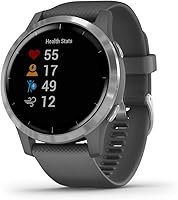
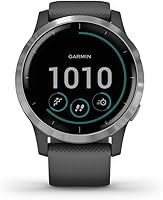
The Garmin vivoactive 4 GPS Smartwatch is a round-faced wearable built for people who want serious fitness tracking without the chunky, multisport-watch look. It sits in a comfortable middle ground in Garmin's lineup — more capable than a basic activity band, but not as specialized (or as expensive) as the brand's triathlon-focused flagships. What stands out right away is how much this fitness watch tries to do in one package: GPS tracking, onboard music storage, and smart notifications all live under a 1.3-inch touchscreen. It's clearly aimed at everyday users rather than competitive endurance athletes, and that focus shows in how the watch is laid out and how it behaves day to day.
Features & Benefits

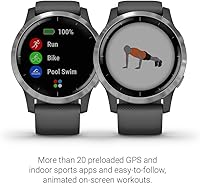
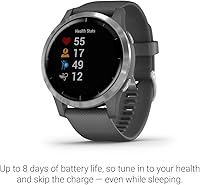
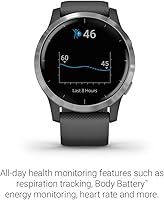
On the health-tracking side, this Garmin watch packs in Pulse Ox readings, stress monitoring, respiration data, and an energy-level estimate, giving a fuller picture of daily wellbeing rather than just step counts. Music lovers get onboard storage, so playlists from Spotify, Amazon Music, or Deezer can be downloaded straight to the watch for phone-free runs, though some services require a premium subscription. There are more than twenty preloaded sports profiles, plus animated workouts for yoga, strength, and cardio that play right on the screen. Battery life runs up to eight days in smartwatch mode, dropping to roughly six hours once GPS and music run together. The Connect IQ store adds custom watch faces and widgets, and built-in incident detection can share a live location with emergency contacts.

Best For

This fitness watch makes the most sense for runners and gym regulars who want guided workouts built right into their wrist, without juggling a separate app for every session. It's also a strong pick for anyone who already pays for Spotify or Amazon Music and likes training without carrying a phone — downloading playlists directly to the watch removes one more thing to think about mid-workout. Health-conscious users who like watching trends in sleep, stress, and menstrual cycle data over weeks and months will get real value from the daily tracking here. People who simply prefer a classic, round watch face over a squared-off fitness band will likely appreciate the look too. That said, ultra-endurance athletes who need multi-day GPS tracking for long races may find the battery life a limiting factor.

User Feedback

Reviewers consistently call out the onboard music storage and Connect IQ customization as two of the best parts of owning this Garmin watch, since they make the device feel more personal and more useful day to day. Battery life draws mixed but generally fair reactions: in plain smartwatch mode it holds up well, but several owners note it drains noticeably faster once GPS tracking and music playback run at the same time during workouts. The Pulse Ox sensor and stress tracking tend to be described as a welcome bonus rather than something to rely on for medical decisions, which lines up with how Garmin positions these features. One recurring gripe is that streaming offline playlists isn't always free — some third-party music services require a paid subscription before downloads work, which can catch new owners off guard.

Pros

  • Built-in Pulse Ox, stress, respiration, and energy tracking offer a fuller picture of daily wellbeing
  • Onboard music storage lets you download Spotify, Amazon Music, or Deezer playlists for phone-free workouts
  • Over twenty preloaded sports profiles cover everything from running and swimming to yoga and strength training
  • Animated on-screen workouts make it easy to follow cardio, strength, and Pilates routines without a separate app
  • Up to eight days of battery life in smartwatch mode is genuinely useful for everyday wear
  • Connect IQ store support means watch faces, apps, and widgets can be customized to fit personal taste
  • Incident detection and live location sharing add real peace of mind during outdoor activities
  • The round touchscreen design feels more like a traditional watch than a boxy fitness tracker
  • Owners consistently praise the music storage and customization options as standout, everyday-useful features

Cons

  • Battery life drops sharply to around six hours once GPS and music run simultaneously
  • Pulse Ox and stress readings are wellness estimates, not medical-grade diagnostic measurements
  • Some third-party music services require a paid subscription before offline downloads will work at all
  • The 1GB of onboard storage limits how many playlists or songs can be stored at once
  • Ultra-endurance athletes may find the GPS battery window too short for long races or all-day events
  • Learning the full menu system and Connect IQ customization options takes a bit of patience upfront
  • The touchscreen and small icons can feel fiddly to navigate during sweaty workouts or while running
  • It lacks the multi-day GPS battery life found on Garmin's higher-end multisport watches

Ratings

These scores for the Garmin vivoactive 4 GPS Smartwatch are generated by AI after analyzing thousands of verified buyer reviews from around the world, filtering out spam, bot activity, and incentivized feedback along the way. Each category below reflects what real owners consistently praised and where they ran into friction, so you get the full picture rather than a polished average. Use these breakdowns to weigh strengths against trade-offs before deciding if this fitness watch fits your routine.
Build Quality & Design
84%
The round 1.3-inch case feels closer to a traditional watch than a typical fitness band, and the silver-and-gray finish reads versatile enough for office wear or weekend errands. Many owners mention it doesn't look out of place dressed up or down.
At 1.78 x 1.78 x 0.5 inches, some smaller wrists find the case a touch bulky compared to slimmer hybrid watches. A few buyers also note the bezel can feel dated next to flashier AMOLED competitors.
Display & Touchscreen
81%
19%
The 260 x 260 touchscreen stays readable in direct sunlight during outdoor runs, and swiping through widgets feels responsive for a mid-tier wearable. Owners managing busy mornings appreciate glancing at stats without fumbling for buttons.
Touch input can occasionally lag mid-workout when fingers are sweaty or gloved, pushing some users back toward the physical buttons. The resolution, while solid, isn't as sharp as flagship AMOLED displays at this price tier.
Battery Life (Smartwatch Mode)
83%
Stretching up to 8 days on a single charge means most owners only plug in once a week, even with notifications and activity tracking running in the background. Commuters and office workers especially like not thinking about charging daily.
Real-world battery life often lands a bit under the 8-day estimate once always-on features like stress tracking and Pulse Ox monitoring are active. Heavy notification use during the workday can shave off extra hours too.
Battery Life (GPS + Music Mode)
58%
42%
For shorter sessions, like a 5K run or an hour-long gym workout, roughly 6 hours of combined GPS and music playback is plenty and lets people leave their phone at home entirely. That phone-free flexibility is a genuine draw for casual exercisers.
Long-distance runners and cyclists training for half-marathons or longer rides regularly run into the battery ceiling mid-session. This is consistently flagged as the watch's biggest limitation for anyone pushing past a couple of hours of GPS-and-music use.
GPS Accuracy & Sports Tracking
82%
18%
With more than 20 preloaded sport profiles, the watch locks onto satellites quickly for runs, rides, and swims, and route mapping holds up well through city blocks and open trails alike. Gym-goers also like having strength and yoga modes built in rather than relying on a separate app.
In dense urban canyons or under heavy tree cover, GPS lock can occasionally drift slightly compared to dedicated running watches. A handful of users wish indoor activity recognition were a bit more automatic.
Music Storage & Streaming
88%
Onboard storage for Spotify, Amazon Music, or Deezer playlists is consistently one of the most praised features, letting runners and gym-goers train completely phone-free with Bluetooth headphones. Reviewers describe it as the feature that finally got them to leave their phone in the locker.
Storage space is limited, so loading multiple large playlists means juggling what stays on the device. Several owners are caught off guard that offline downloads require an active premium subscription with the music service itself, not just the watch.
Health & Wellness Tracking
79%
21%
Pulse Ox, stress, respiration, and energy monitoring give a broader daily wellness snapshot than step counts alone, and health-conscious users like tracking menstrual cycle and stress trends over weeks rather than single days. It's described as a helpful nudge toward better habits.
These readings are wellness estimates rather than medical-grade measurements, so anyone hoping to use them for diagnosis or clinical monitoring will be disappointed. A few users also report occasional inconsistency in Pulse Ox readings depending on wrist fit.
Sleep Tracking
76%
24%
Sleep stage breakdowns give a reasonably detailed look at rest quality, and pairing that data with stress and energy scores helps some owners spot patterns tied to bad nights. People juggling early workouts find the morning readiness snapshot genuinely useful.
Sleep detection occasionally misreads bedtime or wake time if the watch is loose on the wrist overnight. It's also a passive feature rather than something users can fine-tune much beyond wearing it and checking in the morning.
App Ecosystem & Customization
86%
The Connect IQ store gives owners genuine room to personalize watch faces, widgets, and apps, which keeps the device feeling fresh long after initial setup. This level of customization is repeatedly named a standout perk in user feedback.
Browsing and installing apps from a small screen can feel slower than managing things from a phone, and not every third-party app is consistently maintained. Some users say discovering the better widgets takes more digging than expected.
Safety Features
77%
23%
Incident detection paired with live location sharing gives solo runners and cyclists a real safety net during select activities, and several reviewers specifically mention feeling more comfortable training alone with it active. Setup with emergency contacts is described as quick.
The feature only works during select tracked activities, so it offers no coverage during everyday wear or untracked walks. A few users also note it requires a paired phone nearby to actually send alerts, which limits its independence.
Comfort & Everyday Wearability
87%
At 1.28 ounces, the watch stays light enough for all-day wear, including sleep tracking overnight, without the bulk some multisport watches carry. Office workers and gym-goers alike mention forgetting they have it on.
The included gray band runs slightly stiff out of the box for some wrists, taking a few days to break in comfortably. A small number of reviewers with smaller wrists wish a slimmer band option came standard.
Value for Money
78%
22%
Positioned below Garmin's premium triathlon watches, this fitness watch packs in music storage, health tracking, and GPS sports profiles that usually show up on pricier models. Buyers consistently frame it as a strong middle-ground option rather than a budget compromise.
Those who only need basic step and heart rate tracking may find themselves paying for features like Pulse Ox and animated workouts they rarely touch. Shoppers focused purely on multi-day GPS battery life may get more value from a different model in Garmin's lineup.

Suitable for:

The Garmin vivoactive 4 GPS Smartwatch is a strong fit for runners, cyclists, and gym regulars who want guided workouts and GPS tracking built right into their wrist, without having to open a separate app for every session. It also makes sense for anyone who already pays for Spotify, Amazon Music, or Deezer and wants to leave their phone at home during workouts, since playlists can be downloaded directly to the watch. Health-conscious buyers who like watching trends over time — sleep quality, stress levels, respiration, even menstrual cycle data — will get genuine, ongoing value from the daily tracking rather than a one-time snapshot. People who simply prefer a classic, round watch face over a square fitness-band look will likely appreciate the design as much as the features. Overall, it suits active, everyday users more than dedicated competitive athletes.
Not suitable for:

That said, the Garmin vivoactive 4 GPS Smartwatch isn't the right choice for ultra-endurance athletes who need multi-day battery life during long races, since running GPS and music together drains the battery down to roughly six hours. Buyers expecting medical-grade health monitoring should also look elsewhere, since the Pulse Ox sensor and stress tracking are framed as general wellness indicators rather than diagnostic tools. Anyone who wants completely free offline music streaming may be disappointed too, because some third-party services require a paid subscription before downloads actually work. Minimalists who prefer a simple, low-maintenance watch without smart features, menus, or notifications might find the interface more involved than they want. Finally, those on a tight budget may want to compare it against simpler Garmin or competitor trackers that skip music storage and animated workouts.
Specifications

  • Display: The watch features a round 1.3-inch touchscreen display housed in a durable case.
  • Resolution: Screen resolution is 260 x 260 pixels for clear readability outdoors.
  • Storage: Onboard storage totals 1GB, used for downloaded music and Connect IQ apps.
  • Smartwatch Battery Life: Battery life reaches up to 8 days when used in standard smartwatch mode.
  • GPS Battery Life: Battery life drops to roughly 6 hours when GPS tracking and music playback run at the same time.
  • Battery Type: The rechargeable battery uses a lithium polymer cell composition.
  • GPS: Built-in GPS allows outdoor activities to be tracked without needing a paired phone nearby.
  • Connectivity: Bluetooth wireless connectivity links the watch to a smartphone for notifications and data syncing.
  • Operating System: The watch runs on Garmin OS with access to the Connect IQ app store.
  • Health Sensor: A Pulse Ox sensor estimates blood oxygen saturation as part of daily wellness tracking.
  • Sports Apps: More than 20 preloaded sports apps cover activities such as running, yoga, and swimming.
  • Workout Guidance: Animated on-screen workouts guide users through cardio, strength, yoga, and Pilates routines.
  • Safety Features: Incident detection and assistance features can send real-time location data to emergency contacts during select activities.
  • Color & Band: This model comes in a silver case paired with a gray band.
  • Weight: The watch weighs 1.28 oz on the wrist, including the band.
  • Dimensions: Case dimensions measure 1.78 x 1.78 x 0.5 inches.
  • Box Contents: The package includes the watch, a charging and data cable, and printed documentation.
  • Music Streaming: Offline music downloads are supported through Spotify, Amazon Music, or Deezer, depending on the service's subscription terms.

Related Reviews

Garmin Instinct Solar Rugged Smartwatch
78%
88%
Battery Life
93%
Build Quality
91%
GPS Accuracy
89%
Navigation Features
74%
Solar Charging
More
Garmin tactix Delta Tactical GPS Smartwatch
78%
93%
Battery Life
91%
Durability & Build
89%
GPS & Navigation Accuracy
88%
Tactical Features
84%
Sports & Fitness Tracking
More
Garmin Venu 2 GPS Smartwatch
79%
93%
Battery Life
91%
Display Quality
84%
Health & Fitness Tracking
78%
GPS Accuracy
88%
Build Quality
More
Garmin Approach S42 GPS Golf Smartwatch
79%
91%
GPS & Yardage Accuracy
93%
Course Library Coverage
74%
Battery Performance
69%
Touchscreen Usability
62%
AutoShot Tracking
More
Garmin quatix 7 Marine GPS Smartwatch
79%
93%
Marine Integration
89%
Battery Life
91%
Build Quality & Durability
87%
Display Readability
67%
Touchscreen Performance
More
Garmin Venu Sq 2 GPS Smartwatch
79%
91%
Battery Life
88%
Display Quality
86%
Health & Fitness Tracking
83%
GPS Accuracy
84%
Sports & Activity Modes
More
Garmin Forerunner 955 GPS Running Smartwatch
83%
94%
Battery Life
91%
GPS Accuracy
68%
Touchscreen Responsiveness
86%
Display Quality
88%
Training Readiness & Recovery
More
Garmin Enduro 3 GPS Smartwatch
83%
96%
Battery Life
91%
GPS Accuracy
93%
Build Quality
88%
Comfort & Wearability
89%
Navigation & Mapping
More
Garmin Swim 2 GPS Swimming Smartwatch
86%
92%
Swim Tracking Accuracy
89%
Battery Life
88%
Heart Rate Monitoring
85%
Comfort and Fit
83%
Ease of Use
More
Garmin Forerunner 245 GPS Running Smartwatch
75%
92%
GPS Accuracy
89%
Battery Life
88%
Training Plan Quality
71%
Running Dynamics
91%
Comfort and Wearability
More

FAQ

No, the Garmin vivoactive 4 GPS Smartwatch has built-in GPS, so it can track outdoor runs, rides, and walks on its own. You'll still want your phone paired for things like notifications and syncing data afterward, but the actual location tracking doesn't depend on it.
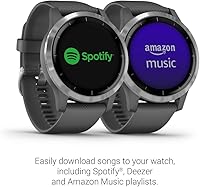
Yes, that's one of its strongest features. You can download playlists from Spotify, Amazon Music, or Deezer directly onto the watch, then pair Bluetooth headphones and head out phone-free.

In normal smartwatch mode, expect up to 8 days between charges. If you're using GPS tracking and streaming downloaded music during a workout, that drops to roughly 6 hours, so plan accordingly for longer runs or rides.

It's not meant to be. The Pulse Ox feature gives a general wellness estimate of blood oxygen levels, not a clinical-grade reading, so it shouldn't be used to diagnose or monitor any medical condition.

There are more than 20 preloaded sport profiles covering things like running, swimming, yoga, and strength training. On top of that, animated on-screen workouts walk you through cardio, strength, and Pilates routines step by step.

In most cases, yes. Offline downloads through third-party music services typically require a premium subscription with that service, separate from anything related to the watch itself.

Swimming is included among the preloaded sport profiles, so it's clearly built with water-based activity in mind. For the exact water-resistance rating and depth limits, it's worth checking Garmin's official documentation rather than relying on general assumptions.

Through the Connect IQ store, where you'll find thousands of free watch faces, apps, and widgets you can install and swap out whenever you like.

You get the watch itself, a charging and data cable, and basic printed documentation. No separate wall adapter is included, so you'll need a USB port or existing charger.

Yes, incident detection is built in for select activities and can share your real-time location with emergency contacts if it senses a potential fall or accident. It's a nice safety net, though it's worth testing how the feature works for your specific activities before relying on it heavily.