Overview

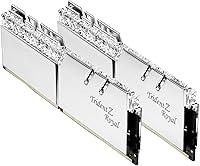
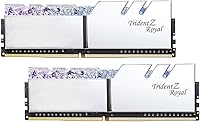
The G.SKILL Trident Z Royal 64GB DDR4 RAM is a high-capacity desktop memory kit that pairs serious performance specs with a distinctive crystal-topped heatspreader that catches the eye in any open build. Two matched 32GB modules run at 3600MHz with CL18-22-22-42 timings, and the kit supports Intel XMP profiles alongside standard JEDEC defaults for flexibility. It works on both Intel and AMD desktop platforms, though checking your motherboard's QVL list before buying is genuinely important, not just a footnote. Since its 2020 launch, this memory upgrade has accumulated over 200 ratings and sits comfortably in the upper tier of the Computer Memory category.
Features & Benefits

What makes this RAM kit practical for most builders is how little friction there is getting it running at full speed. Enable XMP 2.0 in your BIOS and the kit jumps to 3600MT/s automatically — no manual timing adjustments required. The 1.35V operating voltage is worth noting too; it draws less power than older high-speed DDR4 kits, which matters in thermally dense builds. The 288-pin U-DIMM form factor is strictly for desktop motherboards, so laptop or small-form-factor buyers should look elsewhere. One firm rule: do not mix these modules with other kits. G.SKILL designs matched pairs to work as a set, and ignoring that advice risks instability or outright system failure.

Best For

The Trident Z Royal 64GB is genuinely best suited to content creators — video editors, 3D artists, and anyone working with large datasets who regularly bumps into RAM ceilings. Running multiple applications, large project files, and virtual machines simultaneously is where 64GB starts paying for itself. Enthusiast gamers building a showpiece rig will appreciate the aesthetics, but be honest here: most games do not need anywhere near this capacity. If your build has a windowed side panel, the visual payoff is real. If it does not, you are paying a premium for looks you will never see. PC builders who want a mostly plug-and-play XMP experience will also find this kit easy to configure.

User Feedback

Buyers are largely happy with this memory upgrade, and the two things that come up most consistently are how easily XMP activates and how stable the kit runs over time. The crystal aesthetic gets genuine praise from anyone with a windowed case. On the less positive side, a fair number of users discovered that older motherboards needed a BIOS update before the kit would run at its rated speed — worth knowing ahead of time rather than troubleshooting after the fact. A few also verified QVL compatibility before committing to the purchase. No significant complaints about defects or early failures appear in the reviews, which speaks well of the overall build quality.

Pros

  • XMP 2.0 activation gets the kit running at full 3600MHz speed with a single BIOS toggle.
  • Stable dual-channel operation is well-documented by hundreds of real-world buyers.
  • The 1.35V operating voltage runs cooler and draws less power than older high-speed DDR4 kits.
  • 64GB total capacity gives content creators and power users genuine long-term headroom.
  • Crystal-lattice heatspreader looks exceptional inside a windowed build with RGB lighting nearby.
  • Compatible with both Intel and AMD desktop platforms, covering most modern build configurations.
  • G.SKILL ships these as a validated matched pair, reducing the guesswork around stability.
  • Strong sales rank and 200-plus ratings suggest consistent quality control across production batches.
  • Non-ECC design keeps the kit lean and purpose-built for consumer desktop performance.

Cons

  • Older motherboards often require a BIOS update before the kit will post at its rated speed.
  • The premium aesthetic design adds cost that brings zero value in builds without a windowed panel.
  • Mixing this kit with any other memory modules voids the stability guarantee and risks system failure.
  • 64GB is overkill for most gaming setups, making the price hard to justify for that use case alone.
  • Buyers must manually verify motherboard compatibility via the G.SKILL QVL tool before purchasing.
  • No ECC support means it is unsuitable for workstation or server environments that require error correction.
  • At CL18, the latency is not class-leading for 3600MHz DDR4 — tighter-timing alternatives exist at this speed.
  • Strictly a desktop U-DIMM kit, which rules out laptops, NUCs, and any SO-DIMM slot configurations.

Ratings

The scores below reflect an AI-driven analysis of verified global buyer reviews for the G.SKILL Trident Z Royal 64GB DDR4 RAM, with spam, bot-generated, and incentivized feedback actively filtered out before scoring. Each category is rated based on patterns found across hundreds of real-world user experiences, covering everything from first-boot setup to long-term daily use. Both the genuine strengths and the recurring frustrations are transparently baked into every score.

Overall Stability
93%
Buyers across a wide range of Intel and AMD builds consistently report rock-solid stability once the kit is up and running. Running dual-channel at 3600MHz for months without crashes or memory errors is the norm, not the exception, which is exactly what you want from a high-capacity kit handling intensive workloads.
A small but notable group of users experienced initial instability that traced back to needing a BIOS update rather than a defective kit. This kind of early friction can feel alarming for less experienced builders who may not immediately identify the root cause.
XMP Setup Experience
89%
The one-click XMP activation process is genuinely painless on supported motherboards, and most buyers report hitting the rated 3600MHz speed on the first boot after enabling it. For builders who want fast memory without diving into manual timing adjustments, this kit delivers that experience reliably.
On older boards, XMP activation alone is not always enough — a BIOS firmware update is often a prerequisite, and some users only discovered this after troubleshooting an unstable system. That extra step catches a meaningful subset of buyers off guard.
Build Quality
91%
The physical construction of this memory upgrade feels premium in hand, and the crystal-lattice heatspreader is more than just a cosmetic detail — it sits firmly on the modules with no flex or rattling. Buyers who have handled budget DDR4 sticks immediately notice the difference in material quality.
The heatspreader design, while attractive, adds to the overall height of the modules, which has caused clearance conflicts with large tower air coolers in a few builds. It is not a widespread issue, but it is worth measuring before committing.
Aesthetic Design
88%
Inside a windowed build, the crystal tops catch light in a way that genuinely stands out compared to standard heatspreader designs, and the silver finish pairs cleanly with most color schemes. Enthusiast builders consistently call this one of the better-looking DDR4 kits available at this capacity.
The visual premium only makes sense if your case actually shows off the hardware. Buyers with solid-panel cases are paying for a design element they will never see, and that cost is not trivial at this price point.
Performance at Rated Speed
84%
At 3600MHz with CL18-22-22-42 timings, this RAM kit handles memory-intensive workloads like large video project files, multi-VM environments, and complex 3D renders without becoming a bottleneck. Real-world throughput in content creation tasks is where the Trident Z Royal 64GB earns its keep.
The CL18 latency is not the tightest available at 3600MHz — competing kits offer CL16 or even CL14 at similar speeds. For workloads where memory latency is a significant factor, buyers may want to compare timings more carefully before deciding.
Motherboard Compatibility
76%
24%
The kit covers a broad range of Intel and AMD desktop platforms, and G.SKILL provides a well-maintained QVL and online configurator tool that makes checking specific board compatibility straightforward. Most modern boards from major manufacturers have validated support entries.
The compatibility process puts the research burden squarely on the buyer, and not everyone thinks to check the QVL before purchasing. Users with niche or older motherboard models have reported compatibility gaps that were not obvious until they attempted installation.
Value for Money
72%
28%
For content creators and power users who genuinely need 64GB to keep their workflows moving, this memory upgrade offers a combination of capacity, speed, and visual design that is hard to match at a similar price. The performance-per-dollar argument holds up well in that specific context.
For anyone whose workload does not truly require 64GB, the price premium relative to a 32GB kit is hard to justify. The aesthetic design also inflates the cost beyond what pure-performance buyers might prefer to pay.
Ease of Installation
87%
Physical installation is straightforward — the modules seat cleanly into standard 288-pin DIMM slots, and the dual-channel slot configuration is clearly documented in most motherboard manuals. Builders with any level of experience will have these installed in minutes.
The taller heatspreader can make seating the modules slightly more awkward in cramped builds, and confirming the retention clips are fully engaged requires a deliberate press. It is a minor friction point but one that first-time builders occasionally mention.
Thermal Management
82%
18%
Operating at 1.35V keeps heat generation noticeably lower than older high-speed DDR4 kits that ran at 1.5V, and the heatspreader does a reasonable job of distributing warmth across the module surface during sustained loads. Builders in well-ventilated cases report no thermal concerns at all.
In compact cases with restricted airflow, the heatspreader height can interfere with airflow patterns around adjacent components. The heatspreader is passive-only, so builds with poor overall case ventilation may see temperatures creep higher under prolonged memory-intensive loads.
Long-Term Reliability
91%
Across multi-year ownership reports, failures are rare and the kit tends to maintain stable operation without any degradation in performance. G.SKILL's reputation for consistent manufacturing quality is well-supported by the feedback patterns seen with this memory upgrade specifically.
A limited number of buyers reported a module failure after extended use, which, while infrequent, is worth noting at this capacity tier. The lifetime warranty provides a safety net, but the RMA process adds downtime that is particularly painful when a machine is central to a production workflow.
Packaging & Unboxing
79%
21%
The retail packaging is premium and protective, with each module individually secured to prevent transit damage. The presentation feels appropriate for a high-end kit and makes a good impression whether you are building for yourself or gifting a component to someone else.
Beyond the modules themselves, the kit does not include any accessories — no installation guide beyond a basic insert, and no mounting hardware. For a kit at this price, some buyers expected a slightly more complete unboxing experience.
Platform Versatility
74%
26%
Supporting both Intel and AMD desktop platforms in a single SKU gives this kit broader appeal than platform-locked alternatives, and most current-generation boards from both ecosystems have QVL entries confirming compatibility. That flexibility makes it easier to recommend across different build configurations.
Desktop-only U-DIMM form factor is a hard ceiling on versatility — it simply cannot be used in laptops, NUCs, or any SO-DIMM application. Buyers who did not realize this before purchasing have submitted returns, suggesting the form factor limitation is not always immediately obvious from product listings.
Warranty & Support
81%
19%
The limited lifetime warranty is a meaningful long-term reassurance, particularly for a high-investment memory kit used in a production or content creation machine. G.SKILL's support documentation and QVL tooling are also notably thorough compared to some competitors.
Warranty claims require proof of purchase and direct engagement with G.SKILL's support team, which some users found slower than expected during the RMA process. The warranty also explicitly excludes damage from usage outside manufacturer specifications, which covers a broader range of scenarios than buyers sometimes anticipate.

Suitable for:

The G.SKILL Trident Z Royal 64GB DDR4 RAM is built for users who genuinely push their systems hard — think video editors juggling 4K timelines, 3D artists rendering complex scenes, or developers running multiple virtual machines simultaneously. At 64GB across two matched modules, there is real headroom for memory-intensive workflows where dropping below that ceiling causes noticeable slowdowns or forces constant application cycling. Content creators who multitask heavily across demanding software will feel the difference compared to a 16GB or 32GB setup. Enthusiast builders putting together a high-end windowed rig will also appreciate that the kit performs well and looks the part. The XMP 2.0 support makes it approachable for builders who want fast memory without spending hours manually dialing in BIOS timings, and the broad Intel and AMD desktop compatibility means it fits most modern platform choices.
Not suitable for:

The G.SKILL Trident Z Royal 64GB DDR4 RAM is a poor fit for buyers whose primary use case is everyday gaming or general desktop computing, where 64GB of RAM delivers no measurable benefit over a 16GB or 32GB kit and the price premium goes entirely to waste. It is strictly a desktop product — laptop users, small-form-factor Mini-ITX builders using SO-DIMM slots, and anyone needing ECC error correction for workstation or server use should look elsewhere entirely. Buyers with older motherboards should be prepared to update their BIOS before the kit runs at its rated 3600MHz speed, which is a genuine setup hurdle and not just a rare edge case. The crystal heatspreader design commands a cost premium that only makes visual sense inside a build with a windowed side panel — if your case is a solid-panel box, you are paying for aesthetics you will never see. Finally, this kit must be used as a matched pair and cannot be safely mixed with modules from other kits without risking system instability.
Specifications

  • Total Capacity: The kit provides 64GB of total memory across two matched 32GB DDR4 U-DIMM modules.
  • Memory Type: DDR4 U-DIMM, designed exclusively for standard desktop motherboard slots with a 288-pin interface.
  • Rated Speed: Modules are rated to operate at up to 3600MT/s when the XMP 2.0 profile is enabled in the BIOS.
  • Latency Timings: The XMP profile runs at CL18-22-22-42, which is a typical timing configuration for high-capacity DDR4 kits at this speed.
  • Operating Voltage: Rated at 1.35V, which is lower than the 1.5V common in older DDR4 kits and helps reduce heat output.
  • XMP Profile: Includes an Intel XMP 2.0 overclock profile alongside a standard JEDEC default profile for out-of-the-box compatibility.
  • ECC Support: Non-ECC memory; does not support error-correcting code functionality and is not intended for server or workstation use.
  • Platform Support: Compatible with Intel and AMD desktop platforms; users should verify compatibility via the G.SKILL QVL or RAM Configurator tool.
  • Form Factor: 288-pin U-DIMM form factor fits full-size desktop motherboards only and is not compatible with laptop SO-DIMM slots.
  • Module Count: Ships as a matched two-module kit intended to be installed and used together as a set.
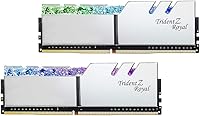
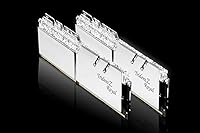
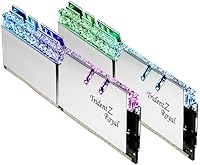
  • Heatspreader: Features a crystal-lattice silver heatspreader design built for visual appeal in windowed or open-frame desktop builds.
  • Model Number: The exact model designation is F4-3600C18D-64GTRS, which identifies this specific speed, timing, and capacity variant.
  • Release Year: This kit was first made available in May 2020 and remains an active product in G.SKILL's Trident Z Royal lineup.
  • Package Dimensions: The retail package measures approximately 7.2″ x 5.3″ x 1.1″ and weighs around 8.8 ounces.
  • Manufacturer: Designed and sold by G.SKILL International Enterprise Co., Ltd., a Taiwan-based memory and storage specialist.

Related Reviews
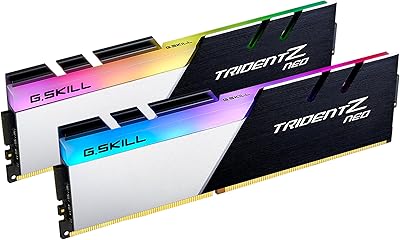
G.SKILL Trident Z Neo 64GB DDR4 RAM
83%
93%
XMP Reliability
91%
Stability & Reliability
82%
Platform Compatibility
89%
Performance at Rated Speed
78%
Value for Capacity
More
G.SKILL Trident Z Neo 16GB DDR4 RAM
88%
93%
XMP Compatibility
91%
Platform Performance
94%
Stability & Reliability
89%
Thermal Performance
86%
Build & Heatspreader Quality
More
G.SKILL Trident Z Neo DDR4 128GB (4x32GB) 3200MT/s RAM
87%
91%
Performance in Gaming
93%
Multitasking & Workload Handling
88%
Overclocking Ease
90%
Build Quality & Durability
84%
Value for Money
More
G.SKILL Trident Z RGB DDR4 64GB (2x32GB) 3200MT/s CL16
87%
94%
Performance
90%
RGB Customization
88%
Installation and Setup
92%
Value for Money
86%
Compatibility with Intel & AMD
More
G.SKILL Trident Z Neo DDR4 32GB (4x8GB) 3600MT/s RAM
88%
93%
Performance
89%
Installation & Setup
91%
RGB Lighting
84%
Compatibility
90%
Overclocking Stability
More
G.SKILL Trident Z Neo 32GB (2x16GB) DDR4 3600MHz CL18
89%
93%
Performance
88%
RGB Lighting & Aesthetics
95%
Installation & Setup
90%
Overclocking Stability
92%
Compatibility with Ryzen
More
G.SKILL Trident Z RGB DDR4 16GB (2x8GB) 3200MT/s
84%
91%
Performance in Gaming
88%
Ease of Installation
84%
Overclocking Potential
90%
RGB Customization
87%
Power Efficiency
More
G.SKILL AEGIS 16GB DDR4 2666MT/s RAM
87%
92%
Value for Money
86%
Performance in Gaming
89%
Ease of Installation
91%
Compatibility with Intel & AMD Systems
84%
Power Efficiency
More
G.SKILL AEGIS 16GB DDR4 3200MHz Desktop RAM
78%
91%
Value for Money
88%
Installation Ease
83%
Gaming Performance
86%
System Stability
79%
Motherboard Compatibility
More
G.SKILL Ripjaws DDR4 SO-DIMM 16GB (2x8GB) 2666MT/s RAM
86%
88%
Performance
93%
Ease of Installation
90%
Value for Money
85%
Compatibility
91%
Power Efficiency
More

FAQ

You will need to enable the XMP profile in your BIOS — it does not run at 3600MHz by default. Without XMP enabled, the kit falls back to the standard JEDEC speed, which is typically 2133MHz or 2400MHz. The good news is that enabling XMP is usually just a one-click toggle in your motherboard's BIOS settings.

Possibly, yes. A number of users with older boards found they needed to update their BIOS firmware before the kit would post at 3600MHz with XMP enabled. Check your motherboard manufacturer's website for the latest BIOS version and install it before dropping the RAM in — it saves a lot of troubleshooting time.

G.SKILL maintains a QVL (qualified vendor list) on their website, and they also offer a RAM Configurator tool where you can enter your motherboard model and find validated memory options. It is worth checking this before you buy rather than assuming compatibility based on the platform alone.

G.SKILL strongly advises against mixing this kit with other modules, including additional sticks of the same model purchased separately. Memory kits are validated as matched sets, and combining them with other modules can cause instability or prevent the system from booting. If you need 128GB, you would be better off buying a 128GB kit designed to run as a four-module set.

That depends on your priorities. The crystal heatspreader design is purely aesthetic and contributes to the kit's premium pricing. If your case has a solid side panel, you will never see it, and that part of the value proposition simply does not apply to you. The performance specs are solid regardless, but you might find a better price-to-performance ratio with a kit that skips the fancy heatspreader.

For gaming alone, 64GB is overkill by a significant margin. Most games today run comfortably on 16GB, and even very demanding titles rarely push past 32GB. Where 64GB makes real sense is for content creators, streamers who simultaneously record and edit, developers running virtual machines, or anyone doing 3D rendering and simulation work.

It works with both Intel and AMD desktop platforms. That said, AMD Ryzen systems can sometimes be more sensitive about high-speed DDR4 kits, so checking your specific motherboard's QVL for this model number is especially worthwhile if you are on an AMD platform.

Technically you can install a single module, but it will drop you into single-channel mode which reduces memory bandwidth noticeably. G.SKILL recommends using the kit as a matched pair, and sourcing an identical replacement module from a different production batch may introduce subtle timing differences. For the best outcome, contact G.SKILL support if a module fails under warranty.

The crystal heatspreader adds some height compared to low-profile memory sticks, so clearance can be a concern if you have a large tower CPU cooler. Check the height specification against your cooler's clearance rating before purchasing. This is particularly relevant for compact ATX builds using oversized air coolers.

G.SKILL offers a limited lifetime warranty on their Trident Z Royal memory kits, which covers manufacturing defects under normal operating conditions. Keep your proof of purchase and contact G.SKILL support directly if you encounter a hardware defect. Note that damage caused by overvolting, improper installation, or use outside manufacturer specifications is not covered.